Thursdays With Oswald—What Does Your Religion Mean?

Oswald ChambersThis is a weekly series with things I’m reading and pondering from Oswald Chambers. You can read the original seed thought here, or type “Thursdays With Oswald” in the search box to read more entries.

What Does Your Religion Mean? 

     To believe is literally to commit. Belief is a moral act, and Jesus makes an enormous demand of a man when He asks him to believe in Him. To be “a believer in Jesus” means to bank our confidence in Him, to stake our soul upon His honor. …

     Many of us use religious jargon, we talk about believing in God, but our actual life proves that we do not really believe one tithe of what we profess. … “The unsearchable riches of Christ”—yet we often live as if our Heavenly Father had cut us off with a shilling! We think it is a sign of real modesty to say at the end of a day—“Oh well, I have just got through, but it has been a severe tussle.” We carry our religion as if it were a headache, there is neither joy nor power nor inspiration in it, none of the grandeur of the unsearchable riches of Christ about it, none of the passion of hilarious confidence in God. …

     Christianity is the vital realization of the unsearchable riches of Christ. …

     We have made Christianity to mean the saving of our skins. Christianity means staking ourselves on the honor of Jesus; His honor means that He will see us through time, death and eternity. … 

     Why do you pray? Why are you religious? Because of a consuming passion for a particular set of your beliefs to be enthroned and proved right, or because of a consuming passion for Jesus Christ? 

From The Place Of Help

Wow, those are excellent questions to consider—What do I think Christianity really is? Do I really believe what Jesus did for me, or is it just jargon I use? Am I consumed in my passion for Christ, or is it only something I profess when things are going my way?

Thursdays With Oswald—At Home With Jesus

Oswald ChambersThis is a weekly series with things I’m reading and pondering from Oswald Chambers. You can read the original seed thought here, or type “Thursdays With Oswald” in the search box to read more entries.

At Home With Jesus

     Beware of the people who tell you life is simple. Life is such a mass of complications that no man is safe apart from God. Coming to Jesus does not simplify life, it simplifies my relationship to God. … 

     God’s idea is that individual Christians should become identified with His purpose for the world. When Christianity becomes over-organized and denominational it is incapable of fulfilling our Lord’s commission; it doesn’t “feed His sheep,” it can’t (see John 21:15-17). …  

     If my religion is not based on a personal history with Jesus it becomes something I suffer from, not a joyous thing, but something that keeps me from doing what I want to do. 

From Disciples Indeed

Jesus came to give us life to the full. He didn’t come to help simplify life or organize our religion. The key word for our relationship with Jesus is personal. He wants you, not your religious ideas or religious activities.

Jesus died for you. Jesus lives for you. And Jesus wants to live in and through you. Jesus replied, “All who love Me will do what I say. My Father will love them, and We will come and make Our home with each of them (John 14:23).

Will you let Him be at home with you?

3 Quotes From Rick Warren On Christmas

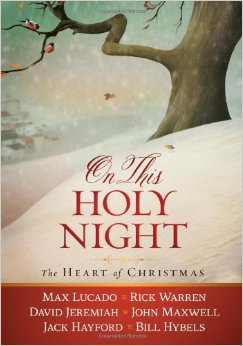
On This Holy NightI have been sharing quotes from On This Holy Night all week. It’s an excellent book from six insightful authors—John Maxwell, Bill Hybels, Max Lucado, Rick Warren, David Jeremiah, and Jack Hayford—that will open your eyes to the beauty of the Advent. Here are some quotes from Rick Warren’s chapter entitled “What Will You Find At Christmas?”

“What are you going to find this Christmas? I’ll tell you what you’re going to find: you’ll find what you’re looking for. … And there’s no better time than Christmas to become the kind of seekers the wise men embodied. Wise people still seek Christ.”

“Real peace is knowing that no matter what I do, God will never stop loving me. Real peace is knowing that no matter what happens, God will never leave me alone. He’ll always be with me. Real peace means that no matter what happens in the New Year, or in the years to come, I know that God is going to give me the strength to handle it. Real peace is living by God’s Word, the Bible, so I can avoid a lot of the needless hang-ups and hurts and habits that mess up my life.”

“Religion is just man’s attempt to get to God. Relationship is when you get to know Jesus Christ in a personal way and He becomes a Friend.”

You can also read other quotes I’ve shared from On This Holy Night:

And be sure to check out my review of On This Holy Night here.

15 More Tweetable Billy Graham Quotes

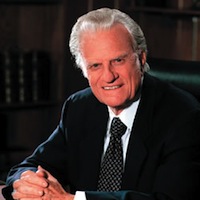
BillyGrahamI recently shared 15 quotes from The Quotable Billy Graham that fit nicely into Twitter. I saw lots of those quotes appearing in other places, so here are 15 more tweetable quotes from Dr. Graham…

“Without God, the best man in the world is capable of the most terrifying crimes.”

“We have become so accustomed to immorality that it no longer seems to us to be immoral.”

“One of the best ways to get a boy to say ‘I do’ at the marriage altar is for the girl to say ‘No’ before marriage.”

“One of the worst sins we can commit is that of ingratitude.”

“I beg you not to squander life. I beseech you to take the long view. Do not live for the world only.”

“All mankind is searching for ideal conditions in a world that is anything but ideal.”

“A religion which is full of pretense is nothing but religious addiction.”

“Crisis times are the times when Christ should be proclaimed.”

Only if Christ is a partner in the home and in the hearts of the two people will romance continue.”

“Self-respect is a wonderful thing so long as it is not produced by self-deception.”

“It has always been the mark of decaying civilizations to become obsessed with sex.”

“The three chief consequences of sin are: estrangement from God; bondage to self; disharmony with others.”

“The verb of the world is ‘get.’ The verb of the Christian is ‘give.’” 

“Any philosophy which deals only with the here and now is not adequate for man.”

“Everyone meets temptations, but some folks entertain them.”

You can read my review of this book here. And check out some longer quotes from Billy Graham here and here.

Thursdays With Oswald—My Personal History With Jesus

Oswald ChambersThis is a periodic series with things I’m reading and pondering from Oswald Chambers. You can read the original seed thought here, or type “Thursdays With Oswald” in the search box to read more entries.

My Personal History With Jesus

Beware of the people who tell you life is simple. Life is such a mass of complications that no man is safe apart from God. Coming to Jesus does not simplify life, it simplifies my relationship to God.

God’s idea is that individual Christians should become identified with His purpose for the world. When Christianity becomes over-organized and denominational it is incapable of fulfilling our Lord’s commission; it doesn’t “feed His sheep,” it can’t (see John 21:15-17). 

If my religion is not based on a personal history with Jesus it becomes something I suffer from, not a joyous thing, but something that keeps me from doing what I want to do.

From Disciples Indeed

These three quotes from one chapter in this book have a common theme: What makes life a joy is a personal relationship with Jesus Christ as my Lord and Savior.

Doctrine can’t do it. Easy answers won’t work. Religion can’t do it. My church denomination won’t.

Only knowing Jesus intimately, personally—only having a “personal history” with Him will bring me lasting joy! I pray that you can know this joy!

(If you would like to read more quotes from Disciples Indeed, please click here.)

Links & Quotes

link quote

“Don’t dare to be different, dare to be yourself—if that doesn’t make you different then something is wrong.” —Laura Baker

“Real joy is to be found in the presence of God, with Jesus Christ, secure and loved forever and ever (Psalm 16:11). Knowing the presence of God is the unique privilege of all who have made the Kingdom turn. God never changes in His love for us, and Jesus Christ holds us fast forever, regardless of the outward circumstances of our lives. The result of experiencing this is joy.” —T.M. Moore

“We can do nothing unless by a supernatural grace of God. It is God who gives the will. It is God who gives the power.” —John Calvin

“How singularly does God, in political events, prepare men’s minds for the particular phase which His church assumes! … I cannot go into the question now, but every Christian student of history knows that the circumstances of the outward world have ever been arranged by God so as to prepare the way for the advance of His great cause.” —Charles Spurgeon

“There is no such thing as genuine knowledge of God that does not show itself in obedience to His Word and will.” —Sinclair B. Ferguson

Eric Metaxas reminds us why Darwinism cannot explain religion. Check out Saber-tooth Psychology.

New emails continue to show the tragedy that Benghazi is. Hold our leaders accountable!

Tim Elmore explains how leading and following must go hand-in-hand.

[VIDEO] John Maxwell challenges us to enrich other people’s lives—

https://youtu.be/Pm767pZBM7w

Links & Quotes

link quote

“May the Lord increase your hunger and your thirst to see the face of God. And may He grant your desire through the gospel of the glory of Christ, Who is the image of God.” —John Piper

Chuck Colson said, “It seems that everywhere—from Tennessee to Tokyo—religion is being permeated by a consumerist mentality.” Read more (or take a listen to Chuck’s broadcast) on Gimmie That Hot-Tub Religion.

My friend and mentor, Tom Kaastra, has an amazing new website called The Basics of Life—Help for your spiritual journey. Do yourself a favor, check out the site, and then subscribe so you can receive his wisdom each time he publishes something new.

Ken Davis has some good insights on handling the ups and downs of life.

Dr. Ben Carson sets the record straight on Planned Parenthood’s racist foundation. And Jayme Metztgar explains why abortion is the new slavery, giving three reasons why what Planned Parenthood is doing is morally wrong.

From Planned Parenthood’s own annual report, prenatal services—which have decreased—amount to 18,684 services. Out of the total 10,590,433 services then, pre-natal care accounts for less than 1 percent. For pregnant women who come to Planned Parenthood, 94 percent of them have an abortion. (h/t Live Action)

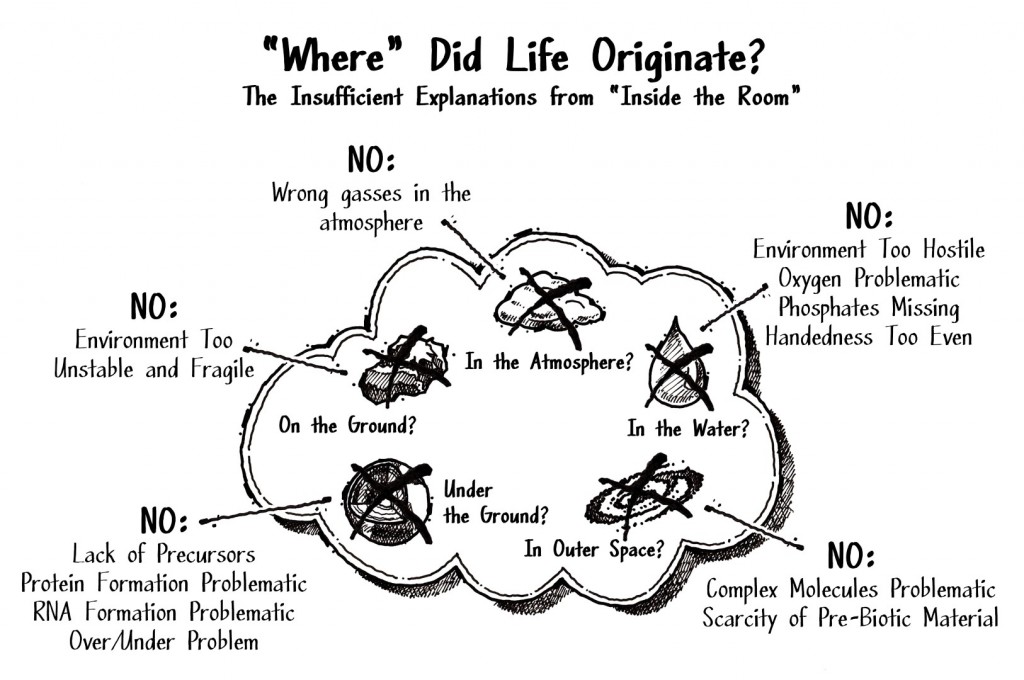
Where did life originateJ. Warner Wallace asks: Can naturalists [evolutionists] explain where life originated? Great apologetics for those who believe in a Creator or Intelligent Design.

David Wilkerson says there is a command from Jesus that far too many Christians ignore: “The King has told us to bind up the devil and cast him out of the banqueting hall. In short, we’re to rise up and take serious action against satan’s attacks on Christ’s Body.” Read more here.

Links & Quotes

link quote

“Being in love is a good thing, but it is not the best thing. There are many things below it, but there are also things above it. You cannot make it the basis of a whole life. It is a noble feeling, but it is still a feeling. Now no feeling can be relied on to last in its full intensity, or even to last at all. Knowledge can last, principles can last, habits can last; but feelings come and go. And in fact, whatever people say, the state called ‘being in love’ usually does not last.” —C.S. Lewis, in Mere Christianity

“There must be nothing about our religion of our own inventing; it is for us to lay thought, and judgment, and opinion at the feet of Christ, and do what He bids us, simply because He gives the command.” —Charles Spurgeon

“The storms of life are no longer our point of reference when Jesus is our focal point.” —Dutch Sheets

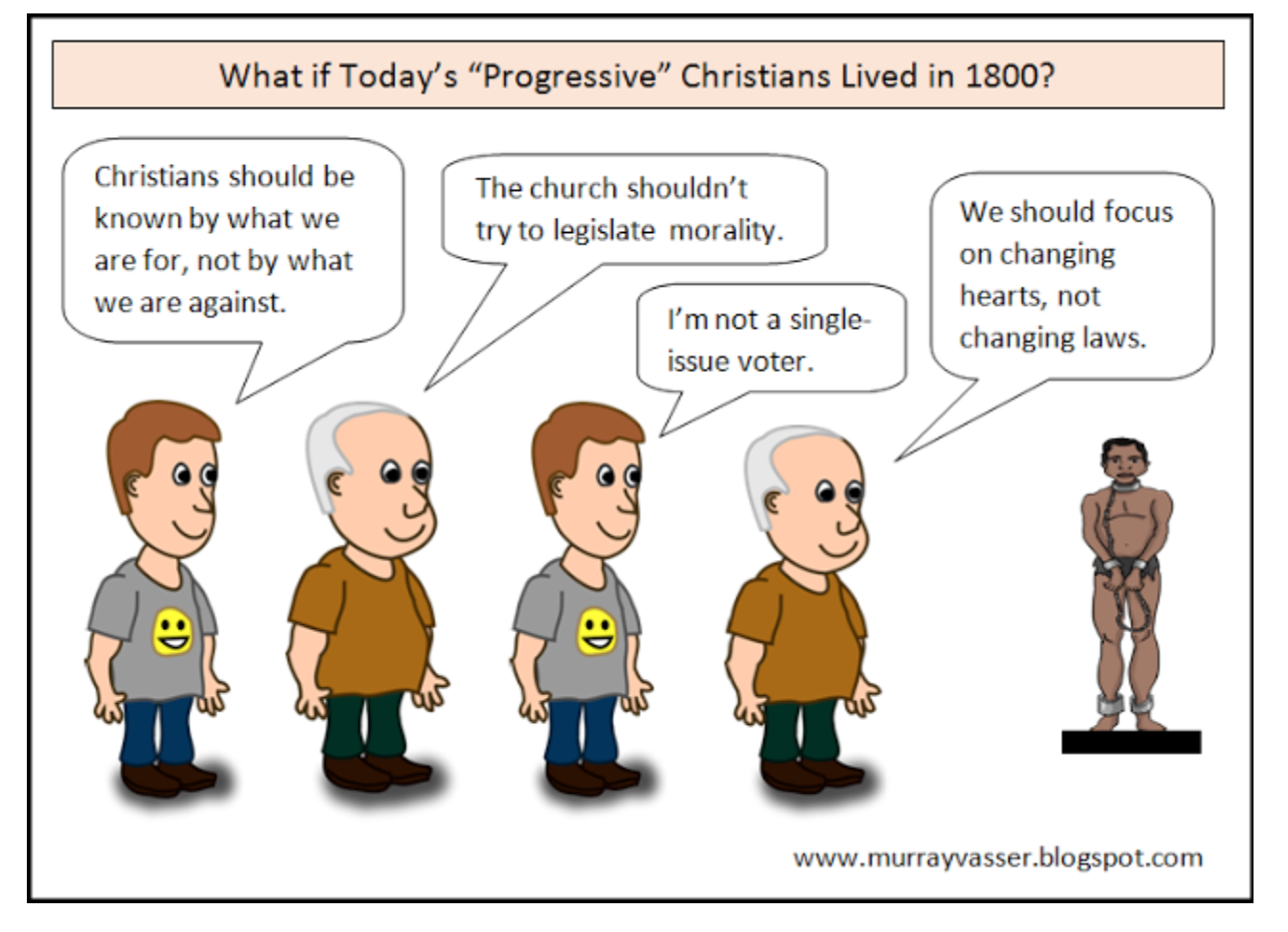
Progressive Christians in 1800sMurray Vassar reminds Christians to speak up for morality!

“Policy, however, Sir, is not my principle, and I am not ashamed to say it. There is a principle above everything is political . . . And, Sir, when we think of eternity, and of the future consequences of all human conduct, what is there in this life that should make any man contradict the dictates of his conscience, the principles of justice, the laws of religion, and of God.” —William Wilberforce

Two imprisoned Christian pastors have been released from their prison sentence in Sudan. Kudos to the ACLJ!

J.Warner Wallace asks a great question: Can naturalism/evolution account for human dignity?

John Piper has a weighty post that is worth your time to read: satan and sodomy.

14 Quotes From “The Printer And The Preacher”

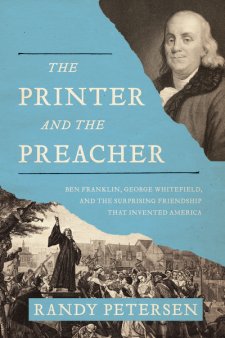
The Printer And The PreacherI loved this book! It’s a great historical story of how Benjamin Franklin and George Whitefield’s lives intertwined at such a pivotal time in history. America exists the way it does politically and religiously today because of the influence of these two titans. You can read my full book review here. Below are a few quotes from this remarkable book.

“The Faith you mention has doubtless its use in the world…. But I wish it were more productive of good works than I have generally seen it: I mean real good works, works of kindness, charity, mercy, and public spirit; not a holiday-keeping, sermon-reading or hearing, performing church ceremonies, or making long prayers. … Your great Master thought much less of these outward appearances and professions than many of His modern disciples. He preferred the doers of the Word to the mere hearers…and those who gave food to the hungry, drink to the thirsty, raiment to the naked, entertainment to the stranger, and relief to the sick.” —Benjamin Franklin, in a letter to pastors

There are many who “perhaps fear less the being in Hell, than out of the fashion.” —Benjamin Franklin

“The alteration in the face of religion here is altogether surprising. Never did the people show so great a willingness to attend sermons, nor the preachers greater zeal and diligence in performing the duties of their function. Religion is become the subject of most conversations. No books are in request but those of piety and devotion; and instead of idle songs and ballads, the people are everywhere entertaining themselves with Psalms, hymns and spiritual songs. All of which, under God, is owing to the successful labors of the Reverend Mr. Whitefield.” —Benjamin Franklin, in a newspaper article

The Body of
B. Franklin
Printer;
Like the Cover of an old Book,
Its Contents torn out,
And stript of its Lettering and Gilding,
Lies here, Food for Worms.
But the Work shall not be wholly lost:
For it will, as he believ’d, appear once more,
In a new& more perfect Edition,
Corrected and Amended
By the Author. —Benjamin Franklin, the Epitaph he wrote for himself at age 22

“I have seen your Epitaph. Believe on Jesus, and get a feeling possession of God in your heart, and you cannot possibly be disappointed of your expected second edition finally corrected, and infinitely amended.” —George Whitefield 

“You blame me for weeping, but how can I help it when you will not weep for yourselves, though your immortal souls are on the verge of destruction?” —George Whitefield

Those who hear the gospel “have more need of heat than light. Would to God we had as much warmth in our hearts, as light in our understandings!” —George Whitefield

“If we are truly converted, we shall not only be turned and converted from sinful self, but we shall be converted from righteous self. That is the devil of devils: For righteous self can run and hide itself in its own doings, which is the reason self-righteous people are so angry with gospel preachers.” —George Whitefield

“Let your practice correspond to your profession.”—George Whitefield

“Oh pray, dear Mr. H., that God would always keep me humble, and fully convinced that I am nothing without Him, and that all the good which is done upon earth, God doth it Himself.” —George Whitefield, in a letter to Gabriel Harris, when his popularity was growing

“Will it not in the end destroy brotherly love, and insensibly take from us that cordial union and sweetness of soul, which I pray God may always subsist between us? … How glad would the enemies of the Lord be to see us divided? How many would rejoice, should I join and make a party against you? And in one word, how would the cause of our common Master every way suffer by our raging disputes about particular points of doctrines? … I write not this, honored Sir, from heat of spirit, but out of love. At present, I think you are entirely inconsistent with yourself, and therefore do not blame me, if I do not approve of all that you say.” —George Whitefield, in correspondence with John Wesley over doctrinal differences

“I find that you grow more and more famous in the learned world. As you have made a pretty considerable progress in the mysteries of electricity, I would now humbly recommend to your diligent unprejudiced pursuit and study the mystery of the new-birth. It is a most important, interesting study, and when mastered, will richly answer and repay you for all your pains. One at Whose bar we are shortly to appear, hath solemnly declared, that without it, ‘we cannot enter the kingdom of heaven.’ You will excuse this freedom. I must have aliquid Christi [something of Christ] in all my letters.” —George Whitefield, in a letter to Benjamin Franklin

“satan is angry. I am now mimicked and burlesqued upon the public stage. All hail such contempt! God forbid that I should glory, save in the Cross of Jesus Christ.” —George Whitefield, in a letter after a play was produced in London making fun of him

“Whitefield and Franklin were not just the two most famous people in America in their time—they were also the most significant. The effects of their lives and their work are still being felt today … If America was born as a Christian nation, it’s because many of its people were genuinely, powerfully Christians. It had less to do with the language in any founding documents and more to do with the fact that George Whitefield had been tromping from town to town, inviting people to hear the call of God. It had even less to do with church membership. God was grabbing lives. People’s hearts were flying open. No one was imposing Christianity on society. The power came from within.” —Randy Peterson

The Printer And The Preacher (book review)

The Printer And The PreacherRandy Peterson has written an amazing story of the unlikely friendship between two men who loom large in history: Benjamin Franklin and George Whitefield. The book is called The Printer And The Preacher: The Surprising Friendship That Invented America.

These men were arguably the first celebrities in the American colonies. They each achieved their level of fame in totally different professions, and yet their paths continue to cross time and time again, until a 30-year-long friendship ensued. Each of them was instrumental in sharpening the other in their craft, promoting their pursuits, and defending each other’s reputations. And perhaps most notably, together they became pivotal in the build-up to America’s independence both politically and religiously.

In concluding this very enjoyable book, Peterson writes—

“Like George [Whitefield], we are, as a nation, very religious. Like Ben [Franklin], we like to make up our own beliefs. About half of Americans call themselves evangelical, children of the Great Awakening. Many even use George’s favorite term: born again. But others do not share this faith. Many, like Ben, are scientific in their outlook. They take an ‘enlightened’ approach to life, focusing on the natural world, not the supernatural.

“We are George and Ben.

“Thanks to Ben and others, we have religious liberty carved into our Constitution. We have freedom to be religious or not to be. We can be Methodists, Calvinist, Catholic, deist, Pietist, or all of the above. No authority can coerce us to believe anything or force us to say we do. Spiritual life is a personal matter, a transaction between us and God. George and Ben both taught us this.

“We are still figuring out how religious freedom works. As a nation, we seem to vacillate between Ben and George, skeptic and zealot, the right to doubt and the right to believe. The question in our deeply divided country is how to preserve the freedom to live without a vibrant Christian faith as well as the freedom to choose something else. The relationship between these two forefathers points to an answer.”

This book will appeal to so many people: history buffs, pastors, scientists, leaders, politicos, and biography readers. I highly recommend it!

I am a Thomas Nelson reviewer.