Keep Up Your Spiritual Health

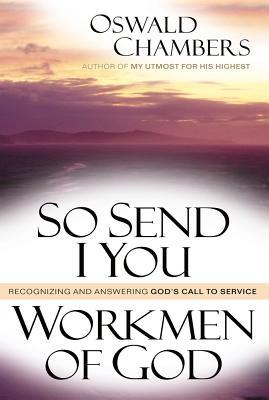
In Workmen Of God, we have a collection of lectures Oswald Chambers delivered to those “reliable men” and women (see 2 Timothy 2:2) who were either already working in pastoral ministry or preparing to do so. Chambers talks to pastors about their work among those entrenched in their unbelief, those who are skeptical, those who are backslidden, those who are hypocrites, and those who have sick souls. He especially challenges pastors on how to minister to themselves so that they are prepared to minister to any soul in which God brings them in contact.

It’s in that light that I think this passage is so vital for anyone involved in Christian ministry—

“So remember, it is absolutely necessary to be like the cedars of Lebanon. Do you know the characteristic of a Lebanon tree? The cedars of Lebanon have such extraordinary power of life that instead of nourishing the parasites it kills them, the life within is so strong and so robust that instead of feeding the parasites it chokes them off. God grant that we may be so filled with His life, may flourish as the cedars of Lebanon, so that He can trust us down in all the dark, difficult places amongst the souls of our brother men and be able to pour His tremendous health and power through us. … 

“Do you remember, then, that it is necessary for the worker to be healthy, and beware of this mistake, that by working for God amongst men, you develop your own Christian life; you do not unless your Christian life is there first. It is so obvious that it needs to be said over again—you cannot develop your own Christian life unless it is there. The advice given that if you work for God you develop your own life often means that if you work for God you get right yourself; you do not, you have to be right with God first.” 

Pastors and other Christian workers, remember that you cannot give to others what you do not have yourself. You MUST make regular time to abide with Jesus, not for sermon preparation, but for your own robust spiritual health. 

Although written over 100 years ago, this book is still a treasure-trove for anyone in church ministry today!

The Core Curriculum Of The Spirit

“The Law of God teaches us how to love Him and our neighbors (Matthew 22:34-40). The Law of God is critical for seeking the Kingdom of God (Matthew 5:17-19). The Law of God liberates us from the blinding and binding power of sin (James 2:8-13). The Law of God marks the path of love that Jesus walked, and that all must walk who would follow Him (1 John 2:1-6; 5:1-3). The Law of God provided the framework within which the apostles ordered their churches (cf. 1 Corinthians 5, 9; James 2:5; 1 John 5). The Law of God is the core curriculum of the Spirit, as He brings us into the presence of God’s glory and transforms us into the image of Jesus Christ (Ezekiel 36:26-27; 2 Corinthians 3:12-18). Neglecting the Law of God is a major cause for the decline of true and selfless love in the world; it licenses the progress of evil; and it threatens to render the prayers of Law-neglecting believers an ‘abomination’ or, we might say, ‘a dead and a useless thing’ (Matthew 24:12; Proverbs 28:4, 9). 

[all Scriptures from the above paragraph are here]

“It’s no wonder the psalmist, echoing Moses, insisted that the righteous person, the one who embodies the goodness of God in all his ways, meditates on the Law of God day and night, hides it in his heart and embodies it in all his ways (Psalm 119:9-11; Deuteronomy 6:1-9), keeps it diligently, delights in and loves it, and hastens to make sure his feet follow in its path (cf. Psalm 1; Psalm 119:4, 5, 35, 59, 60, 97). 

[all Scriptures from the above paragraph are here]

“If you are missing the Law of God in your relationship with Jesus, you are depriving yourself of a most important resource for bringing the goodness of God to light in the land of the living. The good works outlined in the Law of God are those ‘ordained of old’ which God intends us to do in all our ways (Ephesians 2:10). Yes, understanding the Law can be difficult. But we can learn from the prophets, Jesus, and the apostles how to read, study, and meditate in this most important corpus of Biblical literature, and thus we can discover the true freedom for goodness and love that God has prepared for us.” —T.M. Moore 

Two Great Lies

“By two great lies was man led away from God. By the same two lies has the estrangement been kept up. On these two lies the world has been feeding ever since the Fall. Their fruit has been woe and death—‘Ye shall not die’ and ‘Ye shall be as gods.’ …

“The world’s history is the same. Our race has been eating the fruit of lies [Hosea 10:13]; not simply of sin, but of lies. The sorrows, sighs, tears, pains of our race are the fruit of lies—the original lie of Paradise, and a thousand such since then. …

“The two original satanic lies are continually coming up, and along with them myriads of others, all leading us astray. Each day brings forth the lie, the fruit, the eating thereof. satan, or the world, or the flesh, or a friend, or a book, or a scene whispers the lie; it is fair and specious, we believe it; it brings forth fruit, we eat of it, and the end is bitterness and disappointment. We feed on lies. … We persuade ourselves that this world is good, and pleasant, and excellent, so we pursue it in preference to the world to come. …

“Jesus says, ‘Yes, ye shall not surely die, but that deliverance shall not be in the way you think. Death is the wages of sin, yet I bring life to the sinner, everlasting life, life through the belief of the Truth, even as death came through the belief of a lie. Yes, ye shall be as gods, but not in your way. I will make you partakers if the divine nature, not by eating the forbidden tree, but by eating of Me.’” —Horatius Bonar, in Light and Truth: The Old Testament

Loitering Words

These are the last words of David: “The inspired utterance of David son of Jesse, the utterance of the man exalted by the Most High, the man anointed by the God of Jacob, the hero of Israel’s songs. The Spirit of the Lord spoke through me; His word was on my tongue. The God of Israel spoke, the Rock of Israel said to me: ‘When one rules over people in righteousness, when he rules in the fear of God, he is like the light of morning at sunrise on a cloudless morning, like the brightness after rain that brings grass from the earth.’” (2 Samuel 23:1-4) 

Look how David describes himself: 

  • Inspired by God
  • Exalted by the Most High 
  • Anointed by God 

This statement by David reminds me of the words Moses spoke about himself: “Moses was a very humble man, more humble than anyone else on the face of the earth” (Numbers 12:3)! 

David also said that he was the hero of Israel’s songs. The King James Version says he was “the sweet psalmist of Israel.” However he is described, these are his last words. Literally, that means that his words loitered. They hung around. They continued to impact people’s lives long after he was gone.

Look how long his words loitered. When the Church prayed in Acts 4, they quote David’s prophetic words, stating that they were spoken through the Holy Spirit. David said that’s exactly how he was speaking—“the Spirit of the Lord spoke through me; His word was on my tongue” (v. 2), and God Himself is recorded as speaking through David in verse 3.

God’s words were on David’s lips because God’s Spirit was in David’s heart.

David was both confident of this and humbled by this.

  • Confidently he said he “rules over people in righteousness” and “my house [is] right with God” (v. 5). 
  • Humbly he said “he rules in the fear of God” and God was the One who “brought to fruition my salvation” (v. 5). 

God is still looking for people through whom He may speak loitering words.

May our prayer be—God, You are still looking for men and women through whom You can impart loitering words. You want to put Your words in the mouth of those who are righteous in Your sight and who walk in reverent fear of Your holiness, those who acknowledge Your love and Your sovereignty. O God, make me that person! I don’t want to speak idle words, but life-changing, God-glorifying, Spirit-empowered words that will loiter, and impart truth, and bring people to Jesus. Show me what I need to change to be the one through whom You will speak Your loitering words.

’…And Yet We May Not Be Christians’

Something serious for all Christians to ponder…

The disciples had life before our Lord breathed on them, but then they attained more. They had life before Pentecost, but then they obtained more. … Thus a man may be very like a saint and yet not be one. A church or a congregation may be very like a Christian one, with a fair appearance and compact organization; all in excellent bustling order, numerous, liberal, united, earnest after a sort; and yet lack one thing which neutralizes and paralyzes all the rest—the breath of life.

“Our creed may be sound, and yet we may not be Christians.

“Our religion may be externally complete, and yet we may not be Christians. … Mechanical religion may do for the gods of Greece and Rome, but not for the living and true God. … Your sanctuary attendance may be regular and reverent; but what if there be no breath in it? Your prayers and praises may be punctual and unexceptionable, but what if there be no breath in them? Will God accept them? Will they satisfy you? Will they make you happy? Will they not be irksome and intolerable? And the more you multiply them, the more intolerable.

“Our good works may be numerous and praiseworthy, yet we may not be Christians. It is not the work that makes the Christian, but the Christian that makes the work.

Our life may be exemplary, and yet we may not be Christians.” —Horatius Bonar, in Light & Truth—The Old Testament

[see Ezekiel 37:8, and this post that talks about the difference between the Holy Spirit being on a Christian versus in a Christian]

God’s Unrivaled Pencil

Not a flower
But shows some touch in freckle, streak or stain
Of His unrivaled pencil. He inspires
Their balmy odors, and imparts their hues,
And bathes their eyes with nectar.
Happy he
Who walks with Him! —William Cowper


all photos (c) Craig T. Owens 2020

More Of Christ

“Preacher and people, we need more of Christ. More of Christ would make that sad home bright, that wavering soul steadfast, that breaking heart happy, that mourning spirit glad, that burdened conscience light, that selfish nature generous, and make those who are parted in enmity stand with clasped and forgiving hands. More of Christ would smite down sectarian walls and win outcasts to the fold. More of Christ is what we all want in our hearts and homes, in our business and politics, in our schools and universities, in our churches and pulpits.” —Canon James Fleming

Near Christianity

“The proclamation that Jesus died for our sins so that we could be forgiven and have eternal life is not, in fact, what C.S. Lewis referred to as mere Christianity—Christianity at its most basic. Rather, I would say that this message, which offers as its primary hope forgiveness and eternal life, and which offers these to all who merely profess belief in Jesus—this gospel which is roundly proclaimed in perhaps the vast majority of churches throughout the land—should be referred to as near Christianity.

“The Good News that Jesus and the Apostles proclaimed is a message so comprehensive, so altogether new and radical, that it requires deep-seated, heart-felt repentance, complete surrender to the risen Christ, and whole-hearted belief leading to obedience in every area of life. It is the message of the Kingdom of God.

“Anything other than the Gospel of the Kingdom is not the Gospel at all, but a form of near Christianity that holds out promises germane to the Kingdom, prescribes means related to the Kingdom, but holds back on making the full vision and demands of the Kingdom clear to those who would enjoy the conditions of blessedness.

“Such a message obscures the magnitude of God’s grace, minimizes the scope of Christ’s achievement, fails to nurture believers in the full obligations of Kingdom citizenship, and holds out a lesser hope—mere forgiveness and eternal life, rather than the glory of the living God.

“Near Christianity, therefore, produces little in the way of Kingdom evidence in the lives and churches of those who embrace it.” —T.M. Moore, in The Gospel of the Kingdom

(Check out some other quotes from The Gospel of the Kingdom by clicking here.)

Skilled In Scripture

Last week I shared how in a span of a month and a half Peter went from a man who crumbled before a little servant girl, to one who boldly stood up for Jesus before a huge crowd. Don’t you think that some of the other disciples that had spent the previous 3-plus years with Peter were thinking, “Who is this guy?! He’s preaching this amazing sermon that he didn’t even prepare for ahead of time!” 

That’s what the Holy Spirit does for us: He opens up God’s Word like we’ve never seen it before! It wasn’t just for Peter, or the original 12 disciples, or the first-century Church. This is still available to you and me today!  

Please note that it’s not just a relationship with Jesus that opens up the Scriptures to us. No one spent more time in the presence of Jesus than His disciples. And yet even after Jesus explicitly shared truth with them, we read, “His disciples didn’t understand at the time that this was a fulfillment of prophecy. But after Jesus entered into His glory, they remembered what had happened and realized that these things had been written about Him” (John 12:16). 

Notice those words “after…they remembered…and realized.” 

After what? After they were baptized in the Holy Spirit on Pentecost (see Acts 2:1-16). In every setting after that we see their new understanding and correct application of the Scriptures (check out Acts 2:16, 25, 34; 2:42; 4:25-26; 8:35; 2 Timothy 3:16-17; Hebrews 4:12; 2 Peter 1:21).

This is still available to you and me today! Jesus told us that He had more to say to us, and that’s why the Holy Spirit would come. The same Holy Spirit that inspired the Word of God is available today to illuminate it to us! 

R.T. Kendall made this observation about the teachings of Jesus, “[His teachings] cannot be truly understood until you see that it is our Lord’s doctrine of the Holy Spirit. It means we must embrace His interpretation of the Law and how it is fulfilled in us.” 

This is what God foretold through Ezekiel—I will give them an undivided heart and put a new spirit in them; I will remove from them their heart of stone and give them a heart of flesh. Then they will follow My decrees and be careful to keep My laws… (Ezekiel 11:19-20). In other words, God is saying, “When the Holy Spirit is in you, you will know how to apply My laws to your every-day life. You will become skilled in the correct and timely biblical application.”  

ALL Scripture is for ALL servants of God. ALL Scripture is applicable to ALL the circumstances we will ever face in life. But we need the illumination of the Holy Spirit in order to make the connection from the written Word to the real-life application. 

So don’t stop at salvation—press on to be baptized in the Holy Spirit. 

If you have missed any of the other lessons in this series, you may access them by clicking here. 

Controlled By The Holy Spirit

Do not get drunk on wine, which leads to debauchery. Instead, be filled with the Spirit, speaking to one another with psalms, hymns, and songs from the Spirit. Sing and make music from your heart to the Lord, always giving thanks to God the Father for everything, in the name of our Lord Jesus Christ. Submit to one another out of reverence for Christ. (Ephesians 5:18-21) 

Jesus wanted His followers to be His missionaries throughout the world, but not until they were empowered with the baptism of the Holy Spirit. The new Testament writers elaborate on concepts that boil down to a Christian being controlled by the Spirit. What does that entail? I think these words from J. Oswald Sanders are well worth consideration—

“What does this apostolic injunction in Ephesians 5:18 mean? It is not an invitation to realize a privilege but a command to fulfill an obligation. … The clear teaching of Scripture is that we are filled with the Spirit when our human spirit is mastered and controlled by the Holy Spirit. The idea behind the command ‘be filled with the Spirit’ is not so much that of an empty vessel passively waiting for something to be poured into it, as water into a glass [here is a 3-minute video where I illustrate this idea]. It is rather the concept of a human personality voluntarily surrendered to the domination the Holy Spirit. … The Spirit’s control is not automatic but voluntarily and constantly conceded. 

“The fullness of the Spirit does not obliterate personality, as does hypnotism. In fact, the person who is filled with the Spirit only then realizes and discovers his true personality. It is not obliterated but released. We will never know the possibility of our redeemed personality until we definitely yield ourselves in full and undeserved surrender to His control. … 

“Paul’s personality was not obliterated by [Christ’s] indwelling. ‘I live,’ he said, ‘yet not I, but Christ liveth in me.’ He did not become any the less Paul because he was indwelt by Christ. Indeed, he became more and more the Paul God intended him to be; the ideal Paul who was a chosen vessel to the Lord. We need not fear the fullest surrender to Christ, for He enhances and ennobles personality. He imports qualities which are absent and brings into activity powers and possibility which were latent. He became a different Paul, but a greater and better Paul. Apart from the indwelling and mastery of Christ, the world would probably have heard little of him. Instead his influence has been one of the dominating features of the last two millennia.” —J. Oswald Sanders, in Cultivation of Christian Character (emphasis mine) 

If you would like to review some of the thoughts I have already shared in this current series, please click here and scroll down to the list of posts listed on that page.