Forgetfulness Can Be Fatal

Have you ever noticed the up-and-down track record of the Israelites? We see them worshiping God, enjoying His abundance, with their enemies on the run in one chapter, only to see them worshiping idols, barely scraping by, with their enemies closing in on them.  

What led to the downturn from freedom and abundant blessing to slavery and scarcity? I think it’s summed up in two words: They forgot. 

Asaph captures this idea in the 78th Psalm. And if we’re honest with ourselves, Israel’s history is our history too. 

There is a peril in our forgetfulness!  

“When we have much of God’s providential mercies, it often happens that we have but little of God’s grace, and little gratitude for the bounties we have received. We are full and we forget God: satisfied with earth, we are content to do without Heaven. Rest assured it is harder to know how to be full than it is to know how to be hungry—so desperate is the tendency of human nature to pride and forgetfulness of God.” —Charles Spurgeon (emphasis added)
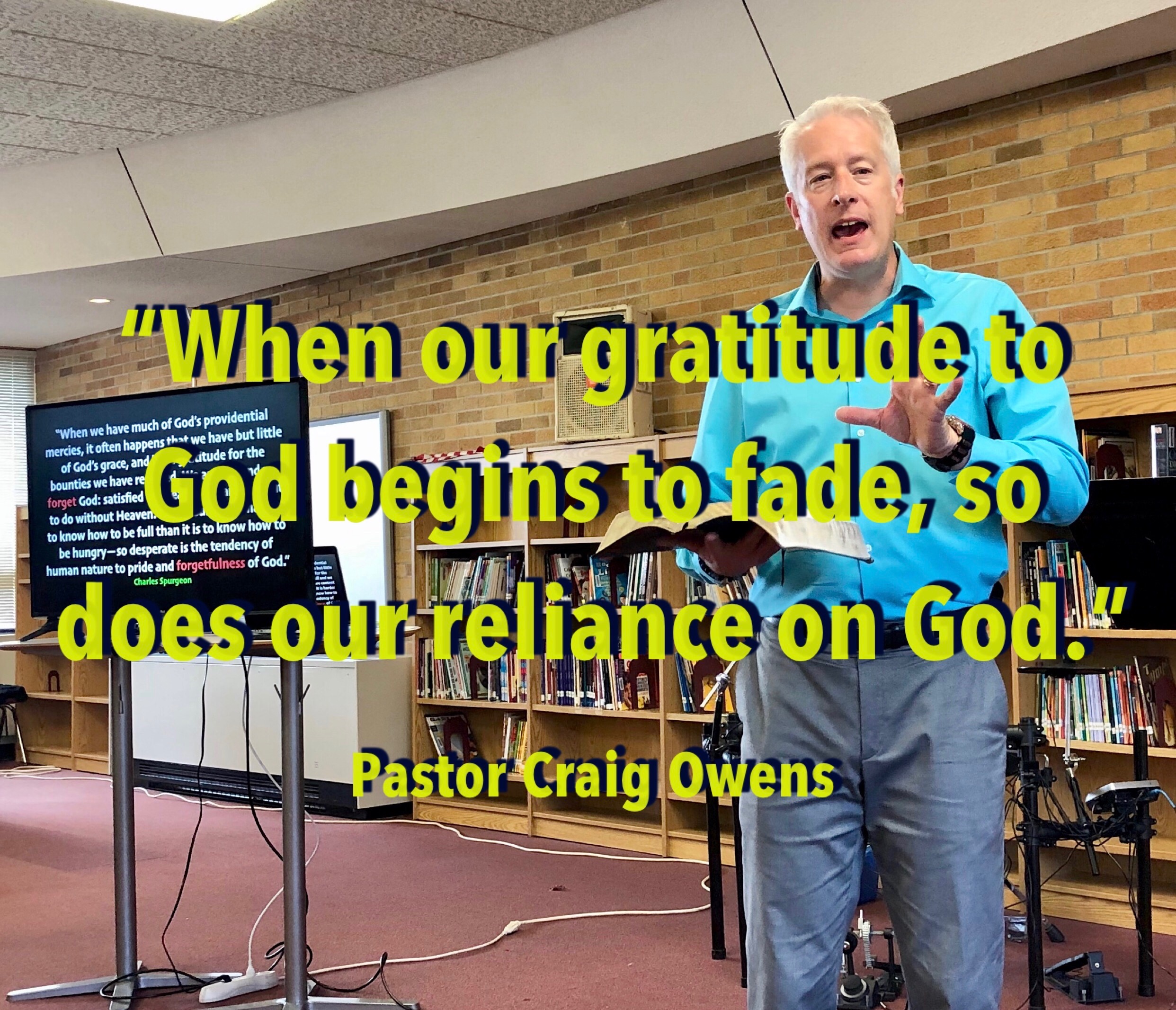
When our thoughts about God begin to fade, so does our gratitude to God. When our gratitude to God begins to fade, so does our reliance on Him. 

The dictionary defines some important terms:

  • Ungratefulness—not giving due return for benefits conferred
  • Unthankfulness—not repaying the blesser with thanks

I don’t think anyone consciously chooses to be ungrateful, but if we don’t choose to actively remember our blessings—and our Blesser—we will become ungrateful. So what if we began to think differently about the definition of gratitude? 

  • Forgetfulness—to cease to think of something
  • Gratitudeto continue to think of Someone (with that Someone being God!) 

When we are continually thankful—when we don’t let our gratitude fade—it keeps God’s blessings at the forefront of our minds. Gratitude—continuing to think of Someone—makes us completely God-reliant. 

Moses had a good idea to help us to continue to think of God’s blessings—

Impress them on your children. Talk about them when you sit at home and when you walk along the road, when you lie down and when you get up. Tie them as symbols on your hands and bind them on your foreheads. Write them on the doorframes of your houses and on your gates. (Deuteronomy 6:7-9) 

What if you posted reminders of God’s blessings all over the place? What if you made it almost impossible to forget God? What if you were constantly thinking of your blessings? 

Join us for our series called Fading Gratitude during the month of November.

Thursdays With Spurgeon—Our Secure Future Hope

This is a weekly series with things I’m reading and pondering from Charles Spurgeon. You can read the original seed thought here, or type “Thursdays With Spurgeon” in the search box to read more entries.

Our Secure Future Hope

     First, Christ is all. Next Christ is in all His people, but the consummation, the top-stone of all, is that God may be all in all [1 Corinthians 15:22-28]. … 

     The fact is, our Lord Jesus Christ has performed and is still performing a work that will end in putting everything into its proper order. …

     Christ is come into the world that all of the evil that is in the world should be subdued. And He will drive it out of the world. There will remain no power that will dare revolt against the Majesty of Heaven! Over the whole surface of this globe, beneath the new heavens and on the new earth, there will yet be the kingdom established all of which Jesus Christ will be the Supreme Head and over which He will reign forever, King of kings and Lord of lords! The Lord hasten it in His own time! … 

     I don’t know whether you catch my thought yet, but it is just this: all evil subdued, all the saints having Christ dwelling in them, Christ the head of all these saints, and then God, still as God, all the more surely and securely supreme over all things, or the head of Christ is God and God is all in all. … 

     I want to you, beloved friends, so to live as to be persuaded that it will be so one day, that God will be all in all—that there will come a time when we will stand before the throne of God, God in us all, and everything in us of God, when all His elect, all His redeemed, all to whom Christ is all, and all in whom Christ is, will only know God as their All-in-All!

From All And All In All

What a glorious future hope is secured for God’s saints! 

If we know what is coming, why would we fear today? If our hope is secure, that means our today is secure as well. That’s why David could confidently say: I keep my eyes always on the Lord. With Him at my right hand, I will not be shaken (Psalm 16:8).

Favorable Influence

Listen to the podcast of this post by clicking on the player below, and you can also subscribe on AppleSpotify, or Audible. 

Twice the 80th psalm declares—Restore us, O Lord God Almighty; make Your face shine upon us, that we may be saved (Psalm 80:19). 

But if we are already a Christian that has been saved from the penalty of our sin and saved to an eternal reward, then that also means that God’s face IS already shining on us, He HAS already restored us, and He HAS already given us His favor. 

I like how the Amplified Bible renders this verse: Restore us, O Lord God of hosts; cause Your face to shine in pleasure, approval, and favor on us, and we shall be saved! 

What we have received is too wonderful for us to keep to ourselves, so we must let His pleasure, approval, and favor now shine out of us! 

“If the result of our experience of God does not compel and propel us into global mission, it is doubtful whether we have really encountered the God of the Bible.” —Dick Brogden 

Jesus stated His mission simply and then sent us out on the exact same mission (Luke 4:18-19; John 20:21). We do this best by living closely among people so they can also see us shine with God’s favor.

Paul called us to shine as well: Live clean, innocent lives as children of God, shining like bright lights in a world full of crooked and perverse people (Philippians 2:15). I believe this is a perfect definition of the word influence. The origin of the word meant the supposed flowing of ethereal fluid from the stars thought to affect the actions of men. Christians that let their good deeds shine in the darkness can influence the entire culture around them!

“Radical Christianity is not going on a missions trip or a big conference. Radical Christianity is staying steady for decades.” —Mike Bickle 

Being a person that shines with favorable influence requires staying involved for the long haul so that you can build trustworthiness. It’s being in visible places not to get glory, but to let people see God’s glory. When they see His glory shine on you and out of you, they will want what you have too!

Solomon said, By the blessing of the influence of the upright and God’s favor—because of them the city is exalted (Proverbs 11:11). So, my fellow Christian, let me ask you: 

  • Has God shined on you?
  • Are you letting Him shine out of you? 
  • Are you living a noteworthy, trustworthy, visible life in your dark community? 

“It’s your choice: You can be a part of your city’s elevation or its deterioration.”

—Craig T. Owens

►► Would you please prayerfully consider supporting this ministry? My Patreon supporters get behind-the-scenes access to exclusive materials. ◀︎◀︎

How To Respond To Evildoers

I’m sure if I asked for a show of hands, everyone of you would put up a hand (or maybe even two!) to the question, “Has someone done something bad to you?” 

The real issue is not if we’ve been the victim of evildoers doing evil things; the real issue is how to respond to evildoers that do evil things. 

In Psalm 52, David tells us that he wrote this prayer after a vile man named Doeg had done atrociously evil things to a whole town of innocent people. Worse yet: these people were simply trying to help David!

David was fleeing for his life from King Saul, forcing him to leave home with just the clothes on his back. He stopped at the village of Nob and asked Ahimelech the priest for food and a weapon. That act, in King Saul’s mind, was worthy of death. None of Saul’s soldiers would carry out his command to execute the priest, but Doeg quickly responded. Doeg not only killed Ahimelech, but he killed the 85 priests with him, and then he proceeded to annihilate everything and everyone left in the village of Nob. Only one man escaped to tell David what happened. 

When David begins this psalm, he uses the words you or your 14 times in just the first five verses. David is addressing Doeg, almost holding up a mirror to his evil deeds. By contrast, the word I is used five times in just the last two verses of this prayer. 

That tells me that we have to work on this problem of evil from two different directions. We need to see evildoers in their evil, and we need to see a godly response to evildoers. As with many Hebrew poems, the most important principle is in the middle—Surely God will bring evildoers down to destruction, but He will protect the righteous (v. 5). 

In the opening words, David asks Doeg, “Why do you boast of evil?” The word for boast in Hebrew is halal—this is usually the word we translate Hallelujah! In other words, Doeg has put his evil on the throne of his life and is saying “Hallelujah!” to it. A downward slide of all sorts of evil words and evil deeds spiral out from this until the climax: Surely God will bring judgment. 

Notice David says “God” (not you) “will” (not might) take care of this. 

Now let’s look at it from a righteous perspective. Working backwards from verse 9 to verse 5, we see whereas Doeg was praising his evil deeds, David is praising God. David recognizes that it’s only in God’s presence that he can be free, and it’s only God that can ultimately balance the scales of justice. 

▶️ My friend, you cannot make things right. Only God can do this. Please, please, take your eyes off the evildoer that did evil things to you, and put your eyes on the Perfect Judge. He alone can balance the scales of justice. ◀️

So here are four lessons for all of us to learn—

  1. When evildoers do evil things to you, talk to God about them; don’t talk to your enemies and don’t even talk to your friends.
  2. Continue to redirect your heart and thoughts to God’s unfailing love, and away from thoughts of retribution—even if you have to do this a hundred times a day.
  3. When evildoers afflict you, look in the mirror of God’s Word to see if there is anything for which you need to repent and then ask forgiveness.
  4. When judgment comes, don’t gloat. John Bradford, when he saw a cartful of men going off to be hanged said, “There goes John Bradford but for the grace of God.”

In this video I reference our series on the Selahs in the book of Psalms. If you missed any of these, please click here to find a list of the other topics we covered.

Rejoicing At The Coming Of The Judge

In Psalm 50, we read the first-of-twelve psalms written by King David’s handpicked worship leader, a man named Asaph. On the day that Asaph first took up his position as worship leader, David gave him a special song, which definitely influenced Asaph’s songwriting.  

Psalm 50 has a pretty easy outline: an introduction in the first six verses, followed by 17 verses of God speaking to His people—speaking to you and me! In between the introduction and God’s speaking is the word selah.

Selah means a time for us to pause and carefully consider. So Asaph is essentially saying, “God is getting ready to speak with us, so we need to selah—pause from what we are doing so that we can pay careful attention to His words!”  

Asaph sets the stage in the first verse, telling us that the Mighty One, God, the Lord speaks. The words that are about to be spoken come from THE I AM—the All-Sufficient One, the Omnipotent, the All-Knowing, All-Powerful Ruler of the Universe. Asaph also reminds us that He is coming as THE Judge.

When you hear that THE All-Powerful, All-Knowing One is THE Judge that has summoned you into His courtroom, it’s quite likely that your heart would skip a beat. Especially when God lists some of the sins you and I are guilty of breaking in verses 16-20. 

It’s also possible that the news that you have to appear before THE Judge could cause you to rejoice. What? How can we rejoice at that?! David taught Asaph this concept in the song he gave him: God’s people should rejoice over God’s judgments. 

You see, in Psalm 50 God says, “I do not rebuke you for your sacrifices, or for all your attempts to follow the rules.” It’s not in the practices of the law that we find salvation.

God doesn’t need our sacrifices, but He wants our hearts. 

In order to win our hearts for Himself, THE Judge did something absolutely mind-blowing—THE I AM became flesh like us. And then He became the once-for-all sacrifice for our sins, paying our penalty Himself when He died on the Cross (see Hebrews 2:14-17; 7:17-27). 

This is why we can rejoice when we hear we have to stand before THE Judge. When you have placed your faith in what Jesus did for you on the Cross, when THE Judge opens His perfect record book to your page He will read this inscription written in the crimson red blood of Jesus: PAID IN FULL!

This is why we can rejoice at the thought of seeing THE Judge face to face!

Join me next Sunday as we wrap up this summer looking at the Selahs in the Psalms. We plan to restart this series next summer, unless the Judge calls us home before then!

Ultimate Wisdom

Last week I posted a quote on some of my social media channels that simply stated: “Our opinions don’t matter if they don’t square with God’s Word on the matter.” This seemed to me to be a fairly uncontroversial statement, but one anonymous reader really took me to task for using the hashtag #objectivetruth. Apparently, he thinks there is no such thing. 

But don’t we all rely on objective, external standards all the time? For instance, a gallon of gasoline is a gallon regardless of where you buy it, or whether you feel like it’s a gallon or not. And when you go to pay for your gasoline, the price isn’t based on how the gas station attendant is feeling at that moment, but on the objective amount posted. 

Psalm 49 is somewhat unusual in that it is a “wisdom psalm.” This psalm feels a lot more like something we would read in Proverbs or Ecclesiastes than it does a prayer or song in the Psalms. 

For instance, the first four verses of this Psalm sound a lot like the opening verses of the Book of Proverbs. And verses 5-13 of the Psalm echo what Solomon wrote in Ecclesiastes 2. 

This psalmist—like Solomon—wants us to understand how important it is to get wisdom. So we are urged to listen intently to those who have hard-won insight, to those who have “been there, done that” so that we don’t have to repeat their folly. 

What is that wisdom? It can be broken down into two profound statements:

(1) Everyone dies. 

That can be a really depressing truth IF your focus is building your own kingdom. If all there is to life is what you can earn and build before you die, only to realize that your “kingdom” ends at your last breath, that can be very depressing. 

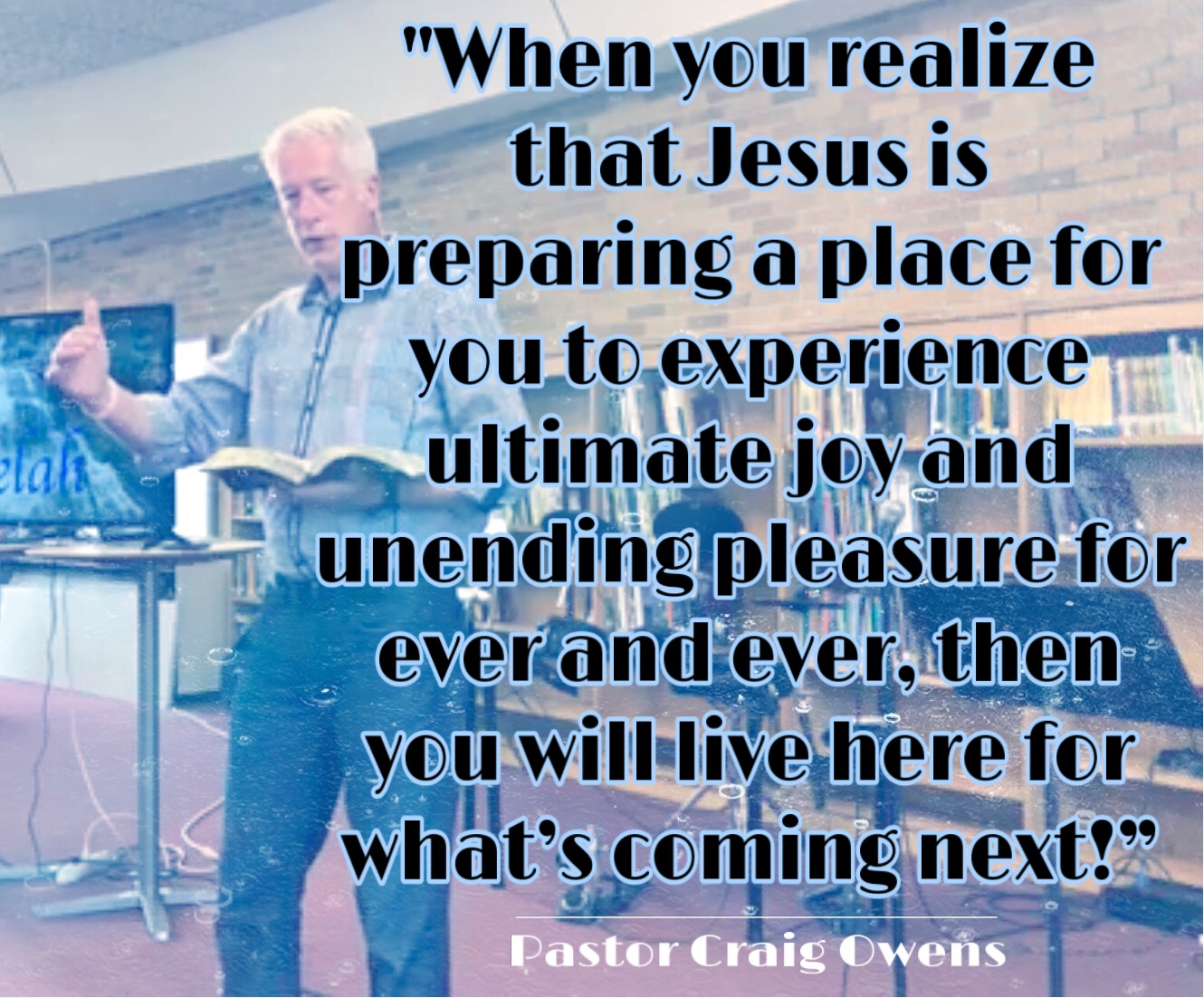
However, this realization that everyone dies can be a very liberating truth IF your focus is on the eternal kingdom that is awaiting you in Heaven. When you realize that Jesus is preparing a place for you to experience ultimate joy and unending pleasure forever and ever, then you will live here for what’s coming next! 

(2) Our eternal destination after we die is determined before we die.

If someone told me that he had discovered the secret to immortality, and then he died and came back to this life to tell me that his theory was correct, it would be wise listen to him. 

That’s exactly what Jesus did for us!

He told us that He would die on a Cross and that He would be raised back to life. AND HE DID IT! His hard-won insight, His “been there, done that” wise words to us are this—“Believe in Me. I died to pay the penalty for the sins that will keep you out of Paradise. So place your faith in what I did, and ask my Father to forgive your sins. Then I promise you that you will spend forever and ever with Me in Paradise!” 

THIS objective truth determines everything else about our lives. 

So I’ll repeat it again—

“Our opinions don’t matter if they don’t square with God’s Word on the matter.” —Craig T. Owens

Join me next Sunday as we continue our series looking at the Selahs in the Psalms. 

City Of God

With “LONG LIVE THE KING!” still reverberating in our ears from Psalm 47, the sons of Korah ask us to zoom out a little farther to see how things begin to change now that the King has assumed His rightful place on the throne.

So Psalm 48 opens with the same praise with which Psalm 47 closed—Great is the Lord and most worthy of praise! The Hebrew word for great means massiveness! God is great beyond comprehension. He is larger than any problem. He is unique. He is uncontainable, unlimited, utterly beyond description. His glory is so bright that no sun is needed (see Revelation 21:23).

His glorious light reveals God’s beauty all around us. As C.S. Lewis noted, “I believe in God as I believe the sun has risen. Not because I can see it, but because by way of it I can see everything else.” Indeed, the psalmist reminds us that the city of our God has become “beautiful in its loftiness”(v. 2).

Look at how majestic our King is, and how majestic He makes His city, with phrases like the city of our Godthe city of the Great King, and the city of the Lord Almighty. 

God makes His city secure forever. 

Selah—pause and consider that. 

About 1200 years after this psalm was written, Augustine would write his book called The City of God in which he contrasted the City of God with the City of Man. He noted how the Romans had gods they trusted in, but the Romans had to “rescue” their gods from the invading barbarians. Rome ultimately fell to those invading barbarians, but, Augustine said, the City of God can never fall because it isn’t a tangible place. The City of God resides inside God’s people. 

So notice that after the Selah the word “city” doesn’t appear anymore. Instead, we read about:

    • God’s temple (v. 9; the Hebrew word is heykal) means the palace of God the King
    • the villages of Judah (v. 11) is translated daughters in the KJV, but it actually means “the beloved apple of My eye” 
    • her towers (v. 12) are something that has grown up because it’s been nourished, not something built up by brick and mortar
    • her citadels (v. 13) are the highest and strongest places, which recalls God’s massiveness that we read in verse 1 

Here’s the question for all of us to ask—Is my heart a City of God or a City of Man? 

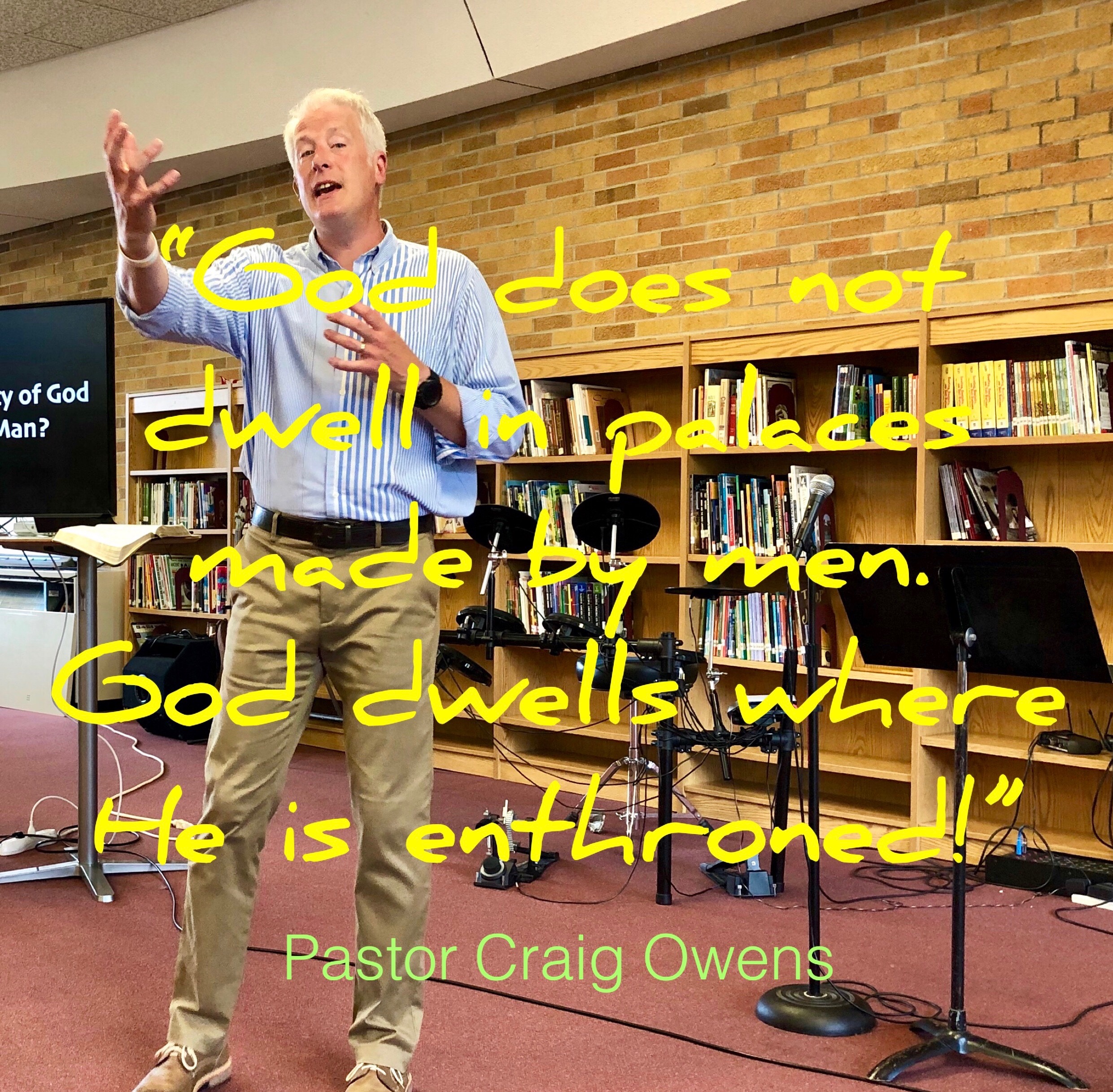
God does not dwell in palaces made by men.

God dwells where He is enthroned! 

When people look at the “city” of my life, can they tell God is on the throne? The telling characteristics of a City of God are a city where…

  • … thoughts continually turn to my King and His unfailing love (v. 9)
  • … praise, rejoicing, and gladness are constantly rising to God (vv. 10, 11)
  • … the King is able to freely walk around His kingdom—anywhere He likes (v. 12)
  • … others can walk around and see what a God-enthroned life looks like (vv. 12, 13)

I’ll ask it again—Can people clearly see that God is the unrivaled King of your heart? 

Join me next Sunday as we continue our look at the Selahs in the Psalms. 

Awesome God, Awesome Praise

Last I week I told you how Hebrew poetry often puts the climax in the middle. In Psalm 47 that middle climax is in verse 5—God has ascended. This is one of seven “psalms of enthronement” in the Psalter. Since all of the Scripture points to Jesus, let’s look at the definition of this word ascend and see how it fits with Jesus: 

When a king is coronated—when he is heading toward his throne—we can expect the people to be happy. So the psalmist tells us that in God’s case the people are clapping and shouting (v. 1), telling God how awesome He is (v. 2), thanking Him for subduing their enemies (v. 3), and expressing their gratitude that He has established them as His people (v. 4). 

Then comes the Selah / Pause—what is happening during this pause? The King is being crowned. He has ascended to His rightful throne. So this is selah/pause is really a deep breath that’s about to explode in a crescendo of praise! 

Now there are shouts of joy (v. 5a). In our earthly understanding, it would be something like: “LONG LIVE THE KING!!” There is also a sounding of trumpets (v. 5b) which literally means a thundering of trumpets. And then there’s the singing—lots and lots of singing. In fact, the word sing appears five times in the next two verses. 

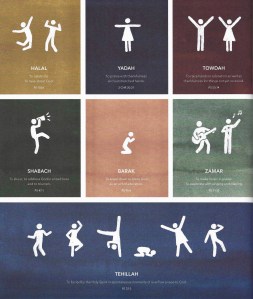
From The Infographic Bible (click the image for more)

There are so many ways to say LONG LIVE THE KING—singing, dancing, raising our hands, falling down on our knees. shouting.  

Our God is praise-worthy. He is clap-worthy! He is sing-worthy! He is dance-worthy! He is shout-worthy! He is bowing-worthy! 

Our awesome God deserves awesome praise! 

Why does it seem that we are prone to worship so quietly? Perhaps we need to take it up a notch or two (or three or four). Perhaps we haven’t gazed into His awesome beauty enough to realize just how incredible He is! 

Do you think shouting praises to the King of kings is too undignified? Did you know that when the King of kings returns, He is going to shout and there is also going to be a thundering trumpet? For the Lord Himself shall descend from heaven with a shout, with the voice of an archangel, and with the trumpet of God (1 Thessalonians 4:16)! 

Here are 4 important lessons from this Psalm of Enthronement—

  1. God is the King of all kings, enthroned on the Throne above all thrones. He is worthy of your “undignified” praise and acclamation. 
  2. God should always get your best praise. In verse 7 the phrase sing praises with understanding really means to sing with insight and skill. 
  3. God deserves a holy vocabulary. We see the word awesome in verse 2. Every time this word is used in the Scripture, it’s speaking of God. So why would we use a word like this for something like a hamburger!?!
  4. All nations and kings and peoples and tribes will bow before God at the end. They will bow in either acclamation for their King, or in abject terror of the All-Righteous Judge. Let’s remain missional so more people in the end are crowning Him as their All-Merciful King. 

I hope you can join me this next Sunday as we continue our series looking at the Selahs in the Psalms. 

The Nearness Of God

I think too often we’re in too big of a hurry when we read the Bible. 

Think with me for a moment how much longer it takes to sing the lyrics of a heart-stirring song than it does to just say the words. The psalms were written as songs, and although the melodies that accompanied them have been lost to the pages of history, we would still do well to move more slowly and deliberately and passionately through these inspired songs. 

Let’s slowly consider Psalm 46 from four different perspectives…

First, as a pause from the noise. Selah can be used three different ways: (1) a pause to reflect; (2) a deep breath to crescendo into something bigger; or (3) a contrast between two very different things. There are three selahs in this psalm, and all of them call us to a pause from something noisy. To pause from…

    • natural upheavals—the earth gives way, the mountains fall, the waters roar, the mountains quake
    • political upheavals—nations are in an uproar, kingdoms fall 
    • religious upheavals—God has to serve the judgment of desolation, as He breaks the bow, shatters the spear, burns the shield

Selah/Pause from these upheavals and reflect—God is our refuge … the Lord Almighty is with us.

Second, notice the contrasts. The songwriter takes us to man’s mountains that fall and quake, but reminds us that THE mountain of God is our sure fortress. In the imagery of water, we see man’s attempts at refreshing that are roaring and foaming, but we also see God’s river that brings life and makes people glad. And look at how man’s use of power results in an uproar, but God makes wars to cease. 

Selah/Pause and reflect—aren’t God’s ways better than man’s ways? 

Third, notice the nearness of God. Twice the songwriter reminds us “The Lord Almighty is with us.” And then we hear God Himself speak to our anxiety-prone hearts, “Be still and know that I am God.” Those words “be still” can also mean “let go.” Let go of earthly things, negative voices, fears, trying to control events. If your hands are full of that, how can you grab onto God?! 

Selah/Pause and reflect—God is calling me to go—and stay—near to Him! 

Fourth, see how God’s peace and protection surrounds AND permeates me. In our Western literature, we are used to the climax—or the payoff—being at the end of the story. The story builds and then comes to a conclusion where the hero prevails. But in Hebrew poetry, the climax—or the payoff—is typically in the middle. So when we read Psalm 46, it’s tempting to say, “Hallelujah! Verse 11 says God is my fortress. That’s the climax, the payoff!” But really the payoff—the most important part—is the middle. In this psalm, that is verse 6. Everything else builds to this and radiates out from this. 

Read this psalm for yourself by reading the verses in this order: 6, 5, 7, 4, 8, 3, 9, 2, 10, 1, 11.

Selah/Pause and reflect—God is not only IN me, He also surrounds me. I’m invited to come close to Him because He is already in me. Nations rage, but His voice in my heart silences the upheaval. He is with me. He is the Most High Sovereign God that controls the outcome of all nations. Earth quakes and kingdoms rumble, but I will have no fear; I will be still and know He is God. He is my refuge, my strength, my help, my fortress! 

Don’t rush the reading of the Psalms. Slowly “sing” these inspired lyrics and listen to how the Holy Spirit will whisper to your heart. 

I’ll be continuing our series on the Selahs in the Psalms this Sunday, and I would love to have you join me. 

Walk This Way

In his letter to the Christians in Ephesus, Paul uses the word “walk” seven times to instruct them how to follow the path Jesus laid down for us. 

In Greek, the word for “walks” (peripatēo) means something that regulates my life, or something that keeps me on the right path. It’s my lifestyle that is kept in proper boundaries by something outside of me. 

First of all, notice how Paul tells Christians how not to walk. DON’T WALK THIS WAY…

…following pop culture (2:2)—Living a certain lifestyle because “everyone” is doing it, or because some popular people are living that way. 

…without thinking about why you’re walking the way you are (4:17)

…without comparing your walk to truth (5:8)—Living a life because it feels good to me is a dangerous way to live. I must make sure there is an objective truth that is keeping me on a proper path.

…foolishly (5:15)—To be foolish is either (a) not knowing the truth, (b) not applying the truth I have been shown, or (c) choosing to disregard the truth I’ve been given. 

Instead, Paul tells Christians to WALK THIS WAY

…knowing I am God’s workmanship, created for a great purpose (2:10)—It may take me some time to discover my purpose and my talents, but I keep at it. 

…worthy of my vocation (4:1)—Once I have discovered my talents, I develop them into strengths that will benefit others. 

…lovingly (5:2)—Just as Jesus did! 

…in the light of God’s truth (5:8)—This is the exact opposite of foolishly walking. It means I seek the truth and I apply the truth to my life. 

…circumspectly (5:15)—Not wasting my moments, but making sure I am giving 100 percent every single day.

When I WALK THIS WAY people will inevitably notice that I’m motivated not by popularity with people, but by intimacy with God (5:2-7). They will see that my path is bordered by the principles in God’s Word (5:8-14; Psalm 119:105). And they will notice that my life has purpose and is productive (5:15-20). 

All Christians should ask themselves:

  • Is Jesus pleased with the path I’m on today?
  • Can others follow my footsteps toward their own relationship with Christ? 

If you can answer “yes” to those questions, then Jesus will be pleased that you WALK THIS WAY! 

[You can check out the Scriptures I referenced in this post by clicking on DON’T WALK THIS WAY and WALK THIS WAY above.]