Toot! Toot!

Do we begin again to commend ourselves?… (2 Corinthians 3:1)

Paul didn’t bring letters of reference to Corinth, nor did he ask the Corinthians to write any testimonials on his behalf.

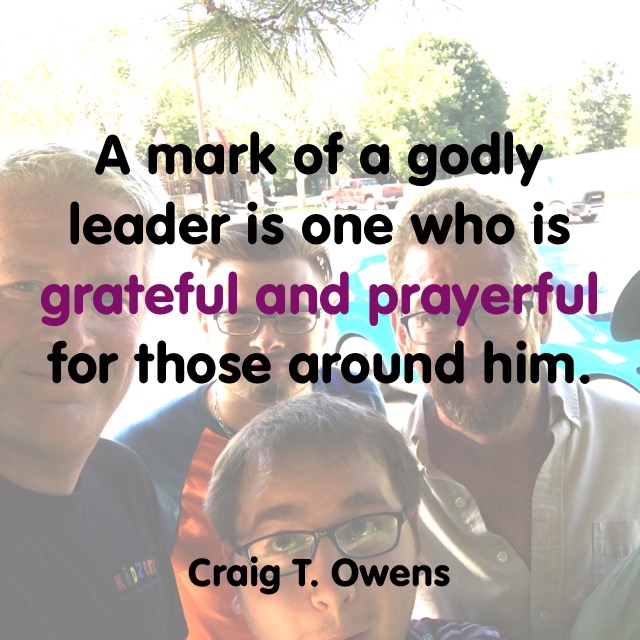
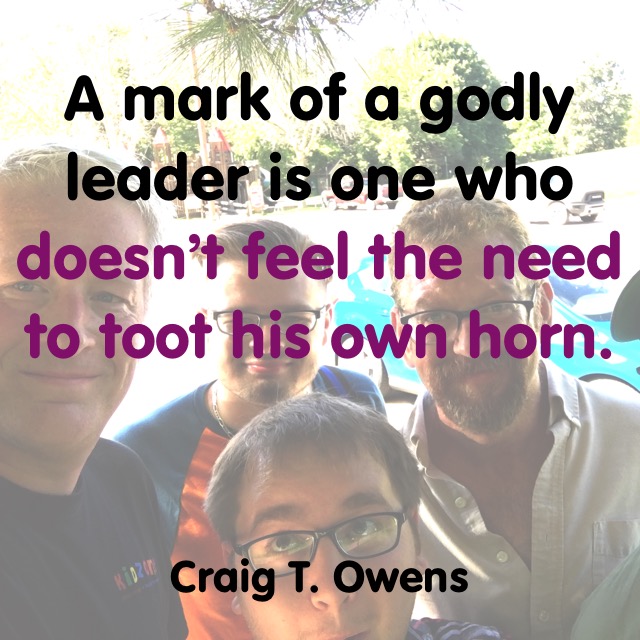
A mark of a godly leader is one who doesn’t feel the need to toot his own horn.

 Paul’s focus was not on what he could get now, but on what would be his in eternity—

  • any “letters of recommendation” would be written on peoples hearts (v. 3)
  • any skills he had came through Jesus (vv. 4-6)
  • he had hope that God was keeping accurate records (vv. 7-11)
  • he had the freedom to speak boldly in love because he wasn’t trying to win man’s approval (vv. 12-13, 18)
  • he saw transformed lives as his real trophy (v. 18)
  • his ministry was through God’s mercy so he remained humbled and encouraged (4:1)
  • he didn’t feel the need to concoct a “marketing plan” nor leverage his pulpit for personal gain (v. 2)
  • he focused on glorifying God alone (vv. 3, 4, 6)
  • his sermons weren’t me-focused, but always others-focused as he became a bondservant to those to whom he ministered (v. 5)
  • he worked only for eternal rewards (vv. 7-12, 16-18)
  • he spoke only what he had already appropriated and faithfully applied to his own life (vv. 13-15)

Our prayer could be very similar to what Paul taught and probably prayed for himself—“May I lead by serving. May I not look for human praise—nor even be tempted to toot my own horn—but lead and minister only to hear applause from the nail-scarred hands of Jesus.” 

As R.T. Kendall reminds us—

“Every day we breathe in and out—in and out—thousands of times a day. There is a day fixed, that unless Jesus comes first, you and I will only breathe out. No amount of money, power, or prestige can alter the date that we each have with death. And at that moment the only thing that will matter is whether we have known Christ and served Him well—that our lives have made a difference. In short: that we are popular in heaven—and famous in hell.”

This is part 37 in my series on godly leadership. You can check out all of my posts in this series by clicking here.

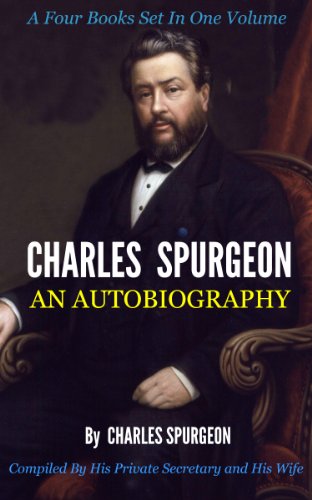
Thursdays With Spurgeon—A Firm Doctrine

This is a weekly series with things I’m reading and pondering from Charles Spurgeon. You can read the original seed thought here, or type “Thursdays With Spurgeon” in the search box to read more entries.

A Firm Doctrine

     If a tree has to be taken up two or three times a year, you will not need to build a very large loft in which to store the apples. When people are always shifting their doctrinal principles, they are not likely to bring forth much fruit to the glory of God. It is good for young believers to begin with a firm hold upon those great fundamental doctrines that the Lord has taught in His Word.

From The Autobiography Of Charles Spurgeon 

This is true of any endeavor—can you imagine constantly shifting the way you learn math, or biology, or cooking, or anything else? There’s always a “learning curve” in every new endeavor that brings a momentary setback before there are new gains.

Thankfully, the Bible has a consistent message from Genesis to Revelation. Getting into the Word regularly and attending a Bible-preaching church will help you immensely. 

There is no “right way” to read the Bible. In fact, Spurgeon had a great response to a man who told him that he “read my Bible on my knees.” Spurgeon said—

“I think you read the Bible in a very uncomfortable posture, and if you had read it in your easy chair, you would have been more likely to understand it. Pray, by all means, and the more, the better, but it is a piece of superstition to think there is anything in the posture in which a man puts himself for reading.”

The point is not in what posture you read the Bible, or in what translation, or at what time of day, but the point is that you are regularly reading God’s Word. Get into the Word, and let the Holy Spirit get the Word into you. 

4 Holy Spirit-Enhanced Habits

According to Paul, there are only two ways people can live: in the flesh or in the Spirit. That is—(1) operating separate from God, or (2) with a soul/body that is operating with God’s full involvement. 

The trouble is: we’re always—as long as we’re alive—still in the flesh because we need these bodies to carry around our soul and spirit. But changes begin to occur first at salvation (when the connection of our spirit to God’s Spirit is reestablished), and even more so after being baptized in the Holy Spirit (when we are not trying to work out things on our own). 

As a result, we have the same brain, but a mind that is being renewed; the same eyes, but insight that is being expanded; the same ears, but learning new ways to hear what the Holy Spirit is saying. 

Remember that Jesus promised that the baptism in the Holy Spirit would empower us TO BE His witnesses (Acts 1:8). Not just to do things differently, but to have our spirit so enlivened by the Holy Spirit that we are living, breathing, walking, talking witnesses of a life transformed.

Have you noticed that there wasn’t a steep “learning curve” for the disciples of Jesus following Pentecost? Part of that is due to four key habits that the Holy Spirit helped form in their lives. 

  1. Correct biblical application—We immediately see people going from “They didn’t understand from the Scriptures” to quickly applying biblical texts to their current situations. This is exactly what Jesus promised would happen (John 20:6-9; Acts 2:16, 25, 34; John 14:26). 
  1. Intercessory prayer—To intercede is to take someone else’s needs to God on their behalf. The Holy Spirit can help us apply Scripture to our prayers, and can even help us without words at all (Acts 4:24-26; Romans 8:26-27). 
  1. Creative thinking—Christians should be the most creative thinkers in the world (Psalm 119:99; Jeremiah 33:3; 1 Corinthians 2:10). 
  1. Healthy conflict resolution—We’re all different, so not seeing eye-to-eye is bound to happen, but Spirit-empowered Christians will be able to resolve conflicts faster and with better results (Acts 6:1-8; Acts 15:1-31). 

“Your life as a Christian should make unbelievers question their disbelief in God.” —Dietrich Bonhoeffer

Amen! Your life as a Christian that is living out daily habits that have been empowered by the Spirit should make everyone around you want to go deeper and deeper into all that the Holy Spirit has in store for them too. 

If you missed any of the messages in this series, you can access the full list of messages by clicking here

Thursdays With Spurgeon—The Life-Changing Power In The Bible

This is a weekly series with things I’m reading and pondering from Charles Spurgeon. You can read the original seed thought here, or type “Thursdays With Spurgeon” in the search box to read more entries.

The Life-Changing Power In The Bible

     When the Spirit came with His divine life and quickened the entire Book to my newly enlightened soul, the inner meaning shone forth with wondrous glory. … Whatever I found to be in His Word, I received with intense joy. … Moreover, I have found that those points of my character that were most weak have been strengthened, while strong passions have been subdued, evil propensities have been kept under, and new principles have been implanted. I am changed; I am as different from what I was as a man could be who had been annihilated and had then been made over again. Nor do I claim any of the credit for this change—far from it. God has done great things for me, but He has done the same for others and is willing to do it for any soul who seeks His face through Jesus Christ and His great atoning sacrifice. …  

     An idea has long possessed the public mind that a religious man can scarcely be a wise man. It has been the custom to talk of infidels, atheists, and deists as men of deep thought and comprehensive intellect, and to tremble for the Christian controversialist as if he must surely fall by the hand of his enemy. But this is purely a mistake, for the gospel is the sum of wisdom, an epitome of knowledge, a treasure house of truth, and a revelation of mysterious secrets. In it we see how justice and mercy may be married; here we behold inexorable law entirely satisfied and sovereign love bearing away the sinner in triumph. Our meditation upon it enlarges the mind, and as it opens to our soul in successive flashes of glory, we stand astonished at the profound wisdom manifest in it.

From The Autobiography Of Charles Spurgeon 

As Spurgeon experienced, all Christians can experience. Think about this—the same Holy Spirit that inspired the written words of the Bible is the same Holy Spirit in you that can illuminate and apply the words of the Bible to your life! 

Bible-reading, Spirit-empowered Christians should be the most informed, creative, wise people you will ever meet. Not because they have studied nature, but because they are getting to know Nature’s God intimately. The Creator can open up the mysteries of creation better than any scientist or philosopher. 

But we don’t read the Bible just to know God’s Word, but we read the Bible to get to know the God revealed in the Word. He said He would reveal Himself to those who earnestly seek for Him. Ask the Holy Spirit to open your eyes, your mind, your heart as you read your Bible. 

A Very Present Help

God is our refuge and strength, a very present help in trouble. (Psalm 46:1)

God is not just present—He is very present! 

God is not merely in the room with you, He is fully attentive to you. He’s never distracted, preoccupied, or disinterested. 

Regardless of the quaking or roaring around you, He is so very present that He knows your quietest sigh. You don’t have to look anywhere else for help because He is VERY present at this VERY moment. 

The rest of this psalm reiterates this promise:

  • God is in the midst
  • God will help
  • The Lord of hosts is with us
  • God is our stronghold 

God Himself speaks the words of the natural conclusion we should draw when we realize that He is VERY present at this VERY moment—

“Be still, and know that I am God!”

Poetry Saturday—The Course Of Prayer

Even so, the course of prayer who knows?
   It springs in silence where it will,
      Springs out of sight, and flows
         At first a lonely rill
But streams shall meet it by and by
   From thousand sympathetic hearts,
      Together swelling high
         Their chant of many parts. 
Unheard by all but angel ears
   The good Cornelius knelt alone,
      Nor dream’d his prayers and tears
         Would help a world undone. 
The while upon his terrac’d roof
   The lov’d Apostle to his Lord
      In silent thought aloof
         For Heavenly vision soar’d. 
Far o’er the glowing western main
   His wistful brow was upward rais’d,
      Where, like an angel’s train,
         The burnish’d water blaz’d. 
The saint beside the ocean pray’d,
   The soldier in his chosen bower
,
      Where all his eye survey’d
         Seem’d sacred in that hour. 
To each unknown his brother’s prayer,
   Yet brethren true in dearest love
      Were they—and now they share
         Fraternal joys above. —John Keble

Pause To Pray

…Now the Philistines had come and spread out in the Valley of Rephaim; so David inquired of the Lord, “Shall I go and attack the Philistines? Will You deliver them into my hands?” … (2 Samuel 5:17-25)

The enemy poised to attack, but David paused. 

David is a man of action. But without a doubt, he is a more successful man of action when he is first a man of prayer. 

The Philistines encamped in the valley, preparing themselves to attack Israel. David has had no problem dealing with this enemy before so no one would have questioned David saying to his army, “God is with us. Let’s go attack these Philistines.” 

But David paused to pray and only went to war when God said, “Go—attack them straight on.” David obeyed and won a great victory (vv. 20-21). 

The Philistines returned to the exact same valley. Again no one would have faulted David for saying, “This is the same scenario as last time. God told us to attack before, so we already have His permission to go attack again.” 

But David paused to pray and this time God gave him a different battle strategy: “Circle behind them.” Same scenario, different battle tactic, but still the same victorious result (vv. 22-25). 

Just because something seems automatic doesn’t mean we should act quickly and prayerlessly.

Just because something seems the same doesn’t mean we should act on auto-pilot. 

In each situation: Pause to pray, wait for God’s direction, then follow through exactly as He says.

Missionary God, Missionary Bible (book review)

Technically speaking, Missionary God, Missionary Bible by Dick Brogden is a pre-book. It is being released through 2019 as a daily email and then it will be published as a book next year. But I urge you to jump in on these stirring thoughts today! 

God is a missions-minded God, so it makes sense that the Bible would be a missions-centered text, speaking to the hearts of both those who don’t know Jesus as Savior yet, and to the hearts of those Christians who should be missional in their lives. 

Dick is a veteran missionary, and he brings his decades of ministry experience to this monumental work. Dick is using The Chronological Study Bible to take us through the Bible in one year and to look at every text through a missionary lens. The Chronological Study Bible is a fascinating read in itself, as it places the biblical texts in the order in which the events happened, but then when Dick’s insights are added to those historical events, something even more powerful stirs in my heart. 

Each day’s devotional also includes a prayer focus for an unreached people group, along with the vital statistics about these precious people who need to hear the Good News of Jesus. 

This study Bible, read alongside Dick’s missional insights, and then combined with a prayer for a group that needs to receive the Gospel, makes for a life-changing devotional time. You will definitely want to get the book when it is published, but please don’t wait until then to begin to have your missionary heart enlarged and engaged in this fantastic daily study. 

You can subscribe to the daily emails by clicking here.

Don’t Stop At Salvation

The Holy Spirit is vital in everything concerning a Christian’s life. Dr. Donald Stamps emphatically said it this way: 

“It is essential that believers recognize the importance of the Holy Spirit in God’s redemptive purpose. Many Christians have no idea what difference it would make if there were no Holy Spirit in this world. Without the Holy Spirit there would be no creation, no universe, no human race (Genesis 1:2; Job 33:4). Without the Holy Spirit there would be no Bible (2 Peter 1:21), no New Testament (John 14:26; 15:26-27; 1 Corinthians 2:10-14), no power to proclaim the gospel (Acts 1:8). Without the Holy Spirit there would be no faith, no new birth, no holiness, no Christians at all in the world.” 

Sometimes I think we have in our mind that the “old” in Old Testament somehow means outdated or no longer applicable to our lives, and the “new” in New Testament should be our sole focus. But Jesus affirmed again and again that all of the Scriptures—what we now refer to as the Old Testament—all point to Him. 

The outpouring of the Holy Spirit on that Pentecost Sunday was not something new to the New Testament Christians. He was always a part of a believer’s life. Even 1000 years before Christ’s public ministry, David knew the importance of the Holy Spirit in both salvation, and in living a consistently holy lifestyle (Psalm 51:10-12, 143:10). 

The role of the Holy Spirit in Christ’s public ministry was foretold in the Old Testament Scriptures and then fulfilled in the New Testament era (see Isaiah 11:1-2; Luke 3:21-22; Isaiah 61:1-2; Luke 4:18-21). 

If Jesus needed the baptism in the Spirit to empower Him, direct Him, and give Him success, how much more do we need this?! That’s why Jesus imparted the Holy Spirit to His followers at their moment of salvation, but then admonished them to eagerly expect the baptism in the Holy Spirit as well (John 20:22; Luke 24:49; Acts 1:8). 

Quite simply Jesus is sayingDON’T STOP AT SALVATION

Jesus didn’t, the apostles didn’t, Paul didn’t, Apollos didn’t, the Ephesian Christians didn’t, I didn’t, and you shouldn’t either! 

Keep on going…

  1. Ask Jesus to forgive you of your sins
  2. Eagerly desire the baptism in the Spirit 
  3. Ask God to baptize you in His Spirit
  4. Expect that He will answer that prayer (Acts 2:38; Isaiah 44:3; John 7:37-39; Luke 11:13; Mark 11:24)

Join me again this Sunday as we continue to learn what it means for Christians today to be Pentecostal. 

If you missed any of the messages in this series, you can access the full list of messages by clicking here.

14 Quotes From “Studies In The Sermon On The Mount”

Oswald Chambers has unlocked the Sermon on the Mount for me like no other Bible commentator has before—deeply and practically. Check out my full book review by clicking here. I have already shared numerous passages from this book in my weekly “Thursdays With Oswald” series, but here are some other quotes that caught my eye as well. 

“Beware of placing our Lord as a Teacher first instead of Savior. That tendency is prevalent today, and it is a dangerous tendency. We must know him first as Savior before His teaching can have any meaning for us, or before it can have any meaning other than that of an ideal which leads to despair. … If Jesus is a Teacher only, then all He could do is to tantalize us by erecting a standard we cannot come anywhere near. But if by being born again from above we know Him first as Savior, we know that He did not come to teach us only: He came to make us what He teaches we should be. The Sermon on the Mount is a statement of the life we will live when the Holy Spirit is having His way with us.” 

“The disadvantage of a saint in the present order of things is that his confession of Jesus Christ is not to be in secret, but glaringly public. It would doubtless be to our advantage from the standpoint of self-realization to keep quiet, and nowadays the tendency to say—‘Be a Christian, live a holy life, but don’t talk about it’—is growing stronger. Our Lord uses in illustration the most conspicuous things known to men—salt, light, and a city set on a hill—and He says, ‘Be like that in your home, in your business, in your church; be conspicuously a Christian for ridicule or respect according to the mood of the people you are with.’” 

“Our Lord goes to the root of the matter every time with no apology. Sordid? Frantically sordid, but sin is frantically sordid, and there is no excuse in false modesty, or in refusing to face the music of the devil’s work in this life. Jesus Christ faced it and He makes us face it too. Our natural idea of purity is that it means according to obedience to certain laws and regulations, but that is apt to be prudery. There is nothing prudish in the Bible. The Bible insists on purity, not prudery.” 

“All our righteousness is ‘as filthy rags’ unless it is the blazing holiness of Jesus in uniting us with Him until we see nothing but Jesus first, Jesus second, and Jesus third. Then when men take knowledge of us, they will not say that we are good men, that we have a wonderful whiteness, but that Jesus Christ has done something wonderful in us.” 

“The Spirit of God comes through the different writers with the one steady insistence to stir up our minds (Philippians 2:5; 2 Peter 1:12-13). … Unless we learn to think in obedience to the Holy Spirit’s teaching, we will drift in our spiritual experience without thinking at all. The confusion arises when we try to think and to reason things out without the Spirit of God.” 

“Jesus does not use the illustration of the birds and the flowers by accident, He uses it purposely in order to show the utter unreasonableness from His standpoint of being so anxious about the means of living. Imagine the sparrows and blackbirds and thrushes worrying about their feathers! Jesus says they do not trouble about themselves at all, the thing that makes them what they are is not their thought for themselves, but the thought of the Father in heaven. A bird is a hard-working little creature, but it does not work for its feathers, it obeys the law of its life and becomes what it is. Jesus Christ’s argument is that if we concentrate on the life He gives us, we will be perfectly free for all other things because our Father is watching the inner life. We have to maintain obedience to the Holy Spirit, Who is the real principle of our life, and God will supply the ‘feathers,’ for are we not ‘much better than they’?” 

“We enthrone common sense as Almighty God and treat Jesus Christ as a spiritual appendage to it.” 

“At the bar of common sense Jesus Christ’s statements are those of a fool; but bring them to the bar of faith and the Word of God, and you begin to find with awestruck spirit that they are the words of God.” 

“No man is born with character; we make our own character. When the man is born from above a new disposition is given to him, but not a new character; neither naturally nor supernaturally are we born with character. Character is what a man makes out of his disposition as it comes in contact with external things. A man’s character cannot be summed up by what he does in spots, but only by what he is in the main trend of his existence.” 

“The Holy Spirit does reveal what is wrong in others, but His discernment is never for purposes of criticism, but for purposes of intercession.” 

“Prayer is not only asking, it is an attitude of heart that produces an atmosphere in which asking is perfectly natural, and Jesus says, ‘everyone who asks receives.’” 

“Fasting is much more than doing without food, that is the least part, it is fasting from everything that manifests itself-indulgence.” 

“When we are saved by God’s grace, God puts into us the possibility of not sinning, and our character from that moment is of value to God. Before we were saved we had not the power to obey, but now He has planted in us on the ground of Redemption the heredity of the Son of God, we have the power to obey, and consequently the power to disobey. The walk of a disciple is gloriously difficult, but gloriously certain. On the ground of the perfect Redemption of Jesus Christ, we find that we can begin now to walk worthily.” 

“Never trust the best man or woman you ever met; trust the Lord Jesus only. … We are never told to follow in all the footsteps of the saints, but only in so far as they have obeyed God.”