8 Quotes From “Workmen Of God”

Although written over 100 years ago, Workmen Of God is still a treasure-trove for anyone in pastoral ministry today. I have shared longer passages from this book in my weekly series called “Thursdays With Oswald,” but here are a few other gems from this book. You can read my full book review of Workmen Of God by clicking here.

“We must keep ourselves in touch, not with theories, but with people, and never get out of touch with human beings, if we are going to use the Word of God amongst them, and if the Holy Spirit is to apply the Word of God through us as workmen meeting not to be ashamed.”

“Men’s minds will always assent that Jesus Christ is right—why? Because Jesus Christ is Incarnate Reason. There is something in Jesus Christ that appeals to every man, no matter what condition he is in. If once Jesus Christ is brought into contact with the man, let that man seem to us dead and indifferent, destitute of anything like goodness—let him come in contact with Jesus Christ by the Holy Spirit, and you will instantly see that he can grasp something about Him in a way we cannot understand unless we know the Holy Spirit.”

“Unless your religion will go to the lowest and the worst and the most desperate case you know of, your religion is of no use.”

“Intercessory prayer for a backslider is a most instructive but most trying work for God, it will teach the worker that prayer is not only making petitions, but that prayer is breathing and atmosphere.”

“When the message you have to deliver, brother preacher, strikes straight home, don’t water it down just a little. Go straight for God if you come from Him. Neither for fear nor favor alter the message.”

“Love for men as men will never stand the strain. In order to catch men for the Lord Jesus Christ, you must love Jesus Christ absolutely, beyond all others. You must have a consuming passion of love, then He will flow through you in a passion of love and yearning and draw all men to Himself.”

“We need to live steadfastly in the presence of God so that when we are praised we don’t arouse the spirit of envy, the spirit that makes a man want to do something, not because he loves God, but because he wants to emulate us. … God grant we may see that the great need of every worker is a first-hand acquaintance with Jesus Christ which puts to death the spirit of ambition.”

“You cannot have holiness without a chaste physical life. Oh, the sapping power of God because of unchaste men and women who preached His Gospel.”
Workmen Of God (book review)

Oswald Chambers constantly tried to follow what Paul spoke to Timothy, “And these things you have heard me say in the presence of many witnesses entrust to reliable men who will also be qualified to teach others” (2 Timothy 2:2). In Workmen Of God, we have a collection of lectures Chambers is giving to those “reliable men” and women who were either already working in pastoral ministry or preparing to do so.

It’s amazing how Chambers could so effectively and specifically apply biblical principles to the audiences he addressed. For instance, some might think that those pastoring a local church and those ministering as a missionary would receive roughly the same sort of training. But a collection of Chambers’ lectures to those in missionary work (in his book So Send I You) has completely different ministry principles from the lectures he delivers to pastors in this book.

But in both books, we are privileged to read what Chambers’ friend and coworker Mary Hooker called “a wealth of spiritual vitamins.” She went on to say, “And now this latest book [Workmen Of God] goes forth, at a time when soul-sickness is more than ever rampant. The messages are full of spiritual discernment and diagnosis.”

If Chambers’ time was a time of rampant “soul-sickness,” how much more so do we need his insight today!

Indeed, Chambers talks to pastors about their work among those entrenched in their unbelief, those who are skeptical, those who are backslidden, those who are hypocrites, and those who have sick souls. He also challenges pastors on how to minister to themselves so that they are prepared to minister to any soul in which God brings them in contact.

Although written over 100 years ago, this book is still a treasure-trove for anyone in pastoral ministry today!

11 Quotes From “Brothers, We Are Not Professionals”

John Piper has written a book that I think every pastor should read: Brothers, We Are Not Professionals. You can read my review of this book here. Below are just a few quotes that caught my attention.

“We pastors are being killed by the professionalizing of the pastoral ministry. The mentality of the professional is not the mentality of the prophet. … The professionalization of the ministry is a constant threat to the offense of the gospel.”

“I defined spiritual leadership as ‘knowing where God wants people to be and taking the initiative to get them there by God’s means in reliance on God’s power.’ …  So the goal of spiritual leadership is to muster people to join God in living for God’s glory.”

“The Son of Man has not come seeking employees. He has come to employ Himself for our good.”

“In this fallen world, the tide is always going out. That is, the affections of our people have for God Himself (as distinct from His gifts) are continually prone to shrink. Our job is to tilt the world, by the power of the Spirit and the Word, so that the tide rolls in again.”

“A pastor who feels competent in himself to produce eternal fruit knows neither God nor himself.”

“Salvation is a gift of God (Ephesians 2:8). Love is a gift of God (1 Thessalonians 3:12). Faith is a gift of God (1 Timothy 1:14). Wisdom is a gift of God (Ephesians 1:17). Joy is a gift of God (Romans 15:13). Yet as pastors we must labor to ‘save some’ (1 Corinthians 9:22). We must stir up the people to love (Hebrews 10:24). We must advance their faith (Philippians 1:25). We must impart wisdom (1 Corinthians 2:7). We must work for their joy (2 Corinthians 1:24). We are called to labor for that which is God’s alone to give. The essence of the Christian ministry is that its success is not within our reach.”

“Are not our people really yearning to be around a man who has been around God? Is it not the lingering aroma of prayer that gives a sense of eternity to all our work?”

“Few things frighten me more than the beginnings of barrenness that come from frenzied activity with little spiritual food and meditation.”

“The domestication of God is a curse on preaching in our day. We need to recover reality and the language of majesty and holiness and awe and glory.”

“He knows that the only way he can deliver God’s message to God’s people is by being rooted in it and by saturating his sermon with God’s own revelation in the Bible. The Bible-oriented preacher wants the congregation to know that his words, if they have any abiding worth, are in accord with God’s words. He wants this to be obvious to them. That is part of his humility and his authority. Therefore, he constantly tries to show the people that his ideas are coming from the Bible. He is hesitant to go too far toward points that are not demonstrable from the Bible.”

“Our salvation and the salvation of those who hear us week after week depend in large measure on our faithful attention to personal holiness and sound teaching” [see 1 Timothy 4:16]. … Oh, how earnest we should be in attending to ourselves and the soundness and helpfulness of our teaching!”

Brothers, We Are Not Professionals (book review)

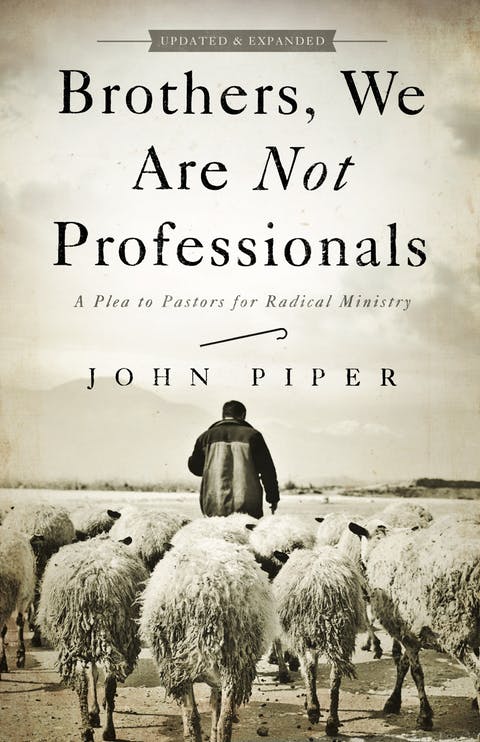
I’ll state it right up front—every pastor should read Brothers, We Are Not Professionals by John Piper.

The pastor is called upon to do lots of things, some of which are considered by both pastor and parishioner to more “spiritual” or more “business.” But in reality, all that a pastor (or any Christian for that matter) does is spiritual, because it is all to be done for the glory of God. Over time, many pastors have lost sight of the sacred nature of their calling, turning what they do into a professional pursuit.

Piper explains, “First, professionalism should always be marginal, not central; optional, not crucial. And second, the pursuit of professionalism will push the supernatural center more and more into the corner while ministry becomes a set of secular competencies with a religious veneer. … When I look back, my regret is not that I wasn’t more professional but that I wasn’t more prayerful, more passionate for souls, more consistent in personal witness, more emotionally engaged with my children, more tender with my wife, more spontaneously affirming of the good in others.”

Every chapter is chockfull of biblical insights, personal examples from John Piper’s ministry, and historical sources that have stood the test of time. I’ll say it again: every pastor should read this book!

I’ll add my own “amen” this prayer John Piper offers: “Banish professionalism from our midst, O God, and in its place put passionate prayer, poverty of spirit, hunger for God, rigorous study of holy things, white-hot devotion to Jesus Christ, utter indifference to all material gain, and unremitting labor to rescue the perishing, perfect the saints, and glorify our sovereign Lord. In Jesus’ great and powerful name. Amen.”

11 Quotes For Pastors From “Interpretation Of The Scriptures”

You don’t have to be a pastor to benefit from reading Interpretation Of The Scriptures by A.W. Pink, rather I think all students of the Bible will benefit from reading this classic book. However, the Apostle James did warn that “not many of you should presume to be teachers” because “we who teach will be judged more strictly” (James 3:1). In that light, A.W. Pink directs several of this comments in this book exclusively to those who teach/preach from the Bible. Here are a few of those quotes.

“The preacher’s task is both the most honorable and the most solemn of any calling, the most privileged and at the same time the most responsible one.”

“The ministry is no place for trifiers and idlers, but for those who are prepared to spend and be spent in the cause of Christ. The preacher ought to work harder than the miner, and to spend more hours per week in his study than does the man of business in his office.”

“Particularly does the minister need to attend unto this injunction ‘take heed unto thyself’ in his study of the Scriptures, reading them devotionally ere he does so professionally; that is, seeking their application and blessing to his own soul before searching for sermonic materials.”

“To ‘open’ the Scriptures helpfully to the saints requires something more than a few months’ training in a Bible institute, or a year or two in a seminary. None but those who have been personally taught of God in the hard school of experience are qualified so to ‘open’ the Word that Divine light is cast upon the spiritual problems of the believer, for while Scripture interprets experience, experience is often the best interpreter of Scripture.”

“The preacher should be with his time as the miser is with his gold—saving it with care, and spending it with caution.”

“Great care needs ever to be taken that we do not expound our own minds instead of God’s.”

“The preacher should be, above everything else, a man of the Book, thoroughly versed in the contents of God’s Word, one who is able to bring forth out of his treasure ‘things new and old’ (Matthew 13:52). The Bible is to be his sole text-book, and from its living waters he is to drink deeply and daily.”

“Commentaries we consult only after we have made a first-hand and exhaustive study of a passage.”

“It is at the feet of God that the preacher must take his place, learning from Him the meaning of His Word, waiting upon Him to open its mysteries, looking to Him for his message.” 

“To discourse upon the chemical properties of food will not feed a starving man, neither will tracing out the roots of the Hebrew and Greek words (necessary though that be in its proper place) the better enable Christ’s followers to fight the good fight of faith.”

“Scripture must be allowed to speak for itself, and it does so only so far as the preacher sets forth its genuine import. Not only is he to explain its terms, but also the nature of the ideas they express, otherwise he is apt to make use of scriptural terms and yet give them an unscriptural sense.”

To read the other quotes I shared from Interpretation Of The Scriptures, click here. You may also check out my full book review by clicking here.

How To Respond To Bad Pastors

God has ordained that His leaders oversee and administer His ministry. But problems arise in the church when humans change the “His” to “my.”

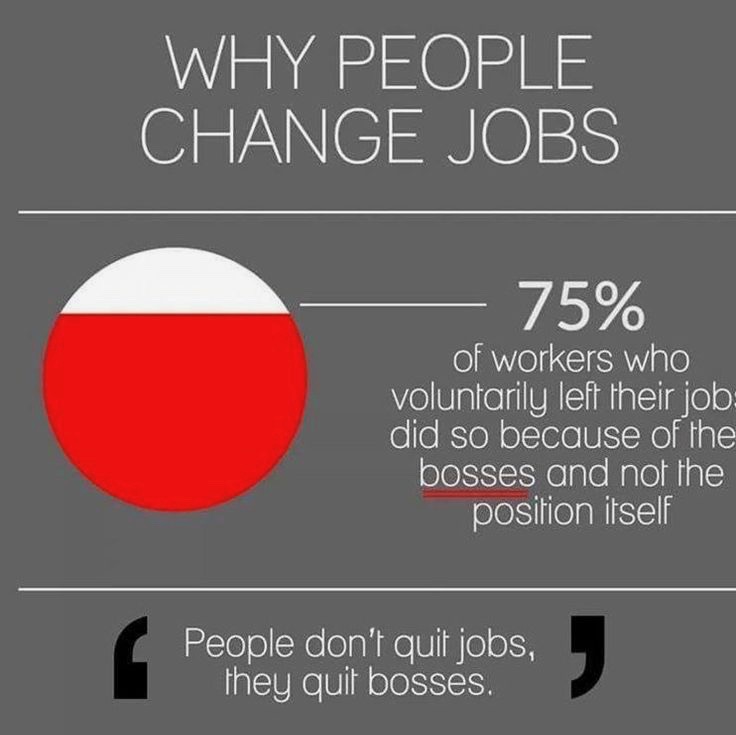
I read a statistic that 75% of people who voluntarily left their jobs did so because of a problem with their boss. In other words, 3-out-of-4 people didn’t quit their job, they quit their boss. In my personal experience this is equally as true in the church world—Most people don’t quit their church, they quit a bad pastor.

Sadly, those who do quit their church usually do so the wrong way. As a result they become either de-churched (they don’t attend anywhere), or cynical in the next church they do attend.

Who is a bad pastor?

  • One who is no longer effective because he is stuck in an old way of doing things
  • One who is theologically off
  • One who is unwilling to admit an error, ask forgiveness, and make amends
  • One who uses his position to build his kingdom instead of God’s kingdom

We have a great example of how to handle a bad spiritual leader in the story of David and Saul (see 1 Samuel 24). David had done nothing wrong, yet Saul was trying to kill him. At one point David’s men urged David to take matters into his own hands, and he almost did. He got close enough to Saul to cut off a corner of his robe, but quickly discovered that was too close. Immediately after doing so David was conscience-stricken!

Then look how David responded:

  • David rebuked his men as he reminded them that Saul was their “master” and “the Lord’s anointed.”
  • David “bowed down and prostrated himself” before Saul as he apologized.
  • David called him his “master,” “father,” and “the Lord’s anointed.”
  • David said he would leave the matter in God’s hands, allowing God to “judge between you and me.”
  • And twice David declared, “My hand will not touch you!”

This humble reply got Saul’s attention. Saul wept as he said, “You have treated me well, but I have treated you badly.” Saul then asked David to be kind to his descendants.

Then this conclusion—David gave Saul his oath, and then went away to a safe place.

The New Testament captures these same ideas for today’s Christians. We are told not to lightly entertain an accusation against spiritual leaders (1 Timothy 5:19), but to submit and obey to biblically-correct leaders (Hebrews 13:17).

The Bible gives us only two options for dealing with spiritual leaders…

SUBMIT & OBEY or WALK AWAY

Two wrongs don’t make a right. Responding in an unscriptural way to an unscriptural pastor’s way is just as wrong as what the pastor was doing wrong in the first place!

So give the bad pastor your oath that you will not lay a hand (or a word!) on them, and then remove yourself to a safe place. Submit and obey, or walk away and leave them in God’s capable hands.

If you’ve missed any messages in this series, you may find the complete list by clicking here.

How Great Is Our God (book review)

Mark Gilroy has given both Christian believers and skeptics a unique overview of profound Christian thinkers throughout the entire “AD” calendar. How Great Is Our God is a year-long journey with those historians, eye-witnesses, preachers, and martyrs who have truly captured the sentiment how great is our God!

From the book’s introduction—

How Great Is Our God is compiled to take you on a journey through every century and every tradition of the Christian faith. We want you to experience the heart and thoughts of Christians from the birth of the church until today. …

You will find daily readings that have been selected because they are considered great and enduring thoughts that have contributed to the spiritual growth of Christians in every age, but also because some of the readings represent seminal moments in the history of Christian thought and Western civilization.”

You can read this book by the date on the calendar, or you can read the various writings in the chronological order in which they were written. Although some doctrinal statements may vary from author to author, truly the underlying theme through every age and every author is the greatness and praiseworthiness of our God.

Reading this book I discovered…

  • …how influential people addressed cultural issues in their time through a biblical worldview
  • …an increased appreciation for the historicity of the Christian faith
  • …new insights into Christian theology
  • …authors I may have overlooked
  • …an invigorated passion to “contend for the faith that was once for all entrusted to the saints” (Jude 1:3)

From church history buffs, to pastors, to theologians … all should be pleased with the content they will find in How Great Is Our God.

Revival God’s Way

T.M. MooreI am a part of a weekly gathering of pastors from around the country who are praying for revival. T.M. Moore, who organizes our prayer time, shared some fantastic thoughts about revival.

He said, “The better we know God’s word, way, righteousness, justice, and judgments, the more our prayers for revival will have the right focus, and be more likely to be heard and answered.”

By way of example, T.M. Moore shared some verses from Psalm 119. I think you will be able to spot the pattern pretty quickly—

  • …revive me according to Your word (v. 25)
  • …revive me in Your way (v. 37)
  • …revive me in Your righteousness (v. 40)
  • …revive me according to Your lovingkindness (v. 88)
  • …revive me, O Lord, according to Your word (v. 107)
  • …revive me according to Your justice (v. 149)
  • …revive me according to Your word (v. 154)
  • …revive me according to Your judgments (v. 156)
  • …revive me, O Lord, according to Your lovingkindness (v. 159)

Praying for revival never comes on our terms, it’s always on God’s terms. Revival is never focused on me, it’s always focus on God.

By the way, if you would like to join me and these other pastors in our weekly prayer for revival, please send me a message and I will get you all of the details.

10 Quotes From “On This Day”

on-this-dayI love studying church history! Robert Morgan has given us a delightful resource in his book On This Day, in which he shares snippets from history which are still impacting us today. Please check out my review of On This Day by clicking here. Then enjoy some quotes and tidbits from this amazing work.

“If we don’t know our own history, we will simply have to endure all the same mistakes, sacrifices, and absurdities all over again.” —Alexander Solzhenitsyn

“How shall we labor with any effect to build up the church, if we have no thorough knowledge of her history? History is, and must ever continue to be, next to God’s Word, the richest foundation of wisdom, and the surest guide to all successful practical activity.” —Philip Schaff

“Here am I, send me; send me to the ends of the earth; send me to the rough, the savage pagans of the wilderness; send me from all that is called comfort on earth; send me even to death itself, if it be but in Thy service and to promote Thy kingdom.” —David Brainerd

“During his lifetime Charles Spurgeon preached to approximately 10,000,000 people. … Today there is more material written by Spurgeon than by any other Christian author of any generation. The collection of his Sunday sermons stands as the largest set of books by a single author in the history of the church.” —Robert Morgan

“What more glorious and blessed lot can fall to man by the grace of God, than to confess God the Lord amidst tortures and in the face of death itself; to confess Christ the Son of God with lacerated body and with a spirit departing, yet free; and to become fellow-sufferers with Christ. Though we have not yet shed our blood, we are ready to do so.” —Christians in Rome wrote from prison to Bishop Cyprian of Carthage

“After the war William Sangster headed Britain’s Methodist home missions department until he was diagnosed with progressive muscular atrophy. For three years he slowly died, becoming progressively more paralyzed, finally able to move only two fingers. But his attitude didn’t falter, for when first learning of his illness, Sangster made four rules for himself. Many people have rules for living. Sangster composed four rules for dying: ‘I will never complain. I will keep the home bright. I will count my blessings. I will try to turn it to gain.’ He did all those things. And thus the work of God was displayed in his life, and God’s strength was made perfect in his weakness.” —Robert Morgan

“If the veil of the world’s machinery were lifted off, how much we could find is done in answer to the prayers of God’s children.” —Robert Murray McCheyne

“I went to Africa as prejudiced against religion as the worst infidel in London. But I saw this solitary old man there, and I asked myself, ‘What is it that inspires him?’ For months I found myself listening to him, wondering at the old man carrying out the words, ‘leave all and follow Me.’ Little by little, seeing his piety, gentleness, zeal, and how he went quietly about his business, I was converted by him.” —Henry Stanley writing about Dr. David Livingston

“I am greatly a debtor to God, Who has bestowed His grace so largely upon me, that multitudes were born again to God through me. The Irish, who had never had the knowledge of God and worshipped only idols and unclean things, have lately become the people of the Lord, and are called sons of God.” —St. Patrick, in his Confessions

“I cannot tell you what joy it gave me to bring the first soul to the Lord Jesus Christ. I have tasted almost all the pleasures this world can give. Those pleasures were as nothing compared to the joy that the saving of that one soul gave me.” —C.T. Studd

These quotes are just a few of the powerful stories throughout this book. Stay tuned for more!

10 Quotes From “Letters To A Birmingham Jail”

Letters To A Birmingham JailIn Letters To A Birmingham Jail, it was very eye-opening to read how modern-day clergy respond to Dr. Martin Luther King’s 50-year-old “Letter From A Birmingham Jail.” What an innovative book! Check out my review of this book by clicking here, and then enjoy a few quotes.

“Our nation is losing a sense of gratitude for the abundance and great bounty that God has bestowed upon us. In America we have witnessed the god of materialism sink his teeth into the fabric of the human soul. He has unleashed a spirit of rugged individualism, fueled by selfish greed. This has become normalized behavior that discourages a care for the other, and especially for the poor. The hope for America is that we will see our responsibility to care for the least among us in recognition of the truth that every person is created in the very image of God.” —John Perkins

“God-centered, Christ-exalting, Bible-saturated churches where the gospel is cherished—these are the birthplace of the kind of racial harmony that gives long-term glory to God and long-term gospel good to the world.” —John Piper

“Some may have quoted, ‘Wait for the Lord; be strong, and let your heart take courage; wait for the Lord!’ (Psalm 27:14). But this call to wait for the Lord never meant stop doing what He commanded us to do in the pursuit of holy goals. Waiting for the Lord means our action is essential, but His is decisive. The farmer must wait for the harvest. But no one works harder than the farmer.” —John Piper

“Now, to be sure the Bible teaches that the government does exist for the well-being of the people; but too many Christians got lock-jaw, saying very little or nothing when in fact the country needed the engagement of the church and a word from God. Silence and business as usual did severe damage to our prophetic integrity. We’ve made progress but our efforts are still woefully inadequate.” —Crawford W. Loritts, Jr.

“I believe from Genesis to Revelation that God is the God of all nations and all peoples. He created all things, including all peoples, all people groups, all races, and all skin colors. From the beginning of the Bible to the end of the Bible, you see God redeeming all people to Himself. John 3:16 tells us God sent Jesus because ‘God so loved the world.’ The Acts of the Apostles tells the story of the earliest church plants. The gospel-dominated people of Matthew, Mark, Luke, and John spilled over into the launching of gospel communities, or church plants in Acts. Racial and cultural issues surfaced almost immediately. Jesus had actually been the One to begin stirring the pot in His ministry as He intentionally went to Samaria, and did all sorts of things with and for Gentiles that Jewish men were not supposed to do.” —John Bryson

“If the torrential force of the first church as found in the book of Acts is to become our twenty-first-century reality, then the faces of most of our churches must look like the faces of the first-century church: multiethnic.” —Bryan Loritts

“If folks feel that this kind of ‘affirmative action’ equals ‘reverse discrimination,’ we can gently lead them to the apostolic solution to the racial controversy in Acts 6:1-7, where the men appointed to resolve a serious ethnic crisis all appear to be from the minority Hellenistic population! It’s called Christian wisdom.” —Sandy Willson

“The mission of the church, the pursuit of the legacy of Christ, cannot simply be about business and culture as usual. If we allow it to be so simple, we will soon find ourselves in the trap the disciples are caught in as they begin to walk around Samaria out of habit, only to notice that Jesus is going a different way. How often this conflict arises when we attempt to follow Jesus! We set out with the best of intentions, and soon find ourselves not following Him but expecting Him to follow us. The sin in us longs to travel only the road that offers comfort and familiarity. Yet Jesus unapologetically walks the more challenging road, inviting us to witness what He will do if we choose to follow.” —Albert Tate

“Diversity is an implication and hope fueled by the gospel, but it is not the good news. Yet, while the gospel and diversity are not equal ideas, diversity is nevertheless an issue that we are weak in and need to grow in—an issue that requires much time, energy, and prayer.” —Matt Chandler

“Producing homogenous churches can be done with relative ease and a total lack of dependence on the Spirit.” —Matt Chandler