Are You A Thief?

Don't Be A ThiefThere are different kinds of thieves. There’s the one that acknowledges, “I’m a thief. I take things that don’t belong to me. I use cunning and skill, and force if I need to.” Then there’s the one who steals quietly without ever realizing he’s stealing.

In the Ten Commandments when God says, “You shall not steal” (Exodus 20:15), guess what type of thief He’s talking about? It’s not the brazen, bold thief, but the one who may not even realize he’s stealing.

The Hebrew word for steal means move by stealth, take something secretly, or deceive someone. How can we steal?

All of these are subtle, stealthy, secretive ways of robbing someone of time, ideas, value, interest, credit, or even actual possessions!

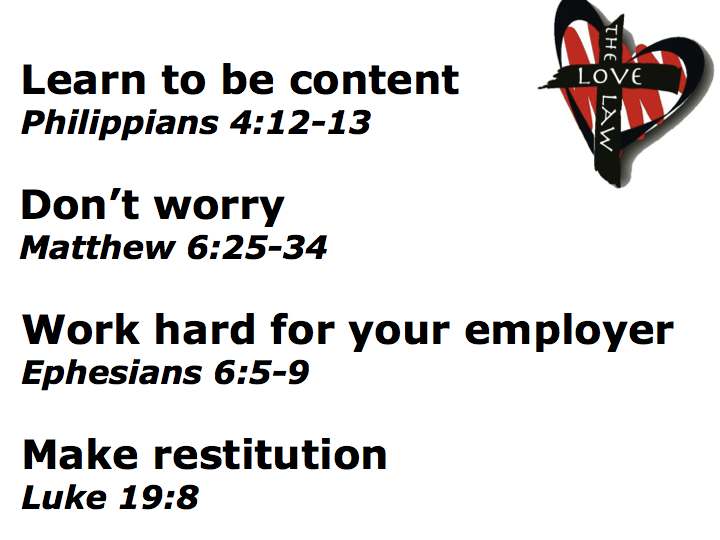
So here are 4 ways to avoid becoming an thief:

  1. Learn to be content with what you have—Philippians 4:12-13.
  2. Don’t let worry rule your life—Matthew 6:25-34.
  3. Work hard for your employer or employees—Ephesians 6:5-9.
  4. If you have stolen, make full restitution as quickly as possible—Luke 19:8.

Every one of the Ten Commandments are broken in our hearts long before they are worked out in our bodies. So listen to what the Holy Spirit is saying to you to make sure you are not a sneaky thief!

If you have missed any of the messages in our series The Love In The Law, you can find them all by clicking here.

Links & Quotes

link quote

Some good reading from today…

“The book of Romans in a sentence: Because you were condemned (1:1 – 3:20) and God justified you (3:21-5:21), empowered you to be distinct (6-8), and explained His plan to keep His promises to Abraham (9-11), it is right for you to submit your life for Divine inspection (12:1-2), and live the life of a real believer (12:2-16:27).” —Dr. Randall D. Smith

[INFOGRAPHIC] I love the Bible study tools from The Overview Bible Project! Check out this one on the main characters in Genesis.

A great story about a marathon runner who intentionally loses the race.

The co-founder of The Weather Channel blasts the “global warming” crowd.

“It is too bad that anything so obvious should need to be said at this late date, but from all appearances, we Christians have about forgotten the lesson so carefully taught by Paul: God’s servants are not to be competitors, but co-workers.” —A.W. Tozer

“The truth is that evil is not a real thing at all, like God. It is simply good spoiled. That is why I say there can be good without evil, but no evil without good. You know what the biologists mean by a parasite—an animal that lives on another animal. Evil is a parasite. It is there only because good is there for it to spoil and confuse.” —C.S. Lewis

“Love, in the Christian sense, does not mean an emotion. It is a state not of the feelings but of the will; that state of the will which we have naturally about ourselves, and must learn to have about other people.” —C.S. Lewis

“In our time we have all kinds of status symbols in the Christian church—membership, attendance, pastoral staff, missionary offerings. But there is only one status symbol that should make a Christian congregation genuinely glad. That is to know that our Lord is present, walking in our midst!” —A.W. Tozer

Don’t Misuse God’s Name

Representing God's nameYou’ve heard the old nursery rhyme: Sticks and stones may break my bones but words will never hurt me. We all know this isn’t true: words do hurt, and names that people call us may leave lasting wounds.

Words and names are important to God. God used His word to create the universe (God said, “Let there by light”); Jesus was called The Word (see John 1:1); God has named people and even renamed them to reflect their character or destiny.

The most important name of all is God’s own name, so the Third Commandment says, “You shall not misuse the name of the LORD your God…” (Exodus 20:7). How can we misuse God’s name? There are five ways—

(1) As emptiness or nothingness

  • Are our words empty? Do we use filler phrases like “Oh my God!” that neither talk to Jehovah or about Jehovah? We shouldn’t use God’s name unless we’re talking to Him or about Him in a respectful way.

(2) In vanity

  • In reality this means calling ourselves a Christian, but speaking in an un-Christlike way.
  • “Giving God a ‘bad name’ might diminish or demolish people’s belief, respect, and awe for God, a tragedy for a world that needs holiness. … It is a major responsibility to represent God; one which should not be taken lightly.” —Dr. Laura Schlessinger

(3) Being insincere

  • Are our promises empty, or is our word our bond? If we have to use phrases like “I swear to God that I will…” then that means we cannot be trusted on our own merits. When we claim to be Christians but cannot be trusted, we undermine the trustworthiness of God in the minds of other people.
  • “The godly man, therefore, will make promises cautiously but keep them conscientiously once they are made, knowing that irresponsibility and unreliability here are great and grievous sins.” —J.I. Packer

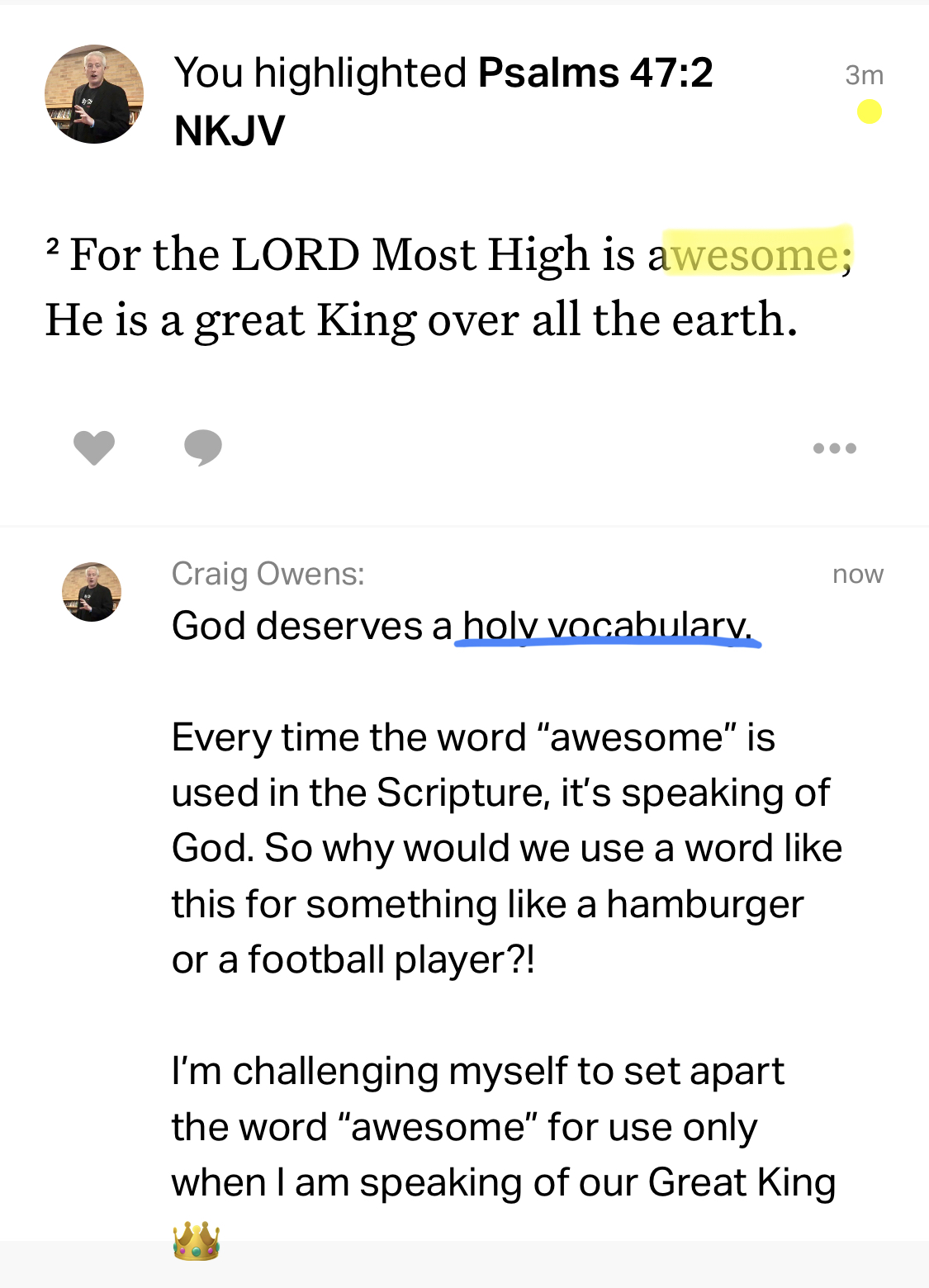
(4) Having an unholy vocabulary

  • Holy means something set apart for a special use. Perhaps there are words we use to describe God that we are also using for lesser things. It might be good to listen to how the Holy Spirit would challenge us to have a unique vocabulary to talk to or about our unique God.

(5) Worthlessness of conduct

  • As the cliche goes, “What you do speaks so loudly that I cannot hear what you are saying.” So we need to make sure that we both talk like Jesus talked and live like Jesus lived.

Anything less than these standards just may be misusing God’s holy name and character by misrepresenting Him or giving Him a “bad name.” What do you think?

If you have missed any of the messages in our series The Love In The Law, you can find them all by clicking here.

Links & Quotes

link quote

Some good reading & watching from this weekend…

“A leader’s role is to raise people’s aspirations for what they can become and to release their energies so they will try to get there.” —David Gergen

A powerful reminder about noticing the overlooked people: My Grocery Store Stripper.

This is so repulsive! 10 quotes that reveal how profitable abortion is.

I am a big believer in studying history. Here are 7 ways Christian history benefits you.

A great post for married couples and parents from Pastor Dave Barringer—Too Busy: The Art Of Abusing With Neglect.

I love this life-affirming message in OneRepublic’s song I Lived

12 Quotes From “The Love Of God”

The Love Of GodOswald Chambers has a way of writing about biblical truths that satisfy both the head and the heart. You can read my review of Chambers’ book The Love Of God by clicking here. Below are just a few of the many, many quotes I highlighted in this amazing book.

“In the future, when trial and difficulties await you, do not be fearful, whatever and whoever you may lose faith in, let not this faith slip from you—God is Love; whisper it not only to your heart in its hour of darkness, but here in your corner of God’s earth and man’s great city, live in the belief of it; preach it by your sweetened, chastened, happy life; sing it in consecrated moments of peaceful joy, sing until the world around you ‘is wrought to sympathy with hopes and fears it heeded not.’ The world does not bid you sing, but God does. Song is the sign of an unburdened heart; then sing your songs of love unbidden, ever rising higher and higher into a fuller conception of the greatest, grandest fact on the stage of Time—God is Love.”

“God did not create man as a puppet to please a despotic idea of His own, He created us out of the superabundant flow of overflowing love and goodness, He created us susceptible of all the blessedness which He had ordained for us.”

“Drink deep and full of the love of God and you will not demand the impossible from earth’s loves, and the love of wife and child, of husband and friend, will grow holier and healthier and simpler and grander.”

“Love is difficult to define, but the working definition I would like to give is that ‘Love is the sovereign preference of my person for another person, embracing everyone and everything in that preference.’”

“The majority of us are unnoticed and unnoticeable people. If we take the extraordinary experience as a model for the Christian life, we erect a wrong standard without knowing it.” 

“God will use any number of extraordinary things to chisel the detail of His ‘lily work’ in His children. He will use people who are like hedgehogs, He will use difficult circumstances, the weather; He will use anything and everything, no matter what it is, and we shall always know when God is at work because He produces in the commonplace something that is inspiring.”

“A Christian is one in whom the indwelling Spirit of God shines out all the time.”

“Our Lord did not say to His disciples: ‘I have had a most successful time on earth, I have addressed thousands of people and been the means of their salvation; now you go and do the same kind of thing.’ He said: ‘If I then, your Lord and Master, have washed your feet; you also ought to wash one another’s feet.’ We try to get out of it by washing the feet of those who are not of our own set. We will wash the heathen’s feet, the feet in the slums; but fancy washing my brother’s feet! my wife’s! my husband’s! the feet of the minister of my church! Our Lord said one another’s feet. It is in the ordinary commonplace circumstances that the unconscious light of God is seen.”

“The reason we are going through the things we are is that God wants to know whether He can make us good bread with which to feed others. The stuff of our lives, not simply of our talk, is to be the nutriment of those who know us. … It is in the solitary life that we prove whether we are willing to be made the unadvertised life for the community to which we belong—whether we are willing to be made bread or to be simply the advertisement for bread? If we are to be made bread, then we must not be surprised if we are treated in the way Our Lord was treated.”

“For a man to lay down his life is not to lay it down in a sudden crisis, such as death, but to lay it down in deliberate expenditure as one would lay out a pound note. Not—‘Here it is, take it out in one huge martyrdom and be done with it.’ It is a continual substitution whereby we realize that we have another day to spend out for Jesus Christ, another opportunity to prove ourselves His friends.”

“The test of spiritual life is the power to descend; if we have power to rise only, there is something wrong. … Spiritual selfishness makes us want to stay on the mount; we feel so good, as if we could do anything—talk like angels and live like angels, if only we could stay there. But there must be the power to descend; the mountain is not the place for us to live, we were built for the valleys. … We never live for the glory of God on the mount, we see His glory there, but we do not live for His glory there; it is in the valley that we live for the glory of God. … The reason we have to live in the valley is that the majority of people live there, and if we are to be of use to God in the world we must be useful from God’s standpoint, not from our own standpoint or the standpoint of other people. … As disciples of Jesus we have to learn not only what Our Lord is like on the Mount of Transfiguration, but what He is like in the valley of humiliation, where everything is giving the lie to His power, where the disciples are powerless, and where He is not doing anything.”

“We shall find that the spheres God brings us into are not meant to teach us something but to make us something.”

Links & Quotes

link quote

Some good reading & watching from today…

[VIDEO] John Maxwell on the importance of follow-through.

Tim Dilena’s post—Pay For The Salsa & Chips—is a great reminder of the power of honesty.

Quite intriguing: Are We Evolving Stupidity?

Another reason to stand-up and speak out for the true definition of marriage—Incest: Another Disordered Image Of Worship.

Soul love is the soul of all love. To pet and pamper and indulge your child, as if this world was all he had to look forward to, and this life the only season for happiness—to do this is not true love, but cruelty. It is treating him like some beast of the earth, which has but only one world to look to, and nothing after death. It is hiding from him that grand truth, which he ought to be made to learn from his very infancy,—that the chief end of his life is the salvation of his soul.” Read more from J.C. Ryle in True Love For The Child’s Soul.

Charles Spurgeon: No One Can Believe For Me.

“Pain is terrible, but surely you need not have fear as well? Can you not see death as the friend and deliverer? It means stripping off that body which is tormenting you: like taking off a hair-shirt or getting out of a dungeon. What is there to be afraid of? You have long attempted (and none of us does more) a Christian life. Your sins are confessed and absolved. Has this world been so kind to you that you should leave it with regret? There are better things ahead than any we leave behind. Remember, though we struggle against things because we are afraid of them, it is often the other way round—we get afraid because we struggle. Are you struggling, resisting? Don’t you think Our Lord says to you ‘Peace, child, peace. Relax. Let go. Underneath are the everlasting arms. Let go, I will catch you. Do you trust Me so little?’” —C.S. Lewis

[VIDEO] Sesame Street parodies Star Wars to teach us about self-control.

Links & Quotes

link quote

Some good reading & watching from today…

“The true measure of ministry effectiveness is the extent to which we are able to lead God’s people into greater love for Him and His Kingdom.” —T.M. Moore

“Tragedy is that our attention centers on what people are not, rather than on what they are and who they might become.” —Brennan Manning

“The most terrible poverty is loneliness and the feeling of being unloved.” —Mother Teresa

“Holiness is not the luxury of the few; it is a simple duty, for you and for me.” —Mother Teresa

The devil does not need to bother about us as long as we remain ignorant of the way God has made us and refuse to discipline ourselves; inattention and our own slovenliness will soon run away with every power we have.” —Oswald Chambers 

“There is something which we can do which God does. He does good to all His creatures, and we can do good also. He bears witness to His Son Jesus, and we can bear witness too.” —Charles Spurgeon

[VIDEO] Ken Davis always cracks me up. Check out this clip Arm Vs. Airbag.

Why do people get so annoyed over anything that looks “religious” to them. For people who claim God doesn’t exist, atheists get awfully mad at Him!

Links & Quotes

link quote

Some good reading from today…

“The hunger for love is much more difficult to remove than the hunger for bread.” —Mother Teresa

A challenging word from John Stonestreet: The Pornification Of The Church.

“Here is no need to expound fuller what the Christian Scripture teaches on this point of feelings. It subjects the whole mind to God’s governance and assistance, and all the passions unto it, in such manner that they are all made to serve the increase of justice.” —Augustine

“…For we are not under law in Christ’s church, but under grace, and grace will prompt you to do more than law might suggest….” —Charles Spurgeon

A great story about Pittsburg Pirate star Andrew McCutchen and his parents.

Ryan Anderson has 7 reasons why the current homosexual “marriage” debate is nothing like the debate on interracial marriage.

Apparently we cannot win: the change from CFCs to HFCs in our spray cans is repairing the ozone but raising the earth’s temperature. Oh, wait a minute: this isn’t settled science, but merely someone’s “model” based on “what the data suggests.” Sounds a lot like faith to me!

15 Tips To Give Healthy Praise To Our Kids

12 Huge MistakesOne of the parental mistakes Tim Elmore highlights in his newest book 12 Huge Mistakes Parents Can Avoid is praising the wrong things. He writes—

“We live in a world of hyperbole. We think we must exaggerate to be heard. So we use words like awesome or excellent when our kids have done merely what is expected of them. We offer huge praise for minimal effort. As our children grow older, matching the affirmation with the effort becomes especially important. Not too little, but not too much. This is how trust is built, and it’s why kids continue to listen to their parents during teen years.” 

Dr. Elmore is not saying that we shouldn’t praise our kids, but that we should do it more intelligently, by making sure we are praising the right things. He offers this list for healthy, profitable praise for kids:

  1. Praise them for effort, not for their intelligence or beauty. 
  2. Reward character virtues (such as honesty) more than performance. 
  3. Teach them to enjoy the process as much as the product. 
  4. Make sure the size and content of your praise matches their effort. 
  5. Be sure your affirmation is sincere, thoughtful, and genuine. 
  6. Empower them by helping them own a personal set of values to live by. 
  7. Identify and affirm unique features that differentiate your kids. 
  8. Provide experiences for them to discover and build their primary strengths. 
  9. Furnish a platform for them to serve others using their strengths and gifts. 
  10. Tell them you enjoy watching them perform regardless of the outcome. 
  11. The younger they are, the more immediate your feedback for them must be. 
  12. Equip them to take risks and learned that failure is okay as long as they tried. 
  13. Build a secure home for them but one that does not revolve around them. 
  14. When in doubt, always praise what is in their control. 
  15. Clarify your unconditional love for them regardless of their performance.

If you would like to read my full book review of 12 Huge Mistakes, click here.

To read some other quotes I shared from this book, click here.

Poetry Saturday—The Lay Of The Last Minstrel


NGS68272In peace, Love tunes the shepherd’s reed; 
In war, he mounts the warrior’s steed; 
In halls, in gay attire is seen; 
In hamlets, dances on the green. 
Love rules the court, the camp, the grove, 
And men below, and saints above; 
For love is heaven, and heaven is love. … 

But earthly spirit could not tell 
The heart of them that loved so well; 
True love’s the gift which God has given 
To man alone beneath the heaven. 
It is not Fantasy’s hot fire, 
Whose wishes, soon as granted, fly; 
It liveth not in fierce desire, 
With dead desire it doth not die: 
It is the secret sympathy, 
The silver link, the silken tie, 
Which heart to heart, and mind to mind, 
In body and in soul can bind.

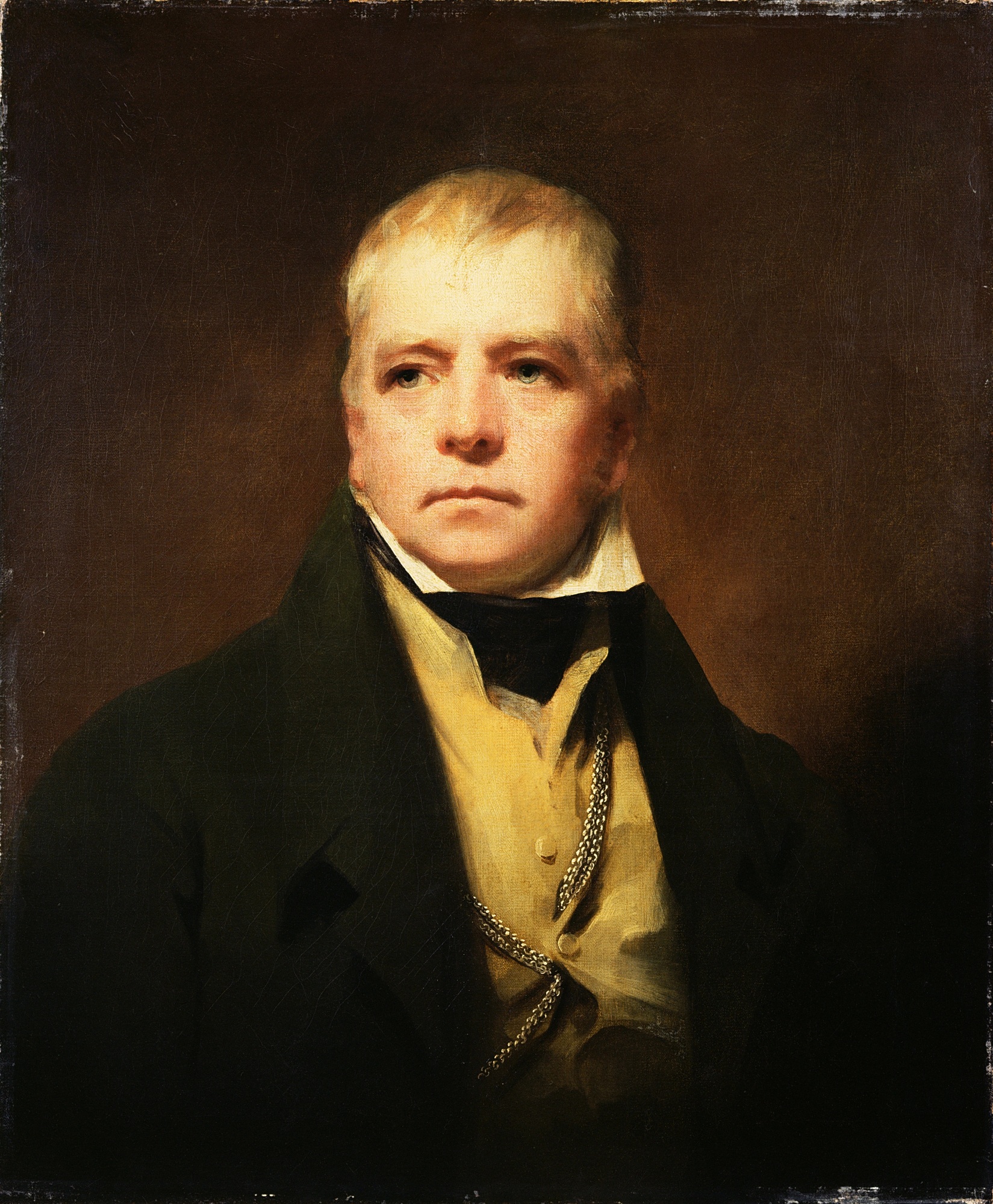
—Sir Walter Scott