Links & Quotes

If leaders want to get the best ideas and implement the best strategies, they must invite everyone on their team to share from their unique perspective. This is the only way to get the whole picture. Check out this full conversation from The Craig and Greg Show.

I have a lot of new video content on my YouTube channel every week. Please check it out and subscribe so you don’t miss anything.

T.M. Moore writes, “We can know that we love our neighbors when, like Jesus, we go seeking them, in order to touch them with His love.”

This last week marked the 187th anniversary of the first time “O.K.” was first published as an abbreviation. The word’s origin is an interesting story, with some calling it “one of the most ubiquitous terms in the world, and certainly one of America’s greatest lingual exports.”

“Meekness and gentleness are two of the ornaments of our faith. I would that some professed Christians would understand that unholy contentiousness is not after the mind of Christ, it is not according to that gracious command, ‘Take My yoke upon you, and learn of Me; for I am meek and lowly in heart and ye shall find rest unto your souls.’ No, the Christian must be willing to suffer wrongfully, and to bear it in patience; he is never to be one who renders evil for evil, or railing for railing.” —Charles Spurgeon, commenting on Titus 3:2

“Then, since according to the Lord’s warnings the blood of so many will be sought for at the hands of their shepherds, careful watch must be kept, that is, the Word of the Lord must be often preached, and preached by the shepherds, by the Church’s bishops and teachers, that none may perish through ignorance; for he perishes through lack of heed, his blood will be on his own head.” —Columbanus, Letter to Pope Boniface 

“Knowledge will forever govern ignorance.” —James Madison 

“A good friend is like a four-leaf clover, hard to find and lucky to have.” —Irish proverb 

“When a man is getting better he understands more and more clearly the evil that is still left in him. When a man is getting worse he understands his own badness less and less. A moderately bad man knows he is not very good: a thoroughly bad man thinks he is all right. This is common sense, really. You understand sleep when you are awake, not while you are sleeping. You can see mistakes in arithmetic when your mind is working properly: while you are making them you cannot see them. You can understand the nature of drunkenness when you are sober, not when you are drunk. Good people know about both good and evil: bad people do not know about either.” —C.S. Lewis, Mere Christianity 

“If you want to win the day, you’ve got to flip the script. How? The Bible is a good starting point. Scripture is more than our script; it’s our script-cure. And that’s more than a play on words. Scripture confronts the false identities and false narratives perpetrated by the Father of Lies. It reveals the heavenly Father’s metanarrative and the unique role that each one of us plays in it.” —Mark Batterson, Win The Day 

What Kind Of Lover Are You?

Listen to the podcast of this post by clicking on the player below, and you can also subscribe on AppleSpotify, or Audible. 

In Paul’s second letter to his friend Timothy, he has quite a bit to say about love—really about two kinds of love. 

For the Spirit God gave us does not make us timid, but gives us power, love and self-discipline. (2 Timothy 1:7) 

What you heard from me, keep as the pattern of sound teaching, with faith and love in Christ Jesus. (2 Timothy 1:13) 

Flee the evil desires of youth and pursue righteousness, faith, love and peace, along with those who call on the Lord out of a pure heart. (2 Timothy 2:22) 

But as he nears the end of this letter, he warns Timothy about an entirely different kind of love. The word “love” appears six times in a span of just three verses, with four of those times being words that are unique in all of the New Testament. This is his warning about the last days—

     But mark this: There will be terrible times in the last days. People will be lovers of themselves, lovers of money, boastful, proud, abusive, disobedient to their parents, ungrateful, unholy, without love, unforgiving, slanderous, without self-control, brutal, not lovers of the good, treacherous, rash, conceited, lovers of pleasure rather than lovers of God. (2 Timothy 3:1-4) 

In “the last days,” the negative characteristics of people will be driven by their misplaced love. They will be…

…lovers of themselves. This is a unique word in the New Testament meaning their only interest is self-interest. 

…lovers of money. These people are ambitious in their pursuit of more, more, more. They are covetous people. Luke uses this same word to describe some Pharisees “who loved money” (Luke 16:14). Literally translated, it means lovers of silver. 

…without love. People so self-focused on their pursuits that the needs of others around them scarcely enter their thoughts, even if those people are their own family members.  

…not lovers of the good. Another unique word that goes beyond simply lacking love, but being antagonistic toward people who are attempting to be loving and kind to others. 

…lovers of pleasure. This unique word means a friend of hedonism. Their pursuit is not just money, but anything that will scratch their itch. This mindset never considers whether their pursuit is healthy, worthwhile, or even injurious to others. 

…[not] lovers of God. This final unique word that Paul uses describes people who have decided to pursue anything except God. Or as the psalmist might say, there is no room for God in any of their thoughts (see Psalm 10:4). 

This is why Solomon told us to guard our heart, or to pay attention to what our heart longs for (Proverbs 4:23), and why Jesus told us to monitor our words that are revealing the pursuits that are truly in our heart (Matthew 12:34). 

Jesus identified the fulfillment of all the requirements of the law as loving God with all our heart, soul, mind, and strength, and then loving our neighbor with the same care that we would love ourselves (see Luke 10:25-37). 

What kind of lover are you? 

Are you pursuing God or are you pursuing your own pleasure? 

You could gauge your love by asking these questions: 

  • What or whom do I think about the most? 
  • What do I talk about the most? 
  • What do I do more than anything else? 

We are, as Paul told Timothy, living in “the last days,” with the imminent return of Jesus. Honestly answering those three questions will help you know whether you will hear Jesus say, “Well done! Enter into your Master’s happiness” or, “Depart from Me. I never knew you.” 

►► Would you please prayerfully consider supporting this ministry? My Patreon supporters get behind-the-scenes access to exclusive materials. ◀︎◀︎

Links & Quotes

Comedian Brian Regan has a great bit about the “Me Monster.” Don’t be that person! John Maxwell wrote, “The problem is that interrupting translates to ‘What I want to say is more important than what you are saying.’” We probably can all do better at this.

I have a lot of new video content on my YouTube channel every week. Please check it out and subscribe so you don’t miss anything.

“To bear the burdens of others we need to be careful to maintain an attitude of humility, coupled with a readiness to serve, according to the gifts and opportunities God gives us at any time (Romans 12:3-8). Even if it’s true that our fellow believers are acting like children, or like people who just need to ‘grow up’ in their faith, our responsibility is to humble ourselves and be ready to show them the love of Jesus however we may (Romans 14:1-18).” —T.M. Moore 

“A cosmos one day being rebuked by a pessimist replied, ‘How can you who revile me consent to speak by my machinery? Permit me to reduce you to nothingness and then we will discuss the matter.’ Moral: You should not look a gift universe in the mouth.” —G.K. Chesterton [see Job 38:1-4]

“Moral principles do not depend on a majority vote. Wrong is wrong, even if everybody is wrong. Right is right, even if nobody is right.” —Fulton Sheen 

Loving, Truthful, And Calm

Listen to the podcast of this post by clicking on the player below, and you can also subscribe on AppleSpotify, or Audible. 

Greg and I took some time to discuss some of the best traits we’ve experienced in some memorable leaders in our work careers. Three traits are linked together in a powerful combination. 

Check out the full conversation we had on Memorable Leaders. 

You may also want to check out a blog post and video I shared previously called “Speak the Truth in Love.” 

And speaking of leadership models, my book Shepherd Leadership calls us back to the leadership model that is most consistently used throughout the Bible. 

►► Would you please prayerfully consider supporting this ministry? My Patreon supporters get behind-the-scenes access to exclusive materials. ◀︎◀︎

The Influence Of Jesus

Listen to the podcast of this post by clicking on the player below, and you can also subscribe on AppleSpotify, or Audible. 

Leadership is influence. 

Influence doesn’t try to get a following, but people naturally follow a leader who quietly, consistently, and effectively shows up for them. 

Jesus saw the needs of people and was moved by compassion to relieve their distress. Peter said He simply went around doing good (Acts 10:38). He gave value to the overlooked, He touched the so-called untouchable, He embraced the rejected. 

Jesus said, “I didn’t come to be served but to serve and to give My life away” (Mark 10:45).

This commentary from the folks at He Gets Us is spot-on:

   So often our idea of leadership is about asserting dominance and wielding authority; Jesus on the other hand revealed a radically different approach to greatness. 

   Jesus chose a path that seemed almost counterintuitive, especially to many of those around Him. He showed that true influence doesn’t come from throwing your weight around or flexing your authority—it comes from genuine empathy, authentic care, and intentionally seeing people and going toward them. 

   Instead of building a platform or demanding attention, Jesus moved quietly through communities, transforming lives through genuine relationships. 

   He didn’t network with the powerful or chase prestigious connections. 

   He sat with the overlooked. 

   He listened to the ignored. 

   He gave dignity to those society had dismissed. 

   Jesus’ approach to influence and greatness wasn’t about commanding rooms or dominating conversations—it was about creating spaces where others felt seen, heard, and valued, demonstrating great love in those moments. 

   When He had opportunities to grasp power, He chose instead to empower others. 

   His visible leadership wasn’t built on titles or positions, but on authentic relationships He cultivated and the lives He transformed through His genuine care and concern. (‘What is Greatness?’)

True influence loves and serves others like Jesus does. Don’t try to grab the top spot, but grab a towel and serve others. 

I would also humbly recommend that you check out my book Shepherd Leadership, where I explore the leadership of Jesus in greater depth.

►► Would you please prayerfully consider supporting this ministry? My Patreon supporters get behind-the-scenes access to exclusive materials. ◀︎◀︎

‘The Depth Of My Love For You’

Listen to the podcast of this post by clicking on the player below, and you can also subscribe on AppleSpotify, or Audible. 

The apostle Paul’s letters to the church in Corinth show two things: a lot of correction and a lot of love. In fact, it’s in the middle of some correction and redirection about the misuse of spiritual gifts that Paul gives us the quintessential definition of love in 1 Corinthians 13. 

Paul also wrote, “For I wrote you out of great distress and anguish of heart and with many tears, not to grieve you but to let you know the depth of my love for you” (2 Corinthians 2:4). 

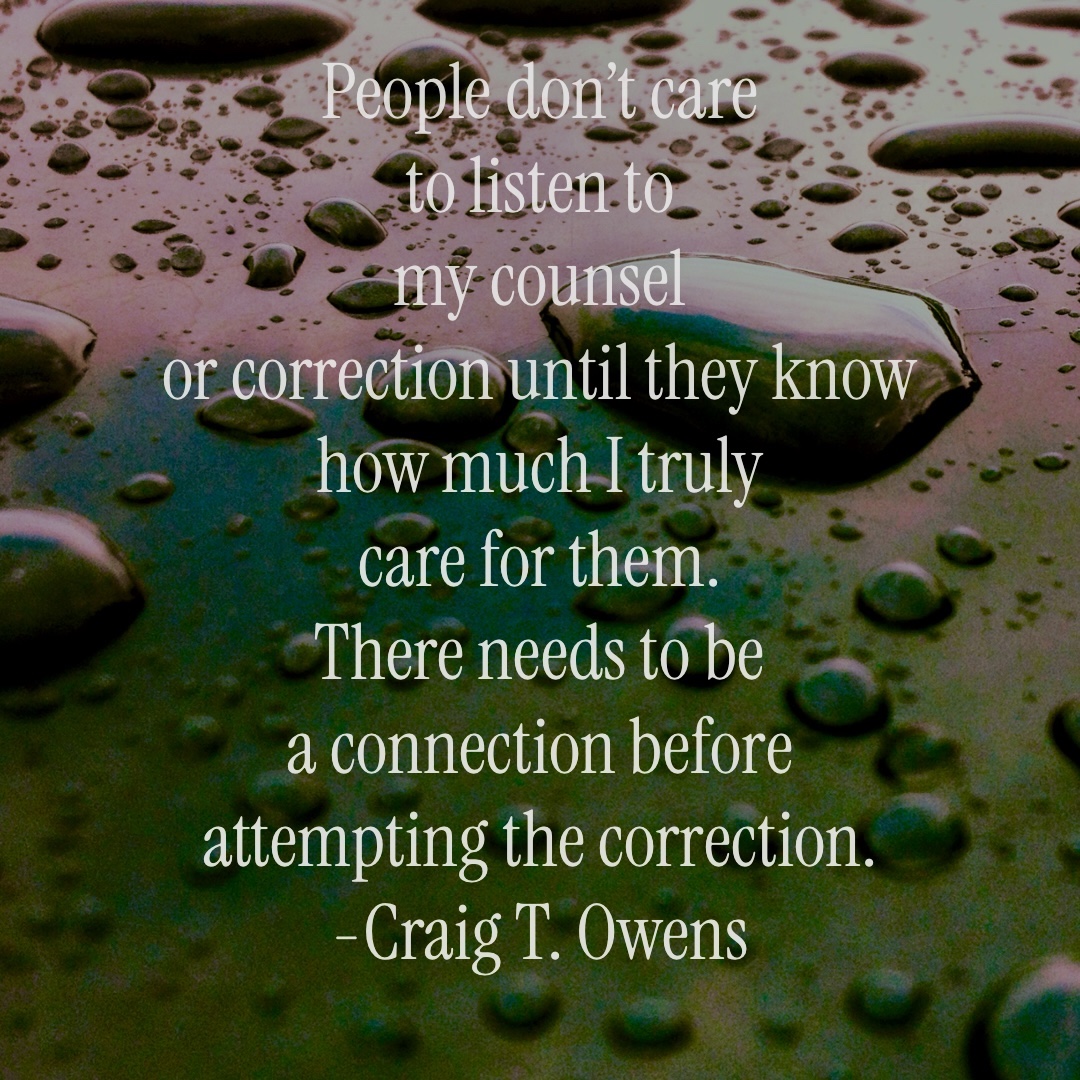
The truth does need to be spoken to wayward sheep, but it has to be birthed in love and spoken in love or else it will alienate more than help. People don’t care to listen to my counsel or correction until they know how much I truly care for them. 

There needs to be a connection before attempting the correction. 

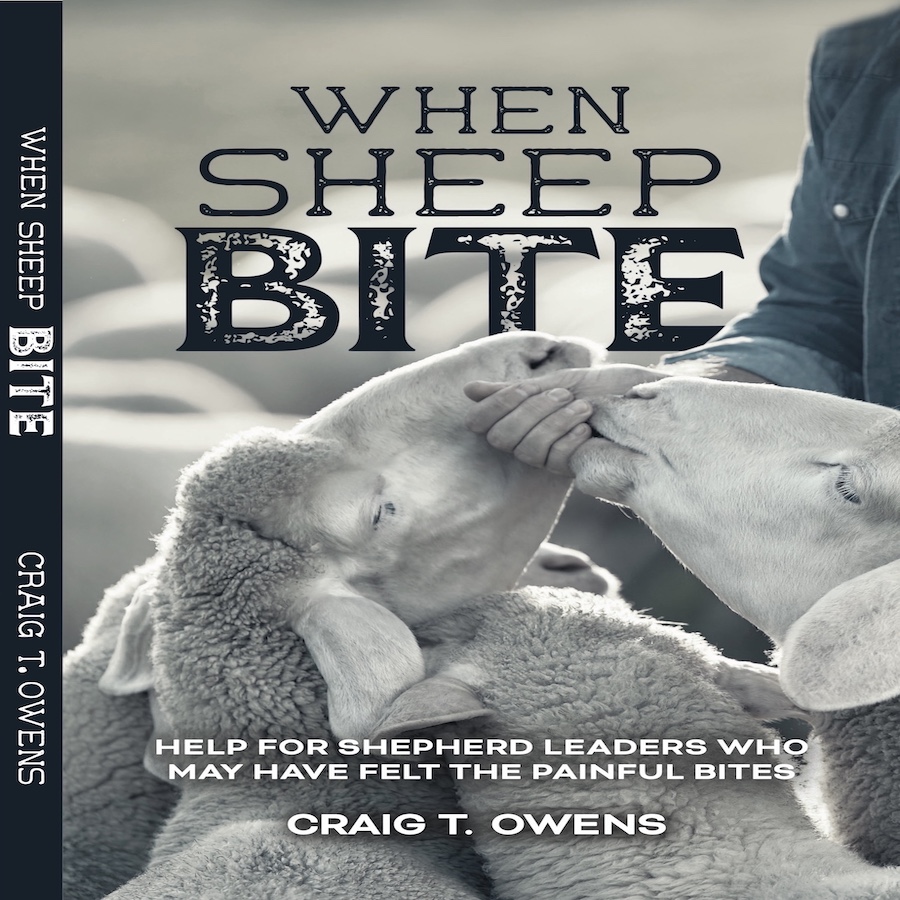
I have an entire chapter in my book When Sheep Bite on this topic. Here’s an excerpt—

     It is possible that our grace-filled response to our biting sheep may make the difference to their eternal home. The apostle Paul told Timothy that those sheep who were out of line were trapped by the devil, and unless Timothy did something those sheep may never break free—

     And the Lord’s servant must not be quarrelsome but must be kind to everyone, able to teach, not resentful. Opponents must be gently instructed, in the hope that God will grant them repentance leading them to a knowledge of the truth, and that they will come to their senses and escape from the trap of the devil, who has taken them captive to do his will. (2 Timothy 2:24-26) 

     For some reason many shepherd leaders have made “confrontation” a dirty word, or have sullied its usefulness by confronting in an ungodly way. One thing that will help us handle confrontation the right way is to remember why we confront: The goal of confrontation is restoration, not destruction! 

     There is a cliché that says, “Once bitten, twice shy.” As I mentioned earlier, after we’ve been bitten we need to allow the Holy Spirit to search our hearts to point out anything in us that may have contributed to such a painful outburst from that sheep. Perhaps after doing all of that you attempted to confront a sheep and it didn’t go so well. As a result, you are now a bit shy to confront another wayward sheep. Dick Brogden wrote:

     “Experience so easily leads us to cynicism. Information too easily leads to pain. Leadership often makes us jaded because we’ve seen so much junk, all the effects of broken people breaking people. … A strong heart determines that it will stay soft, that it will absorb hurt, disappointment, and reality, and yet believe that God can redeem people and circumstances.” 

     Handled correctly, confrontation can lead to restoration, a deeper intimacy, and newfound maturity. Handled incorrectly, and, well, let’s just say it can get very ugly!

     I imagine we have all heard stories of the fallout from confrontation in another pasture, or perhaps we know the painful consequences in our own pastures. But let’s try for a moment to put those past experiences or secondhand stories out of our minds and take a fresh look at how to handle confrontation. 

     Samuel was going to be sent by God to confront King Saul about the sin he had committed. Look at this passage: “Then the word of the Lord came to Samuel: ‘I am grieved that I have made Saul king, because he has turned away from Me and has not carried out My instructions.’ Samuel was troubled, and he cried out to the Lord all that night” (1 Samuel 15:10-11). 

     Did you catch how Samuel responded? He cried out to the Lord all that night. 

     Perhaps if we, as godly under-shepherds, cried before we confronted the results might be more healthy. Billy Graham noted, “Tears shed for self are tears of weakness, but tears shed for others are a sign of strength.” (from Chapter 5 ‘Cry Before You Confront’) 

If you have some difficult but necessary words to speak to someone, take time to cry before you confront. Ask the Holy Spirit to reveal to you the most loving way to handle this situation. Cry before you confront, and may your tears soften your heart to speak truthful words saturated in your love for God and your love for this wayward saint. 

Please pick up a copy of When Sheep Bite to learn more biblical strategies for handling biting sheep and for healing from biting sheep. If I can be of help to you, please get in touch with me.

P.S. You may also be interested in a whole series about growing and showing our love called Loving the Unlovable.

►► Would you please prayerfully consider supporting this ministry? My Patreon supporters get behind-the-scenes access to exclusive materials. ◀︎◀︎

Links & Quotes

People need to know how much you love them before they will listen to any correction you may need to give them. “Real friends hurt each other.” Check out the full sermon here.

I have a lot of new video content on my YouTube channel every week. Please check it out and subscribe so you don’t miss anything.

David Mathis shares a faith-building message of confidence during times of crisis. He takes his text from Psalm 46—“Whatever trouble comes, Psalm 46 tells us, with its first word, where to turn. Not to a change in circumstances. Not to our best efforts to fix the problem. Not to our anxious strategies to avoid pain and loss. But rather, turn to God.”

“There is not a facet of our lives, not an interest or occupation, not a nook or cranny of the cosmos, where God does not intend that His glory should shine forth and be known. Indeed, even now He is showing His glory in created things, and even in much of the culture that human beings make to meet their own needs (Psalm 19:1-4; Psalm 68:18). God is manifesting His glory; it is there to be noted and pondered. The task of those entrusted with the Kingdom economy is to serve as docents of the glory of God, bringing His glory to light and making Him known for all to see in these last days. … Our mission in these last days is to glorify God by living out the reality of His indwelling Presence among the people to whom He sends us day by day (cf. Micah 4:1-8). In all our relationships, cultural activities, conversations, families, vocations, and diversions, what will it look like, and how will it appear to others when the glorious Presence of God is being refracted through us?” —T.M. Moore 

“The resurrection of Jesus from the dead was the one unvarying refrain of the apostles. This chapter [1 Corinthians 15] is the fullest discussion of it in the New Testament. It is one of the most significant and grandest chapters in the Bible because of the meaning it gives to human life. … The resurrection of Jesus from the dead is the one most important and most established fact in all history. And the story of it has come down to us through the centuries, beautifying human life with the halo of immortality; making us feel sure that because He lives again we too shall live; making our hearts thrill with the thought that we are immortal, that we have begun an existence that shall never end; that nothing can harm us; that death is merely an incident in passing from one phase of existence to another; that wether here or there we are His, doing the thing He has for us to do; that millions of ages after the sun has grown cold, we ourselves shall still be young in the eternities of God.” —Dr. Henry Halley

Would you like to get better sleep and lower your stress levels? Check this out: “If you share a bed with your sweetie, consider incorporating this step into your nighttime routine if you aren’t already: a snuggle sesh…. A study found that couples who cuddled prior to drifting off experienced less stress and more feelings of security in the relationship.”

“The Bible tells us to love our neighbours, and also to love our enemies; probably because they are generally the same people.” —G.K. Chesterton 

John Piper is asked an interesting question from Ephesians 6:12—are our adversaries merely flesh-and-blood humans or are demonic forces at work? “Flesh and blood apart from Christ is always under the sway of the spirit of the age, and it’s always under the sway of the prince of the power of the air, and it’s always acting out of its own bodily, mental desires. Therefore, in one sense, there is no separation in our warfare with human sinfulness and demonic schemes. They overlap; they’re intertwined.”

Sincere Love

Listen to the podcast of this post by clicking on the player below, and you can also subscribe on AppleSpotify, or Audible. 

The apostle Paul begins a lengthy series of commands for Christians with a simple statement: “Love must be sincere” (Romans 12:9). 

Let’s define a couple of those key words. “Love” (Greek: agape) is not self-focused but others-serving. And “sincere” (anypokritos) means genuine, not hypocritical; or as the Amplified Bible says, “a real thing.” 

Love is the motivating force for us to be able to carry out every one of the commands listed in verses 9-21 with God-honoring sincerity. 

  • Love clings to what is good and drives away evil 
  • Love is devoted to God and to its neighbor 
  • Love honors others more than itself 
  • Love is zealous 
  • Love serves God in everything 
  • Love is joyful in hope 
  • Love is patient in affliction 
  • Love is faithful in prayer 
  • Love is hospitable to its neighbors 
  • Love blesses persecutors 
  • Love rejoices with those who rejoice 
  • Love mourns with those who mourn 
  • Love finds a way to live in harmony with others 
  • Love is not proud 
  • Love never repays evil for evil 
  • Love always does what is right 
  • Love lives at peace with everyone 
  • Love doesn’t seek revenge 
  • Love serves its enemies 
  • Love overcomes evil with good 

This is a great list—a lofty, noble, Christ-glorifying list! 

How do I know if I am fulfilling these mandates? Quite simply, I could ask myself, “What does it sound like if I replace the word ‘love’ in those statements with my own name?” Do each of those statements sound accurate if I do that? 

If not, that means I need to continue to offer my body as a living sacrifice (Romans 12:1) so that the Holy Spirit can continue to sanctify me. 

►► Would you please prayerfully consider supporting this ministry? My Patreon supporters get behind-the-scenes access to exclusive materials. ◀︎◀︎

Speaking Good Words

When we speak God things TO God about God, and when we speak good things TO God about our neighbors, then we will have good things FROM God to speak to our neighbors. 

The Greek word for “bless” (eulogeo) literally means good (eu-) words (logos). We can bless people simply by saying good words to them, as well as good words about them to both God and others. 

Check out my posts Blessing the Blesser and Choice Four-Letter Words. 

And check an episode of The Podcast called Pray For Them?! 

Links & Quotes

I’ve got a great Christmas gift idea for you to give to your favorite pastor: a copy of my book When Sheep Bite. I promise you that your pastor has been bitten and that there will be more bites in the future. This book will bring about the healing and restoration that your pastor needs.

I have lots of new content every week, which you can check out on my YouTube channel.

“Good advice is always certain to be ignored, but that’s no reason not to give it.” —Agatha Christie 

Skeptics of the Bible will often point to incidents in the Scripture that they would consider genocide. How are Christians to respond to these claims? J. Warner Wallace helps us respond thoughtfully and biblically. 

Our Creator crafted a perfect environment for life to flourish on Earth. This isn’t random chance, but intelligent precision. Check out this short clip that outlines the devastation that would occur with even the smallest of changes.

“Let us remember, dear friends, that as we meet at our tables today with our sisters and brothers from distant parts, we are also invited by our elder Brother, our divine Friend, to join with Him in a higher feast, the way there sprinkled with His own blood. Let us not forget, as we are blessed with the providential bounties for the nourishment of these frail bodies that Christ the Lord summons us to a spiritual feast.” —Rev. James Cruickshanks, November 21, 1861 

“The apostle Paul explained that the power of God at work within us, the power of His indwelling Holy Spirit, is exceedingly abundantly greater than all we could ever ask or think (Ephesians 3:20). Greater for what? For a clearer vision of Christ and more intimate communion with Him (Colossians 3:1-3; 2 Corinthians 3:12-18). More continuous and abundant yields of spiritual fruit (Galatians 5.22-23). Greater consistency and effectiveness in the exercise of spiritual gifts for ministry (1 Corinthians 12:7-11). More power to bear witness for Christ, to love God and our neighbors, and to advance His rule of righteousness, peace, and joy on earth as it is in heaven (Acts 1:8; Matthew 22:34-40; Romans 14:17-18).” —T.M. Moore [check out all of the Scripture here