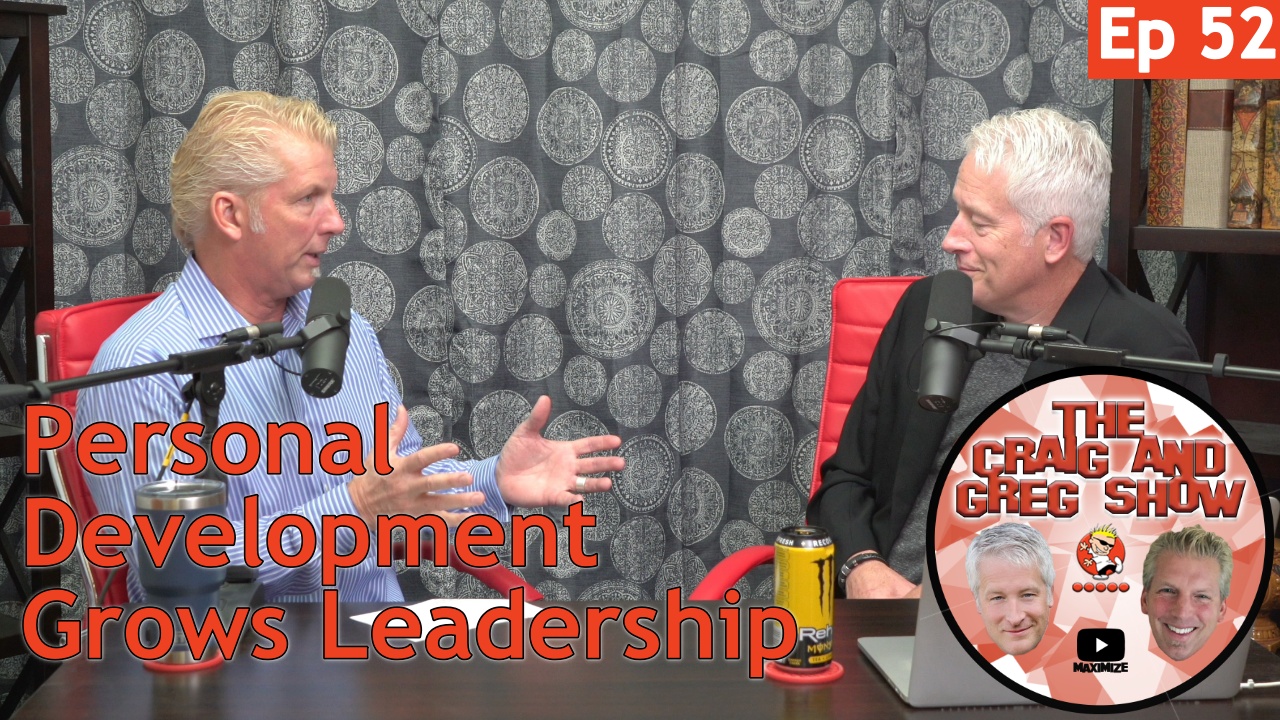
These co-hosts wanted to discuss two back-to-back chapters in my book Shepherd Leadership where I talk about the balance between leading confidently and leading humbly. Most of us are wired to lean toward one of these poles, but godly leaders are learning how to find the healthy tension between them.
In this part of our conversation, we talked about leaders who haven’t learned to add confidence to their humility.
I’ll be sharing more clips from this Leading From Alignment interview soon, so please stay tuned. Shepherd Leadership: The Metrics That Really Matter is available in print or ebook, and in audiobook through either Audible or Apple.
T. M. Moore has been presenting an outstanding series of posts in the series To Stop The Lie. In his most recent post, he wrote, “Winds of false doctrine blow across the sails of the Church continuously, bringing lies against the ship of truth to drive it off its Kingdom course. Wafting in from worldly thinking, these false doctrines downplay the Word of God, make the needs of people rather than the glory of God the focal point of religion, introduce alien practices to worship and church life, and becalm the Body of Christ into complacency. Such lies must be exposed, deconstructed, and stopped.” Check out the post from which this quote came by clicking here, and then you can follow the thread to read the other posts in this series.
“We are more fulfilled when we are involved in something bigger than ourselves.” —John Glenn
NASA has a really cool interactive map that allows you to track the flight of asteroids and comets as they orbit around the sun. You can go forward or backward in time, zoom in or out, and angle the solar system to see the flights and orbits from a different perspective.
Too many people in leadership positions think that leadership means that others do things for them. In actuality, godly leaders view their elevated position as an opportunity to serve more—to do more things for more people. I dive deeper into this in my book Shepherd Leadership: The Metrics That Really Matter.
Listen to the audio-only version of this podcast by clicking on the player below, or scroll down to watch the video.
As a leader, you will have to deal with very emotional situations from time to time. While you may not always have control over when these situations arise, you do have the ability to control your reaction to them. In this episode of The Craig and Greg Show, we discuss emotional regulation and how keeping your emotions managed can be a powerful tool for leaders.
[0:34] Well-regulated emotions are powerful.
[0:55] How do we keep emotions in check?
[2:52] Greg thinks of emotional regulation as a throttle.
[3:31] What are the messes created by unregulated emotion?
[5:59] The triggers of emotional response.
[8:35] We can’t control situations, but we can control our responses.
[9:06] The four categories of regulation.
[10:52] What should you look for to help you be more self-aware?
[13:25] Don’t give up how you feel.
[14:12] Self-awareness doesn’t come from a book, it takes practice and reflection.
[16:10] Slow down!
[16:40] Dis-regulated emotions hurt your ability to influence.
[19:05] How to improve your emotional regulation skills.
[22:48] I discuss the difference between responding and reacting.
[24:02] Greg says people are sensitive and the damage done can be lasting.
[25:27] Greg shares an insightful quote from Viktor Frankl.
[26:45] We would love to coach you if you need help with emotional regulation.
Check out this episode and subscribe on YouTube so you can watch all of the upcoming episodes. You can also listen to our podcast on Spotify and Apple.
Listen to the podcast of this post by clicking on the player below, and you can also subscribe on Apple, Spotify, or Audible.
Sometimes people say it would be nice to live a carefree, never-have-troubles life. But I think we would rob ourselves of so many lessons if we avoided all of the difficult things.
I’m not saying to seek out things that are difficult, but instead of trying to get out of those difficult things, try to see what lessons you can get out of those difficult things.
Listen to the podcast of this post by clicking on the player below, and you can also subscribe on Apple, Spotify, or Audible.
Thank you to my many friends who helped make Shepherd Leadership a reality! My first book would not have been published, and been such a blessing to so many Christian leaders, if it hadn’t been for such amazing people who helped me fund this project!
Shepherd Leadership opened the door for me to talk with so many pastors. In my conversations with them, I discovered how beat up so many of them were feeling. This began to stir in me the desire to write another book to help them out, which prompted the thought for yet another book.
The first book has the working title When Sheep Bite: How shepherds should respond to attacks and abandonment. This book will be presented in three sections:
Cultivating a shepherd’s heart toward the sheep
Handling the various bites and kicks that come from the sheep
Staying faithful to God’s call to shepherd His flock under your care
The second book has a working title of Amen Indeed! This is a book of prayers for the variety of situations that pastors face. The first part of this book lists the different scenarios that call for prayer and then presents a prayer that is rooted in biblical texts. The second part of the book is a prayer for pastors for each Sunday of the year.
But in order to help these ministry leaders, I once again need some help from you. One of the lessons I learned from my first publishing experience is that a lot of money was spent on a publisher that could have gone toward getting the book out to more people. So this time I will be self-publishing these books.
Would you consider being a sponsor of these books?
For a donation of $35, you will get an advanced, pre-release copy of the ebook. You will be reading this book before anyone has it![UPDATE: 1 sponsor at this level]
For a donation of $75, you will not only get the pre-release copy of the ebook but also an autographed copy of the pre-released print version of the book.[UPDATE: 2 sponsors at this level]
For a donation of $200 or more, you will get all of the above, AND you will have access to the opening paragraphs of each chapter as they are written, as well as some behind-the-scenes videos throughout this journey.[UPDATE: 3 sponsors at this level]
All of my supporters will receive immediate access to the audio version of the introduction to When Sheep Bite.
Listen to the audio-only version of this podcast by clicking on the player below, or scroll down to watch the video.
When we think about leadership, we often envision the people in organizationally designated leadership roles “leading down” to the people on their team. In this episode of The Craig And Greg Show, we flip the script, discussing how you can “lead up” to those above you and help your team achieve greater levels of success.
[0:30] This is part 1 of a new series of periodic episodes of how to lead at all levels of your organization.
[1:07] What is the real definition of a leader?
[1:55] You need different skills to lead up based on how receptive your leader is.
[3:31] Do you have the right tools to lead up, or do you need to fill your toolbox first?
[5:30] What happens when the leadership above you changes?
[6:35] There are two really important words when leading up: stewardship and accountability.
[7:59] “I told you so” doesn’t help you lead up, nor does withholding information from your up-leader.
[11:55] What are the best ways to talk to your up-leader?
[14:35] Everyone in the organization already knows when you have the good ideas, so you don’t have to announce it.
[15:05] How do you balance being proactive with being too aggressive?
[16:05] What lessons can you learn from working with your difficult up-leader?
[17:42] You shouldn’t try to “fix” your up-leader, but help your up-leader.
[19:34] I share how I kept my attitude in check with my difficult up-leader.
[22:00] Coaches can help you do what you’re already doing better than you’re currently doing it
Check out this episode and subscribe on YouTube so you can watch all of the upcoming episodes. You can also listen to our podcast on Spotify and Apple.
Listen to the podcast of this post by clicking on the player below, and you can also subscribe on Apple, Spotify, or Audible.
When I was younger—and so much more immature—I thought it would diminish my leadership if I ever answered, “I don’t know” to any question. As a result, I fired off very self-assured answers that probably weren’t well thought-out.
They probably weren’t very God-honoring answers either.
Once a leader is “on the record” with an answer, they will usually defend their stance even if it appears to be wrong. After all, they must save face at all costs.
A downward slide continues when a leader then uses their position of authority to say something like, “Because I’m the leader and I said so!” With this stance, people are often repelled from that leader.
How much better to to wait before giving an answer—to give up the need to always be “The Answer Man”!
And better yet, let’s not give anyone our answer, but let’s seek God for HIS answer! Not only will this be the best answer, but God will defend Himself without us having to step in to “help” Him.
With this stance, the people are not only drawn to this godly leader but they are drawn to God as well.
Consider these examples from Moses:
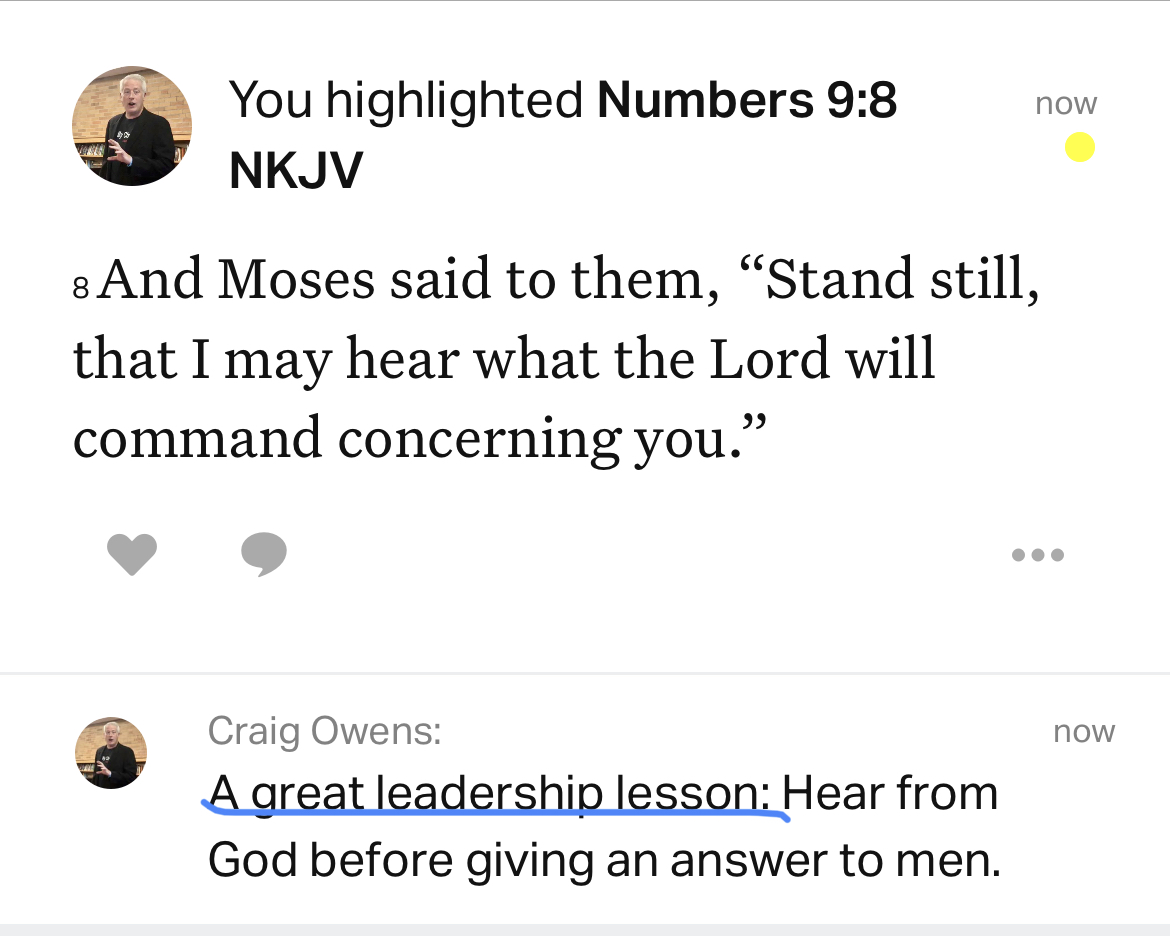
Stand still, that I may hear what the Lord will command concerning you. (Numbers 9:8)
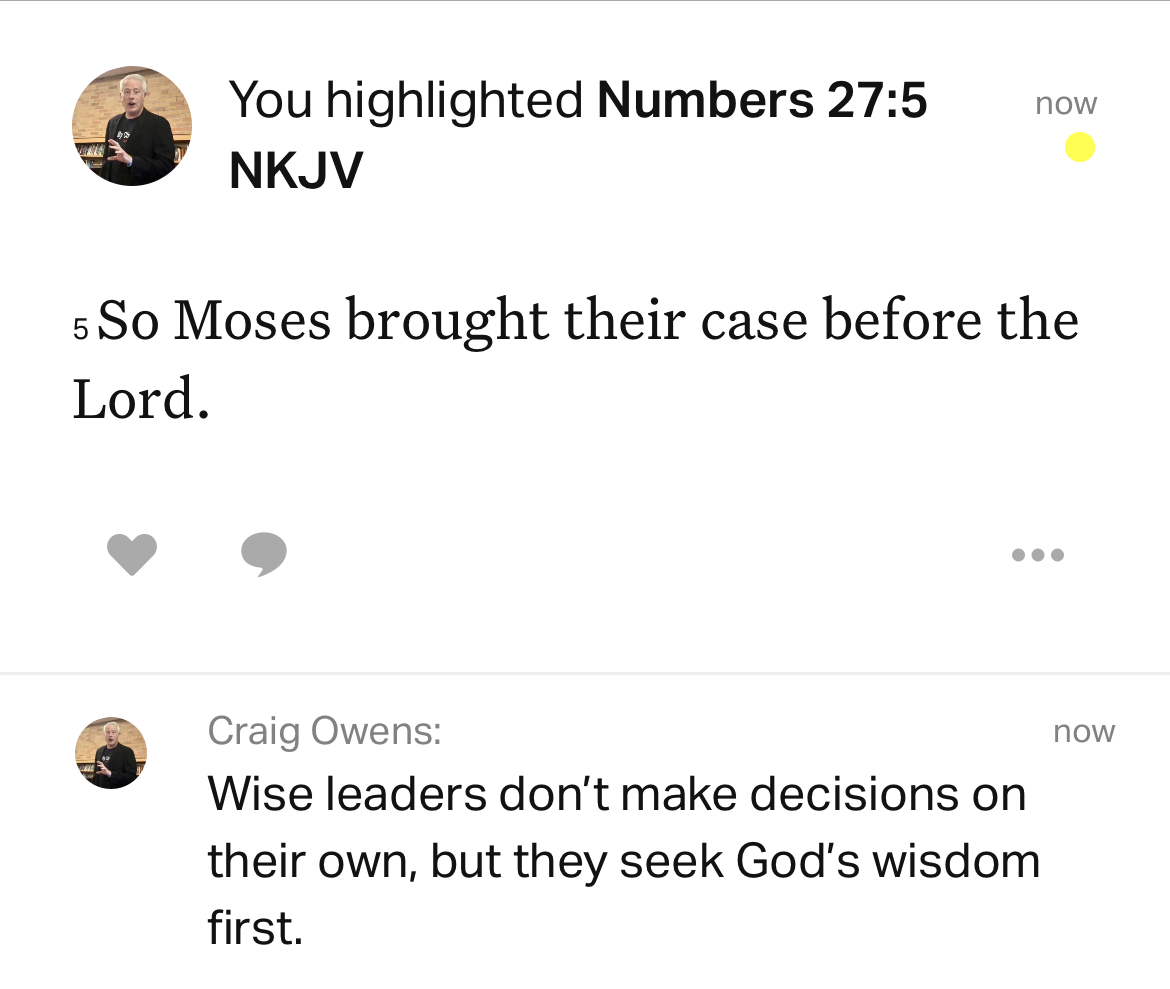
So Moses brought their case before the Lord. (Numbers 27:5)
A mark of a godly leader is one who hears from God before answering men.
So the next time someone asks your opinion, pause. Remember that it’s okay to say, “I’m not sure how to answer you on that one. I need to hear what God has to say about this.” Let’s give up the desire to be “The Answer Man” for everything. Instead we can simply announce the answer that God has given.
This is part 69 in my series on godly leadership. You can check out all of my posts in this series by clicking here.
I am really looking forward to a new series of sermons that I am launching this Sunday. This will be a once-per-month series for the remainder of the year and it’s simply called A Christian’s Mental Health. If you don’t have a home church in the west Michigan area, I would love for you to join me in person, but the sermons will also be posted on my YouTube channel.
T.M. Moore has an outstanding post called The Essence of the Lie. In one part, Moore writes, “Thus the lie claims to be the truth, but, at the same time, it insists that truth is personal, relative, pragmatic, and utilitarian. Truth, from this perspective, is not absolute, but dynamic, changeable rather than fixed. It is conditioned by circumstances of time and place. At the end of the day, people are the final arbiters of truth, and truth is whatever they find to be useful for their purposes. Ultimate truth is that which people impose on others by one or another kind of force, whether intellectual, political, or physical.” Check this one out!
Harvard University has been studying a group of individuals since 1938 to try to determine the main factors that contribute to a long and healthy life. The director and assistant director of this study just published an article that sums up what they have learned over all these years—“[If] we had to take all 85 years of the Harvard Study and boil it down to a single principle for living, one life investment that is supported by similar findings across a variety of other studies, it would be this: Good relationships keep us healthier and happier. Period. If you want to make one decision to ensure your own health and happiness, it should be to cultivate warm relationships of all kinds.”
“The battle for control and leadership of the world has always been waged most effectively at the idea level. An idea, whether right or wrong, that captures the minds of a nation’s youth will soon work its way into every area of society, especially in our multimedia age. Ideas determine consequences.” — The American Covenant
“The storms of life are no longer our point of reference when [Jesus] is our focal point.” —Dutch Sheets
John Stonestreet was intrigued by a street reporter asking, “What are men good for?” There were a lot of soft, ambiguous answers given, but John quipped, “Men are good for fathering, protecting, loving, providing, leading, fighting for what’s right with their lives if need be, and obeying, in a masculine way, the creation mandate of the God who made us male and female and declared both ‘very good.’ Was that so hard?” Amen!
There has never been anyone as perfectly healthy as Jesus. He was wise, physically healthy, spiritually strong, and emotionally resilient. My co-host Greg and I talked about this on a recent episode of our leadership podcast The Craig And Greg Show. Check out this snippet. I dive deeper into this topic in five chapters in my book Shepherd Leadership.
Fight The New Drug reports how easily sex trafficking happens in the porn industry. They also share a recent survey of how many teens are watching pornography while at school.
Listen to the audio-only version of this podcast by clicking on the player below, or scroll down to watch the video.
As leaders, it’s our responsibility to help our organization grow. As Greg and I discuss in this episode of The Craig And Greg Show, one of the best ways to do that is by focusing on your own personal development. It might seem counterintuitive, but by focusing inward we make ourselves more flexible, robust, and prepared leaders. This, in turn, enables us to better influence and encourage others in our leadership roles.
[17:21] Check out some of the benefits of personal development.
[19:15] It’s important to self-reflect on the areas where we’ve already grown.
[20:34] More benefits that come with personal development.
[23:10] Personal development is the best resume.
[25:07] I have seen that as I develop myself I am able to be a greater help for my team’s development.
[26:14] Comparing is a personal development killer.
[27:24] Progress is exciting!
[29:22] Greg and I would love to help coach you in your personal development.
Check out this episode and subscribe on YouTube so you can watch all of the upcoming episodes. You can also listen to our podcast on Spotify and Apple.



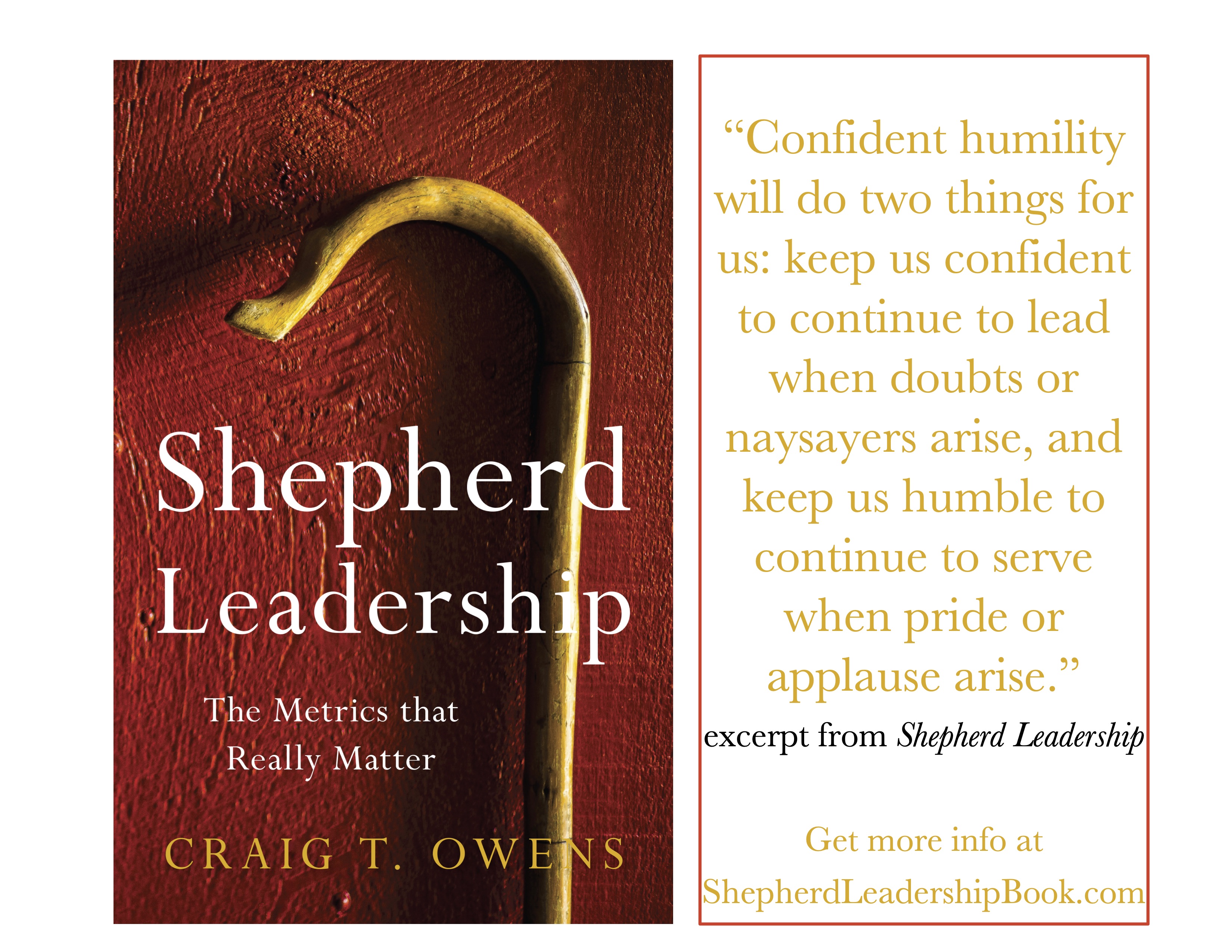 I had a great time on the Leading From Alignment podcast with Jim Wiegand and John Opalewski.