When The World Fears Christians

Listen to the podcast of this post by clicking on the player below, and you can also subscribe on AppleSpotify, or Audible. 

Here’s an interesting interaction between King Saul and David—

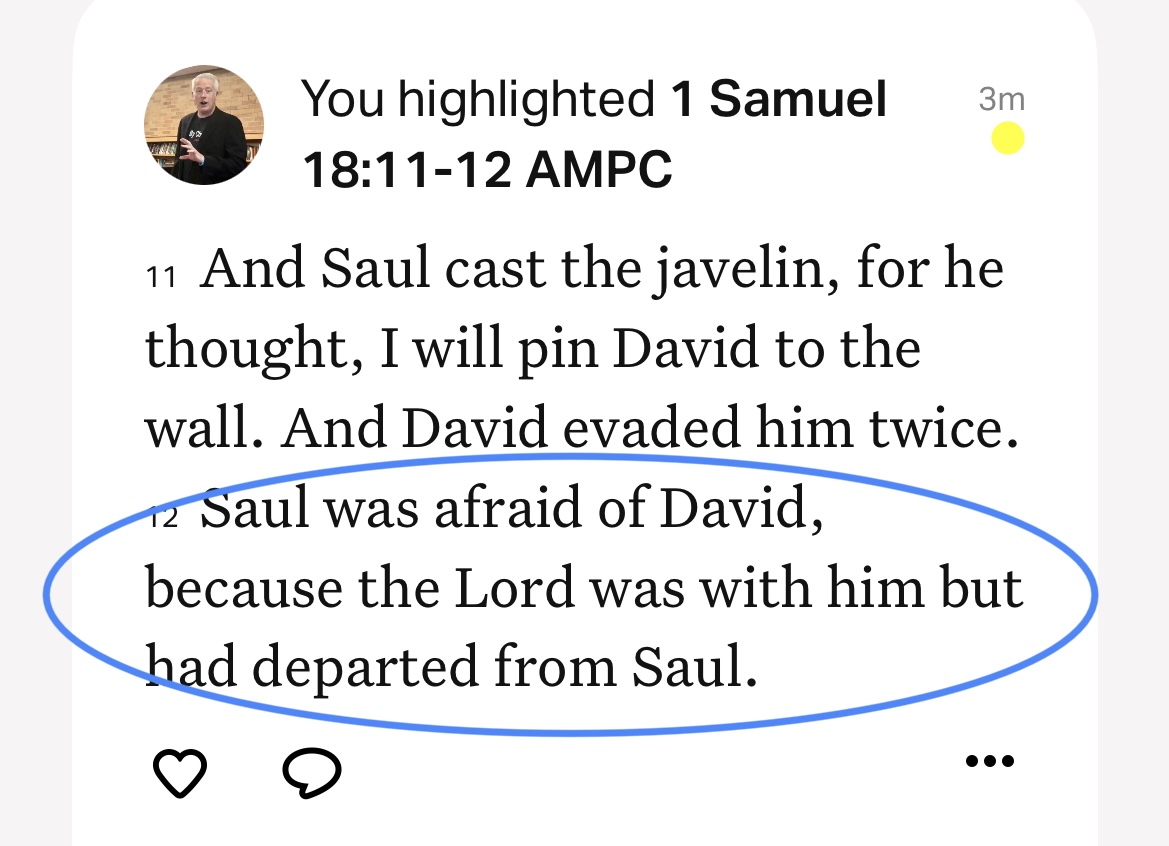
And Saul jealously eyed David from that day forward. … And Saul cast the javelin, for he thought, I will pin David to the wall. And David evaded him twice. Saul was afraid of David, because the Lord was with him but had departed from Saul. (1 Samuel 18:9, 11-12 AMPC)

This exchange in this well-known story got me wondering. I was thinking how Saul had the position of authority over David and he had a javelin in his hand, but the Bible still says that Saul “was afraid of David.” Why would that be? I think even the most atheistic of people intuitively know there is something other-worldly about those in whom the Spirit of God abides, which makes worldly people lash out at them in fear. 

But those who fear God—as David did—don’t fear mortals. Jesus said, “Don’t be afraid of those who want to kill your body; they cannot touch your soul. Fear only God, Who can destroy both soul and body in hell” (Matthew 10:28 NLT). This reverent fearlessness is what galls those who fear the unknown, so they try to silence confident God-followers. 

In these attacks, Jesus tells us not to respond naturally, but supernaturally. “But to you who are willing to listen, I say, love your enemies! Do good to those who hate you. Bless those who curse you. Pray for those who hurt you” (Luke 6:27-28 NLT). 

Peter picked up those words from Jesus and instructed Christians: “Be careful to live properly among your unbelieving neighbors. Then even if they accuse you of doing wrong, they will see your honorable behavior, and they will give honor to God when He judges the world. … For God called you to do good, even if it means suffering, just as Christ suffered for you. He is your example, and you must follow in His steps.” (1 Peter 2:12, 21 NLT). 

Although Saul feared the presence of God in David, he also had to acknowledge the success that came to David because of God’s abiding presence in him, and also, by extension, the success that came to Saul’s kingdom. On the one hand, Saul wanted David dead; on the other hand, he wanted David close by—

So Saul removed David from him and made him his commander over a thousand; and [David] went out and came in before the people. David acted wisely in all his ways and succeeded, and the Lord was with him. When Saul saw how capable and successful David was, he stood in awe of him. (1 Samuel 18:13-15 AMPC) 

When Christians are supernaturally empowered by God, they never have to respond in natural fight-or-flight from those who lash out at them. Let your faithfulness to God be your testimony that points others to Him. 

►► Would you please prayerfully consider supporting this ministry? My Patreon supporters get behind-the-scenes access to exclusive materials. ◀︎◀︎

Jesus said, “If the world hates you, know that it hated Me before it hated you. If you belonged to the world, the world would treat you with affection and would love you as its own. But because you are not of the world [no longer one with it], but I have chosen (selected) you out of the world, the world hates (detests) you.” (John 15:18-19)


Getting Uncomfortable With Staying Comfortable

Listen to the podcast of this post by clicking on the player below, and you can also subscribe on AppleSpotify, or Audible. 

We as a Church are underperforming. How do I know this? Look at the way the world treats Christians; specifically, look at what’s NOT happening. 

  • By this all will know that you are My disciples, if you have love for one another” (John 13:35). Jesus said this right after He served His disciples by washing their feet. Is this happening today: Do people know you are a Christian by the way you put your love into servant-hearted action, or do they just know what you are against? 
  • “Be prepared to give an answer to everyone who asks you to give the reason for the hope that you have” (1 Peter 3:15). When was the last time someone saw your hope-filled life in such contrast to everyone else’s response that they said, “How can I have what you have?” 

(Find all of the Scriptures I’ve used in this post by clicking here.)

Peter said our adversary prowls like a lion. He is perfectly willing to bide his time, picking the strategy that works best. One of his favorite strategies is lies—sometimes half-truths or out-of-context truths. 

…Woe to the earth and the sea, because the devil has gone down to you! He is filled with fury, because he knows that his time is short. … The dragon was enraged with the woman and went off to make war against the rest of her offspring—those who obey God’s commandments and hold to the testimony of Jesus (Revelation 12:12, 17). 

Lies are his native tongue. He lied to Adam and Eve right in the beginning (Genesis 3:1, 4-5), and he still lies now (Revelation 12:10). Jesus contrasted this with the truth that He came to proclaim (John 8:42-45). 

The devil has learned that with many people, outright attacks drive them TO God. We see this in the oldest book of the Bible (Job 1:6f, 20-22), and in modern times (churches were filled after the 9-11 terrorist attacks). 

What the devil would rather do is lie to you to keep you comfortable. In The Screwtape Letters, Screwtape implores Wormwood to keep his patient indifferent and comfortable. Indeed, we all have a comfort zone and we love to stay in it. 

King Saul went from 3000 men to 600 men, from a full armory to only two swords, from defeating the Ammonites to being hemmed in by the Philistines. King Saul was enjoying life as the king, hanging out with his friends, sitting under a pomegranate tree, far away from his enemies. Life was good for Saul, life was familiar and comfortable. Saul was living in his comfort zone. But the comfort zone is a lousy place to live. 

In the comfort zone you only tell stories, but never live an adventure. In the comfort zone, you only hear about what God has done for others, but you never experience Him move in miraculous ways for yourself. 

God has given us all gifts so that we can live as overcomers and bring Him glory, but we settle for living only in our comfort zone. Our comfort zones are always way smaller than our gift zones, and the devil is perfectly happy to see us stay there.

Moses was comfortable in the desert, but God sent him in His power (Exodus 3:11, 14). 

David was comfortable in the pasture, but God equipped him to lead a whole nation (2 Samuel 7:18; Psalm 78:70-71). 

Jeremiah was comfortable being an anonymous priest, but God gave him words to prophesy to a wayward nation (Jeremiah 1:4-8). 

Saul was comfortable as a Pharisee, but God sent him to tell the world the Jesus is the Messiah (Acts 8:3; 1 Timothy 1:16). 

What lies have kept you in your comfort zone? 

  • Maybe a parent said, “You’ll never amount to anything.” 
  • Maybe a teacher said, “You’re slow.” 
  • Maybe a classmate said, “You’re weird.” 
  • Maybe the devil said, “You cannot make a difference in the world.” 

You need to silence those lies with God’s truth: 

  • God created me on purpose and for a purpose—Psalm 139:13-17 
  • He has given me all the gifts I need to soar—2 Peter 1:3-4 
  • He wants to help me, if I will trust Him—Isaiah 41:10, 13-14 

Charles Spurgeon said, “The extent of power God can infuse into a person is immeasurable; when divine strength is granted, human weakness ceases to be a hindrance.” 

So, friends, it’s time to get uncomfortable with staying comfortable. It’s time to stretch and soar out of your comfort zone and into more of your gift zone! 

How do you discover your gifts? That’s what we are going to unpack in this series over the next few weeks, I hope you will continue to follow along. And you can catch up on anything you may have missed in our series called Living in Your Gift Zone by clicking here. 

►► Would you please prayerfully consider supporting this ministry? My Patreon supporters get behind-the-scenes access to exclusive materials. ◀︎◀︎

Honoring Friends And “Enemies”

Listen to the podcast of this post by clicking on the player below, and you can also subscribe on AppleSpotify, or Audible.

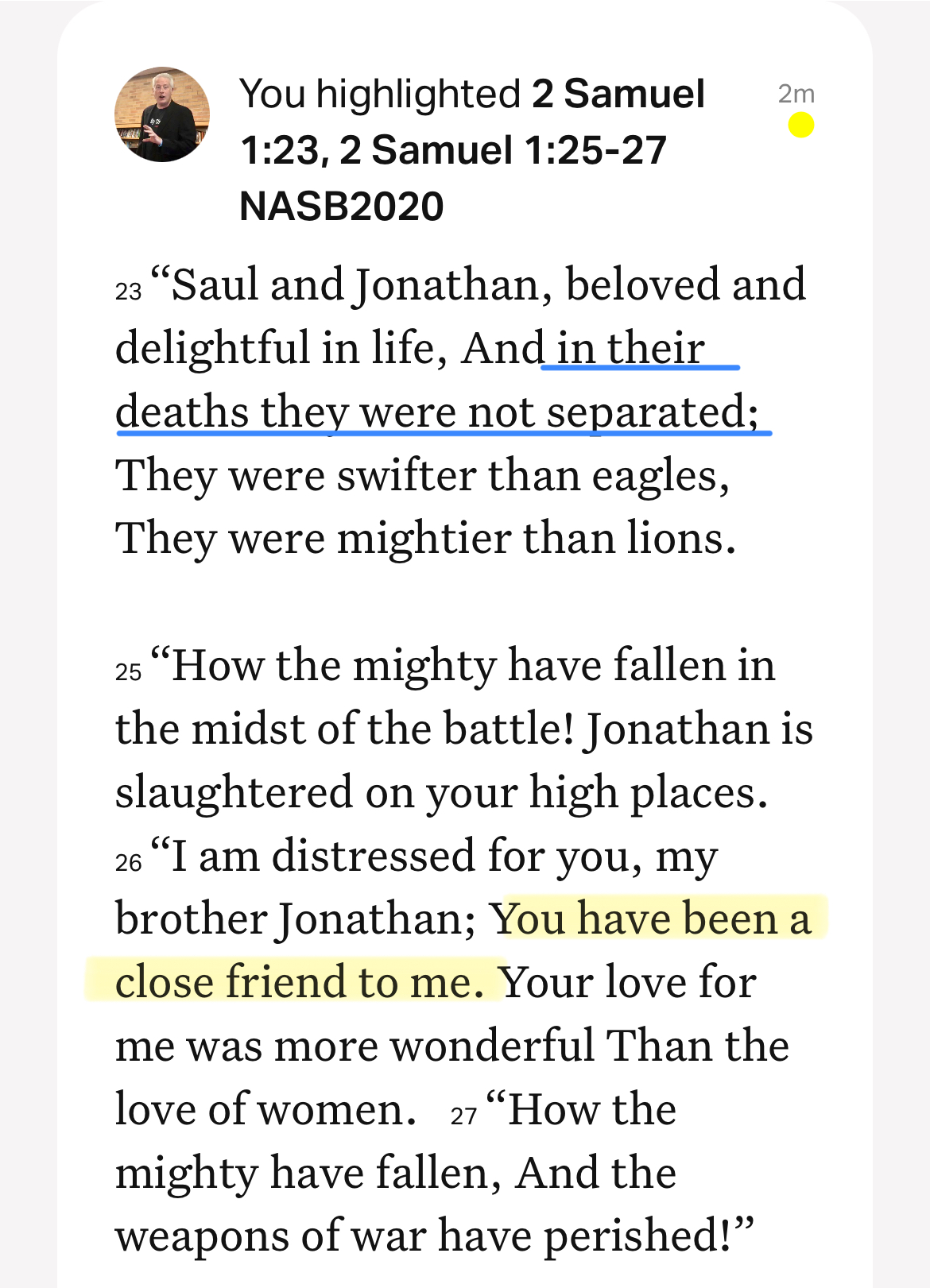
Saul and Jonathan, beloved and delightful in life, and in their deaths they were not separated; they were swifter than eagles, they were mightier than lions. Daughters of Israel, weep over Saul, who clothed you in scarlet, with jewelry, who put gold jewelry on your apparel. How the mighty have fallen in the midst of the battle! Jonathan is slaughtered on your high places. I am distressed for you, my brother Jonathan; you have been a close friend to me. Your love for me was more wonderful than the love of women. How the mighty have fallen, and the weapons of war have perished! (2 Samuel 1:23-27)

It’s not surprising that David honored his friend Jonathan in song after his death. But it is surprising that Jonathan remained faithfully at his father’s side, fulfilling his duties as a son and a prince of Israel, although he did not agree with his father’s treatment of David. 

In Jonathan we see the obedience to the fifth commandment: Honor your father and mother (Exodus 20:12). 

And it is also surprising that David says nothing bad about Saul in this song of lament, but only praises him for his valiant victories as Israel’s king. 

In David we see a true picture of forgiveness—where a forgiven transgression is a forgotten transgression, no longer held by David against his tormentor. Later in his life, David would write about the mind-blowing truth that God obliterates the record of our forgiven sins, never bringing them up again (Psalm 103:10-12)! 

Is it any wonder that David and Jonathan became and remained such close friends? From the moment Jonathan first heard David speaking about his trust in God, they became “one in spirit” and forged a covenant friendship that lasted even beyond Jonathan’s life (1 Samuel 18:1-4). 

May we learn from these two God-fearing, faithful friends what it really means to honor others, whether we call them friends or others might call them “enemies.” 

You may also be interested in a related blog post: How to pray when you’ve been stabbed in the back. 

In my book When Sheep Bite I have a chapter called “When the sheep slander you.” In that chapter, I dive deeper into the lesson leaders can learn from how David treated Saul both during his life and after his death. 

►► Would you please prayerfully consider supporting this ministry? My Patreon supporters get behind-the-scenes access to exclusive materials. ◀︎◀︎

Aligning With God’s Word

Listen to the podcast of this post by clicking on the player below, and you can also subscribe on AppleSpotify, or Audible.

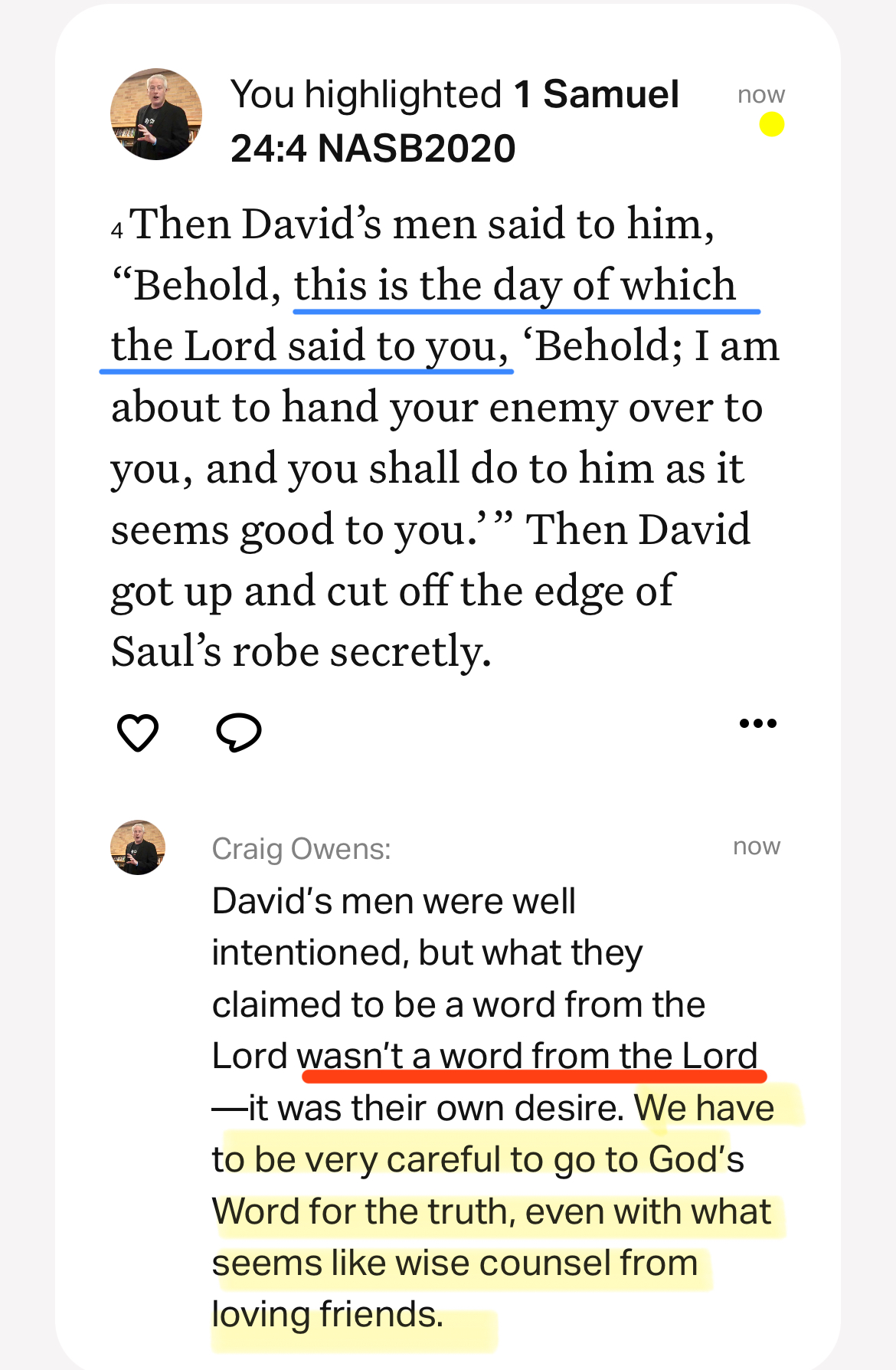
David was hiding from Saul in a cave when Saul walked into the same cave, totally oblivious to the danger that awaited him! David’s men tried to spur him to action by whispering, “Isn’t this what God said, that He would hand your enemy over to you?” (see 1 Samuel 24). 

David momentarily listened to his men and then acted on their words. He crept forward to cut off a corner of Saul’s robe. But then the Holy Spirit pricked his conscience. 

Why? 

Because God never said those words! 

From what David has learned, he now speaks this same lesson to Saul. He in essence asks Saul, “Are you listening to men or to God?” (vv. 9-11). 

David learned that without God as his Guide, he could easily be persuaded to act in a way that seemed right to men but was wrong before God. 

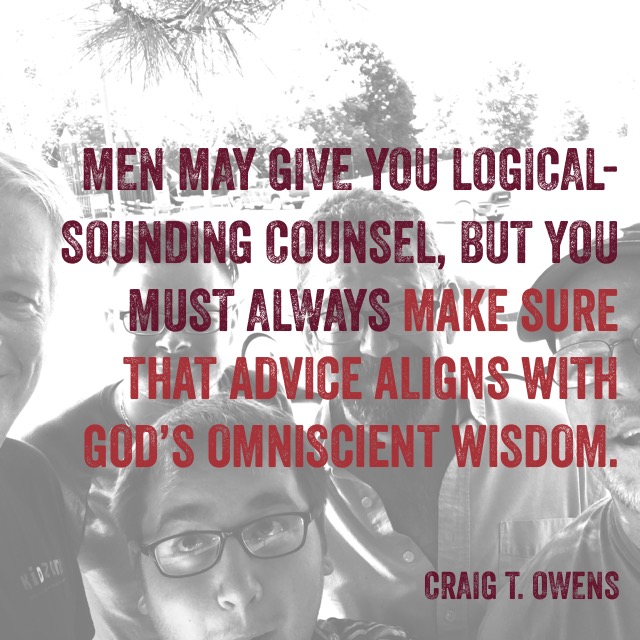
It’s still true for all of us today: Men may give you logical-sounding counsel, but you must always make sure that advice aligns with God’s omniscient wisdom. That means you need to be reading, studying, meditating on, and thinking about God’s Word. 

✔️ Keep God always before you 

✔️ Know His voice intimately 

✔️ Compare every word of man with God’s infallible Word 

🙏🏻 “Hear my prayer for help, O God, for I look to You alone as my Helper and the Sustainer of my soul. You will deal with my enemies as You know best, and You will deliver me from my troubles” (see David’s prayer in Psalm 54).

►► Would you please prayerfully consider supporting this ministry? My Patreon supporters get behind-the-scenes access to exclusive materials. ◀︎◀︎

Creating A Peaceful Environment

Listen to the podcast of this post by clicking on the player below, and you can also subscribe on AppleSpotify, or Audible. 

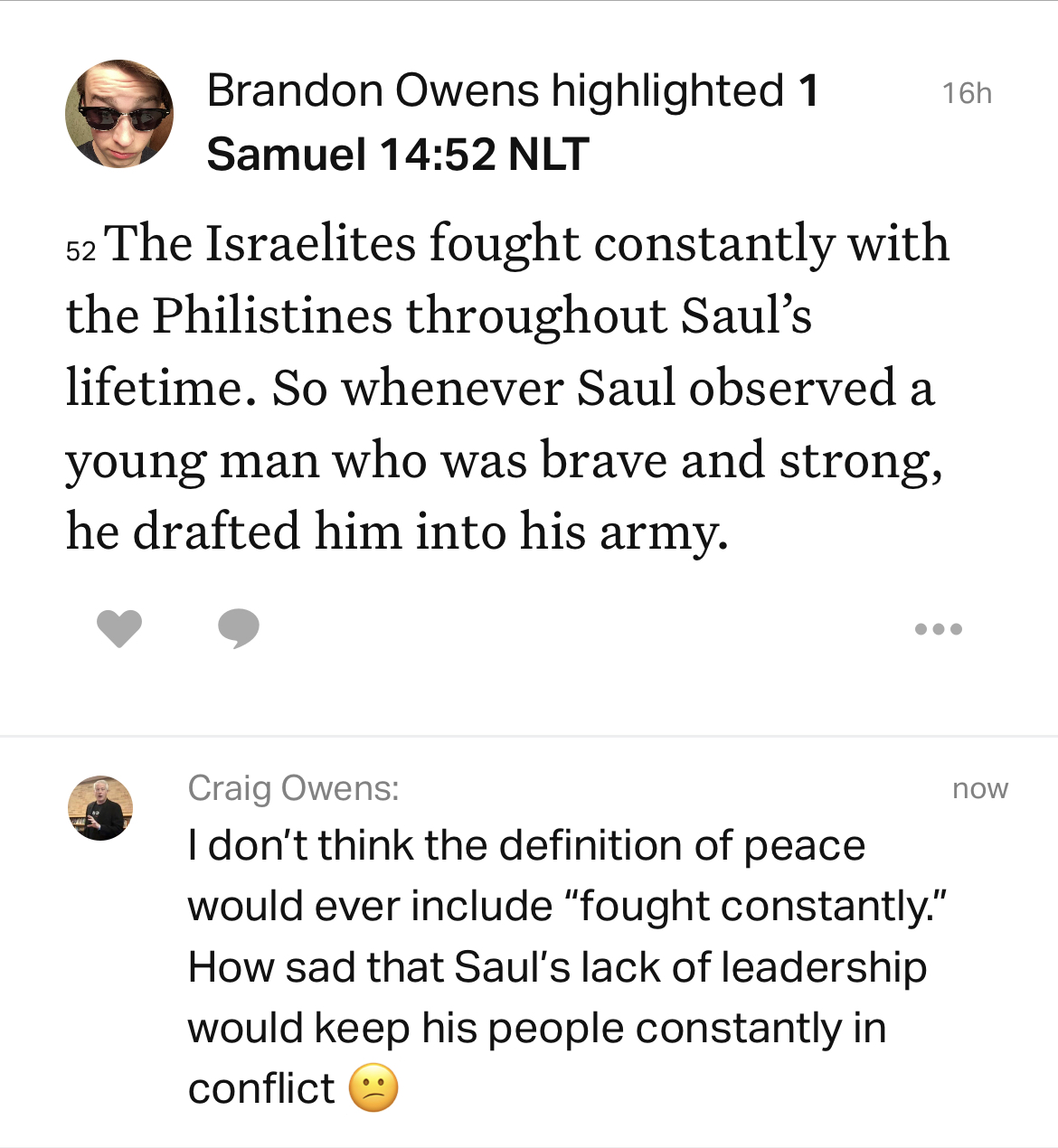
The Israelites fought constantly with the Philistines throughout Saul’s lifetime… (1 Samuel 14:52). 

Have you ever worked in a hostile environment? I was involved with one organization where all of the staff members called the weekly meeting the “staff beating” instead of the staff meeting. This was largely because the senior leader started off every meeting by asking for problems that needed to be addressed, but then he “addressed” the problem by attacking the person who shared the problem. 

I was reminded of this recently when I was scrolling through YouVersion and saw that my son had highlighted 1 Samuel 14:52 that said that Saul’s reign as king was noted for the constant fighting. I added the comment, “I don’t think the definition of peace would ever include ‘fought constantly.’ How sad that Saul’s lack of leadership would keep his people constantly in conflict.” 

Make no mistake about it: It was his poor leadership that created this environment. We often read of his jealousy of anyone else who was successful, and we see that although he had a loyal army, he kept them bottled up. 

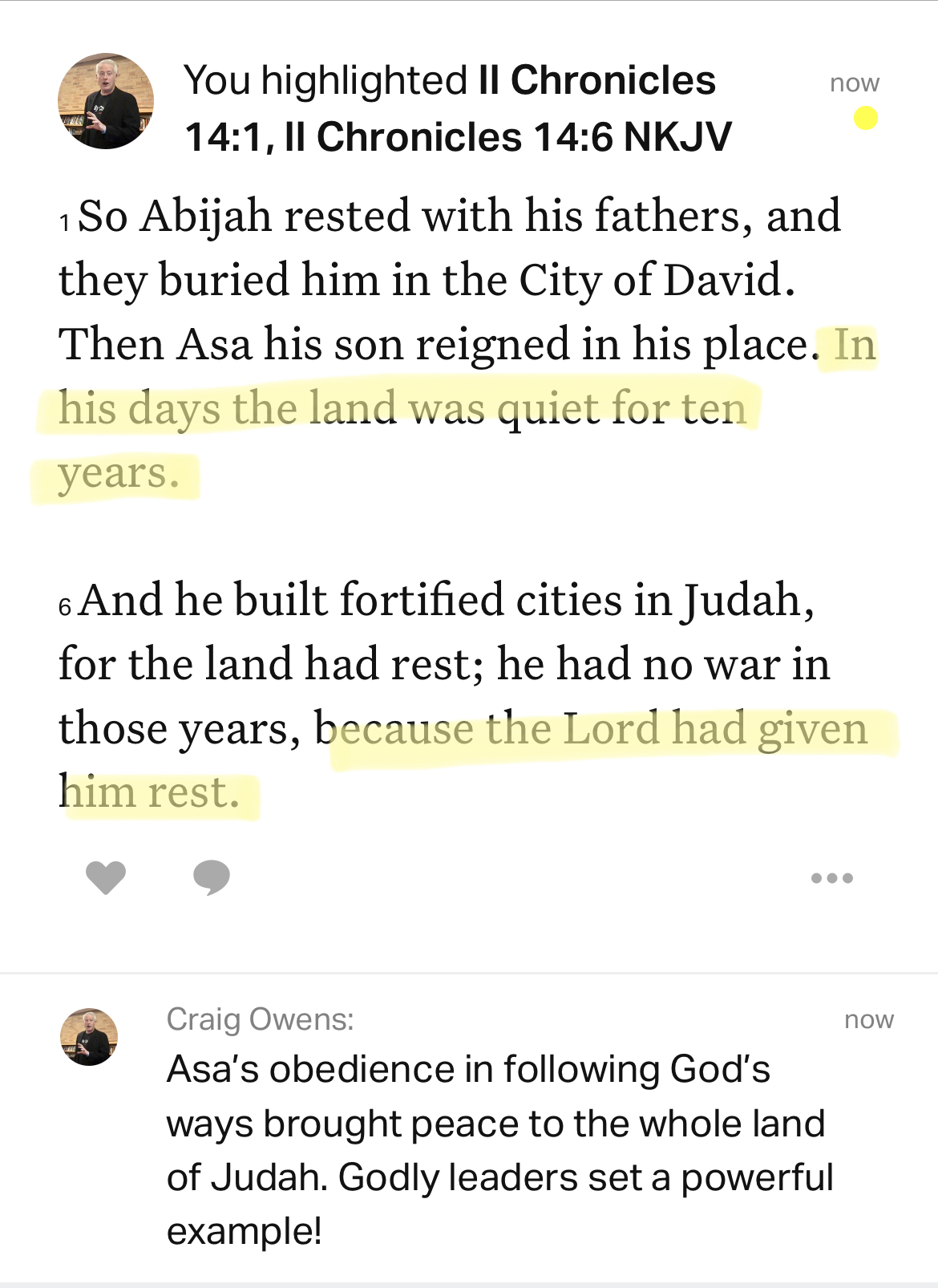
On the other hand, consider this statement about the reign of king Asa: “In his days the land was quiet for ten years. … He had no war in those years, because the Lord had given him rest” (2 Chronicles 14:1, 6). This peace and quiet and rest is directly tied to Asa’s obedience to God’s laws. 

A mark of a godly leader is one whose obedience to God fosters an environment of peace for his people. 

This is part 62 in my series on godly leadership. You can check out all of my posts in this series by clicking here. And I would also encourage you to check out my book Shepherd Leadership: The Metrics That Really Matter, where I outline in more detail the characteristics of godly leadership. 

►► Would you please prayerfully consider supporting this ministry? My Patreon supporters get behind-the-scenes access to exclusive materials. ◀︎◀︎

The Destructive Power Of Self-Sufficiency

…Find me a woman who is a medium, so I may go and inquire of her (1 Samuel 28:7). 

How sad for King Saul! But this is the inevitable path for one who was put into his leadership position by God and then completely turned his back on God. 

God did so much over so many years to try to get Saul to turn back to Him, but Saul persisted in his self-sufficiency. As Paul wrote in Galatians, “A man reaps what he sows.” Militarily, Saul had one shining moment: delivering the people of Jabesh Gilead. The closing words of 1 Samuel show us the valiant man from Jabesh conducting a covert nighttime mission to remove the bodies of Saul and his sons from the Philistines, and then giving them a proper burial. Just imagine how many more valiant men may have been around if Saul had continually obeyed God! 

Now, nearing the end of his life, Saul is at his wits’ end: God is not answering him by any means he tries. As a result, this final chapter of Saul’s leadership is characterized by words like:

  • afraid
  • terror filled his heart 
  • great distress 
  • filled with fear 
  • his strength was gone

Until King Saul ultimately takes his own life.

The consequences of Saul’s sinful self-sufficiency impacted more than just him. A leader’s sins have devastating effects on his followers. Throughout Saul’s reign as king we see the army fearful, hesitant, ill-equipped, slinking away, confused, set up for failure, and ultimately defeated. Saul could never get out of his own way, taking Israel down with him.

A mark of a godless leader is sinful self-sufficiency.

How sad for Saul and Israel. Especially because Saul’s demise was totally avoidable if he only would have repented of his pride and turned wholeheartedly to God.

This is a sober reminder for all leaders: if God has put you in a place of leadership, you will experience success. Don’t let that success fool you, as it did with Saul, into thinking you created that success. This is the first step toward the downward slide that ultimately destroyed Saul, and it will be your undoing as well. 

This is part 49 in my series on godly leadership. You can check out all of my posts in this series by clicking here.

Trespassers

Psalm 59 is the prequel to David being betrayed by the Ziphites as well as the incident in the cave between himself and King Saul. 

This psalm is also called an imprecatory psalm, which is the theological way of saying, “Get ‘em, God!” Since King Saul has sent assassins to try to kill David, you can understand why David is praying this way. But I sort of wonder why he inserts a Selah pause after two rather angry-sounding sentences in verses 5 and 13. 

When we are reading—or even praying—an imprecatory prayer, here are some important things to keep in mind: 

  • This prayer is inspired by the Holy Spirit. All of the words in the prayer, including the Selah pauses, are directed by the Holy Spirit. Getting our angry thoughts out in God’s presence is the safest place to vent. 
  • This is a prayer for justice because an injustice has been done, not just a prayer because David is upset with someone. 
  • Since this prayer says, “Get ‘em, God,” it’s a prayer that turns matters over to God as the Ultimate Judge, taking the judgment out of my hands. 

Really this is a prayer that seeks to balance something vital: The desire to see evil punished while at the same time desiring to see all evildoers come to salvation. 

Think of it this way: When I sin, do I want to meet a God of justice or a God of mercy? Since we are to treat others the way that we would want to be treated, if I want to receive God’s mercy, I have to desire that for others too. Even those evildoers who have hurt me. 

David’s first Selah pause comes after saying that he is innocent of any offense or wrongdoing. When we pray an imprecatory prayer, we would do well to ask the Holy Spirit to search our hearts to reveal any trespasses we have committed (see Psalm 19:12-13; 139:23-24). 

David’s second Selah pause comes after he says, “Then it will be known to the ends of the earth that God rules over Jacob.” Is my “Get ‘em, God” prayer a desire for me to be seen as the overcomer or for God to be seen as glorious? 

As long as my focus is on my trespassers, my focus is off my God. 

I cannot be consumed by thoughts of “them” because then I rob myself of thoughts of Him! 

So when you get angry enough at someone who has trespassed against you that you want to pray a “Get ‘em, God” prayer, Selah pause and pray, “Holy Spirit… 

  • …show me my trespasses; 
  • …help me forgive my trespassers; and
  • …help me to focus on my God, and not on my trespassers or my forgiven trespasses.” 

If you have missed any of the other messages in our Selah series, you can find links to all of them listed here. 

Messes

My good friend Josh Schram shared a powerful message in our Selah series. 

David is the anointed king, but instead of living in a palace, he’s living in a cave. From this cave, David gave us Psalm 57. 

Here are some of my takeaways from Josh’s message, but I would encourage you to watch this 20-minute video for yourself

Takeaways: 

  • To get where God needs me to be, I often have to go through things I never expected. 
  • Even my “cave times” are directed by God. 
  • “David didn’t get down on Saul’s level; he got down on his knees.” —Josh Schram 
  • If David had taken matters into his own hands, what would his legacy have been? Instead, he worshiped God, and let God take care of Saul. 
  • “We don’t worship God because our circumstances are good but because our God is good.” —Josh Schram 
  • My little messes become big messes when I try to handle them myself. I need to run to my Heavenly Father for help with all of my messes! 

If you have missed any of the messages in our Selah series, you can access all of them by clicking here. 

C’mon, Let’s Go!

In May 1917, the British war cabinet was divided. Some of the generals wanted to continue a combined assault on the German forces, but other generals saw the need to confront the Ottoman Empire in the Middle East. They selected General Edmund Allenby to lead the British Egyptian Expeditionary Force against the Turks.  

Allenby’s forces were able to quickly recapture Jerusalem, but the Turks had entrenched themselves at Micmash Megiddo, allowing them a place to launch counterattacks. As battle plans were being contemplated, Major Vivian Gilbert came to Allenby with an unorthodox solution. Major Gilbert was a student of history, and he remembered the name Micmash Megiddo from an ancient text. Reading in his tent by candlelight one night, he rediscovered the text. 

Gilbert brought his report to Allenby. To take advantage of this text, conventional battle plans would have to be scraped. Instead of attacking with overwhelming force, as was usually done, Allenby ordered one company out. This small force discovered just a few Turks whom they overpowered with hardly a sound. Then scaling the cliffs, the company took up their position just before daybreak. When dawn broke and the Turks saw Allenby’s men on the highest, most strategic point, they panicked, thinking they were nearly surrounded, and quickly retreated. 

In his journal, Major Gilbert wrote, “And so after thousands of years British troops successfully copied the tactics of Jonathan.” 

Who was this Jonathan that he referred to? He was the oldest son of Saul, king of Israel. 

Before his successful assault, Jonathan had another military campaign that ended poorly. The Philistines seized the high ground, the Israelite army was reduced to a fraction of its original size, and many of the Israelite soldiers who remained were defecting to the Philistines or deserting the army altogether. And if that weren’t bad enough, Israel had only two swords left: one for King Saul and one for Jonathan. 

Jonathan’s first military campaign had been with 1000 men. As he discovered, that was actually too many men! For his next assault on Micmash, Jonathan switched tactics: he alone would attack the enemy with only his armor bearer to assist him. 

Was Jonathan impetuous? reckless? a man with a death wish? No! He was a God-fearing initiator. He knew that God would fight for anyone who was fighting for God’s people. I think his inspiration came from this promise—Each one of you will put to flight a thousand of the enemy, for the Lord your God fights for you, just as He has promised (Joshua 23:10). 

Knowing that God would help him, three times Jonathan implores his armor bearer, “C’mon, let’s go!” 

Jim Rohn noted, “The difficulties you meet will resolve themselves as you advance. Proceed, and light will dawn and shine with increasing clearness on your path.” 

Just look at the light that dawned with Jonathan’s c’mon-let’s-go initiative: 

  • his armor bearer said he was with Jonathan “heart and soul” even though he didn’t even have a sword!
  • God sent an earthquake that caused the Philistines to panic 
  • King Saul finally mobilized the remaining army that remained with him 
  • God so confused the Philistine that they turned and fought against each other
  • the Israelite deserters returned from Philistia 
  • the fearful soldiers that had deserted returned to their posts 

Could God have defeated the Philistines on His own? Of course He could have. But He was waiting for just one godly leader to say, “Enough is enough! C’mon, let’s go!” 

Godly men are never satisfied with maintaining the status quo. Godly men know that standing still is really moving backward. Godly men know that their initiative can start a momentum that liberates others. 

Fellas, your family needs you to initiate. Your Christian brothers and sisters need you to initiate. Your countrymen need you to initiate. 

Take the initiative for God’s glory, for your family’s protection, for your nation’s revival, for generations yet to be born. Let’s charge the enemy of our souls together—

C’mon, let’s go!  

All Of HIStory Is His Story

There were the kings who reigned in Edom before any Israelite king reigned (Genesis 36:31). 

When Rebecca was pregnant with twins, they jostled each other in her womb. God said this was an indication of what was to come of the two nations that would arise from her sons. God also said that the older son would serve the younger son (25:23).

The nation of Edom was a fierce but unstable people. Just take a look at the succession of their kings to see the power struggles at every transition. But eventually, King Saul would war against Edom, and King David would subjugate them—making the prophecy true that the older son served the younger son.

What went into the fulfillment of this prophecy?

  • Esau (also known as Edom) short-sightedly sold his birthright
  • Jacob and Rebecca conspired to get Isaac to bless Jacob instead of Esau
  • Esau married Canaanite wives, which disappointed his parents and strained relations with them
  • God blessed both Esau and Jacob so that Esau had to move to the region that would eventually bear his name: Edom

Along the way, Esau had a son with his Canaanite wife named Eliphaz. Eliphaz had a child with a concubine named Timna—a son that grew into one of Israel’s most deadly foes: the Amalekites!

Yet all of this was foreseen by God and fulfilled His pre-ordained plan. Once again: All of History is His story. There is never any need for us to worry about turmoil—political or otherwise—because God is in sovereign control… always! 

(By the way, this is not an isolated incident. There are countless examples in the Bible of how God’s sovereign plan is fulfilled, despite man’s best efforts to derail it. Check out another example here.)