The Power Of Touch

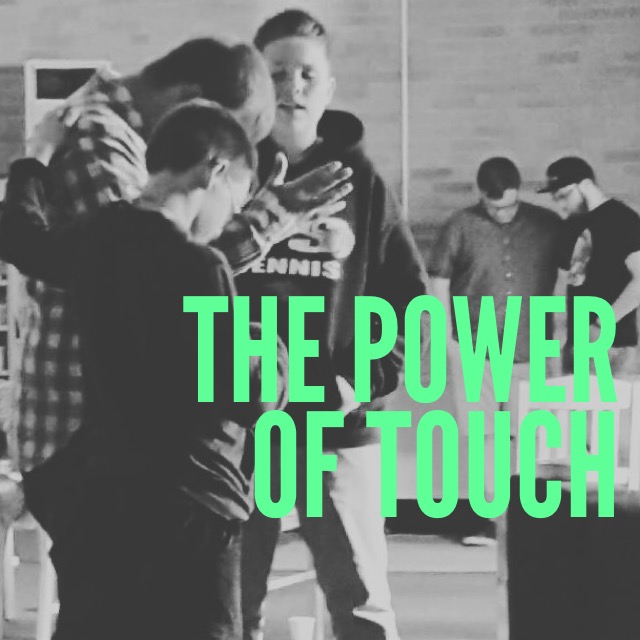
I grew up in a church that believed in the literal “laying on of hands” while praying for someone. I still like to pray that way because I believe there is a power in the human touch.

Science has proven that human-to-human touch helps people feel better faster, lowers blood pressure, and stimulates cognitive development in newborns.

We shake hands with people when we meet them as a sign of acceptance.

We lay our hand on a friend’s arm or shoulder to show we empathize with their pain.

We embrace or kiss a loved one to show affection.

Dr. Paul Brand, a renowned surgeon who worked with leprosy patients in India, said that his hands were his most delicate and most accurate diagnostic tool.

How devastating when we withhold our touch! How crushing when the only time we touch is when we are angry!

  • Think about how much more meaningful our prayers with someone would be if we would just lay our hands on them.
  • Think about how much warmer the greeting would be if we gave someone the two-handed handshake.
  • Think about how much greater our bond with a hurting friend if we simply put our arm around their slumping shoulders.
  • Think about how much deeper the connection with your spouse and children if you held hands more often.

Touch someone today. When you do, you’ll be touching much more than their hand; you’ll be touching their heart. Your touch could make a world of difference to someone today.

You Can’t Lose

I was really challenged by the message Andy Lapins brought to our youth group.

Andy opened with a simple question, “Have you ever been afraid to tell someone about your relationship with Jesus.” My hand went up, along with just about every other hand in the room.

Andy followed up: “Why? Why are you afraid to share this good news?” The number one answer: Fear of rejection.

Andy then asked us, “If you share the good news of Jesus with someone and they accept what you have to say, is that a good thing or a bad thing?” We all answered, “Good!”

Then he asked, “If you share the good news of Jesus with someone and they neither accept it nor reject it, but you know you have planted or watered a seed, is that a good thing or bad thing?” Again, we all answered, “Good!”

Then he asked, “If you share the good news of Jesus with someone and they completely reject it—they curse you out or tell you you’re a weirdo—is that a good thing or a bad thing?” We all answered, “Bad!”

To which Andy said, “Really?!?” Then he dropped these two Bible passages on us:

  • So be happy when you are insulted for being a Christian, for then the glorious Spirit of God rests upon you. (1 Peter 4:14)
  • Blessed are you when men hate you, when they exclude you and insult you and reject your name as evil, because of the Son of Man. Rejoice in that day and leap for joy, because great is your reward in heaven. (Luke 6:22-23).

Andy followed up, “So what do you think now? If someone rejects you for sharing Jesus with them, is it a good thing or a bad thing?” Now we all answered, “Good!”

You can’t lose when you share Jesus with others!

There are only three possible outcomes:

  1. They accept Jesus = good thing
  2. You plant or water a seed = good thing
  3. You earn rewards in heaven = good thing (cha-ching!!)

I challenged our youth group to write “Cha-ching!” on their status line on Facebook whenever they shared the good news of Jesus with a friend.

Regardless of the outcome, you can’t lose! So go tell more people about Jesus today!

If All Your Friends Were Jumping Off A Cliff…

…would you do it too?

Okay, quick show of hands: how many of you heard your Mom or Dad say this to you? I’ve got both my hands up!

I always hated this statement, because I felt like saying, “Mom, I’m not an idiot. I know where to draw the line.” This an extreme example (a hyperbole) intended to get a point across. The point that our parents were trying to make is: humans tend to be crowd followers.

We want to be accepted, so sometimes we bend ourselves a little bit to get the stamp of approval from our peers. It might be a little more obvious among teenagers with clothing choices, music preferences, or attitudes toward those “outside” the mainstream. Although it gets a little more subtle among adults, I think the desire to be accepted—to go along with the crowd—is always there.

Or else we become rebels. If society says “Right” the rebel says “Left.” If society says “War” the rebel says “Peace.” If Mom and Dad say, “Go to church,” the rebel says, “I’m going to stay away from church.” Which shows another tendency of human nature: we tend to go to extremes.

God says, “Do what is right. Period”…

You must not follow the crowd in doing wrong. When you are called to testify in a dispute, do not be swayed by the crowd to twist justice. And do not slant your testimony in favor of a person just because that person is poor.

Don’t go along with the crowd just to be accepted.

Don’t go alone just to be an individual.

Live for the approval of an audience of One.

It’s only when I take the time to reflect on my conversations, my actions, my thoughts, that I see these two tendencies in me: I do one thing to go along and then do something entirely different to show that I’m my own man. Instead of these extremes, I need to ask, “Is this pleasing to God?”

I’m working on it. How about you?

Higher Standards For Greater Rewards

Most people think of the Ten Commandments as God’s law given through Moses. Actually the Ten Commandments are just the beginning of the laws, practices, and regulations that God gives to His people. The rest of the book of Exodus, the entire book of Leviticus, and the first ten chapters of Numbers compromise the bulk of the law.

For those of you keeping track, that’s nearly 60 chapters of rules and regulations.

Why so many? I think the answer is found in the lead-up to the Ten Commandments:

Now if you obey Me fully and keep My covenant, then out of all nations you will be My treasured possession. Although the whole earth is Mine, you will be for Me a kingdom of priests and a holy nation.

God wants people who are treasured. A people who are priests. A people who are holy. In short: He wants pacesetting leaders.

Priests have intimate access to God, and they are people who set an example for others to follow. In order to enjoy these special privileges, priests must be held to higher standards.

These are not standards just for those of Jewish ancestry, but for anyone who is a follower of Jesus Christ. Look what John recorded in the last book of the Bible:

To Him who loves us and has freed us from our sins by His blood, and has made us to be a kingdom and priests to serve His God and Father—to Him be glory and power for ever and ever! Amen.

…With Your blood You purchased men for God from every tribe and language and people and nation. You have made them to be a kingdom and priests to serve our God, and they will reign on the earth.

Yes, the standards to be a priest—to be a holy leader—are higher. But the rewards are immeasurable!

Are you ready to bring greater glory to God? Do you want to be a pacesetting leader for the Kingdom of heaven? Then ask the Holy Spirit to sanctify you as you take on the discipline of greater responsibility. Live up to higher standards, and you won’t be disappointed by the rewards!

What’s So Good About Good Friday?

Good Friday? Good for whom?

For you and me? Yes.

Good for Jesus, no. It was Bad Friday for Him, wasn’t it?

Or was it?

The writer of Hebrews says, “For the joy set before Him, Jesus endured the Cross, scorning its shame.”

What joy?

It was for the joy of what was nailed to the Cross.

So what exactly was nailed to the Cross?

Isaiah records an usual statement from God –

Comfort, comfort My people, says your God. Speak tenderly to Jerusalem, and proclaim to her that her hard service has been completed, that her sin has been paid for, that she has received from the Lord’s hand double for all her sins.

That seems unfair! We receive double (!) for our sins! Here’s a brief video where I explain what this means culturally –

Only when invoices were paid-in-full did they get doubled-up.

The Bible tells us that we’ve all sinned, and that the invoice or penalty for our sin is death. We have the IOUs of sin nailed to the door of our heart where God says “You owe Me your life!” But we cannot pay this debt by ourselves.

But Jesus can. And Jesus did! Check this out –

He personally carried our sins in His body on the Cross…. (1 Peter 2:24, NLT)

Having cancelled and blotted out and wiped away the handwriting of the note with its legal decrees and demands which was in force and stood against us. This He set aside and cleared completely out of our way by nailing it to His Cross. (Colossians 2:14, AMP)

That’s what is good about Good Friday. Jesus knew that taking our sins on His body, and then allowing His body to be nailed to the Cross, would double-up and nail-down our sin once and for all!

When Jesus said, “It is finished!” He was really saying, “It is was paid-in-full!”

Don’t Just Sit There

I’m convinced that in my pursuit of a deeper relationship with Christ, neutral is the most vulnerable position I can take.

I can pursue God with all I’ve got. Every day I can learn a little more what it means to love God with all my heart, with all my soul, with all my mind, and with all my strength.

Or I can make a decision that I’ve gone as far as I can in my relationship with Jesus. I can say, “I’m not willing to be stretched any further. I’m comfortable with where I am.” But when I get into this neutral position, I’m more likely to slide away from God than I am to move closer to Him. It’s hard to even stay where I was. Check this out:

BLESSED—HAPPY, fortunate, prosperous, and enviable—is the man who walks and lives not in the counsel of the ungodly—following their advice, their plans and purposes—nor stands submissive and inactive in the path where sinners walk, nor sits down to relax and rest where the scornful and the mockers gather.

It’s when I become inactive that I am vulnerable to ungodly counsel.

It’s when I sit down to relax that I can easily slip into the cynical banter of the scornful.

If I want to avoid the downward slide away from God, I can’t just sit still. I’ve got to be actively, passionately, wholeheartedly moving toward Him. Solomon wrote:

Make your ear attentive to skillful and godly Wisdom and incline and direct your heart and mind to understanding—applying all your powers to the quest for it.

Don’t just sit there! Keep on moving closer and closer to Jesus every day.

What’s So Amazing About Grace (book review)

Philip Yancey calls grace “the last best word,” and I quite agree. What’s So Amazing About Grace is a challenging read because it is so painful. The truth of our almost daily practice of ungrace is confronting and convicting.

Throughout this book I wanted to say, “I’m glad I don’t behave that way.” And then I’d get a quick glance of myself in the mirror and realize how easily I slip into the same ungraceful behavior I despise. I so desperately want to be a grace-filled man.

Here are just a few of the passages that I’m meditating on, and trying to apply to my life:

  • “I yearn for the church to become a nourishing culture of grace.”
  • “Sociologists have a theory of the looking-glass self: you become what the most important person in your life (wife, father, boss, etc.) thinks you are. How would my life change if I truly believed the Bible’s astounding words about God’s love for me, if I looked in the mirror and saw what God sees?”
  • “I really only love God as much as I love the person I love the least.” (Dorothy Day)
  • “In a brilliant stroke Jesus replaces the two assumed categories, righteous and guilty, with two different categories: sinners who admit and sinners who deny.”
  • “Grace substitutes a full, childlike and delighted acceptance of our Need, a joy in total dependence. We become ‘jolly beggars.’” (C.S. Lewis)
  • “Having spent time around ‘sinners’ and also around purported ‘saints,’ I have a hunch why Jesus spent so much time with the former group: I think He preferred their company. Because the sinners were honest about themselves and had not pretense, Jesus could deal with them. In contrast, the saints put on airs, judged Him, and sought to catch Him in a moral trap. In the end it was the saints, not the sinners, who arrested Jesus.”

If you are challenged about living grace-filled in an increasingly grace-less society, you will find ample help in reading this book.

Bad Theology

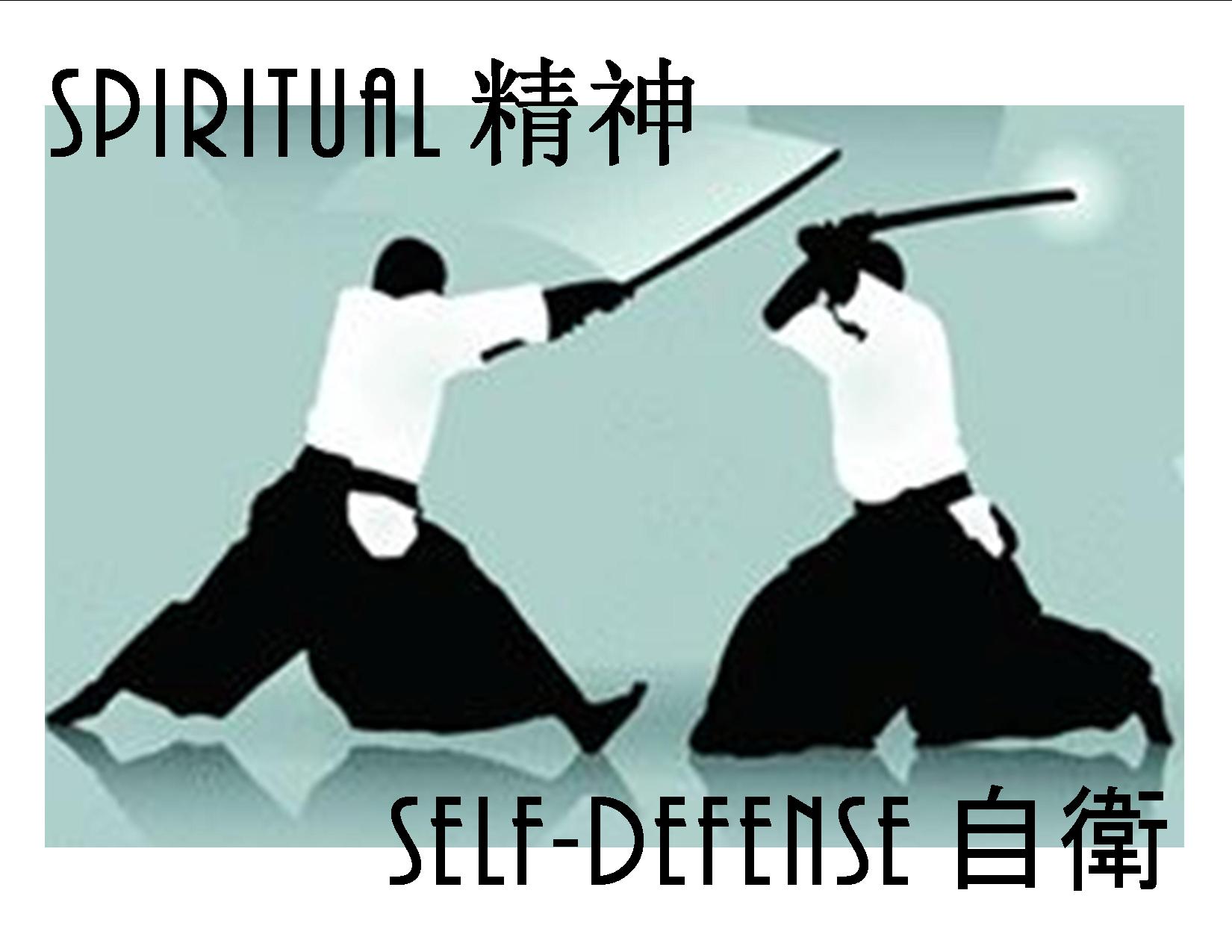
I’m working on the next lesson in our Spiritual Self-Defense series. It’s a tough topic to address: the deity of Jesus, who was fully God and fully Man.

I know it’s very hard for a finite human mind to grasp an infinite concept like this. However in my studies I have found some really bad theology posted on the web. I realize as soon as I say, “It’s like this…” that I’ve already diminished the majesty of God coming to earth in human form, because Christ’s virgin birth, sinless life, sacrificial death and resurrection is nothing like anything we can comprehend. But still, I need to find a way to capture it and explain it to our students.

C.S. Lewis wrote about the need for good philosophy to address bad philosophy. I’m adapting his quote in this instance to say,

“Good [theology] must exist, if for no other reason, because bad [theology] needs to be answered.”

Prayerfully my good theology can answer the bad theology that I’ve been seeing.

Theology is a compound word: Theos (God) + Logos (wisdom, revelation, thought). I’ve been praying that God will give me greater revelation about Him. And I’m grateful that the Holy Spirit has given me some like analogies to use. But I’m still blown away by how unlike anything we’ve ever known was the coming of Jesus to earth. It is truly the grandest of all miracles.

What Do You Want On Your Tombstone

I’m preparing for our upcoming series called Be An Andrew.

Andrew was one of the twelve apostles of Jesus, but we know so little about him. Only a few of his spoken words are recorded for us, and he is only mentioned by name 13 times in the New Testament. But one thing is so clear in those few mentions: All he did was invite people to meet Jesus…

  • His brother Peter, who went on to become one of the leaders of the first Christian church.
  • A young boy, whose small lunch fed thousands.
  • Non-Jewish Greeks who wanted to meet the Messiah.

Wouldn’t you love to have that written on your tombstone? If my entire life was captured in just one sentence, I’d love for it to be:

He just brought people to Jesus.

What do you want on your tombstone?

The Point Of The Gospel

While I was preparing for our Spiritual Self-Defense class, Rick Warren tweeted this timely reminder: “If you spend more time defending the truth than actually sharing it, you will have missed the point of the Gospel.”

What is the point of the Gospel? Isn’t it simply that mankind is lost without God, and that only a relationship with Jesus can bring true life? If that’s the point, we can never argue someone into this divine relationship.

Here are some other thoughts I’m trying to keep in mind for this exciting class:

  • Jesus never shouted down those who disagreed with Him. Isaiah’s prophesy about Jesus said, “He will not shout or cry out, or raise His voice in the streets.” And that’s exactly how Jesus conducted Himself.
  • Jesus said, “God didn’t go to all the trouble of sending His Son merely to point an accusing finger, telling the world how bad it was. He came to help, to put the world right again.” Jesus didn’t come to win an argument, but to win lost people to a relationship with His Father.
  • There are very few exclamation points in Christ’s dialogue in the Gospels, but there are a lot of question marks. He was interested in engaging people in conversation.
  • G. K. Chesterton said, “The principle objection to a quarrel is that it interrupts an argument.” We need to discuss, not argue.

I’m really looking forward to leading this class, but I’m also excited about what I’m learning in the process.