Thursdays With Oswald—Is It Human Or Divine?

Oswald ChambersThis is a weekly series with things I’m reading and pondering from Oswald Chambers. You can read the original seed thought here, or type “Thursdays With Oswald” in the search box to read more entries.

Is It Human Or Divine? 

     It is easy to say that human love and Divine love are one and the same thing; actually they are very far from being the same. It is also easy to say that human virtues and God’s nature are one and the same thing; but this, too, is actually far from the truth. We must square our thinking with facts. Sin has come in and made a hiatus between human and Divine love, between human virtues and God’s nature, and what we see now in human nature is only the remnant and refraction of the Divine. Human virtues according to the Bible are not promises of what human nature is going to be, but remnants of what human nature once was. … 

     As Christians we must learn to trace things to their right source. God makes very distinct the difference between the qualities that are Divine and those that are human. John 15:13 has reference to human love, which lays down its life for its friends. Romans 5:8 has reference to the Divine love, which lays down its life for its enemies, a thing human nature can never do.

From The Psychology Of Redemption

We must be very careful about looking at our life, and then trying to match it up with something we see in Scripture. It should always be the other way around—look at Scripture first, and then see if my life squares with what I see in God’s Word.

Even harder: see if my life squares with what I see in the life of Jesus as presented to me in God’s Word.

In Psalm 139 David began His prayer by saying, “God, You have searched me thoroughly, and You know me completely.” Then he ended his prayer by inviting God to search him yet again. This should be the ongoing posture and attitude of a Christian: asking the Holy Spirit to constantly show us where our lives fall short of the Christian lifestyle presented in the Bible.

Thursdays With Oswald—Thinking Like Christians

Oswald ChambersThis is a weekly series with things I’m reading and pondering from Oswald Chambers. You can read the original seed thought here, or type “Thursdays With Oswald” in the search box to read more entries.

Thinking Like Christians 

     The New Testament insists on an instructed mind as well as a vital experience. … 

     There is always a quarrel between our common sense and the revelations made in God’s Book. We must lose our soul in order to find it. We have to be born from above and receive the Holy Spirit into our spirit, and then begin to construct another soul, or way of reasoning, and to do this we must accept not only the facts that come to us through our common sense, but the facts that come by revelation. We say seeing is believing, but it is not. We must believe a thing is possible before we should believe it even though we saw it (John 20:29). … 

     Our beliefs will mock us unless something comes into us from God, because nothing has any power to alter us save the incoming of the life of God. The Holy Spirit is the One Who makes experimentally real in us what Jesus Christ did for us. … The great need for men and women is to receive the Holy Spirit. Our creeds teach us to believe in the Holy Spirit; the New Testament says we must receive Him (Luke 11:13). Are you powerless in your life? Then, for Christ’s sake, get at Reality! Ask God for the Holy Spirit. … 

     We starve our minds as Christians by not thinking, and we cannot think as Christians until we are born from above. So many of us have a good spiritual experience, but we have never thought things out on Christian lines. It is just as true that a man may live a Christian life without thinking as that a man may think a Christian life without living it. We have to learn to combine the two, and to do this we must build up our minds on these great truths. 

From The Psychology Of Redemption

How are you doing at thinking AND living a Christian life? To do both, you must receive the Holy Spirit, and begin to rely on Him for both Christian thinking and living.

The Key Decision For Influential Men

Influence like JesusNo matter how you look at it, being a Dad is hard work! Men have this constant balancing act between being tough and being tender. Guys have to have their game face on at work, and their family face on at home. They’ve got to work hard knocking down work competitors, and then work just as hard building up their family members.

But there is one key decision that will determine how successful a man will be at work, at home, in his social circles, and even in his relationship with God. 

In Acts 10 we meet a centurion named Cornelius. Centurions were professional military officers in charge of a centuria (usually 100 soldiers). Centurions were always “on the clock,” never letting down their guard nor their professionalism.

All of the centurions mentioned in the New Testament have noble characteristics associated with them. Whereas someone might be uncertain how a typical Roman soldier would behave, people felt more assured when the centurion was on the scene. Even Roman governors like Pilate, and Jewish kings like Herod, all seemed to fully trust the judgement, honesty, and resourcefulness of centurions.

Centurions worked hard to get where they were, and had some well-earned perks:

  • Good pay (one built a temple, Luke 7:1-5).
  • “Men of authority” with soldiers and servants reporting to them (Matthew 8:8-9).
  • Opportunity for advancement (Rome was the dominate world force).
  • A certain degree of autonomy (they had their own residences (Matthew 8; Acts 10).

In order to keep this position, they would have to buy into kurios Caesar (Caesar is lord). To do otherwise was to put their position and future advancement at risk.

Yet Cornelius was different. 

He was a trusted centurion, but something unusual stood out about his life. Luke the historian describes him as devout and God-fearing, mentioning his pious activities of prayer and giving to the poor. Cornelius’ own soldiers referred to him as righteous and respected by notable people in the community.

But probably most telling of all: God noticed how committed Cornelius was (see Acts 10:3-4)!

Cornelius had a lot to lose by rejecting kurios Caesar for, as the Christians said, kurios Iesous (Jesus is Lord). Yet after carefully weighing his options, he saw that trusting God was the best thing he could do for his family. His view of the eternal outweighed anything that he could gain in the temporal.

This one decision changed everything! 

Because Cornelius trusted God, look at the expansiveness of his influence, not only at home, but at work, and among his friends and extended family, and throughout his community:

  • His family—ALL his family were devout and God-fearing (v. 2)
  • His employees—a devout soldier (v. 7)
  • His community—respected by ALL the Jewish people (v. 22)
  • His relatives and friends—his relatives and close friends (v. 24)
  • In fact everyone around him—we are ALL here in the presence of God (v. 33)
  • And most importantly, with God—your prayers and gifts have come up as a memorial offering before God (v. 4)

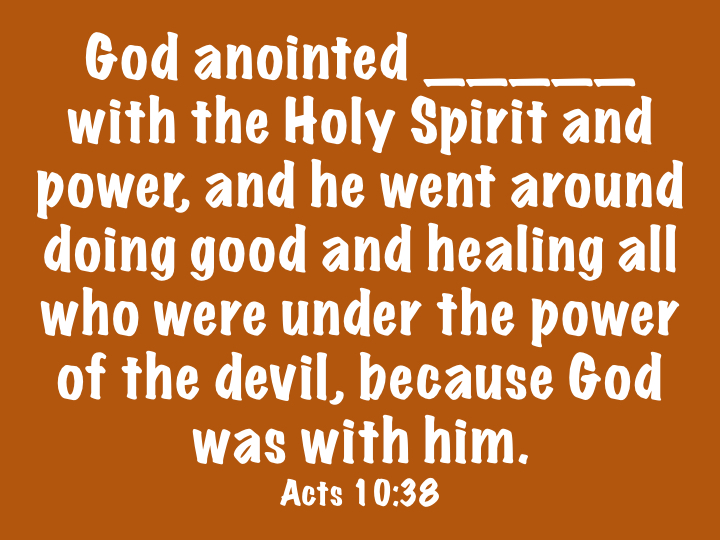
Fellas, you can have this same level of influence if you, too, will decide to live karios Iesous: Jesus is Lord. If you will do that, you can have said about your life what was said about Cornelius and Jesus: “God anointed ___________ with the Holy Spirit and power, and he went around doing good and healing all who were under the power of the devil, because God was with him!” (see Acts 10:38).

7 Quotes For Leaders Who Love The Church

Catalyst devotionsI recently completed an excellent reading plan on YouVersion called Catalyst: Devotions For Leaders Who Love The Church. Here are some quotes I especially liked…

“Too often we view leadership as purely outward, thinking only of how we will climb the next mountain, or overcome the next obstacle without considering who we will be when we do. But true leadership, great leadership, starts within.” 

“Your capacity for life changing leadership is directly related to your willingness to be led, not your eagerness to perform. Lean in to the promises of God, allow Him to mature you in goodness, knowledge, self-control, perseverance, and love; true hallmarks of a leader worth following.”

“The more we look, act, love, and lead like Jesus, the more impactful our leadership will be to the world around us.” 

“There is no choosing to lead through the Spirit of God without choosing to be changed by the Spirit. … What is not cultivated in secret cannot be called upon in public. We have to pray for the transformative power of the Spirit to work His way in our hearts and minds, changing us forever, so our leadership is not a facade, but a reflection of His power at work within us.”

“Jesus calls us further, calls us to more, and through His power we have to change the landscape of leadership in our world. We must demonstrate that leadership through Christ speaks life and value into people’s hearts. That the way we treat the Father’s children matters, and is our greatest end.” 

“Father, help me to see Your children the way You do. Give me eyes to look beyond what my flesh sees, and to focus on how to affirm, love, and care for those You’ve entrusted me to lead. Create in me a compassionate heart, one that turns first to You in worship and then towards Your children with love.”

“God, this world is Yours, everything in it is Yours. I am Yours, do with my life what You will. Help me to release the things of my flesh, so that I may be transformed according to Your Spirit. Give me a heart for those around me, a burden for my community that compels me to fulfill the mission You have may give me. Teach me to clothe myself in You, to speak Your words and offer Your hands. May my leadership radiate You, and draw people towards Jesus.”

Thursdays With Oswald—What Prayer Does In Us

Oswald ChambersThis is a weekly series with things I’m reading and pondering from Oswald Chambers. You can read the original seed thought here, or type “Thursdays With Oswald” in the search box to read more entries.

What Prayer Does In Us

     Prayer is the point where the reality of God merges with human life. Until we are born from above, prayer with us is honestly nothing more than a mere exercise; but in all our Lord’s teaching and in His own personal life, as well as in the emphasis laid on prayer by the Holy Ghost after He had gone, prayer is regarded as the work (see John 14:11-13). … 

     If prayer is the highest reach of communion possible between Almighty God and the Son of Man, what part ought prayer to play in our lives? … 

     Prayer is not meant to develop us, but to develop the life of God in us after new birth.

From The Psychology Of Redemption

In another lesson, Chambers reminds us that prayer is easy for us because it cost Jesus so much to make it possible for us.

Jesus knew the value of prayer, which is why it was an essential priority all throughout His earthly life. Now we have access to the same Almighty God through the name of Jesus. Yes, Jesus is interceding for us, but we don’t have to stop there—we should never stop there!—because Christ’s death and resurrection makes a way for us to go right into Almighty God’s presence.

Prayer is powerful! Prayer brings the life of God right down into our own souls.

So… what part ought prayer to play in your life?

8 Ways Pastors Can Minister Like The Apostle Paul

PreachingThe Apostle Paul reminded the Thessalonians of how he ministered among them (“You know…” [1 Thessalonians 2:1]). This gives all of us pastors now an example of how to minister.

(1) “With the help of God we dared to tell you His gospel” (v. 2). I cannot minister out of my own strength; everything must flow from God’s strength.

(2) The message “does not spring from error or impure motives, nor are we trying to trick you” (v. 3). I must constantly allow the Holy Spirit to check my motives and check my theology.

(3) “We speak as men approved by God to be entrusted with the gospel”( v. 4a). I am merely a vessel that God chooses to use to share His gospel. This must keep me humble.

(4) “We are not trying to please men but God, Who tests our hearts” (v. 4b). I minister only for God’s approval, only for the applause of Nail-Scarred hands. “We were not looking for praise from men” (v. 6).

(5) “We were gentle among you, like a mother caring for her little children … We dealt with each of you as a father deals with his own children, encouraging, comforting and urging you to live lives worthy of God” (vv. 7, 11, 12).

(6) “We loved you so much that we were delighted to share with you not only the gospel of God but our lives as well” (v. 8). Paul didn’t just show up to preach, but he was in day-to-day interaction with the saints.

(7) “We worked night and day in order not to be a burden to anyone while we preached the gospel of God to you” (v. 9). My salary should not be too much of a burden for my congregation.

(8) “Holy, righteous and blameless we were among you” (v. 10). My life of integrity adds weight to the message that I preach (v. 5).

May all of us who are pastors live and minister like this!

4 Ways To Share The Good News With Everyone

Everybody EveryoneJesus told His followers that their ministry assignment was to take His message of salvation throughout the entire world. One requirement to do this, is to be able to communicate with lots of people. Actually to be able to communicate with everyone.

Be careful to do what is right in the eyes of everybody. If it is possible, as far as it depends on you, live at peace with everyone. (Romans 12:17-18)

Really? Everybody and everyone?!

Yes!

Jesus said our Helper would be the Holy Spirit. He would come to empower us to be witnesses to everyone, everybody, everywhere (Acts 1:8).

We have been learning how to communicate with others better, but noticing their communication style “accent.” Check out this post to get some more insight into this. In a nutshell…

  • Doers are action-oriented
  • Planners like to work out all the details
  • People want to make sure everyone is connected
  • Visions are imagining a better future

So if you are a Doer, and you’re trying to share the Good News about Jesus with a Planner, you can probably see a potential problem. The Doer is speaking in bullet points, but the Planner is wanting a lot more facts and figures.

This is where the Holy Spirit can help us. He has the insight that we don’t, and He can direct our words, just as He directed Christ’s words (see John 12:49-50).

Here’s how to talk their talk when you’re sharing the Good News:

(1) Doer

  • Keep it brief
  • Share more facts than stories
  • Stress now/today
  • Rely on the Gospel of Mark (action oriented)

(2) Planner

  • Tell them the who, what, where, when, why, and how
  • Be ready for lots of questions
  • Give them time to process your information
  • Rely on the Gospel of Matthew (lots of background, lots of Old Testament references to answer the who, what, where, when, why and how)

(3) People

  • Develop a friendship first
  • Share more stories than facts
  • Don’t tell them, show them your personal life
  • Rely on the Gospel of Luke (lots of personal stories about changed lives)

(4) Vision

  • Share both the facts and the stories
  • Encourage them to “Imagine what would happen …”
  • Give them time to ask questions
  • Rely on the Gospel of John (very poetic and image-rich)

You can connect with everyone, everybody, everywhere and share the Gospel with them in an effective way. Allow the Holy Spirit to give you the insight you need.

Check out how I describe this in more detail here…

Pentecost Sunday

For Pentecost Sunday, I think these words from Charles Spurgeon are vital for us to hear again…

“The Holy Spirit’sC.H. Spurgeon power was gloriously manifested in and after Pentecost. He remains at this hour the present Immanuel—God with us, dwelling in and with His people, quickening, guiding, and ruling in their midst. Is His presence recognized as it ought to be? We cannot control His working; He is most sovereign in all His operations, but are we sufficiently anxious to obtain His help, or sufficiently watchful lest we provoke Him to withdraw His aid? Without Him we can do nothing, but by His almighty energy the most extraordinary results can be produced…. The Holy Ghost is no temporary gift, He abides with the saints. We have but to seek Him aright, and He will be found of us.” —Charles Spurgeon

Thursdays With Oswald—The Right Ingredients For Spiritual Growth

Oswald ChambersThis is a weekly series with things I’m reading and pondering from Oswald Chambers. You can read the original seed thought here, or type “Thursdays With Oswald” in the search box to read more entries.

The Right Ingredients For Spiritual Growth 

     God engineers the circumstances that are best fitted for the development of the life of His Son in us. … 

     We hear it asked, “What is the good of all this study and reading of the Bible? We get no ‘change’ out of it.” Most of us want something to show for what we do. We are not interested in God’s life in us, but only in our life in God. We are not after the development of the unconscious life of the Son of God in us, but after the “small change” which enables us to say, “I did this and that.” The life of the Son of God grows feeble in a life of that order.

     Every mind has two stories, the conscious and the unconscious. Most of what we hear passes out of our conscious mind into our unconscious mind and we think we have forgotten it, but we have not, we never forget anything; we cannot always recall it when we want to, but that is a different matter. We forget nothing; it is there, although not in the conscious mind, and when certain circumstances arise, suddenly the thing we thought we had forgotten is there to our amazement right enough. 

     This is exactly what Jesus said the Holy Ghost would do, “He shall…bring all things to your remembrance whatsoever I have said unto you” [John 14:26]. The Holy Spirit is forming the unconscious mind all the time, and as we “mop up” His teaching—simply take it in, not try to estimate it as we would a mathematical study—we shall find God is putting in the right soil for His life to grow in.

From The Psychology Of Redemption

God knows the soil, and the circumstances that will best make His life grow in us. Will I let Him have His way?

The best “fertilizer” for this growth is the Holy Spirit bringing out the Word of God in the circumstances in which God places us. Notice Jesus said the Spirit would remind us the Word. Which means it is my responsibility to put the Word into my mind as regularly as I can. Am I daily in His Word?

Thursdays With Oswald—Why Does God Bring Clouds?

Oswald ChambersThis is a weekly series with things I’m reading and pondering from Oswald Chambers. You can read the original seed thought here, or type “Thursdays With Oswald” in the search box to read more entries.

Why Does God Bring Clouds?

     It is not true to say that God wants to teach us something in our trials. In every cloud He brings, God wants us to un-learn something. God’s purpose in the cloud is to simplify our belief until our relationship to Him is exactly that of a child. God uses every cloud which comes in our physical life, in our moral or spiritual life, or in our circumstances, to bring us nearer to Him, until we come to the place where our Lord Jesus Christ lived, and we do not allow our hearts to be troubled. 

     Christianity does not add to our difficulties, it brings them to a focus, and in the difficulties we find Jesus Himself. We must get out of the habit of misinterpreting God by saying He wants to teach us something, it is not a New Testament idea, but an idea that is as unlike the God whom Jesus revealed as could be. God is all the time bringing us to the place where we un-learn things. … In everything that happens we should be un-learning that which keeps us from a simple relationship to God. … 

     There are no such things as “calamities” or “accidents” to God’s children—“all things work together for good.” 

From God’s Workmanship

Futurist Alvin Toffler wrote that the illiterate of this age are those who cannot learn, unlearn, and relearn. God wants to do the same thing for us. God doesn’t want us to be spiritually illiterate, so there are times to learn and times to un-learn.

The next time you are going through some clouds in your spiritual walk, pause to ask the Holy Spirit, “What do I need to un-learn from this?” And then follow through on what He shows you.