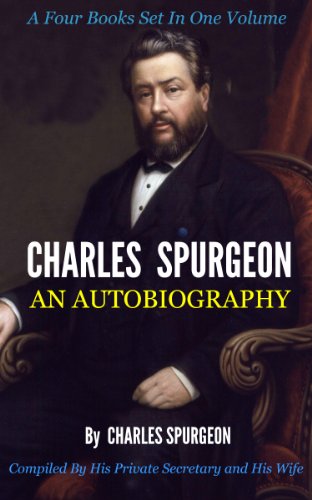
Thursdays With Spurgeon—The Greatest Treasure Ever!

This is a weekly series with things I’m reading and pondering from Charles Spurgeon. You can read the original seed thought here, or type “Thursdays With Spurgeon” in the search box to read more entries.

The Greatest Treasure Ever!

     Oh! Christian, do but consider what it is to have God to be your own! Consider what it is, compared with anything else.

Jacob’s portion is the Lord;
What can Jacob more require?
What can heaven more afford—
Or a creature more desire?

     Some have their portion in the city. Their wealth is superabundant and in constant streams it flows to them, until they become a very reservoir of gold. But what is gold compared with your God? You could not live on it; your spiritual life could not be sustained by it. Apply it to your aching head, and would it afford you any ease? 

     Put it on a troubled conscience, and could your gold allay its pangs? Put it on your desponding heart and see if it could stay a solitary groan or give you one grief the less. But you have God, and in Him you have more than gold or riches ever could buy, more than heaps of brilliant ore could ever purchase for you. … 

     There are griefs here with which men cannot intermeddle, and there are griefs to come with which men cannot interfere to alleviate the pangs, pains, agonies, and dying strife. But when you have this: “I will be your God” [Jeremiah 31:33]—you have as much as other men can have put together. … 

     O Christian, ask for nothing in this world but that you may live on this and that you may die on this: “I will be your God.” This exceeds all the world has to offer. …

     Oh! Here is a very sea of bliss, a very ocean of delight! Come, bathe your spirit in it. You may swim to eternity and never find a shore. You may dive to the very infinite and never find the bottom. “I will be your God.” Oh! If this does not make your eyes sparkle, if this makes not your foot dance for joy and your heart beat high with bliss, then assuredly your soul is not in a healthy state.

From God In The Covenant 

I agree with Spurgeon: “If this does not make your eyes sparkle, if this makes not your foot dance for joy and your heart beat high with bliss, then assuredly your soul is not in a healthy state.” 

If you want your soul to be in this healthy state, it is possible for you to know assuredly that God is saying to you, “I will be your God.” Jesus died in your place to pay the penalty for your sin. If you believe that, you may ask God to forgive all your sins—completely cancel that record of wrongdoing—and He will! Then His Spirit will take up residence in your heart and you can know the unspeakable bliss of the truth of what God says: “I am your God”! 
Humbug?!

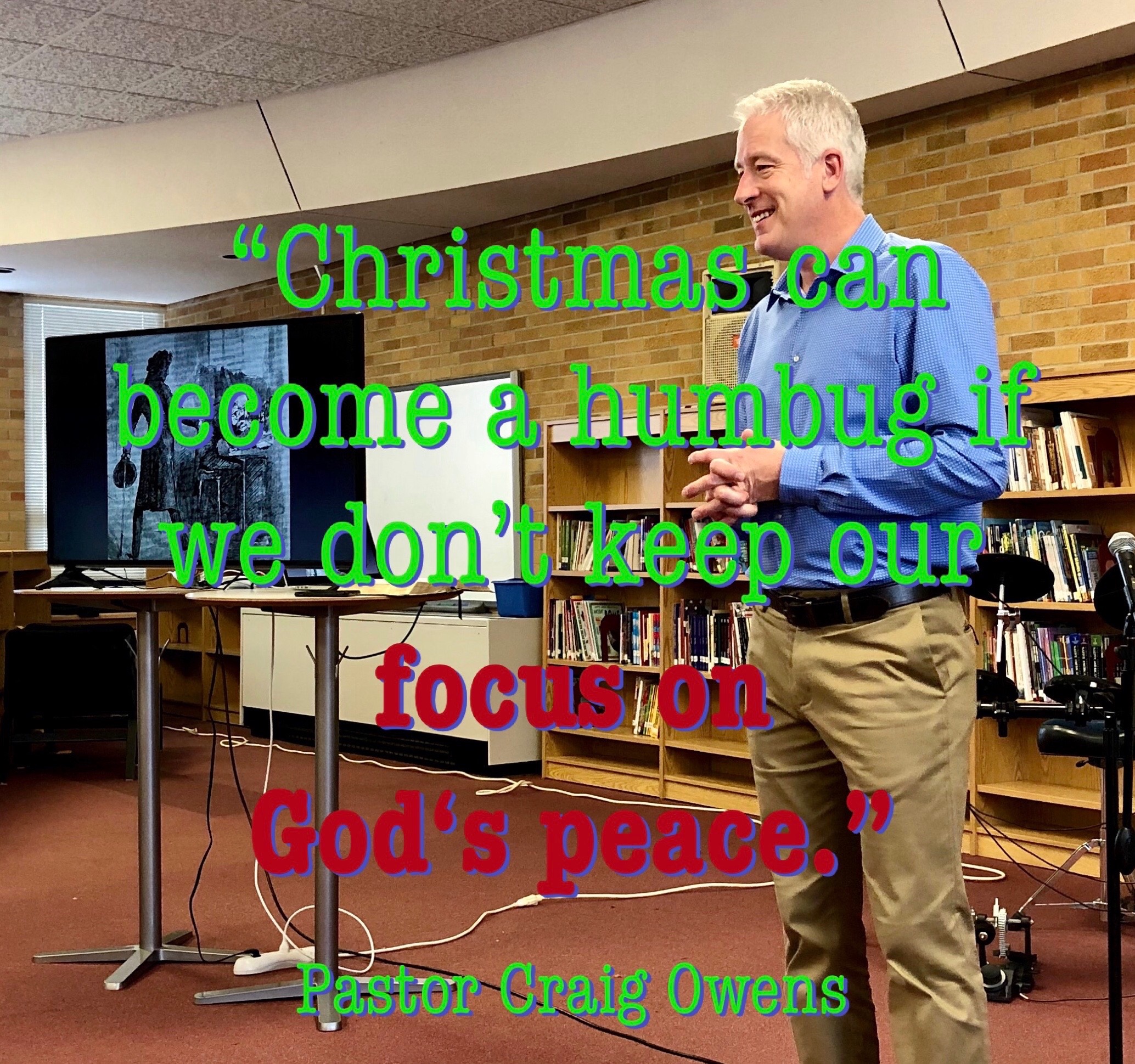
In Longfellow’s classic I Heard The Bells On Christmas Day every stanza ends with the phrase “peace on earth, goodwill to men.” Unless you’ve been living someplace that doesn’t get the daily news, you might be saying, “Peace on earth? Really? I just don’t see it….” Or as Ebenezer Scrooge might say, “Peace on earth? Bah! Humbug!” 

A humbug is an imposter, or something empty of meaning. 

The third stanza of I Heard The Bells seems almost to slide into that Christmas humbug note: “And in despair I bowed my head: ‘There is no peace on earth,’ I said. ‘For hate is strong and mocks the song of peace on earth, goodwill to men.’” 

Indeed, even for those who call themselves a Christian, Christmas could become a humbug if…

  • … it’s all about busyness or just trying to “survive the holidays” 
  • … we get more excited about Santa Claus coming down the chimney to fill stockings than we do about Jesus coming down to Earth to be born in a manger 
  • … our main focus is on gifts—both what you’re giving and what you’re getting—and then we regret putting ourselves into debt 

Between Malachi (the last book of the Old Testament) and Matthew (the first book of the New Testament) is a time span of about 400 years that is called “the dark period.” God had promised through Jeremiah that He would restore the Israelites and rebuild Jerusalem. There were promises of the Messiah coming to set things right, but after 400 years of darkness, the mindset of most Israelites was probably, “Messiah? Peace? Bah! Humbug!!” 

What God really promised through Jeremiah was a peace that came about as a result of two things: (1) forgiveness of sins and (2) restoration of a perfect relationship with God. The Hebrew word for “peace” is shalom, which means one’s personal sense of wholeness and well-being, free from anxiety and fear, knowing that all is well between my soul and God. 

This is what God promises—I will cleanse them from ALL the sin they have committed against Me and will forgive ALL their sins of rebellion against Me (Jeremiah 33:8). 

This shalom is what comes through the First Advent of Jesus! As Longfellow observed, “Then pealed the bells more loud and deep: God is not dead nor doth He sleep; the wrong shall fail, the right prevail, with peace on earth, goodwill to men.” 

And this is what Jesus brought—

  • She will give birth to a Son, and you are to give Him the name Jesus, because He will save His people from their sins (Matthew 1:21 NIV). 
  • Now you have been united with Christ Jesus. Once you were far away from God, but now you have been brought near to Him through the blood of Christ. For Christ Himself has brought peace to us… (Ephesians 2:13-14 NLT) 
  • Therefore, since we are justified (acquitted, declared righteous, and given a right standing with God) through faith, let us grasp the fact that we have…peace with God through our Lord Jesus Christ (the Messiah, the Anointed One) (Romans 5:1 AMP). 

The bells and carols and remembrances of Christ’s First Advent should send our hearts soaring in anticipation of Christ’s Second Advent—when Christ shall return to take all of His own to be with Him forever, where He will wipe away every tear and where we live forever with Him in the New Jerusalem (see Jeremiah 33:9; John 14:3; Revelation 21:1-4). 

Let us guard against Christmas ever becoming a humbug—an imposter, something empty of meaning—but let’s make sure the rich meaning of Christ’s peace dwells richly in us! 

If you’ve missed any of the message in this series, you can check them out by clicking here.  

Poetry Saturday—Come, Thou Fount

Come, Thou Fount of every blessing, tune my heart to sing Thy grace; 
streams of mercy, never ceasing, call for songs of loudest praise. 
Teach me some melodious sonnet, sung by flaming tongues above. 
Praise the mount! I’m fixed upon it, mount of Thy redeeming love. 

Here I raise mine Ebenezer; hither by Thy help I’m come; 
and I hope, by Thy good pleasure, safely to arrive at home. 
Jesus sought me when a stranger, wandering from the fold of God; 
He, to rescue me from danger, interposed His precious blood. 

O to grace how great a debtor daily I’m constrained to be! 
Let Thy goodness, like a fetter, bind my wandering heart to Thee. 
Prone to wander, Lord, I feel it, prone to leave the God I love;
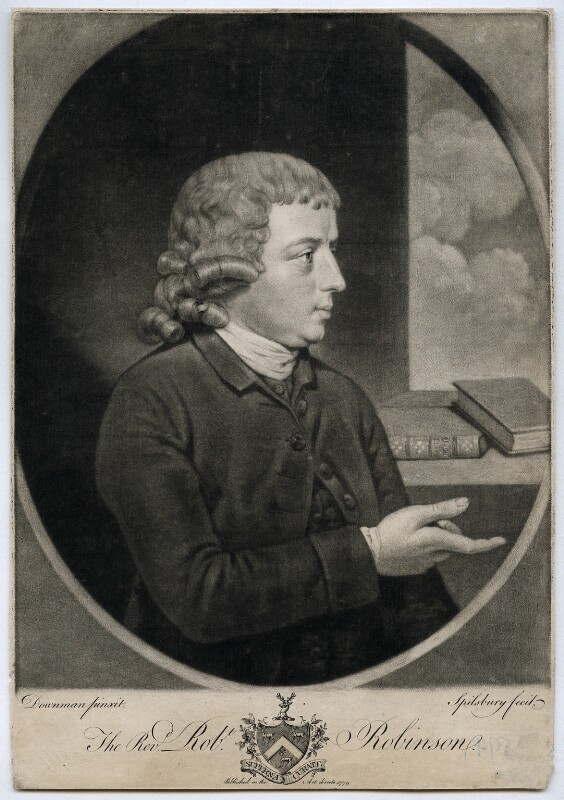
here’s my heart, O take and seal it, seal it for Thy courts above. —Robert Robinson

Poetry Saturday—Come, Ye That Love The Lord

Come, ye that love the Lord,
  And let your joys be known;
Join in a song with sweet accord
  While we surround the throne.
The sorrow of the mind
  Be banish’d from the place; 
Religion never was design’d
  To make our pleasures less.
Let those refuse to sing
  Who never knew our God;
But servants of the heavenly King
  May speak their joys abroad.
The God that rules on high,
  That all the earth surveys,
That rides upon the stormy sky,
  And calms the roaring seas:
This awful God of ours,
  Our Father and our Love;
He will send down His heavenly powers
  To carry us above. 
There shall we see His face,
  And never, never sin;
There from the rivers of His grace
  Drink endless pleasures in.
Yes! and before we rise
  To that immortal state,
The thoughts of such amazing bliss
  Should constant joys create.
The men of grace have found
  Glory begun below;
Celestial fruits on earthly ground
  From faith and hope may grow.
The hill of Zion yields
  A thousand sacred sweets,
Before we reach the heavenly fields,
  Or walk the golden streets.
Then let our songs abound,
  And every tear be dry;
We’re marching through Immanuel’s ground
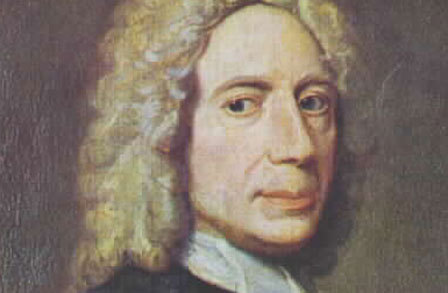
  To fairer worlds on high. —Isaac Watts

Thursdays With Spurgeon—Our Secure Future Hope

This is a weekly series with things I’m reading and pondering from Charles Spurgeon. You can read the original seed thought here, or type “Thursdays With Spurgeon” in the search box to read more entries.

Our Secure Future Hope

     First, Christ is all. Next Christ is in all His people, but the consummation, the top-stone of all, is that God may be all in all [1 Corinthians 15:22-28]. … 

     The fact is, our Lord Jesus Christ has performed and is still performing a work that will end in putting everything into its proper order. …

     Christ is come into the world that all of the evil that is in the world should be subdued. And He will drive it out of the world. There will remain no power that will dare revolt against the Majesty of Heaven! Over the whole surface of this globe, beneath the new heavens and on the new earth, there will yet be the kingdom established all of which Jesus Christ will be the Supreme Head and over which He will reign forever, King of kings and Lord of lords! The Lord hasten it in His own time! … 

     I don’t know whether you catch my thought yet, but it is just this: all evil subdued, all the saints having Christ dwelling in them, Christ the head of all these saints, and then God, still as God, all the more surely and securely supreme over all things, or the head of Christ is God and God is all in all. … 

     I want to you, beloved friends, so to live as to be persuaded that it will be so one day, that God will be all in all—that there will come a time when we will stand before the throne of God, God in us all, and everything in us of God, when all His elect, all His redeemed, all to whom Christ is all, and all in whom Christ is, will only know God as their All-in-All!

From All And All In All

What a glorious future hope is secured for God’s saints! 

If we know what is coming, why would we fear today? If our hope is secure, that means our today is secure as well. That’s why David could confidently say: I keep my eyes always on the Lord. With Him at my right hand, I will not be shaken (Psalm 16:8).

Poetry Saturday—Hark! The Sound Of Jubilee

Hark! the song of jubilee,
Loud as mighty thunders roar,
Or the fullness of the sea,
When it breaks upon the shore:
“Hallelujah! for the Lord
God Omnipotent shall reign;
Hallelujah!” let the word
Echo round the earth and main.

Hallelujah! hark! the sound,
From the depths unto the skies.
Wakes above, beneath, around
All creation’s harmonies;
See Jehovah’s banner furled,
Sheathed His sword; He speaks; ‘tis done;
And the kingdoms of this world
Are the kingdoms of His Son.

He shall reign from pole to pole
With illimitable sway;
He shall reign when, like a scroll,
Yonder heavens have passed away.
Then the end; beneath His rod
Man’s last enemy shall fall:
Hallelujah! Christ in God,
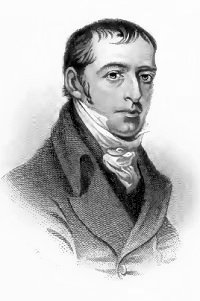
God in Christ is All in All. —James Montgomery

Gone From My Sight

   I am standing upon the seashore. A ship at my side spreads her white sails to the morning breeze and starts for the blue ocean. She is an object of beauty and strength. I stand and watch her until at length she hangs like a speck of white cloud just where the sea and sky come to mingle with each other.

   Then someone at my side says, “There, she is gone!”

   “Gone where?”

   Gone from my sight. That is all. She is just as large in mast and hull and spar as she was when she left my side, and she is just as able to bear her load of living freight to her destined port.

   Her diminished size is in me, not in her. And just at the moment when someone at my side says, “There, she is gone,” there are other eyes watching her coming, and other voices ready to take up the glad shout, “Here she comes!” —Henry Van Dyke

Poetry Saturday—I’ll Praise My Maker While I’ve Breath

I’ll praise my Maker while I’ve breath;
and when my voice is lost in death,
praise shall employ my nobler powers.
My days of praise shall ne’er be past
while life and thought and being last,
or immortality endures.

How happy they whose hopes rely
on Israel’s God, who made the sky
and earth and seas with all their train;
whose truth forever stands secure,
who saves the oppressed and feeds the poor,
and none shall find God’s promise vain.

The Lord pours eyesight on the blind;
the Lord supports the fainting mind
and sends the laboring conscience peace.
God helps the stranger in distress,
the widowed and the parentless,
and grants the prisoner sweet release. —Isaac Watts

Ultimate Wisdom

Last week I posted a quote on some of my social media channels that simply stated: “Our opinions don’t matter if they don’t square with God’s Word on the matter.” This seemed to me to be a fairly uncontroversial statement, but one anonymous reader really took me to task for using the hashtag #objectivetruth. Apparently, he thinks there is no such thing. 

But don’t we all rely on objective, external standards all the time? For instance, a gallon of gasoline is a gallon regardless of where you buy it, or whether you feel like it’s a gallon or not. And when you go to pay for your gasoline, the price isn’t based on how the gas station attendant is feeling at that moment, but on the objective amount posted. 

Psalm 49 is somewhat unusual in that it is a “wisdom psalm.” This psalm feels a lot more like something we would read in Proverbs or Ecclesiastes than it does a prayer or song in the Psalms. 

For instance, the first four verses of this Psalm sound a lot like the opening verses of the Book of Proverbs. And verses 5-13 of the Psalm echo what Solomon wrote in Ecclesiastes 2. 

This psalmist—like Solomon—wants us to understand how important it is to get wisdom. So we are urged to listen intently to those who have hard-won insight, to those who have “been there, done that” so that we don’t have to repeat their folly. 

What is that wisdom? It can be broken down into two profound statements:

(1) Everyone dies. 

That can be a really depressing truth IF your focus is building your own kingdom. If all there is to life is what you can earn and build before you die, only to realize that your “kingdom” ends at your last breath, that can be very depressing. 

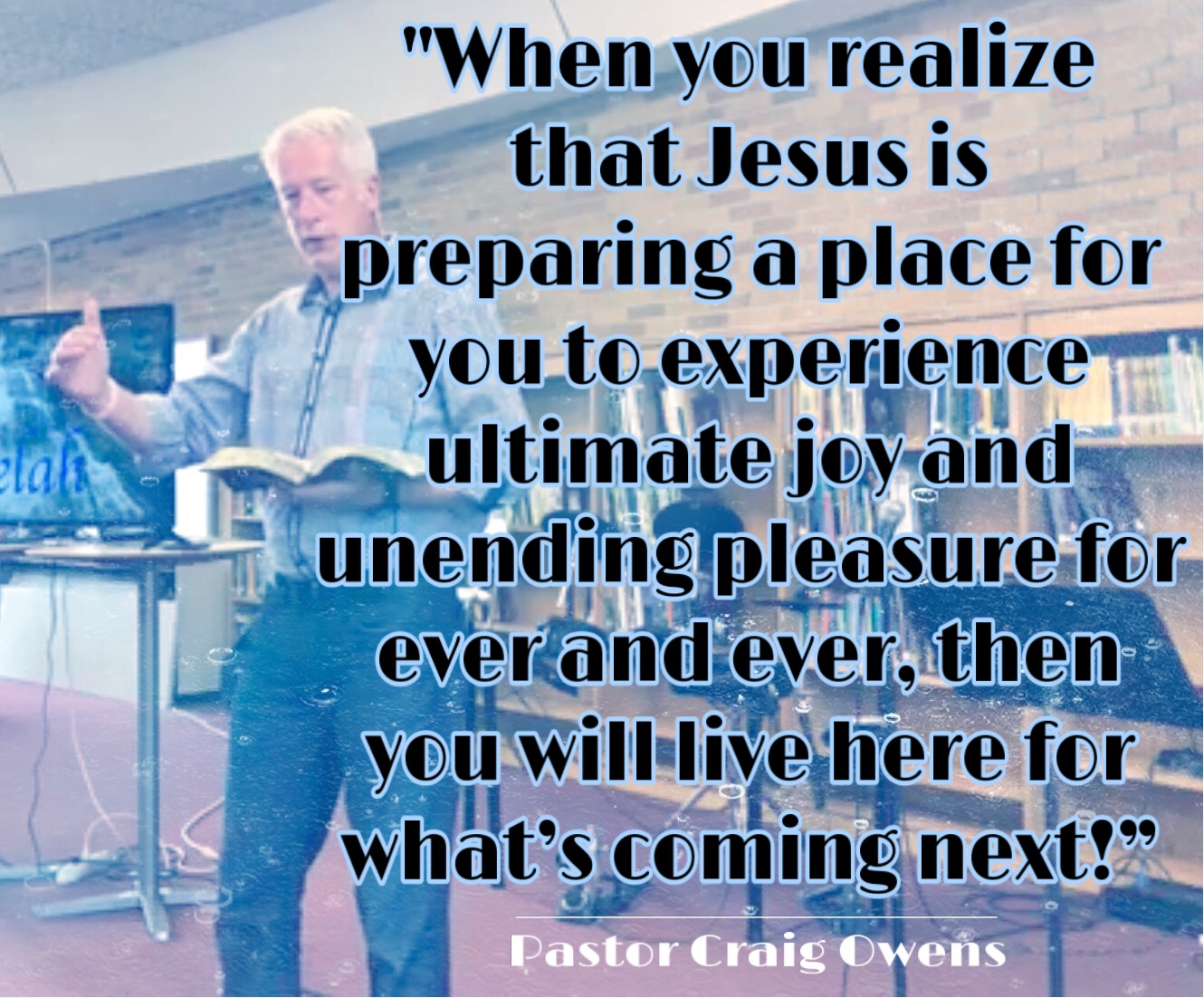
However, this realization that everyone dies can be a very liberating truth IF your focus is on the eternal kingdom that is awaiting you in Heaven. When you realize that Jesus is preparing a place for you to experience ultimate joy and unending pleasure forever and ever, then you will live here for what’s coming next! 

(2) Our eternal destination after we die is determined before we die.

If someone told me that he had discovered the secret to immortality, and then he died and came back to this life to tell me that his theory was correct, it would be wise listen to him. 

That’s exactly what Jesus did for us!

He told us that He would die on a Cross and that He would be raised back to life. AND HE DID IT! His hard-won insight, His “been there, done that” wise words to us are this—“Believe in Me. I died to pay the penalty for the sins that will keep you out of Paradise. So place your faith in what I did, and ask my Father to forgive your sins. Then I promise you that you will spend forever and ever with Me in Paradise!” 

THIS objective truth determines everything else about our lives. 

So I’ll repeat it again—

“Our opinions don’t matter if they don’t square with God’s Word on the matter.” —Craig T. Owens

Join me next Sunday as we continue our series looking at the Selahs in the Psalms. 

12 Quotes From “The Autobiography Of Charles Spurgeon”

Charles Spurgeon lived exactly as he preached. What a delight that is! Check out my full book review of his Autobiography by clicking here. Also, be sure to check out my weekly Thursdays With Spurgeon series, where I share longer passages from this Prince of Preachers. 

“My sole hope for heaven lies in the full atonement made upon Calvary’s Cross for the ungodly. On that I firmly rely. I have not the shadow of a hope anywhere else.” 

“While my brief term on earth shall last, I should be the servant of Him who became the Servant of servants for me.” 

“For I am persuaded there are more delights in Christ, yea, more joy in one glimpse of His face than is to be found in all the praises of this harlot-world, and in all the delights that it can yield to us in its sunniest and brightest days.” 

“I have found, in my own spiritual life, that the more rules I lay down for myself, the more sins I commit. The habit of regular morning and evening prayer is one that is indispensable to a believer’s life, but the prescribing of the length of prayer, and the constrained remembrance of so many persons and subjects, may gender unto bondage and strangle prayer rather than assist it.” 

“There is nothing that more tends to strengthen the faith of the young believer than to hear the veteran Christian, covered with scars from the battle, testifying that the service of his Master is a happy service, and that, if he could have served any other master, he would not have done so, for His service is pleasant and His reward everlasting joy.” 

“I went to my chamber and told my little griefs into the ears of Jesus. They were great griefs to me then, though they are nothing now. When on my knees I just whispered them into the ear of Him who had loved me with an everlasting love, oh, it was so sweet! If I had told them to others, they would have told them again, but He, my blessed Confidant, knows all my secrets, and He never tells again.” 

“That God predestined, and yet that man is responsible, are two facts that few can see clearly. They are believed to be inconsistent and contradictory to each other. If, then, I find taught in one part of the Bible that everything is foreordained, that is true; and if I find, in another Scripture, that man is responsible for all his actions, that is true. And it is only my folly that leads me to imagine that these two truths can ever contradict each other.” 

“It was said of an old Greek philosopher that he wrote over his door, ‘None but the learned may enter here.’ But Christ writes over His door, ‘He who is simple, let him turn in hither.’” 

“I used to think, sometimes, that if they had degrees who deserved them, diplomas would often be transferred and given to those who hold the plow handle or work at the carpenter’s bench; for there is often more divinity in the little finger of a plowman than there is in the whole body of some of our modern divines. ‘Don’t they understand divinity?’ someone asks. Yes, in the letter of it, but as to the spirit and life of it, D.D. often means Doubly Destitute.” 😀

“When I came to New Park Street Chapel, it was but a mere handful of people to whom I first preached; yet I can never forget how earnestly they prayed. Sometimes they seemed to plead as though they could really see the Angel of the covenant present with them, and as if they must have a blessing from Him. More than once, we were all so awestruck with the solemnity of the meeting that we sat silent for some moments while the Lord’s power appeared to overshadow us. All I could do on such occasions was to pronounce the benediction and say, ‘Dear friends, we have had the Spirit of God here very manifestly tonight; let us go home and take care not to lose His gracious influences.’ Then down came the blessing; the house was filled with hearers, and many souls were saved. I always give all the glory to God, but I do not forget that He gave me the privilege of ministering from the first to a praying people.” 

“It is the extremity of unwisdom for a young man, fresh from college or from another charge, to suffer himself to be earwigged by a clique, and to be bribed by kindness and flattery to become a partisan, and so to ruin himself with one half of his people.” 

“It is of no use to rise before an assembly and hope to be inspired upon subjects of which one knows nothing. If anyone is so unwise, the result will be that, as he knows nothing, he will probably say it, and the people will not be edified. But I do not see why a man cannot speak extemporaneously upon a subject that he fully understands. Any tradesman, well versed in his line of business, could explain it without needing to retire for meditation, and surely I ought to be equally familiar with the first principles of our holy faith. I ought not to feel at a loss when called upon to speak upon topics that constitute the daily bread of my soul.”