Love Beyond Imagining!

God has always been revealing Himself. Sometimes it’s in His Creation, or the conscience He placed inside every human, or the prophets who remind us of God’s ways. But ultimately God revealed His fullness in the Person of Jesus.

Nancy Guthrie wrote

“God has always wanted His people to know Him—not in a generic or shallow way, but personally, as He truly is. So He revealed Himself in a progressive way, not only through His name, but also through His glorious presence that dwelt in the Temple, through the Law, and through His mighty deeds on behalf of His people. But these revelations all led up to a definitive revelation in the Person of Jesus.

One of the ways the love of Jesus was revealed to us is in the story of Ruth and Boaz. This is one of my favorite Bible stories. It’s a short story, so please check it out when you have 10 minutes to read it.

Here’s the part of the story I want to share today. Ruth is…

  • a foreigner in Israel (she has no citizenship)
  • a widowed woman (she has no legal standing)
  • without money and no way to earn money, which means she is merely in survival mode
  • so far in debt that creditors are about to foreclose on the one remaining asset she and her mother-in-law have.

Ruth meets a man named Boaz, who is…

  • a rich land owner;
  • a “man of standing,” which can mean hero
  • well respected by the city leaders
  • a popular and successful employer
  • God-fearing and above-and-beyond obedient to God’s laws

Ruth, in an unexpected twist, asks Boaz to marry her!

Boaz has nothing to gain and everything to lose by agreeing to this marriage proposal, but he does it anyway!

In the language of the day, Ruth asks Boaz to “cover me with the corner of your robe.” This becomes the picture that Jesus will ultimately fulfill.

Not only does the corner of Christ’s robe heal people physically (Matthew 9:20-22; 14:34-36), but it also signifies His willingness to take in marriage anyone who is as utterly helpless as Ruth was.

Ruth had nothing but debts; we have nothing but debts. Ruth was barely surviving unless help came; we are headed for death without Jesus.

Boaz took Ruth as she was and gave her citizenship, legal standing, and riches. He covered her shame and allowed her to stand boldly in the city square.

Jesus takes us as we are and gives us citizenship in Heaven, a legal standing before Almighty God, all of His riches, and then…

All who are victorious will be clothed in white. I will never erase their names from the Book of Life, but I will announce before My Father and His angels that THEY ARE MINE! (Revelation 3:5)

Oh, how Jesus loves us!!
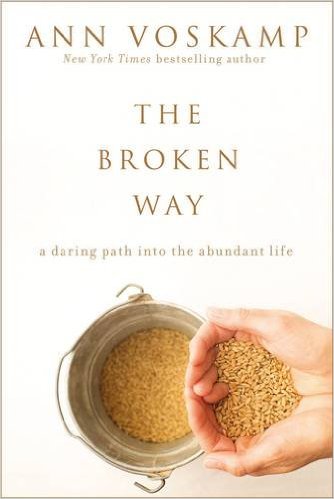
The Broken Way (book review)

“What in God’s holy name do you do when it feels like you’re broken and cut up, and love has failed, and you’ve failed, and you feel like Somebody’s love has failed you?” With these raw, penetrating questions, Ann Voskamp opens her book The Broken Way.

Not only does she open her book, but she opens her heart. In every chapter we are gifted with Ann’s vulnerability and realness. Yes, it is a gift that someone like Ann would be so transparent in sharing her pain, her questions, and also her path to healing and wholeness.

Yet Ann would probably tell me that “wholeness” is not the goal. The goal is brokenness and givenness before God and to the other broken, hurting people around me. It’s in the embracing of the healing that comes from the Healer, and in giving that healing to others, that we truly find how Jesus walks with us on the broken way.

This is a book of healing. A book that will remind you that you are not alone in your pain, in your questions, in your searching for answers. This book is a gift to anyone who feels broken, cut up, cut off, or beaten down.

Perhaps you need this book for yourself. Perhaps you can read it with a broken friend. In either case, reading this book will help reveal the depths of love that can flood into your life when you encounter the Wounded Healer: Jesus!

9 Quotes From “Take Your Life Back”

take-your-life-backStephen Arterburn and David Stoop have given us a great resource if we are struggling to free ourselves from the wounds that are trapping us in a reactive life. I truly believe Take Your Life Back will start many people on a journey of healing. Check out my full book review by clicking here, and then check out a few quotes from this helpful book.

“When we’re constantly looking at what’s happening with other people and measuring our satisfaction based on how fairly we feel we’ve been treated, we are forever at the mercy of what is going on over there. We’ve wired ourselves to react to whatever scale of comparison we’ve established.”

“The real self, quite simply, is the self that God sees. He sees it all, with all its flaws. He does not approve of or endorse everything He sees, but He loves the person He sees. He does not see an idealized self, free of sin. He sees the real self—sinful, doubtful, and flawed—and yet He accepts the reality of it and loves us in spite of it all.”

“Our reactions to pain and our adaptations to it are unique to ourselves; we are not all the same. But we have several things in common: In one way or another, we have turned our back on reality, and we have allowed all, or portions, of our lives to be controlled by another person, a destructive pattern, or unrealistic expectations. We live on the edge of almost. We are almost breaking free, or we are almost free. We are almost fed up or almost ready to take our lives back.” 

“Denial keeps us from addressing the things we can change, causing us to think that our inability to change everything means we can’t change anything. … Because we either don’t or won’t see how far we are from living the life that God intends for us, we stay in our denial and wait for the magic cure that never materializes. But when we admit that we’re in denial, and when we are willing to break through it, we can begin to move into recovery.”

“When we talk about the elephant in the room, we have a way of describing it as a small rodent. Our internal application for minimizing language automatically converts words like pain into irritation; devastating into difficult; abusive into insensitive; and horrific into unpleasant. Our self-talk is unrealistic, so whenever we communicate with someone else, we present our overwhelming problems as manageable situations that we have completely under control. Because we don’t acknowledge the full scope and intensity of our struggles, we don’t act in realistic ways to free ourselves and take our lives back. We minimize in order to give ourselves permission to do little or nothing to change.”

“Toxic shame undermines our will and our power to stand up for ourselves. … Toxic shame carves out a new normal for those who partake of its poisonous fruit. Rather than seeing themselves as human beings who have made a few mistakes—maybe even some really big mistakes—people who are saturated with toxic shame see their failures as an objective expression of who they are. Before long, they don’t even try to avoid future mistakes. They don’t learn from their errors because they don’t think they can, or need to, learn anything. Repeated mistakes are simply a self-fulfilling prophecy that their shame as written for them. …

“Toxic shame…blinds us to wisdom and insight. It prevents us from cleaning up after ourselves. We start to live in the debris of past mistakes, and that leads us to more debris-producing decisions. We fill our lives with problem after problem because we don’t think we can do any better.”

“There is such a thing as good shame. A better term for it might be godly sorrow. …

“Godly sorrow is a warning sign that we are on the wrong path and need to make some adjustments. Any mistakes we make are not seen as the inevitable result of who we are but as stark reminders that—because of who we are, created in the image of God—we can do better. We are genuinely sorry that we fell short, hurt ourselves or other people, or simply created a lot of hassle that has kept us from living in the good things that God has for us. However, our defective behavior is rightly seen as separate from our identity. Making a mistake doesn’t mean that we are a mistake; it’s simply evidence that we are like every other human being—completely capable of many things, including mistakes. …

“Godly sorrow is a prompt from God, and from a well-developed conscience, that we need something more to achieve all that we want to accomplish. We respond to healthy shame with the desire to get better or do better….”

“Tough love says that I will choose to not give you what you want if it prevents you from attaining what you need.”

“Taking your life back is not just about deciding to defend yourself. It is about finding and removing roadblocks, sinkholes, and dead ends that have disconnected you from other people and stopped your journey from going forward together.”

Take Your Life Back (book review)

take-your-life-backStephen Arterburn and David Stoop say it’s quite simple—you are either living a reactive life or a responsive life. One keeps us trapped by our past or other people, and one sets us free to live life to the fullest. Arterburn and Stoop want you to Take Your Life Back.

Arterburn and Stoop vividly describe the childhood wounds and experiences that can lead to so many of us burying our real selves and living out of a reactive, false self that we believe others want to see. Then, using the imagery from the story of the Prodigal Son, they talk about how the younger son came home to address his concerns, and how the elder brother who never left home also had to come to grips with his woundedness.

To some extent or another, we all carry some sort of woundedness in our hearts—someone abused us, or let us down, or led us to believe that we weren’t valuable. The question now is: “Do I know my wound? Am I willing to admit to my wound? Am I willing to take the necessary steps toward healing and freedom?” Far too many people hide their wound and end up living restricted, reactive lives. But Arterburn and Stoop want to help lead you to confront your wound and take the necessary steps to live a free, responsive life.

Whether you have a wound in your life that you need to address, or you know someone close to you struggling with their woundedness, Take Your Life Back will be an invaluable resource. Stop letting your past or other people control and limit you, take your life back to live the abundant life God wants you to live!

I am a Tyndale book reviewer.

Praying With The Authority Of The Creator

pray-boldlyJesus had a way of praying that sounds unusual to our ears because He didn’t pray “normal” prayers. His prayers were bold statements! But Jesus also taught us to pray just like He did.

Most prayers that Christians pray sound like they come from the same formula. We may start with something like, “Heavenly Father” or “Dear God.” Then we probably spend some time praising God for His greatness before we make our requests of Him. Often our requests include something like “If this is Your will, I ask You to please heal/help/answer/etc.” And then almost always the prayer concludes, “In Jesus’ name, Amen!”

When Jesus prayed, His prayers sounded more like commands than requests. He would say things like, “Be clean” or “Rise up and walk” or “Blind eyes, be opened.” He usually didn’t ask His Father if it was His will to heal/help/answer/etc. And He never concluded a prayer by saying, “In My name, Amen!”

In Luke 6 there is a story about a man with a withered hand. Jesus healed him by speaking to the man, not to God. He said, “Stretch out your hand,” and when the man did so, his hand was completely restored. Jesus spoke with the authority of the Creator. 

I believe this was possible because Jesus had an unbroken conversation with His Father and the Holy Spirit. Certainly He had set times of prayer (see Mark 1:35, Mark 6:45-46, and Luke 6:12-13 as examples), but Jesus also told us that He only did what His Father told Him to do (John 5:19), and He only said what His Father told Him to say (John 12:49).

I know sometimes people want to say, “Yeah, but this is Jesus we’re talking about! C’mon, He’s the Son of God, so of course He could do these things.” But remember that the miracle of Christ’s Incarnation is that He chose NOT to do these things out of His Deity while He was on Earth, but restricted Himself only to His humanity. That’s why the Bible says that everything we face, Jesus also faced in the flesh (Hebrews 2:14-18).

But perhaps another example from someone who had no Deity in his nature might help. Consider Joshua—this man spent more time in God’s presence, listening to His voice, than even Moses (Exodus 33:11). So when the time came, Joshua could pray an incredibly bold prayer: He actually spoke to the sun and the moon and told them to stand still in the sky, AND THEY OBEYED HIM!

Just like Jesus spoke to the man with the withered hand in the authority of the Creator, Joshua spoke to the sun and the moon in the same authoritative voice. How could these men do that? Because they were familiar with God’s voice, and when He told them to speak out boldly, they simply obeyed.

Jesus said we could pray the same way—Very truly I tell you, whoever believes in Me will do the works I have been doing, and they will do even greater things than these, because I am going to the Father. And I will do whatever you ask in My name, so that the Father may be glorified in the Son. You may ask Me for anything in My name, and I will do it (John 14:12-14, emphasis added).

How can we learn to pray this boldly? We need to spend more and more time in dialogue with God. We need to become increasingly aware of the His abiding presence with us. Then we, too, can pray in the Creator’s authority.

Praying this way glorifies God!

Get together with a friend this week and work through these application questions:

  1. Am I spending time in planned prayer and Bible reading?
  2. How can I make myself more aware of God’s perpetual presence?
  3. What’s holding me back from praying more boldly?

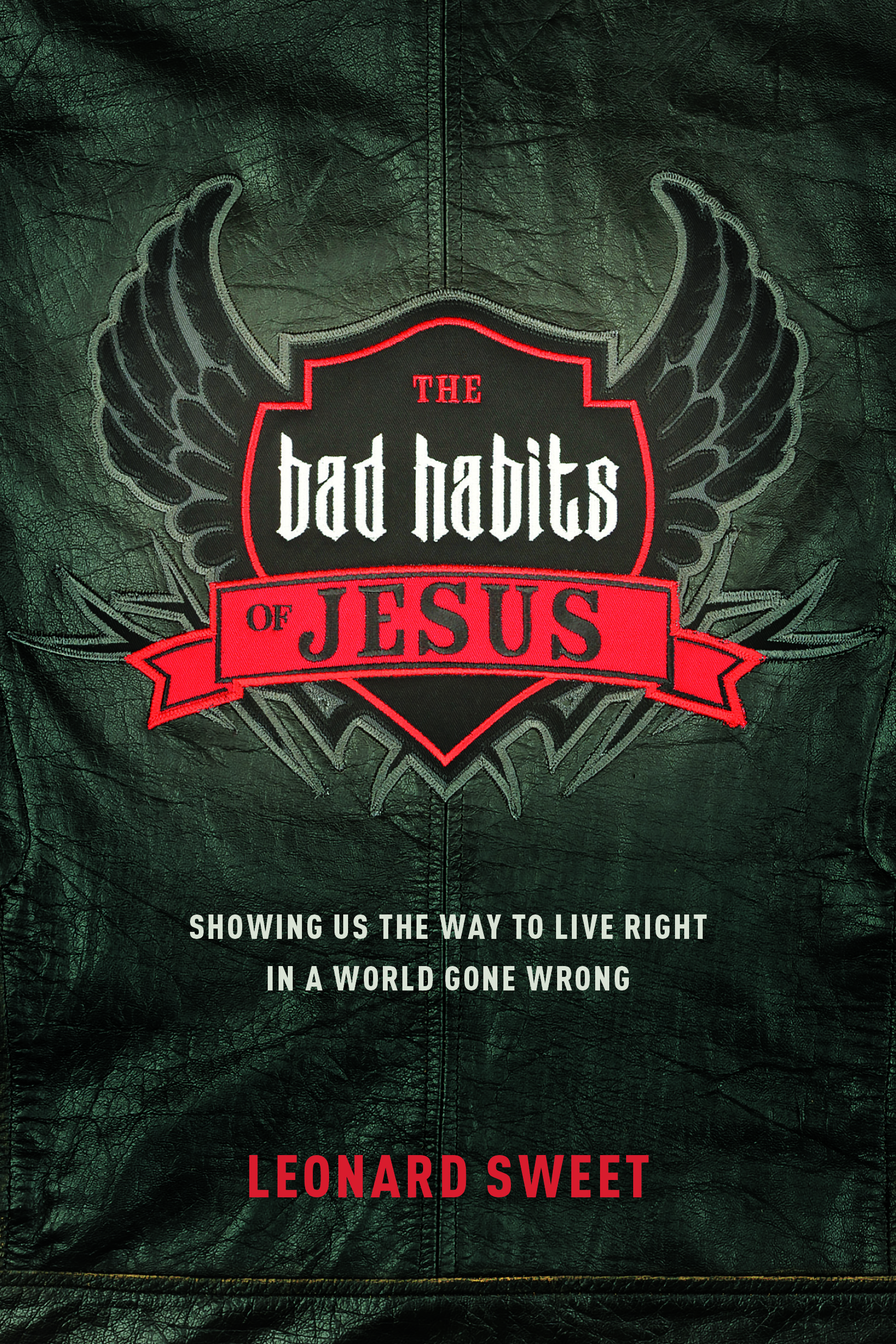
9 Quotes From “The Bad Habits Of Jesus”

the-bad-habits-of-jesusLeonard Sweet explores how revolutionary Jesus Christ’s public ministry was in his outstanding book The Bad Habits Of Jesus. Check out my book review by clicking here, and then enjoy some of these quotes I especially liked.

“As the church we can be Jesus to the world, but only if we are not afraid of the spit in the dirt. To lose our earthiness is to lose our humility, which, in the end, is to lose our humanity.”

“It’s easier to donate money than to put our hand in the hand of a man or a woman who looks dirty, down, and drowned with mud. Yet the church of Jesus is not meant to be a hideaway but a hostel for all of God’s dirtiest who need restoration and healing.”

“Jesus didn’t procrastinate due to slackness or indecision or perfectionism or fear of moving forward. Jesus delayed doing what He wanted or needed to do because the timing wasn’t right, because He was telling time by His Father’s clock and making the most of the time His Father had given Him.”

“Sometimes delay is the best strategy for dealing with a problem, especially problems that have not been prayed over enough in the heart or played about enough in the mind.”

“We especially need to learn to wait on Jesus, which has both a Martha and a Mary meaning. There is the ‘waiter’ meaning of ‘waiting on Jesus,’ which means serving Him by serving others. To put the interests of others before our own is not to be weak but to be strong enough to transcend selfishness. That’s why love is only for the strong, not for the weak. Only the strong can love. … Then there is the ‘await’ meaning of ‘waiting on Jesus,’ which means patiently waiting without hating or wearing out the carpets with our pacing and fretting, sitting at His feet upon His arrival, leaning into His presence, and learning to put on the mind of Christ.” 

“We all need the pendulum swing of snatching spaces of solitude and setting tables of sociability. In fact, the more plugged in and connected we are, the more we need to unplug and disconnect. A world of presence needs a time of absence.”

“Sometimes the Prince of Peace was a disturber of the peace so that He could be God’s purveyor of true peace.”

“When political correctness takes over in the church, it’s no longer about Jesus. … The Gospel becomes not God’s Good News but our own good intentions. … Jesus’ bad habit of not being afraid to offend so offends our PC sense of rectitude that He would be liable to be arrested for indecency.”

“When people today work for the church instead of working for God, love a denomination more than they love God, cherish their traditions more than they cherish their relationship with God, then they steal what is due only God.”

I will be sharing more quotes from this book soon. If you would like to be notified as soon as these quotes are posted, simply enter your email address in the box in the right column and click “Sign me up!” You can also follow me on Twitter and Tumblr where I share inspiring and thoughtful quotes ever day.

Favorite 2016 Posts

The Porn CircuitThese are the Top 10 posts that were published on my blog in 2016…

1. Break Free From Porn

2. 7 Must-Have Bible Study Tools

3. 9 Quotes From “The Porn Circuit”

4. 7 Quotes From “The Beauty Of Intolerance”

5. 10 Quotes From “#struggles”

6. Theism Or Christianity?

7. Notes From The Global Leadership Summit

8. 4 Practical Prayer Tips From Jesus

9. The Porn Circuit (book review)

10. 9 Quotes From “Chase The Lion”

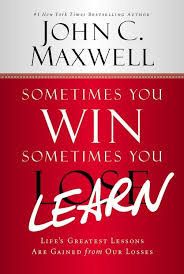
Sometimes You WinAnd these are the posts with “staying power.” These posts received the most views in 2016, even though they were published in an earlier year…

1.  21 Quotes From “Sometimes You Win, Sometimes You Learn” [originally posted October 22, 2013]

2.  17 Quotes From “Smith Wigglesworth On Prayer, Power & Miracles” [January 15, 2014]

3.  14 Quotes From “Smith Wigglesworth On Healing” [May 7, 2013]

4.  11 Quotes From Vujicic in “Stand Strong” [July 23, 2014]

5.  22 Quotes From “The Ragamuffin Gospel” [July 17, 2013]

6.  15 Quotes From “Mansfield’s Book Of Manly Men” [January 11, 2014]

7.  10 Quotes From “You Don’t Need A Title To Be A Leader” [March 19, 2013]

8. 13 Quotes From “God’s Pursuit Of Man” [September 13, 2014]

9. 23 Quotes From “The 5 Levels Of Leadership” [March 28, 2013]

10.  10 Quotes From “The Necessity Of An Enemy” [July 13, 2012]

7 Quotes On Healing From “The Seven Laws Of Love”

The Seven Laws Of Love

In The Seven Laws Of Love, Dave Willis gives us some highly practical, biblically-based counsel for investing in all of our relationships. Normally when I share quotes from books, I share all of them at once, but for this book I felt like it would be good to share these quotes a bit more slowly, to give you time to read them and apply them.

The seven laws Dave identifies are:

  1. Love requires commitment (read the quotes here)
  2. Love selflessly sacrifices (read the quotes here)
  3. Love speaks truth (read the quotes here)
  4. Love conquers fear (read the quotes here)
  5. Love offers grace (read the quotes here)
  6. Love brings healing
  7. Love lives forever

From law #6, here are some quotes on healing—

“Love requires vulnerability, and when we feel like we’ve been in an exposed position and then experienced rejection, our defense mechanisms can actually work against us and sabotage our current relationships. We tend to militantly safeguard certain parts of ourselves in order to prevent the same kind of humiliation or rejection we have felt in the past.”

“The more you love someone, the more ability that person will have to hurt you; but until you give a person the ability to hurt you (vulnerability), you’ll never be able to truly experience love. This reality keeps some people from wholeheartedly committing to a relationship, because they’re trying to protect their hearts from being wounded again. But if were not careful, our wounds from the past can create new wounds in the present. It is a catch-22 that can keep us in perpetual dysfunction in our relationships until we become intentional about healing from the past and moving forward in a healthy way.”

“Sometimes we can subconsciously do things to make ourselves seem ugly or intimidating to drive people away, because were afraid if we let others close to us, we’ll only be hurt again. This kind of behavior might give us the illusion of power and safety that comes from isolation, but it will also hold us captive in a prison of solitude where we never experience true love. Whatever you may have done or whatever may have been done to wound you in the past, healing is possible. God wants you to live a life of love. He wants you to experience rich, meaningful relationships. He wants to bring you to a place of healing so you can experience life and love in all of its fullness.”

“Healing from a broken heart isn’t the result of mere time and effort. It comes when we put our trust in the Healer of our hearts.”

“Don’t let your love be an unspoken assumption. Make sure your loved ones know exactly how much you love them because your words and actions make it clear.”

“An encounter with Jesus always has the power to bring healing. When love is present, healing is present. It won’t always look miraculous, but it will always make a difference.”

“Sometimes God uses prayer to change the situation, and sometimes He uses prayer to change our own perspective about the situation, but either way, He’s always doing something positive through prayer.”

Check out my review of The Seven Laws Of Love by clicking here.

Watch for the last set quotes from the other laws of love explained in this book later this week.

5 Quotes On Grace From “The Seven Laws Of Love”

The Seven Laws Of LoveIn The Seven Laws Of Love, Dave Willis gives us some highly practical, biblically-based counsel for investing in all of our relationships. Normally when I share quotes from books, I share all of them at once, but I felt like it would be good to share these quotes a bit more slowly, to give you time to read them and apply them.

The seven laws Dave identifies are:

  1. Love requires commitment (read the quotes here)
  2. Love selflessly sacrifices (read the quotes here)
  3. Love speaks truth (read the quotes here)
  4. Love conquers fear (read the quotes here)
  5. Love offers grace
  6. Love brings healing
  7. Love lives forever

From law #5, here are some quotes on grace—

“If we deserved forgiveness, it wouldn’t be called grace. If we can earn it, it wouldn’t be real love.”

“Jesus was the perfect embodiment of both love and truth. He never told a lie, but at the same time He was never cruel or judgmental with the truth. Every word He spoke was wrapped in love, so even when the truth hurt, He never broke anyone’s trust. Jesus not only modeled how to speak the truth in love, but He also showed us how to offer grace when trust is broken. … Jesus loved Peter enough to give him the opportunity to be forgiven and rebuild trust. That opportunity for grace wasn’t an exclusive offer for Peter; it’s an opportunity God freely extends to all of us who have broken trust (which is everybody). It’s also a command. We can’t receive God’s grace without being willing to extend grace to others.”

“Some people get stuck in a cycle of grudges and mistrust because they wrongly assume that forgiveness and trust are the same thing. It’s vital that we understand their distinctions. Forgiveness can’t be earned; it can only be given freely. That’s why it’s called grace. Trust, however, can’t be given freely; it can only be earned. When someone breaks your trust, you should give your forgiveness instantly, but give your trust slowly as it is earned through consistency of actions by whoever broke your trust. During this period of rebuilding, fight the urge to punish or retaliate. Those actions won’t do anything to promote healing, and healing always needs to be our ultimate objective. Love, after all, is a healing force. You don’t have to trust someone in order to forgive, but you do have to forgive someone in order to make trust possible again.”

“When you’ve broken trust, you must be willing to take immediate action to rebuild it. When someone has broken your trust, you must be willing to provide that person the opportunity to rebuild. Giving someone the chance to reestablish trust is one of the most loving acts you can do for someone.”

“Our responses to present difficulties will often determine our level of future opportunities.”

Check out my review of The Seven Laws Of Love by clicking here.

Watch for the last few quotes from the other laws of love over the next couple of days.

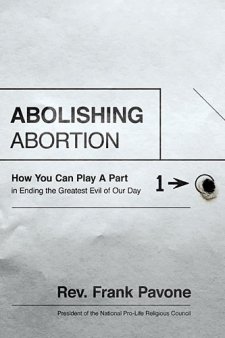
7 Quotes From “Abolishing Abortion” For The Church

Abolishing AbortionFather Frank Pavone writes persuasively and passionately about the role all of us can play in abolishing abortion throughout the world. One group that definitely needs to step to the forefront of this battle is the Church! Here are some quotes from Father Pavone specifically talking to Christians.

“People need to know that to oppose abortion does not mean to oppose those who have had one. … The Church has the perfect spiritual and psychological balance necessary for those who have been involved in an abortion. The last thing such a person needs to hear is, ‘What you did is no big deal.’ The nature of post-abortion grief is that the individual involved in the abortion has begun to realize precisely what a big deal it was. Now this person needs someone to tell her that she should not feel silly for feeling sad, that there is indeed reason for the grief in her heart, and that what her heart is telling her is true: her child was killed. A great disservice was done both to her and her child when someone convinced her that the abortion would be ‘no big deal.’ Accepting that line was a major act of denial. Healing can begin when she breaks out of denial and calls the evil what it is. … At the same time, the other line she does not need to here is, ‘You are rejected; there is no hope.’ As she realizes the evil that has occurred, she will be tempted to say this to herself. The Church, however, contradicts that despair with the clear message of forgiveness.” 

“Those in the pain of abortion are not helped by silence. Some pastors refrain from preaching about abortion out of the sincere desire to not hurt women who have had abortions. Yet that silence does not interpret itself. The person grieving over abortion can infer from our silence that we do not know her pain, or that we do not care, or that there is no hope. None of this is true. With clear and compassionate messages, pastors can break through the silence that led to a woman to this disastrous choice in the first place.”

“Those who attend church regularly are statistically the most likely to be pro-life and the most likely to be pro-life activists. Within America’s Christian churches there are people enough and resources enough to end abortion, armed as the pro-life movement is with the supernatural gifts of truth and grace. It is clear that the full activation of the Church is a critical step for ending abortion. This does not primarily mean creating new structures. It simply means infusing the existing structure with greater vigor and effectiveness.”

“The pro-life movement is not primarily a response to Roe v. Wade. It is a response to Jesus Christ. His teachings not only show us why we are to be pro-life but also show us how. They give us the virtues we need to have in doing this work.”

“The Church is the only institution that has a divine guarantee that it will prevail over the culture of death. ‘The gates of hell shall not prevail against it,’ the Lord Himself said (Matthew 16:18 KJV). Now, gates do not run out on the battlefield to attack the enemy. Rather, they stand still and defend the city against the enemy attacking it. To say that the gates of hell will not prevail against the Church is to say that it is the Church that takes the offense and storms the gates of hell to win ground for Jesus Christ. Gates of hell cannot withstand the power of heaven. The gates of death fall in the presence of eternal life. Sin melts in the presence of saving grace. Falsehood collapses in the presence of living truth. These are the tools with which Christ has equipped His Church.”

“Love is found on Calvary. Love’s best symbol is not the heart but the Cross. … What Christ revealed to the world through the Cross about the meaning of love, we must also reveal through our own sacrifice for those we love.”

“Abortion is the exact opposite of love. Loves says, ‘I sacrifice myself for the good of the other person.’ Abortion says, ‘I sacrifice the other person for the good of myself.’ And isn’t it amazing that the very same words used by the culture of death to justify abortion are the words used by our Lord to proclaim life and salvation and love: ‘This is My body!’ … ‘This is My body,’ Jesus said, ‘given for you’ (see Luke 22). He did not cling to His body so that we would die but rather gave it away so that we could live. These are the words that define our mission in the world: spouse saying to spouse, parents saying to children, clergy saying to their congregation, all of us saying to our brothers and sisters, ‘This is my body, my time, my efforts, my resources, my life—given for you, that you may live!’”

I have shared other quotes from Abolishing Abortion which you can read here and here.

And be sure to check out my book review of Abolishing Abortion here.