God made you uniquely YOU! You have been made on purpose and for a purpose. I have lots of new content every week, which you can check out on my YouTube channel.
“The wise recognize before the fight that adversity will come and therefore are not surprised by it. The wise recognize in the fight that adversity is a formidable foe and thus steel themselves for a long, hard struggle to the death. The wise recognize after winning a fight that the war is not over and so never let down their guard nor release their weapons.” —Dick Brogden, in Proverbs: Amplified and Applied
Astronomers have discovered planet-sized objects that are puzzling the best minds. In fact, they have had to create a new category for these objects: Jupiter Mass Binary Objects (JuMBOs). What is baffling the brightest minds is that these planets don’t orbit a star but appear to be gravitationally bound to other JuMBOs. My favorite line is this one: “The new phenomenon challenges current frameworks explaining how stars and planets form within nebula, with astrophysicists claiming such objects should not exist.” There is at least one who isn’t baffled: The One who created JuMBOs along with everything else in our universe.
T.M. Moore is in the midst of a series of posts about the Christian and the government. They are excellent! Here is just a short sample—“The Christian understands that government is a servant of God for good, and that God, therefore, must define the terms of goodness by which a government fulfills its appointed task. As Paul reminds us, the Law of God is holy and righteous and good (Romans 7:12). It is important, therefore, that Christians understand the Law of God and consider the best ways of bringing its influence to bear in the arena of public policy. … Public policy is not about what governments can do, but what they should do, that is, if they are to fulfill their callings as God’s servants for good. When it comes to applying the Law of God to public policy, Christians must make this first principle foundational in the logic with which they approach the work of influencing and shaping public policy.”
“The weak can never forgive. Forgiveness is an attribute of the strong.” —Mahatma Gandhi
Leaders are naturally wired to be either confident or humble. Both kinds of leaders need to remain coachable. Greg and I unpacked this idea on this episode of The Craig And Greg Show, and I also discuss it in greater depth in my book Shepherd Leadership.
Matthew Walker, director of the Center for Human Sleep Science, says, “Sleep is the universal health care provider: whatever the physical or mental ailment, sleep has a prescription it can dispense.” It’s not just medical science, but the Bible also talks about the value of sleep, as Scott Hubbard explains in this post. I’ve also shared some posts about sleep here, here, and here.
Don’t you love the beautiful melody of songbirds? Being a percussionist, I’m attracted to the woodpeckers. Scientists have found that woodpeckers are the only non-songbird that share an identical genetic marker in their brains with songbirds. That means that the drumming of woodpeckers is actually a song!Check out some additional fascinating insights about our drumming friends in this post.
“What is the best thing in the world? To please its Creator. What is His will? To fulfill what He commanded, that is, to live rightly and dutifully to seek the Eternal; for duty and justice are the will of Him Who is dutiful and right. How do we seek this goal? By application. Then we must apply ourselves in duty and justice. What helps to maintain this practice? Understanding, which, while it winnows the remainder and finds nothing solid to rest in amongst those things which the world possesses, turns in wisdom to the one thing which is eternal.” —Columbanus
“Jesus taught us to pray that the Kingdom would come on earth in the same way that it exists in heaven. … Jesus made praying for the Kingdom the highest priority in our prayers after praising and honoring God. The Kingdom is more important than our daily needs. The Kingdom is more to be desired than that our sins should be forgiven or that we should be rescued through temptation [Matthew 6:9-13].” —T. M. Moore
Stephen O. Presley wrote, “If our modern world resembles the ancient one, perhaps we could glean some wisdom from the ways the early church navigated these murky waters. As Polycarp testifies, the Scriptures were essential to the early Christian apologetic. Passages such as Romans 13:1 and Matthew 22:21, alongside the examples of Old Testament figures such as Joseph and Daniel, guided the church’s vision for engaging the unbelieving world.” His post especially caught my eye after I shared a very similar message to my flock this past Sunday.
Sean McDowell sits down with an Old Testament professor to discuss 10 of the most bizarre OT passages (as selected by Sean’s X followers).
Listen to the podcast of this post by clicking on the player below, and you can also subscribe on Apple, Spotify, or Audible.
The events in the Bible are rooted in history. These are actual events in which real people lived in a moment in recorded history. The songs of ascent were sung both pre-exile and post-exile. The post-exile pilgrims were returning to Jerusalem after the edict of King Cyrus (2 Chronicles 36:22-23).
The first pilgrims to go up to Jerusalem after the exile were the rebuilders of both Jerusalem and the temple, and they faced heavy opposition (Ezra 4:1-5; Nehemiah 4:1-3, 7-8). In light of these events, I think the song of ascent in Psalm 125 is especially pertinent to this situation.
The middle verse of Psalm 125 contains a warning to godly people. God’s followers may be tempted to grab earthly political power to try to make things right—to “fight fire with fire.” The phrase “the scepter of the wicked” symbolizes the royal authority of a foreign conqueror. In other words, we might justify using the scepter of the wicked because we think “the ends justify the means.” But notice the warning if we do: “the righteous might use their hands to do evil.”
You can see this in a couple of other biblical translations. The Amplified Bible says, “lest the righteous (God’s people) stretch forth their hands to iniquity and apostasy,” and the New Living Translation says, “the godly might be tempted to do wrong.”
Instead, we are called to look to God for our security. Psalm 125:1-2 sounds like an echo of Psalm 121, in which we are reminded that our God is unshakable, unrivaled, and eternal. Political parties come and go, even evil dictators and tyrannical regimes come and go, but the Sovereign God remains forever. All of History is His story!
Chuck Colson used to frequently remind his audiences, “Salvation does not arrive on Air Force One!”
The motto on our US currency is still accurate: In God we trust! Psalm 125:4 says the same thing: God does good to those who trust Him.
Earlier I mentioned the opposition that Ezra and Nehemiah recorded. Let me also share with you how these God-fearing men instructed the Jewish people to respond. Ezra says that the prophets called them to remember “the name of the God of Israel, who was over them,” and three times Nehemiah records that their response was prayer to God (Ezra 5:1; Nehemiah 4:4, 9; 6:9).
In God we trust, not in political power. On the flip side, Psalm 125:5 warns us that God treats as evildoers those who look to the worldly scepter to try to get ahead.
So when opposition and even persecution come, we should pray to God and ask for Him to remove the scepter of the wicked. Let’s pray for God to put His favor in the hearts of even ungodly leaders. Ezra recognized this when he said—
Praise be to the Lord, the God of our ancestors, who has put it into the king’s heart to bring honor to the house of the Lord in Jerusalem in this way and who has extended His good favor to me before the king and his advisers and all the king’s powerful officials. Because the hand of the Lord my God was on me, I took courage and gathered leaders from Israel to go up with me.(Ezra 7:27-28)
The New Testament calls on Christians to pray for those in governmental leadership over us (1 Timothy 2:1-2). But perhpas you ask, “What exactly are we to pray for these leaders?” Solomon wrote, “The king’s heart is like channels of water in the hand of the Lord; He turns it wherever He wishes” (Proverbs 21:1). So perhaps a God-honoring prayer is to ask for our leaders’ hearts to be moved as King Cyrus’ heart was.
“God is King of kings and ultimately always wins, always gets His way. Even when it seems that earthly authorities continually rebel against the Lord and His Anointed, the reality is that even their most heinous acts are turned against them. It must be very frustrating to be the devil and to constantly see how God turns situations to gospel good and God’s unique glory. God is so wise that He turns the hearts of authorities without them knowing it. Smug on their decaying thrones, the power brokers of this world revel in their supposed autonomy and imagined resistance, never realizing how foolish they look to the angel hosts who are privy to God’s unmatched strategic dominance.”
Let’s never try to fight fire with fire, but let’s turn repeatedly to God in prayer whenever opposition arises against God-fearing people anywhere.
Listen to the podcast of this post by clicking on the player below, and you can also subscribe on Apple, Spotify, or Audible.
As we near the crucifixion of Jesus, we begin to see how politics plays a role in so many decisions. The Sanhedrin is trying to balance their popularity with the Jewish people and their standing with powerful leaders in the Roman government. Pontius Pilate is trying to balance how the Sanhedrin portrays him to the Jewish people and what those in Rome are telling Caesar Tiberius about him. King Herod Antipas also has issues with balancing the pressure from the Sanhedrin with the popularity of Jesus.
Luke gives us a very telling statement about the politics of the day when he writes, “That day Herod and Pilate became friends—before this they had been enemies” (Luke 23:12). How did they become friends over this issue of what to do with Jesus? Remember that the Sanhedrin is a common thorn-in-the-side for both of them, and the political axiom that still holds to this day says, “The enemy of my enemy is my friend.”
I point out all of the political maneuverings during this pivotal time because these political balancing acts are still being played out today and Christians will end up in the crosshairs.
Pilate was trying to appease the Sanhedrin but there was no Roman law that Jesus had broken that was deserving of the death penalty they were demanding. So twice Pilate tells these religious leaders, “I will punish Him and then release Him.” In fact, without waiting for their approval, Pilate subjects Jesus to the tortuous punishment known as flagellation (Luke 23:13-22; John 19:1-11).
I think Pilate believed that if they saw Jesus so humiliated and beaten down they would back off from their desire for His death. But Pilate miscalculated their commitment to seeing Jesus eliminated from the scene.
Pilate finally gives in and says, “You take Him and crucify Him. As for me, I find no basis for a charge against Him.” But the Jewish religious leaders insisted, “We have a law, and according to that law He must die, because He claimed to be the Son of God.”
If you have ever watched a movie about the gladiatorial games in the Roman Colosseum, you’ve probably viewed the scene where one combatant is disarmed and helpless. Before the victor strikes his deathblow he will look to Caesar in the stands. The Roman Caesar will either give a thumbs-up signal to pardon the victim or he will give a thumbs-down signal to send the defeated one to their death.
Pilate asks Jesus, “Don’t You realize I have power either to free You or to crucify You?”
There was another king who called himself “king of kings” but God called him “My servant.” He was King Nebuchadnezzar of Babylon. Daniel, an exile from Israel who was Nebuchadnezzar’s prime minister, reminded him where his authority originated, “The Most High is sovereign over all kingdoms on earth and gives them to anyone He wishes” (Daniel 4:17).
In the same way, Jesus addressed Pilate, “You would have no power over Me if it were not given to you from above.”
John Piper wrote: “This does not intimidate Jesus because Pilate’s authority over Jesus is subordinate to God’s authority over Pilate. Jesus gets His comfort at this moment not because Pilate’s will is powerless, but because Pilate’s will is guided. Not because Jesus isn’t in the hands of Pilate’s fear, but because Pilate is in the hands of Jesus’s Father.”
Jesus shows us an important principle: Should we respect our leaders (even the ungodly ones)? Yes! Should we fear them? No!
We don’t fear them because their power is limited to just this life and is under the control of the Most High God (Luke 12:4). Peter and John learned this lesson well, as we see in their interaction with the same Sanhedrin that turned Jesus over to Pilate (see Acts 4:1-10). What Jesus and these apostles demonstrate for us is respectful boldness.
In light of this, here are five things Christians should keep in mind. When persecution comes against us, we should respond like this:
Jesus taught us there is a time for eloquent silence, but when the Holy Spirit needs us to speak, He will give us the respectfully bold words to share. Jesus said,
On My account you will be brought before governors and kings as witnesses to them and to the Gentiles. But when they arrest you, do not worry about what to say or how to say it. At that time you will be given what to say, for it will not be you speaking, but the Spirit of your Father speaking through you. (Matthew 10:18-20)
Respectful? Yes. Fearful? No. Respectful, loving, prayerful boldness is how we will glorify the Most High God in the face of persecution.
Listen to the podcast of this post by clicking on the player below, and you can also subscribe on Apple, Spotify, or Audible.
Our country has a policy of separation of church and state, and that appears to be a good thing. When the head of the government starts telling the church how to worship, or when the head of the church starts telling the government how to run its affairs, strife typically results.
There have been some notable examples of wise kings who were God-fearing rulers, and some examples of religious leaders who had the wisdom to make just laws. But history has most often shown us that when a king imposes on the church a mode of worship or a pastor imposes on the king religious ways of governing, clashes result. Some of them have been bloody civil wars and some have spread into international conflicts.
That being said, wouldn’t it be better for everyone if there was a way that one person could hold both of those offices simultaneously? If only there was some way to bring those different offices together. Very few people could ever accomplish this because it would require a perfect person with both absolute wisdom and complete God-honoring selflessness, someone so confident in both their wisdom and their relationship with God that they would never be swayed unfairly one way or the other.
Last week we saw the first bold claim from Jesus: “I am the I AM.” With this title and authority, Jesus claimed to be the Head of the Church. This is a title Paul uses several times in his letter to the church at Ephesus (Ephesians 1:22, 5:23). Paul goes on to remind us that our aim as the Church body is to grow into maturity under the Headship of Jesus (Ephesians 4:15).
Consider two other notable rulers during this same time period. As the high priest, Caiaphas would have laid claim to the title of “head of the church.” As the Roman governor, Pilate would have laid claim to the title of “head of the government in Judea.” Yet both of them clearly demonstrated that they had “become the symbol of those who make religious decisions based on political expediency rather than truth and justice,”as Dr. Donald Stamps noted.
Paul goes father than calling Jesus simply the Head of the Church—
And He [Jesus] is the head of the body, the church; He is the beginning and the firstborn from among the dead, so that in everything He might have the supremacy. (Colossians 1:18)
Not just Headship over the Church, but Headship over “everything.”
After the bold claim of Jesus that He was the I AM, the Sanhedrin wanted to have Him put to death, so they took Jesus to Pontius Pilate (Luke 22:71—23:2; Matthew 27:1-2; John 18:28-37).
Pilate “knew it was out of self-interest that they had handed Jesus over to him” (Matthew 27:18), but he still asked Jesus, “Are You the king of the Jews?” Just as Caiaphas was trying to save his position of power by keeping a delicate balance between the Jews and the Romans, Pilate was also trying to save his skin. Pilate was trying to appease both the Sanhedrin and Tiberius Caesar.
Jesus answers Pilate’s question in a way Pilate never expected. Twice Jesus says “My kingdom,” noting that His kingdom is other-worldly. His kingdom comes from outside this world and therefore supersedes any government of this world. Pilate clearly has never heard anything like this, so after hearing this statement he announces, “You are a king, then!”
Just as Jesus had answered the Sanhedrin with, “You are right in saying I am the Messiah,” now He answers Pilate, “You are right in saying I am a king.”
Combining those two bold claims—“I am God” and “I am a King”—Jesus is the only One who can perfectly hold both offices without any conflict. This is what the prophecy in Isaiah 9:1-7 foretold, and this is the fulfillment that John shows us at the end of time (Revelation 17:14, 19:11-16).
What does this mean for us? How are we now supposed to live knowing Jesus as our God and as our King? We should live confidently before our King and humbled before our God. We don’t fear earthly kings, but neither do we fight them. We don’t have to try to convince earthly kings to rule a certain way because they are God’s servants to accomplish God’s plan. We don’t have to get caught up in the politics of the day because this day will come to an end.
We are subjects of a kingdom not of this world, so the kings of this world don’t get to decide our final destiny!
(If you would like to explore this topic further, check out my series of messages from 1 Peter called Aliens and Strangers.)
Listen to the podcast of this post by clicking on the player below, and you can also subscribe on Apple, Spotify, or Audible.
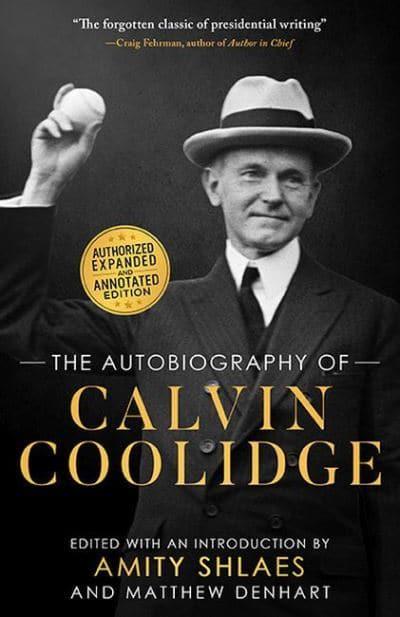
Calvin Coolidge is the only US president to have been born on July 4, which I think is very fitting for him, since his political philosophy found its firm foundation in our nation’s remarkable founding. In a very modest fashion, President Coolidge relates his amazing career in his autobiography.
I’m not sure how the title “Silent Cal” ever stuck to this president. Throughout his legal and political career, his speeches—almost all of which he wrote himself—are some of the most thoughtful and enduring speeches in our nation’s history. His voice seemed to resonate across the political aisle too, because at each subsequent election, Coolidge would be elected by larger margins than before, with more Democrats crossing over to vote for him each time.
Coolidge stood strong during a potentially disastrous Boston police strike while he was governor of Massachusetts, and he transitioned our government’s activities and expenditures from the wartime outlay of Word War I back into the peacetime activities after the war. He never wavered from his adherence to the principles in our founding documents, remaining a strong proponent of states’ rights and a smaller federal budget.
He was quite progressive, utilizing the new media of radio to get his thoughts out to as many people as possible while championing topics like women’s suffrage, lower taxes, and a stronger working class.
And then at the height of his political career, he chose not to run for reelection to the presidency, walking away from an almost guaranteed victory to a second term.
Calvin Coolidge was a fascinating leader, one which both those in and out of politics should strive to emulate. As a student of leadership myself, I highly recommend this book to both American history buffs and those desiring to increase their leadership acumen.
Listen to the podcast of this post by clicking on the player below, and you can also subscribe on Apple or Spotify.
You know how they say, “Never judge a book by its cover?” Well, I did that with Reading The Bible With The Founding Fathers, and I judged incorrectly. My son gave me this book as a gift and I thought I would be reading passages of Scripture that our founding fathers had highlighted in their Bibles. Although that wasn’t the case at all, I was delighted to be wrong. What Daniel Dreisbach has given us in this book is a masterpiece of American history that I so thoroughly enjoyed devouring.
This book is about the Bible’s influence on not only the founders’ thought process as they contemplated independence from Great Britain, but also as they formed our own republican form of government. It’s also about the common lexicon that the colonists had with each other because the Bible was the most well-read book in the American colonies. This allowed our founding fathers to speak in figurative language that rang true to the hearts of their fellow Americans.
Mr. Dreisbach often takes us back to Europe and the Protestant Reformation era to help us understand how biblical thinking had coalesced and gained strength in the minds of the mid-eighteenth century Americans. Things like did the Bible sanction rebellion against the king of England, or could principles for a sound government structure be found in the pages of Scripture?
Reading The Bible With The Founding Fathers is a fascinating and eye-opening read. Not only to help us understand the foundational thoughts of our great country but also to see the role that biblical literacy still plays in our governmental operations today. This book is extensively footnoted, so the curious reader can dig even deeper than Mr. Dreisbach has already taken these topics.
For Christians who want a better understanding of the Bible’s place in the republican form of government in these United States of America, I would recommend reading this book alongside your Bible so you may ponder for yourself how much of our civic framework is supported by a proper understanding of Scripture.
…the Lord filled them with joy by changing the attitude of the king of Assyria so that he assisted them in the work on the house of God, the God of Israel (Ezra 6:22).
King Darius didn’t just allow the Israelites to worship God at the temple, he assisted them in reestablishing worship at the temple! He did this because God changed his attitude.
Nearly 60 years later, King Artaxerxes did the same thing for Ezra: “the king had granted him everything he asked for, for the hand of the Lord his God was on him” (7:6). Artaxerxes gave Ezra and the returning Israelite exiles…
… authority
… provisions
… tax exemptions (vv. 14, 20-22, 24)
Ezra says again that this was all due to God putting this in Artaxerxes’ heart: Praise be to the Lord, the God of our fathers, who has put it into the king’s heart to bring honor to the house of the Lord in Jerusalem this way (vv. 27-28).
Daniel declares that all of the world leaders are in that position of leadership because God placed them there. The apostle Paul teaches us that government officials are God’s servants and that we are to pray for them (Romans 13:1-7; 1 Timothy 2:1-2).
God can change the attitude of even the most hard-hearted, godless leader. Not just change their attitude, but give God’s people favor with that leader.
Don’t become frustrated—pray.
Don’t get discouraged—pray.
Pray, pray, pray for all of God’s servants who are in leadership over us. God has a plan. All of history is His story, and He will change attitudes so that His servants fulfill His plan.
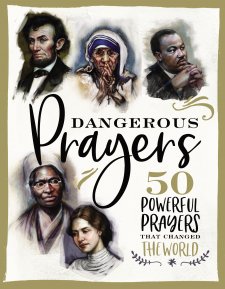
Dangerous Prayers give a brief biography of 50 culture-shifting people, and the world-changing prayers they prayed. Check out my full book review by clicking here, and then enjoy just a few of the prayers from this excellent book.
“Listen to my supplication, Master, so that my soul doesn’t stagger under Your instruction, so that I don’t stumble in testifying to Your mercies, by which You tore me away from all my ruinous pathways. Thus You’ll grow sweet to me beyond all that led me wrong, in my willingness to follow it. Thus I’ll love You most mightily, and grasp Your hand with all the strength of my inmost being. Thus You’ll tear me away from every trial, clear to the end.” —Augustine
“Restore me to liberty, and enable me so to live now that I may answer before Thee and before the world. Lord, whatever this day may bring, may Thy name be praised. Amen.” —Dietrich Bonhoeffer, while awaiting execution in a Nazi concentration camp
“Give us grace, O God, to dare to do the deed which we well know cries to be done. Let us not hesitate because of ease, or the words of men’s mouths, or our own lives. Mighty causes are calling us—the freeing of women, the training of children, the putting down of hate and murder and poverty—all these and more. But they call with voices that mean work and sacrifice and death. Mercifully grant us, O God, the spirit of Esther, that we may say: ‘I will go unto the king and if I perish, I perish.’” —W.E.B. DuBois
“Because we have need continually to crave many things at Your hands, we humbly beg You, O heavenly Father, to grant us Your Holy Spirit to direct our petitions, that they may proceed from such a fervent mind as may be agreeable to Your holy will.” —John Knox
“O keep us, we beseech Thee, Lord, for without Thy keeping we cannot keep ourselves.” —Charles Spurgeon
“Oh Jesus, You who suffer, grant that today and every day I may be able to see You in the person of Your sick ones and that, by offering them my care, I may serve You. Grant that, even if You are hidden under the unattractive disguise of anger, of crime, or of madness, I may recognize You and say, ‘Jesus, You who suffer, how sweet it is to serve You.’” —Mother Teresa
“I now make it my earnest prayer, that God would have you, and the State over which you preside, in His holy protection, that He would incline the hearts of the Citizens to cultivate a spirit of subordination and obedience to Government, to entertain a brotherly affection and love for one another, for their fellow Citizens of the United States at large, and particularly for their brethren who have served in the Field, and finally, that He would most graciously be pleased to dispose us all, to do Justice, to love mercy, and to demean ourselves with that charity, humility, and pacific temper of mind, which were the Characteristics of the Divine Author of our blessed Religion, and without an humble invitation of whose example in these things, we can never hope to be a happy Nation.” —George Washington
“God give me a deep humility, a well-guided zeal, a burning love, and a single eye, and then let men or devils do their worst.” —George Whitefield
Theodore Roosevelt never pulled his punches! And you could never misunderstand exactly what he was saying. Check out my review of his autobiography by clicking here, and then enjoy some of these straight-shooter quotes from TR.
“With soul of flame and temper of steel we must act as our coolest judgment bids us. We must exercise the largest charity towards the wrong-doer that is compatible with relentless war against the wrong-doing. We must be just to others, generous to others, and yet we must realize that it is a shameful and a wicked thing not to withstand oppression with high heart and ready hand. With gentleness and tenderness there must go dauntless bravery and grim acceptance of labor and hardship and peril.”
“The necessity of character as the chief factor in any man’s success—a teaching in which I now believe as sincerely as ever, for all the laws that the wit of man can devise will never make a man a worthy citizen unless he has within himself the right stuff, unless he has self-reliance, energy, courage, the power of insisting on his own rights and the sympathy that makes him regardful of the rights of others.”
“I never won anything without hard labor and the exercise of my best judgment and careful planning and working long in advance.”
“For I then held, and now hold, the belief that a man’s first duty is to pull his own weight and to take care of those dependent upon him; and I then believed, and now believe, that the greatest privilege and greatest duty for any man is to be happily married, and that no other form of success or service, for either man or woman, can be wisely accepted as a substitute or alternative.”
“I did not then believe, and I do not now believe, that any man should ever attempt to make politics his only career. It is a dreadful misfortune for a man to grow to feel that his whole livelihood and whole happiness depend upon his staying in office. Such a feeling prevents him from being of real service to the people while in office, and always puts him under the heaviest strain of pressure to barter his convictions for the sake of holding office.”
“No man can lead a public career really worth leading, no man can act with rugged independence in serious crises, nor strike at great abuses, nor afford to make powerful and unscrupulous foes, if he is himself vulnerable in his private character. … He must be clean of life, so that he can laugh when his public or his private record is searched; and yet being clean of life will not avail him if he is either foolish or timid. He must walk warily and fearlessly, and while he should never brawl if he can avoid it, he must be ready to hit hard if the need arises. Let him remember, by the way, that the unforgivable crime is soft hitting. Do not hit at all if it can be avoided; but never hit softly.”
“I am glad to see wrong-doers punished. The punishment is an absolute necessity from the standpoint of society; and I put the reformation of the criminal second to the welfare of society. But I do desire to see the man or woman who has paid the penalty and who wishes to reform given a helping hand—surely every one of us who knows his own heart must know that he too may stumble, and should be anxious to help his brother or sister who has stumbled. When the criminal has been punished, if he then shows a sincere desire to lead a decent and upright life, he should be given the chance, he should be helped and not hindered; and if he makes good, he should receive that respect from others which so often aids in creating self-respect—the most invaluable of all possessions.”
“My duty was to stand with every one while he was right, and to stand against him when he went wrong.”
“We must ever judge each individual on his own conduct and merits, and not on his membership in any class, whether that class be based on theological, social, or industrial considerations.”
More quotes coming soon! You can subscribe to this blog to be notified when more quotes are published, and you can also check out the quotes I publish daily on Tumblr.











 Craig T. Owens