Grateful For What You Have

Listen to the podcast of this post by clicking on the player below, and you can also subscribe on AppleSpotify, or Audible. 

We said last week that nobody likes to be around a complainer, although many complainers would say they’re not complaining but just sharing facts. In their mind, they have a legitimate right to let everyone know how they’ve been short-changed, gotten a bad deal, or experienced something that no one else has gone through.    

Have you ever heard your kids say, “I’m starving”? And perhaps you think, “Do you really know what starving is?” Or what about people waving their very expensive phones around as they complain, “Isn’t there any WiFi here?!” 

This isn’t a glass half-full or half-empty thing. This is really closing your eyes to the fact that many people don’t even have a glass, or if they do have a glass, they don’t have access to the water that they need. 

I was delivering some Christmas toys to a family and I discovered they had lost everything they owned. When I came to their house their furniture was mismatched, their food and clothes were donated, and their kids only had a couple of simple toys to play with. And yet this family was happy to be together! 

That sort of puts things in perspective, doesn’t it? 

We have to choose grumbling or gratefulness, but as E.M. Bounds noted, “Gratitude and murmuring never abide in the same heart at the same time.” So if you are complaining about what you don’t have, you cannot be grateful for what you do have. 

There is a fascinating story told in all four Gospels of a woman named Mary. She was an uninvited guest at a house where Jesus and His disciples had been invited to dinner. Jesus was not there because someone was grateful to have Him in his home, but because Simon the Pharisee and his cronies were trying to find a reason to accuse Jesus of wrongdoing. 

Simon was so focused on his “gotcha” moment that he completely overlooked his host duties. He didn’t wash Jesus’ feet, nor greet Him with a kiss, nor anoint Him with perfume, as the custom of the day demanded. But Mary, standing behind Jesus at the dinner table, washed Jesus’ feet with her tears, kissed His feet, and anointed Him with an entire bottle of costly perfume! She did all of this out of gratitude for what she had received from Jesus. 

First, I would like you to consider what Mary didn’t have:

  • a seat at the table—even though the dinner was in her hometown of Bethany, her brother Lazarus was invited to the meal, and her sister Martha was serving the meal 
  • a good reputation—twice Simon the Pharisee said, “Does Jesus even know what kind of woman she is? Does He know she is a sinner?” 
  • the acceptance or approval of others—even the disciples thought her gesture of anointing Jesus with so much perfume was a wasted extravagance 

Next, let’s look at what Simon did have:

  • an elevated position as a Pharisee 
  • considerable wealth—he had servants and a home large enough for a big dinner party 
  • healing from leprosy—the Gospels refer to him as “Simon the leper” which tells us that he had been healed of his leprosy 

Now, let’s consider what the disciples did have:

  • an enviable position as disciples of Jesus
  • a dinner invitation to Simon’s house
  • access to the financial resources that people gave to Christ’s ministry
  • and let us never overlook the fact that they had access to Jesus Himself like no one else had

Finally, let’s look at what Mary did have:

  • forgiveness—Luke says this about her, “A woman who HAD lived a sinful life” 

Gratitude is truly a great attitude. Grateful people stand out because they don’t grumble about what they don’t have, but they are focused on what they do have.  

Mary knew that she didn’t have the outward marks of success or favor or approval, but she did have the assurance that she had been forgiven. For that, she was more than willing to give everything she had to Jesus in thankful worship! 

And as a result, look what Mary now has:

  • the kind words of Jesus—He assured her that she was forgiven (Luke 7:47)
  • Jesus as her defender—He told His disciples, “Leave her alone” (John 12:7)
  • an eternal testimony—Jesus said that wherever the Gospel was preached, people would tell Mary’s story (Matthew 26:13) 

I think a good way to sum up the distinguishing way grateful people live is like this: They don’t grumble about what they don’t have, but they are extremely grateful for what they do have. 

When you find grumbling slipping out of your mouth, remind yourself of just how much you have been given. Even if you think to yourself, “I don’t have much,” you can be assured that you have Jesus, and He is more than enough! And with that assurance, let your gratitude be lifted up in extravagant, fragrant praise to God. 

If you’ve missed any of the messages in our series The Great Attitude of Gratitude, you can find the full list by clicking here. 

►► Would you please prayerfully consider supporting this ministry? My Patreon supporters get behind-the-scenes access to exclusive materials. ◀︎◀︎

Links & Quotes

This is the most-viewed reel I have ever shared on Instagram! The Bible isn’t a bunch of “once upon time” stories but they are actual events at actual moments in history. Check out how Jesus verifies the historicity of the Bible.

“All obedient believers are near akin to Jesus Christ. They wear His name, bear His image, have His nature, are of His family. He loves them, converses freely with them as His relations. He bids them welcome to His table, takes care of them, provides for them, sees that they want nothing that is fit for them: when He died He left them rich legacies, now He is in heaven He keeps up a correspondence with them, and will have them all with Him at last, and will in nothing fail to ‘do the kinsman’s part’ (Ruth 3:13), nor will ever be ashamed of His poor relations, but will confess them before men, before the angels, and before His Father.” —Matthew Henry

Once again science—in this case, archeology and paleomagnetism—verify the historicity of the biblical accounts. Check out how paleomagnetism can sift through layers to determine when battles took place. It is quite fascinating!

As regular readers know, I have a great admiration for the poetry of George Herbert. This article by Dr. Betsy Howard explores how Herbert’s poetry helped shape reformational doctrinal beliefs. You may also want to check out poems and biographical information about Herbert here.

I have a familial connection to Pentecostal pioneer Stanley Frodsham. This article explores Frodsham’s role in the earliest doctrinal statement of the Assemblies of God.

Even skeptics of the claims of the Bible cannot help including biblical themes in their books, movies, plays, and TV shows. I discussed that in this apologetic video— 

Some interesting and fun facts about the Bible from the folks at OverviewBible.

Links & Quotes

In reading Matthew 12:38-40 I notice something important about how Jesus answered a request. Be careful of quarreling with those skeptical of Christianity. When it gets to point that they aren’t looking for evidence to believe but another point to argue, do what Jesus did: point them to the empty tomb! 

Some skeptics of the Bible want to make the argument that the Gospels were written at a much later date, thus they aren’t as accurate. Cold-case detective J. Warner Wallace addresses that topic in this video. 

Thursdays With Spurgeon—Understanding Repentance

This is a weekly series with things I’m reading and pondering from Charles Spurgeon. You can read the original seed thought here, or type “Thursdays With Spurgeon” in the search box to read more entries.

Listen to the podcast of this post by clicking on the player below, and you can also subscribe on AppleSpotify, or Audible. 

Understanding Repentance

     Repentance is an old-fashioned word, not much used by modern revivalists. 

     “Oh!” said a minister to me one day, “it only means a change of mind.” This was thought to be a profound observation. “Only a change of mind”; but what a change! A change of mind with regard to everything! 

     Instead of saying, “It is only a change of mind,” it seems to me more truthful to say it is a great and deep change—even a change of the mind itself. But whatever the literal Greek word may mean, repentance is no trifle. You will not find a better definition of it than the one given in the children’s hymn:

     Repentance is to leave
     The sins we loved before
     And show that we in earnest grieve,
     By doing so no more.

From The Soul Winner

The Greek word Spurgeon references that is rendered as repentance is metanoia. Many have translated this as a “new mind.” But a more literal translation is “with new understanding.” When my carnal mind has been replaced by a spiritual mind, I now see everything differently—I understand everything differently. 

The Amplified Bible elaborates it like this: Bring forth fruit that is consistent with repentance—let your lives prove your change of heart (Matthew 3:11). 

More than just an about-face away from my old sinful habits, repentance is a more profound understanding of just how grievous my sinful lifestyle was to God. It repulses me to even consider indulging in those sins again because now that I understand how joy-filled my relationship with Jesus is when I walk in righteousness, I never want to even dabble in that slime again! 

I don’t want to see how close I can get to sin, but I want to see how close I can get to Jesus! When I truly have repented of my sins, the Holy Spirit has given me a whole new understanding of both the pain of sin and the joy of righteousness. Let’s become people so quick to repent anytime the Holy Spirit convicts us of even the smallest of sins.

►► Would you please prayerfully consider supporting this ministry? My Patreon supporters get behind-the-scenes access to exclusive materials. ◀︎◀︎
God Longs For You

Listen to the podcast of this post by clicking on the player below, and you can also subscribe on AppleSpotify, or Audible. 

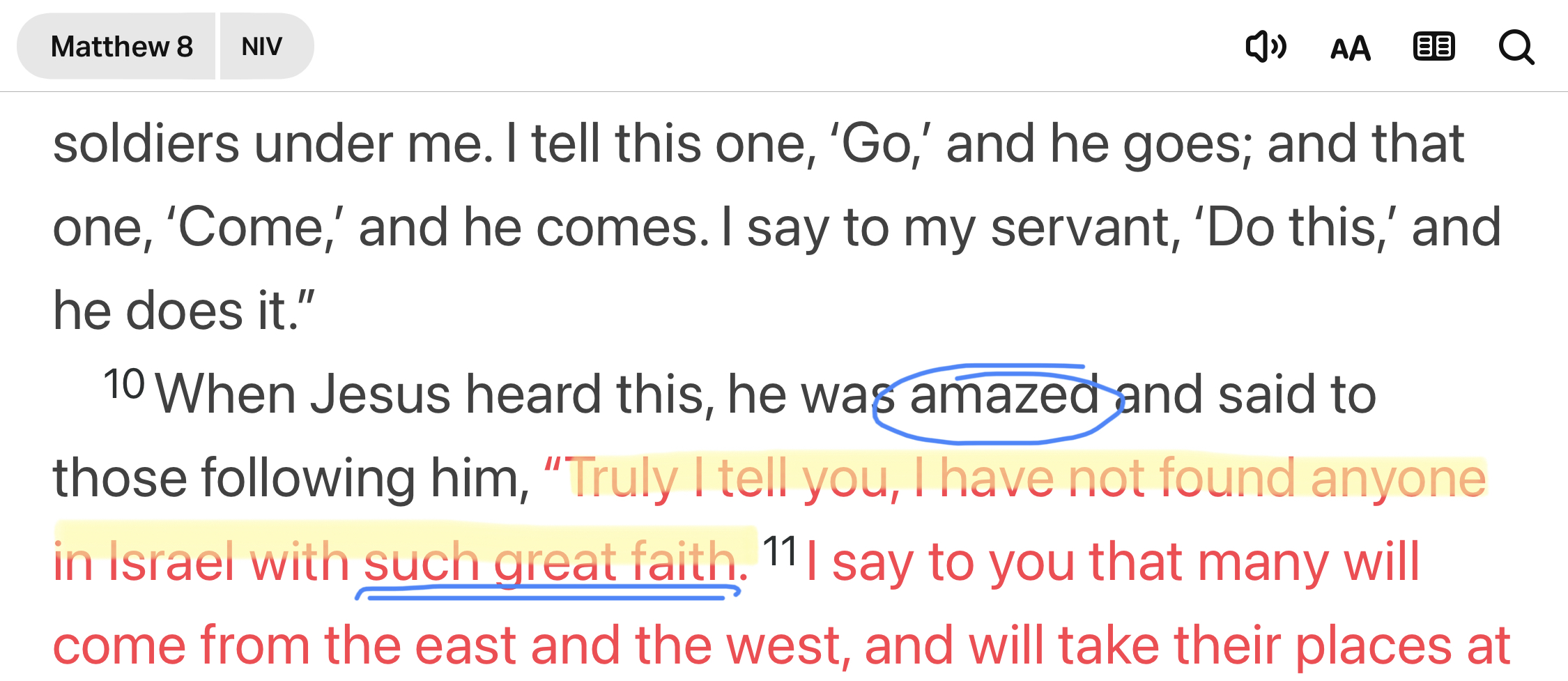
There’s a misconception that many people have about God’s laws: they think that they are intended to rob us of enjoyment, that they restrict our lives and remove our pursuit of happiness. 

In actuality, the exact opposite is true. God is love (1 John 4:8). That means everything God does is rooted in His love for us. Including the laws He gives us. He loves us and wants us to stay in the place where we don’t experience the heartache, pain, and disappointment of missing out on His blessings. 

God is also happy. Paul calls it “the glory of the blessed God” (1 Timothy 1:11). The word “blessed” can easily be translated as happy. God is happy and He wants us to share in this ultimate happiness. 

Consider the blessings that are in first and last of the Ten Commandments: 

  • The first commandment says there is only one God. Far from this being restrictive, it’s a huge blessing. I don’t have to search and compare, I don’t have to make a list of pros and cons and then settle on the best option, but I can enjoy the one and only true God. 
  • The tenth commandment says I don’t need to crave anything outside of what God has given me. Again, this is a huge blessing because it tells me that my loving Father has given me all that I need, that He alone satisfies my cravings. 

John Piper gave the essence of idolatry in this line: “Preferring other things above God.” This is why God delights for us to delight in Him. When we do, He is our sole focus. When He is our focus, we enjoy Him immensely and we reject anything that would remove our gaze from Him. 

That’s why there is a continuous linkage in all 176 verses of Psalm 119 between God’s laws and our delight—between obedience and satisfaction. When we obey God, we experience His happiness. 

The apostle Paul called Christians to live this way: “Whatever happens, conduct yourselves in a manner worthy of the gospel of Christ” (Philippians 1:27). Gospel literally means “good news.” What good news are we supposed to proclaim? The good news that God is happy and that He wants to say to us, “Come and share your Master’s happiness” (Matthew 25:21)! 

When I was a kid I struggled with this question: Do I love God just because He first loved me? I thought, “That seems like a cop out. Am I really saying that the only reason I have for loving Him is that He went first?” But then I realized it couldn’t be any other way. How could I love an angry God? How could I ever expect to approach a God who knew all my sins and had the final say on my punishment, and was just waiting for a chance to get His hands on me? 

I can only love a loving God. I can only love Him because He first loved me (see Romans 5:8). 

In a similar way, I can only crave God because He first craved a relationship with me. Otherwise I’m setting myself up for unimaginable heartbreak and disappointment! 

Jesus said it was His Father’s “good pleasure” to reveal Himself to us. No one knows the Son except the Father, and no one knows the Father except the Son. Our heavenly Father craved a relationship with us, so He revealed His Son Jesus to us so that Jesus could reveal the Father to us (see Matthew 11:25-30; John 14:7).

Just as we could only love God because He loved us first, we could only crave a relationship with God because He craved a relationship with us first. It was always His plan to adopt us into His family—this is what gives Him great pleasure (Ephesians 1:5). Then God works in us to fulfill His craving for us, which empowers us to find our deepest longings satisfied exclusively in Him (Philippians 2:13). 

Sometimes we get a small taste or experience of earthly pleasure that quickly fades away. C.S. Lewis reminded us, “If I find in myself a desire which no experience in this world can satisfy, the most probable explanation is that I was made for another world.” 

Our craving for God is only satisfied in the knowledge that God first craved a relationship with us. Only the intimacy of our Savior will fulfill our cravings. Anything else will end only in utter disappointment. 

If you have missed any of the message in our series called Craving, you can find a list of all of the messages by clicking here. 

►► Would you please prayerfully consider supporting this ministry? My Patreon supporters get behind-the-scenes access to exclusive materials. ◀︎◀︎
Firsthand Experience

Listen to the podcast of this post by clicking on the player below, and you can also subscribe on AppleSpotify, or Audible. 

I had an encounter with my atheist college professor that has always stuck with me. I was reminded of that interaction when I was reading the question John the Baptist sent to Jesus from prison. 

Always remember:

The one with a firsthand experience is never at the mercy of the one with only secondhand information. 

The biblical passages I reference in this video are Matthew 11:1-6 and 1 Peter 3:12-16. 

►► Would you please prayerfully consider supporting this ministry? My Patreon supporters get behind-the-scenes access to exclusive materials. ◀︎◀︎

Links & Quotes

We have a new kitten in our home and the places she shows up cracks me up!

In the Wall Street Journal, Andy Kessler said that without the discoveries and influence of Michael Faraday, “there would be no modern economy.” John Stonestreet built on this by explaining that “Faraday is an example of how Christians can balance the constructive purposes of science with an accurate understanding of scientific authority.” Indeed, Faraday’s Christian faith made his scientific findings even more powerful.

This year marks the centennial anniversary of Central Bible College, the first educational institute opened by the Assemblies of God to train ministers and missionaries.

“For many years, evidence has been found showing that humans were surprisingly intelligent in times that were only supposed to reveal simple, ‘primitive’ man in his brute, evolving condition.” Now a new discovery has shown a surgical amputation that took place about 7000 years ago.

There’s a cool story in three of the Gospels where some creative, persistent friends took their paralyzed friend to Jesus. The Bible notes that “when Jesus saw *their* faith” He healed their friend. Wow! Which of your friends or family are too weak to pray for themselves? Who do you know that feels paralyzed and cannot get to Jesus? Be that friend who has faith for someone else. And be sure to check out more of my Monday Motivation videos too.

We have seen it in countless science fiction movies, but is it possible for artificially intelligent machines to take over the world? This is a great video from Science Uprising—

If you have known someone who has battled cancer, you know that their liver is quite vulnerable to metastatic cancer since everything in our body is filtered through the liver at some point. Researchers have discovered the mechanism by which this metastasis happens, opening the door for defensive measures that can be employed. Let’s pray for divine insight for these researchers!

Is Christianity rational? Cold-case detective J. Warner Wallace explains how Christianity stands up to intense scrutiny—

Savoring The Meal

Listen to the podcast of this post by clicking on the player below, and you can also subscribe on AppleSpotify, or Audible. 

Jesus told us twice, “Your Father knows what you need before you ask Him” (Matthew 6:8, 32). He knows the good we need. 

When we were children, our parents tried to give us good-for-you food, but sometimes it wasn’t necessarily good. It might have given us nutrients, but perhaps it wasn’t as tasty as we would have liked. Let’s be honest: most junk food tastes really, really good—probably better than the good-for-you food. As a result, sometimes we eat just to eat. We eat because we have to. We choke down the vegetables just so we can get to the dessert.  

As parents, we want our kids to have good-for-you food. God wants that too, but He wants more than that for us: He wants it to be savory as well. Jesus talked about how evil parents knew enough to give good things to their children, but then He reminded us how much more does God want to give us (Luke 11:11-13)! 

It usually takes much longer to prepare food than it does to eat it. This is especially true for more savory gourmet meals. When we gulp down our food, we don’t really appreciate or savor the tastes, the subtle hints the chef has mixed in, and certainly not the time involved to prepare such a lovely feast. 

When we gulp down our food without savoring it…

  • …we don’t honor the one who prepared the food 
  • …we don’t savor the goodness so we don’t appreciate the goodness
  • …we move on to dessert (or junk food) before our body is ready for it 

In Psalm 106 we read a history lesson of Israel’s ups-and-downs—the trouble they were in and the deliverance God prepared for them. The psalmist directly connects their lack of savoring God’s good things to their rebellion and their carnal, godless cravings. Instead of slowing down to be grateful for what God had given them, they just wanted to move on to the next dessert. That attitude may have been what was behind the spoiled girl named Veruca Salt in the movie “Willy Wonka and the Chocolate Factory” who sang the song “I Want It NOW! 

David gives us the antidote for this tasteless gulping of God’s good and good-for-us food: “Taste and see that the Lord is good…” (Psalm 34:8a). This deliberate tasting allows us to see how excellent the things of God are, better than anything else the world has to offer!  

David concludes his counsel with these words, “Blessed is the man who takes refuge in Him. Fear the Lord, you His saints, for those who fear Him lack nothing” (Psalm 34:8b). 

In the New Testament, the apostle Peter gives us a similar word: “Like newborn babies, you must crave pure spiritual milk so that you will grow into a full experience of salvation. Cry out for this nourishment, now that you have had a taste of the Lord’s kindness” (1 Peter 2:2-3 NLT). 

It’s this savoring that will help us appreciate the sweet and the bitter. It’s this appreciation that brings glory to God and keeps us craving more of the ultimate good that only He has for us. 

If we will slow down to savor God’s Word, if we will delight to spend time in prayer, if we won’t rush through the good-for-you trials, we will taste and see that there is nothing that can satisfy like our Savior! 

If you’ve missed any of the messages in our series called Craving, you can find the full list by clicking here. 

►► Would you please prayerfully consider supporting this ministry? My Patreon supporters get behind-the-scenes access to exclusive materials. ◀︎◀︎

Links & Quotes

“Don’t quit until every base is uphill. I played just a little too long.” —Babe Ruth’s advice to Hank Greenberg, when Hank was considering retirement

As a part of my ongoing Monday Motivation series, I shared a thought of how we can see more miracles—

The Assemblies of God have always been a missions-centric fellowship. Check out this mini-biography of Alice Luce as a prime example.

The Bible isn’t a “once upon a time” collection of stories, but the accounts contained in Scripture are historically verifiable. I love this archaeological biography of Israel’s King Pekah. And be sure to check out my side-by-side chart of the kings and prophets of the divided kingdoms of Israel and Judah.

There is a psychological term called “projection” where we see in others what is really in ourselves. This is something Christians MUST guard against doing. Instead of going to the other person first, let’s go to our knees in prayer first. This is a short clip from a full-length teaching video I provided exclusively for my Patreon supporters.

“Blessed are those who can give without remembering and can take without forgetting.” —Elizabeth Bibesco

A High And Holy Calling

Listen to the podcast of this post by clicking on the player below, and you can also subscribe on AppleSpotify, or Audible. 

When God spoke to the “princes of Israel,” He was speaking to those in leadership positions. They were men who had wealth, position, and a high level of influence. God called them to live up to their title as “prince” because leadership is a high and holy calling given by God. 

Leaders are to set an example for others. They are to provide what is lacking so that others can live up to their own God-given potential as well. Here’s the way God describes His leaders in Ezekiel 45-46:

They are to be peacemakers, never men of violence nor oppression (45:9). 

They are to be fair, consistent, and impartial in their interactions with others (45:10). 

They are to generously provide for the people under their care (45:15-17, 22; 46:13-14). 

They are to have a “get to do it” attitude toward their duties, not a “have to do it” attitude” (46:5, 7, 11). 

They are to be among their people, not aloof nor isolated from them (46:10). 

They are to provide for their family without impoverishing the people under their care (46:18). 

Since God calls leaders, He will also call them to account. Jesus made it clear that there are only one-of-two assessments that leaders will hear from God:

  1. Well done, good and faithful servant 
  2. You wicked, lazy servant

Let me say it again: Leadership is a high and holy calling. So…

A mark of a godly leader is one who joyfully and faithfully fulfills God’s leadership call. 

This is part 67 in my series on godly leadership. You can check out all of my posts in this series by clicking here.

►► Would you please prayerfully consider supporting this ministry? My Patreon supporters get behind-the-scenes access to exclusive materials. ◀︎◀︎