Thursdays With Oswald—All Of Me

ChambersThis is a weekly series with things I’m reading and pondering from Oswald Chambers. You can read the original seed thought here, or type “Thursdays With Oswald” in the search box to read more entries.

All Of Me

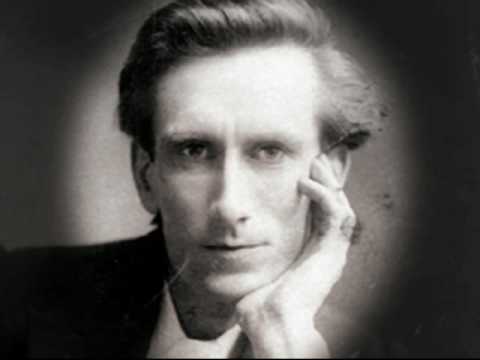
     Never run away with the idea that you are a person who has a spirit, has a soul and has a body; you are a person that is spirit, soul and body. Man is one; body, soul and spirit are terms of definition. My body is the manifest “me.” Some of us are so dominated by the body that our spirit lives only in the physical domain, instead of the physical being slowly taken into the spiritual by a series of moral choices. Our spirit goes no further than we bring our body. 

From Conformed To His Image

God created us as a three-part, integrated being. Quite simply, all parts are interdependent on each other.

If my body is diseased, it’s hard for me to develop my soul and spirit. If my emotions are out-of-balance, it adversely affects by body and spirit. If my spirit is still weighed down by sin, it cannot but affect my body and soul.

I love the brief description Dr. Luke gives us about how Jesus grew up: Jesus grew in wisdom and in stature and in favor with God and all the people (Luke 2:52). Let me state this verse differently. Jesus grew healthily…

  • …in wisdom (His mind)
  • …in stature (His physical body)
  • …in favor with God (His soul)
  • …in favor with all the people (His emotions and relationships)

Jesus showed us well-round, healthy growth. If you are diseased in your body, talk to a doctor about remedies; if you are diseased in your soul, talk to a counselor or psychologist about your emotional health; if you are diseased in your spirit, talk to God about forgiveness.

Don’t let one part of you hold you back from being all the you God created you to be!

7 Quotes From “Did Jesus Rise From The Dead?”

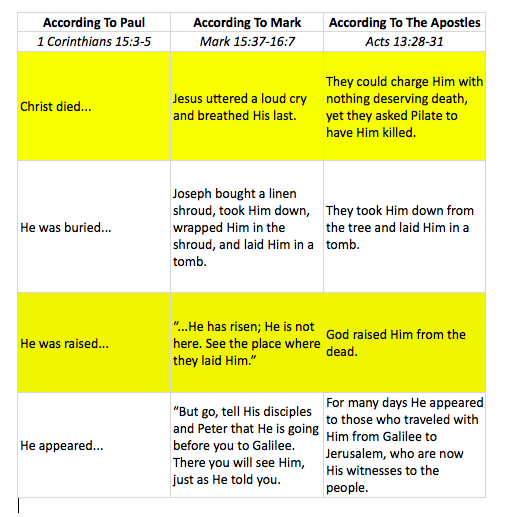
Did Jesus Rise From The DeadDid Jesus Rise From The Dead? is an excellent apologetic for both the biblical skeptic and the biblical student. You can read my full book review by clicking here. Below are seven noteworthy quotes and one infographic from this fascinating book.

“One of the most noteworthy facts about the early Christian belief in Jesus’ resurrection was that it flourished in the very city where Jesus had been publicly crucified. So long as the inhabitants of Jerusalem thought that Jesus’ corpse lay in the tomb, few would have been prepared to believe such silliness as the claim that God had raised Jesus from the dead.”

“We have the extraordinary number of at least five independent sources for Jesus’ burial, some of which are extremely early. The Gospels describe Joseph as a rich man, a member of the Jewish Sanhedrin. As a member of the Jewish Sanhedrin that condemned Jesus, Joseph of Arimathea is unlikely to be a Christian invention. The Sanhedrin was a sort of Jewish high court made up of seventy of the leading men of Judaism, which presided in Jerusalem. There was an understandable hostility among early Christians toward the Jewish Sanhe-drists, for Christians blamed the Sanhedrists for engineering a judicial murder of Jesus at the hands of the Romans. … Therefore, Jesus’ burial by Joseph is very probably historical, since it would be almost inexplicable why Christians would invent a story about a Jewish Sanhedrist who gives Jesus a proper burial.”

“Matthew is clearly working with an independent source, for he includes the story of the guard at the tomb, which is not derived from Mark and is unique to his Gospel; moreover, his comment that the rumor that the disciples had stolen Jesus’ body, ‘And this story has been spread among the Jews to this day,’ (Matthew 28:15) shows that the guard is not Matthew’s own creation, but was part of prior tradition. Luke also has an independent source, for he tells the story, not found in Mark, of two disciples’ inspecting the tomb to verify the women’s report that the tomb was vacant. This story cannot be regarded as Luke’s own creation, since the incident is independently reported in John’s Gospel. And, again, given John’s independence of the other three Gospels, we have yet another independent report of the empty tomb.”

Did Jesus Rise From The Dead infographic

(click image for a larger view)

“To appreciate how restrained Mark’s narrative is, we need only read the account in the second-century apocryphal Gospel of Peter. It describes Jesus’ triumphant exit from the tomb as a gigantic figure whose head reaches above the clouds, supported by giant angels, followed by a talking cross, heralded by a voice from heaven, and all witnessed by a Roman guard, the Jewish leaders, and a multitude of spectators! This is how real legends look: They’re richly decorated with theological and apologetical motifs. By contrast, Mark’s account is stark in its simplicity.”

“Think about that: ‘His disciples came by night and stole Him away’ [Matthew 28:13]. The Jewish authorities did not deny the fact that Jesus’ tomb was empty; instead they entangled themselves in a hopeless series of absurdities, trying to explain it away. In other words, the Jewish claim that the disciples stole the body presupposes that the body was, in fact, missing. Therefore, we have evidence from the very adversaries of the early Christian movement for the fact of the empty tomb.”

“All the followers of those first century messianic movements were fanatically committed to the cause…. But in no case right across the century before Jesus and the century after Him do we hear of any Jewish group saying that their executed leader had been raised from the dead, and he really was the Messiah after all.” —N.T. Wright

“A supernatural explanation of the empty tomb, the resurrection appearances, and the origin of the Christian faith is not contrived given the context of Jesus’ own unparalleled life, ministry, and personal claims.”

Healed Healer

Healed HealerMartha has gotten a bad rap throughout history. So many people jump on her for buzzing around her home trying to make sure Jesus, His disciples, and all of the other guests were taken care of. She was attempting to be a good hostess.

But let’s read her story again carefully (see Luke 10:38-42). Notice first of all that Martha “opened her home” to Jesus. She took the responsibility for making sure Jesus felt welcomed in her home.

Next notice how Jesus addressed Martha. He said “Martha, Martha.” There are no unnecessary words in the Scripture, so His repeating her name is significant. Jesus alone speaks like this in all of the New Testament: only He repeats someone’s name to make sure He has their undivided attention—

  • Simon, Simon (Luke 22:31) when warning him that satan is after him.
  • Jerusalem, Jerusalem (Luke 13:34) to the people who could be helped by Him.
  • My God, My God (Matthew 27:46) to His Father from the Cross.
  • Saul, Saul (Acts 9:4) to the young zealot who was persecuting Christ.

Jesus was not scolding Martha, but He was trying to get her attention. Jesus told her she was “worried and upset about many things.” By contrast Mary was focused on one thing: soaking up Christ’s words. It’s hard to be hospitable when you’re doing it in your own strength. It’s hard to be a healer when you need healing yourself.

In an amazing turnaround, Jesus became the Host. He wanted Martha to see that having a relationship with Him is THE priority. Everything else flows from that.

It’s not coincidental that both hospitality and hospital come from the same root word meaning a place of healing.

  • You are HEALED when you make Christ at home in your heart. 
  • You are a HEALER when your heart makes others feel at home. 

This is the essence of being God-oriented and then people-focused. This is when YOU can be a healed healer!

Think about this: What does it mean to you to make Jesus at home in your heart? What’s stopping you from receiving His healing today? It’s only after you’ve been healed that you can bring healing to others.

God-Oriented & People-Focused

God-oriented & People-focusedYou can spin it around, roll it down the stairs, throw it high in the air, and still it isn’t phased one bit. It doesn’t matter if you’re moving fast or slow, if you’re at high altitudes or in Death Valley, it still works. The needle of the compass always points north.

It can’t help it: it is naturally oriented to the north pole. Whether it’s pitch-black outside, or 40 degrees below zero; whether you feel like north is “north” or not, the needle will always point its way back to north.

Jesus could be cheered by the crowds or jeered by them. People could shout “Hosanna!” or “Crucify Him!” The weather could be calm or stormy, His disciples could be courageous or scared to death, and still Jesus was oriented to His Father.

Every word Jesus said, every action He undertook, every lesson He taught, every prayer He prayed was God-oriented.

But not only that, even as much as people ridiculed Him, snubbed Him, rejected Him, or denied Him, Jesus was still people-focused. After being so cruelly treated, I think I may have turned from some people, or even turned on some people with some not-so-kind words. I may have even begun to withdraw from people. But despite the way people mistreated Him, Jesus remained lovingly people-focused (see 1 Peter 2:21-23).

Jesus us told us that if we stand for Him, we will be mistreated as well (see Luke 21:17 and John 15:20). But He also told us there was a reward for that mistreatment (see Matthew 5:11-12).

When asked what the greatest of all the commandments was, Jesus replied that it was to be God-focused and people-oriented—

Jesus replied, “The most important commandment is this: ‘Listen, O Israel! The Lord our God is the one and only Lord. And you must love the Lord your God with all your heart, all your soul, all your mind, and all your strength.’ The second is equally important: ‘Love your neighbor as yourself.’ No other commandment is greater than these.” (Mark 12:29-31)

So a good check-up question for us all: How am I doing at being God-oriented and people-focused, no matter what the circumstances are?

UPDATE: I explore the example of how Jesus responded to His critics in a couple of chapters of my book When Sheep Bite.

Thursdays With Oswald—The Power To Descend

This is a weekly series with things I’m reading and pondering from Oswald Chambers. You can read the original seed thought here, or type “Thursdays With Oswald” in the search box to read more entries.

Oswald Chambers

The Power To Descend 

     The test of spiritual life is the power to descend; if we have power to rise only, there is something wrong. … Spiritual selfishness makes us want to stay on the mount; we feel so good, as if we could do anything—talk like angels and live like angels, if only we could stay there. But there must be the power to descend; the mountain is not the place for us live, we were built for the valleys. … 

   The reason we have to live in the valley is that the majority of people live there, and if we are to be of use to God in the world we must be useful from God’s standpoint, not from our own standpoint or the standpoint of other people. 

From The Love Of God

When Peter, James and John were with Jesus on the mountain and He was transfigured in their presence, Peter said, “Lord, let me build some shelters so we can stay here always!” (see Luke 9:28-36). But there was no one on the mountaintop, except for them. In the valley below was a demon-possessed boy who needed help (Luke 9:37-43). If they had stayed on that mountain, this boy would not have been helped.

On the day of Pentecost, the followers of Jesus were on the “mountaintop” of an upper room when the Holy Spirit baptized them (Acts 2:1-4). It was an amazing experience, probably very similar to what those apostles had seen with Jesus. It would have been very tempting to stay there, basking in the presence of God. But Jesus had said that this baptism in the Holy Spirit was to empower them for the “valley” of service (Acts 1:8). There were people in valleys all over the world who needed the good news of Jesus.

Mountaintops with God are great. God gives us these experiences so that we can be of greater service for Him in the valleys. The people are in the valleys and they need what you and I have received from God. Enjoy the mountaintop experience with God and then go quickly to minister in the valleys!

14 Quotes From “Pentecost”

Pentecost

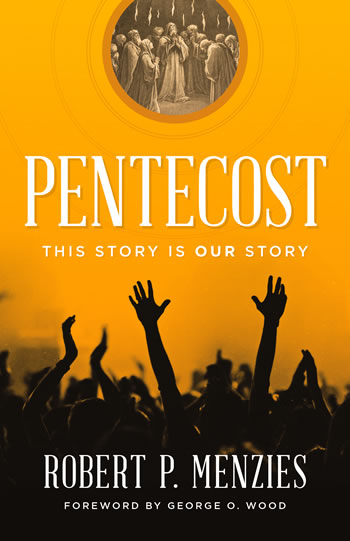
I thoroughly enjoyed reading Pentecost by Robert P. Menzies, and learned quite a bit. You can read my full book review by clicking here. Here are a few quotes that stood out to me.

“It’s because Pentecostals fuse the biblical and contemporary horizons that we link baptism in the Holy Spirit with speaking in tongues, since that’s what Acts 2 does. It’s why we associate Spirit-baptism with empowerment for mission rather than with spiritual regeneration. And it’s why we expect God to perform ‘signs and wonders’ and to manifest spiritual gifts in worship services. All these things happened in the first Pentecostal community, and their story is our story.” 

“At its heart, the Pentecostal movement is not Spirit-centered but Christ-centered. The work of the Spirit, as Pentecostals understand it, centers on exalting and bearing witness to the Lordship of Christ.”

“Pentecostals are ‘people of the Book.’ Although Pentecostals certainly encourage spiritual experience, they do so with a constant eye to Scripture.”

“So, the stories of Acts are our stories, and we read them with expectation and eagerness: stories of the Holy Spirit’s power, enabling ordinary disciples to do extraordinary things for God. … The hermeneutic of the typical Pentecostal believer is straightforward and simple: the stories in Acts are my stories—stories that were written to serve as models for shaping my life and experience.”

“In Luke’s view, every member of the church is called (Luke 24:45–49; Acts 1:4–8/Isaiah 49:6) and empowered (Acts 2:17–21; cf. 4:31) to be a prophet. Far from being unique and unrepeatable, Luke emphasizes that the prophetic enabling experienced by the disciples at Pentecost is available to all of God’s people. … Through his two-volume work, Luke declares that the church, by virtue of its reception of the Pentecostal gift, is nothing less than a community of prophets. It matters not whether we are young or old, male or female, rich or poor, black or white; the Spirit of Pentecost comes to enable every member of the church, each one of us, to fulfill our prophetic call to be a light to the nations.” 

“Not long ago a Chinese house church leader commented, ‘When Western Christians read the book of Acts, they see in it inspiring stories; when Chinese believers read the book of Acts, we see in it our lives.’”

“Luke’s theology of the Spirit is different from that of Paul. Unlike Paul, who frequently speaks of the soteriological dimension of the Spirit’s work, Luke consistently portrays the Spirit as a charismatic or, more precisely, a prophetic gift, the source of power for service.” 

“Luke crafts his narrative so that the parallels between Jesus’ experience of the Spirit (Luke 3–4) and that of the disciples on the day of Pentecost (Acts 1–2) cannot be missed. Both accounts: 1. Are placed at the outset of Luke’s Gospel on the one hand, and the book of Acts on the other; 2. Associate the reception of the Spirit with prayer; 3. Record visible and audible manifestations; 4. Offer explanations of the event in the form of a sermon that alludes to the fulfillment of Old Testament prophecy.”

“Luke’s understanding of baptism in the Holy Spirit, I have argued, is different from that of Paul. It is missiological rather than soteriological in nature. … The tendency in Protestant churches has been to read Luke in the light of Paul. Paul addresses pastoral concerns in the church; Luke writes a missionary manifesto.” 

“Bold witness for Jesus is recognized as our primary calling and the central purpose of our experience of the Spirit’s power. Missions is woven into the fabric of our DNA.”

“I do not wish to minimize in any way the significance of the great doctrinal truths of Paul’s writings. I merely point out that since Paul was, for the most part, addressing specific needs in various churches, his writings tend to feature the inner life of the Christian community. His writings, with some significant exceptions, do not focus on the mission of the church to the world. … It is probably fair to say that while Paul features the ‘interior’ work of the Spirit (e.g., the fruit of the Spirit, Gal. 5:22–23); Luke features His ‘expressive’ work (Acts 1:8). Thus, by appropriating in a unique way the significant contributions of Luke-Acts, Pentecostals have developed a piety with a uniquely outward or missiological thrust.”

“The clarity of the Pentecostal message flows from the simple, straightforward manner in which we read the Bible. As I have noted, Pentecostals love the stories of the Bible. We identify with the stories that fill the pages of the Gospels and Acts, and the lessons gleaned from these stories are easily grasped and applied in our lives. For Pentecostals, the New Testament presents models that are to be emulated and guidelines that are to be followed. It should be noted that our approach to doing theology is not dependent on mastering a particular set of writings, say, the works of Luther; or coming to terms with a highly complex theological system. Pentecostals also do not worry much about cultural distance or theological diversity within the canon. We do not lose sleep over how we should understand the miracle stories of the Bible or how we might resolve apparent contradictions in the Bible. Our commitment to the Bible as the Word of God enables us to face these questions with a sense of confidence.”

“We must remember that whatever we do, God is measuring the work we do for Him in a qualitative, not quantitative way. … Only the work which is done by the power of the Holy Spirit can be acceptable in the Kingdom of God.” —David Yonggi Cho

“Some will still remain skeptical. They will ask: Is not this approach to church life, with its emphasis on ecstatic experience, emotional response, and spiritual power, filled with inherent dangers? Might it not encourage us to feature emotionally manipulative methods and to focus on superficial matters? Yes, undoubtedly, there are dangers. However, there is more danger in an approach that fails to make room for the full range of human experience, including the emotions, in our encounter with God.”

Pentecost (book review)

PentecostI grew up with this stuff: I’m a fourth-generation Pentecostal, so I cut my teeth on this distinctive doctrine. But I was still amazed at the depth of insight into this dynamic theology that Dr. Robert Menzies shares in Pentecost: This Story Is Our Story.

Although Dr. Menzies shares a number of anecdotal stories to help illustrate certain points, this book is really a serious doctrinal work. Many people have written-off the operational gifts of the Holy Spirit seen in the book of Acts as something that ceased at the death of the apostles, or at the closing of the cannon of Scripture. But Dr. Menzies points out from the outset that Luke’s writings in the Gospel that bears his name and in the book of Acts are not just historical, but doctrinal too.

Many times people look at Paul’s writings as doctrinal, and the four Gospels and Acts as simply historical; thus giving more “weight” to the Pauline epistles. Dr. Menzies persuasively shows that Luke’s writing in Luke-Acts is just as doctrinal, and just as Holy Spirit-inspired, as every other book of the New Testament. In fact, he really goes beyond that to show how Luke’s writing is heavily influenced by Old Testament prophesies about the coming of the Messiah and the subsequent outpouring of the Holy Spirit.

This is not a sensational book, but a scholarly work. It is extensively referenced, as evidenced by the ample endnotes. But don’t let this scare you off as a book just for pastors and theologians, as Dr. Menzies’ writing style is very readable by all.

Anyone who is interested in this distinctive doctrine of the Holy Spirit should read Pentecost.

Monologue Or Dialogue

Dialogue with GodTrue prayer, according to the Bible, is a dialogue. If we ever think of it as a monologue, it ceases to be true prayer.

Look at the contrasting statements in the opening verses of Psalms 13 and 14—

How long, O Lord? Will You forget me forever? (13:1)

The fool says in his heart, “There is no God.” (14:1)

We can have a dialogue with God—even asking questions of the Almighty—or we can monologue to ourselves.

The dialoguer asks a lot of questions (five of them in the first two verses of chapter 13) and anticipates that God will answer. In fact, David wrote in an earlier psalm, “In the morning, O Lord, You hear my voice; in the morning I lay my requests before You and wait in expectation” (Psalm 5:3).

God’s answers are expected, as the dialoguer stops asking questions of God and begins to express his trust in God’s love, as he rejoices in God’s salvation, and sings about God’s goodness (13:5-6). Clearly, this trust, rejoicing, and singing come from assurances received in his dialogue with God.

The monologuer asks no questions of God, but makes definitive conclusions that he himself concocted. He talks to himself, making himself the final authority! The result is inevitable: “There they are, overwhelmed with dread” (14:5).

Jesus told a similar account of a man whom Jesus said, “prayed about himself” (see Luke 18:9-14). That word “about” is probably better translated “to.” That’s right: this man was so sure of himself that he now monologued to himself and thought he was praying. But Jesus said this about the monologuer: He went home without God taking notice of his prayer.

May we always be dialoguers in prayer, and never monologuers.

God wants to talk with you, even hearing and answering your many questions. Be sure you allow Him time to speak with you, as you anticipate His loving reply.

I will be continuing our series on prayer next Sunday, and I would love to have you join me!

Sword Drills

© kpmoorse.deviantart.com

© kpmoorse.deviantart.com

When I was a kid in Sunday School, we used to have “sword drills.” Anyone remember those? We would hold our Bibles up in the air until the teacher gave us a reference to look up. The first one to find it, and stand up and read it, won that drill. For that, we received a sticker to put inside the front cover of our Bibles. I loved sword drills, and it showed: the front cover of my Bible was filled with stickers!

Oh, that we were as quick to pull out the Sword God has given us today! I wish we were as quick to flip open our Bibles as we seem to be to turn to something else. We call friends, consult a pastor or a counselor, pray about it, talk about, plan how to overcome it; but we are slow on pulling out our Swords. 

  • The writer of Hebrews tells us that the Word of God is sharper than a sword (Hebrews 4:12).
  • Paul told Timothy that the Bible was the premier place for teaching, rebuking, correcting and training (2 Timothy 3:16).
  • He told the Corinthians that God’s Word is what helps us capture wrong thoughts (2 Corinthians 10:5).
  • In Revelation we see satan defeated by the blood of the Lamb and the use of the Word (Revelation 12:11).
  • Jesus Himself demonstrated the power to defeat satan’s temptations when He used the Word to ward off every attack (Luke 4:1-13).
  • And Paul said the Sword is the weapon we should arm ourselves with every single day (Ephesians 6:17).

I love the story John Knox (1514-1572) told about defeating satan’s temptations by the Sword of the Word—

“All my life I have been tested and assaulted of satan. But my present test has assailed me most fearfully. He has set to devour me, and make an end of me. Before, he often would place all my sins before my eyes. He tried to ensnare me with the allurements of this world. But the Spirit broke those attacks. Now he has attacked me another way. This cunning devil has labored to persuade me that I have earned heaven by my faithfulness to my ministry! … Blessed be God who has enabled me to beat down and quench this fiery dart by passages from the Scripture. By the grace of God, I am what I am, not I, but the grace of God in me. Through Jesus Christ I have gained the victory.” (emphasis added)

What do you think? Is it time to brush up on our Sword-handling skills? Get some Sword drills in today, and see how God’s Word will help you!

A Harmony Of The Gospels (book review)

HarmonyFor anyone who wants to read the four New Testament gospels with greater insight, I highly recommend A Harmony Of The Gospels For Students Of The Life Of Christ by A.T. Robertson.

Dr. Robertson wrote: “The purpose of a harmony is not to teach theology, but to make available for men of any faith the facts in the Gospels concerning Jesus of Nazareth.” And that’s exactly what this book does.

It is one of the more interesting ways I have ever read Matthew, Mark, Luke and John. When I followed the outline in Robertson’s book, instead of reading each gospel straight through, I read them in chronological order. For instance, in reading about John’s message announcing the soon-arrival of Jesus, I was reading Mark 1:7-8, Matthew 3:11-12, and Luke 3:15-18.

In other words, you will be reading the four gospels in chronological order as the events unfolded in Christ’s ministry. Right alongside each section of study are Dr. Robertson’s fascinating and insightful notes. Reading the gospels this way really brought out details that you may have missed when just reading through the gospels in a more traditional manner.

You don’t have to be a scholar to use this book, you just need to be desirous to learn more about Jesus.