Jesus Is Everlasting Father

Listen to the podcast of this post by clicking on the player below, and you can also subscribe on AppleSpotify, or Audible. 

Last week we talked about how the title “God” can mean different things to different people. When we are talking about the One True God as He is revealed to us in the Person of Jesus, there is no doubt of Whom we are speaking. The opponents of Christianity knew this too, which is why they tried to get the early saints to not use the name Jesus.  

Isaiah 9:6 says that a Child is born and a Son is given, but this Son is given the unusual title of Everlasting Father. Jesus acknowledged this unusualness in this exchange with the Pharisees in Matthew 22:41-45. 

(Check out all of the Scriptures in this post by clicking here.) 

Everlasting” means continuous existence; existing in perpetuity; the Chief by which all other things are ordered and aligned. We see this in Genesis 1:1, where “In the beginning” signifies God started Time but He existed before that moment. 

In John 1:1, similar words are used,  but here “in the beginning” means if you stand at the moment Time began and were able to look back into the immeasurable eternity that existed before that, God was there. More specifically, the Word of God (Jesus) was there as God. Jesus Himself affirmed this in Revelation 1:8 and 3:14. 

Then in 1 John 1:1, the phrase “from the beginning” means that after Time ends, you can look into the infinite eternity that still exists and God is there. Again, Jesus Himself affirms this in Revelation 22:13. 

Father” this is the first word in our biblical Hebrew dictionary. It means father, the head or founder of a family, the protector of the family. Paul says that Jesus fulfills all of these definitions (Colossians 2:9-10, 1:15-22), and the writer of Hebrew opens his epistle with the same thought (Hebrews 1:1-3). 

No one on earth has seen God the Father. This makes it difficult to follow Him. Which is why Jesus made His appearing among us (John 1:1, 14, 18). 

Paul wanted people to know the mystery of God, namely, Christ” (Colossians 2:2), and he said that Jesus is the Key that unlocks the treasure-trove of God’s rich love for us. Notice Paul’s progression: teaching the Word (1:25-27) so that we mature (1:28), so that we have the full riches of complete understanding, in order that we may know the mystery of God, namely, Christ (2:2-4). 

When Jesus was born, Simeon gave us the same assurance when he saw Jesus and announced that Jesus was the Christ that had been prophesied (Luke 2:25-32), and Jesus Himself told His disciples the exact same thing (John 14:8-9). 

Let people see God’s love through your life, all year-round but especially at Christmas. As we said last week, when we talk about Jesus and live for Jesus, we invite others to God, through Jesus, by the Spirit’s illumination. 

If you have missed any of the other messages in our series Jesus Is…, you can find them all here.

►► Would you please prayerfully consider supporting this ministry? My Patreon supporters get behind-the-scenes access to exclusive materials. ◀︎◀︎
Jesus Is Mighty God

Listen to the podcast of this post by clicking on the player below, and you can also subscribe on AppleSpotify, or Audible. 

Have you ever heard the phrase “in name only”? For instance, someone might say, “He’s the boss around here in name only, but the one who really calls the shots is someone else.” We might give the title “boss” to someone just for convenience because “The guy who thinks he’s in charge” is probably too awkward to keep saying! We know the true boss by what he or she says or does, and how people respond to him or her. 

I think this is true when someone says, “God,” you might wonder just what they mean by that. Sennacherib’s field commander appeared to be confused by this, as he uses both “God” and “god” interchangeably in 2 Kings 18:19-22, 32-35. But the foretelling of the Advent of the Christ makes it perfectly clear to Whom the prophets were pointing (Isaiah 9:6-7). 

(Check out all of the Scriptures in this post by clicking here.) 

Let’s consider the title Mighty God. The word God is the Hebrew word el. It is translated many ways, but let’s find out which definition is correct in this foretelling of Jesus. 

  1. A god-like person  
  2. A mighty hero  
  3. An angel  
  4. A manmade god  
  5. The One True God 

We can eliminate “a god-like person” from Exodus 15:11.
We can eliminate “a mighty hero” from Psalm 82:1.
We can eliminate “an angel” from Psalm 29:1 and Isaiah 6:1-3.
We can eliminate “a manmade god” from Isaiah 14:12-15.

So it must mean He is The One True God! One of Isaiah’s favorite phrases is “the Lord Almighty” which he uses 61 times (e.g. Isaiah 47:4)! 

Isaiah 40 is one of the most descriptive chapters of the Lord Almighty. In here we see that…

  • He forgives sin (vv. 1-2) 
  • He is beyond description (v. 12)—holding the world’s 326 quintillion gallons of water in the hollow of His hand, fitting the 10 septillion stars of the cosmos across the breadth of His hand, and carrying the weight of the Earth (1.3 octillion pounds) easily in His basket! 
  • He is distinguished from manmade gods (vv. 18-20, 25) 
  • His strength is absolutely unrivaled (vv. 26, 28) 

How do we know these descriptive words in Isaiah point to Jesus? Look at these First Testament Scriptures compared to Christ’s First Advent: 

  • Isaiah 40:3-5 foretells the messenger who would herald Christ’s arrival. Zechariah is inspired by the Holy Spirit to make this connection to his son John (Luke 1:76-77), and then John lives this out (Mark 1:1-3).  
  • Remember that 40:1-2 says that The One True God forgives sins, which is what John the Baptizer sees in Jesus (John 1:29).  
  • In 41:10, 13-14 we read of God shining His light into darkness to set people free, which is another thing that Zechariah connects to Jesus (Luke 1:67-75). 

Jesus wasn’t God in name only, but His words and action—and the response of those who saw and heard Him—affirmed that He is the Mighty God that was foretold (John 8:48-59; Mark 14:60-64). 

Notice also how the early New Testament saints proclaimed Christ’s unique deity, stating clearly that He is the fulfillment of all of the prophetic words that point to Him as The One True God (Acts 4:8-10, 12, 18; 5:27-32). 

Peter and John said, “We are witnesses of this.” We too are witnesses of this if we have accepted Jesus as our Lord and Savior. We get to proclaim His Lordship by our verbal testimony and our lifestyle. As C.S. Lewis said, “A man who was merely a man and said the sort of things Jesus said would not be a great man or a moral teacher. He would either be a lunatic—on the level with the man who says he is a poached egg—or else he would be the devil of hell. You must take your choice. Either this was, and is, the Son of God; or else a madman or something worse. You can shut Him up for a fool…or you can fall at His feet and call Him Lord and God.” 

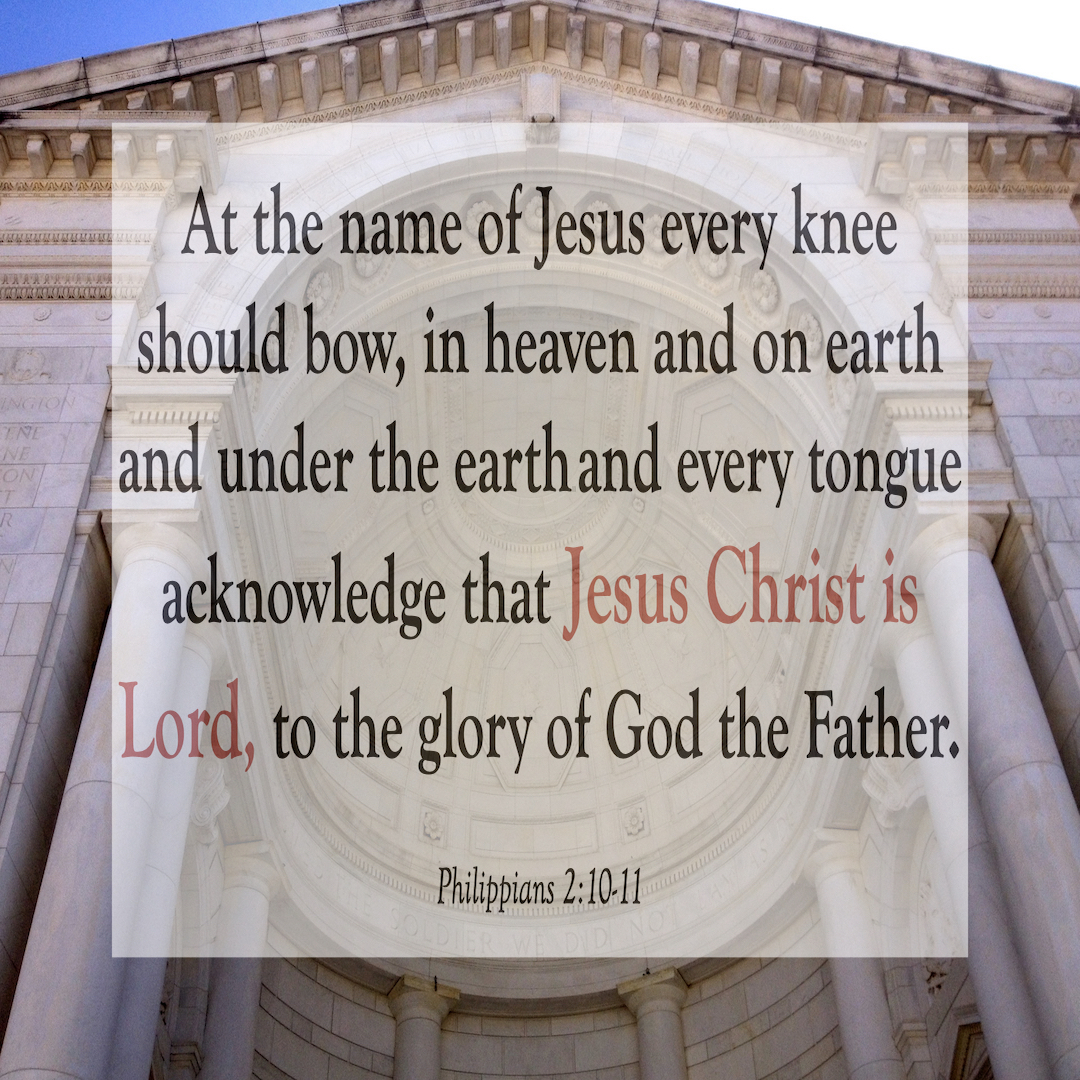
In Philippians 2:9-11, Paul points out that Jesus has the name above every name and that every knee must bow to Him and every tongue confess that He is Mighty God! Today, let us bow our knee to Him and lift our voices proclaiming that He is Lord and God until our One True God takes us home or returns at His Second Advent. 

If you’ve missed any of the other message in our Advent series called Jesus Is…, you can find them all here. 

►► Would you please prayerfully consider supporting this ministry? My Patreon supporters get behind-the-scenes access to exclusive materials. ◀︎◀︎
Jesus Is Wonderful Counselor

Listen to the podcast of this post by clicking on the player below, and you can also subscribe on AppleSpotify, or Audible. 

Jesus made His first appearance as a fully human Man in a stable in Bethlehem. But His Advent—or appearing—had been anticipated for a long time before that. 

In fact, one of the darkest chapters in human history takes place shortly after human history began. Mankind sinned and was separated from God because of that sin. The initial separation foretold an eternal separation (Genesis 3:22), but God shines His light of hope in this darkest hour, foretelling the Advent of our rescue (3:15). 

(Check out all of the Scriptures in this post by clicking here.)

Seven hundred years before Christ’s birth in Bethlehem, the setting is still dark and getting darker. Sin is running rampant, God’s people are groping in darkness, and enemies are pressing in from every side. 

Out of the darkness, God speaks (Isaiah 8:5-10), giving us a glimpse of the Messiah’s glory. Notice the hope-filled words Immanuel (v. 8) and God with us (v. 10). This darkness is the inevitable result of not gazing on God’s glory (vv. 21-22), and yet there appears another glorious promise in a single word: Nevertheless (9:1-7). 

We get a glimpse of Immanuel’s glory in the titles that will describe our Messiah. Let’s look first at Wonderful Counselor. 

Wonder can have two definitions: 

  1. Something so extraordinary that it is hard for our finite human minds to comprehend—Exodus 15:11; Isaiah 25:1 NLT. 
  2. God’s awesome deeds: His works that leave us in absolute awe of His greatness—Jeremiah 32:17 AMPC. 

Counselor is someone who gives counsel; not just any counsel, but perfect counsel because He is omniscient (knows it all) and omnipotent (can do it all)—Isaiah 14:26-27; Psalm 139:1-6; Psalm 32:8. 

Job got a glimpse of this Awesome Counselor too in Job 42:1-6. 

Our First Testament friends only got a glimpse of the Messiah’s glory, but we have the glory revealed to us—Hebrews 1:1-3a; Matthew 1:22-23; John 1:5, 14, 18. 

We have His wonderful counsel revealed to us too—Luke 5:20-26; John 7:37-46. 

And we look forward to seeing His glory undimmed at His Second Advent—John 1:47-51; Mark 14:61-62. 

As we live now between the Advents, we have the joyful privilege and responsibility to proclaim this glory to those still living in darkness—Matthew 28:18; Acts 4:30.  

See how the saints proclaimed Christ’s glory, relying on His wonderful counsel in Acts 4:13, 20, 31; 5:12; 6:8, 10; 8:6-8. This is how we are to live too (2 Thessalonians 2:16-17). 

As you live between the Advents, I pray that the glory of our Wonderful Counselor will become more real to you and that it will shine out of every word you speak and everything you do! 

Check out the other posts in this series Jesus Is… here.

►► Would you please prayerfully consider supporting this ministry? My Patreon supporters get behind-the-scenes access to exclusive materials. ◀︎◀︎
Contend For People

Listen to the podcast of this post by clicking on the player below, and you can also subscribe on AppleSpotify, or Audible. 

Jude calls Christians to contend for the faith without contention and without compromise. As we wrap up this series, there is one final question that we should ask: What are we contending for? 

I believe the bottom line for Jude is that we are contending with saints for people. In other words, we have to be united in our efforts as we seek to expand the Kingdom of God. 

The first hurdle we need to overcome is eliminating the dividers. Paul told the Ephesian elders about these people (Acts 20:29-30). And Jude describes them in verses 12, 16-19 as…

  • blemishes 
  • self-serving and boasting about themselves 
  • unfruitful 
  • grumblers and faultfinders 
  • ungodly desires 
  • following natural instincts = governed by their appetites 
  • who divide you 

(Check out all of the Scriptures in this post by clicking here.)

Jude then makes a stark distinction—saints are to be different! Saints are to be united in their love for Jesus and their love for each other. In fact, this is what Jesus said would distinguish His followers (John 13:35) and Paul elaborates on this in Philippians 2:1-4. 

In verses 20-25, Jude calls saints to live in contrast to “these men” who divide. He challenges saints to—

  • keep being built up in our faith (see also Ephesians 2:20; Colossians 2:7) 
  • praying in the Holy Spirit 
  • keeping ourselves in God’s love 
  • waiting in assurance for Christ’s imminent return 

And as we are building, praying, keeping, and waiting, we must also be rescuing people from their path toward Hell. Our battle is never against flesh and blood. Our battle is against those powers that divide and those powers that bind and blind (Ephesians 6:12; 2 Timothy 2:26). 

We must not get sidetracked or distracted, we must not contend in a contentious way, but we must remain united with Jesus and united with fellow saints as we seek to expand the Kingdom of God. 

If you’ve missed any of the previous messages from this series on the Book of Jude, you can find them all here. 

►► Would you please prayerfully consider supporting this ministry? My Patreon supporters get behind-the-scenes access to exclusive materials. ◀︎◀︎
7 Images Of The Church

Husbands, love your wives, just as Christ loved the church and gave Himself up for her to make her holy, cleansing her by the washing with water through the Word. (Ephesians 5:25-26)

Dr. Henry Halley points to seven images the Bible portrays of how Jesus interacts with His saints.

“1. The Shepherd and the sheep emphasizes both the warm leadership and protection of Christ and the helplessness and dependency of believers (John 10:1-18). 

2. The vine and the branches points out the necessity for Christians to depend on Christ’s sustaining strength for growth (John 15:1-8).

3. Christ as high priest and the church as a kingdom of priests stress the joyful worship, fellowship, and service which the church can render to God through Christ (Hebrews 5:1-10; 7:1; 8:6; 1 Peter 2:5-9). 

4. The cornerstone and building stones (Matthew 21:42) accents the foundational value of Christ to everything the church is and does, as well as Christ’s value to the unity of believers. Love is to be the mortar which solidly holds the living stones together (1 Corinthians 3:9; 13:1-13; Ephesians 2:19-22; 1 Peter 2:5). 

5. The head and many-membered body, the church, is a vibrant organism, not merely an organization; it draws its vitality and direction from Christ, the Head, and each believer has a unique and necessary place in its growth (1 Corinthians 12:12-13, 27; Ephesians 4:4). 

6. The last Adam and new creation presents Christ as the initiator of a new creation of believers as Adam was of the old creation (1 Corinthians 15:22, 45; 2 Corinthians 5:17). 

7. The bridegroom and bride beautifully emphasizes the intimate fellowship and co-ownership existing between Christ and the church (Ephesians 5:25-33; Revelation 19:7-8; 21:9).

You can read all of the Bible verses listed in this post by clicking here. 

The Servant Stands Strong

Listen to the podcast of this post by clicking on the player below, and you can also subscribe on AppleSpotify, or Audible. 

The second-to-last book of the New Testament is a short letter to the Church in which Jude felt urged by the Holy Spirit to challenge Christians to “contend for the faith that was once for all entrusted to the saints.” Does contend mean Christians are supposed to be combative about sharing their faith? We can learn a lot from the way Jude opens this letter. 

First, let’s look at who wrote this book. 

The names of the brothers of Jesus are listed twice (Mark 6:3; Matthew 13:55), and Jude is either the youngest or second youngest of these male siblings. He was a part of the family delegation that went to bring Jesus home because they thought He was out of His mind (Mark 3:21, 31). Later on, Jude would also mockingly taunt Jesus (John 7:5). 

(Check out all of the Scriptures in this post by clicking here.)

James is the oldest brother after Jesus. When Paul writes that Jesus appeared to James after the resurrection (1 Corinthians 15:7), it’s possible that it means Jesus appeared to all of his brothers, because Paul also mentions that the brothers of Jesus had become evangelists (9:5). It’s not surprising that Jude calls himself a brother of James, but it is quite shocking that he calls himself a servant of Jesus Christ. 

In fact, he calls Jesus:

  • our only Sovereign and Lord (v. 4) 
  • the One who gives us eternal life (v. 21) 
  • the only One who is our entrance into Heaven (vv. 24- 25) 

We need to adopt this servant’s mindset as we interact with others. 

Second, let’s notice who Jude’s audience is. 

Jude writes to people who are called, sanctified, preserved (NKJV). 

  • called = invited to the banquet 
  • sanctified = hagiazo = holy ones or saints 
  • preserved / kept = carefully attended to  

Finally, let’s consider how Jude expects saints to be living each day. 

Jude says in verse 2 that we are to live…

  • mercifully = not wanting people to get the punishment they deserve 
  • peacefully = having our soul so secure that we fear nothing from God 
  • lovingly = agape love like Jesus (John 3:16, 13:1) and like us (13:35, 15:9) 

And all of these things are to be in abundance—ever multiplying! 

After all of this, we are now in a place to consider how to live contending for the faith (v. 3). 

We are servants of Jesus, called to His banquet, set apart and preserved for His glory; we are intimately aware of His mercy, peace, and love, which we want others to know for themselves. 

Before we learn how to contend, let’s ask the Holy Spirit to check our attitude to ensure we indeed have the attitude of a secure servant. 

Follow along with all of the sermons in this series called Earnestly Contend. 

►► Would you please prayerfully consider supporting this ministry? My Patreon supporters get behind-the-scenes access to exclusive materials. ◀︎◀︎
Community Involvement

Listen to the podcast of this post by clicking on the player below, and you can also subscribe on AppleSpotify, or Audible. 

The letters we’ve looked at so far—B, A, S, and I—are bringing about greater fruitfulness and joy-fullness in our lives, which is then enhancing our personal testimony. So the B, A, S, and I all lead up to the C—community involvement. 

One of the first things we need to consider about our community is our role—both what the Bible says is and isn’t our area of concern. Jesus helps us with a parable about wheat and weed and its explanation a few verses later (Matthew 13:24-30, 36-43). 

(Check out all of the Scriptures in this post by clicking here.) 

From Jesus we learn that the world was created good—that’s what God said at each day of Creation. Since the fall of man, satan has sown his evil seeds alongside Christ’s good seeds. 

  • Our responsibility isn’t about pointing out what’s wrong in the world 
  • It isn’t about rooting out the evil in the world 
  • It isn’t about judging the evil or even the evildoers in the world 
  • Our responsibility is to proclaim how good our God is 
  • Our responsibility is to bear as much God-honoring fruit as we can 
  • Our responsibility is to embody biblical principles and proclaim the benefits of God’s Kingdom to others 

The apostle Paul helps us see our role in our community with his payer in Ephesians 1:17-20. Paul desires that we know…  

  1. The hope to which God has called us. A rock-solid, irrevocable, eternal hope! 
  2. The riches of His inheritance in His saints. The treasure is in us. We get to be God’s blessing to those around us. 
  3. God’s incomparably great power for us. We’re never lacking anything because His power is for us—God Himself is for us! 

When our eyes are opened to this, we can see better how to live in our communities. God has placed us and equipped us to proclaim His glorious Gospel in our Personal Mission Field. The PMF includes places like our: 

  • Family—John 1:35-42 
  • Friend group—John 1:43-46 
  • Neighborhood—Colossians 1:3-8 
  • Workplace—Ephesians 6:5-9 

How do we do this? 

  • We talk about the daily interactions you have with Jesus—make it clear that He is a real Person with Whom you have a relationship.  
  • We live out our biblical worldview. 
  • We stay in fellowship with out saints so that we are sharpened and prepared to give an answer for the reason for the hope we have. 
  • We continually monitor our conversation and attitude to make sure they are Christ-like. 

Let us saints be known for what we’re for more than for what we’re against! 

Instead of railing on the evil, proclaim the favor of God, proclaim the soul-satisfying joy of a relationship with Jesus, and proclaim the advantages of the Holy Spirit’s continual counsel. 

If you’ve missed any of the previous messages in our series B.A.S.I.C. Christianity, you can find them all here. 

►► Would you please prayerfully consider supporting this ministry? My Patreon supporters get behind-the-scenes access to exclusive materials. ◀︎◀︎
Why?

Listen to the podcast of this post by clicking on the player below, and you can also subscribe on AppleSpotify, or Audible. 

We had our final service of the summer joining with Hillcrest Community Church in Morley Park. Pastor Caleb Claybaugh shared a message that challenged me.

He started out with a simple question: Why do we do ministry? “Because the Bible says so” is a good start but it’s not enough. It’s not just doing but having the right attitude. 

God is more interested in the attitude of our hearts than He is the actions of our hands. 

First, we have to love others as Jesus loved: So now I am giving you a new commandment: Love each other. Just as I have loved you, you should love each other. Your love for one another will prove to the world that you are My disciples (John 13:34-35 NLT).

When people hurt, Jesus hurts. When Jesus saw her weeping and saw the other people wailing with her, a deep anger welled up within Him, and He was deeply troubled. … Then Jesus wept (John 11:33, 35 NLT). So, too, when we see people hurting, we should hurt with them, and our pain should move us to action—When [Jesus] saw the crowds, He had compassion on them because they were confused and helpless, like sheep without a shepherd (Matthew 9:36 NLT). 

Christ’s compassion prompted Him to preach the Good News and to heal the sick (v. 35). And then Jesus prayed that more of us would be involved in this type of compassion-driven ministry (vv. 37-38). 

Although this was a word Peter spoke to pastors, it’s a good challenge for all of us about checking out attitude: Care for the flock that God has entrusted to you. Watch over it willingly, not grudgingly—not for what you will get out of it, but because you are eager to serve God (1 Peter 5:2 NLT). 

May our prayer be for God to give us both the heart of compassion that Jesus has, and also the hands of compassion that meet the needs of hurting people. 

Some related posts:

►► Would you please prayerfully consider supporting this ministry? My Patreon supporters get behind-the-scenes access to exclusive materials. ◀︎◀︎
When I Feel Afraid

Listen to the podcast of this post by clicking on the player below, and you can also subscribe on AppleSpotify, or Audible. 

Can we take just a couple of minutes to talk about fear? This isn’t on the list of anyone’s favorite topics, but it is something we all have to confront. 

The Scriptures I reference in this episode are from John 8:12, 9:5; Revelation 1:8; and Psalm 56:3-4, 10-11. 

I also mentioned how many times the Bible shows us God saying, “Do not be afraid.” Here are several of those instances. 

I shared a whole series of messages called “Do Not Be Afraid” which you can check out here. Some other related posts are: 

But when I am afraid, I will put my trust in You. I praise God for what He has promised. I trust in God, so why should I be afraid? What can mere mortals do to me? … I praise God for what He has promised; yes, I praise the Lord for what He has promised. I trust in God, so why should I be afraid? What can mere mortals do to me? (Psalm 56:3-4, 10-11 NLT)

►► Would you please prayerfully consider supporting this ministry? My Patreon supporters get behind-the-scenes access to exclusive materials. ◀︎◀︎
Walk By The Spirit

Listen to the podcast of this post by clicking on the player below, and you can also subscribe on AppleSpotify, or Audible. 

Paul makes it so clear that the Holy Spirit is a Person with Whom I should be in regular and intimate conversation. In the span of just a few verses in Galatians, Paul uses five different Greek words to fill out the definition for what it means for a Christians to walk by the Spirit. 

(Check out all of the Bible verses in this post by clicking here.) 

(1) Walk by the Spirit (Galatians 5:16). This word means to conduct my life at the Spirit’s speed. Not rushing ahead; not lagging behind. As Solomon might say, “Trust the Holy Spirit with all your heart, and do not depend on your own understanding. Seek His will in all you do, and He will show you which path to take” (paraphrase of Proverbs 3:5-6). 

(2) Led by the Spirit (5:18). This means to be attached to the One Who is conducting my life. Just like Jesus explained about branches staying connected to the Vine in John 15:1-5. 

(3) Live by the Spirit (5:25). To consider the Holy Spirit as my one and only vitalizing Source. He is more important than the air I breathe, the food I eat, or the water I drink. 

(4) Keep in step with the Spirit (5:25). I march obediently as a soldier under direction from my Superior Officer; attuned to His voice to obey His every direction. 

(5) Live by the Spirit (6:1). This describes one who is filled with and governed by the Holy Spirit’s life-force. 

Christians who live this way cannot help but exhibit the fruit of the Spirit in such abundance that their very lives become a living, breathing testimony to others of the delight in walking by the Spirit on every single step of our life’s journey (5:22-23). 

!For me, there’s no other way to live! 

►► Would you please prayerfully consider supporting this ministry? My Patreon supporters get behind-the-scenes access to exclusive materials. ◀︎◀︎