Thursdays With Spurgeon—The Joyful Journey To Realization

This is a weekly series with things I’m reading and pondering from Charles Spurgeon. You can read the original seed thought here, or type “Thursdays With Spurgeon” in the search box to read more entries.

Listen to the podcast of this post by clicking on the player below, and you can also subscribe on iTunes or Spotify.

The Joyful Journey To Realization

And [Abram] believed in the Lord, and [God] accounted it to him for righteousness. (Genesis 15:6) 

     Brothers and sisters, this everyday faith is the faith of God’s elect! There are persons who imagine saving faith to be a barren conviction of the truth of certain abstract propositions, leading only to a quiet contemplation upon certain delightful topics, or separating ourselves from all sympathy with our fellow creatures. But it is not so! Faith, restricted merely to religious exercise, is not Christian faith. It must show itself in everything. … 

     There may be some of you here today who have been called by divine grace from darkness into marvelous light. You have been led to look to Jesus and you believe you have received pardon of your sin, and yet, for lack of knowledge, you know little of the sweet meaning of such words as these: ‘accepted in the Beloved’ (Ephesians 1:6); ‘perfect in Christ Jesus’ (Colossians 1:28); ‘complete in Him’ (Colossians 2:10). You are doubtless justified, though you scarcely understand what justification means. And you are accepted, though you have not realized your acceptance. And you are complete in Jesus Christ, though you have, today, a far deeper sense of your personal incompleteness than of the all-sufficiency of Jesus. … 

     But there will come a time, beloved, when you who are called will clearly realize your justification and will rejoice in it! It will be intelligently understood by you and will become a matter of transporting delight—lifting you to a higher platform of experience and enabling you to walk with a firmer step, sing with a merrier voice, and triumph with an enlarged heart!  

From Justification By Faith

I was once asked, “If you could have a superpower, what would it be?” After a moment’s thought, I answered, “I’d like the power to just go <poof> for someone and they would be able to fully comprehended God’s love for them, or they would instantly realize how to live out their Christian faith.” 

Alas, there is no such superpower. But you and I have something far, far better: the Holy Spirit! 

Abram (who would later become Abraham) obediently followed God, even though the Bible said he didn’t fully grasp where he was going nor how God was going to give him many descendants. But he followed, and he trusted, and he listened, and slowly God began to reveal more and more to him. 

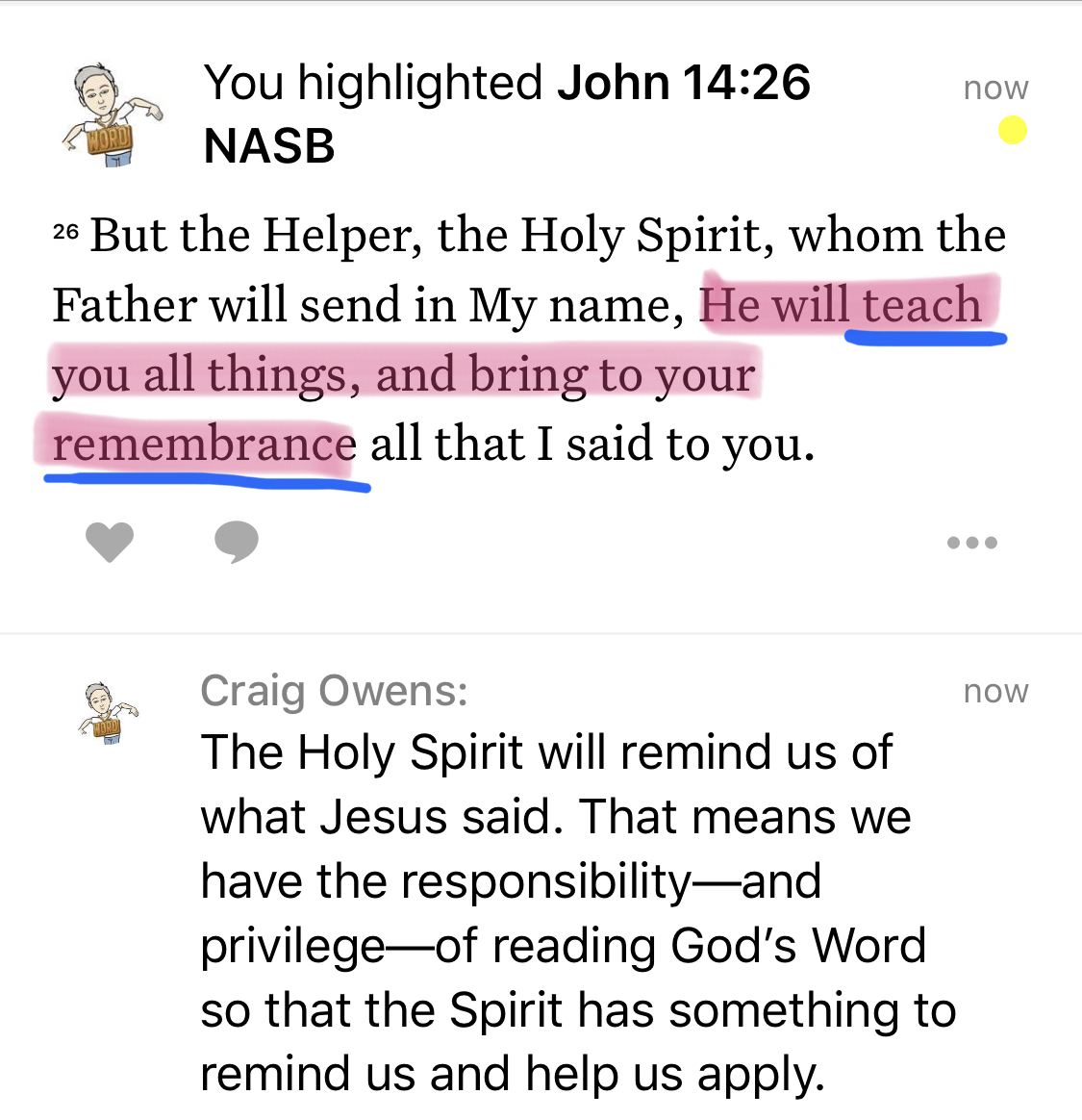
Jesus said the Holy Spirit would guide us into all truth. He didn’t say, “The Holy Spirit will go <poof> and you will immediately and fully understand everything.” Like Abram, we believe what God says about us, we follow, we trust, we listen, we obey, and the Spirit will begin to illuminate God’s Word to us. We’ll discover more each day what He’s asking of us, and we will notice that both our joy in Him and our effectiveness for the Kingdom of God are increasing along the journey! 

Don’t bail out early! Stick with it! I promise you that the joy still to be revealed along this journey is beyond compare with anything which would tempt you to stay behind to acquire.

►► Would you please prayerfully consider supporting this ministry? ◀︎◀︎
 

Thursdays With Spurgeon—Our Daily Doctrine Of Experience

This is a weekly series with things I’m reading and pondering from Charles Spurgeon. You can read the original seed thought here, or type “Thursdays With Spurgeon” in the search box to read more entries.

Listen to the podcast of this post by clicking on the player below, and you can also subscribe on iTunes or Spotify.

Our Daily Doctrine Of Experience 

[God] alone is my rock and my salvation (Psalm 62:2).

     Doctrine is nothing unless it is proved in our experience. Most of God’s doctrines are only to be learned by practice—by taking them out into the world and letting them bear the wear and tear of life. …  

     Think how many enemies you have. How many rivers you have to cross, how many mountains to climb, how many dragons to fight, how many lions’ teeth to escape, how many fires to pass through, how many floods to wade. … Can your salvation be of anything except God? … 

     I beseech you, remember this. I hope you know it by experience in the past, but try to remember it in the future—wherever you go, ‘Salvation is of the Lord.’ Do not get to looking at your heart; do not get to examining to see whether you have anything to recommend you; just remember, salvation is of the Lord. ‘He alone is my rock and my salvation.’ … 

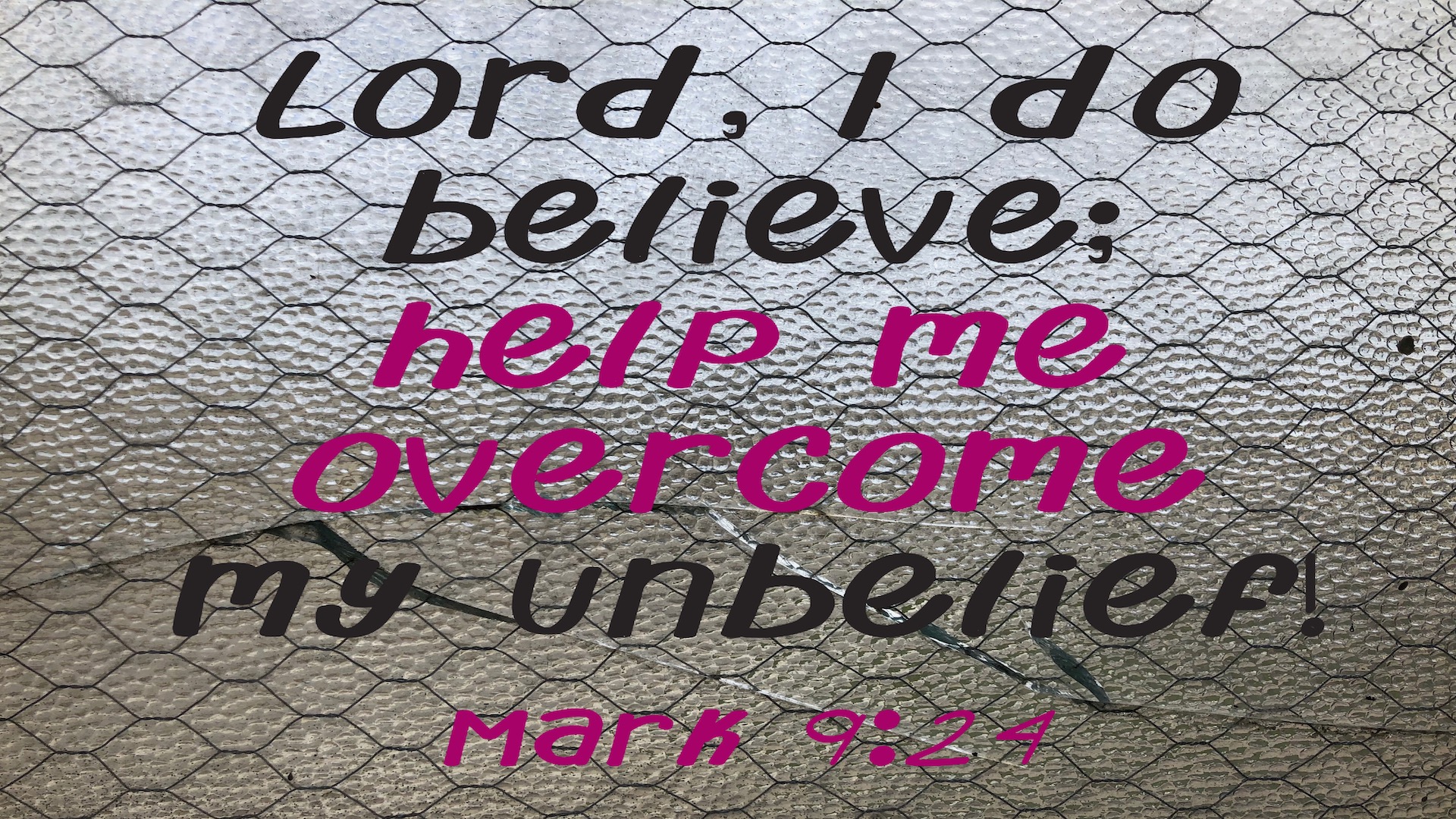
     I say, Christian, your highest and noblest experience is not to be groaning about your corruption, is not to be crying about your wanderings, but is to say, ‘With all my sin and care and woe, His Spirit will not let me go.’ ‘Lord, I believe; help my unbelief!’ (Mark 9:24). …  

     Now we must have the great duty. The great duty is this: If God only is our rock and we know it, are we not bound to put all our trust in God, to give all our love to God, to set all our hope upon God, to spend all our life for God, and to devote our whole being to God? … Trace your mercies to God and say perpetually, ‘He alone is my rock and my salvation.’

From God Alone The Salvation Of His People

If you will look through the pages of the Bible, you will see that people struggled when they forgot what God had done for them and therefore they began to take matters into their own hands. In the Old Testament, the prophets called this idolatry and adultery; in the New Testament, Jesus called this a lack of faith. 

An old hymn reminds us:

Oh, to grace how great a debtor
Daily I’m constrained to be!
Let Thy goodness, like a fetter
Bind my wandering heart to Thee
Prone to wander, Lord, I feel it
Prone to leave the God I love
Here’s my heart, Oh, take and seal it
Seal it for Thy courts above (Robert Robinson, Come Thou Fount)

I think this is the reason why Jesus taught us to pray, “Give us today our daily bread.” We need to be perpetually reliant on God’s grace—a perpetual debtor. This posture reminds us, “He alone is my rock and my salvation,” and guards us against the spirit of self-reliance that would lead us astray. 

Let our doctrine be proven in our daily experience of coming to God as our one and only Source again and again and again.

►► Would you please prayerfully consider supporting this ministry? ◀︎◀︎
 

The Hiding Place (book review)

Listen to the podcast of this post by clicking on the player below, and you can also subscribe on Apple or Spotify.

In The Problem of Pain, C.S. Lewis writes, “Suffering is not good in itself. What is good in any painful experience is, for the sufferer, her submission to the will of God, and, for the spectators, the compassion aroused and the acts of mercy to which it leads.” This sentiment was never more fully displayed than in the lives of the ten Boom family. Corrie ten Boom relates her story in The Hiding Place. 

The ten Boom family had lived in Holland for a couple of generations at the time the Germans occupied their country during World War II. Immediately, their family home and watch repair shop became a hub for underground resistance activity. But the start of this war was not the start of their compassionate activity in their city. The ten Booms lived out their Christian faith in tangible, compassionate ways every single day, and their neighbors reaped the benefits. 

The entire ten Boom family was actively involved in the efforts to protect at-risk people during the Nazi oppression of their country, including the elderly and sick, their Jewish neighbors, the mentally disabled, and the young men that were being pressed into duties to support the German war effort. As The Hiding Place progresses, the story begins to zoom-in on two sisters: Betsie and Corrie, especially their activities inside the German prisons and concentration camps in which they were imprisoned. 

The miracles that God performed for these women are too many to recount here, but it seems like hardly a page in the story passes before another miracle is seen. These Christian women took full advantage of each miracle and used them to continue to bring light and love into one of the most dark and hateful times in human history. Even after the war has ended and Corrie has returned to her Holland home, the ministry of healing, forgiveness, and reconciliation continued unabated through her tirelessly loving activities. 

The Hiding Place is truly a heroic tale! I highly recommend parents and grandparents reading it aloud to their children and grandchildren. May all Christians follow the example of the ten Boom family in finding ways to daily share the love of Jesus to their neighbors-in-need. 

►► Would you please prayerfully consider supporting this ministry? ◀︎◀︎
How Big?

…your servant has nothing there at all…except a small jar of olive oil (2 Kings 4:2). 

This widow made the right move in going to Elisha for help. The situation seemed impossible, so she had nowhere else to go but to God.

Instead of giving her immediate relief, God asks this widow to extend her faith. The steps she takes next will determine how big of a blessing she will receive. God frequently does this:

  • how many ditches am I willing to dig (3:16)? 
  • how many doors am I willing to knock on to ask for empty jars (4:3)?
  • how many times am I willing to strike the ground with my arrows (13:18-19)?

The ditches were filled with water until they could hold no more.

The jars were filled with oil until they could hold no more.

Joash only struck the ground three times, so he only received three victories.

Jesus told us…

…ask, and keep on asking 

…seek, and keep on looking 

…knock, and keep on knocking 

God IS going to answer. The question is: HOW BIG do I want Him to answer? 

Now all glory to God, who is able, through His mighty power at work within us, to accomplish INFINITELY MORE than we might ask or think. (Ephesians 3:20) 

Thursdays With Spurgeon—A Christian’s Waiting Activity

This is a weekly series with things I’m reading and pondering from Charles Spurgeon. You can read the original seed thought here, or type “Thursdays With Spurgeon” in the search box to read more entries.

A Christian’s Waiting Activity

They were looking intently up into the sky as He [Jesus] was going, when suddenly two men dressed in white stood beside them. “Men of Galilee,” they said, “why do you stand here looking into the sky? This same Jesus, who has been taken from you into heaven, will come back in the same way you have seen Him go into heaven.” (Acts 1:10-11)

     Despisers tell us nowadays, ‘Your cause is done for! Christianity is spun out! Your divine Christ is gone! We have not seen a trace of His miracle-working hands, nor of that voice that no man could rival.’ Here is our answer: We are not standing gazing up into heaven. We are not paralyzed because Jesus is away. He lives, the great Redeemer lives, and though it is our delight to lift up our eyes because we expect His coming, it is equally our delight to turn our heavenly gazing into an earthward watching and to go down into the city and there to tell that Jesus is risen, that men are to be saved by faith in Him, and that whoever believes in Him will have everlasting life! We are not defeated! Far from it—His ascension is not a retreat, but an advance! His tarrying is not for lack of power, but because of the abundance of His long-suffering. …  

     It is clear that He has not quit the fight nor deserted the field of battle. Our great Captain is still heading the conflict! He has ridden into another part of the field, but He will be back again, perhaps in the twinkling of an eye [Revelation 22:12; Matthew 25:21]. … 

     Brothers and sisters, do not let anybody spiritualize away all this from you! Jesus is coming as a matter of fact—therefore go down to your sphere of service as a matter of fact. Get to work and teach the ignorant, win the wayward, instruct the children, and everywhere proclaim the sweet name of Jesus! … Jesus is not coming in a sort of mythical, misty, hazy way. He is literally and actually coming—and He will literally and actually call upon you to give an account of your stewardship. Therefore now, today, literally not symbolically, personally and not by deputy, go out through that portion of the world that you can reach and preach the gospel to every creature according as you have opportunity, for this is what the men in white apparel meant—be ready to meet your coming Lord. … 

     If you would meet Him with joy, serve Him with earnestness! 

From The Ascension And The Second Advent Practically Considered

Jesus was about His Father’s business the whole time He was on earth. As He ascended to heaven, He promised us His authority and the empowerment of the Holy Spirit so we too could be about our Father’s business. 

In one of His parables about stewarding our Master’s gifts and resources until He returned, Jesus said, “Occupy until I return” (Luke 19:13). I love Spurgeon’s remind: “If you would meet Him with joy, serve Him with earnestness!” 

Yes, we are waiting for Jesus to return, but our waiting is an active waiting. With one eye toward the heavens and one eye toward earth, we actively tell others about our soon returning King. Occupy! Stay active! Stay alert! Meet Him with joy! 

Thursdays With Spurgeon—When A Natural Action Becomes A Disobedient Inaction

This is a weekly series with things I’m reading and pondering from Charles Spurgeon. You can read the original seed thought here, or type “Thursdays With Spurgeon” in the search box to read more entries.

When A Natural Action Becomes A Disobedient Inaction

They were looking intently up into the sky as He [Jesus] was going, when suddenly two men dressed in white stood beside them. “Men of Galilee,” they said, “why do you stand here looking into the sky? This same Jesus, who has been taken from you into heaven, will come back in the same way you have seen Him go into heaven.” (Acts 1:10-11)

     Hearts are not to be argued with. Sometimes you stand by the grave where one is buried whom you dearly loved—you go there often to weep. You cannot help it; the place is precious to you, yet you could not prove that you do any good by your visits. Perhaps you even injure yourself thereby and deserve to be gently chided with the question, ‘Why?’ It may be the most natural thing in the world, and yet it may not be a wise thing. The Lord allows us to do that which is innocently natural, but He will not have us carry it too far, for then it might foster an evil nature. Therefore He sends an interrupting messenger…. 

     Notice, then, that the apostles were doing that which seemed to be right and what was evidently very natural, but that it is very easy to carry the apparently right and the absolutely natural too far. Let us take heed to ourselves and often ask our hearts, ‘Why?’ … We may, under the influence of great love, act unwisely. … The apostles would be wise to cease gazing, for nobody would be benefited by it, and they would not themselves be blessed. … 

     If you have a command from God to do a certain thing, you need not inquire into the reason of the command. It is disobedient to begin to canvas God’s will. But when there is no precept whatever, why persevere in an act that evidently does not promise to bring any blessing?

From The Ascension And The Second Advent Practically Considered

Faith requires action (see James 2:14-26). Feelings may keep us inactive, or at the very least may make us feel active because we are “doing that which seemed to be right and what was evidently very natural.” 

Our natural emotional response may keep us inactive from the thing God has commanded us to do. In the case of these apostles, Jesus commanded them not to leave Jerusalem, but wait there for the baptism in the Holy Spirit. Their standing and gazing—though it seemed right and natural at first—was bordering on disobedience through omission. So God sent angels to ask, “Why are you still doing this? What will your continual gazing ultimately accomplish?” 

God still speaks those words to us today. Sometimes it’s through the prompting of the Holy Spirit and sometimes it’s through the loving voice of a friend: “What are you doing? This may have been right at first, but now it is keeping you inactive.” There is so much God wants to do through your life, but He cannot do it while you are standing still and gazing.


What Is The Church Supposed To Look Like?

If someone asked you what a church is supposed to look like, do you describe steeples and crosses, stained glass windows and big wooden pulpits?

Guess what? The first Church in Jerusalem had none of those things!

Luke the historian describes the church this way: “They studied and prayed together, they ate with each other, they fed the hungry, and they took care of the poor. God performed miracles through them, everyone thought well of them, and people were getting saved every single day” (see Acts 2:42-47). Other historians of the day noted that Christians started the first orphanages, the first feeding programs, the first homes/schools for the blind, and the first medical dispensaries. They described how the Christians changed the cultural understanding of marriage and family, and how they gave dignity to women, children, the elderly, and the sick. 

They did this by putting their faith into action, just as Jesus described (see Matthew 25:31-40). James reminds us that this required a deeply personal faith and a roll-up-your-sleeves attitude. In fact, James went so far as to say that faith in Jesus wasn’t enough. 

Faith without works is dead. Works without faith is useless. We must believe it and live it. We need both faith and works.

Everyone can do this… 

  • if a young kid is hungry, get involved with feeding them
  • if an elderly lady in your neighborhood needs a friend, stop by for coffee
  • if a neighbor is sick and can’t cover their usual tasks, mow their lawn 
  • if a high school student can’t go to homecoming because she can’t afford the dress, take her shopping and buy the dress for her
  • if someone has an extended hospital stay, collect their mail and water their plants
  • if no one is visiting them in the hospital, go sit with them for a while

Jesus said, “When you do this for others, you are really doing it for Me.” 

Luke didn’t say, “Every day the Christians were preaching.” He says, “Every day the Christians were serving. And then every day God was adding to their number people who were being saved.” 

Your faith in action speaks a sermon louder and more convincingly than any sermon ever could. 

How will you show your neighbors the love of Jesus this week?

Do It! [reblog]

[I originally posted this about 10 years ago(!), but recently came across it as I was studying the book of Ezekiel. I hope you (re)enjoy this classic.]

Here’s what God said to His people—five times!—through the prophet Ezekiel, “I will judge you according to your conduct.”

It’s not what I believe. It’s not what I discuss. It’s not what I intend to do. It’s not what I know is right and wrong. It’s what I do.

I have to give an account for my conduct. I have to answer to God for how I lived out my beliefs. I have to show God what I did with what I believed about Him. I have to put into practice what’s in my heart.

Do I believe God is God? Do I have idols?

Do I believe God is holy? Do I sin?

Do I believe God forgives? Do I repent?

Do I believe God looks after orphans and widows? Do I?

Do I believe God is my Provider? Do I steal? Do I get jealous or envious?

Do I believe He is Lord? Do I give Him control of everything?

Do I believe I should do something for the hungry, thirsty, naked, sick and imprisoned? Do I actually do something?

What God judges is not just godly beliefs, but godly actions motivated by those godly beliefs.

Don’t just believe it … do it.

If We Can Dare, God Will Do

“Here and there we meet with one to whom it is given to believe in God with mighty faith. As soon as such a man strikes out on a project, or sets about a work that none but men of his mold would venture upon, straightway there arises a claimer: ‘The man is overzealous,’ or he will be charged with an innovating spirit, rashness, fanaticism, or absurdity. Should the work go on, the opposers whisper together, ‘Wait a little while, and you’ll see the end of all this wildfire.’ What said the sober semi-faithful men to Luther? The monk had read in the Scriptures this passage: ‘A man is not justified by the works of the law, but by the faith of Jesus Christ’ (Galatians 2:16). He went to a venerable divine to ask him about it, and at the same time he complained of the enormities of Rome. What was the good but weak brother’s reply? ‘Go to your cell, and pray and study for yourself, and leave these weighty matters alone.’ Here it would have ended had the brave reformer continued to consult with flesh and blood. But his faith enabled him to go forward alone, if none would accompany him. He nailed up his theses on the church door and showed that one man at least had faith in the gospel and in its God. Then trouble came, but Luther minded it not, because the Father was with him. We also must be prepared, if God gives us strong faith, to ride far ahead, like spiritual light cavalry, who bravely pioneer the way for the rank and file of the army. It were well if the church of God had more of the fleet-footed sons of Asahel—swifter than eagles in their Lord’s service—men who can do and dare alone till laggards take courage and follow in their track. These Valiant-for-Truths will pursue a solitary path full often, but let them console themselves with this thought: ‘I am not alone, but I am with the Father who sent Me’ (John 8:16). If we can believe in God, He will never be in arrears with us; if we can dare, God will do; if we can trust, God will never suffer us to be confounded, world without end. It is sweet beyond expression to climb where only God can lead, and to plant the standard on the highest towers of the foe.” —Charles Spurgeon, in his Autobiography (emphasis added)

Thursdays With Oswald—We Must Do The Doing

Oswald ChambersThis is a weekly series with things I’m reading and pondering from Oswald Chambers. You can read the original seed thought here, or type “Thursdays With Oswald” in the search box to read more entries.

We Must Do The Doing

     Our Lord warns that the devout life of a disciple is not a dream, but a decided discipline which calls for the use of all our powers. No amount of determination can give me the new life of God, that is a gift; where the determination comes in is in letting that new life work itself out according to Christ’s standard. 

     We are always in danger of confounding what we can do with what we cannot do. We cannot save ourselves, or sanctify ourselves, or give ourselves the Holy Spirit; only God can do that. Confusion continually occurs when we try to do what God alone can do, and try to persuade ourselves that God will do what we alone can do. We imagine that God is going to make us walk in the light; God will not; it is we who must walk in the light. God gives us the power to do it, but we have to see that we use the power. God puts the power and the life into us and fills us with His Spirit, but we have to work it out. “Work out your own salvation,” says Paul, not, “work for your salvation,” but “work it out”; and as we do, we realize that the noble life of a disciple is gloriously difficult and the difficulty of it rouses us up to overcome, not faint and cave in. It is always necessary to make an effort to be noble. …

     Things that are worth doing are never easy. … It is a noble life and a difficult life. God works in us to do His will, only we must do the doing; and if once we start to do what He commands we find we can do it, because we work on the basis of the noble thing God has done for us in Redemption.

From Studies In The Sermon On The Mount

It’s a simple question that all Christians should ask themselves—“Am I doing the doing?” 

It’s never, “Am I working for my salvation?” but it’s always, “Am I working out my salvation because of all that the Redemption has enabled and empowered me to do?”