


We love presenting the message of Christ’s arrival in Bethlehem to our Cedar Springs community.
12 Quotes From “Keeping The Ten Commandments”
November 19, 2014 — Craig T. Owens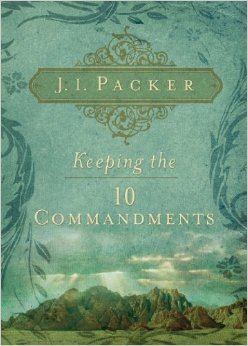 J.I. Packer wrote a very readable, but scholarly, book examining how 21st-century people should live out the biblical Ten Commandments. You can read my full book review by clicking here, but I’m sharing some of my favorite quotes below.
“God’s love gave us the law just as His love gave us the gospel, and as there is no spiritual life for us save through the gospel, which points us to Jesus Christ the Savior, so there is no spiritual health for us save as we seek in Christ’s strength to keep the law and practice the love of God and neighbor for which it calls.”
“Where the law’s moral absolutes are not respected, people cease to respect either themselves or each other; humanity is deformed, and society slides into the killing decadence of mutual exploitation and self-indulgence.”
“The negative form of the Commandments has positive implications. ‘Where a sin is forbidden, the contrary duty is commanded’ (Westminster Larger Catechism, Question 99). The negative form was needed at Sinai (as in the West today) to curb current lawlessness that threatened both godliness and national life.”
“Moral permissiveness, supposedly so liberating and fulfilling, is actually wounding and destructive: not only of society (which God’s law protects), but also of the lawless individual, who gets coarsened and reduced as a person every time.”
“Law-keeping is that life for which we were fitted by nature, unfitted by sin, and refitted by grace, the life God loves to see and reward; and for that life liberty is the proper name.”
“The Bible, however, takes promises very seriously; God demands full faithfulness of our vows. Why? Partly because trustworthiness is part of His image, which He wants to see in us; partly because without it society falls apart.”
“We honor God by respecting His image in each other, which means consistently preserving life and furthering each other’s welfare in all possible ways.”
“We have in us capacities for fury, fear, envy, greed, conceit, callousness, and hate that, given the right provocation, could make killers out of us all. … When the fathomless wells of rage and hatred in the normal human heart are tapped, the results are fearful.”
“When you lie to put someone down, it is malice; when you lie to impress, move, and use him, and to keep him from seeing you in a bad light, it is pride.”
“Reformed theologians said that God’s law has three uses or functions: first, to maintain order in society; second, to convince us of sin and drive us to Christ for life; third, to spur us on in obedience, by means of its standards and its sanctions, all of which express God’s own nature.”
“What is God’s ideal? A God-fearing community, marked by common worship (commandments 1, 2, 3) and an accepted rhythm of work and rest (commandment 4), plus an unqualified respect for marriage and the family (commandments 5, 7), for property and owner’s rights (commandments 8, 10), for human life and each man’s claim on our protection (commandment 6), and for truth and honesty in all relationships (commandment 9).”
“When God’s values are ignored, and the only community ideal is permissiveness, where will moral capital come from once the Christian legacy is spent? How can national policy ever rise above material self-interest, pragmatic and unprincipled? How can internal collapse be avoided as sectional interests, unrestrained by any sense of national responsibility, cut each other down? How can an overall reduction, indeed destruction, of happiness be avoided when the revealed way of happiness, the ‘God first, others next, self last’ of the Commandments, is rejected? The prospects are ominous. May God bring us back to Himself and to the social wisdom of His Commandments before it is too late.”
12 Quotes From “The Love Of God”
September 25, 2014 — Craig T. Owens Oswald Chambers has a way of writing about biblical truths that satisfy both the head and the heart. You can read my review of Chambers’ book The Love Of God by clicking here. Below are just a few of the many, many quotes I highlighted in this amazing book.
“In the future, when trial and difficulties await you, do not be fearful, whatever and whoever you may lose faith in, let not this faith slip from you—God is Love; whisper it not only to your heart in its hour of darkness, but here in your corner of God’s earth and man’s great city, live in the belief of it; preach it by your sweetened, chastened, happy life; sing it in consecrated moments of peaceful joy, sing until the world around you ‘is wrought to sympathy with hopes and fears it heeded not.’ The world does not bid you sing, but God does. Song is the sign of an unburdened heart; then sing your songs of love unbidden, ever rising higher and higher into a fuller conception of the greatest, grandest fact on the stage of Time—God is Love.”
“God did not create man as a puppet to please a despotic idea of His own, He created us out of the superabundant flow of overflowing love and goodness, He created us susceptible of all the blessedness which He had ordained for us.”
“Drink deep and full of the love of God and you will not demand the impossible from earth’s loves, and the love of wife and child, of husband and friend, will grow holier and healthier and simpler and grander.”
“Love is difficult to define, but the working definition I would like to give is that ‘Love is the sovereign preference of my person for another person, embracing everyone and everything in that preference.’”
“The majority of us are unnoticed and unnoticeable people. If we take the extraordinary experience as a model for the Christian life, we erect a wrong standard without knowing it.”
“God will use any number of extraordinary things to chisel the detail of His ‘lily work’ in His children. He will use people who are like hedgehogs, He will use difficult circumstances, the weather; He will use anything and everything, no matter what it is, and we shall always know when God is at work because He produces in the commonplace something that is inspiring.”
“A Christian is one in whom the indwelling Spirit of God shines out all the time.”
“Our Lord did not say to His disciples: ‘I have had a most successful time on earth, I have addressed thousands of people and been the means of their salvation; now you go and do the same kind of thing.’ He said: ‘If I then, your Lord and Master, have washed your feet; you also ought to wash one another’s feet.’ We try to get out of it by washing the feet of those who are not of our own set. We will wash the heathen’s feet, the feet in the slums; but fancy washing my brother’s feet! my wife’s! my husband’s! the feet of the minister of my church! Our Lord said one another’s feet. It is in the ordinary commonplace circumstances that the unconscious light of God is seen.”
“The reason we are going through the things we are is that God wants to know whether He can make us good bread with which to feed others. The stuff of our lives, not simply of our talk, is to be the nutriment of those who know us. … It is in the solitary life that we prove whether we are willing to be made the unadvertised life for the community to which we belong—whether we are willing to be made bread or to be simply the advertisement for bread? If we are to be made bread, then we must not be surprised if we are treated in the way Our Lord was treated.”
“For a man to lay down his life is not to lay it down in a sudden crisis, such as death, but to lay it down in deliberate expenditure as one would lay out a pound note. Not—‘Here it is, take it out in one huge martyrdom and be done with it.’ It is a continual substitution whereby we realize that we have another day to spend out for Jesus Christ, another opportunity to prove ourselves His friends.”
“The test of spiritual life is the power to descend; if we have power to rise only, there is something wrong. … Spiritual selfishness makes us want to stay on the mount; we feel so good, as if we could do anything—talk like angels and live like angels, if only we could stay there. But there must be the power to descend; the mountain is not the place for us to live, we were built for the valleys. … We never live for the glory of God on the mount, we see His glory there, but we do not live for His glory there; it is in the valley that we live for the glory of God. … The reason we have to live in the valley is that the majority of people live there, and if we are to be of use to God in the world we must be useful from God’s standpoint, not from our own standpoint or the standpoint of other people. … As disciples of Jesus we have to learn not only what Our Lord is like on the Mount of Transfiguration, but what He is like in the valley of humiliation, where everything is giving the lie to His power, where the disciples are powerless, and where He is not doing anything.”
“We shall find that the spheres God brings us into are not meant to teach us something but to make us something.”
15 Quotes From “I Like Giving”
June 28, 2014 — Craig T. Owens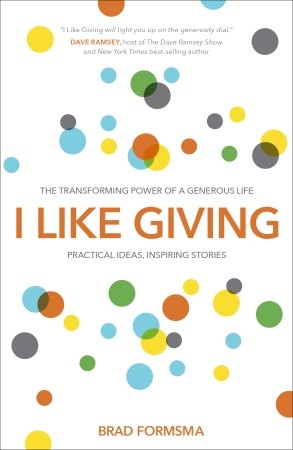 I Like Giving by Brad Formsma is a unique look at how to impact our communities. You can read my full book review by clicking here, but I strongly encourage anyone who wants to see their world changed to pick up a copy of this book. Below are some quotes I found thought-provoking in this book.
“Living generously is about giving your life to other people so that everything you do—whether it is your work, your charitable giving, or your contribution to your neighborhood—becomes both a gift to others and rewarding for yourself.”
“Don’t make giving too big a project. Sometimes your best and most perfect gift might be as simple as a smile or a compliment. Maybe it’s paying for a stranger’s lunch.”
“Watch out for these nasty four-letter words: debt, fear, and busy. They steal the joy with the greatest of ease. Be aware of them as they compete with the nudge to do for others.”
“The good news is that it’s never too late to give. If an opportunity comes your way and you don’t seize it, don’t get stuck in the downward spiral of regret. Smile, tell yourself all is well, and then ask for another one. If there are people around you, there will be more opportunities to give.”
“No matter how successful you are, it is giving your life away to others that makes you happy. … The right response, though, is not to shun success but to replace selfish ambition with other ambitions—doing things for others.”
“Give daily, in small ways, and you will be happier. Give and you will be healthier. Give, and you will even live longer. … Giving protects overall health twice as much as aspirin protects against heart disease.” —Dr. Stephen Post
“Don’t let the occasional person who abuses the goodwill of others ruin your giving and deter you.”
“Compassion doesn’t mean giving every time, but when I give, I do it knowing that I’ve loved a fellow human being right where that person is, whether the money will be wasted or not.”
“One thing I’ve learned through the process is that I can’t force generosity. I can’t lead my family unless I’m going there myself. Simply keeping my eyes open for opportunities to give and ways to include the whole family sparks the idea in my kids. Kids are too young and innocent to believe they can’t be generous if they see adults living that way. … I never want to underestimate the example I am setting. My kids are watching how I live, and the choices I make have rippling effects down through the generations. I can choose to do nothing and let my children be swept up in the current of empty materialism that is rampant in our culture, or I can choose to live a different way by living generously.”
“I don’t think we can ever overestimate just how profound the effects of giving can be. You can give without loving, but you can’t love without giving. The reality is that other people are watching how we live our lives, and what we do can have extraordinary effects in our communities. Generosity is for all of us. It is available to all of us, even when the cultural tide is moving in the opposite direction. Why not be brave and live differently?”
“Is weakness really that bad? Could it be that our specific weaknesses allow other people’s strengths to shine? Could it be that life sometimes throws us a curve that creates a need in our own lives? Once you experience the joy of giving, you realize that other people feel the same way when they give to you. Receiving might be harder than giving, but if you think about the joy the givers are receiving when they give to you, that will help you open up to receiving. You know that refusing the gift would deny them that joy.”
“Focusing on what you don’t have or the bad hand you were dealt can actually make your life worse. What you think about affects who you become. It affects your relationships and the people you attract into your life. Keeping your focus on what you do have, what you have been given, and the good things in your life will make you happier and more grateful and will empower you to become a generous person yourself.”
“Often when we see someone in a bad situation, our natural response is to say, ‘Hey, if you need anything, let me know.’ Please don’t say that. Unknowingly you have put an added burden on the person. For some people the pressure is just too great, so they freeze and never respond. It’s a dangerous comment that produces a false sense of doing good. I encourage you to assess the situation and make something happen.”
“There are a lot of problems in the world. Sitting around talking about them or waiting for a large organization to do something about them doesn’t work. Finding opportunities to help others and change the world around us does work. We just have to take that scary step of actually doing something. We don’t need to overthink what we do. Sometimes we just know this is our opportunity to help. When we recognize an opportunity and dive in, amazing things happen! … So the question then becomes, are we willing? Will we decide to live generously and then be open to the opportunities that come our way?”
“You don’t have to make massive life changes, move to another city, or start your own nonprofit to become a gift to other people. You can start with who you are, right where you are, right now. In fact, you probably are already a gift to many people in many ways, but you might not always be aware of it.”
I Like Giving (book review)
June 24, 2014 — Craig T. OwensWhen you read a title like I Like Giving you might immediately think, “This is a book telling me to tithe, or give bigger offerings to my church, or support my local charity.” And you would be dead wrong. Brad Formsma’s book isn’t really about giving money away, it’s about giving yourself away.
Brad writes, “When we choose to give, we change, and the people around us change. When we move from awareness to action, miracles happen. When we allow giving to be our idea, a world of possibilities opens up before us, and we discover new levels of joy.”
Indeed, Brad weaves together his own personal stories, with stories from other givers, and even a healthy dose of medical and psychological research data to show us just how life-transforming and joy-producing it is when we are giving people. Not only are the gift receivers benefitted, but so are the gift givers.
Let me state it again: this book isn’t about giving your money to a charitable organization or a church; it’s about you seeing a need and finding a way to take care of that need. If everyone took on this mindset, just imagine how our communities would change!
One final thought from author Brad Formsma—“I don’t think we can ever overestimate just how profound the effects of giving can be. You can give without loving, but you can’t love without giving. The reality is that other people are watching how we live our lives, and what we do can have extraordinary effects in our communities. Generosity is for all of us. It is available to all of us, even when the cultural tide is moving in the opposite direction. Why not be brave and live differently?” (emphasis added)
Let I Like Giving be a springboard for you to live differently and to make a difference where you live!
I am a Waterbrook book reviewer.
Links & Quotes
June 18, 2014 — Craig T. Owens
Some good reading from today…
“The more difficult it becomes for an older person to use the mind and the memory, the more we must fight with him and for him, wielding the sword of the Spirit where his own hand is weak.” —John Piper
A little comedy—Al and Lois go to a counselor after fifteen years of marriage. The counselor asks them what the problem is. Lois goes into a tirade, listing every problem they’ve ever had in their years of marriage. She goes on and on and on. Finally, the counselor gets up, embraces the surprised Lois, and kisses her passionately. Lois shuts up and sits quietly in a daze. The counselor turns to Al and says, “That is what your wife needs at least three times a week. Can you do that?” Al thinks for a moment and replies, “Well, I can get her here Mondays and Wednesdays, but Fridays I play golf.”
Ken Davis reminds us of the value of slowing down in his post Not So Fast.
Digital photography software is allowing archeologists and paleontologists and others to examine artifacts in 3D without damaging the original.
Kevin DeYoung has 5 questions for Christians who believe the Bible supports homosexual “marriage.”
John Maxwell reminds us to make sure we drop the right ball.
16 Quotes From “Firsthand”
April 23, 2013 — Craig T. Owens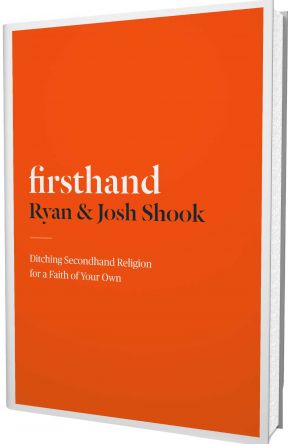 I strongly encourage Christian parents to put a copy of Firsthand into the hands of their children, high school age and older. This book will help them think through making their faith in Jesus something personal to them. You can read my book review by clicking here. Below are some quotes that stood out to me. All of these quotes are by the authors, unless otherwise noted.
“You must be emptied of that of which you are full, so that you may be filled with that of which you are empty.” —Augustine
“One of the most liberating and powerful statements of all time comes from the lips of Jesus: ‘You will know the truth, and the truth will set you free’ (John 8:32). And we’re writing this chapter to tell you something that will set you free. The only way we’ve been able to experience freedom is by making the choice to get completely gut-level honest with God and others.”
“God can use you and me through our brokenness, but first we have to get real and vulnerable with Him and with others. I think this powerful ‘get real’ dynamic works for a few reasons. First of all, being real with God and those around us invites us to drop the pride and pretense and to walk in humility. Second, honesty invites us to live every day in gratitude for the incredible grace that Lord has shown us. And third, since now we know we can’t make it on our own—and that’s okay—we’re ready to invite God’s power to do for us what we can’t do for ourselves. Paul said in 2 Corinthians 12:9, ‘I will boast all the more gladly about my weaknesses, so that Christ’s power may rest on me.’ This turns the concept of weakness and vulnerability on its head. We are saying that God makes up for our weaknesses. We are admitting that He is ready to work through them. Our weaknesses can actually become our greatest assets because they draw us closer to the Lord. And once we see how God can use them, we have all the more reason to be open about our struggles.”
“When all you see is a life in pieces, remember: the Remodeler wants to change you from the inside out. And He’s at work building your character to match His great calling and purpose for your life.”
“We have to decide, moment by moment, if we want to act changed or be changed.”
“It is more important to live one word of Scripture than it is to memorize volumes.” —Tim Hansel
“When our faith looks like a long list of things we should do, it’s usually a sign we’re not really focused on knowing God today for ourselves. Firsthand faith is all about a relationship with the God who is always faithful.”
“God is no less with you in your doubts that He is with you in your certainties.”
“Firsthand faith means we’re not afraid to bring our burning questions directly to God. But it also means that we’re not afraid to simply relax in His love. Even when all our questions haven’t yet been answered.”
“The needs of this world are endless. So whenever we feel a divine disturbance, it’s essential that we respond with firsthand action. If we don’t, it will quickly turn into secondhand bitterness.”
“James tells us that faith without works is dead (James 2:26). The most certain way to go back to living a secondhand faith is to refuse to act upon the Holy Spirit’s movement in your heart…. When you do not respond to a divine disturbance of the Holy Spirit, you get bitter and you criticize. That helps no one. … When you don’t respond to a divine disturbance in your life, you become the greatest obstacle between an unbelieving world and a loving God—a judgmental Christian.”
“Your eternal footprint—the impact you make on this earth—will be determined by whether you respond to the calling of the Spirit of the Lord in your heart to love a broken world, to step into the gifts and passions the Lord has blessed you with yo meet the needs that others overlook.”
“When we set out to discover our own firsthand faith, we were disillusioned with church. We had seen how imperfect the church could be, and we were certain that church was the problem. Coming full circle with our firsthand faith, we now realize that church was not the problem. The problem was out view and definition of the church itself. It took us a long time to understand that church wasn’t a building or a pastor or a sermon series. It’s easy to point out everything wrong with the church when you stand outside it and approach it with a consumer mentality. We thought the church had given us a secondhand faith, when in reality we had chosen to avoid a firsthand relationship with the community of Christ follower we claimed to care about.”
“The church is messy and imperfect because it is made up of broken and imperfect people. Are you sitting on the sidelines because the people in your church are imperfect or ‘just not like you’? … God designed you to be in community with your local church. He designed you to have firsthand relationships not only with Him but also with the people in your church. You can come up with plenty of excuses not to get involved and reasons that your church has it wrong, but when was the lat time you looked inside yourself and really searched your own heart for issues?”
“You can try to live out a firsthand faith on your own for as long as you want, but until you live out that faith in a community, you will never realize your full potential in Christ.”
“As a Christian, you are part of a movement that will outlast you, and you are part of the Firsthand Generation. As communities of believers rise up, we will gain momentum and create a movement that is stronger than anything we could ever accomplish on our own. Perhaps God is calling you to gather people and become a leader in the Firsthand Generation. Take up the challenge.”
My Brothers
February 1, 2013 — Craig T. Owens Pastor, I love how the Apostle James consistently addresses his audience in his epistle. Over a dozen times in his five short chapters, Pastor James addresses his congregation as my brothers (sometimes the phrase is even my dear brothers).
The word brothers is always the Greek word adelphos, which means from the same womb. James didn’t elevate himself, nor put down others in the church; he constantly put himself on the same plain. He was saying, “Look, I struggle with what you struggle with—we all have the same issues. I’m not immune to these things because I’m the so-called leader of the Jerusalem church. I have to keep alert and keep on working in these areas too!”
Sometimes James adds the adjective dear (or as the KJV says, beloved). This word is from the root word which means to be fond of someone, to love dearly, or to be well pleased. James, in essence, is saying, “I like you! You’re not just someone that goes to church with me, but you’re a dear friend.”
As the adage goes—People don’t care how much you know until they know how much you care. So almost every point James covers in this epistle is introduced by the my brothers tag. It’s his way of reminding them, “I’m sharing this with you because I really like you, and I want us to grow closer to God together.”
Wow! What a great example for me as a pastor. I’m not immune to struggles. I’m not in a separate category. I’m in this with my dear brothers and sisters, and I want us to all overcome and grow in our level of intimacy with God together.
UPDATE: This is one of the major themes in my book for pastors called Shepherd Leadership. I hope you will check it out!
THAT Kind Of Church
September 28, 2012 — Craig T. OwensListen to the podcast of this post by clicking on the player below, and you can also subscribe on Apple, Spotify, or Audible.
 The book of James is written to a bunch of Christians. James knew his audience was the Church (see James 1:1).
Keep that firmly in mind when you read these words from James 3:2—
We all stumble in many ways. (New International Version)
For we all often stumble and fall and offend in many things. (Amplified Bible)
Indeed, we all make many mistakes. (New Living Translation)
I hate to break the news to you, but that means:
- Your pastor’s not perfect
- Your church isn’t perfect
- You’re not perfect
You attend a church with people who stumble, and offend, and mess it up. Your pastor stumbles, and offends, and messes up. And so do you!
Isn’t that wonderful?! We all make mistakes! So we all need to give and receive the same forgiveness. We all need to extend grace to others and receive grace from others. You need to help others back up when they stumble, and you need to admit when you’ve stumbled, and let others help you get back up.
Abraham Kuyper wrote—
“Sin is a destroyer that creeps in everywhere. Therefore we must expect an imperfect church. In fact, we church members carry the sin of the world with us into the church, too often hiding it under a veil of spirituality. If the church were not the Bride of His Son, surely God would in holy wrath destroy not first of all the church, but rather first of all the wretched sin-ridden church.”
To these beautifully imperfect Christians, James concludes his teaching with these words:
Confess your sins to each other and pray for each other so that you may be healed. The prayer of a righteous man is powerful and effective. … My brothers, if one of you should wander from the truth and someone should bring him back, remember this: Whoever turns a sinner from the error of his way will save him from death and cover over a multitude of sins. (James 5:16, 19-20)
Yeah, let’s be THAT kind of church!!
►► Would you please prayerfully consider supporting this ministry? My Patreon supporters get behind-the-scenes access to exclusive materials. ◀︎◀︎
The Power Of United
August 27, 2012 — Craig T. Owens One of my highlights every summer since I have moved to Cedar Springs is our annual United service. All of the churches in the Cedar Springs Ministerial Association cancel our regular Sunday morning services, and join together for a united worship service in the park. How incredible it is to see people from so many churches—United Methodist, Free Methodist, Christian Reformed, Evangelical Free, Assembly of God, Church of God, Weslyan and non-denominational—praising God together!
Kevin Reed shared in yesterday’s service the blessings of being one in our worship and in our lifestyle. He highlighted Jesus’ prayer just prior to His passion:
My prayer is not for them alone. I pray also for those who will believe in Me through their message [that’s us!], that all of them may be one, Father, just as You are in Me and I am in You. May they also be in Us so that the world may believe that You have sent Me. (John 17:20, 21)
I tweeted what Pastor Kevin said next…
I love that thought: When all who love Jesus unite, we show the world the love of God Who sent His one and only Son to reconcile us to Himself!
In the few days leading up to our United service, some of my friends in other parts of the country contacted me to say they wished that there was cooperation like this among the churches in their community. I know that we are truly blessed in Cedar Springs to have this sort of unity among our churches. But with all of these comments from my friends still on my mind, I stumbled across this great thought from Shane Claiborne…
I pray that you can begin to build the bridges that will start to start create the oneness—the unity—in your community. Start becoming the church God dreams of!
My most-viewed posts


 Craig T. Owens