A Unique Look At “Church”

gods-people-are-the-saintsHave you ever noticed that nowhere in the New Testament do we see an “order of service” for a church congregation? It’s simply not there.

Neither is there a list of acceptable songs, or the design of a church building, or how or when Communion is served, or even what clothing the pastor is supposed to wear. Yet we modern-day Christians seem to spend a lot of time not only arguing about these non-essentials, but even (gasp!) evaluating the “churchness” of a church based on these things.

It’s understandable, then, when someone says, “I enjoy being a Christian, but I really don’t like going to church.” Or even insisting that they can be a Christian without attending a church.

But here’s where those statements miss the mark: “Church” was never intended to be merely a group of people who met at a designated address once a week.

The Church that Jesus described—and the Church the apostles were a part of—was a living organism. It was fellow followers of Jesus Christ interacting with each other as they worshiped the Lord.

The Apostle Peter describes a gathering of Christians in just one verse. In this verse he gives five descriptors of how Church should be done. To stress the point that every gathering of Christians is unique, three of Peter’s five descriptors are found nowhere else in Scripture.

  1. Live in harmony with one another (the first unique word)

One translation has this as “one mind.” Paul has a similar thought in 1 Corinthians 14:20. The bottom line—get on the same page working toward the same goal. What’s that goal? Pointing people to Jesus!

2.  Be sympathetic (the next unique word)

A definition we may better understand is “empathy.” This world literally means to “vibrate with others.” Be on in tune with what they’re going through that you can feel it just like it was happening to you.

      3.  Love as brothers

This is the Greek word philadelphos, which means to treat other Christians like they’re from the same womb as you.

4.  Be compassionate

That is: be strong enough to step into other people’s stuff. Keep on increasing your capacity to carry a bigger load for someone else (Galatians 6:2).

      5.  Be humble (the last unique word)

The King James Version translates this “courteous.” Not just being strong enough to help, but gentle enough that your help will be accepted.

Let me repeat: The Church is not a physical address where we gather once per week. YOU are the temple of God’s presence, which is why Jesus said if just two of His followers get together, He is right there with them. That’s right—two Christians can have “church” wherever they happen to meet

Don’t just go to church, BE the church. Don’t miss an opportunity to encourage, pray with, instruct, or learn from another Christ-follower whenever and wherever you happen to meet.

If you’ve missed any messages in this series, you may find the complete list by clicking here.

11 More Quotes From “Culture”

cultureA.W. Tozer wrote almost 50 years ago, but his words to the church still ring true today. Check out my review of Culture, and then enjoy some additional quotes from this book.

“To preserve life the physician and the druggist use words of fixed meaning common to both. How much more should the pulpit and the pew have a clear understanding about the words of eternal life. The modern effort to popularize the Christian faith has been extremely damaging to that faith. The purpose has been to simplify truth for the masses by using the language of the masses instead of the language of the church. It has not succeeded, but has added to rather than diminished religious confusion.”

“The hope of the church yet lies in the purity of her theology, that is, her beliefs about God and man and the relation to each other. These beliefs have been revealed to her by the inspiration of the Holy Spirit in the sacred Scriptures. Everything there is clear-cut and accurate. We dare not be less than accurate in our treatment of anything so precious.”

“I think we make two mistakes in our attitude toward our Christian leaders, one is not being sufficiently grateful to them and the other in following them too slavishly.”

“Today we evangelicals are showing signs that we are becoming too rich and too prominent for our own good. With a curious disregard for the lessons of history we are busy fighting for recognition by the world and acceptance by society.”

“That terrible zone of confusion so evident in the whole life of the Christian community could be cleared up in one day if the followers of Christ would begin to follow Christ instead of each other.”

“The difficulty we modern Christians face is not misunderstanding the Bible, but persuading our untamed hearts to accept its plain instructions.”

“Our churches these days are filled (or one-quarter filled) with a soft breed of Christian that must be fed on a diet of harmless fun to keep them interested. About theology they know little. Scarcely any of them have read even one of the great Christian classics, but most of them are familiar with religious fiction and spine-tingling films. No wonder their moral and spiritual constitution is so frail.”

“To accept the call of Christ changes the returning sinner indeed, but it does not change the world. The wind still blows toward hell, and the man who is walking in the opposite direction will have the wind in his face. And we had better take this into account when we ponder on spiritual things.”

“Christianity’s scramble for popularity today is an unconscious acknowledgment of spiritual decline.”

“The desire to stand well with our fellow man is a natural one, and quite harmless up to a point, but when that desire becomes so all-consuming that we cannot be happy apart from the praises of man, it is no longer harmless, it is sinful in itself and injurious in its effects.”

“A Christian’s standing before God does not depend upon his standing before men. A high reputation does not make a man dearer to God, nor does the tongue of the slanderer influence God’s attitude toward His people in anyway.”

To read some additional quotes I shared from Culture, click here. You may also follow me on Twitter and Tumblr to read quotes which I share daily from Tozer and other notable thinkers.

John Bunyan On The Relationship Between Church And State

Of Antichrist And His RuinJohn Bunyan, as Charles Spurgeon said, was so steeped in Scripture, that he practically bled Bible! In his book Of Antichrist And His Ruin, Bunyan pointed out how God would use earthly governments to bring about the demise of Antichrist. In addition, Bunyan also shared these insights on how the Church should treat the governments of Earth.

“Take heed in laying the cause of your troubles in the badness of the temper of governors. … God is the chief, and has the hearts of all, even of the worst of men, in His hand. Good tempered men have sometimes brought trouble; and bad tempered man have sometimes brought enlargement to the churches of God: Saul brought enlargement (1 Samuel 14:28). David brought trouble (2 Samuel 12:10).) Ahab brought enlargement (1 Kings 21:29). Jehoshaphat and Hezekiah did both sometimes bring trouble (2 Chronicles 19:2; 20:35; 32:25). Therefore, the good or bad tempers of men sway nothing with God in this matter; they are the sins or repentances of His people, that make the church either happy or miserable upon earth.”

“The church therefore, as a church, must use such weapons as are proper to her as such; and the magistrate, as a magistrate, must use such weapons as are proper to him as such. … She [the church] may, and ought, with her faith and prayer, and holy life, to second this work of kings (Ezra 1:2, 3). When the king’s laws, and the law of their God, did at any time come in competition, they would indeed adhere to, and do the law of their God; yet with that tenderness to the king, his crown and dignity, that they could at all times appeal to the righteous God about it (Daniel 6:22). Nor did they lose by doing so; yea, they prospered; for by this means Mordecai was made a great man, and a savior of his people (Esther 2:21-23). By this means also was Daniel made a great man, and helpful to his brethren (Daniel 5:29).”

“Pray for kings to the God of heaven, Who has the hearts of kings in His hand: and do it ‘without wrath and doubting’; without wrath because thy self is not perfect; and without doubting because God governeth them, and has promised to bring down Antichrist by them. Pray for the long life of the king. Pray that God would always give wisdom and judgment to the king. Pray that God would discover all plots and conspiracies against his person and government. Pray also that God would make him able to drive away all evil and evil men from his presence….”

To read more quotes from this book, please click here. And to check out my review of this book, please click here.

8 Quotes From “Culture”

cultureIn Culture, you will find a collection of chapters from various A.W. Tozer books all addressing the theme of how a Christian should behave in worldly culture. If you are concerned about influencing the culture for Christ (instead of being influenced by it), I urge you to read my review of this book, and then pick up a copy for yourself. Below are a few quotes from Culture that caught my attention.

“The sacred-secular antithesis has no foundation in the New Testament. … The Lord Jesus Christ Himself is our perfect example, and He knew no divided life. In the presence of His Father He lived on earth without strain from babyhood to His death on the Cross. God accepted the offering of His total life, and made no distinction between act and act. ‘I do always those things that please Him,’ was His brief summary of His own life as it related to the Father (John 8:29). As He moved among men, He was poised and restful.”

“A Christian is now living according to the will of God as he understands it from the written Word. Of such a one it may be said that every act of his life is or can be as truly sacred as prayer or baptism or the Lord’s Supper. To say this is not to bring all acts down to one dead level; it is rather to lift every act up into a living kingdom and turn the whole life into a sacrament.”

“Keep reminding God in our times of private prayer that we mean every act for His glory; then supplement those times by a thousand thought-prayers as we go about the job of living. Let us practice the fine art of making every work a priestly ministration. Let us believe that God is in all our simple deeds and learn to find Him there.”

“You cannot get miracles as you would get a chemical reaction. You cannot get a miracle as you get a wonderful act on stage by a magician. God does not sell Himself into the hands of religious magicians. I do not believe in that kind of miracles. I believe in the kind of miracles that God gives to His people who live so close to Him that answers to prayer are common and these miracles are not uncommon.”

“Our trouble is not that we refuse to believe right doctrine, but we refuse to practice it. We have the peculiar contradiction of believing the right thing and living the wrong way.”

“It seems that the average person spends more time and intellectual labor each year filling out income tax forms then he or she spends in a lifetime trying to learn from the Scriptures and from the light of the Spirit what the church is and what he or she ought to do about it.”

“I would also have in our body the power of the Spirit of Christ. I have said that the average gospel church could get along without the Holy Spirit—and many do. We are praying for revival. What is revival? It is when the Holy Spirit takes over the work that is His, instead of being pushed aside into the benediction. He now becomes the Chief Executive of the church, running it. ‘But ye shall receive power, after that the Holy Ghost is come upon you’ (Acts 1:8). That means that the Spirit of Heaven should come to a company on earth with His all-prevailing gifts, power, and grace, with His life, His illumination, and His discernment. This is not fanaticism; this is not any weird religion. This is just what the Bible teaches.”

“Did you read the Bible or watch TV more this week? Think of the time you have spent. How many half-hour periods did you spend with your Bible, and how many did you spend with amusements? We do not take our faith seriously enough.”

I will be sharing other quotes from Culture soon. If you will enter your email address in the “Subscribe” box to on the right side of the page, you will be notified as soon as new quotes are posted. You can also read Tozer’s quotes from this book, as well as other empowering quotes that I share daily in Twitter and Tumblr.

Rethinking Addiction

AddictionThis is a fascinating video that may just revolutionize the way you think about addictions and addicts.

Near the 4:45 mark of the video the statement is made about a new way of interacting with others. This, I believe, is what the Christian church should be doing. If we aren’t, I doubt we are living out the good news that Jesus taught. If you want to do an interesting study, check out how many times the phrase “let us” is used in the New Testament. Also note that the word saint never appears in the New Testament in the singular, but it is always saintS. This tells me that we were designed to be together.

“Human beings have a deep need to bond and form connections. It’s how we get our satisfaction. If we can’t connect with each other, we will connect with anything we can find—the whirr of a roulette wheel or the prick of a syringe…. We should stop talking about ‘addiction’ altogether, and instead call it ‘bonding.’ A heroin addict has bonded with heroin because she couldn’t bond as fully with anything else.” —Johann Hari

What do you think? Please share your thoughts in the comment below?

9 Quotes From “Of Antichrist And His Ruin”

Of Antichrist And His RuinJohn Bunyan’s works are steeped in Scripture. His thoughts about the Antichrist and other end times events are either directly taken from biblical passages, or else his line of reasoning fits perfectly with the intent of the Scriptures. You can read my full book review by clicking here. Below are some quotes I found enlightening.

“Coercion, in anything connected with religion, whether it imposes creeds, liturgies, or modes of worship, is Antichrist: whom to obey, is spiritual desolation, and if knowingly persevered in, leads to death.” —George Offor, editor

“As God therefore did put it into the hearts of the wicked kings of Babylon, to distress in His church and people for their sins; so He put it into the hearts of the kings of the Medes and Persians, who were to be, in a sense, their saviors; to ease them of those distresses, to take off the yoke, and let them go free.”

“This twenty years we have been degenerating, both as to principles, and as to practice; and have grown at last into an amazing likeness to the world, both as to religion and civil demeanor.” 

“Take heed in laying the cause of your troubles in the badness of the temper of governors. … God is the chief, and has the hearts of all, even of the worst of men, in His hand. Good tempered men have sometimes brought trouble; and bad tempered man have sometimes brought enlargement to the churches of God: Saul brought enlargement (1 Samuel 14:28). David brought trouble (2 Samuel 12:10).) Ahab brought enlargement (1 Kings 21:29). Jehoshaphat and Hezekiah did both sometimes bring trouble (2 Chronicles 19:2; 20:35; 32:25). Therefore, the good or bad tempers of men sway nothing with God in this matter; they are the sins or repentances of His people, that make the church either happy or miserable upon earth.”

“Antichrist is the adversary of Christ; an adversary really, a friend pretendedly. So then, Antichrist is one that is against Christ; one that is for Christ, and one that is contrary to Him (and this is that mystery of iniquity [2 Thessalonians 2:7]). Against Him in deed; for Him in word, and contrary to Him in practice. … Christ prefereth His Father’s will above heaven and earth: Antichrist prefereth himself and his traditions above all that is written, or that is called God, or worshiped.”

“Nor can all the fallen angels, with all the members and limbs of Antichrist, cause that their brat should abide so much as one day longer than our God’s prefixed time.”

“Now, by ordinances of Antichrist, I do not intend things that only respect matters of worship in Antichrist’s kingdom, but those civil laws that impose and enforce them also; yea, that enforce that worship with pains and penalties, as in the Spanish Inquisition. … What could the king of Babylon’s golden image have done, had it not been for the burning fiery furnace that stood within view of the worshipers (Daniel 3)? Yea, what could that horrible command, to pray for thirty days to neither God nor man, but to the king, have done, had it not been for the dark den and the roaring lions therein ready to devour those that disobeyed it (Daniel 6)? … For as the furnace would have been next to nothing, if void of fire; and the den as little frightful, if destitute of lions; so these laws will be as insignificant, when Christ has slain that spirit that is in them; that spirit that causes that as many as will not worship the image of the beast, should be killed.”

“What say ye now, ye sons of God! Will you learn to make a judgment of things according to the mystery of the wisdom of God, or will ye longer conclude according to sense and reason?”

“Cold blasts in November are not received with that gentleness as are colder in March and April; for that these last cold ones are but the farewell notes of a piercing winter; they also bring with them the signs and tokens of a comfortable summer. Why, the church is now at the rising of the year; let then the blasts at present, or to come, be what they will, Antichrist is assuredly drawing towards his downfall.”

Dr. Martin Luther King On Abortion

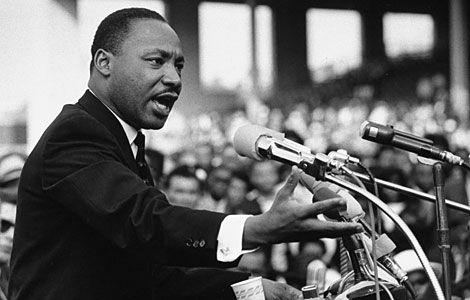
Dr. Martin Luther King Jr.In preparing for a recent book review, I re-read Dr. Martin Luther King’s amazing Letter From A Birmingham Jail. Dr. King was addressing some pastors who had advised him to slow down in his push to abolish segregation.

I believe there are some amazing parallels to what Dr. King wrote about abolishing segregation, and what many are writing and speaking about today in abolishing abortion.

Below are a few quotes from Dr. King’s Letter that I think are appropriate in the context of calling the church to not slow down in her push to abolish abortion. Just as Dr. King spoke up for the people whose voices were not being heard, we need to speak up for those children in the womb whose voices are not being heard.

I have taken the liberty to make a couple of changes in Dr. King’s original letter, to clarify how I believe he would have addressed the abortion issue. My changes are in brackets.

“You express a great deal of anxiety over our willingness to break laws. This is certainly a legitimate concern. Since [many] so diligently urge people to obey the Supreme Court’s decision of [1973 ‘legalizing’ abortion], at first glance it may seem rather paradoxical for us consciously to break laws. One may well ask: ‘How can you advocate breaking some laws and obeying others?’ The answer lies in the fact that there are two types of laws: just and unjust. I would be the first to advocate obeying just laws. One has not only a legal but a moral responsibility to obey just laws. Conversely, one has a moral responsibility to disobey unjust laws. I would agree with St. Augustine that ‘an unjust law is no law at all.’ 

“Now, what is the difference between the two? How does one determine whether a law is just or unjust? A just law is a man-made code that squares with the moral law or the law of God. An unjust law is a code that is out of harmony with the moral law. To put it in the terms of St. Thomas Aquinas: An unjust law is a human law that is not rooted in eternal law and natural law. Any law that uplifts human personality is just. Any law that degrades the human personality is unjust. All [abortion] statutes are unjust because [abortion kills an unborn] soul and [destroys a] personality. It gives the [abortionist and those who advocate for abortion] a false sense of superiority and the [aborted human baby] a false sense of inferiority. … 

“An unjust law is a code that a numerical or power majority group compels a minority group to obey but does not make binding on itself. This is a difference made legal. By the same token, a just law is a code that a majority compels a minority to follow and that it is willing to follow itself. This is sameness made it legal. Let me give another explanation. A law is unjust if it is inflicted on a minority that, as a result of being denied the right to [live], had no part in enacting or devising the law. …

“One who breaks an unjust law must do so openly, lovingly, and with a willingness to accept the penalty. I submit that an individual who breaks a law that conscience tells him is unjust, and who willingly accepts the penalty of imprisonment in order to arouse the conscience of the community over its injustice, is in reality expressing the highest respect for law.” 

“We will have to repent in this generation not merely for the [murder of innocent human beings] but for the appalling silence of the good people. Human progress never rolls in on wheels of inevitability; it comes through the tireless efforts of men willing to be co-workers with God, and without this hard work, time itself becomes an ally of the forces of social stagnation. We must use time creatively, in the knowledge that the time is always ripe to do right.” 

“So the question is not whether we will be extremists, but what kind of extremists we will be. Will we be extremist for hate or for love? Will we be extremist for the preservation of [abortion laws] or for the [saving] of [life]?” 

“I have heard many ministers say: ‘Those are social issues, with which the gospel has no real concern.’ And I have watched many churches commit themselves to a completely other-worldly religion which makes a strange, un-Biblical distinction between body and soul, between the sacred and secular.” 

“Yes, I see the church as the body of Christ. But, oh! how we have blemished and scarred that body through social neglect and through fear of being nonconformists.” 

“There was a time when the church was very powerful—in that time when the early Christians rejoiced at being deemed worthy to suffer for what they believed. In those days the church was not merely a thermometer that recorded the ideas and principles of popular opinion; it was a thermostat that transformed the mores of society. Whenever the early Christians entered a town, the people in power became disturbed and immediately sought to convict the Christians for being ‘disturbers of the peace’ and ‘outside agitators.’ But the Christians pressed on, in the conviction that they were ‘a colony of heaven,’ called to obey God rather than man. Small in number, they were big in commitment. They were too God intoxicated to be ‘astronomically intimidated.’ By their effort and example they brought an end to such ancient evils as infanticide and gladiatorial contests. 

“Things are different now. So often the contemporary church is a weak, ineffectual voice with an uncertain sound. So often it is an arch-defender of the status quo. Far from being disturbed by the presence of the church, the power structure of the average community is consoled by the church’s silent—and often even the vocal—sanction of things as they are.

“But the judgment of God is upon the church as never before. If today’s church does not recapture the sacrificial spirit of the early church, it will lose its authenticity, forfeit the loyalty of millions, and be dismissed as an irrelevant social club with no meaning for the [twenty-first] century.” 

“Over the past few years I have consistently preached that nonviolence demands that the means we use must be as pure as the ends we seek. I have tried to make clear that it is wrong to use immoral means to attain moral ends. But now I must affirm that it is just as wrong, or perhaps even more so, to use moral means to preserve immoral ends.”

10 Quotes From “Letters To A Birmingham Jail”

Letters To A Birmingham JailIn Letters To A Birmingham Jail, it was very eye-opening to read how modern-day clergy respond to Dr. Martin Luther King’s 50-year-old “Letter From A Birmingham Jail.” What an innovative book! Check out my review of this book by clicking here, and then enjoy a few quotes.

“Our nation is losing a sense of gratitude for the abundance and great bounty that God has bestowed upon us. In America we have witnessed the god of materialism sink his teeth into the fabric of the human soul. He has unleashed a spirit of rugged individualism, fueled by selfish greed. This has become normalized behavior that discourages a care for the other, and especially for the poor. The hope for America is that we will see our responsibility to care for the least among us in recognition of the truth that every person is created in the very image of God.” —John Perkins

“God-centered, Christ-exalting, Bible-saturated churches where the gospel is cherished—these are the birthplace of the kind of racial harmony that gives long-term glory to God and long-term gospel good to the world.” —John Piper

“Some may have quoted, ‘Wait for the Lord; be strong, and let your heart take courage; wait for the Lord!’ (Psalm 27:14). But this call to wait for the Lord never meant stop doing what He commanded us to do in the pursuit of holy goals. Waiting for the Lord means our action is essential, but His is decisive. The farmer must wait for the harvest. But no one works harder than the farmer.” —John Piper

“Now, to be sure the Bible teaches that the government does exist for the well-being of the people; but too many Christians got lock-jaw, saying very little or nothing when in fact the country needed the engagement of the church and a word from God. Silence and business as usual did severe damage to our prophetic integrity. We’ve made progress but our efforts are still woefully inadequate.” —Crawford W. Loritts, Jr.

“I believe from Genesis to Revelation that God is the God of all nations and all peoples. He created all things, including all peoples, all people groups, all races, and all skin colors. From the beginning of the Bible to the end of the Bible, you see God redeeming all people to Himself. John 3:16 tells us God sent Jesus because ‘God so loved the world.’ The Acts of the Apostles tells the story of the earliest church plants. The gospel-dominated people of Matthew, Mark, Luke, and John spilled over into the launching of gospel communities, or church plants in Acts. Racial and cultural issues surfaced almost immediately. Jesus had actually been the One to begin stirring the pot in His ministry as He intentionally went to Samaria, and did all sorts of things with and for Gentiles that Jewish men were not supposed to do.” —John Bryson

“If the torrential force of the first church as found in the book of Acts is to become our twenty-first-century reality, then the faces of most of our churches must look like the faces of the first-century church: multiethnic.” —Bryan Loritts

“If folks feel that this kind of ‘affirmative action’ equals ‘reverse discrimination,’ we can gently lead them to the apostolic solution to the racial controversy in Acts 6:1-7, where the men appointed to resolve a serious ethnic crisis all appear to be from the minority Hellenistic population! It’s called Christian wisdom.” —Sandy Willson

“The mission of the church, the pursuit of the legacy of Christ, cannot simply be about business and culture as usual. If we allow it to be so simple, we will soon find ourselves in the trap the disciples are caught in as they begin to walk around Samaria out of habit, only to notice that Jesus is going a different way. How often this conflict arises when we attempt to follow Jesus! We set out with the best of intentions, and soon find ourselves not following Him but expecting Him to follow us. The sin in us longs to travel only the road that offers comfort and familiarity. Yet Jesus unapologetically walks the more challenging road, inviting us to witness what He will do if we choose to follow.” —Albert Tate

“Diversity is an implication and hope fueled by the gospel, but it is not the good news. Yet, while the gospel and diversity are not equal ideas, diversity is nevertheless an issue that we are weak in and need to grow in—an issue that requires much time, energy, and prayer.” —Matt Chandler

“Producing homogenous churches can be done with relative ease and a total lack of dependence on the Spirit.” —Matt Chandler

Letters To A Birmingham Jail (book review)

Letters To A Birmingham JailIt’s been fifty years since Dr. Martin Luther King wrote his amazing Letter From A Birmingham Jail. His letter was written in response to some clergy who had exhorted Dr. King to slow down a bit in his drive to abolish segregation. Now, fifty years later, some of our notable clergy members are responding to Dr. King in Letters To A Birmingham Jail.

Ten different clergymen—from different races, ages, and parts of the country—all responded to Dr. King’s seminal letter with gratitude, passion, and a unified voice for the twenty-first century church. Gratitude for Dr. King’s tireless trailblazing work, and for the indelible mark he made on each author’s life; passion for the church to rise up and fulfill its calling as a symbol of God’s picture of racial reconciliation in the world; and a united voice calling all Christians to follow in Dr. King’s footsteps, making the church look more like Heaven.

As a student of both history, leadership, and the church, Letters To A Birmingham Jail hit on multiple fronts for me. In the case of two of the authors, I got to witness Dr. King’s impact on both a father and son. In all the authors, I could see what a passionate, persuasive leader can do to change the attitudes and paradigm of an entire nation. Now, listening to these impactful church leaders calling us to fulfill the mandate of Jesus to evangelize “all nations,” I can see principles I can apply to my life, my community, and my church.

We owe a huge “thank you” to Bryan Loritts for dreaming up this book idea and pulling together such passionate and articulate voices from across our nation, to sound a unified and clear call to all Christians. I am confident that any one who desires to see the Church return to its apostolic roots will enjoy reading this book.

I am a Moody Press book reviewer.

6 Quotes From “Light & Truth—The Lesser Epistles”

Light & Truth The Lesser EpistlesHoratius Bonar’s insights on the Scriptures are amazing! So far I’ve read and reviewed three of the four commentaries he has prepared on the New Testament (you can read those reviews here, here and here). These are a few quotes from the third book on the epistles Galatians through Jude. Any reference in brackets is the passage from the Bible on which Bonar is commenting.

“It is a busy, lighthearted, laughing, pleasure-seeking world. But sin is here, and pain is here, and broken hearts are here, and weeping is here, and death is here, and the grave is here. Oh! in spite of all its laughter and vanity, it is an evil world. And the great proof of its evil is, that it cost the death of the Son of God to deliver you from it. … Give yourselves to Him Who came to deliver you from it, and Who stretches out His hands to you all day long, asking you to allow Him to deliver you. He yearns over you; and with sincere earnestness proffers to you His love, His friendship, His great salvation. Consent, O man, consent! His desire is to bless, and not to curse; to save, and not to destroy.” [Galatians 1:4]

“There never have been two gospels. There is not an Old Testament gospel and a New Testament Gospel. There is not one gospel for the Jew, and another for the Gentile, one gospel for the first century, and another for the nineteenth. It is but one gospel, as there is but one Cross and one Savior. Many ages, but one gospel; many sinners, but one gospel; many prophets and apostles, but one gospel. As our earth has had but one sun, so it has had but one gospel. Nor does it need more; that one is sufficient.” [Galatians 1:6-9]

“As the earth without rain or sunshine turns to barrenness, so is it with the Church or soul without the Spirit. … The age thinks it can do without the Spirit. Let the Church watch against this blasphemy. Let her keep hold of the Lord’s promise, the promise of the Father. Let her prize the gift; long for more of it. Let every saint seek more of it. Let our cry be continually: More of the Holy Spirit; more of His fullness; more of His gifts and graces!”

“Strength for the race is needed, hourly strength, superhuman strength; for it is no earthly race, but something lofty, supernatural, divine. Forgetting the supernatural source of strength, we betake ourselves to the internal or the simply external. And so we weary. For only God can supply the power which keeps us running. By Him only shall we run, and not be weary.” [Galatians 5:7]

“‘To Him who is able’—He is the Mighty One, the mighty God, the Lord God Almighty. Hear how this word ‘able’ is used. ‘He is able to subdue all things unto Himself’ (Philippians 3:21). ‘He is able to help them that are tempted’ (Hebrews 2:18). ‘He is able to save to the uttermost’ (Hebrews 7: 25). ‘He is able to keep us from falling’ (Jude 24). It is with the mighty God that we have to do; mightier than ourselves or our foes; mightier than earth or hell; omnipotent.” [Ephesians 3:20]

“Are you expecting the Lord? Are you living in this expectation? Is it a deep-seated, abiding, cherished hope? Is it a hope that tells upon your character, your life, your daily actings in public or private, your opinions, your whole man? Does it quicken you? Does it purify you? Does it keep you separate from the world? Does it keep you calm in the midst of earth’s most exciting events, or most untoward changes? Does it give you a new view of history as well as prophecy? … Let your expectation of the Lord’s coming be a calm and healthy one; not one that excites, but one that tranquilizes; not one that unfits for duty, but one that nerves you more firmly for it; not one that paralyzes exertion, but one that invigorates you for it; not one that makes you indifferent to present duty, but one that makes you doubly in earnest about everything that your hand findeth to do; not one that stops liberality, and prayer, and work, but one that increases all these a hundred fold; not one that dwells exclusively on the future’s dark side—the judgments that are at hand—but one that realizes the glory and the joy of Messiah’s approaching victory and triumphant reign.” [Philippians 3:20]