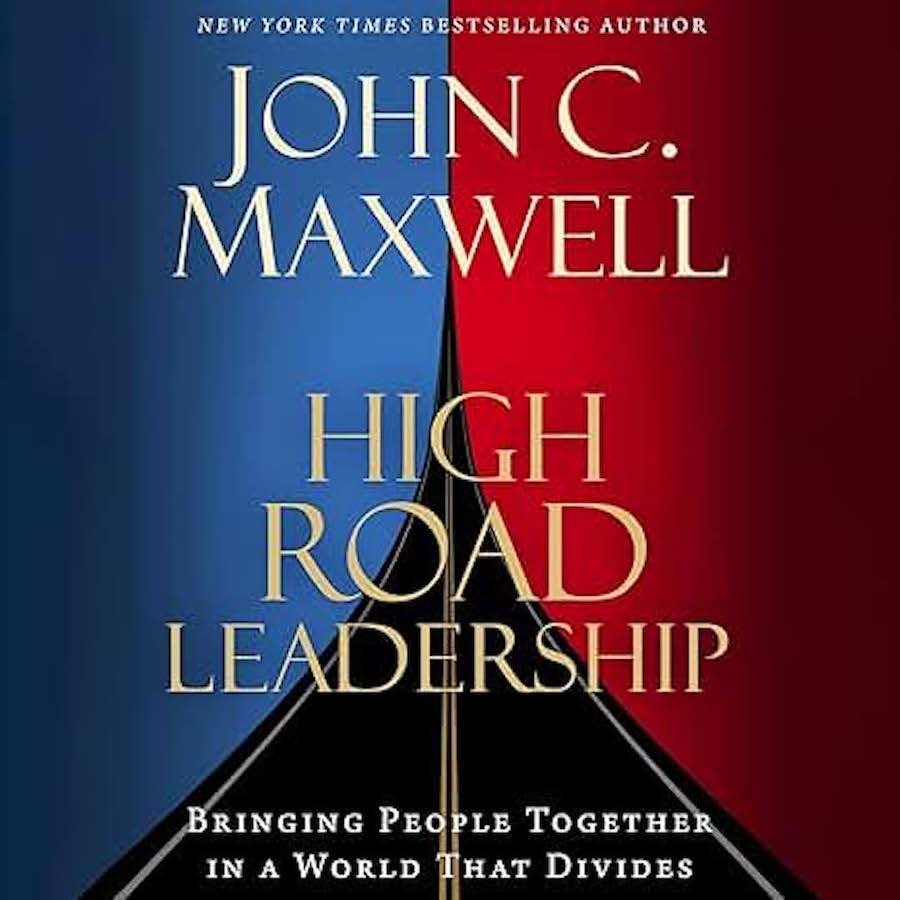
High Road Leadership (book review)

Listen to the podcast of this post by clicking on the player below, and you can also subscribe on AppleSpotify, or Audible. 

I have been a longtime fan of John Maxwell. His ability to distill so many insights into accessible action steps is a true gift. High Road Leadership is no exception to this, and it is a timely read at this cultural moment. 

I was recently talking with a friend about the stark divide in American politics today. I was recalling a time when a US President would nominate someone for a cabinet position or an opening on a judicial bench, and the vote in the Senate would be something like 89-8 in favor of the nominee. Now it is more likely that the vote will end in a 50-50 tie with the vice president stepping in to cast the tie-breaking vote. It’s become axiomatic that a senator’s vote has to be a “nay” if the president making the nomination was of a different political party.

As a pastor, I’ve even experienced people moving to a different church because someone else in the church is perceived to support something that they are against. It’s heartbreaking, to say the least! 

This is why I said that Maxwell’s book is timely in this cultural moment. 

As with all of his books, the focal point is leadership. More specifically, John Maxwell calls leaders to continue to grow in their ability to serve more people; with the emphasis on “serve.” 

High Road Leadership challenges leaders on ways to take the high road. One illustration that encapsulates the ideas in this book comes from Maxwell’s observation on the well known story of the good Samaritan. The thieves took the low road by saying to the man they robbed, “What’s yours is mine.” The leaders who passed by the man who was injured took the middle road by exempting themselves from action by saying, “What’s mine is mine.” However, the good Samaritan who helped the injured man at his own expense took the high road in saying, “What’s mine is yours.” 

High road leaders are always looking for ways to bring people together, to go above and beyond what would be culturally expected of them, to embrace those who are different, to find common ground that can unite disparate groups. 

This is the consistent example and teaching of Jesus Christ Himself, but it is an attitude and lifestyle that is routinely ignored. Everyone seems to be waiting for “them” to go first, but high road leaders always take the Christ-like initiative of going first.

High Road Leadership is a practical guide to help all of us consistently operate on the high road. If you are ready to help heal what divides us, this book will become your go-to resource. 

►► Would you please prayerfully consider supporting this ministry? My Patreon supporters get behind-the-scenes access to exclusive materials. ◀︎◀︎

Links & Quotes

Is it okay to pray a prayer written by someone else? Sure! But let’s use those prayers merely as guides to help us form our own personalized prayers to our loving Heavenly Father. I shared a whole series on prayer that you may want to check out.

I have lots of new content every week, which you can check out on my YouTube channel.

T.M. Moore wrote, “The Holy Spirit comes to dwell in believers with an agenda. His agenda is not ours, and unless we can put our agendas aside, we will never line up with His to realize more of the presence, promise, and power of the Kingdom of God. The Spirit has not come to make us ecstatically happy. He has not come to fulfill our every wish. He comes to bring forth in us distinctly Kingdom values and virtues: love, joy, peace, patience, kindness, goodness, faithfulness, gentleness, and self-control. He comes to distribute among us spiritual gifts, God-given abilities to serve one another in caring and sharing ways. He comes to empower us as witnesses for Jesus, both in how we live and what we say. And He comes to build our churches up into Christlikeness by our unified and focused work.”

I am really enjoying these mini-biographies of key leaders in the Reformation presented by Desiring God. One that I found especially fascinating is about Menno Simons—“If you are familiar with the contemporary Mennonites, you may be surprised to learn that the group’s founder started as a Catholic priest who had never read the Bible.” Yet, near the end of his life, Menno wrote, “Although I resisted in former times Thy precious Word and Thy holy will with all my powers…nevertheless, Thy fatherly grace did not forsake me, a miserable sinner, but in love, received me…and taught me by the Holy Spirit until of my own choice I declared war upon the world, the flesh, and the devil…and willingly submitted to the heavy cross of my Lord Jesus Christ that I might inherit the promised kingdom.”

“What strikes me is that there’s a very fine line between success and failure. Just one ingredient can make the difference.” —Andrew Lloyd Webber 

This past Sunday I spoke to my congregation about how Christians should behave biblically during an election season. Someone forwarded to me a related graphic from the Pentecostal Evangel magazine (a publication of the Assemblies of God) from 1984. I love these reminders for Christians!

Researchers unveiled the largest brain map ever completed. It was of a fruit fly, whose brain “includes nearly 140,000 neurons and captures more than 54.5 million synapses”! It took four years to complete this map. “All told, the researchers identified 8,453 types of neuron—much more than anyone had expected. Of these, 4,581 were newly discovered.” This level of complexity and order in a fruit fly is astounding to me. Can you imagine what it would take to map the much larger and more complex human brain?! Truly, David was right when he said that we are wonderfully made by our Creator!

“Freely, willingly and joyfully do good to everyone, serve everyone, suffer all kinds of things, love and praise the God who has shown such grace. Thus, it is just as impossible to separate faith and works as it is to separate heat and light from fire!” —Martin Luther

“Faith the mother of all good works justifieth us, before we can bring forth any good work: as the husband marryeth his wife before he can have any lawful children by her.” —William Tyndale

A Leader’s Commitment To Lifelong Learning

Listen to the podcast of this post by clicking on the player below, and you can also subscribe on AppleSpotify, or Audible. 

Bruce Barton said, “When you’re through changing, you’re through!” I think the same thing could be said about a leader’s learning—when you think you’ve learned it all, your leadership is beginning to crumble. 

I never want to get to the place where I think I have “arrived” as a leader, but I want to be humble enough to admit that there are so many things I have yet to learn. Jesus reminded us, “Every student of the Scriptures who becomes a disciple in the kingdom of heaven is like someone who brings out new and old treasures from the storeroom” (Matthew 13:52 CEV). 

“New and old treasures” tells me that there’s some good stuff we need to protect, and also some good stuff we haven’t yet learned. 

A mark of a godly leader is his commitment to being a lifelong learner. 

Here are three new things the Holy Spirit has recently taught me: 

Acts 6:3 says, “Choose seven men from among you who are known to be full of the Spirit and wisdom. We will turn this responsibility over to them.” 

My lesson: The résumé for those that are to be placed in ministry leadership positions should include servant-heartedness, Christlike character, wise experience for the task, and reliance on the Holy Spirit.

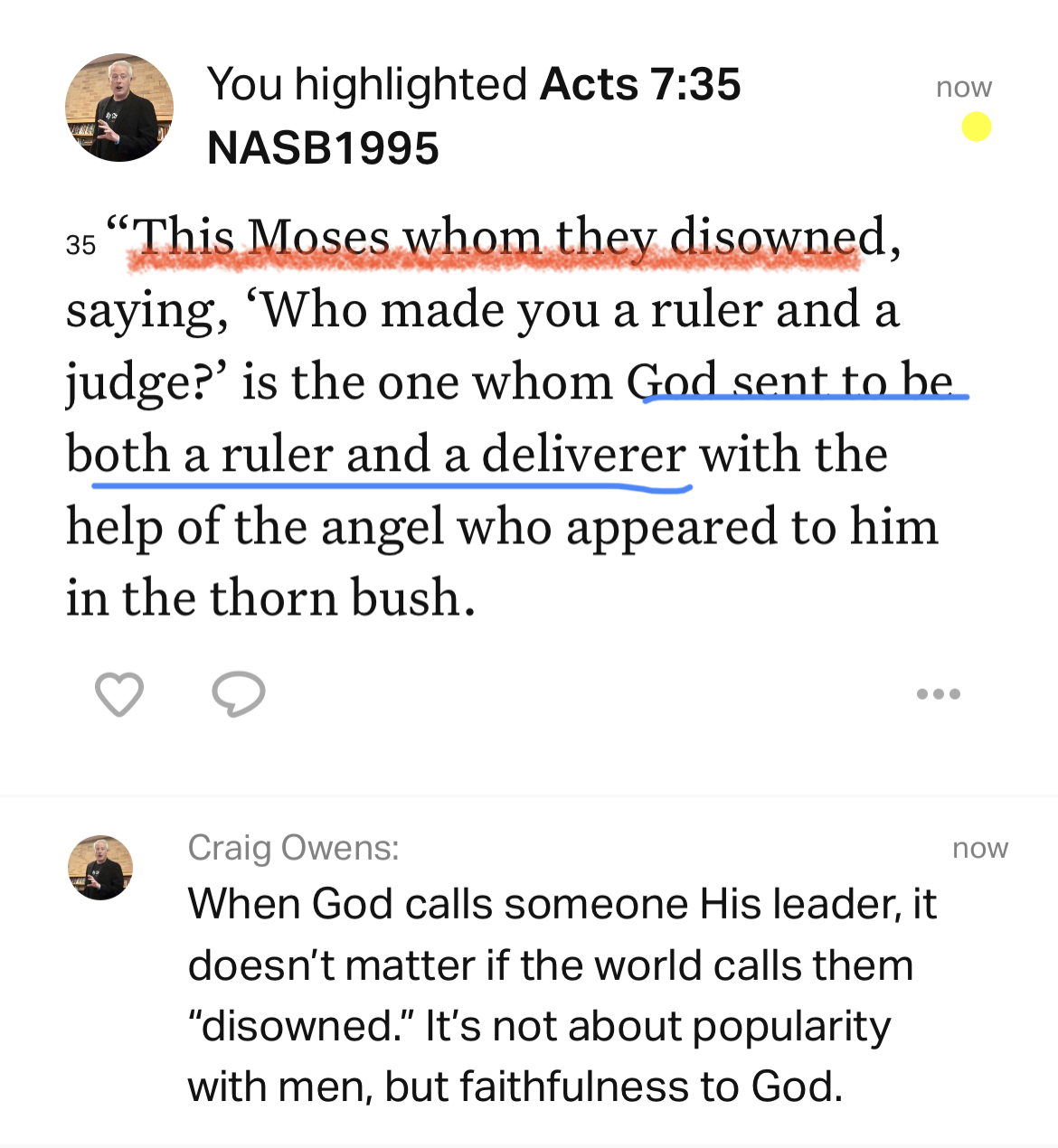
“This Moses whom they disowned…is the one God sent to be both a ruler and a deliverer” (Acts 7:35). 

My lesson: When God calls someone His leader, it doesn’t matter if the world calls them disowned. It’s not about popularity with men, but faithfulness to God.

Notice the plural pronoun “they” in 1 Kings 11:33. 

My lesson: When King Solomon sinned, he then gave license to the people to follow his example. As the leader goes, so go the people.

I hope you are learning new things every day. In fact, feel free to share in the comments something new you’ve learned. 

This is part 73 in my series on godly leadership. You can check out all of my posts in this series by clicking here.

►► Would you please prayerfully consider supporting this ministry? My Patreon supporters get behind-the-scenes access to exclusive materials. ◀︎◀︎
Links & Quotes

“Ministers should be persons of the same quiet, lamb-like spirit that Christ was of, the same spirit of submission to God’s will, and patience under afflictions, and meekness towards men; of the same calmness and composure of spirit under reproaches and sufferings from the malignity of evil men; of the same spirit of forgiveness of injuries; of the same spirit of charity, of fervent love and extensive benevolence; the same disposition to pity the miserable, to weep with those who weep, to help men under their calamities of both soul and body, to hear and grant the requests of the needy, and relieve the afflicted; the same spirit of condescension to the poor and mean, tenderness and gentleness towards the weak, and great and effectual love to enemies.” —Jonathan Edwards

“God has promised to supply all our needs. What we don’t have now, we don’t need now.” —Elizabeth Elliot

In my book Shepherd Leadership: The Metrics That Really Matter, I talk about how important it is for us to get a good night’s sleep to keep our leadership skills sharp. Sleep is also vitally important to help in the battle against overcoming temptations.

A groundbreaking paper was released this year that appears to debunk evolutionary theories once again. Check out this commentary from John Stonestreet’s podcast.

“There’s no such thing as a spiritual vacuum in the cosmos. Whatever of our time, attention, interest, or strength is not devoted to the Lord, and His Kingdom and glory, will become susceptible to being taken over by contrary interests. These often take the form of false teachers who appeal to our selfish interests and encourage us to make of the faith of Jesus Christ a kind of spiritual smorgasbord for whatever we think we need. We leave off the solid food of sound doctrine and dabble in the sweets and crunchies of mere self-interest—if we spend any time in the Word of God at all. Our mind enters a period of arrested development which will become permanent atrophy unless serious measures are engaged.” —T.M. Moore

“Always make your gratitude greater than your success.” —Dan Sullivan & Catherine Nomura

Manly Men

I talked about the example of Boaz’s integrity on Father’s Day, and his example has still been working on me. Especially when I read this bold statement from Charles Spurgeon— 

“Christ Jesus was the Man of men, the model Man, the manliest Man in all respects, and yet He was, of all men, the most fully subordinated to the divine law and the most obedient in all things to the Father’s will! See your calling, my brethren! You, too, are not to be common men, nor to belong to the herd that run foolishly after their own lusts, but you are to be model men, manly and brave yet always submissive to the great Father of your spirits. We are to be such men that those who look upon us may wish that they were such as we are.”

Fellas, check out this 4-minute challenge I gave to Christian men on Father’s Day by clicking on the media player below… ↓ 

To check out the messages I shared on Boaz and Ruth, please click here. 

I’d also invite you to follow my daily podcast on AppleSpotify, or Audible. 

Poetry Saturday—Jesus, Saviour, Grow In Me

O Jesus, Saviour, grow in me,
and all things else recede:
to You my heart would nearer be,
from sin be daily freed.

Each day embrace my weakness, Lord,
with Your supporting might;
and let my death be lost in life,
my darkness in Your light.

Let faith in You and in Your strength
my every motive move;
may You alone be my delight,
my passion and my love.

Fill me with gladness from above,
hold me by strength divine.
Lord, let the glow of Your great love
through my whole being shine.

Show me Your glory more and more,
Lord, holy, wise, and true!
Your living image I would be,
in joy and sorrow too.

Make this poor self grow less and less,
and be Yourself my aim;
and through Your grace, make me each day
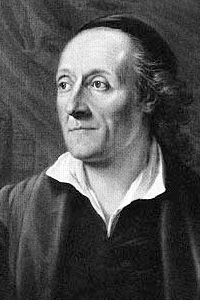
more worthy of Your name. —Johann K. Lavater

Refined By The Fire

Where is God in our trials? When we call, Jesus runs to our cry. He is able to help us because He knows exactly what our cries sound like. Aren’t you glad He does?! 

While we are in these difficult times, you might find yourself asking a question I have asked, “Okay, God, I believe You are doing something, but what exactly are You doing?” 

I can’t tell you specifically what God is doing in your life, because your story is unique and special. But I can tell you that during the hard, painful chapters of our lives, God is accomplishing at least five things in all of us.

  1. God is opening our eyes to new paradigms

We will learn lessons in these fiery trials that we couldn’t possibly learn any other way. 

  1. God is building empathy in us which we didn’t have before

One dictionary defines empathy as “the power of understanding and imaginatively entering into another person’s feelings.” It’s only because of our trials that we no longer have to imagine what someone else is feeling, but instead we know exactly what they’re feeling and how we can help. 

  1. God is growing our patience 

It’s been said that patience is the “mother of all other virtues.” Paul said that “these troubles produce patience” (Romans 5:3). As God grows your patience, He will also help you to grow all of the other Christlike virtues. 

  1. God is refining His character in us 

Paul went on to add that not only does trouble produce patience, but “patience produces character” (Romans 5:4). During the times of difficulty and uncertainty, we become more aware of deficiencies in our character. 

  1. God is building in us an unshakable hope in His future grace 

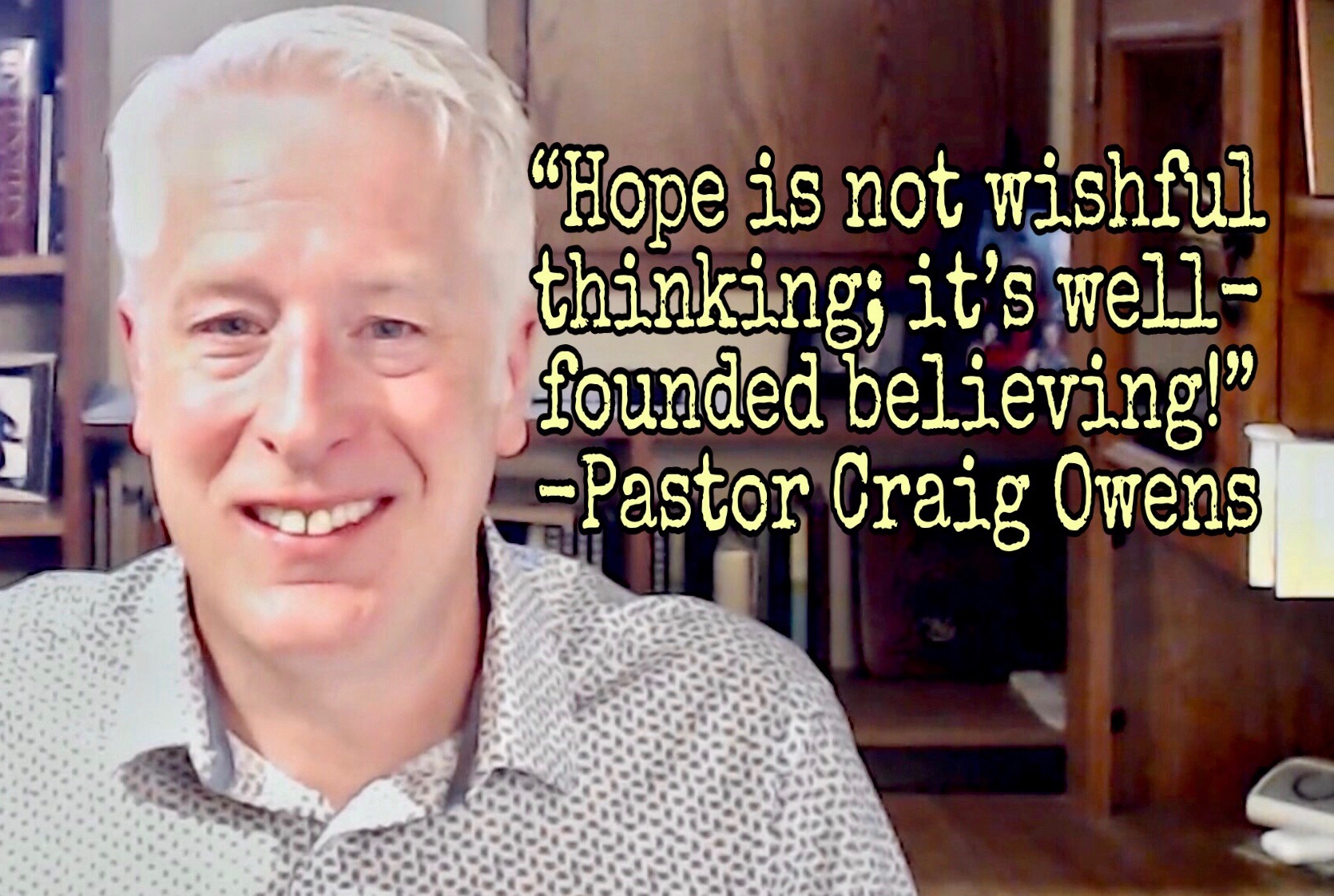
Hope is not wishful thinking; it’s well-founded believing! 

I want to circle back to that word refining because I think that best sums up what God is doing in our painful times. Romans 8 tells us—The Spirit Himself thus testifies together with our own spirit, assuring us that we are children of God. And if we are His children, then we are His heirs also: heirs of God and fellow heirs with Christ—sharing His inheritance with Him; only we must share His suffering if we are to share His glory. But what of that? For I consider that the sufferings of this present time—this present life—are not worth being compared with the glory that is about to be revealed to us and in us and for us and conferred on us! (Romans 8:15-18) 

So where’s God in this time of fire? He is overseeing our trial as a Perfect Refiner. Do you know how the silversmith knows he has purified the impurities from the silver ore? The silver is pure when he can see his own reflection in the silver! 

In the heat of your trial, God is close to you. He knows the perfect temperature and the precise time that it will take to allow His face to be seen in you! 

Sometimes you will see what God is doing through your furnace time, sometimes you won’t. But don’t ever bail out! God IS working! He is giving you a new perspective, a deeper empathy, more patience, an unshakable hope, and most of all—He is removing the impurities that will allow His face to be seen more clearly in you! 

Join me this Sunday as we continue to learn where God is in our darkest times. And if you didn’t catch the previous messages in this series, please check out The God That Runs To You and How Long Will This Last?

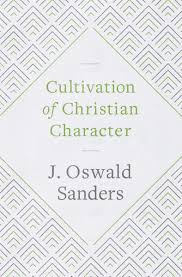
10 Quotes From “Cultivation Of Christian Character”

J. Oswald Sanders has given us a short but powerfully effective book for developing more Christlikeness in each and every Christian. Check out my full book review by clicking here. 

“In a word, spiritual maturity is Christlikeness.” 

“Christ set the standard in everything. He was never petulant, always calm; never rebellious, always obedient; never fearful, always courageous; never vacillating, always resolute; never pessimistic, always cheerful; never subtle, always sincere; never grasping, always generous; never acting from expediency, always from principle. He is the pattern of spiritual maturity.” 

“So then our spiritual maturity or immaturity is seen in the manner in which we react to the changing circumstances of life. … It has to be learned. Is it not striking that it is recorded of Christ that ‘though He were a Son, yet He learned obedience by the things which He suffered; and being made perfect, He became the author of eternal salvation’ (Hebrews 5:8-9)? He alone was fully mature. The rest of us are ‘going on to maturity.’ In all of us there are some expressions of our personality in which we react immaturely instead of as mature men of God.” 

“The highest manifestation of spiritual maturity is love. We are only as mature as we are mature in love.” 

“God forbid that we should ever cease to love the gospel in its simplicity, but we must not be content to stay there. We must go on to appreciate increasingly the gospel in its profundity.” 

“There is a place for a constructive contending for the faith. The church has degenerated sadly since Pentecostal days and the servant of the Lord has an important part to play in its revival.” 

“It is possible to get to heaven without living a consecrated life, but the journey there will be barren and disappointing, since consecration is the doorway to undreamed-of joy. Neglect it, fail to seek it, and life will be greatly impoverished. Welcome it, and life becomes inexpressibly enriched.” 

“When we dedicate our lives to God, He consecrate us to His service. We dedicate our lives to Him that He may work His will in us. He consecrates us to Himself that He might make us holy.” 

“It has been suggested that in consecration we bring our lives to God as a blank sheet of paper with our names signed at the bottom. Confident of His love, we invite Him to fill in the details as He will.” 

“It is a life separated to the glory of God. Inherent in the word ‘consecration’ is the idea of separateness. There must of necessity be separation from sin if there is to be separation to God. … The consecrated Christian hates evil, but he has a passion for the right and for the glory of God and Christ. He tests all his actions by the one standard, ‘Is this for the glory of God?’ He will do anything, suffer anything, if only God is glorified. Nothing is too costly to give to the Master.” 

Cultivation Of Christian Character (book review)

I’ve always enjoyed reading J. Oswald Sanders. Let me rephrase that: I enjoy the new insights on God’s Word that Sanders’ books have given me, but the confrontation of the Holy Spirit that comes while reading these books can be quite painful at times. Cultivation Of Christian Character is no exception! 

In his opening words, Sanders explains the purpose of “this little volume” (as he calls it)—

“The genuine disciple of Christ earnestly desires a closer walk with God and a greater conformity to Christ. If these are absent, there is reason to doubt the genuineness of the discipleship. But many true lovers of the Lord are beset with a sense of inadequacy and failure in living the Christian life as it ought to be lived. They are very conscious with Paul that they have not already attained, neither are already perfect, but they yearn to know Christ better and to serve Him more worthily.” 

There you have it in a nutshell: If you yearn to be more Christlike, and yet at the same time struggle with how far you still have to go to see the fruits of Christlikeness in your life, this is the book for you. 

The chapters are short enough to read in just a few minutes. But the thought processes and the heart-searching that these short chapters will stimulate will undoubtedly take a long time to assimilate into your daily life. At least, this is the case for me. 

None of J. Oswald Sanders’ books are long books, but all of his books live long inside of me. Dive into Cultivation of Christian Character with an attitude of ready submission to the Holy Spirit, and then watch the amazing fruitfulness and Christlikeness that will begin to blossom from your life. 

I am a Moody Publishers book reviewer. 

7 More Quotes From “Start With The Heart”

Dr. Kathy Koch has given parents—and anyone else who works with children—a marvelously helpful resource in her latest book Start With The Heart. Be sure to check out my full book review by clicking here. 

“God created you and your children with five core, basic needs that must be met. These needs are interrelated. The health of one influences the others:

  • Security—who can I trust?
  • Identity—who am I?
  • Belonging—who wants me?
  • Purpose—why am I alive?
  • Competence—what do I do well?” 

“Children who know their purpose will often choose to look for peers with similar goals and interests. They will want to hang out with people who affirm them and their purpose and be willing to end relationships that are not joyful and purposeful.” 

“When you parent so your children believe three things, their hearts will be impacted and they will be motivated to succeed. This translates into less stress and anxiety and more peace. … Children who believe these things don’t want to be average. They are willing to work for more. … Children’s character will be more Christlike. They’ll want to be more others-centered than self-centered. They’ll be compassionate, brave and able to stand up for themselves and others. 

  1. I have value. Children who do know they have value are often motivated intrinsically, from the inside. They internally recognize what is good for them and respond accordingly.
  2. Learning matters. When children believe they have worth, they are more likely to value learning. … Children who value learning will exhibit many positive character traits, including teachability. This will be true even when they are not convinced that your requests or planned activities are relevant. They’ll pay attention anyway because they know they matter and learning matters. These beliefs strengthen children’s purpose and give rise to competence.
  3. My future can be bright.” 

“Which is better: ‘Be on time!’ or ‘Don’t be late!’? Do you hear the difference? Which one is positive? ‘Be on time’ communicates ‘I believe you’re capable of this.’ It’s more hopeful. It’s about what you want your children to do. ‘Don’t be late’ reminds them of how they’ve frustrated you.” 

“Carol Dweck…has consistently found that children praised for using effort tackled more challenging tasks than those praised just for ability or for the quality of their work.” 

“Sometimes have children tell you what they think they did before you offer your opinions. If they are relatively accurate, affirm them specifically. When they’re not, have the conversation.” 

“Working to provide feedback that can be described with the following attributes will serve you and your children well—specific, believable, helpful, and thoughtful.” 

You can also check out the first set of quotes I shared from Start With The Heart by clicking here.