8 Quotes From “The World’s Last Night”

In seven essays expressly shared to get the reader to think in terms of eternity, C.S. Lewis masterfully practices his craft. Check out my full book review of The World’s Last Night by clicking here. Below is just a small sampling of a few of the outstanding quotes in this book.

“Simply to say prayers is not to pray; otherwise a team of properly trained parrots would serve as well as men.”

“Prayer is not a machine. It is not magic. It is not advice offered to God. Our act, when we pray, must not, any more than all our other acts, be separated from the continuous act of God Himself, in which alone all finite causes operate.”

“Scientists are mainly concerned not with believing things but with finding things out. And no one, to the best of my knowledge, uses the word believe about things he has found out. The doctor says he ‘believes’ a man was poisoned before he has examined the body; after the examination, he says the man was poisoned. No one says that he believes the multiplication table. No one who catches a thief red-handed says he believes that man was stealing. The scientist, when at work, that is, when he is a scientist, is labouring to escape from belief and unbelief into knowledge. Of course he uses hypotheses or supposals. I do not think these are beliefs.”

“Since most men, as Aristotle observed, do not like to be merely equal with all other men, we find all sorts of people building themselves into groups within which they can feel superior to the mass.”

“‘Good works’ in the plural is an expression much more familiar to modern Christendom than ‘good work.’ Good works are chiefly alms-giving or ‘helping’ in the parish. They are quite separate from one’s ‘work.’ And good works need not be good work, as anyone can see by inspecting some of the objects made to be sold at bazaars for charitable purposes. This is not according to our example. When our Lord provided a poor wedding party with an extra glass of wine all round, He was doing good works. But also good work; it was a wine really worth drinking.”

“Christ died for men precisely because men are not worth dying for; to make them worth it.”

“It would be difficult, and, to me, repellent, to suppose that Jesus never asked a genuine question, that is, a question to which He did not know the answer. That would make of His humanity something so unlike ours as scarcely to deserve the name. I find it easier to believe that when He said ‘Who touched Me?’ (Luke 7:45) He really wanted to know.”

“For what comes [after Christ’s Second Coming] is Judgment: happy are those whom it finds labouring in their vocations, whether they were merely going out to feed the pigs or laying good plans to deliver humanity a hundred years hence from some great evil. The curtain has indeed now fallen. Those pigs will never in fact be fed, the great campaign against White Slavery or Governmental Tyranny will never in fact proceed to victory. No matter; you were at your post when the Inspection came.”

11 Quotes From Important Islam Booklets

I recently read four very insightful booklets on how Christians can best prepare themselves to share their faith in Jesus with their Muslim neighbors. You can read my complete review of these booklets by clicking here. Below are just a few quotes that caught my attention.

“‘America’s mosques are loaded with people who grew up in church’ [says Carl Ellis]. Ellis says that many converts to Islam are African-American males who see traditional churches as male unfriendly and as failing to address their real needs.”

“God is bringing thousands of Muslim immigrants to our shores every year. These people are coming from Islamic nations where they could not be evangelized before. Yet here in America, they are free to listen and respond to the Gospel. In this ‘land of the free’ they do not have to fear horrible consequences if they believe the gospel and accept Jesus Christ as their Savior.”

“Our hearts should be increasingly burdened not only by the enormous spiritual need of the 1.4 billion Muslims, but also by the apathy of the missionary movement towards them. …  Instead of being evangelized, Muslims are evangelizing. …

“It is reported that Muslims are counting on Europe, the birthplace of the Reformation and the modern missionary movement, to become completely Islamic within the next few decades. In England more than 300 closed churches have been converted into mosques. … Muslims are now a majority in 44 countries of the world.”

“When you are discussing the Bible with the Muslim, it is important that you read the Bible verses in context. The Muslim has developed an intricate system of ‘abrogation’ or substitution of one verse for another, due to the random way the Qur’an is written. He will have a tendency to try to find verses in the Bible that ‘contradict’ each other. Anyone witnessing to a Muslim must know the Scriptures thoroughly and be able to lead the Muslim to understand the meaning of passages in relation to the setting in which they are found.”

“The Muslim will be impressed with a Christian’s words only if he experiences genuine friendship from the Christian and sees him living a consistent moral life. A Christian’s lifestyle must match his testimony.”

“It is better to win the Muslim as a friend than to win an argument and lose his friendship.”

“Christians should be aware that Muslims are people who seek after God!”

“Here, surely, is a key to witnessing to Muslims, both in the United States and around the world: Love them as Jesus loves us. … You must give your SELF to your Muslim friend—not just the gospel!”

“A cardinal rule is: Never become involved in arguments—especially theological ones! Nominal and even irreligious Muslims often become fanatical advocates of their faith when pushed by argument. The truth is: We have argued and debated for hundreds of years without success. Let us now become witnesses—not debaters!”

“No religion on the face of the earth deals with forgiveness of sins except Christianity. … The concept of God as a loving Heavenly Father is completely foreign to a Muslim. … Show him from the Bible how God has provided a way whereby all sins can be forgiven, and every trace of guilt can be completely removed. This is a very powerful tool in witnessing.”

“One way the power of the Holy Spirit is demonstrated is through physical healing. If your Muslim friend or a member of his family is sick, offer to go and pray for him. He will deeply appreciate your concern, and when the person is healed, this demonstration of the Holy Spirit’s power will be convincing—often the key to his accepting Christ as Savior and Lord.” 

Some other helpful resources on this topic are two books from Nabeel Qureshi: Seeking Allah, Finding Jesus and Answering Jihad. Also, check out Praying For Muslims.

Islam Booklets (book review)

Last week I reviewed a book calling Christians to pray for Muslims to come to a personal relationship with Jesus Christ. Prayer must be our first priority. But often times prayer will open the door for us to speak and act in love to share our faith with our Muslim friends.

I recently read a quarter of booklets that I would highly recommend to you—

  • The Shadow Of The Crescent 
  • What Christians Need To Know About Muslims
  • Sharing Your Faith With Muslims
  • Questions Muslims Ask

These booklets will help you understand the mindset of Muslims, learn more about the questions Muslims ask of Christians, some thoughtful ways to answer those questions, and the lifestyle that will be the most appealing for Muslims to open their hearts to Christians.

In one of the booklets, Ron Peck says, “It is our prayer that this knowledge [in these booklets] will encourage true believers in Jesus to reach out in love and share the life-changing gospel of Christ with Muslims God has brought to our shores. We also pray it will challenge Christ’s followers to take a stand against the missionary efforts of Islamic governments overseas as they endeavor to Islamize our nation.”

Given the fact that about 15 percent of all U.S. immigrants each year are followers of Islam, and that most statisticians agree that in the United States there are about 25,000 converts to Islam every year, now is the optimal time for Christians to be prepared to share their faith in Jesus with their Muslim neighbors.

15 More Quotes From “Run Today’s Race”

Oswald Chambers’ book Run Today’s Race was originally published as a thought-a-day calendar. Here are a few more short, thought-provoking quotes.

“When we say ‘Thy will be done,’ do we say it with a sigh? If so, we have never realized that the character of God is holy love; nothing can ever happen outside His purposeful will.”

“‘Why does God bring thunderclouds and disasters when we want to green pastures and still waters?’ Bit by bit we find, behind the clouds, the Father’s feet; behind the lightning, an abiding day that has no night; behind the thunder, ‘a still small voice’ that comforts with a comfort that is unspeakable.”

“Beware of interpreting Scripture in order to make it suit a pre-arranged doctrine of your own.”

“The New Testament view of a Christian is that he is one in whom the Son of God has been revealed, and prayer deals with the nourishment of that life.”

“In order to be able to wield the Sword of the Spirit, which is the Word of God, we must obey, and it takes a courageous heart to obey.”

“The Bible talks plentifully about joy, but it nowhere talks about a ‘happy Christian.’ Happiness depends on what happens; joy does not. Remember, Jesus Christ had joy, and He prays ‘that they might have My joy fulfilled in themselves.’”

“If God has made your cup sweet, drink it with grace; if He has made it better, drink it in communion with Him.”

“We must distinguish between the burden-bearing that is right and the burden-bearing that is wrong. We ought never to bear the burden of sin or doubt, but there our burdens placed on us by God which He does not intend to lift off. He wants us to roll them back on Him.”

“The reason we know so little about God’s wisdom is that we will only trust Him as far as we can work things out according to our own reasonable common sense.”

“Take time, strangle some other interests and make time to realize that the center of power in your life is the Lord Jesus Christ and His Atonement.”

“The essence of Christianity is that we give the Son of God a chance to live and move and have His being in us.”

“God rarely rebukes us for our impulsive plans because those plans work their own distress.”

“God will never begin to teach me His will in other matters until I do what I know.”

“‘Ye are the light of the world.’ We have the idea that we are going to shine in heaven, but we are to shine down here ‘in the midst of a crooked and perverse nation’ (Philippians 2:15). We are to shine as lights in the world in the squalid places, and it cannot be done by putting on a brazen smile, the light must be there all the time.”

“Have you ever noticed what Jesus said would choke the Word He puts in? The devil? No, the cares of this world. It is the little worries always. … All our fret and worry is caused by calculating without God.”

Please check out my full book review of Run Today’s Race by clicking here, and the first set of quotes I posted from this book is here.

The Cure For Spiritual Fanaticism

“Some time after Pentecost a group of believers met to pray for strength and power to meet the emergency then facing them, and to enlist the help of God on their behalf. ‘And when they had prayed, the place was shaken where they were assembled together; and they were all filled with the Holy Ghost, and they spake the Word of God with boldness’ (Acts 4:31). Some of these were of the original number filled at Pentecost. It is hardly conceivable that God acted contrary to His own will in filling them again after Pentecost. Still other outpourings are recorded in Acts 8, Acts 10 and Acts 19. All these occurred some years after the original act.

“In brief, the teaching of the New Testament is that the outpouring at Pentecost was the historic beginning of an era which was to be characterized by a continuous outpouring of the Holy Spirit. …

“This anti-emotionalism, though it is sponsored by some good people and travels in pretty orthodox company, is nevertheless an unwarranted inference, not a scriptural doctrine, and is in violent opposition to psychology and common sense. Where in the Bible are feeling and faith said to be at odds? The fact is that faith engenders feeling as certainly as life engenders motion. We can have feeling without faith, it is true, we can never have faith without feeling. Faith as a cold, unemotional light is wholly unknown in the Scriptures. …

“The Holy Spirit is the cure for fanaticism. Not the cause of it.”

—A.W. Tozer, in Paths To Power

8 Quotes From “Paths To Power” by A.W. Tozer

As I said in my book review, A.W. Tozer’s words frequently make me say both “Ouch!” and “Amen!” Maybe you’ll feel the same thing in these few quotes.

“Left to herself the Church must have perished as a thousand abortive sects had done before her, and have left nothing for a future generation to remember. That the Church did not so perish was due entirely to the miraculous element within her. That element was supplied by the Holy Spirit who came at Pentecost to empower her for her task. For the Church was not an organization merely, not a movement, but a walking incarnation of spiritual energy. …

“In short, the Church began in power, moved in power, and moved just as long as she had power. When she no longer had power she dug in for safety and sought to conserve her gains. But her blessings were like manna: when they tried to keep it overnight it bred worms and stank. So we have had monasticism, scholasticism, institutionalism; and they have all been indicative of the same thing: absence of spiritual power.” 

“The weakness in our message today is our overemphasis on faith with a corresponding underemphasis on obedience. This has been carried so far that ‘believe’ has been made to double for ‘obey’ in the minds of millions of religious persons.”

“In every denomination, missionary society, local church, or individual Christian this law operates. God works as long as His people live daringly; He ceases when they no longer need His aid.” 

“To any casual observer of the religious scene today, two things will at once be evident: one, that there is very little sense of sin among the unsaved, and two, that the average professed Christian lives a life so worldly and careless that it is difficult to distinguish him from the unconverted man.”

“It is always dangerous to isolate a truth and then press it to its limit without regard to other truth.”

“It may be stated as an axiom of the Christian system that whatever makes sin permissible is a foe of God and an enemy of the souls of men.”

“Some time after Pentecost a group of believers met to pray for strength and power to meet the emergency then facing them, and to enlist the help of God on their behalf. ‘And when they had prayed, the place was shaken where they were assembled together; and they were all filled with the Holy Ghost, and they spake the Word of God with boldness’ (Acts 4:31). Some of these were of the original number filled at Pentecost. It is hardly conceivable that God acted contrary to His own will in filling them again after Pentecost. Still other outpourings are recorded in Acts 8, 10 and 19. All these occurred some years after the original act.

“In brief, the teaching of the New Testament is that the outpouring at Pentecost was the historic beginning of an era which was to be characterized by a continuous outpouring of the Holy Spirit.”

“This anti-emotionalism, though it is sponsored by some good people and travels in pretty orthodox company, is nevertheless an unwarranted inference, not a scriptural doctrine, and is in violent opposition to psychology and common sense. Where in the Bible are feeling and faith said to be at odds? The fact is that faith engenders feeling as certainly as life engenders motion. We can have feeling without faith, it is true, we can never have faith without feeling. Faith as a cold, unemotional light is wholly unknown in the Scriptures.”

Paths To Power (book review)

As I read A.W. Tozer’s words I find myself saying two things: (1) “Ouch!” and (2) “Amen!” Tozer’s Paths To Power is a continuation in those responses as he outlines what robs the Church and individual Christians of the power God wants them to have.

Right at the outset, Tozer identifies a key element robbing the Church of power: a lack of obedience in the things God has commanded us. “A knowledge of the truth is not enough,” he writes. “The truth must be followed if we would realize in actual experience the blessedness which is here described.”

Another power-blocker is an unwillingness to let God confront us and help us change. We get stuck in a this-is-how-it’s-always-been rut and then shut our eyes to the times of refreshing God wants to send to us. Other blockers include poor doctrine, putting the Holy Spirit in a box, justifying our sin, and not unleashing our faith, to name just a few.

Thankfully, Tozer also points us to the straightforward cures for all of the blockages to power. If we are willing to open our eyes, ears, and hearts to God’s voice, His unlimited blessings could flow uninterrupted into our lives and churches.

Paths To Power contains only seven short chapters, but the digestion, contemplation, and implementation of Tozer’s cures will be something that will involve a lifetime commitment for those ready for God’s fresh power to be poured into their lives.

I am a Moody Publishers book reviewer.

4 BIG Lessons From Esther

One of my favorite stories in the Bible shows God’s role in world events, and how the obedience of His people fits into God’s plan. Yet this story doesn’t even mention God by name!

It’s an important reminder that we don’t have to say, “God’s at work here” for God to be at work here. We don’t have to say, “I’m a Christian” to live in a Christlike way.

Have you ever read the story of Queen Esther and her cousin Mordecai? Let me tell you, this is a real page-turner of a story! If you already know the story, skip to the four lessons below. Here’s a quick recap (but you really should read this for yourself)…

  • King Xerxes is the ruler of the most powerful nation on earth
  • Queen Vashti (Xerxes’ wife) defies him and is deposed
  • When the king is looking for a new queen, a young lady named Hadassah catches his eye
  • Hadassah went by her Persian name of Esther, so the king didn’t know he married a Jewess
  • Mordecai was Esther’s cousin, her legal guardian, and a palace worker
  • Mordecai uncovered a plot to assassinate Xerxes, which he shared with Queen Esther, who told the king, who investigated and had the plotters killed
  • King Xerxes had a prime minister named Haman, who was really full of himself
  • Mordecai wouldn’t bow down to Haman because Haman thought of himself as a deity
  • Haman wanted to show Mordecai, and all the other Jews like him, who was boss so he deceived King Xerxes into signing a law that would allow for all the Jews to be killed on a set date
  • Mordecai again told Queen Esther about the plot, but the queen was scared to go before the king unsummoned (where the penalty for doing so could be death)
  • Esther finally had the courage to approach Xerxes and invite him and Haman to dinner
  • At dinner, the king asked Esther why she really invited him to dinner, and Esther said, “Come back to dinner tomorrow night and I’ll tell you then”
  • King Xerxes couldn’t sleep that night so he asked for the royal chronicles to be read to him
  • The king discovered that Mordecai had never been rewarded for uncovering the assassination attempt
  • Xerxes asked Haman what he should do for a man he wanted to honor; Haman thought the king was talking about him, so he gave an elaborate plan of recognition, to which the king replied, “Excellent! Go do all that for Mordecai!”
  • Haman was so ticked off that he built a 75-foot tall gallows on which to hang Mordecai
  • At the second dinner, Esther asked for her life to be spared; the king wanted to know who would presume to attack her and the Jews, and she called out Haman
  • The king stormed from the room while Haman stayed to beg for his life
  • As the king returned, Haman was pawing at the queen in desperation, so the king’s bodyguards grabbed him
  • The king found out about the gallows built for Mordecai and gave orders for Haman to be hanged on those very same gallows
  • Mordecai became prime minister and wrote another law to help save the Jews from annihilation

4 BIG Lessons From Esther for Christians living in a pagan culture today

  1. All of History is His Story. God’s timing to bring all of the key players on the scene at just the right moment is obvious. Even giving the king insomnia at just the right time was a part of God’s plan!
  2. God gives us favor and we win favor by obeying God. The word “favor” is all throughout this story. God-fearing people are given God’s favor which leads to man’s favor as well.
  3. God-following people do make a positive impact on their culture. Esther becoming queen pleased the people, as did Mordecai’s just laws.  
  4. Pride humiliates and destroys; humility elevates the person and glorifies God. Just look at the contrast between Haman and Mordecai!

Do you have any other takeaways from this story? If so, please share them in the comments below.

Thursdays With Oswald—Where Are Your Feet?

This is a weekly series with things I’m reading and pondering from Oswald Chambers. You can read the original seed thought here, or type “Thursdays With Oswald” in the search box to read more entries.

Where Are Your Feet?

“Where did Jesus placed His feet? He placed them by the sick and the sorrowful, by the dead, by the bad, by the twisted and by the good. He placed His feet exactly where we have to place ours…, in the ordinary rough and tumble of human life as it is. ‘I will make the place of My feet glorious [Isaiah 60:13].’” 

From Run Today’s Race

Run Today’s Race contains short statements from Oswald Chambers intended to stimulate Christians to ponder things like:

  • All of Isaiah 60 is about God’s glory being revealed on earth through Jesus Christ. Am I letting Christ’s glory shine through my life?
  • Do I only look for “super-spiritual” moments, or am I aware that God can make wherever I place my feet a glorious place?
  • Am I willing to go wherever God needs me to go?

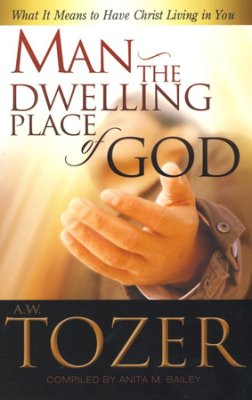
11 Quotes From “Man—The Dwelling Place Of God” by A.W. Tozer

A.W. Tozer’s 50-year-old publication Man—The Dwelling Place Of God still rings with timely truth for today. You can check out my full book review by clicking here.

“I long ago decided that I would rather know the truth than be happy in ignorance. If I cannot have both truth and happiness, give me truth. We’ll have a long time to be happy in heaven.”

“Shakespeare may be enjoyed without penitence; we may understand Plato without believing a word he says; but penitence and humility along with faith and obedience are necessary to a right understanding of the Scriptures.”

“Faith and morals are two sides of the same coin. Indeed the very essence of faith is moral. Any professed faith in Christ as personal Savior that does not bring the life under plenary obedience to Christ as Lord is inadequate and must betray its victim at the last. The man that believes will obey; failure to obey is convincing proof that there is not true faith present.”

“There are two kinds of love: the love of feeling and the love of willing. The one lies in the emotions, the other in the will. Over the one we may have little control. It comes and goes, rises and falls, flares up and disappears as it chooses, and changes from hot to warm to cool and back to warm again very much as does the weather. Such love was not in the mind of Christ when He told His people to love God and each other. … The love the Bible enjoins is not the love of feeling; it is the love of willing, the willed tendency of the heart.

“Let no one interpret the Scriptures for you in such a way as to rule out the Father’s gift of the Spirit. Every man is as full of the Spirit as he wants to be. Make your heart a vacuum and the Spirit will rush in to fill it.”

“I am among those who believe that our Western civilization is on its way to perishing. It has many commendable qualities, most of which it has borrowed from the Christian ethic, but it lacks the element of moral wisdom that would give it permanence. Future historians will record that we of the twentieth century had intelligence enough to create a great civilization but not the moral wisdom to preserve it.”

“The church today is suffering from the secularization of the sacred. By accepting the world’s values, thinking its thoughts and adopting its ways we have dimmed the glory that shines overhead. We have not been able to bring earth to the judgment of heaven so we have brought heaven to the judgment of the earth. Pity us, Lord, for we know not what we do!”

“David Brainerd once compared a man without the power of the Spirit trying to do spiritual work to a workman without fingers attempting to do manual labor. The figure is striking but it does not overstate the facts. The Holy Spirit is not a luxury meant to make deluxe Christians, as an illuminated frontispiece and a leather binding make a deluxe book. The Spirit is an imperative necessity.”

“I do not believe that it is the will of God that we should seek to be happy, but rather that we should seek to be holy and useful. The holy man will be the useful man and he’s likely to be a happy man too; but if he seeks happiness and forgets holiness and usefulness, he’s a carnal man.”

“That religion may be very precious to some persons is admitted, but never important enough to cause division or risk hurting anyone’s feelings. In all our discussions there must never be any trace of intolerance; but we obviously forget that the most fervent devotees of tolerance are invariably intolerant of everyone who speaks about God with certainty. And there must be no bigotry, which is the name given to spiritual assurance by those who do not enjoy it.”

“The truly spiritual man is indeed something of an oddity. He lives not for himself but to promote the interests of Another. He seeks to persuade people to give all to his Lord and asks no portion or share for himself. He delights not to be honored but to see his Savior glorified in the eyes of men. His joy is to see his Lord promoted and himself neglected.”