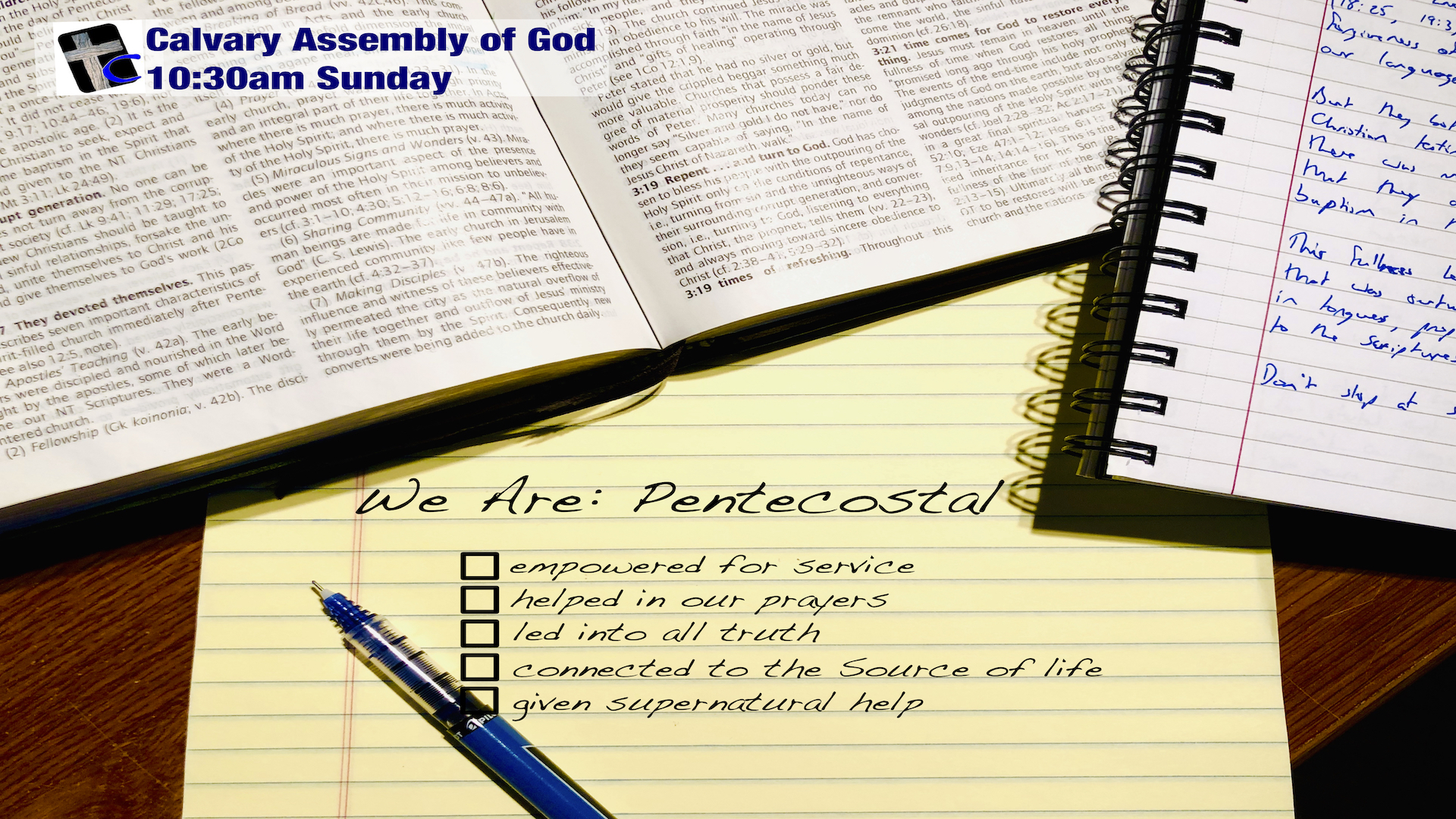
Pentecost for over 1500 years was a celebration in Jerusalem that brought in Jews from all over the world. But on the Day of Pentecost which came just ten days after Jesus ascended back into heaven, the meaning of Pentecost was forever changed!
Followers of Jesus—now empowered by an infilling of the Holy Spirit—began to take the good news of Jesus all over the world. These Spirit-filled Christians preached the Gospel and won converts to Christ even among hostile crowds, performed miracles and wonders, stood up to pagan priests and persecuting governmental leaders, and established a whole new way of living as Christ-followers.
We, too, can be Pentecostal followers of Jesus Christ today. We can experience an anointing and an empowering in our lives that turns ordinary Christianity into extraordinary Christianity!
Please join me this Sunday at Calvary Assembly of God as we rejoin this series. You can check out what I taught in this series in 2019 by clicking here, the messages from 2020 are here, and the messages from 2021 are here.
This is a weekly series with things I’m reading and pondering from Charles Spurgeon. You can read the original seed thought here, or type “Thursdays With Spurgeon” in the search box to read more entries.
Listen to the podcast of this post by clicking on the player below, and you can also subscribe on Apple, Spotify, or Audible.
My Element
But our citizenship is in heaven. And we eagerly await a Savior from there, the Lord Jesus Christ, Who, by the power that enables Him to bring everything under His control, will transform our lowly bodies so that they will be like His glorious body. Therefore, my brothers and sisters, you whom I love and long for, my joy and crown, stand firm in the Lord in this way, dear friends! (Philippians 3:20—4:1).
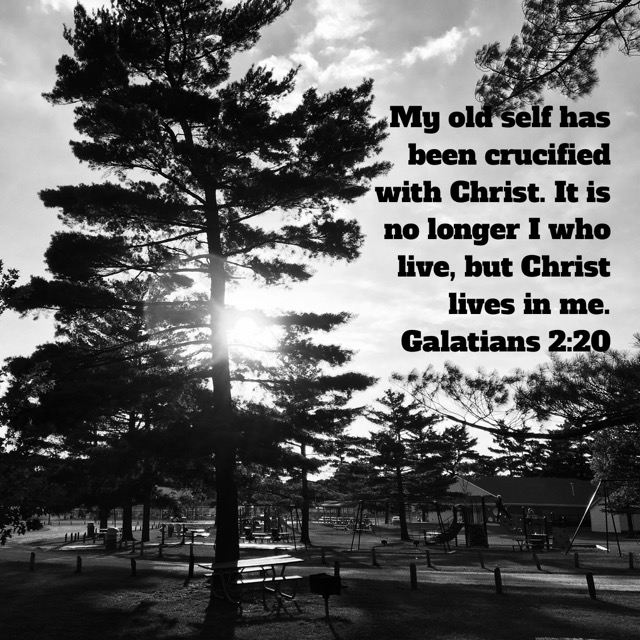
Do you know what it is to feel that the life that is in you is first in Christ and still flows from Him, even as the life of the branch is mainly in the stem? ‘I live; yet not I, but Christ lives in me’ (Galatians 2:20). This is to be in Christ! …
This expression is very short but very full: ‘In Christ.’ Does it not mean that we are in Christ as the birds are in the air that buoys them up and enables them to fly? Are we not in Christ as the fish are in the sea? Our Lord has become our element—vital and all surrounding! In Him we live, move, and have our being. He is in us, and we are in Him. We are filled with all the fullness of God because all fullness dwells in Christ and we dwell in Him.
From The Watchword For Today: “Stand Fast”
Years ago I was taking a class, and the teacher asked us to write down some of the different roles we had in our life. I wrote down things like son, brother, employee, team captain. After everyone had finished their lists, the teacher asked the students to share some of their roles. As each one listed a role, the rest of the class would raise a hand if that role also applied to them. One person said, “Christian,” and nearly every hand in the classroom went up. Except mine.
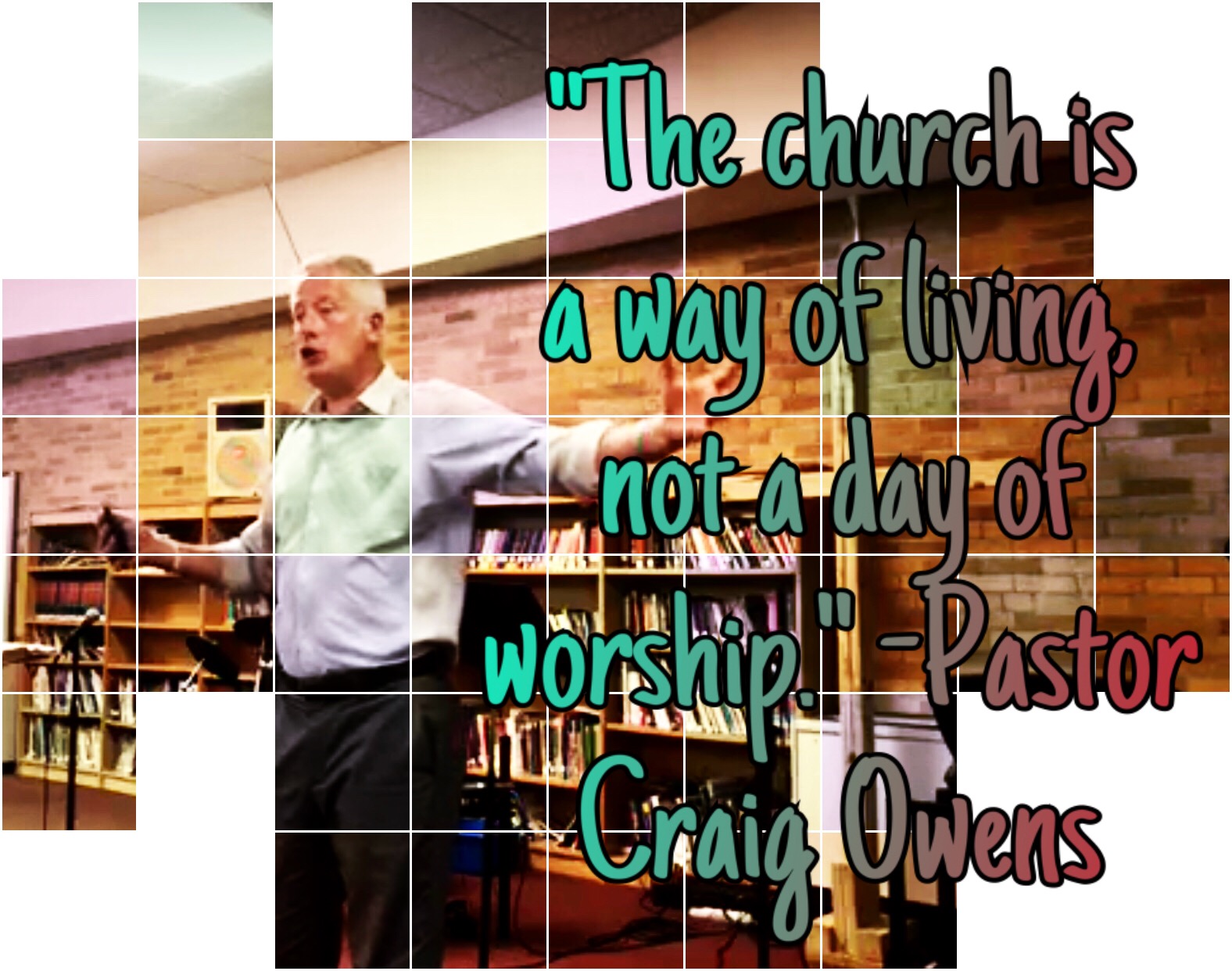
Being a Christian is not a role I step into; it’s who I am. It impacts everything I think and everything I do.
Birds don’t step into the air when they want to fly. Fish don’t run to the water when they want to swim. Birds and fish always live in their element. We are in our element in Christ when we can always say, “In Him I live, and move, and have my being.”
The devil has always used doubt and uncertainty—“Did God really say…” he asked Eve, and “Are you really the Son of God,” he mocked Jesus. He wants to do the same thing to you today, making you think you have somehow missed out on being in Christ.
But if Christ is your Savior and your Lord, stand fast in that. Let nothing move you. Counteract the devil’s doubt-inciting accusations with truthful as-it-is-written statements from God’s Word. Immerse yourself in Christ and make Him your constant element—just as a branch connected to a stalk, or a bird in the air, or a fish in the ocean. You are in Christ, Christ is in you, and Christ is in the Father. Which means Jesus has taken you into the Father with Him. Live, and move, and have your very being in His presence every single moment!
This is a weekly series with things I’m reading and pondering from Charles Spurgeon. You can read the original seed thought here, or type “Thursdays With Spurgeon” in the search box to read more entries.
Listen to the podcast of this post by clicking on the player below, and you can also subscribe on Apple, Spotify, or Audible.
Don’t Let Your ‘Well Begun’ Be Only ‘Half Done’
But our citizenship is in heaven. And we eagerly await a Savior from there, the Lord Jesus Christ, Who, by the power that enables Him to bring everything under His control, will transform our lowly bodies so that they will be like His glorious body. Therefore, my brothers and sisters, you whom I love and long for, my joy and crown, stand firm in the Lord in this way, dear friends! (Philippians 3:20—4:1).
The start is not everything, but it is a great deal. It has been said by the old proverb that ‘well begun is half done,’ and it is certainly so in the things of God. … See to it that you lay a good foundation. It is better to have no repentance than a repentance that needs to be repented of! It is better to have no faith than a false faith! It is better to make no profession of religion than to make an untruthful one! … We should learn early on the difference between grace and merit, between the purpose of God and the will of man, between trust in God and confidence in the flesh. If we do not start aright, the further we go, the further we will be from our desired end and the more thoroughly in the wrong we will find ourselves.
In the biblical passage Spurgeon used as his text, we read some important words. First of all, we need to live as citizens of Heaven, not as citizens of Earth. That means we need to always follow God’s laws, not the passing fads of culture.
Second, the apostle Paul calls Jesus both Savior and Lord. We don’t get to choose one and ignore the other. We cannot say, “Thank You, Jesus, for saving me, but I’ll take it from here.”
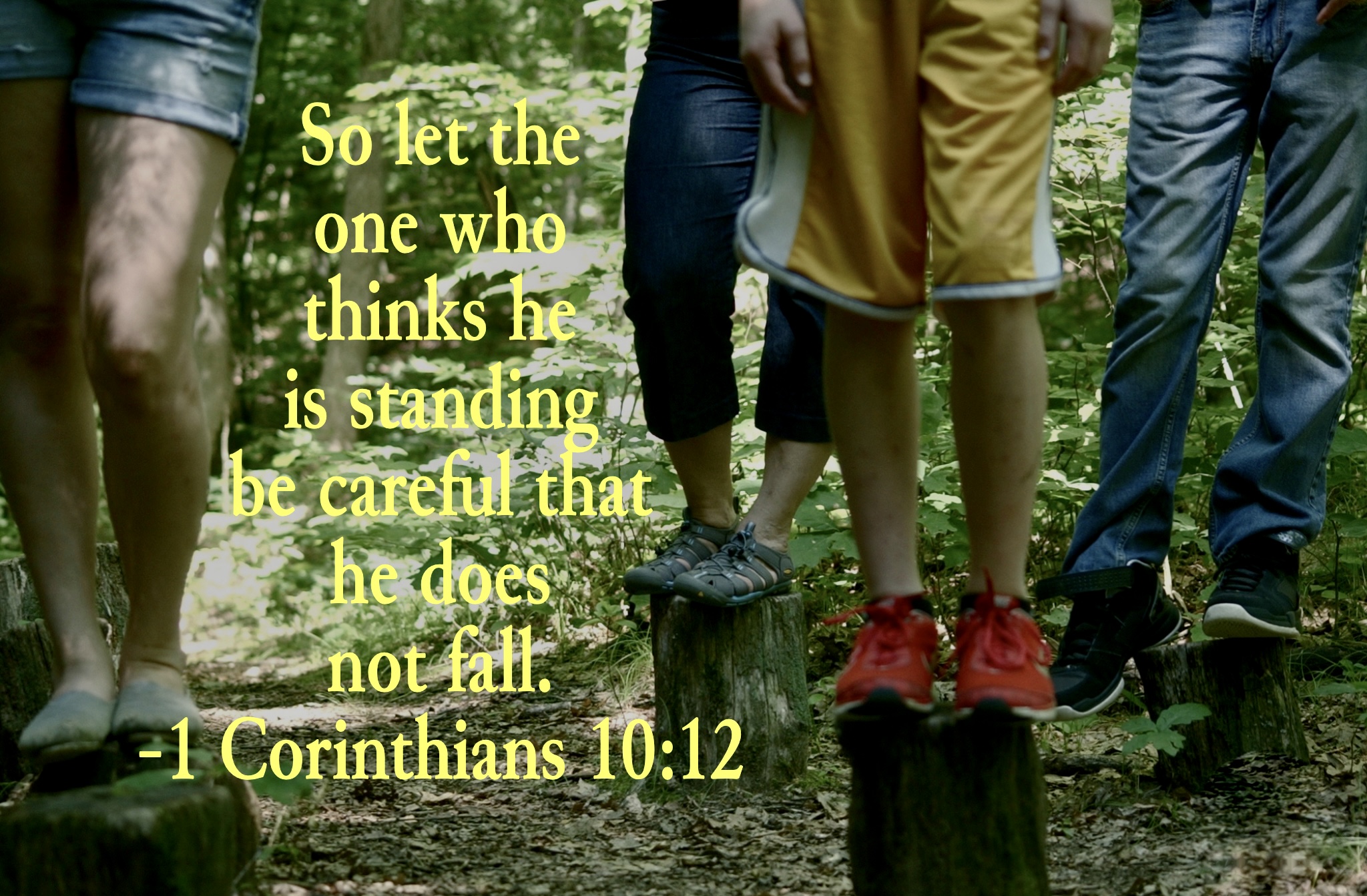
Finally, we need to not only stand firm, but as Paul also says in another letter, “So, if you think you are standing firm, be careful that you don’t fall!” (1 Corinthians 10:12). No assumptions. No coasting. No merely going through the motions of Christianity, but keeping a humble heart that responds to the correcting word from the Holy Spirit.
Let’s make sure that our walk with Jesus is never described as only “half done.” But instead, let’s begin well, walk well, and rejoice to hear our Savior say, “Well done, good and faithful servant!”
This is a weekly series with things I’m reading and pondering from Charles Spurgeon. You can read the original seed thought here, or type “Thursdays With Spurgeon” in the search box to read more entries.
Listen to the podcast of this post by clicking on the player below, and you can also subscribe on Apple, Spotify, or Audible.
Hypocrites Who Hurt The Church
Only let your conversation be as it becometh the gospel of Christ (Philippians 1:27 KJV).
Dear friends, I might just continue, for the subject is a very wide one. But I stop because, unhappily for me, though perhaps happily for your patience, my time has gone. Having just indicated what the Christian life ought to be, I must, in a few words, plead with you that by the power of God’s Holy Spirit you will seek to make your lives such. I could mention many reasons, but I will only give you one or two.
The first is, if you do not live like this, you will make your fellow members who are innocent of your sin, suffer. … It is very hard when [skeptics] can say to you, ‘Look at So-and-So, he is a church member! Look at what he did. You are all a parcel of hypocrites!’ …
And then, remember, dear friends, unless your conversation is such, you will pull down all the witness that you have ever borne for Christ. … Oh, the great thing the church needs is more holiness! The worst enemies of the church are not the infidels. … No, the worst enemies of the church are the hypocrites, the formalists, the mere professors, and the inconsistent walkers. …
May the Eternal Spirit, Who still winnows His church, blow away the chaff and heave only the good golden wheat upon the floor! And if you know yourselves to be living in any sin, may God help you to mourn over it, to loathe it, to go to Christ about it….
From The Gospel’s Power In A Christian’s Life
I have defined a hypocrite as a Christian who carries the name of Jesus Christ but not the nature of Jesus Christ.
I remember once when a man who was virtually a stranger to me—but apparently knew that I was a pastor—walked up to me and said, “What do you think about your boy So-and-So?” The So-and-So he mentioned was a prominent pastor in another state who had just been caught doing some very sinful and embarrassing things. This stranger quickly painted me with the same brush!
The phrase “one another” is so prominent in the New Testament, which means that we truly are all in this together. That’s why Charles Spurgeon warns us that a hypocritical lifestyle is not only damaging to the hypocrite’s life, but to the entire Christian community as well.
So I also call for every Christian to “examine themselves” (1 Corinthians 11:28) for both known and hidden sins. We ought to regularly ask the Holy Spirit to point them out so that we can repent of them, make restitution, and strengthen the testimony of all Christians everywhere!
Let me close with a final word from Dwight Moody, “The world finds plenty of difficulties on the way; let us see that we Christians do not add more stumbling-blocks by our un-Christlike walk.”
This is a weekly series with things I’m reading and pondering from Charles Spurgeon. You can read the original seed thought here, or type “Thursdays With Spurgeon” in the search box to read more entries.
Listen to the podcast of this post by clicking on the player below, and you can also subscribe on Apple, Spotify, or Audible.
The Christian Lifestyle
Only let your conversation be as it becometh the gospel of Christ (Philippians 1:27 KJV).
The text says we are to ‘let our conversation be such as becomes the gospel.’ What sort of conversation, then, will we have? In the first place, the gospel is very simple. It is unadorned. No meretricious ornaments to clog the pile. It is simple and ‘not with persuasive words of human wisdom’ (1 Corinthians 2:4). … The Christian man ought always to be simple in all respects. I think wherever you find him, you ought not to need a key to him. He should not be like certain books that you cannot make out without having somebody tell you the hard words. He should be a transparent man like Nathaniel, who was ‘an Israelite indeed, in whom is no deceit’ (John 1:47). …
The Christian’s lips should speak truth when falsehood drops from the lips of all other men. A Christian man should never need to take an oath, because his word is as good as an oath. His yes should be yes, and his no, no. …
The gospel of Jesus Christ is a very fearless gospel. … As the gospel is very fearless in what it has to say, so let the Christian always be. It strikes me that a living that becomes the gospel of Christ is always a bold and fearless kind of living! …
But again, the gospel of Christ is very gentle. Hear it speak: ‘Come to Me, all you who labor and are heavy laden, and I will give you rest’ (Matthew 11:28). Here is its spirit in its Founder: ‘A bruised reed He will not break, and smoking flax He will not quench’ (Matthew 12:20). Moreover, bad temper, snapping off of people’s heads, making men offenders for a word—all this is quite contrary to the gospel. … If you have a lion’s heart, have a lady’s hand. Let there be such a gentleness about your carriage that the little children may not be afraid to come to you and the publican and harlot may not be driven away by your hostility, but invited to goodness by the gentleness of your words and acts. …
The world ought to point to us and say, ‘See, how these Christians love one another? Not in word only, but in deed and truth!’ …
The gospel of Christ is mercy, generosity, and liberality. It receives the beggar and hears his cry! It picks up even the vile and undeserving and scatters lavish blessings upon him, and it fills the bosom of the naked and of the hungry with good things. Let your conversation be such as becomes the gospel of Christ!
From The Gospel’s Power In A Christian’s Life
We’ve had a tagline at our church for years: Come and see why so many people around here say, “I ♥ my church!” I believe Christians can—and should—live in such a way that everyone in their communities would sit up and take notice of the positive changes.
Let’s all examine our lifestyle. Is it simple, truthful, bold, gentle, loving, merciful, generous, and hospitable? If not, what changes do we need to make? But if it is all these things, God’s blessing is sure to follow this lifestyle that so clearly portrays the gospel of Jesus Christ!
I’ve shared some other posts about a church’s reputation here, here, and here.
This is a weekly series with things I’m reading and pondering from Charles Spurgeon. You can read the original seed thought here, or type “Thursdays With Spurgeon” in the search box to read more entries.
Listen to the podcast of this post by clicking on the player below, and you can also subscribe on Apple, Spotify, or Audible.
The Best Of Neighbors
Only let your conversation be as it becometh the gospel of Christ (Philippians 1:27 KJV).
The word ‘conversation’ does not merely mean our talk with one another, but the whole course of our life and behavior in the world. The Greek word signifies the actions and the privileges of citizenship, and we are to let our whole citizenship, our actions as citizens of the New Jerusalem, be such as becomes the gospel of Christ. …
We are delighted to preach good high doctrine and to insist that salvation is of grace alone! But we are equally delighted to preach good high practice and to insist that a grace that does not make a man better than his neighbors is a grace that will never take him to heaven nor render him acceptable before God!
Whatever happens, conduct yourselves in a manner worthy of the gospel of Christ (NIV)
Above all, you must live as citizens of heaven, conducting yourselves in a manner worthy of the Good News about Christ (NLT)
Live in such a way that you are a credit to the Message of Christ (Message)
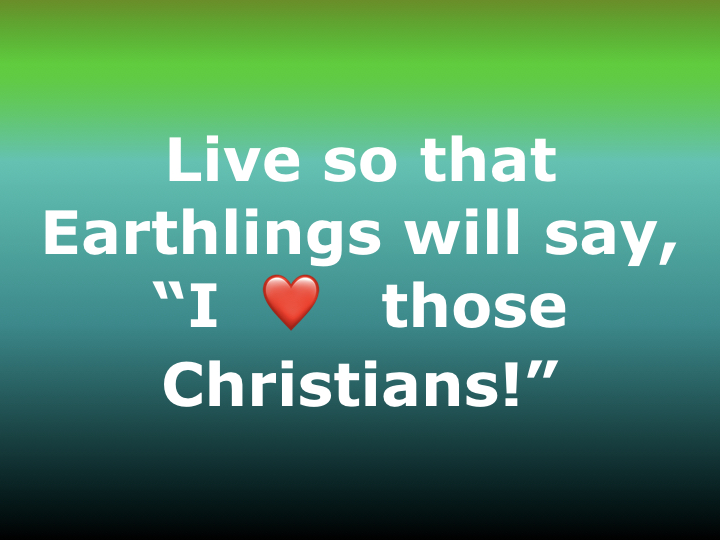
I believe that Christians are not citizens of Planet Earth. Our citizenship is in a place called Heaven, and yet we are traveling on Earth during our present lifetime. While we are here, we need to conduct ourselves in such a way that we make our Homeland desirable for other Earthlings too.
Let’s live in a such a way that Earthlings will say, “I ❤️ those Christians!”
This is a weekly series with things I’m reading and pondering from Charles Spurgeon. You can read the original seed thought here, or type “Thursdays With Spurgeon” in the search box to read more entries.
Listen to the podcast of this post by clicking on the player below, and you can also subscribe on Apple, Spotify, or Audible.
Be Careful
Having a form of godliness but denying its power…. (2 Timothy 3:5)
Time was when to be a Christian was to be reviled, if not to be imprisoned and perhaps burned at the stake. Hypocrites were fewer in those days, for a profession cost too much. …Today religion walks forth in her velvet slippers. And in certain classes and ranks, if men did not make some profession of religion, they would be looked upon with suspicion. Therefore men will take the name of Christian upon them and wear religion as a part of full dress. …
I do not doubt that a form of godliness has come to many because it brings them ease of conscience and they are able, like the Pharisee, to thank God that they are not as other men are. …
Many who have the form of godliness are strangers to its power and so are in religion worldly, in prayer mechanical, in public one thing, and in private another. True godliness lies in spiritual power, and they who are without this are dead while they live. …
In the depths of winter, can you warm yourself before a painted fire? Could you dine off the picture of a feast when you are hungry? There must be vitality and substantiality—or else the form is utterly worthless and worse than worthless, for it may flatter you into deadly self-conceit. Moreover, there is no comfort in it. The form without the power has nothing in it to warm the heart, to raise the spirits, or to strengthen the mind against the day of sickness or the hour of death. …
If you tremble at God’s Word, you have one of the surest marks of God’s elect. Those who fear that they are mistaken are seldom mistaken. If you search yourselves and allow the Word of God to search you, it is well with you. …
If the Spirit of God leads you to weep in secret for sin and to pray in secret for divine grace, if He leads you to seek after holiness, if He leads you to trust alone in Jesus, then you know the power of godliness, and you have never denied it.
From The Form Of Godliness Without The Power
Spurgeon mentioned the Pharisee that said, “God, I thank You that I am not like other people. Especially like that tax collector over there.” Jesus said that the tax collector who humbly said, “God, be merciful to me, a sinner” is the one who went home justified by God (see Luke 18:9-14).
That’s where the warning comes in. When we begin to compare ourselves to others, when we begin to say, “I’m better than him” or “At least I don’t mess up as bad as she does,” instead of judging ourselves by God’s standard, we are in real danger of having merely a form of godliness without any real power.
Paul said, “So, if you think you are standing firm, be careful that you don’t fall,” and challenged each of us to “test their own actions. Then they can take pride in themselves alone, without comparing themselves to someone else” (1 Corinthians 10:12; Galatians 6:4).
I would challenge everyone that calls themself a Christian to be careful! Don’t fool yourself by saying, “I do all of the things a Christian is supposed to do, so I must be standing firm.” But ask the Holy Spirit to reveal to you even your hidden sins, and then just as the tax collector who experienced God’s reassurance in his heart did, pray: “God, be merciful to me. Help me to correct what’s wrong. May my life be godly not just in outward performance, but in the power that can only come from a vibrant, growing relationship with You!”
Let’s all strive to not only have the form of godliness, but to have the real energizing power of godliness on full display in our daily lives.
John Newton’s autobiography Out Of The Depths contains a very interesting closing chapter. They are not the words written by John Newton, but the words spoken by him to his friends and parishioners. Here are a few that especially caught my attention. You can check out my full book review of Out Of The Depths by clicking here.
“If two angels were sent from heaven to execute a divine command, one to conduct an empire and the other to sweep a street in it, they would feel no inclination to change employments.”
“A Christian should never plead spirituality for being a sloven. If he be but a shoe cleaner, he should be the best in the parish.”
This is a weekly series with things I’m reading and pondering from Charles Spurgeon. You can read the original seed thought here, or type “Thursdays With Spurgeon” in the search box to read more entries.
Listen to the podcast of this post by clicking on the player below, and you can also subscribe on Apple, Spotify, or Audible.
Do Your Own Growing
Having a form of godliness but denying its power. Have nothing to do with such people. (2 Timothy 3:5)
But now, as these people had not got the power of godliness, how did they come to hold the form of it? This needs several answers. Some come by the form of godliness in a hereditary way. Their ancestors were always godly people, and they almost naturally take up with the profession of their fathers. …
Not generation but regeneration makes the Christian. You are not Christians because you can trace the line of fleshly descent throughout twenty generations of children of God. … Grace does not run in the blood. If you have no better foundation for your religion than your earthly parentage, you are in a wretched case. …
I have seen the form of godliness taken up on account of friendships. Many a time courtship and marriage have led to a formal religiousness but a lacking heart. … Godliness should never be put on in order that we may put a wedding ring upon the finger. This is a sad abuse of religious profession. …
I put these things to you that there may be a great searching of hearts among us all and that we may candidly consider how we have come by our form of godliness. …
Let me remind you of the questionable value of that which springs out of fallen human nature. Assuredly, it brings no one into the spiritual kingdom, for ‘that which is born of the flesh is flesh.’ Only ‘that which is born of the Spirit is spirit’ (John 3:6). ‘You must be born again’ (3:7). Beware of everything that springs up in the field without the sowing of the Husbandman, for it will turn out to be a weed.
From The Form Of Godliness Without The Power
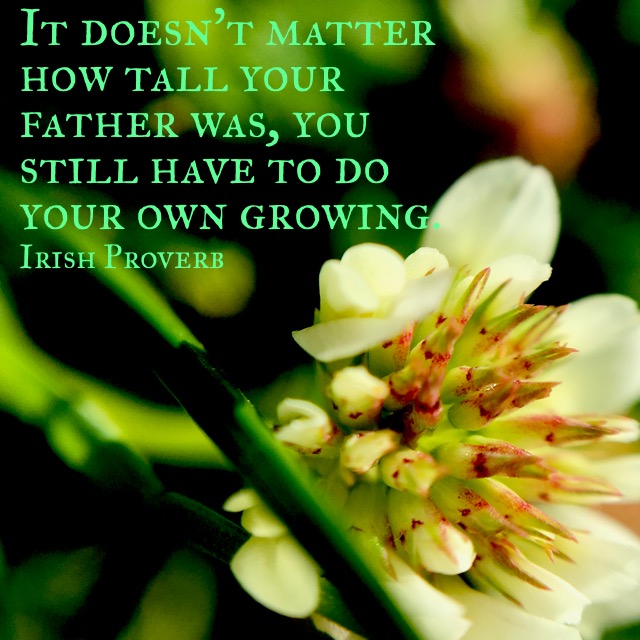
There’s an old Irish proverb that says, “You’ve got to do your own growing, no matter how tall your grandfather is.” This is equally true for Christians!
I’m a fourth-generation Pentecostal Christian, which means I was practically raised in a church building. But still I had to come to a point in my life where I had to decide: Do I believe that Jesus is my Savior just because my parents and grandparents believed this, or because I truly believed it for myself. All of us, regardless of our parentage, have to make this choice.
Listen to the podcast of this post by clicking on the player below, and you can also subscribe on Apple, Spotify, or Audible.
I love reading, and I love sharing my love of good books with others! Here is a list of the books I read and reviewed in 2021. Click on a title to be taken to that review.



 Pentecost for over 1500 years was a celebration in Jerusalem that brought in Jews from all over the world. But on the Day of Pentecost which came just ten days after Jesus ascended back into heaven, the meaning of Pentecost was forever changed!