Links & Quotes

link quote

These are links to articles and quotes I found interesting today.

Wise words from John Maxwell: A Leader′s Need For Humility

“Many people preach and teach. Many take part in the music. Certain ones try to administer God’s work. But if the power of God’s Spirit does not have freedom to energize all they do, these workers might just as well stay home. Natural gifts are not enough in God’s work. The mighty Spirit of God must have freedom to animate and quicken with His overtones of creativity and blessing.” —A.W. Tozer

Very thoughtful post from Frank Viola: Rethinking The Second Coming Of Christ. Frank references the book he co-authored with Leonard Sweet entitled Jesus: A Theography; I highly recommend this book!

Max Lucado writes in Like A Child, “Quit looking at life like an adult.  See it through the eyes of a child.”

[VIDEO] Greg Koukl on Discussing The Age Of The Earth With Other Christians

5 Reasons To Attend Church Regularly

“To be humble, and, like a little child, afraid of taking a step alone, and so conscious of snares and dangers around us, as to cry to [God] continually to hold us up that we may be safe, is the sure, the infallible, the only secret of walking closely with Him.” —John Newton

“One of principle that today’s intellectuals most passionately disseminate is a vulgar relativism, ‘Nihilism with a happy face.’ For them it is certain that there is no truth, only opinion: my opinion, your opinion. They abandoned the defense of the intellect…. Those who surrender the domain of the intellect make straight the road to fascism. Totalitarianism…is the will-to-power unchecked by any regard for truth. To surrender the claims of truth upon humans is to surrender Earth to thugs…. Vulgar relativism is an invisible gas, odorless, deadly, that is now polluting every free society on earth. It is a gas that attacks the central nervous system of moral striving…. ‘There is no such thing as truth,’ they teach even the little ones. ‘Truth is bondage. Believe what seems right to you. There are as many truths as there are individuals. Follow your feelings. Do as you please. Get in touch with yourself….’ Those who speak in this way prepare the jails of the twenty-first century. They do the work of tyrants.” —Michael Novak

Cool story on how The Detroit Tigers Hired Sparky Anderson

What God Will You Choose?

What God:godMy friend Chuck and I have a sort of shorthand when we talk. We’ve been through so many experiences together, that now just a single word can bring to our minds the fullness of that time, with all of its tears and laughter. Someone listening to one of our conversations might not get the full impact, but we sure do!

It’s the same way when we read one of the Apostle Paul’s letters. He is writing to a church or an individual with whom he had a rich, personal experience. So when he alludes to something, those friends who went through that experience with him recall all of the fullness. When reading the letter to the church at Ephesus, you can experience some of that fullness by reading about Paul’s experience in that city in Acts 19.

In Acts 19 you will meet the followers of Jesus who were already there and see them get baptized in the Holy Spirit … watch Paul teach for three months in the synagogue before the Jewish troublemakers run him out … see Paul lecture for the next three years in the Hall of Tyrannus, so that everyone in that province heard the Word of God … see how God authenticated Paul’s ministry with miracles … experience those who tried to counterfeit what Paul was doing … see many in that city turn from their witchcraft and idol worship … and finally experience the tumult of a near-riot started by the merchants who were losing their income on sales of mythological trinkets because so many were turning to Christ.

With this backdrop, you can then understand why Paul uses such specific language in the opening greeting of his letter to Ephesus (see Ephesians 1:1-3). By doing so he is contrasting the followers of Jesus with the followers of Artemis—

  • Christians for whom God has a specific plan (“by the will of God” [1:1a]; see also 1:4 and 2:10) versus Artemis’ followers who felt like they had no choice (Acts 19:26).
  • Christians who are called saints (set apart for God’s special use) and faithful (trusting Jesus implicitly [1:1b]) versus those followers of Artemis who are self-serving (Acts 19:24, 25).
  • Christians who experience God’s grace and peace (1:2) versus those followers of Artemis who did not even know why they were there (Acts 19:32).

But the most specific language is in Ephesians 1:3—Praise be to THE God and Father of our Lord Jesus Christ (emphasis added)….

  • Not “a” god, but “THE” God.
  • Not a god that needs to be appeased, but THE loving Father.
  • Not a god that may or may not be able to respond, but OUR Lord Jesus Christ Who overcame death, hell and the grave so that our sins can be forgiven!

The question Paul invites the Ephesians to consider is the same question we must consider:

What God / god will you choose?

We will be continuing our study on the book of Ephesians next Sunday, and I would love to have you join us!

Listen, O My Soul

Listen O my soulDavid wraps up the 35th Psalm with a thought that is familiar to him—

My tongue will speak of Your righteousness and of Your praises all day long. (Psalm 35:28)

Praise is good for the soul! But in the midst of enemies gloating over David, hating him without reason, devising false accusations against him, and making plans to do him in (see verses 19-21), where could David get the strength to sing about God’s goodness?

As I said, it’s the last verse where David declares his unending praise. This verse is the result of seeing God move. But much earlier in this psalm David says, “Say to my soul, ‘I am your salvation’” (v. 3).

Before David could speak it, he had to hear it! He had to quiet himself in the midst of all the assaults on him to hear God say, “I AM your salvation!”

Not “my ears,” but “my soul”: the very center of my being, my mind, my emotions. I need the I AM to reassure the soul He created that He is still there. Unless I hear that assurance at the core of my being, I can only go through the motions. True worship comes from a real, personal encounter with the I AM.

O, listen my soul! Hear your Savior speak the assurance of His salvation. Only then can I open my lips in endless praises all day long.

The Journey Begins

Tom KaastraAs Tom Kaastra introduced our study of Ephesians he said, “There is no other book in the Bible that is as exalted in its thought and yet as earthly practical.” Our series is called Sit Walk Stand (three words that Watchman Nee gave to the overview of Ephesians), and Tom shared what those mean.

Sit—(1) to be in a place of authority (Ephesians 2:4-7; Hebrews 1:3); or (2) a rest from work. We sit down to enjoy what Christ has done for us, we don’t work to try to achieve it for ourselves. “God works and then He rests. We are invited to rest and then work” (Watchman Nee). Look at the Creation story: God’s seventh day of rest after working six days was man’s first day of rest before he started working.

Walk—an act of progression modeled by Jesus (Ephesians 4:1-3). A typical rabbi built a synagogue and invited people to come to where he was. Jesus always went to where the people were, and He invites us to follow Him in this walk. We cannot have a “just Jesus and me” mindset. If Peter wanted to walk with Jesus, he had to walk with Matthew too; there are no Lone Ranger followers of Christ.

Stand—firmly in place for spiritual battle (Ephesians 6:10-17). Ephesians deals with our warfare against satan more than any other book in the Bible. Sadly, George Barna reported that 60% of Christians think satan is a only a “force,” not an actual person. Paul uses this word stand as a military term to place our feet in a position ready for action.

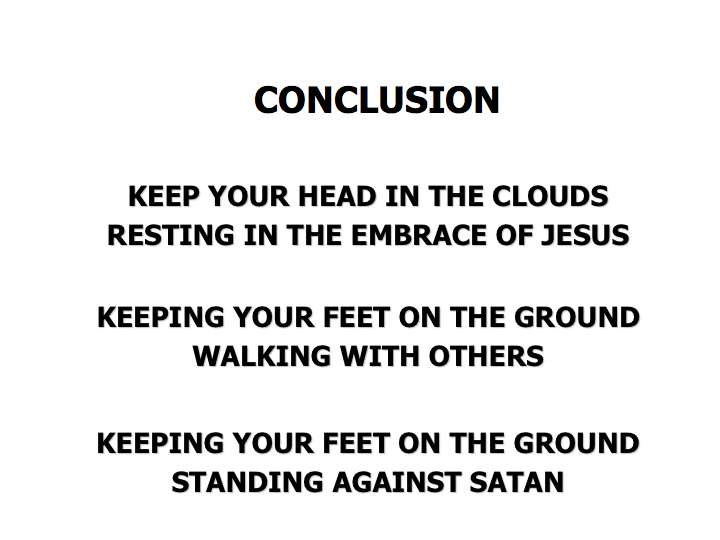
ConclusionsConclusions:

  • Keep your head in the clouds resting in the embrace of Jesus, while you are
  • Keeping your feet on the ground walking with others, and
  • Keeping your feet on the ground standing against satan.

Join us next Sunday as we continue our look at this amazing book.

Sit Walk Stand

Sit Walk StandThis coming Sunday we begin a new series at Calvary Assembly of God called Sit Walk Stand: A Study In The Book Of Ephesians.

Why Ephesians? Dr. Martin Lloyd-Jones, who preached 232 sermons on this book to his packed-out church, said, “It is very difficult to speak of Ephesians in a controlled manner because of its greatness. Many have tried to describe it. One writer has described it as the crown and climax of Pauline theology. Another has said that it is the distilled essence of the Christian religion, the most authoritative and most consummate compendium of our holy Christian faith. What language! And it is by no means exaggerated.”

It is my desire that the congregation of Calvary Assembly of God be as biblically literate as I can encourage and resource them to be. So Tom Kaastra, a 38-year veteran pastor, is going to co-teach with me, and we’re going to spend the next 6-weeks mastering this powerful epistle. Then we’ll pick it up again around this same time next year, as we continue our way through the entire letter.

The name of our series—Sit Walk Stand—comes from Watchman Nee, who wrote, “Of all Paul’s epistles, it is in Ephesians that we find the highest spiritual truths concerning the Christian life. The letter abounds with spiritual riches, and yet at the same time is intensely practical.”

Please join us this Sunday at 10:30am.

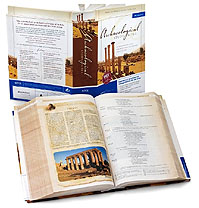
Archeological Study Bible (book review)

Archeological Study BibleNormally I post book reviews after I have completely read a book. But since I’m going to be working my way through The Archeological Study Bible for quite some time, I thought now was as good a time as any to share my thoughts.

I have never been able to read through the Bible in a year. I find too many fascinating subjects that keep me locked into a passage, and so it ends up putting me hopelessly behind such a rigorous reading schedule. In this study Bible, I’m finding even more fascinating reading that is making God’s Word come alive (and consequently causing me to pause even longer on certain passages)!

Since archeology and anthropology put human history in order, I am reading through the Scripture in its chronological order (i.e. not in the order the books appear in the Bible, but in the order the historical events occurred. There is a helpful chronological list on BibleGateway.com). The Archeological Study Bible is adding such a richness to the places and people and customs that are chronicled in Scripture. With each commentary, map, chart, graph, or in-depth article, I am learning about the cultures in which the people of the Bible lived, and the prevailing thoughts and customs in which biblical writers wrote the Spirit-inspired Scriptures. It is quite fascinating!

If you would like to add a new level of richness to your Bible study, this study Bible should definitely be a part of your library.

Singing Your Prayer

Be honest: have you ever crammed for an exam? You’re up late into the night “cramming” info into your brain, then chugging Coke or Mt. Dew or coffee the next morning to try to wake up.

You get to class and fly through your test, trying to get all of the information out of your brain before it evaporates. Perhaps you do well on the test, but if someone were to quiz you on the same material a week later, you’d probably recall very little of what you studied. If the teacher asks you the next school year what you remember from that exam, your mind might be blank.

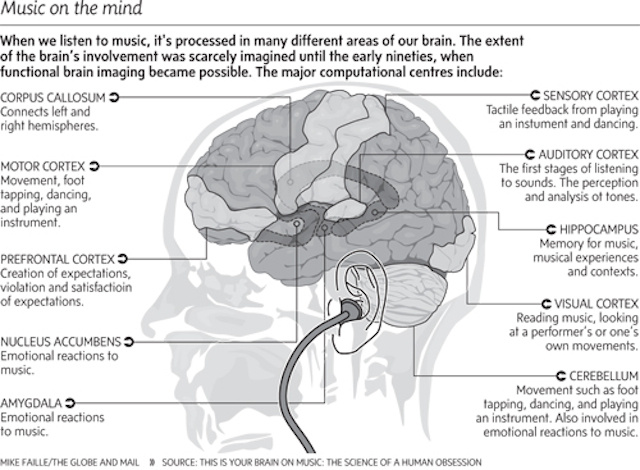
Music & the brainYears later you might be flipping through the radio dial, and a song comes on that you haven’t heard for years. You turn up the volume, and start singing along to the song, recalling that this was the very song you were listening to the night you were cramming for that exam.

Why is it that can you recall everything about this song, and very little about what you studied? The answer is that music engages the whole brain. Both the left hemisphere of your brain (which remembers facts) and the right hemisphere (which remembers music) work together as a powerful memory tool.

Did you know this can be just as powerful in your prayers?

There is a  Hebrew word (tephillah) for prayer which means a prayer set to music; a poetic prayer; a sacred song. This is the word used heavily in the first 72 psalms.

In other words, the psalmists linked words and melodies—left and right brain hemispheres—together to help our songful prayers get locked into our memory banks. The more we remember what God has done for us in answering our prayers, the more likely we are to keep on praying and keep on trusting Him in the future. 

Many times when I am reading Scripture, a song or hymn will come to my mind, and I pause to hum that melody. Maybe God will give you a new song to sing, or perhaps you will write your own personal melody as you pray. There’s no wrong way to sing your prayers.

However you do it, it’s a powerful memory tool when we sing our prayers to our Heavenly Father.

14 Quotes From “Pentecost”

Pentecost

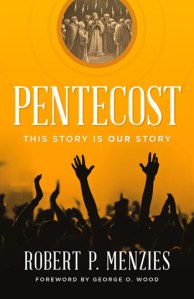
I thoroughly enjoyed reading Pentecost by Robert P. Menzies, and learned quite a bit. You can read my full book review by clicking here. Here are a few quotes that stood out to me.

“It’s because Pentecostals fuse the biblical and contemporary horizons that we link baptism in the Holy Spirit with speaking in tongues, since that’s what Acts 2 does. It’s why we associate Spirit-baptism with empowerment for mission rather than with spiritual regeneration. And it’s why we expect God to perform ‘signs and wonders’ and to manifest spiritual gifts in worship services. All these things happened in the first Pentecostal community, and their story is our story.” 

“At its heart, the Pentecostal movement is not Spirit-centered but Christ-centered. The work of the Spirit, as Pentecostals understand it, centers on exalting and bearing witness to the Lordship of Christ.”

“Pentecostals are ‘people of the Book.’ Although Pentecostals certainly encourage spiritual experience, they do so with a constant eye to Scripture.”

“So, the stories of Acts are our stories, and we read them with expectation and eagerness: stories of the Holy Spirit’s power, enabling ordinary disciples to do extraordinary things for God. … The hermeneutic of the typical Pentecostal believer is straightforward and simple: the stories in Acts are my stories—stories that were written to serve as models for shaping my life and experience.”

“In Luke’s view, every member of the church is called (Luke 24:45–49; Acts 1:4–8/Isaiah 49:6) and empowered (Acts 2:17–21; cf. 4:31) to be a prophet. Far from being unique and unrepeatable, Luke emphasizes that the prophetic enabling experienced by the disciples at Pentecost is available to all of God’s people. … Through his two-volume work, Luke declares that the church, by virtue of its reception of the Pentecostal gift, is nothing less than a community of prophets. It matters not whether we are young or old, male or female, rich or poor, black or white; the Spirit of Pentecost comes to enable every member of the church, each one of us, to fulfill our prophetic call to be a light to the nations.” 

“Not long ago a Chinese house church leader commented, ‘When Western Christians read the book of Acts, they see in it inspiring stories; when Chinese believers read the book of Acts, we see in it our lives.’”

“Luke’s theology of the Spirit is different from that of Paul. Unlike Paul, who frequently speaks of the soteriological dimension of the Spirit’s work, Luke consistently portrays the Spirit as a charismatic or, more precisely, a prophetic gift, the source of power for service.” 

“Luke crafts his narrative so that the parallels between Jesus’ experience of the Spirit (Luke 3–4) and that of the disciples on the day of Pentecost (Acts 1–2) cannot be missed. Both accounts: 1. Are placed at the outset of Luke’s Gospel on the one hand, and the book of Acts on the other; 2. Associate the reception of the Spirit with prayer; 3. Record visible and audible manifestations; 4. Offer explanations of the event in the form of a sermon that alludes to the fulfillment of Old Testament prophecy.”

“Luke’s understanding of baptism in the Holy Spirit, I have argued, is different from that of Paul. It is missiological rather than soteriological in nature. … The tendency in Protestant churches has been to read Luke in the light of Paul. Paul addresses pastoral concerns in the church; Luke writes a missionary manifesto.” 

“Bold witness for Jesus is recognized as our primary calling and the central purpose of our experience of the Spirit’s power. Missions is woven into the fabric of our DNA.”

“I do not wish to minimize in any way the significance of the great doctrinal truths of Paul’s writings. I merely point out that since Paul was, for the most part, addressing specific needs in various churches, his writings tend to feature the inner life of the Christian community. His writings, with some significant exceptions, do not focus on the mission of the church to the world. … It is probably fair to say that while Paul features the ‘interior’ work of the Spirit (e.g., the fruit of the Spirit, Gal. 5:22–23); Luke features His ‘expressive’ work (Acts 1:8). Thus, by appropriating in a unique way the significant contributions of Luke-Acts, Pentecostals have developed a piety with a uniquely outward or missiological thrust.”

“The clarity of the Pentecostal message flows from the simple, straightforward manner in which we read the Bible. As I have noted, Pentecostals love the stories of the Bible. We identify with the stories that fill the pages of the Gospels and Acts, and the lessons gleaned from these stories are easily grasped and applied in our lives. For Pentecostals, the New Testament presents models that are to be emulated and guidelines that are to be followed. It should be noted that our approach to doing theology is not dependent on mastering a particular set of writings, say, the works of Luther; or coming to terms with a highly complex theological system. Pentecostals also do not worry much about cultural distance or theological diversity within the canon. We do not lose sleep over how we should understand the miracle stories of the Bible or how we might resolve apparent contradictions in the Bible. Our commitment to the Bible as the Word of God enables us to face these questions with a sense of confidence.”

“We must remember that whatever we do, God is measuring the work we do for Him in a qualitative, not quantitative way. … Only the work which is done by the power of the Holy Spirit can be acceptable in the Kingdom of God.” —David Yonggi Cho

“Some will still remain skeptical. They will ask: Is not this approach to church life, with its emphasis on ecstatic experience, emotional response, and spiritual power, filled with inherent dangers? Might it not encourage us to feature emotionally manipulative methods and to focus on superficial matters? Yes, undoubtedly, there are dangers. However, there is more danger in an approach that fails to make room for the full range of human experience, including the emotions, in our encounter with God.”

A Caution About Success

CautionAfter King David had been firmly established as the king of Israel, he wanted to show the world how devoted he was to God, and undertook to bring the ark of the covenant to Jerusalem.

This move came after “David knew that the Lord had established him as king” and “that his kingdom had been highly exalted for the sake of God’s people” (2 Samuel 5:12; 1 Chronicles 14:2). David also asked the people about bringing the ark to Jerusalem and “it seemed right to all the people” (1 Chronicles 13:4).

Hooray! It sure sounds like David is using his new position as king to do something wonderful for his people. But…

Even with David’s knowledge that God had established him, David proceeded in a way that was displeasing to God, by attempting to move the ark in a way that God never sanctioned (2 Samuel 6:3; 1 Chronicles 13:7).

When things are going well and there seems to be a lot of positive momentum, we cannot abandon the things that brought God’s success in the first place! 

David had a habit of inquiring of God (2 Samuel 5:19, 23; 1 Chronicles 14:10, 14) which had led to his God-given success (1 Chronicles 14:17). But in the excitement of moving the ark, and the applause of the people David said, “We did not inquire of Him” (15:13) nor did they undertake the task “in accordance with the Word of the Lord” (15:15).

CAUTION!!! We can never be too careful about inquiring of God nor consulting His Word. A danger of success is that we abandon those things which God blesses and simply ride the positive momentum of the moment. No matter how popular or obvious a thing may seem, don’t forget to pray about it and consult God’s Word about it!

Thursdays With Oswald—Heavenly Minded & Earthly Good

This is a weekly series with things I’m reading and pondering from Oswald Chambers. You can read the original seed thought here, or type “Thursdays With Oswald” in the search box to read more entries.

Oswald Chambers

Heavenly Minded & Earthly Good 

     Entire sanctification puts a man’s breast and back as either should be, places his feet on earth and his head in Heaven, and gives him the royal insignia of the saints. 

From Christian Disciplines

Have you ever heard it said of someone, “He’s so heavenly minded that he’s no earthly good”? They are saying that man has ideas which sound spiritual but aren’t very practical.

Isn’t it also true that someone could be “so earthly minded that he’s no heavenly good”? Yes, sadly, many people fall into this category!

Oswald Chambers is saying that those people who allow the Holy Spirit’s total sanctification process in their lives are both heavenly minded and earthly good. Or, as Chambers says in If Ye Will Ask, “Jesus Christ does not make monks and nuns, He makes men and women fit for the world as it is (see John 17:15).”

Christians should be the most practical people on earth, because their feet remain on earth while their mind and hearts remain in Heaven, hearing and applying God’s timeless and practical truths. True Christians should sound and live differently.