7 Tips For A Better Night’s Sleep

Psalm 4.8It’s no secret that being tired can lead to a lot of not-so-nice consequences. Everything from automobile crashes, to poor work performance, to foot-in-mouth statements, to giving in to temptations, to health issues are all traced back to not getting enough peaceful sleep.

But did you know that sweet sleep is something God wants to give you?

Psalm 127 says, “God grants sleep to those He loves.” Guess what? God loves you, and wants you to have a peaceful night’s sleep!

Here are some benefits to getting solid sack time:

  1. Muscles are repaired—the body “turns off” muscles during sleep so they can repair themselves.
  2. The hormone leptin, that regulates your appetite, is adjusted.
  3. Your blood pressure is lowered.
  4. Your heart rate is lowered.
  5. The energy-producing cells we all need are restocked.
  6. Your immune system is re-energized.
  7. Memories are consolidated from short-term memory banks to long-term memories.
  8. The hormones that allow you to concentrate are replenished.
  9. Your “database” of decision-making options is re-calibrated.
  10. Bottom line—you get healthier physically, mentally, emotionally, relationally, and spiritually.

All of this God wants to give to those He loves. “God loves me, so I’m going to sleep peacefully tonight!”

The problem is we often sabotage God’s blessing of sweet sleep by our own poor decisions during the day. So here are seven things you can do to cooperate with God’s blessing of sleep:

  1. Reduce stress. Stress causes your body to release cortisol, which prepares your body for fight-or-flight. This means when you’re trying to quiet down for the night, your body is still screaming, “Go, go go!” Stress is mainly triggered by worrying over things outside of our control, so check out what Jesus said to us about not worrying—Matthew 6:25-34.
  2. Reduce late-day caffeine. Caffeine has a half-life of six hours, so if you are pouring it into your body late in the date, you might fall into bed exhausted but the caffeine is keeping your brain buzzing. As a result, you don’t have the normal deep sleep patterns.
  3. Eliminate emotional caffeine. Arguments with other people release cortisol and adrenaline in your bloodstream. If these disagreements are happening later in the day, your body is fighting against God’s plan for your tranquil sleep. So take care of any disagreements quickly (Ephesians 4:26).
  4. Exercise. Getting some movement into your daily routine flushes cortisol and adrenaline from your bloodstream.
  5. Go to bed and get up at the same time. There’s a reason God made the sun to rise and set at predictable times. Your body also functions best on a predictable schedule.
  6. Reduce “blue lights” close to bed time. The blue light waves of dawn tell our bodies to stop releasing melatonin, the sleepy hormone. The red light waves of dusk tell our bodies to increase melatonin so we can go to sleep. But when we’re staring into the blue light of our phones and tablets, our body is being sent a conflicting signal.
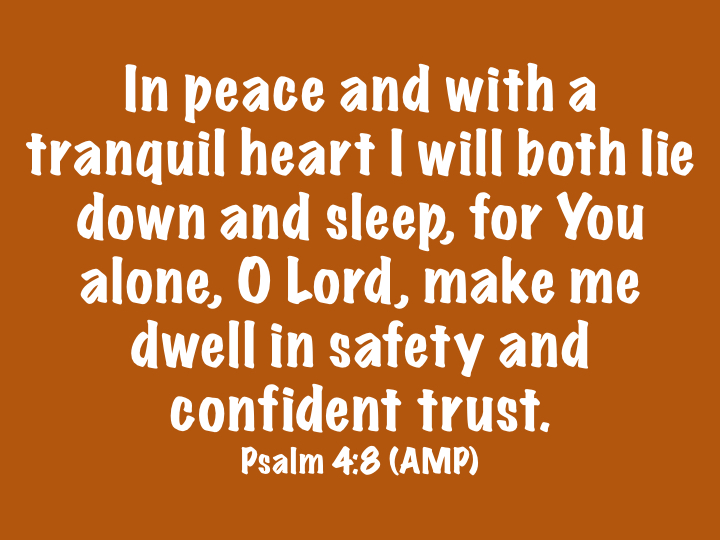
  7. Pray. Two great passages you can pray before bedtime are Psalm 4:8 and Proverbs 3:24. Claim those promises of sweet sleep!

God loves you. He wants to give you the blessing of peaceful sleep. If you’re going to sleep peacefully tonight, make sure you are not sabotaging what God wants to give you.

If you’ve missed any of the messages in this series, you can access the complete list by clicking here

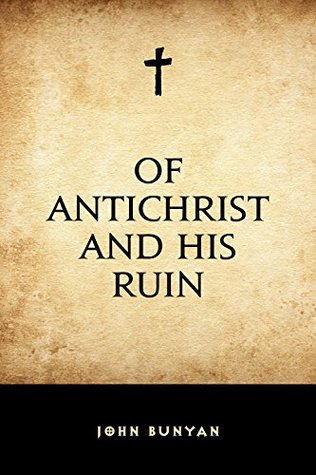
9 Quotes From “Of Antichrist And His Ruin”

Of Antichrist And His RuinJohn Bunyan’s works are steeped in Scripture. His thoughts about the Antichrist and other end times events are either directly taken from biblical passages, or else his line of reasoning fits perfectly with the intent of the Scriptures. You can read my full book review by clicking here. Below are some quotes I found enlightening.

“Coercion, in anything connected with religion, whether it imposes creeds, liturgies, or modes of worship, is Antichrist: whom to obey, is spiritual desolation, and if knowingly persevered in, leads to death.” —George Offor, editor

“As God therefore did put it into the hearts of the wicked kings of Babylon, to distress in His church and people for their sins; so He put it into the hearts of the kings of the Medes and Persians, who were to be, in a sense, their saviors; to ease them of those distresses, to take off the yoke, and let them go free.”

“This twenty years we have been degenerating, both as to principles, and as to practice; and have grown at last into an amazing likeness to the world, both as to religion and civil demeanor.” 

“Take heed in laying the cause of your troubles in the badness of the temper of governors. … God is the chief, and has the hearts of all, even of the worst of men, in His hand. Good tempered men have sometimes brought trouble; and bad tempered man have sometimes brought enlargement to the churches of God: Saul brought enlargement (1 Samuel 14:28). David brought trouble (2 Samuel 12:10).) Ahab brought enlargement (1 Kings 21:29). Jehoshaphat and Hezekiah did both sometimes bring trouble (2 Chronicles 19:2; 20:35; 32:25). Therefore, the good or bad tempers of men sway nothing with God in this matter; they are the sins or repentances of His people, that make the church either happy or miserable upon earth.”

“Antichrist is the adversary of Christ; an adversary really, a friend pretendedly. So then, Antichrist is one that is against Christ; one that is for Christ, and one that is contrary to Him (and this is that mystery of iniquity [2 Thessalonians 2:7]). Against Him in deed; for Him in word, and contrary to Him in practice. … Christ prefereth His Father’s will above heaven and earth: Antichrist prefereth himself and his traditions above all that is written, or that is called God, or worshiped.”

“Nor can all the fallen angels, with all the members and limbs of Antichrist, cause that their brat should abide so much as one day longer than our God’s prefixed time.”

“Now, by ordinances of Antichrist, I do not intend things that only respect matters of worship in Antichrist’s kingdom, but those civil laws that impose and enforce them also; yea, that enforce that worship with pains and penalties, as in the Spanish Inquisition. … What could the king of Babylon’s golden image have done, had it not been for the burning fiery furnace that stood within view of the worshipers (Daniel 3)? Yea, what could that horrible command, to pray for thirty days to neither God nor man, but to the king, have done, had it not been for the dark den and the roaring lions therein ready to devour those that disobeyed it (Daniel 6)? … For as the furnace would have been next to nothing, if void of fire; and the den as little frightful, if destitute of lions; so these laws will be as insignificant, when Christ has slain that spirit that is in them; that spirit that causes that as many as will not worship the image of the beast, should be killed.”

“What say ye now, ye sons of God! Will you learn to make a judgment of things according to the mystery of the wisdom of God, or will ye longer conclude according to sense and reason?”

“Cold blasts in November are not received with that gentleness as are colder in March and April; for that these last cold ones are but the farewell notes of a piercing winter; they also bring with them the signs and tokens of a comfortable summer. Why, the church is now at the rising of the year; let then the blasts at present, or to come, be what they will, Antichrist is assuredly drawing towards his downfall.”

Of Antichrist And His Ruin (book review)

Of Antichrist And His RuinAs I was finishing up reading through the Bible this time, I especially noticed in the last couple of books quite a few mentions of the Antichrist. Wanting to dig a little deeper on this subject, I turned to a man who so throughly knew Scripture: John Bunyan and his book Of Antichrist And His Ruin.

The Antichrist is not something we can just brush off and say, “Well, that’s end-times stuff and doesn’t really concern Christians. After all, won’t we already be in Heaven when the Antichrist appears on earth?” But John, in his first epistle warns us—

This is the spirit of the Antichrist, which you have heard is coming and even now is already in the world. (1 John 4:3, emphasis added)

Wow, even in the first century, John already saw the spirit of the Antichrist at work. How much more so should Christians today prepare themselves for this onslaught of evil!

I didn’t want any “pop theology” or well-intentioned ideas about the Antichrist, I wanted to know what the Bible said about it. Speaking of John Bunyan, Charles Spurgeon said, “Prick him anywhere—his blood is Bibline, the very essence of the Bible flows from him. He cannot speak without quoting a text, for his very soul is full of the Word of God.”

Indeed, Bunyan’s work in Of Antichrist is a compilation of all the biblical texts, put together in a way that makes sense. Of course, the English is sometimes a bit challenging to follow, since Bunyan wrote over 400 years ago. But if you are interested in the biblical facts about the Antichrist described in the Bible, this must be your go-to source!

The Psychology Of Redemption (book review)

The Psychology Of RedemptionTo put psychology (a social science) and redemption (a decidedly theological term) together in the same title seems a bit paradoxical. Yet Oswald Chambers was such a well-rounded, well-studied man, that The Psychology Of Redemption seems like a perfect topic for him to tackle!

Chambers himself described these collection of thoughts this way: “Christian Psychology is based on the knowledge of the Lord Jesus Christ, not on the knowledge of ourselves. It is not the study of human nature analyzed and expounded, but the study of the new life that is born in us through the Redemption of our Lord, and the only standard of that new life is our Lord Himself.”

Chambers goes on to explain in this outstanding work that our true self was marred when Adam sinned. We were made by God, so we can best understand ourselves (psychology) when we are reestablished in our original relationship with God (redemption). So the topics that Oswald Chambers goes into in this book are some of the deepest topics of any I have read to-date in his books. But he does it in such an accessible way, that anyone from a novice, to a trained psychologist, to a trained theologian will find value in his thoughts.

Editor David Lambert further advises us: “To profit by this book demands concentrated thought, with Bible in hand, and with a humble eagerness to ‘act on the Word, instead of merely listening to it and deluding yourselves’ (James 1:22).’”

3 Quotes For Uncommen Husbands

Uncommen HusbandsI recently finished a reading plan on YouVersion called Uncommen Husbands. Here are some quotes that I especially appreciated from Brian Goins’ insights.

“Paul indicates there a came a time in his life when he grew out of an immature, boyish love and embraced a more mature, and dare we say, manly love [1 Corinthians 13:11]. If we’re going to love our wives like Christ loved the church, we must let the boy die. And in marriage, that’s far easier said than done. Check out the comparisons below:

  • Boys retaliate quickly when hurt; manly love is patient and kind.
  • Boys require constant affirmation; manly love is not arrogant or rude.
  • Boys stew, stammer, and hold grudges when they don’t get their way; manly love does not insist on its own way; it is not irritable or resentful.
  • Boys try to win every argument; manly love does not rejoice at wrongdoing, but rejoices with the truth.
  • Boys have a short fuse; manly love bears all things.
  • Boys write people off when wronged; manly love believes God’s best for the relationship.
  • Boys lose hope after they’re hurt; manly love always hopes for reconciliation regardless of the pain.
  • Boys expect to be served; manly love endures all things.”

“Paul says, ‘cherish’ our bride like we cherish our own bodies. The word means, ‘bring warmth to,’ and from which we derive our words, thermal and thermostat. … When Paul tells us to love our wives as we love our own bodies, he’s encouraging us to cherish their emotional needs in the same way we cherish our own physical needs. If she’s chilly, it’s our job to warm her up. If she’s steaming, then we help lower the mercury. In other words, the call to cherish means we have to engage when we’d rather shrink back.”

“I’m not sure Paul was the most popular men’s retreat speaker. When he spoke, some fell asleep…and then fell out a window (Acts 20:9). He admitted to the church at Corinth his messages were a bit convoluted (1 Corinthians 2:3-5). Even his buddy Peter threw him under the bus for his ivory tower verbiage (2 Peter 3:15-16).

“Then there was his unfortunate use of the word nourish in Ephesians 5:28. I’m pretty sure every guy in the audience cringed a bit when Paul said to husbands, ‘nourish’ your wife. We may think of nutritious foods, but in Paul’s day, the word often referred to nursing moms. Try and get that picture out of your head.

“When my wife used her God-given equipment to nourish our children I don’t ever remember a time when I asked her, ‘Honey, when was the last time you fed the baby?’ and she responded, ‘Oh, I don’t know, it’s been a few days.’ Because instinctively a mom knows her baby’s nourishment has to be consistent, catered to their tastes, and is crucial for their survival. In the same way, Paul calls husbands to nourish their brides. Is your love consistent? I don’t know about you, but I rarely miss a meal. Unless I’m fasting (for a very short time!), about every 4-5 hours I feed the beast. It’s all too common for our wives to go months between meals: a date night, taking a walk, go on an adventure, a simple text saying, ‘are you tired? You should be because you’ve been running through my mind all day long,’ or a well thought out letter. Nourishment must be ongoing. Is your love catered to her tastes? You’re not going to catch me at the all-you-can-eat tofu bar. Unless I’m on the mission field, I generally nourish my body with stuff I like. It’s common to give love the way we want to receive love. But your love language probably doesn’t match hers. Want to know if you are catering to her ‘love’ taste buds, ask this UNCOMMEN question: ‘Honey, do you feel the depth of my love? Not do you know it, but do you feel it? If not, how can I nourish your soul?’ Do you realize your love is crucial to her survival?”

4 Blessings From Trusting God + 1 Curse For Not

Choose lifeWhen you have a decision to make, isn’t it nice when you know the outcome of each option ahead of time? I mean, it makes it way easier to decide when you know what you’re going to get with each decision.

Like just before the Israelites head into the Promised Land, God says, “You can choose Me and have a whole lot of blessings, or you can choose another god and miss out on all My blessings” (Deuteronomy 30:11-20).

Easy choice, right?

I think the songwriter of Psalm 125 had that Deuteronomy passage in mind when he wrote his song of ascent. Basically, he says, you can trust God (v. 1) or you can walk on crooked paths (v. 5). What does it mean to trust God? Literally it means to have a confident expectation that He is Who He says He is, and He does what He says He’s going to do.

To help make the decision easier, the songwriter lists four blessings that come when we trust God—

  1. We become as secure and unshakeable as Heaven is (v. 1).
  2. We experience God’s “surroundedness” over, around, above and beneath us (v. 2).
  3. We escape evil’s clutches (v. 3).
  4. We experience God doing good for us (v. 4).

Of course, we can also choose not to trust God. We can try another path on our own. The curse for doing that is pretty sad—God will allow those who aren’t responsive to His voice to walk away from Him (v. 5).

Just like the story of the prodigal son (in Luke 15), the Father will allow you to walk away, but He will continue to long after you. And hopefully like that wayward son you will “come to your senses” and return to your Father. When you do, He will run to you, wrap you in His love, restore you to His family, and allow you to experience all of His blessings again!

The choice is up to you. I pray you will choose life and blessing and surroundedness, and God’s goodness toward you.

If you’ve missed any of the messages in this series, you can access the complete list by clicking here

How To Escape Your Fears

Jesus is ChampionFear is crippling. Fear robs us of seizing opportunities. Fear cuts short the abundant life God desires for us to have. One definition of fear captures it well: F.E.A.R is False Evidence Appearing Real.

Oversized fears can turn into what psychologists call phobias. One website actually lists 543 unique phobias!

Where does this fear come from? Why are so many plagued by fears?

I believe the answer is found in this: fearful people aren’t looking far enough ahead. They are looking at their fears, and not the Champion of their fears.

King David knew what it was to have assassins stalking him, to be on the run for his life, to not know if someone was a friend or foe, to not even know where he was going to sleep at night. So he begins his second song of ascent with this thought: “If the Lord had not been on our side, here’s a list of really bad things that would have happened to us.”

Notice the “if” statements. David is not saying “if there were no God,” of “if God didn’t care for us.” In other words, David is clearly saying that God exists, and that God is for us!

I like this—Oh, blessed be God! He didn’t go off and leave us. He didn’t abandon us defenseless, helpless as a rabbit in a pack of snarling dogs (v. 6, in The Message).

David is not telling us how to escape our fears, but to begin celebrating that we have already been freed from our fears! 

We seem to think that satan and Jesus are still duking it out, that the outcome of the struggle is still up for grabs. I’ve got fantastic news: Jesus already won! He is already the Champion!!

We’ve flown free from their fangs, free of their traps, free as a bird. Their grip is broken; we’re free as a bird in flight (v. 7, The Message).

Speaking of birds flying free, J.B. Figgis wrote, “Do you find yourself asking, ‘But am I to step out onto nothing?’ That is exactly what the bird is seemingly asked to do, yet we know that the air is there and that the air is not nearly as insubstantial as it seems. And you know that the promises of God are there, and they certainly are not insubstantial at all” (emphasis added).

What fears plague you? Jesus has already set you free from that. The battle has already been won. You just need to find the promise of God in the Bible that tells you how He has canceled that fear.

Now begin to swing that promise like a sword at your fear every time it raises its ugly head! Stop being crippled by your fear, and lift your eyes up to the Maker of heaven and earth who has set you free!

Check out my full message on this song of ascent:

If you’ve missed any of the messages in this series, you can access the complete list by clicking here

How Christians Can Overcome Ridicule

Much ridicule and contemptHave you ever been…

  • …told to keep your religious beliefs to yourself?
  • …laughed at for living out your biblical convictions?
  • …excluded from the “in” crowd?
  • …put down because your morals are too strict?

The writer of the song of ascent in Psalm 123 must have experienced this quite a bit. He uses phrases like we have endured much contempt and we have endured much ridicule.

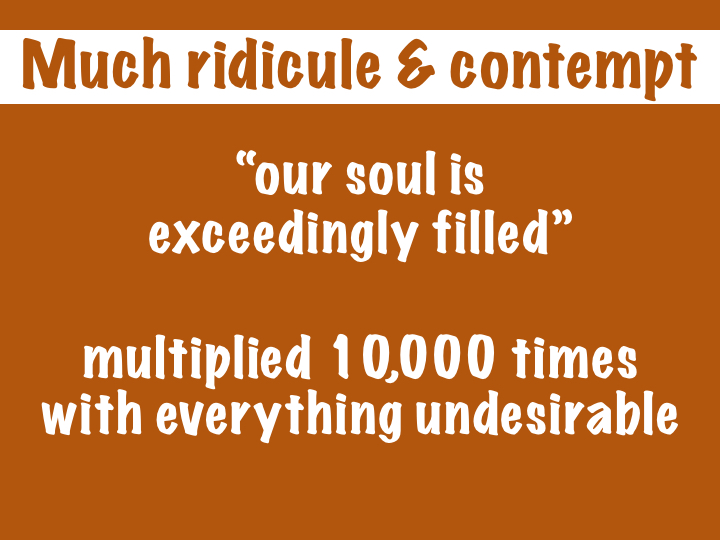
These are not words which the songwriter could easily brush off. One translation says, “our soul is exceedingly filled with the scorning” of these ridiculing people. In other words, it’s not something he could just brush off by thinking, “They don’t know what they’re talking about.”

Literally translated, the phrases exceedingly filled mean bad things multiplied 10,000 times! 

The ridicule and the contempt hurts! So the psalmist cries out Mercy! three times. This isn’t like saying “Uncle,” or having your cornerman throw in the towel, or even tapping out in a UFC match. This is a soul crying out, “God, if You will give me Your gracious favor for one more round, I will not tap out, I will not go down, I will go through!”

So he looks to the only One who can help him—my eyes wait upon Jehovah. Just like a servant who is completely dependent on his master for his daily bread, just like a maid who is trusting her mistress will give her favor, this guy says, “My eyes are fixed on Jehovah! If He can’t help me, no one can.”

The songwriter’s conclusion is this: “I will continually lift my eyes up to You, to You Whose throne is in heaven.” There are distractions, and hurts, and those who ridicule me—lots of them!—but I will develop the habit of redirecting my eyes UP to look to God.

  • When I feel anxious: I will redirect my eyes UP.
  • When I feel scorned: I will redirect my eyes UP.
  • When I’m hurt by others: I will redirect my eyes UP.
  • When I’ve had my fill of ridicule and contempt: I will redirect my eyes UP.
  • When I don’t think I can answer the bell for another round: I will redirect my eyes UP.
  • No matter what: I will redirect my eyes UP!

Check out the full video of this encouraging message. And if you are in the area, join us this Sunday as we continue our look at the Psalms of Ascent.

If you’ve missed any of the messages in this series, you can access the complete list by clicking here

4 Quotes On Persecution From “The Blessing Of Humility”

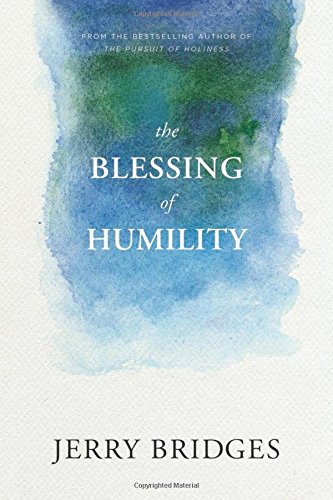
The Blessing Of HumilityAs I stated in my review of Jerry Bridges’ book The Blessing Of Humility, reading through these thoughts slowly—Beatitude by Beatitude—would bring about the most life-changing impact. In that spirit, I will be sharing some noteworthy quotes one Beatitude at a time. Here are some quotes on blessed are those who are persecuted because of righteousness (Matthew 5:10-12)

“There is no doubt that the culture is becoming more and more antagonistic toward biblical values. For some years I have thought our American culture to be ungodly; that is, to believe and act as if God is irrelevant. Now I believe we have become not just ungodly but actually anti-God. An increasing number of those who most influence our culture—such as academia, the media, and the entertainment industry—are openly hostile to the whole idea of God or of biblical values.”

“I suspect that our own court system will eventually fail us, as more and more judges are appointed who have been trained in law schools that at best are indifferent to biblical righteousness and at worst are openly hostile to it. Even our Supreme Court seems to be rendering decisions based on the mores of popular culture rather than on a principled application of the Constitution.”

“There is a sense in which this eighth Beatitude is the climax of several preceding ones dealing with our response to the way others treat us. … In this eighth Beatitude Jesus has in mind persecution rooted in the hostility of the anti-God culture we live in.”

“Keep in mind these words from Jesus [Luke 6:27-28] are precepts—authoritative commands of God. Furthermore, they address more than our attitude toward those who persecute us. They are action steps: we are to love our enemies, do good to them, bless them, and pray for them.”

 I have previously shared quotes on:

6 Quotes On Peacemakers From “The Blessing Of Humility”

The Blessing Of HumilityAs I stated in my review of Jerry Bridges’ book The Blessing Of Humility, reading through these thoughts slowly—Beatitude by Beatitude—would bring about the most life-changing impact. In that spirit, I will be sharing some noteworthy quotes one Beatitude at a time. Here are some quotes on blessed are the peacemakers (Matthew 5:9)…

“Jesus was speaking of making peace when we ourselves are involved in conflict with others.”

“It is often the sinful use of our tongues that cause conflict. But the tongue is only an instrument. The real problem is the heart. … To become peacemakers, then, we must begin with ourselves. We must ask ourselves, ‘Why do I make cutting remarks to another person? Why do I make demeaning remarks about them?’ We must also ask us ourselves, ‘What causes my resentment toward that person?’ or ‘Why do I continue to nurse hurts by that person instead of forgiving them? What is it that causes me to be envious or jealous of that person?’ In order to even ask those questions, we have to admit that we have those attitudes. But because we know they are sinful, we tend to live in denial that we have them.”

“Peacemaking where there is conflict with someone else is not an option for us. It is God’s commandment. We are to strive for peace with everyone (Hebrews 12:14). The word strive is a translation of the Greek word dioko. It is a very intense word and is most often used for the word pursue. (See also Philippians 3:12, 14; 2 Timothy 2:22; 1 Peter 3:11.)”

“Jesus tells us, ‘Love your enemies and pray for those who persecute you’ (Matthew 5:44). Are we willing to pray for those who have hurt us, that God will bless them? To be a peacemaker, then, means we absorb the hurtful words or actions of others without becoming resentful, retaliating, or even cutting off a relationship with the person.”

“To be a peacemaker means taking the initiative to restore such broken or damaged relationships, even when the major cause of the rupture lies with the other person.”

“To be a peacemaker means we must seek to be delivered from self-interest and not look at everything in terms of how it affects us. Instead we must be concerned about the glory of God and how we can best promote that glory in situations of conflict.”

 I have previously shared quotes on:

Quotes on the final Beatitude will be posted soon. Stay tuned…