Let’s Put That In Perspective!

How long is your life? If you’re a man living in the United States on average your life is 689,412 hours. But how long is that really? 

Here’s some perspective—if you drew a timeline 50 feet long that represented all of Earth’s recorded history, your life would cover about the breadth of your hand. But that’s only recorded history—what about the eternity that existed before history started and the eternity that will continue after history ends? 

Twice in Psalm 39, David described our brief life like this: each man’s life is but a breath. 

So what do we do with our breath-long life? Fortunately for us, David gives us godly perspective in five areas. 

  1. Perspective on the weight of my words and my silence (vv. 1-3) 

David had a good start: I will keep my tongue from sin, but what happens when sinful words slip out? I would suggest we count those as a gift. Really?! Yes, because those “slips” make us aware of what’s really in our heart (see Matthew 15:19) so that we can confess them. 

David also suggests putting a muzzle on our mouths when we’re around certain people. In other words, don’t get into petty fights with people who aren’t going to receive the wisdom we may have to share with them. 

  1. Perspective on the use of my time (vv. 4-5)

Why do we procrastinate doing good things? Some of our simple cliches reflect this, like TGIF. Why wait until Friday to get happy? Why not say TGIT—thank God it’s today! Do something memorable today… do something life-altering today… do something for God today.

  1. Perspective on my possessions (v. 6) 

David reminds us that we work so hard to accumulate stuff “not knowing who will get it.” Jesus had another word for someone who only wanted to get stuff to make his life easier: fool (see Luke 12:16-21). Use stuff to serve others. 

  1. Perspective on forgiveness (vv. 7-11)

Why oh why, would we spend one minute longer than we have to with unconfessed, unforgiven sin? I blogged last week about the freedom that immediately comes when we receive forgiveness from our confessed sin. Let’s do this quickly! 

  1. Perspective on the purpose of my life (vv. 12-13)

If I only have a breath-long life, I want to make every moment count. I love what C.T. Studd wrote: “Only one life will soon be past. Only what’s done for Christ will last. … Let us not glide through this world and then slip quietly into heaven without having blown the trumpet loud and long for our Redeemer, Jesus Christ. Let us see to it that the devil will hold a thanksgiving service in Hell when he gets the news of our departure from the field of battle.”

Here’s my prayer for all of us—Lord, help me to know how few days I have so I can live every one for Your glory. 

Saturday In The Proverbs—God Gets The Final Say (Proverbs 21)

[Each chapter in the Book of Proverbs contains thoughts that fit into a theme; they are not just random thoughts gathered together. In this “Saturday In The Proverbs” series, I will share a theme that I see in each chapter. But the cool thing about God’s Word is that you may see an entirely different theme. That’s great! If you do, I would love for you to share it in the comments below.]

The king’s heart is in the hand of the Lord, like the rivers of water; He turns it wherever He wishes (Proverbs 21:1).


I may be in charge of something, but I am never in complete control. God has the final say in my…

  • …affections (vv. 1, 17, 24)
  • …motives (vv. 2, 6, 10, 13, 14, 22, 27)
  • …righteousness (vv. 3, 4, 7, 8, 12, 15, 16, 18, 21, 29)
  • …plans (vv. 5, 31)
  • …household management (vv. 9, 19)
  • …attitude toward correction (v. 11)
  • …stewardship (v. 20)
  • …words (vv. 23, 28)
  • …work ethic (vv. 25, 26)

“There is no wisdom or understanding or counsel against the Lord” (v. 30). God always has the final say.

Thursdays With Oswald—Jeremiah 17

Oswald ChambersThis is a weekly series with things I’m reading and pondering from Oswald Chambers. You can read the original seed thought here, or type “Thursdays With Oswald” in the search box to read more entries.

Jeremiah 17

[These are notes from Oswald Chambers’ lecture on Jeremiah 17.] 

     All sin is unpardonable, every sinner is pardonable. … 

     God cannot pardon sin, but He instantly receives the sinner when the sinner leaves his sin and comes to Him. The Atonement of the Lord Jesus Christ does not mean that God forgives the sinner and leaves him in his sin; God forgives a man for being a sinner and puts him in the place where he need never be a sinner any more. …  

     God is only after one thing, a right relationship to Himself, and He does not care about our physical comforts. Until we are rightly related to Him, God will play ruthless havoc with every comfort and relationship we have. … 

     When we are sanctified the perpetual temptation is to do what Jesus did not do—“Now I am sanctified I can do what I like.” I cannot. My natural life and natural gifts are to be turned into a spiritual possession by offering them to God. 

From Notes On Jeremiah

God cannot tolerate sin, but He loves the sinner so much that He sent His Son to die in our place as payment for our sin. While we are still wallowing and trapped in our sin, God will not leave us alone; He will not make life comfortable for us; He will ruthlessly ruin everything that we try to use as a substitute for a relationship with Him. 

Once we do confess our sin and receive the Atonement that Jesus purchased on the Cross for us, the Holy Spirit will continue to harass our old nature. Our sinful flesh wants to return to wallowing in the muck of sin, but the Holy Spirit will make it tremendously uncomfortable for us to go there. 

Don’t strive for a comfortable life; strive for a God-honoring life. Pay attention to those areas of discomfort or dissatisfaction, because God is speaking to you through those and calling you into a deeper, more vibrant life in Him.

The Power Of Praying Scripture

I have always been a huge proponent of allowing the Scriptures to help form my prayers. I think there is great value in speaking God’s Word back to Him. 

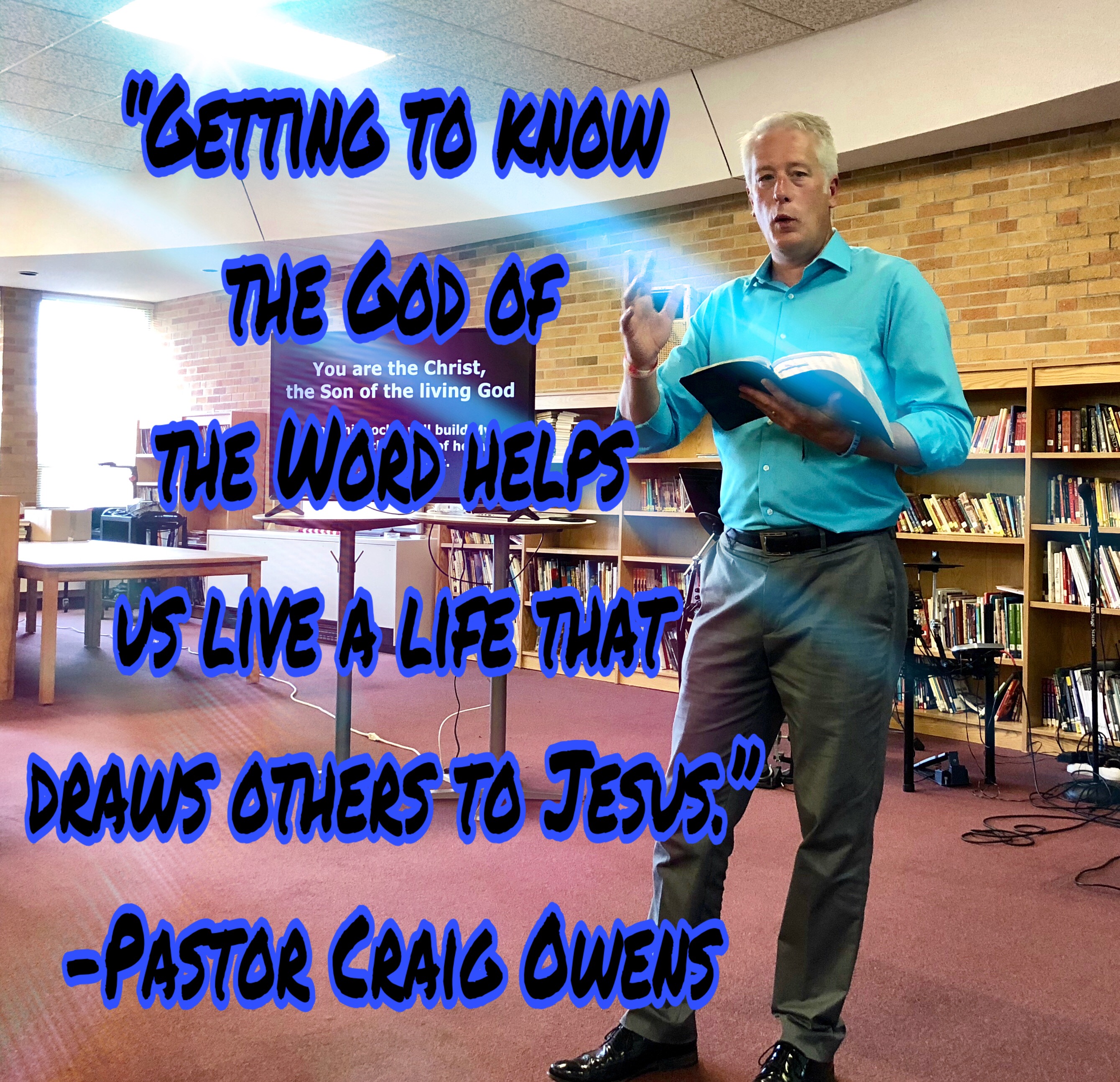
“Knowing God’s Word helps us pray, and praying helps us know God’s Word.” —Craig T. Owens

I am currently reading Max Lucado’s book Praying The Promises in which he makes the same case. For instance, consider the following passages—

The rain and snow come down from the heavens and stay on the ground to water the earth. They cause the grain to grow, producing seed for the farmer and bread for the hungry. It is the same with My word. I send it out, and it always produces fruit. It will accomplish all I want it to, and it will prosper everywhere I send it. (Isaiah 55:10-11) 

[Abraham] was fully convinced that God is able to do whatever He promises. (Romans 4:21) 

For no matter how many promises God has made, they are “Yes” in Christ. And so through Him the “Amen” is spoken by us to the glory of God. (1 Corinthians 1:20) 

Here’s how Max Lucado turned those passages into a prayer—

Lord, You are the Maker and Keeper of promises. Your Word does not return void. When You say You will do something, You do it. You are able to do whatever You promise. So many years ago You made a covenant with Your people, and You have been faithful to the covenant.

Sometimes it is easier to put my faith in my circumstances rather than in Your promises. I want to rely on myself, my earthly possessions, and the people in my life, but these so often fail me. But Your promises will never fail me!

As I read through Your promises, give me a new passion for them. Show me what promises I have forgotten over the years and need to cling to again. Reveal Your true character to me. Remind me of the power of Your love and Your grace. Strengthen my faith, and teach me to lean on Your Word rather than on myself.

Thank You for keeping Your promises. I’m grateful for the ultimate promise I have in Your Son, Jesus. Amen.

Why don’t you start making this a regular habit yourself.

Confession Is Good For You

One of the best definition of Selah is the bracketed comment used next to that word in the Amplified Bible: pause, and calmly think of that. 

Psalm 32 is only eleven verses long, yet Selah—a call to pause and ponder—is used three times. In other words, David is very interested in getting us to weigh something important. This whole psalm is a call to ponder the heavy, unbearable burden of unconfessed sins vs. the freedom and fresh start that comes immediately with confession.

And in case you think that confession is just something that someone does one time when they become a Christian, keep in mind that David is writing this song to be sung by the choir in church. That means confession is good for everyone!

The weighty CURSES of unconfessed sin

  • I feel worn out, wasting away like old, flimsy clothes (v. 3a)
  • I am groaning (v. 3b)—I am worn out from my groaning. All night long I flood my bed with weeping and drench my couch with tears (Psalm 6:6)
  • I feel God’s hand of displeasure heavy upon me (v. 4a AMP) 
  • My strength evaporates like water in the summer heat (v. 4b NLT) 
  • I’m led around like a dumb mule (v. 9)
  • I experience many woes (v. 10a) 

Then comes confession—I acknowledged my sin to You, and my iniquity I did not hide. I said, “I will confess my transgressions to the Lord continually unfolding the past till all is told”—then You instantly forgave me the guilt and iniquity of my sin (v. 5 AMP).  

If we claim to be without sin, we deceive ourselves and the truth is not in us. If we confess our sins, He is faithful and just and will forgive us our sins and purify us from all unrighteousness (1 John 1:8-9).

The weighty BLESSINGS after confessed sin

  • My transgressions are forgiven, which means they are lifted up and carried away (v. 1a)
  • My sins are covered; they are literally overwhelmed by God’s forgiveness (v. 1b)
  • My sin is no longer counted against me (v. 2a) because my record of forgiven sins has been cleared (v. 2b NLT; see also Psalm 103:2-3, 12) 
  • I get a fresh start, my slate’s wiped clean … Suddenly the pressure was gone—my guilt dissolved, my sin disappeared (vv. 1, 5 MSG) 
  • I’m protected in God’s hiding place and surrounded by God’s songs (vv. 7, 10b)
  • God instructs me and protects me to keep me from sinning again (v. 8)

What relief for those who have confessed their sins and God has cleared their record (v. 2 TLB) 

The mark of a maturing Christian is the one who is constantly closing the gap between sin and confession. 

Don’t let unconfessed sin weigh you down. As soon as you feel the Holy Spirit pointing something out in your heart, confess it and experience God’s immediate release! 

I am going to share one more message in this series on the Selahs in the Psalms this Sunday (but, God willing, we will return to this next summer). Please join me either in person or on Facebook Live. 

Saturday In The Proverbs—Setting Myself Up For Failure (Proverbs 20)

[Each chapter in the Book of Proverbs contains thoughts that fit into a theme; they are not just random thoughts gathered together. In this “Saturday In The Proverbs” series, I will share a theme that I see in each chapter. But the cool thing about God’s Word is that you may see an entirely different theme. That’s great! If you do, I would love for you to share it in the comments below.]

Wine is a mock, strong drink is a brawler, and whoever is led astray by it is not wise (Proverbs 20:1).

This collection of proverbs warns against things that impair a person’s judgment, or things that set us up for failure. Things like…

  • intemperance (v. 1)
  • making leaders angry (vv. 2, 8, 26)
  • starting petty quarrels (v. 3)
  • laziness (vv. 4, 13)
  • shallow thinking (vv. 5, 12, 25)
  • unfaithfulness or a lack of integrity (vv. 6, 7, 11, 27)
  • unconfessed sin (vv. 9, 24)
  • duplicity or favoritism (vv. 10, 14, 17, 23)
  • not valuing wisdom (vv. 15, 18. 25)
  • risky business deals (vv. 16, 25)
  • gossiping (v. 19)
  • dishonoring your parents (vv. 20, 21)
  • holding a grudge (v. 22)
  • unkindness or dishonesty (v. 28)
  • not valuing life (v. 29)
  • not allowing anyone to correct you (v. 30)

Now that you know these items that set you up for failure, ask the Holy Spirit to help you root any of these out of your life before failure happens to you! 

Thursdays With Oswald—Jeremiah 16

Oswald ChambersThis is a weekly series with things I’m reading and pondering from Oswald Chambers. You can read the original seed thought here, or type “Thursdays With Oswald” in the search box to read more entries.

Jeremiah 16

[These are notes from Oswald Chambers’ lecture on Jeremiah 16.]     

     “All things are lawful… but all things are not expedient,” says Paul, i.e., all things are lawful to me as a natural man, but not expedient to me as a spiritual man because I am under a superior command. … 

     How many of us have begun to realize our privilege of not doing things? The liberty to waive our rights is the great privilege of Christian sanctity. One of the meanest things is to say, “I don’t do certain things because it will damage me.” Paul’s argument is—“I don’t do certain things because it will damage someone else” (see 1 Corinthians 8:9-13). … 

     In the days before you knew God you did any number of things which God overlooked, but try and do them now, and if you persist you will realize what is written in Psalm 106:15—“And He gave them their request; but sent leanness into their soul.” 

From Notes On Jeremiah

A Christian should be able to say a guilt-free, excuse-free “No” to anything that would be inexpedient for themselves OR for others around them. 

Going Into The Heavy Presence Of God

“The King of glory” is a phrase that’s only used five times in the Bible, and all five times are packed into just four verses of Psalm 24. In this psalm, David lets us know who can enter into this awesome, heavy presence of the King of Glory. 

Why do I say “heavy”? The definition of the Hebrew word for glory always refers to a heaviness. There is something majestically, awesomely heavy about going before the All-Righteous, All-Powerful, All-Holy, All-Knowing, Absolutely Perfect God. Can any mere mortal enter into this presence? 

In an earlier psalm, David said, “For the Lord is righteous, He loves justice; the upright will see His face” (Psalm 11:7). But in this psalm, David asks, “Who can ascend Your holy hill? Who can come into Your presence?” (Psalm 24:3). 

He answers the question with these words: the upright, the one with clean hands and a pure heart (he expands this list even more in Psalm 15), then he calls on us to Selah—pause and weigh this as if on a scale. David is asking, “Do you really want to enter into the weighty presence of the King of Glory?” 

If you do, something needs to happen first. David calls his generation (and our generation) the generation of Jacob. You can read the story of Jacob’s life beginning in Genesis 27. Jacob was a pragmatic man. If he could get away with something, he did. He only looked out for his own interests. He deceived, he connived, he bribed, he calculated his odds—he did what he had to so that he could advance himself. He didn’t realize God’s weight. He saw God only through a scarcity-mindset that gave God limits. He thought there was only a limited supply, and if somebody else was getting a blessing, then that meant there was less for him to get.

Then Jacob encountered God and discovered that he couldn’t do a thing against this weighty King of Glory. When he finally submitted to God, his name was changed to Israel. Jacob—the self-sufficient man—would never be allowed to enter the doors into God’s heavy glory. But Israel—the submitted man—may ascend the hill of the Lord and stand in His holy presence. Jacob means deceitful; Israel means the man without any deceit. 

For the rest of his life, Israel walked with a limp. It was a constant reminder that he simply wasn’t the man he was before he wrestled with God.

  • Jacob could only obtain what he could finagle; Israel is the recipient of all God’s blessings. 
  • Jacob could only keep his gains for this life; Israel got God’s blessings for eternity. 
  • Jacob might be vindicated by men; Israel is definitely and completely vindicated by God. 
  • Jacob couldn’t enter the presence of the King of Glory; Israel was welcomed as a prince into God’s presence.

Here’s the challenge I would give you… Use either Psalm 15 or Psalm 24:3-4 and let the Holy Spirit wrestle with you. Is there anything that’s holding you back from going through those doors into the weighty presence of the King of glory? If there is, confess it, repent from it, and even limp away from it (if you have to) so that you don’t miss out on God’s eternal blessings. 

Join me this coming Sunday as we continue our look at the Selahs in the Book of Psalms. 

Saturday In The Proverbs—The Blessings Of Integrity (Proverbs 19)

[Each chapter in the Book of Proverbs contains thoughts that fit into a theme; they are not just random thoughts gathered together. In this “Saturday In The Proverbs” series, I will share a theme that I see in each chapter. But the cool thing about God’s Word is that you may see an entirely different theme. That’s great! If you do, I would love for you to share it in the comments below.]

…integrity… (Proverbs 19:1).

Integrity is wholeness—it brings its own blessings because a person of integrity…

  • …is wise (vv. 1, 8, 20, 27)
  • …doesn’t fall into the haste-makes-waste trap (v. 2)
  • …is at peace with God (v. 3)
  • …knows true friendship (vv. 4, 6, 7, 19)
  • …is never punished for lying (vv. 5, 9, 28, 29)
  • …gets promoted to leadership (v. 10)
  • …preserves relationships (vv. 11, 12, 13, 14, 25, 26)
  • …is satisfied with his work (vv. 15, 23, 24)
  • …guards his soul (v. 16)
  • …serves others without an agenda (v. 17)
  • …disciplines only in love (vv. 18, 25)
  • …walks in God’s ways (vv. 21, 23)
  • …is kind to others (v. 22)

“With integrity you can experience freedom. Not only are you less likely to be enslaved by the stress that comes from bad choices, debt, deceptiveness, and other negative character issues, but you are free to influence others and add value to them in an incredible way.” —John Maxwell

How true: Integrity = Freedom to live a satisfying life!

Thursdays With Oswald—Jeremiah 14

Oswald ChambersThis is a weekly series with things I’m reading and pondering from Oswald Chambers. You can read the original seed thought here, or type “Thursdays With Oswald” in the search box to read more entries.

Jeremiah 14

[These are notes from Oswald Chambers’ lecture on Jeremiah 14.] 

     While one desire remains unsatisfied, God is not Lord over all. That means we must quit some desires or else quit God. Most of us bring our desires to God and He has to wither them. When we delight in God He gives us our desires because they are in accordance with His will (see Psalm 37:4). 

From Notes On Jeremiah 

Wow, there’s a lot to contemplate in that short statement. 

Oswald Chambers references this verse: Take delight in the Lord, and He will give you the desires of your heart (Psalm 37:4). 

And then there’s this—You will show me the path of life; in Your presence is fullness of joy, at Your right hand there are pleasures forevermore (Psalm 16:11). 

Some things I’m contemplating:

  • Do I have unsatisfied desires? 
  • Have I taken that desire into God’s presence? 
  • If so, why does it still feel “unsatisfied”?