[Each chapter in the Book of Proverbs contains thoughts that fit into a theme; they are not just random thoughts gathered together. In this “Saturday In The Proverbs” series, I will share a theme that I see in each chapter. But the cool thing about God’s Word is that you may see an entirely different theme. That’s great! If you do, I would love for you to share it in the comments below.]
Good things—the best of things—usually require hard work. They don’t just come to us but we have to discover them. However, the good things are always worth the effort!
This is a weekly series with things I’m reading and pondering from Oswald Chambers. You can read the original seed thought here, or type “Thursdays With Oswald” in the search box to read more entries.
Jeremiah 22
[These are notes from Oswald Chambers’ lecture on Jeremiah 22.]
“Perfect love drives out fear” [1 John 4:18]—but not love in its beginning. To say “Therefore will we not fear, though…” [Psalm 46:2] is only possible when the love of God is having its way. …
Every power of human government that can be used by the devil and self-interest can be reclaimed and used by God. On the other hand, everything that is usable by God is abusable by the devil. …
As in the Book of Isaiah, so in Jeremiah, God is revealed as the Controller behind every power of evil; when evil strikes His people it strikes not only by God’s permission but under His direct control (cf. Isaiah 37:29; John 19:11). …
Divine fire as opposed to natural fire, burns the fiercer the farther you get away from it; when you get nearer to God, His burning becomes a comfort.
From Notes On Jeremiah
These are good thoughts from Chambers—and good passages of Scripture as well—to keep in mind when we are staring down evil or being persecuted for our faith in Christ.
Remember:
God’s love drives out our fear, but focusing on our fears can drive out God’s love.
God uses; the devil abuses.
No evil can touch you unless God has allowed it, and He only allows it to accomplish something that will bring Him glory.
If the fires seem to be burning hotter, run to God notaway from Him!
Jesus told Peter, and now Peter tells us—Christians are going to be insulted and persecuted for believing in Jesus. So the fact that life is hard shouldn’t come as a surprise. Peter then goes on to elaborate on how Christians should live in spite of the mistreatment.
“The more Christians are unlike the world, the more it hates us; the more we are like our Lord, the more the world will persecute us.” —Horatius Bonar
How should Christians respond to insults and persecution? Peter outlines the Christian’s response in 1 Peter 4:12-19—
—dear friends, do not be surprised (v. 12). I like this verse in the Amplified Bible: Do not be amazed and bewildered at the fiery ordeal which is taking place to test your quality, as though something strange (unusual and alien to you and your position) were befalling you. After all, Jesus told us this was coming (see John 15:18-20).
—but rejoice that you participate in the sufferings of Christ (v. 13a). Notice that this should be the sufferings OF Christ, not of our own making.
—let suffering lead to Spirit-led reflection (notice the if’s in vv. 14-18, and the if’s in what Jesus said in John 15:18-20). We need to make sure our suffering is because we’re standing for Jesus, not because we’re being jerks! David asked God to check if his actions were the cause of his persecution (Psalm 7:3-4) and we should too. If we discover that we’re the one to blame, quickly apologize, ask for forgiveness, and make things right.
—keep your focus on when His glory is revealed (v. 13b). Time is short, and the rewards are sure so don’t remain focused on the immediate pain, but look up to the longterm gain.
—do not be ashamed to suffer for Jesus (v. 16). Jesus told us not to be ashamed of Him because He is not ashamed of us (Luke 9:26; Hebrews 2:11).
—stay committed to your faithful Creator (v. 19a). Staying committed means getting even closer to God in the hard times.
—continue to do good (v. 19b). What does continue to do good look like? Peter lists things like being self-controlled, helping others that are being persecuted, showing proper respect, having a good work ethic, not trading insult for insult, and many other commands. Bottom line: doing good means living like Jesus lived while He was on Earth (see Acts 10:38).
So, Christian, I’ve got two questions for you—
How are you handling insults and persecution? Are you continuing to do good despite the mistreatment?
Remember Jesus is coming soon, and His rewards are with Him for how we have lived. “Behold, I am coming soon, and I shall bring My wages and rewards with Me, to repay and render to each one just what his own actions and his own work merit.” —Jesus (Revelation 22:12)
Join me this Sunday as we continue to learn how Christians are to live as aliens and strangers while we visit Earth. If you’ve missed any messages in this series, you may find the complete list by clicking here.
[Each chapter in the Book of Proverbs contains thoughts that fit into a theme; they are not just random thoughts gathered together. In this “Saturday In The Proverbs” series, I will share a theme that I see in each chapter. But the cool thing about God’s Word is that you may see an entirely different theme. That’s great! If you do, I would love for you to share it in the comments below.]
If you faint in the day of adversity, your strength is small (Proverbs 24:10).
Character is forged like steel—with fire and hammering.
There are blessings that will come in no other way than for a man or woman to let God forge steel-like character in them.
A man of steeled character…
…doesn’t try to go along with those who cut corners (vv. 1-2, 15), but builds his foundation on godly wisdom and righteousness (vv. 3-4).
…seeks counsel from other wise people (vv. 5-8).
…stands strong in times of adversity (v. 10).
…rescues those heading toward destruction (vv. 11-12).
…knows the boundaries and the blessings of temperance (vv. 13-14).
…isn’t kept down when he stumbles, and never rejoices when others stumble (vv. 16-18).
This is a weekly series with things I’m reading and pondering from Oswald Chambers. You can read the original seed thought here, or type “Thursdays With Oswald” in the search box to read more entries.
Jeremiah 20
[These are notes from Oswald Chambers’ lecture on Jeremiah 20.]
O Lord…I am ridiculed all day long; everyone mocks me (Jeremiah 20:7b). Jeremiah came back to the city and repeated to all the people the message he gave to the elders (Jeremiah 19:14-15). For the first time Jeremiah is designated by his office—‘the prophet’ (20:2), and the action of Pashur is against him as a prophet for his public utterance. According to the people Pashur was right and Jeremiah a raving fanatic. How we select things out of the Bible! We have forgotten what Paul wrote—‘He was crucified in weakness … likewise, we are weak in Him’ [2 Corinthians 13:4]. A Christian is one who can be weak, an abject failure in the eyes of the world. …
It takes the grace of God to go through disgrace unspoilt. …
O Lord, You deceived me, and I was deceived [v. 7a]. Jeremiah says in heart-breaking sobs before God, ‘I have been deceived in what I hoped Thou wouldst do.’ His cry is not the theological argument of a man’s mind, he is pouring it all out before God; there is no charge brought against God and no reply from God. ‘I spoke because the people were reproaching Thy Word, and now I see nothing but ridicule all day long.’
Jeremiah is sensitive to the last degree to all the affinities of the people and he speaks out of perplexity—But if I say, ‘I will not mention him or speak any more in His name,’ His Word is in my heart like a fire, a fire shut up in my bones, and I am weary of holding it in; indeed, I cannot [v. 9].
I hear many whispering… ‘Report him! Let’s report him!’ All my friends are waiting for me to slip, saying, ‘Perhaps he will be deceived; then we will prevail over him and take our revenge on him.’ ‘The people watch for inconsistencies in my life that they may say on that ground I am not preaching Thy truth.’ To be defamed means that if you stand for God you will not be able to stand for anything else. …
But the Lord is with me like a mighty warrior [v. 11]—a sudden outburst of the devotion of Jeremiah’s heart for God. … When in communion with God His desires are a delight, he sees and enjoys deliverance.
From Notes On Jeremiah
Standing for God may mean that you stand alone. Are you ready?
Standing for God also mean that He stands with you like a mighty warrior. Are you ready now?!
Did you know that you were only born with two fears: the fear of falling and the fear of loud noises? Yet the DSM-5 has a whole section to help mental health professionals diagnosis the specific phobia that may be limiting someone’s life. That might be because some places list upwards of 500 recognized phobias that constrict people’s lives!
Since only two of our fears are innate fears, that means the rest of the fears that trouble us are learned fears. Since God repeatedly says “Fear not!” throughout Scripture, that must mean He also tells us how to overcome our fears.
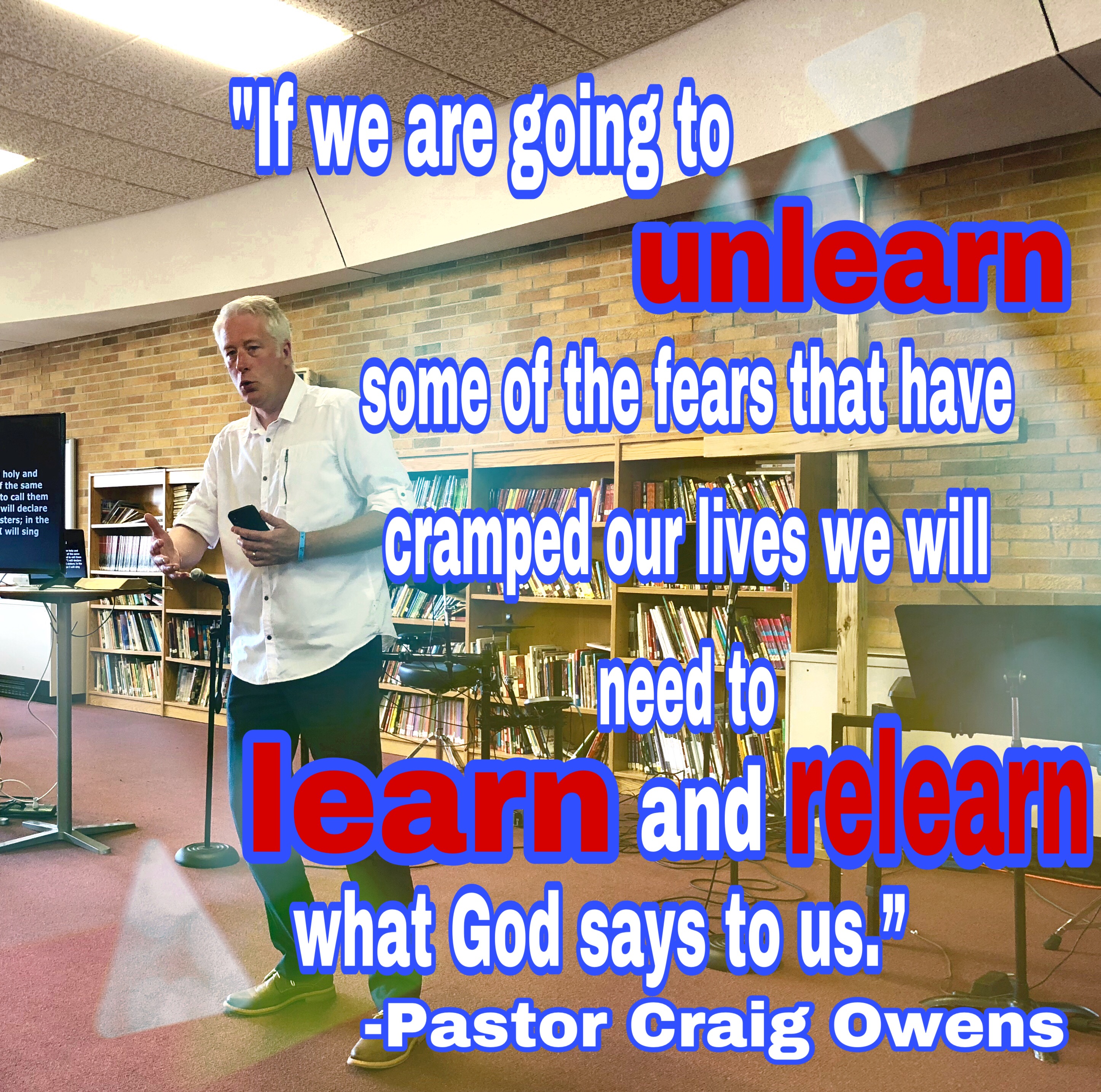
Christians—as aliens and strangers on this Earth—should have an alien response to earthly fears. So if we are going to unlearn some of the fears that have cramped our lives we will need to learn and relearn what God says to us.
Peter asks what might seem like a rhetorical question, “Who is going to harm you if are eager to do good?” Think about it: who wants to punish someone for doing the right thing? Apparently some people do because Peter goes on to add, “But even if you should suffer for what is right, you are blessed. Do not fear what they fear; do not be frightened” (1 Peter 3:13-14).
So even if people insult Christians for doing things God’s right way, God’s blessing is on them. Sadly, people without God’s blessing on their lives often give in to the FOMO (fear of missing out) and they end up lashing out at those being blessed. That lashing out is directly rooted in their fears.
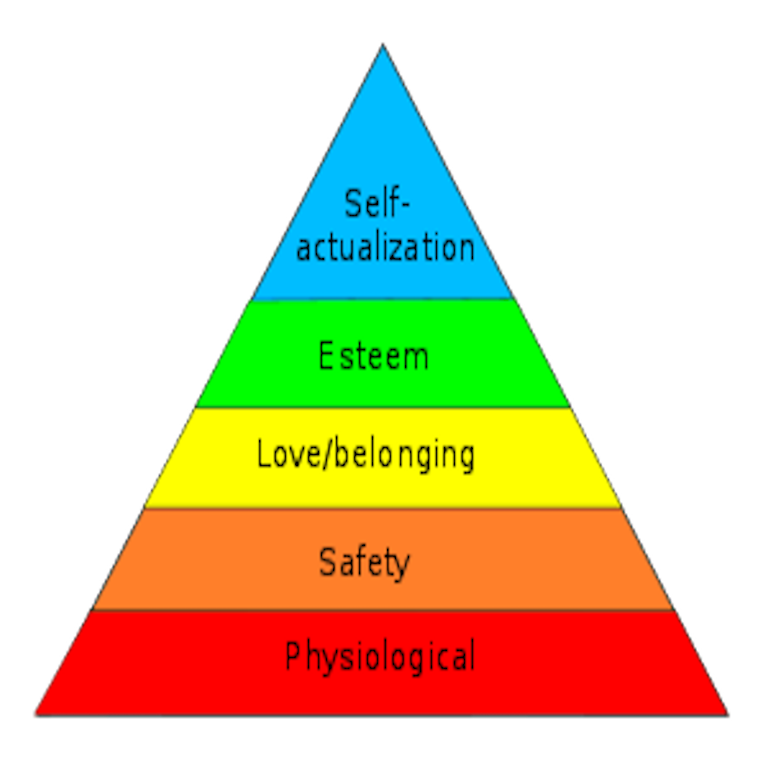
Abraham Maslow proposed a hierarchy of needs that humans have, and obviously, there would be fears associated with any of those needs not being met. At least, that would be the Earthling response. Christians need to unlearn those fears by learning and relearning why God tells them to “Fear not!”
Fear of not having physiological needs met—Jesus tells us why we shouldn’t worry (Matthew 6:25-34).
Fear of not being kept safe—the psalmist tells us that God is our shield (Psalm 84:11).
Fear of not fitting in with a certain social group—Jesus proudly call His followers His brothers and sisters (Hebrews 2:11-12).
Fear of not being rewarded or recognized—Jesus says there are blessings for those that hang in with Him through persecution, including being called a co-heir alongside Him (Matthew 5:10-12; Romans 8:17).
Fear of our life not having purpose—the apostle Paul reminds us that God chose us on purpose to be His example to the world (1 Corinthians 1:25-27).
Since Jesus overcame all the things that could cause us fear, Peter counsels us to “armyourselves with this sameattitude” (1 Peter 4:1). The Greek word for arm yourselves only appears here, and it means for us to repeatedly remind ourselves of God’s truth. The Greek word for attitude is only here and in Hebrews 4:12, where we are reminded that the Word of God helps our minds unlearn, learn, and relearn God’s truth.
Have the borders of your life been squeezed by your fears? Do you feel like you’re missing out on the “abundant life” that Jesus said you could have? The Word of God can help you unlearn those fears, and fellow Christians would love to come alongside you to help you continue to relearn that truth over and over again until your fears are banished from your life!
Don’t let fear keep you from being all that God has planned for you to be!
Please join me on Sunday as we continue our study of how Christians are to live as aliens and strangers while on Earth. If you’ve missed any messages in this series, you may find the complete list by clicking here.
[Each chapter in the Book of Proverbs contains thoughts that fit into a theme; they are not just random thoughts gathered together. In this “Saturday In The Proverbs” series, I will share a theme that I see in each chapter. But the cool thing about God’s Word is that you may see an entirely different theme. That’s great! If you do, I would love for you to share it in the comments below.]
Jesus said, “Stop judging by mere appearances, but instead judge correctly” (John 7:24). That means we have to look beyond the surface; we have to see things as they really are, not as we want them to be.
Things like…
…the outward appearances of wealth aren’t the same thing as true riches (vv. 1-3, 6, 8)
…overwork doesn’t mean it’s good work or a noble work ethic (vv. 4-5)
…just because someone hears you doesn’t mean they are truly listening to you (v. 9)
…just because you can do something doesn’t mean you should do it (vv. 10-11)
…children may grumble in the moment of correction, but they will be truly thankful in the end (vv. 12-5, 22-25)
…sinners aren’t “getting away” with their sins (vv. 17-18)
…pornography and other sexual sins aren’t victimless crimes or “no one is getting hurt” activities (vv. 26-28)
As the Holy Spirit to show you the truth. Ask Him to show you the ultimate consequences of your activities. Stop judging by mere appearances, but instead judge correctly.
Have you ever said something and then immediately thought, “Where in the world did that come from?!?”
You might have thought it was just a slip of the tongue, but it’s not. That slip of the tongue is actually a gift to us to help us know what’s really going on in our heart.
This is a snippet from a longer message on putting other things in our life in perspective. You can check out the full video by clicking here, or you can read the list of the 5 things we need to keep in proper perspective by clicking here.
This is a weekly series with things I’m reading and pondering from Oswald Chambers. You can read the original seed thought here, or type “Thursdays With Oswald” in the search box to read more entries.
Jeremiah 19
[These are notes from Oswald Chambers’ lecture on Jeremiah 19.]
In the temple precincts judicious minds were without excuse, because they understood what Our Lord was doing. Outside Jerusalem, Our Lord always said, “Don’t tell anyone Who I am”; every time He went to Jerusalem He made it clear who He was.
The presentation of the Gospel of God to sinners is one of love and mercy, but to the house of God one of judgment and truth. When we preach to the crowd outside we lambast drunkenness and other things, Jesus never did. The stern messages of the Bible are never given to sinners, but to God’s people.
From Notes On Jeremiah
Hmmm, are we doing this the right way? It seems like many times we get this reversed—we rebuke those outside because of their sin, and we speak tenderly to those on the inside. Definitely something for Christian leaders to consider carefully.
If you’ve ever looked at the list of books I’ve read and reviewed at the end of each year, you will quickly discover how much I enjoy reading! I read science, biographies, theological works, philosophy, financial resources, relationship helpers, and on and on. But hands-down, not-even-close to second place, I read the Bible more than anything else. Not only do I read the Bible extensively every day, I then read all of my other books through the lens of Scripture.
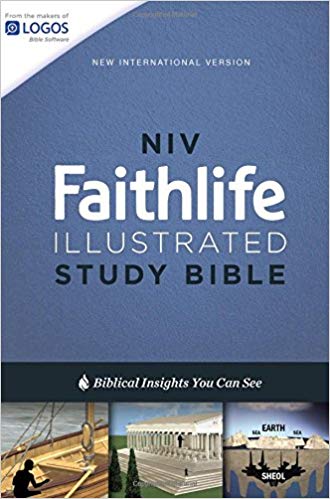
So whenever I come across a resource that helps with Bible reading and study, I’m absolutely thrilled to share it with you. One such resource I’ve been so excited about is the Faithlife Illustrated Study Bible.
I originally purchased this study Bible because of the “illustrated” part. I glanced through it and found several things that make the biblical accounts more understandable. Things like:
timelines
genealogical records
“blueprints” of notable buildings and structures
infographics
maps and tables
Then I was excited to discover the wealth of articles embedded in the notes section next to the biblical texts.
But the happiest discovery I made was the ability to combine the written text with so much additional online content. Using the Faithlife Study Bible app on my iPhone, I can access all of the content in the print version in addition to more resources that have become available since this study Bible was published. My favorite way to do this is via the “reference scanner” in the app. I use my iPhone camera to take a picture of the part of the Bible I’m studying and then the app pulls up all of the resources associated with nearly everything on that page. Amazing!
If you already love studying the Bible, this book/app combination will take you to a whole new level. Even if you’re just getting started in a Bible study, you will love how much fullness these resources quickly bring to your fingertips.



 Good things—the best of things—usually require hard work. They don’t just come to us but we have to discover them. However, the good things are always worth the effort!





 Craig T. Owens