Come To God As A Counselor

Listen to the podcast of this post by clicking on the player below, and you can also subscribe on AppleSpotify, or Audible. 

I’ll bet you have “go-to” people in your life. The ones you immediately call when you need computer help, relationship insights, household or car repairs, Bible questions, or even cooking instructions. 

We love having these go-to people in our lives, but I’m also going to guess that none of us has someone who possesses all of these go-to skills. After all, all of us are only human, with limitations and deficiencies. 

We’ve learned that in prayer we can come to God as a Father—calling Him our Abba Father. We can also come to God as a Brother—knowing that Jesus has walked every path we will ever walk, and He intercedes to the Father on our behalf. 

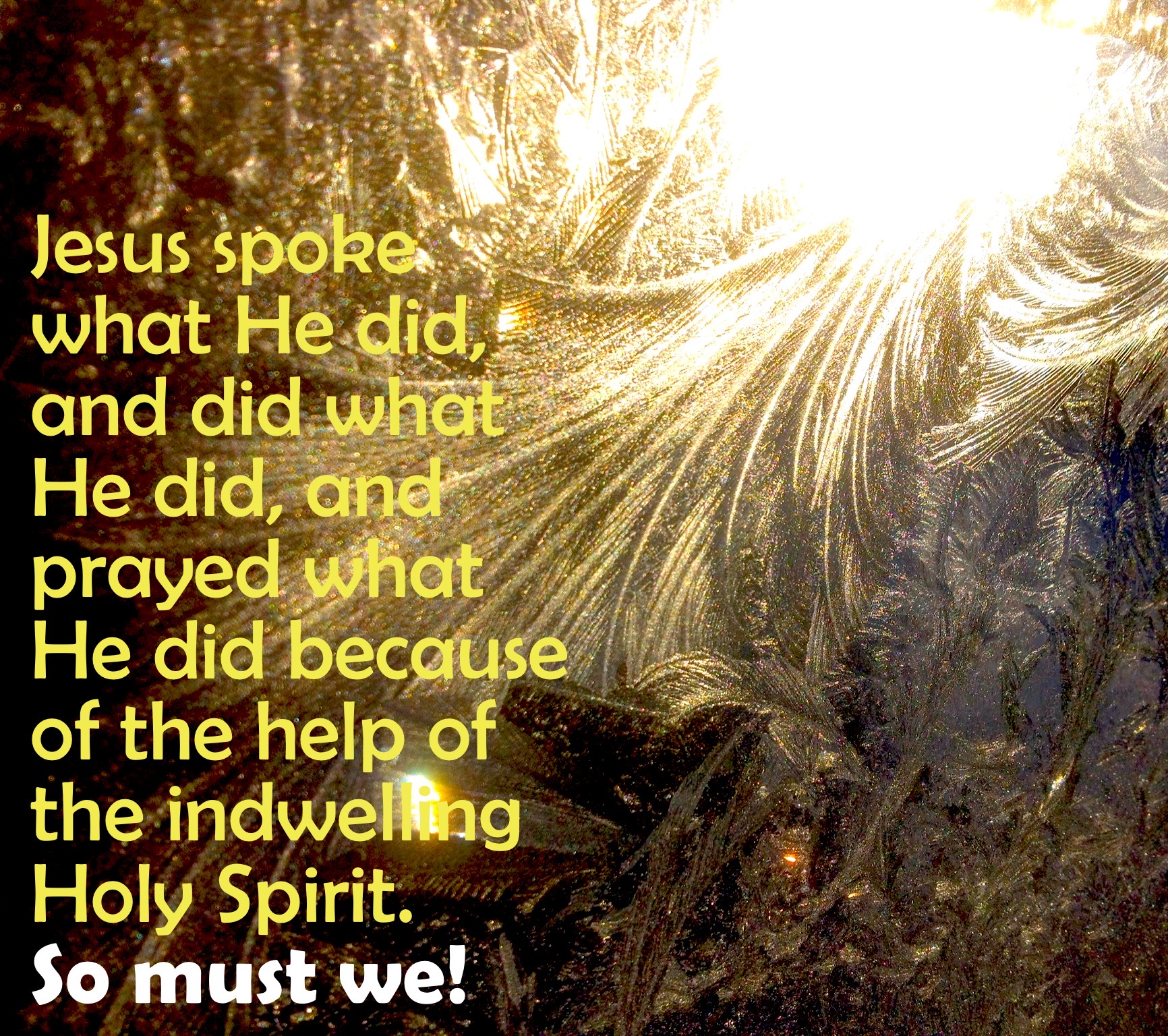
In fact, we saw last week that Jesus was never at a loss of what to say, what path to take, or what prayer to pray. He spoke what He did, and did what He did, and prayed what He did because of the help of the indwelling Holy Spirit. 

This is the same Holy Spirit that is in us as Christians. It’s because of this that we can come to God as a Counselor. The Holy Spirit is THE Go-To Resource for everything! 

Jesus said that both He and our Father love to give us the Holy Spirit as our Counselor, and then the Holy Spirit loves to reveal our Father and our Brother to us (Luke 11:13; John 14:26, 16:15; Galatians 4:6; Matthew 16:17). 

Andrew Murray wrote, “Prayer is simply the breathing of the Spirit in us; power in prayer comes from the power of the Spirit in us as we wait on Him. Failure in prayer is the result of a spirit that is not yielded to the Spirit of God.” 

What does it mean to yield to the Holy Spirit? It means that we don’t look for other go-to people for certain situations, but we trust the Spirit to be the Go-To Resource for everything. This is what Jesus did. 

As Jesus relied on the Counselor, so must we. As the Counselor helped Jesus, so He will help us. 

Let’s break this down. 

First, Jesus was never at a loss of what words to say, and the Holy Spirit will give us the right words to say as well (John 12:49; Matthew 10:19-20; Luke 1:67; Acts 2:14). 

Second, Jesus was never at a loss of what path to take, and neither do we have to experience any confusion about what to do and when to do it (Matthew 4:1; Luke 2:27; Acts 16:6-10).

Finally, Jesus was never at a loss of what prayer to pray, and so too will the Holy Spirit help us go deeper into our prayer time (Luke 10:21; Romans 8:26-27; Ephesians 3:14-21). 

In addition, there is not one issue we will ever face that God hasn’t already addressed for us in Scripture (Ephesians 3:4-5). We see Jesus being totally reliant on Scripture (Luke 4:4, 8, 12). In an identical way, the Holy Spirit will help illuminate and apply the Scripture to our lives (John 14:26; 1 Corinthians 2:13). 

Let me repeat this vital truth: The Holy Spirit is THE Go-To Resource for everything!

  • We are vulnerable to temptation without the help of our Go-To Counselor. 
  • We are limited in our understanding of Scripture without the help of our Go-To Counselor.
  • We have a shallow prayer life without the help of our Go-To Counselor. 
  • We will be frequently confused about words to use or paths to take without the help of our Go-To Counselor. 

Let us learn to rely on our Counselor, as we keep our eyes on our Brother, and as we go together to our Father in childlike prayer. This is what leads to true intimate conversation! 

If you’ve missed any of the other messages in our prayer series Intimate Conversation, please click here. 

►► Would you please prayerfully consider supporting this ministry? My Patreon supporters get behind-the-scenes access to exclusive materials. ◀︎◀︎

Come To God As A Brother

Listen to the podcast of this post by clicking on the player below, and you can also subscribe on AppleSpotify, or Audible. 

Being the firstborn, I didn’t have a big brother, but I took being the big brother to my little sister very seriously! Like when young men would come to pick her up for a date, I would meet them on the front porch and say, “I hope you have a really nice evening. Just so you know, I will be home all evening waiting by the phone. You’d better pray that my little sister doesn’t have to call me!” Hopefully, that let my sister know I was ready to protect her whenever she may need it. 

 Whenever we go into any situation for the first time, there is always a natural fear of the unknown. What’s going to happen? How do I behave? What do I say? How will others treat me? How will I know who to trust? Or even, how will I know what to pray for? 

Those unknowns cause fear, and fear prevents intimacy. The Bible says, “There is no fear in love” (1 John 4:18). Where there is love, fear has to leave. But when there is fear, love is pushed aside. 

We learned that we can come to God in prayer as a Father—we can bring Him all our fears and concerns and problems—but did you know that we can also come to God in prayer as coming to a Brother? 

Jesus loves the fact that we can come to our Abba Father just as He did, which is why He taught us to begin our prayers with, “Our Father in heaven.” 

How wonderful it is to have a “big brother” to show us the ropes, to walk with us, to give us his counsel! One that says, “I’ve already been to that high school … I know that employer … I have experience with that kind of relationship … I’ve solved that problem … I’ve tasted that pain.…” That’s exactly what Jesus does for us. He is our perfect Big Brother! 

Jesus knows everything we will experience in life. There might be unknown things that we walk into, but they are never unknown to Him. And more importantly, they are never unexperienced by Him. Check out these assuring words from the Book of Hebrews—

Both the One who makes people holy and those who are made holy are of the same family. So Jesus is not ashamed to call them brothers and sisters. … For this reason He had to be made like them, fully human in every way, in order that He might become a merciful and faithful high priest in service to God, and that He might make atonement for the sins of the people. Because He Himself suffered when He was tempted, He is able to help those who are being tempted. (2:11, 17-18) 

For we do not have a high priest who is unable to empathize with our weaknesses, but we have one who has been tempted in every way, just as we are—yet He did not sin. Let us then approach God’s throne of grace with confidence, so that we may receive mercy and find grace to help us in our time of need. (4:15-16) 

Jesus has been there, done that, and has the scars to prove that He is victorious! 

  • We never have to be at a loss of what to say (John 12:49-50)
  • We never have to be at a loss of what path to take (John 14:6) 
  • We never have to be at a loss of what prayer to pray (John 16:23)

(Check out all of those verses by clicking here.) 

Charles Spurgeon said, “The Lord Jesus Christ is always ready to take the most imperfect prayer and perfect it for us. If our prayers had to go up to heaven as they are, they would never succeed; but they find a Friend on the way, and therefore they prosper.” 

Solomon wrote, “Trust in the Lord with all your heart; do not depend on your own understanding. Seek His will in all you do, and He will show you which path to take (Proverbs 3:5-6). 

Commenting on these verses in his book Proverbs: Amplified and Applied, Dick Brogden wrote:

“We tend to crave God’s explicit direction for the momentous choices of life—marriage, study, career, transition, promotion, change—but sail through a thousand daily choices independent of consultation with Him. Functionally, we act as if we only need God’s help for big things because we can handle the small things without Him. The error in this dichotomy of dependence (thinking we only need God’s help for big decisions) is twofold. First, big decisions are not divorced from small decisions; they are simply the crowning act, the summary of a legion of choices. Second, big decisions are not more important than small decisions. It is the small, simple, silent, serial choices of daily living that make one wise. When we acknowledge the Lord in all the minutia, our course is chosen and our path is set, and we do not stand bewildered at the critical crossroads of life.” 

Walking with Jesus as our Brother keeps us free from fear. His perfect love opens our hearts to have intimate conversation with our Heavenly Father. You can trust our Brother to help you with every single decision at every single moment. Let’s learn to lean on Him more! 

If you’ve missed any of the messages in our series on prayer called Intimate Conversation, you can find all of the messages by clicking here. 

►► Would you please prayerfully consider supporting this ministry? My Patreon supporters get behind-the-scenes access to exclusive materials. ◀︎◀︎
Come To God As A Father

Listen to the podcast of this post by clicking on the player below, and you can also subscribe on AppleSpotify, or Audible. 

Jesus told us numerous times that we can come to God as our Father. 

Have you ever played a word association game? For instance, if I said “winter” you might say “shoveling” (or kids might say “sledding”). If I said “summer” you might say “vacation.” But I think the word “father” may bring up a lot of very different feelings or images. Some may have fond memories of the word “father” while others may think:

  • playful but not a good provider 
  • disciplinarian 
  • hard to please 
  • absent
  • unavailable 

Even if our human fathers were good, they were still flawed. Jesus said this about us, “If you parents, that even know how to give good things to your kids are evil, how much more amazing is the goodness and love of God” (Matthew 7:11). But Jesus had something entirely different in mind for us when He told us we could come to God as our Father. And, sadly, it’s a level of intimacy that many have never known. 

All of us could only experience limited intimacy with our earthly fathers, but with our Heavenly Father we can have unlimited and unimaginable intimacy! 

When Jesus was teaching us to pray in Matthew 6:6-9, there are two thoughts that stand out to me about coming to God as our Father. First, Jesus tells us that we don’t have to use any special language. When He said some people babble in prayer, Jesus was saying they were using a language that was unnatural to them—they weren’t being themselves. 

Our Heavenly Father wants us to come to Him as children: full of innocence, and wonder, and expectation, and imagination!

Second, I notice that three times Jesus calls God “your Father,” but when He begins His model prayer He says, “Our Father.” Think of that: Jesus is saying we can approach God the same way He approached His Father! 

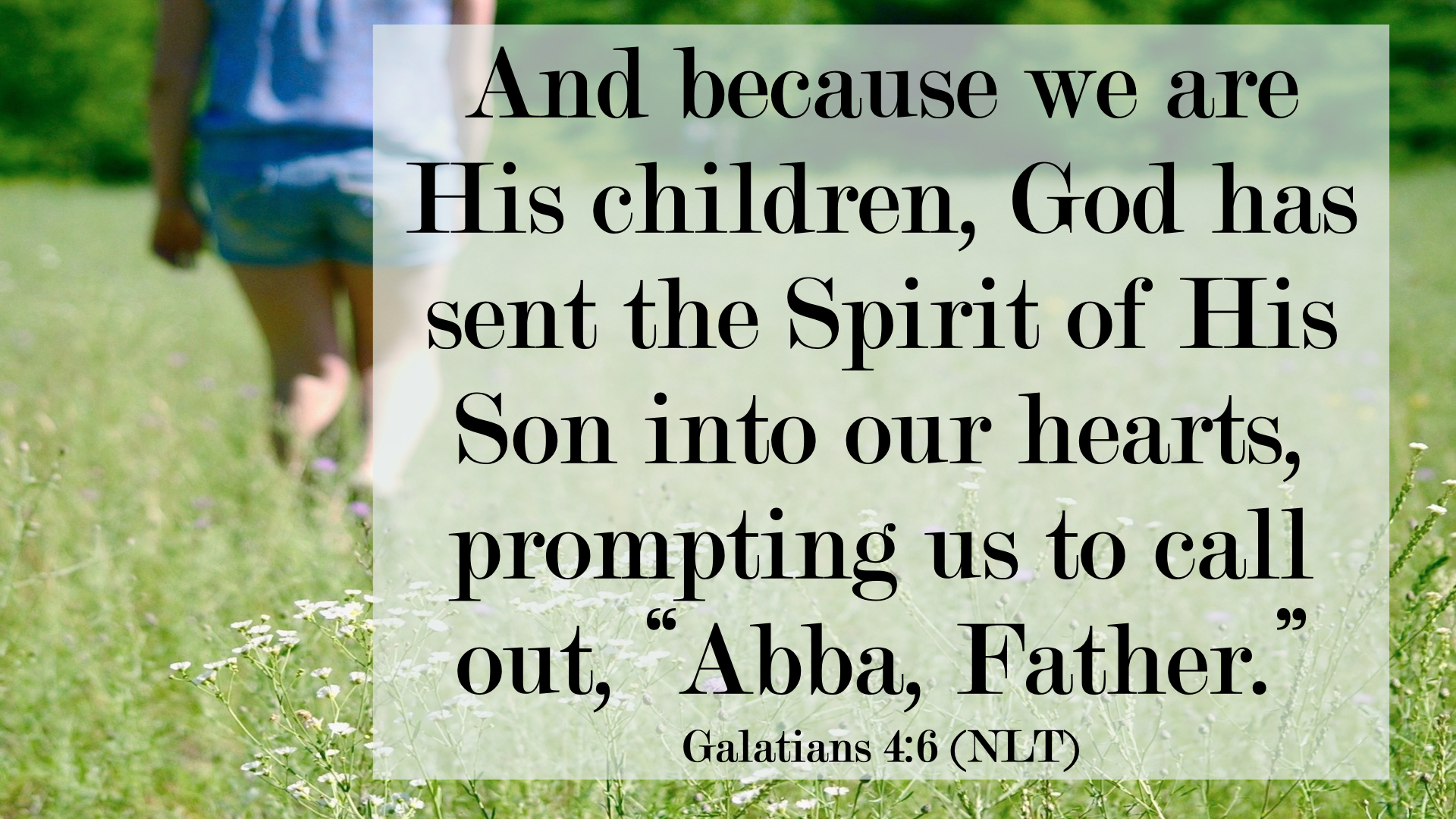
In His intense prayer time just before His crucifixion, Jesus used the phrase “Abba Father” to express His intimacy. This phrase is used two other times in the New Testament. Both of these times it’s telling us that we can approach our Heavenly Father the same way Jesus did (see Mark 14:36; Galatians 4:6; Romans 8:15). 

The Romans understood the weight that was associated with the practice of adoption. They knew that a father chose that child to be a part of his family, giving that child full acceptance into the family. Marvin Vincent noted,

“We have but a faint conception of the force with which such an illustration would speak to one familiar with the Roman practice; how it would serve to impress upon him the assurance that the adopted son of God becomes, in a peculiar and intimate sense, one with the heavenly Father.”

In writing to the Romans, Paul reminds them that for those who are in Christ Jesus, there is no condemnation—nothing holding them back from God’s presence. He also said that God has fully adopted us into His family, and that the Holy Spirit was now in us, encouraging us to call God “Abba Father” just as Jesus did (Romans 8:1, 14-16). 

Check out these two final thoughts from Jesus: He encourages us to approach God as innocent children, and He praises Our Father for then intimately confiding in His children—

“Truly I tell you, unless you change and become like little children, you will never enter the kingdom of heaven. … I praise You, Father, Lord of heaven and earth, because You have hidden these things from the wise and learned, and revealed them to little children.” (Matthew 18:3, 11:25) 

No matter what your relationship was with your earthly father, Jesus encourages us to approach our Heavenly Father in innocence, wonder, expectation, imagination, and intimacy. This is what God desires in His relationship with you! 

If you’ve missed any of the messages in our series Intimate Conversation, you can find them all by clicking here. 

►► Would you please prayerfully consider supporting this ministry? My Patreon supporters get behind-the-scenes access to exclusive materials. ◀︎◀︎

Powerful Childlike Prayer

Listen to the podcast of this post by clicking on the player below, and you can also subscribe on Apple or Spotify.

I was at a friend’s house and interacting with their two young children. Their son was very energetic and playful, but not very talkative. When the tikes climbed up to the kitchen counter for lunch, their mom asked them what they wanted to eat. The little girl placed her lunch order and then said, “He wants PB&J with milk.” I asked him, “Is that really what you want?” He smiled a big grin and nodded his head. Isn’t nice to have someone give us words when we are lacking in our own vocabulary? 

Last week we learned how the Spirit of Truth would help us speak truthful words to those who were antagonistic to the Good News of Jesus. If the Holy Spirit will do this when we are speaking to people who are enemies of the Cross of Christ, how much more so will He help us when we are speaking to our loving Heavenly Father! 

Here’s something we never have to doubt: God’s love for us. We don’t have to try to get our Father’s attention because He wants to lavish His love on us (Matthew 6:7-8; Luke 11:9-13; Ephesians 1:5). 

Jesus likens our coming to God as a child coming to its father. Sometimes we come with fears or tears, sometimes with hunger or thirst, or sometimes just to feel His closeness. The Holy Spirit is also called the Spirit of Adoption, and He loves to keep on reminding us how much our Father loves us (Romans 8:14-17). 

“When our perplexed spirit is so befogged and beclouded that it cannot see its own need and cannot find out the appropriate promise in the Scriptures, the Spirit of God comes in and teaches us all things and brings all things to our remembrance whatever our Lord has told us. He guides us in prayer and thus He helps our infirmity. … He will write the prayers that I ought to offer upon the tablets of my heart, and I will see them there and so I will be taught how to plead! It will be the Spirit’s own Self pleading in me and by me and through me before the throne of grace!” —Charles Spurgeon 

Our loving Father is not looking for well-polished prayers; He’s looking for real, childlike prayers. Let’s be honest: Not even the most educated person in the world has a vocabulary sufficient enough to accurately communicate with The Almighty God! So He wants us to come to Him in simple, childlike anticipation. Jesus reminded us, “Your Father knows the things you have need of before you ask Him.” Our Father wants to answer our prayers, and He has given us His Holy Spirit to help us pray in a way that He can answer (Romans 8:26-27). 

The Holy Spirit turns our tearful, childlike prayers into powerful, poetic prayers!

Don’t try to spruce up your vocabulary before you come to God in prayer. Just come to God in prayer, trusting that the Holy Spirit will make a beautiful prayer even out of your childlike groanings! The Holy Spirit turns our groans into prayerful poetry in our Father’s ears! 

If you’ve missed any of the messages in our series called We Are: Pentecostal, I’ve shared the complete list here.

►► Would you please prayerfully consider supporting this ministry? ◀︎◀︎

Thursdays With Spurgeon—Talking Back To Your Old Family

This is a weekly series with things I’m reading and pondering from Charles Spurgeon. You can read the original seed thought here, or type “Thursdays With Spurgeon” in the search box to read more entries.

Listen to the podcast of this post by clicking on the player below, and you can also subscribe on iTunes or Spotify.

Talking Back To Your Old Family

     When a man is adopted into a family and comes thereby under the regime of his new father, he has nothing whatever to do with the old family he has left behind and he is released from subjection to those whom he has left. And so, the moment I am taken out of the family of satan, the prince of this world has nothing to do with me as my father and he is no more my father. I am not a son of satan; I am not a child of wrath. 

     …When the law comes to a Christian with all its terrible threats and horrible denunciations, the Christian says, ‘Law! Why do you threaten me? I have nothing to do with you. I follow you as my rule, but I will not have you to be my ruler. I take you to be my pattern and mold, because I cannot find a better code of morality and of life, but I am not under you as my condemning curse.’ …  

     If one man adopts another child into his family, he cannot give it his own nature as his own child would have had. And if that child whom he will adopt should have been a fool, it may still remain so. He cannot make it a child worthy of him. But our heavenly Father, when He comes to carry out adoption, gives us not only the name of children, but the nature of children, too. He gives us a nature like His well-beloved Son, Jesus Christ.

From Adoption

Charles Spurgeon was called “the prince of preachers” for good reason! His word pictures are so biblically-accurate and so easy to recall, that anyone can grasp the concepts he shares from the Scripture. I have two takeaways from this portion of his sermon: 

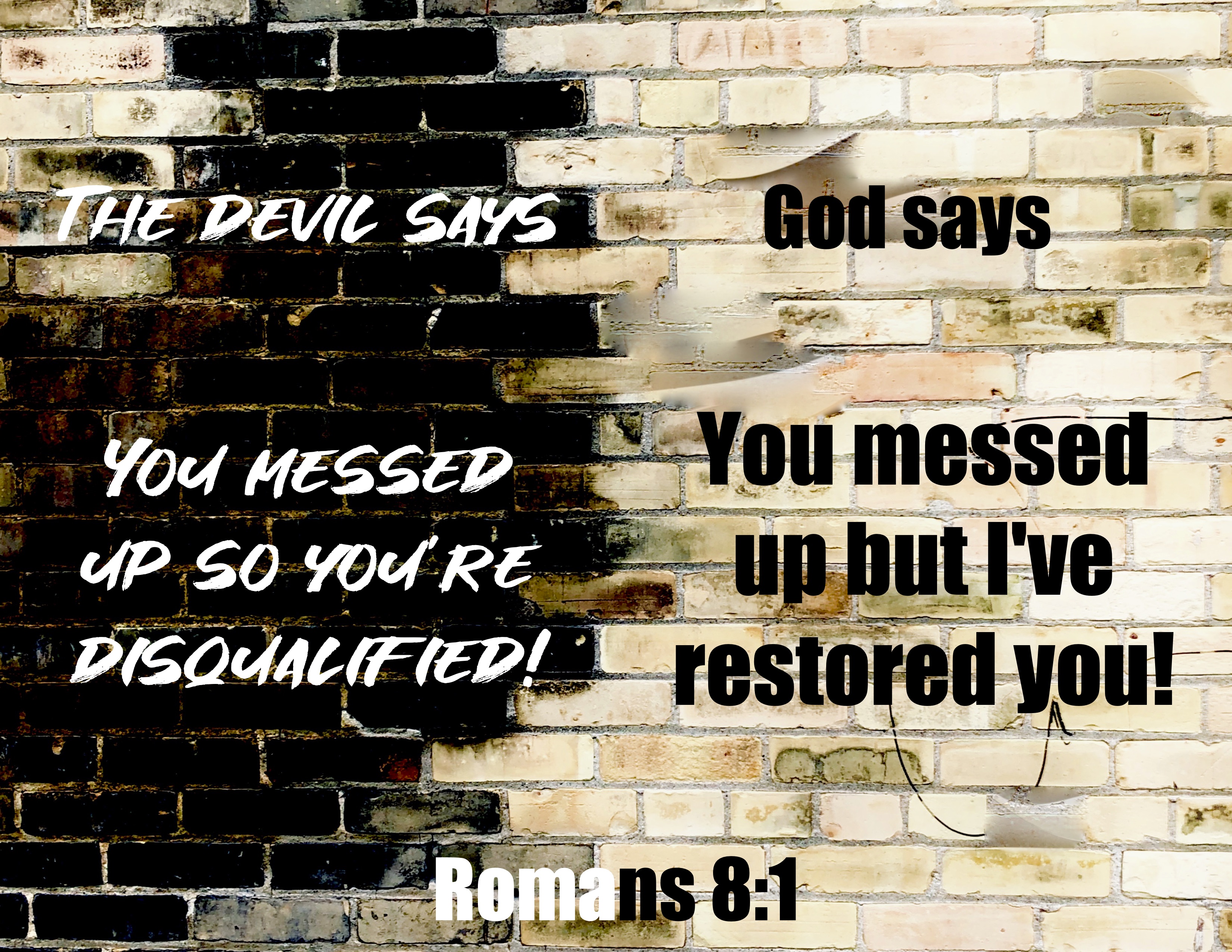
First, we need to talk back to our old family. The name “satan” means accuser: he accuses, condemns, slanders, and does his best to separate. When a Christian has been adopted into God’s family, there is no condemnation for the one who now calls God, “Abba Father” (see Romans 8:1-17). 

This is where we need to call out satan’s lies. I mean literally call them out. We need to talk back to the devil and tell him the truth, just as Spurgeon said in his example of talking back to the Law. Let me say it again: literally speak the truth out loud. The devil needs to hear it and your own ears need to hear it too: “I am no longer subject to your jurisdiction. You have no say over me any longer. I am a child of God. My sins have been forgiven and forgotten; therefore, there are no grounds left for any condemnation!”


Second, we need to talk back to our old nature. After being adopted into God’s family, the Holy Spirit undertakes a process to conform us to the image of Jesus. This process is called sanctification, but I like to call it saint-ification. 

This is where we call out what we used to be. And, again, I challenge to literally speak these words out loud. Don’t say, “I’m so impatient,” but tell yourself (out loud!), “I am becoming the patient saint Jesus wants me to be.” Don’t say, “I’ll never get this right,” but tell yourself, “I am learning more and more about Christ’s nature with each attempt.” Talk back to these old habits from your old family, and tell them about the new saintly habits the Holy Spirit is developing in you. 

The book of Revelation tells us that the saints overcame the slanderous devil by the blood of Jesus and by the words of their testimony. Speak out those life-affirming words every time that slanderer tries to make you forget into whose family you have been adopted!

Hallowed Be Your Name

Jesus was once asked, “What is the greatest commandment?” He responded by saying, “The Lord our God, the Lord is One,” and then saying we should love God with all our heart, soul, mind, and strength (which fulfills the first four of the Ten Commandments), and then love our neighbor as ourselves (which fulfills the next six of the Commandments).

To live this way, we need to pray this way too! That’s why Jesus taught us a model prayer—which we typically call “The Lord’s Prayer”—in which the first three petitions are for God’s glory (hallowed be Your name; Your kingdom come; Your will be done), and the next three petitions are for man’s help (daily bread, forgiveness, victory over temptation). 

Jesus says we can pray to our Heavenly Father, but we still need to remember that He is also the God of the Hallowed Name. The Greek word for hallowed is made up of two other Greek words: 

  • hagnos is something totally immaculate, blindingly pure, and unapproachable. The apostle Paul said this about God: Our Master, Jesus Christ, is on His way. He’ll show up right on time, His arrival guaranteed by the Blessed and Undisputed Ruler, High King, High God. He’s the only one death can’t touch, His light so bright no one can get close. He’s never been seen by human eyes—human eyes can’t take Him in! Honor to Him, and eternal rule! (1 Timothy 6:15-16) 
  • thalpo means cherished. The same apostle Paul also said that God has given us the right to approach Him as “Abba, Father” or “Daddy, God” (Romans 8:15). 

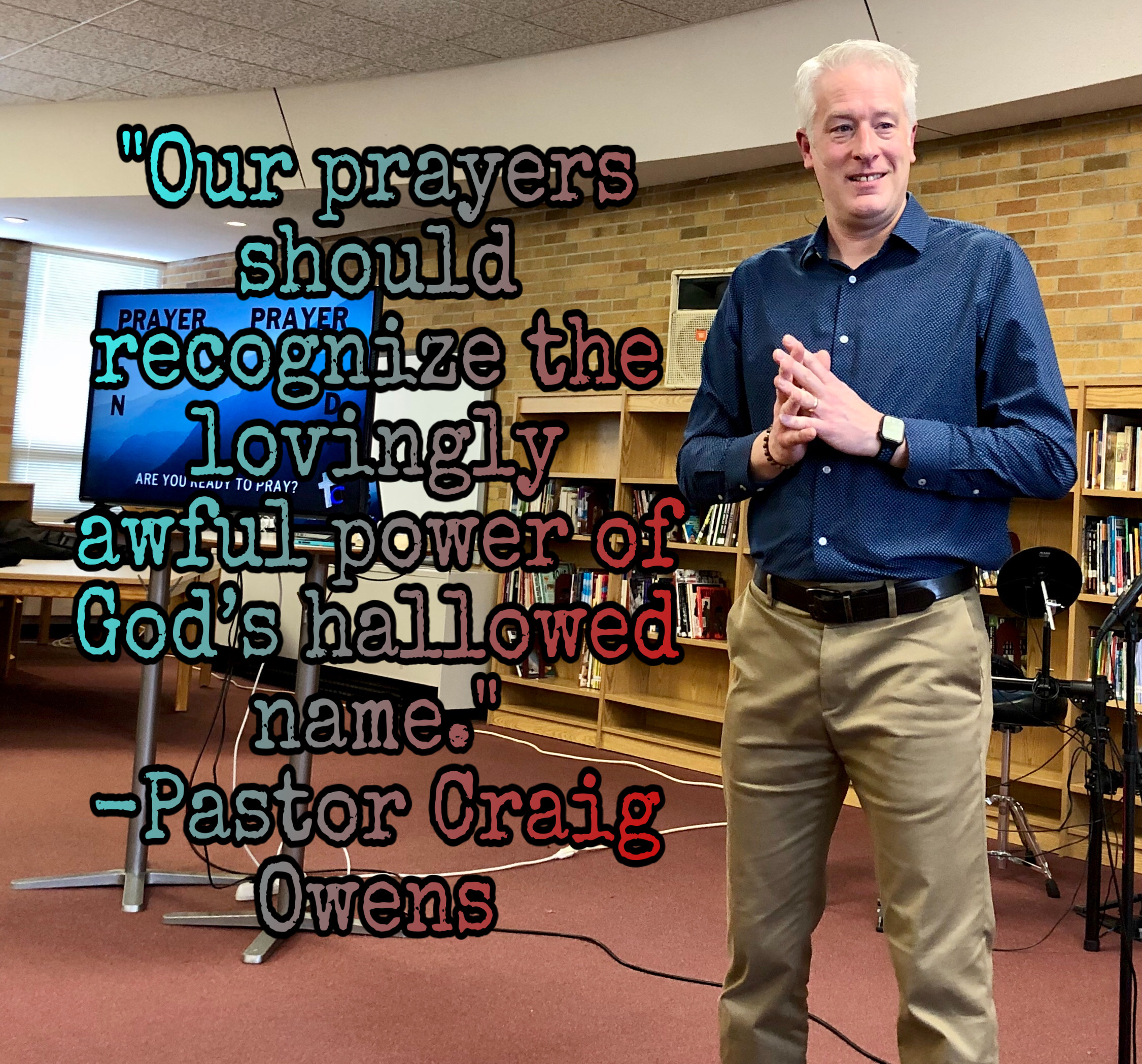
He is both unapproachable and approachable. He is both awful and lovable. He is both Supreme power and Supreme love. He is both Hallowed and Father. He is unique. Since He is unique, we must approach Him uniquely in holy prayer. But we must always approach first and foremost to reverence His holy Name. As Matthew Henry said, “Let Him have the praise of His perfections, and then let us have the benefit of them.” 

Think of His glory in every request you make of Him. Father, may Your holy, righteous name be hallowed and exalted and made famous as You…

  • … provide my daily bread
  • … forgive me and help me forgive others
  • … give me victory over temptations

Let’s not pray prayers that rob God of His glory. Prayers like:

  • Selfish prayers that are all about me, me, me
  • Doubtful prayers that aren’t really sure God can help
  • Little prayers that insult God’s power and His love
  • Unexpectant prayers that ask God to do something, but we don’t really expect that He will

Let’s be known as people who pray confidently humble prayers. Let’s come to a Father Who is All-Love and to a God Who is All-Powerful—a God Whose power is perfectly balanced by His love, and Whose love is perfectly balanced by His power. May our prayers HALLOW His name! 

Join me this Sunday as we continue to learn more about prayer. 

14 Quotes From “Living A Prayerful Life”

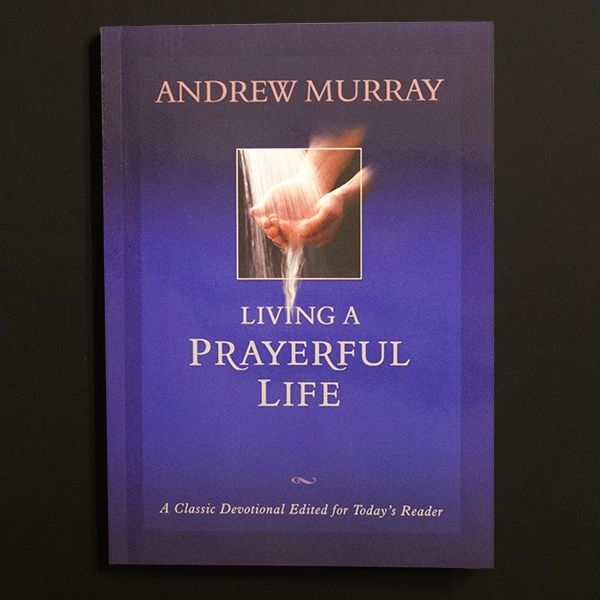
Living A Prayerful LifeAndrew Murray’s book Living A Prayerful Life is a timeless call to all Christians to value prayer more highly. You can read my book review by clicking here. Below are a few of the quotes I especially appreciated.

“How many of us admit to taking a mere five minutes for prayer! The claim is that there is no time. The reality is that a heart desire for prayer is lacking. … Prayerlessness is proof that for the most part our life is still under the power of the flesh. Prayer is the pulse of life; by it the doctor can diagnose the condition of the heart.” 

“God’s child can conquer anything and everything by prayer. Is it any wonder that satan does his utmost to snatch that weapon from the Christian or hinder him in the use of it?”

“Think about our Lord’s words: ‘Believe Me when I say that I am in the Father and the Father is in Me. [And] you know Him, for He lives with you and will be in you’ (John 14:11, 17). Those words are the secret of the life of prayer. Take time in your place of prayer to bow down and worship. Wait on Him until He reveals Himself, takes possession of you, and goes with you to show you how a person may live and walk in abiding fellowship with Him.”

“I know all too well what weak concepts we have concerning the promises and the power of God. I see how prone we are to backsliding, to limiting God’s power, and to deeming it impossible for Him to do greater things than we have seen. It is a glorious thing to get to know God in a new way in our prayer time. That, however, is only the beginning. It is something still greater and more glorious to know God as the All-Sufficient One and to wait on His Spirit to open our hearts and minds to receive the great things, the new things that He longs to bestow on those who wait for Him.”

“Does it not become even more clear that what God wills to accomplish on earth needs prayer as its indispensable condition? There was only one way for Christ and so for believers: a heart and mouth open toward heaven in believing prayer will certainly not be put to shame.” 

“God has done His utmost to make prayer as natural and effectual as the cry of a child to an earthly father when he says, ‘Abba, Father.’”

“Our first work, therefore, ought to be to come into God’s presence not with our ignorant prayers, not with many words and thoughts, but in the confidence that the divine work of the Holy Spirit is being carried out within us. This confidence will encourage reverence and quietness and will also enable us, in dependence on the help that the Spirit gives, to lay our desires and deepest needs before God. The supreme lesson for every prayer is first of all to commit to the leading of the Holy Spirit and in total dependence on Him to give Him first place. Through Him your prayer will have value you cannot imagine. Through Him also you will learn to express your desires in the name of Christ.”

“If we remain prayerless, let our hearts be deeply ashamed. By so doing we make it impossible for God to impart His holiness to us. Let us ask God to forgive us this sin and to draw us to Himself by His heavenly grace and to strengthen us to have fellowship with Him, the One Who is holy.”

“As you enter a time of private prayer, let your first focus be to give thanks to God for the unspeakable love that invites you to come to Him and to converse freely with Him.”

“Prayer is not a soliloquy, where everything comes from one side; it is a dialogue, where God’s child listens to what the Father says, replies to it, and then makes his requests known.”

“Prayerful study of the Bible is indispensable for powerful prayer.”

“Do not forget the close bond between the inner room and the outside world. The attitude of the inner prayer room must remain with us all day. The object of secret prayer is to unite us to God that we may know His abiding presence with us.”

“The Word supplies us with material for prayer and encourages us to expect everything from God. … It is only by prayer that we may live such a life that every word of God might be fulfilled in us.” 

“Our daily life has a tremendous influence on our prayers, just as our prayers influence our daily life. In fact, our life is a continuous prayer. We are continually praising or thanking God by our actions and by the manner in which we treat others. This natural prayer and desire for God can be so strong in a man (who also prays to God) that the words of prayer that he actually utters cannot be heard. At times God cannot hear the prayer of your lips, because the worldly desires of your heart cry out to Him much more strongly and loudly.”

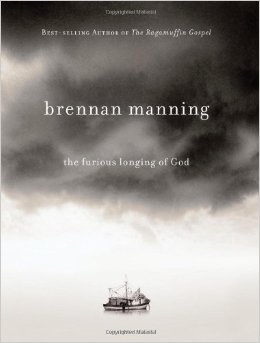
10 Quotes From “The Furious Longing Of God”

Furious Longing Of GodI love the way Brennan Manning writes! It’s so gut-level real. His words both convict me and encourage me to go deeper into God’s love. You can read my full book review of The Furious Longing Of God by clicking here. Below are some of the quotes I especially appreciated.

“The God I’ve come to know by sheer grace, the Jesus I met in the grounds of my own self, has furiously loved me regardless of my state—grace or disgrace. And why? For His love is never, never, never based on our performance, never conditioned by our moods—of elation or depression. The furious love of God knows no shadow of alteration or change. It is reliable. And always tender.”

“The foundation of the furious longing of God is the Father who is the originating Lover, the Son who is the full self-expression of that Love, and the Spirit who is the original and inexhaustible activity of that Love, drawing the created universe into itself.”

“Pagan philosophers such as Aristotle arrived at the existence of God via human reason and referred to Him in vague, impersonal terms: the uncaused cause, the immovable mover. The prophets of Israel revealed the God of Abraham, Isaac, and Jacob in a warmer, more compassionate manner. But only Jesus revealed to an astonished Jewish community that God is truly Father.” 

“The degree of Abba’s love for me is in direct proportion to His love for Jesus. For example, I can love the mailman with twenty percent and my best friend with ninety percent. But with God, there is no division, no more and no less. God loves me as much as He loves Jesus. Wow!”

“First, if we continue to picture God as a small-minded bookkeeper, a niggling customs officer rifling through our moral suitcase, as a policeman with a club who is going to bat us over the head every time we stumble and fall, or as a whimsical, capricious, and cantankerous thief who delights in raining on our parade and stealing our joy, we flatly deny what John writes in his first letter (4:16)—‘God is love.’ In human beings, love is a quality, a high-prized virtue; in God, love is His identity. Secondly, if we continue to view ourselves as moral lepers and spiritual failures, if our lives are shadowed by low self-esteem, shame, remorse, unhealthy guilt, and self-hatred, we reject the teaching of Jesus and cling to our negative self-image.”

“Healing becomes the opportunity to pass off to another human being what I have received from the Lord Jesus; namely His unconditional acceptance of me as I am, not as I should be. He loves me whether in a state of grace or disgrace, whether I live up to the lofty expectations of His gospel or I don’t. He comes to me where I live and loves me as I am.”

“To affirm a person is to see the good in them that they cannot see in themselves and to repeat it in spite of appearances to the contrary.”

“Jesus said the world is going to recognize you as His by only one sign: the way you are with one another on the street every day. You are going to leave people feeling a little better or a little worse. You’re going to affirm them or deprive them, but there’ll be no neutral exchange.”

“The question is not can we heal? The question, the only question, is will we let the healing power of the risen Jesus flow through us to reach and touch others, so that they may dream and fight and bear and run where the brave dare not go?” 

“How is it then that we’ve come to imagine that Christianity consists primarily in what we do for God? How has this come to be the good news of Jesus? Is the kingdom that He proclaimed to be nothing more than a community of men and women who go to church on Sunday, take an annual spiritual retreat, read their Bibles every now and then, vigorously oppose abortion, don’t watch x-rated movies, never use vulgar language, smile a lot, hold doors open for people, root for the favorite team, and get along with everybody? Is that why Jesus went through the bleak and bloody horror of Calvary? Is that why He emerged in shattering glory from the tomb? Is that why He poured out His Holy Spirit on the church? To make nicer men and women with better morals? The gospel is absurd and the life of Jesus is meaningless unless we believe that He lived, died, and rose again with but one purpose in mind: to make brand-new creations. Not to make people with better morals, but to create a community of prophets and professional lovers, men and women who would surrender to the mystery of the fire of the Spirit that burns within, who would live in ever greater fidelity to the omnipresent Word of God, who would enter into the center of it all, the very heart and mystery of Christ, into the center of the flame that consumes, purifies, and sets everything aglow with peace, joy, boldness, and extravagant, furious love.”

Miserable

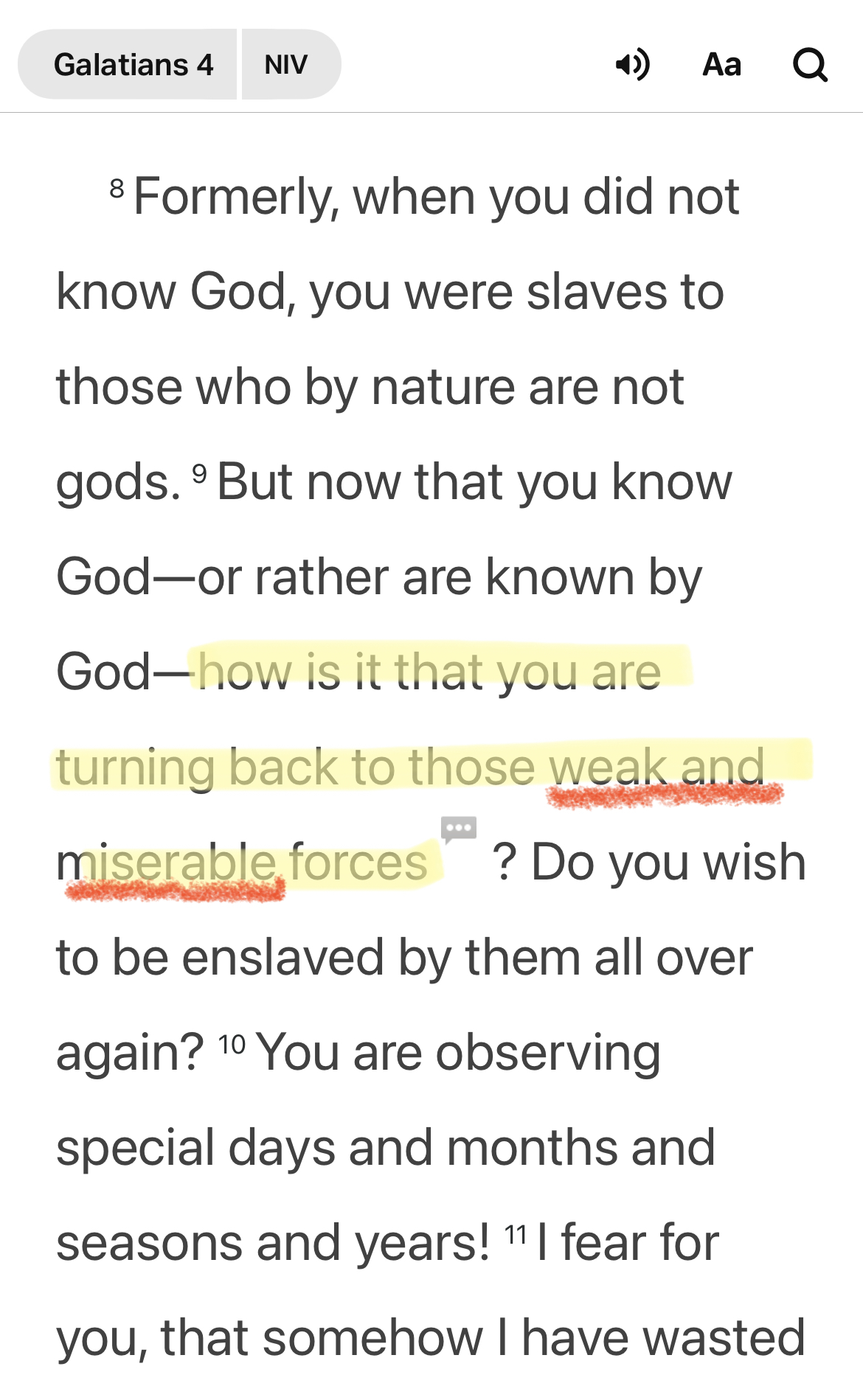
The Apostle Paul asked the Christians in Galatia an important question:

How is it that you are turning back to those weak and miserable principles? (Galatians 4:9)

The two words together in the Greek—weak and miserable—imply things that impoverish us and reduce us to lowly paupers and beggars. That’s not a pretty picture!

Look at the contrast between the princely life and the pauper’s life.

Those who follow Christ:

  • Are called sons of God (Galatians 4:6a)
  • Experience Abba Father’s favor (4:6b)
  • Are heirs to God’s Kingdom (4:7)

Those who don’t follow Christ:

  • Live as slaves (4:7)
  • Are separated from God’s favor (4:1-3)
  • Live as miserable beggars (4:9)

Why would anyone choose the miserable beggar’s life?

Here’s the principle: Everyone serves someone! I will either serve God and be called His son, or I will serve myself (my desires, my passions, my way of doing things) and be called a stranger to God.

Do I want to be in control, or do I want to let God be in control? When I try to control my own life, not only am I not in control, but I actually become a slave to my own passions. Ironic, isn’t it?

The choice is simple, but the choice must be made every day. I must choose to serve God in every moment of every day. It’s the only way to avoid the miserable life, and live the blessed life God has for me.

Battling Depression

Have you ever been depressed? I have. I know all too well how depression robbed me of sleep, sapped joy from my day, kept me from smiling and on the verge of tears all the time, made sunny days seem cloudy, caused me to sigh all the time and lose interest in the things that used to bring me pleasure, and brought such a sense of loneliness and isolation.

Did you know that Jesus felt the crushing load of depression too? As He was praying in the Garden of Gethsemane just before His arrest, listen to these words—

  • He began to be sorrowful and troubled
  • He became anguished and distressed
  • He began to show grief and distress of mind and was deeply depressed
  • He said to them, “My soul is overwhelmed with sorrow to the point of death”
  • He prayed more fervently, and He was in such agony of spirit that His sweat fell to the ground like great drops of blood
  • “Abba, Father,” He cried out, “everything is possible for You. Please take this cup of suffering away from Me. Yet I want Your will to be done, not Mine.” (see Matthew 26:37-38; Mark 14:36; Luke 22:44)

The writer of Hebrews wrote this about Jesus—

While Jesus was here on earth, He offered prayers and pleadings, with a loud cry and tears, to the One who could rescue Him from death. And God heard His prayers because of His deep reverence for God. Even though Jesus was God’s Son, He learned obedience from the things He suffered. In this way, God qualified Him as a perfect High Priest, and He became the source of eternal salvation for all those who obey Him. (Hebrews 5:7-9)

We learn something in suffering that we can’t learn any other way. Jesus learned how to experience all of the grief, anxiety, and depression that you and I will ever feel. And that is what qualifies Him to be a perfect High Priest for us.

Our part is to pray. Time and time and time again, not only did Jesus pray, but He encouraged His disciples to pray as well. As you continue to pray, Jesus is your High Priest praying for you. Only He truly knows how to translate the cry of your heart into a language Abba Father can understand.

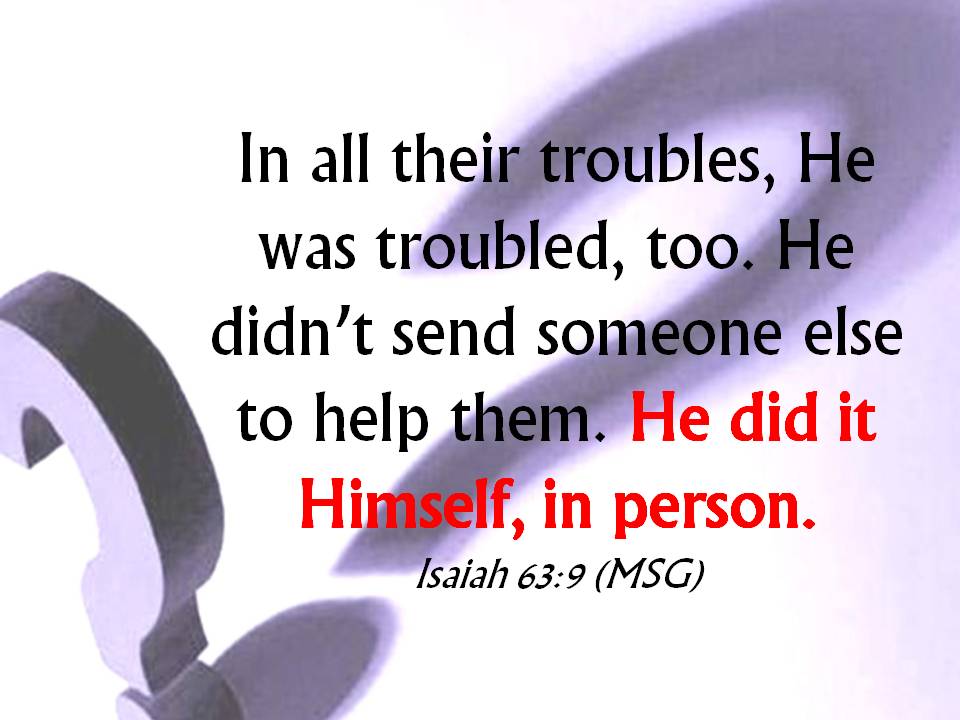
In all their troubles, He was troubled, too. He didn’t send someone else to help them. He did it Himself, in person. (Isaiah 63:9)

If you’ve missed any of the messages in this series called Where’s God, please check them all out by clicking here.