‘The Depth Of My Love For You’

Listen to the podcast of this post by clicking on the player below, and you can also subscribe on AppleSpotify, or Audible. 

The apostle Paul’s letters to the church in Corinth show two things: a lot of correction and a lot of love. In fact, it’s in the middle of some correction and redirection about the misuse of spiritual gifts that Paul gives us the quintessential definition of love in 1 Corinthians 13. 

Paul also wrote, “For I wrote you out of great distress and anguish of heart and with many tears, not to grieve you but to let you know the depth of my love for you” (2 Corinthians 2:4). 

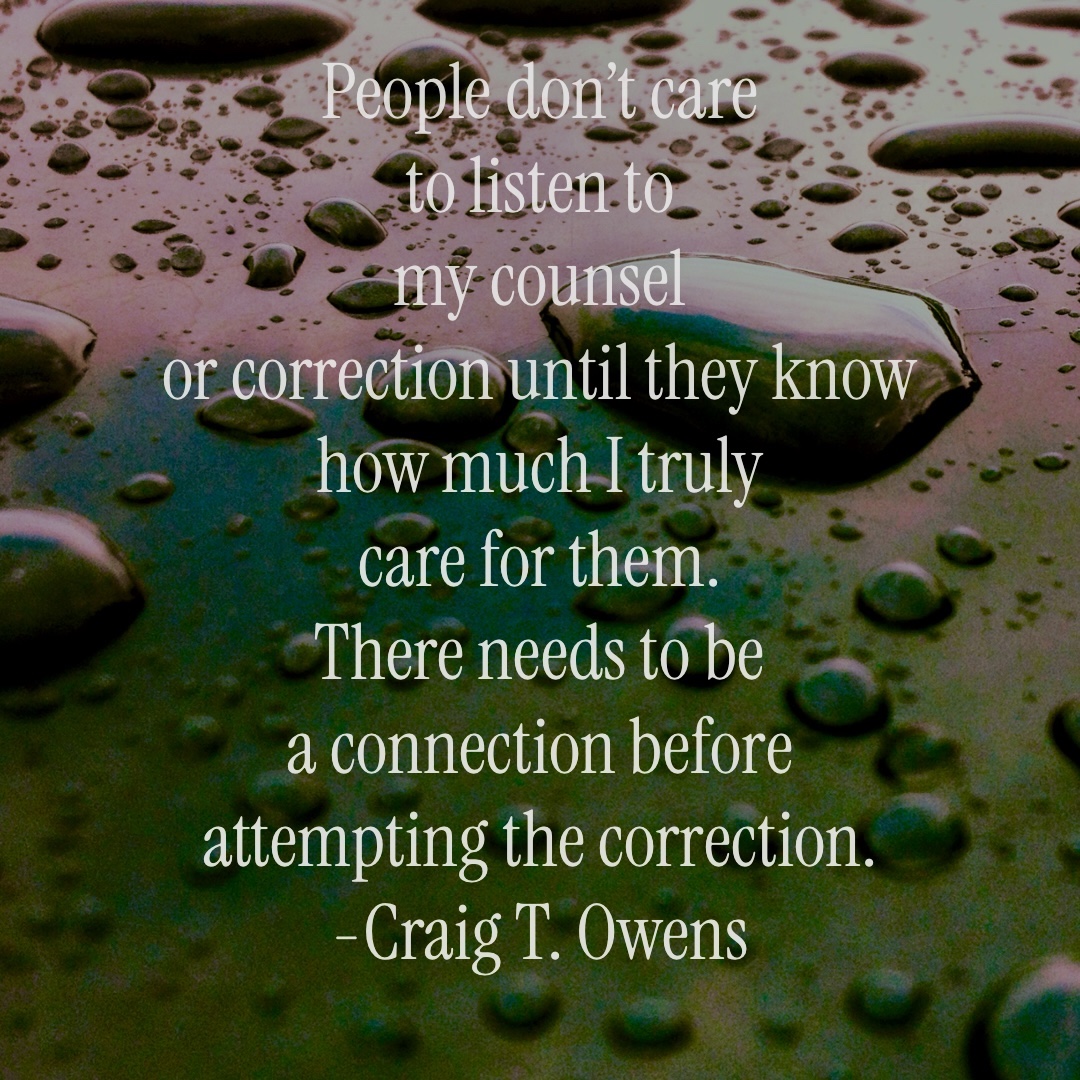
The truth does need to be spoken to wayward sheep, but it has to be birthed in love and spoken in love or else it will alienate more than help. People don’t care to listen to my counsel or correction until they know how much I truly care for them. 

There needs to be a connection before attempting the correction. 

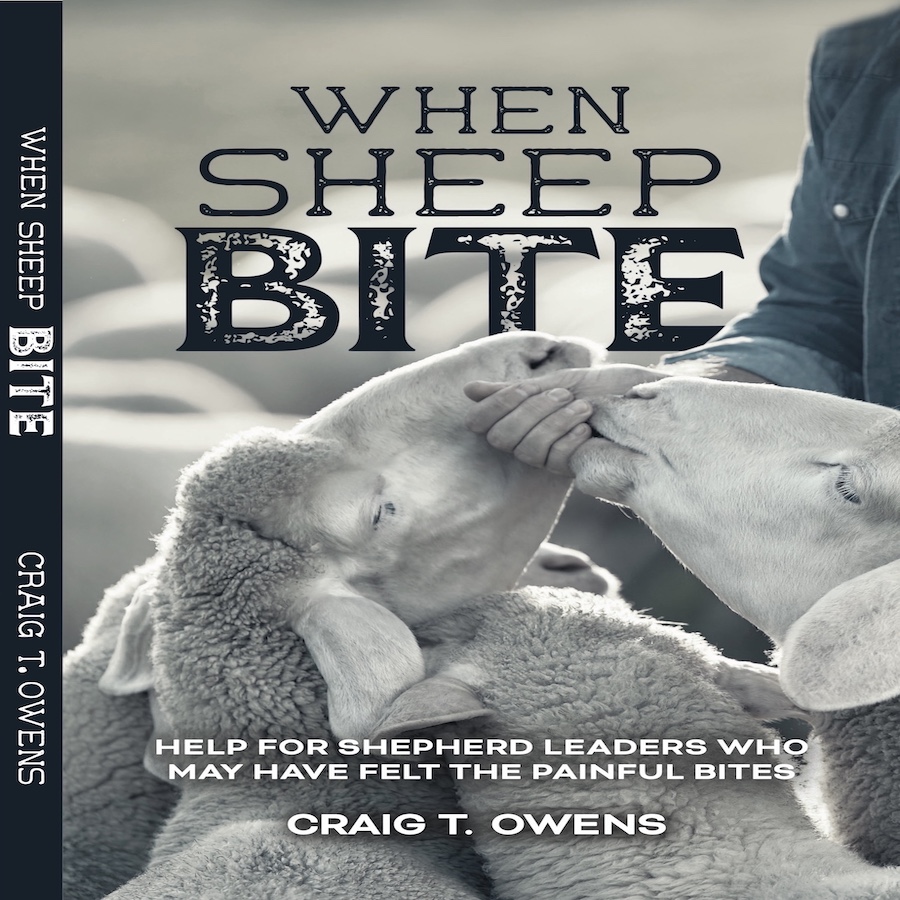
I have an entire chapter in my book When Sheep Bite on this topic. Here’s an excerpt—

     It is possible that our grace-filled response to our biting sheep may make the difference to their eternal home. The apostle Paul told Timothy that those sheep who were out of line were trapped by the devil, and unless Timothy did something those sheep may never break free—

     And the Lord’s servant must not be quarrelsome but must be kind to everyone, able to teach, not resentful. Opponents must be gently instructed, in the hope that God will grant them repentance leading them to a knowledge of the truth, and that they will come to their senses and escape from the trap of the devil, who has taken them captive to do his will. (2 Timothy 2:24-26) 
     For some reason many shepherd leaders have made “confrontation” a dirty word, or have sullied its usefulness by confronting in an ungodly way. One thing that will help us handle confrontation the right way is to remember why we confront: The goal of confrontation is restoration, not destruction! 

     There is a cliché that says, “Once bitten, twice shy.” As I mentioned earlier, after we’ve been bitten we need to allow the Holy Spirit to search our hearts to point out anything in us that may have contributed to such a painful outburst from that sheep. Perhaps after doing all of that you attempted to confront a sheep and it didn’t go so well. As a result, you are now a bit shy to confront another wayward sheep. Dick Brogden wrote:

     “Experience so easily leads us to cynicism. Information too easily leads to pain. Leadership often makes us jaded because we’ve seen so much junk, all the effects of broken people breaking people. … A strong heart determines that it will stay soft, that it will absorb hurt, disappointment, and reality, and yet believe that God can redeem people and circumstances.” 

     Handled correctly, confrontation can lead to restoration, a deeper intimacy, and newfound maturity. Handled incorrectly, and, well, let’s just say it can get very ugly!

     I imagine we have all heard stories of the fallout from confrontation in another pasture, or perhaps we know the painful consequences in our own pastures. But let’s try for a moment to put those past experiences or secondhand stories out of our minds and take a fresh look at how to handle confrontation. 

     Samuel was going to be sent by God to confront King Saul about the sin he had committed. Look at this passage: “Then the word of the Lord came to Samuel: ‘I am grieved that I have made Saul king, because he has turned away from Me and has not carried out My instructions.’ Samuel was troubled, and he cried out to the Lord all that night” (1 Samuel 15:10-11). 

     Did you catch how Samuel responded? He cried out to the Lord all that night. 

     Perhaps if we, as godly under-shepherds, cried before we confronted the results might be more healthy. Billy Graham noted, “Tears shed for self are tears of weakness, but tears shed for others are a sign of strength.” (from Chapter 5 ‘Cry Before You Confront’) 

If you have some difficult but necessary words to speak to someone, take time to cry before you confront. Ask the Holy Spirit to reveal to you the most loving way to handle this situation. Cry before you confront, and may your tears soften your heart to speak truthful words saturated in your love for God and your love for this wayward saint. 

Please pick up a copy of When Sheep Bite to learn more biblical strategies for handling biting sheep and for healing from biting sheep. If I can be of help to you, please get in touch with me.

P.S. You may also be interested in a whole series about growing and showing our love called Loving the Unlovable.

►► Would you please prayerfully consider supporting this ministry? My Patreon supporters get behind-the-scenes access to exclusive materials. ◀︎◀︎

Links & Quotes

For personal growth and team growth, consider how you can set both small, bite-size goals that can be done daily and also bigger, stretching goals that energize the competitive drive. Check out more leadership content from The Craig and Greg Show.

I have a lot of new video content on my YouTube channel every week. Please check it out and subscribe so you don’t miss anything.

“This chapter contains the premier teaching of Christianity. It is an undying expression of Jesus’ doctrine of heavenly love. This chapter is more potent for the building of the church than any, or all, of the various manifestations of God’s power. Love is the church’s most effective weapon. Love is the essence of God’s nature. Love is the perfection of human character. Love is the most powerful, ultimate force in the universe. Without love, al various gifts of the Spirit are of no avail. … What a call to self-examination!” —Dr. Henry Halley, commenting on 1 Corinthians 13

“The transition from the good man to the saint is a sort of revolution; by which one for whom all things illustrate and illuminate God becomes one for whom God illustrates and illuminates all things.” —G.K. Chesterton 

T.M. Moore launched a new series of articles about the coming of God’s Kingdom in these last days. In the first article, T.M. wrote, “In his Pentecost sermon Peter announced that, with the resurrection of Jesus Christ and the pouring out of God’s Spirit, the ‘last days’ had begun (Acts 2:14-17), the new economy has been put into effect. Paul says Jesus came in ‘the fullness of the times’ to inaugurate His great work of redemption in these last days (Galatians 4:4). The ‘fullness of the times’ in which the divine economy is unfolding, is now. We are living in the last days, the fullness of the times, when the Lord of heaven and earth is establishing and expanding His divine economy.”

Once again, a new fossil discovery doesn’t fit into evolutionary models, but instead bolsters the facts recorded in the Bible about Creation and the Flood.

“For years, Michael Pratt operated in the shadows of the internet, profiting from coercion, deception, and exploitation under the guise of adult entertainment.” Pratt has now pled guilty to sexual trafficking charges. Fight The New Drug wrote, “The story is more than a courtroom headline. It’s a stark reminder of how the porn industry can weaponize vulnerability, disguise abuse and trafficking, and sell it as fantasy.”

A really penetrating question from John Piper: Why do so many PhDs in theology commit adultery?

Christ’s Advents Bring Love

Listen to the podcast of this post by clicking on the player below, and you can also subscribe on AppleSpotify, or Audible

The lights of hope, peace, and joy burn brightly. They drive out the darkness in our own lives and in the lives of others with whom we come in contact. But you and I both know lots of people who are very positive people—always upbeat, seemingly peaceful and joyful. The real question is: What is the source of this light? Or more specifically, how do people know that you are hopeful, peaceful, and joyful because you know Jesus as your Savior and King?  

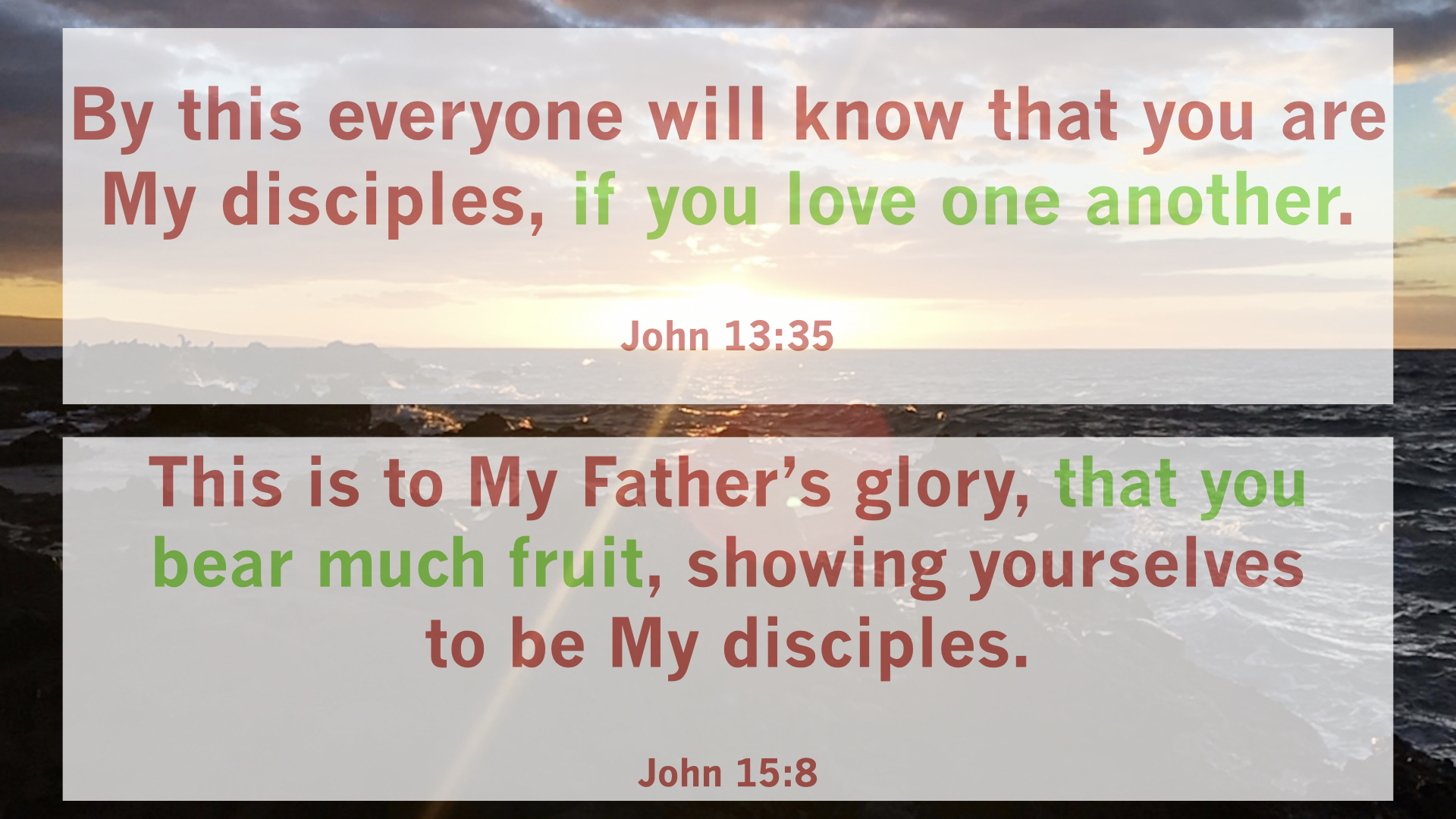
Jesus said there were two proofs that we are His followers:

  1. That we love others (John 13:35) 
  2. That we are producing God-honoring fruit (John 15:8) 

God IS love—it’s His very nature. Just like an apple doesn’t have the capacity for apple-ness but is by its nature an apple, so God doesn’t have the capacity for love, or love more than others, but He is by His nature Love. 

Any qualities of hope, peace, and joy in our lives have to originate from God’s love. We cannot manufacture these fruits, but they are a natural result of our being connected with Love Himself. 

Love is what brought Jesus to earth at His First Advent (John 3:16-17; Romans 5:5-8). And we can only love others and produce the fruit of hope, peace, and joy because Jesus went first and became our Source (1 John 4:19; John 15:1). 

Love brought Jesus to earth at His First Advent, and Love is what empowers us to be loving and fruitful between His Advents. 

  1. Love one another means that love serves (John 13:1-5, 15-17, 34-35) 
  2. Bear much fruit means that love grows (John 15:1-12) 

We can only serve and be lovingly fruitful as we stay connected to Love (2 Peter 1:2-7; 1 John 2:28). 

Love brought Jesus to earth at His First Advent, Love is what empowers us to be loving and fruitful between His Advents, and Love is what patiently waits for Christ’s Second Advent (2 Peter 3:3-4, 9). 

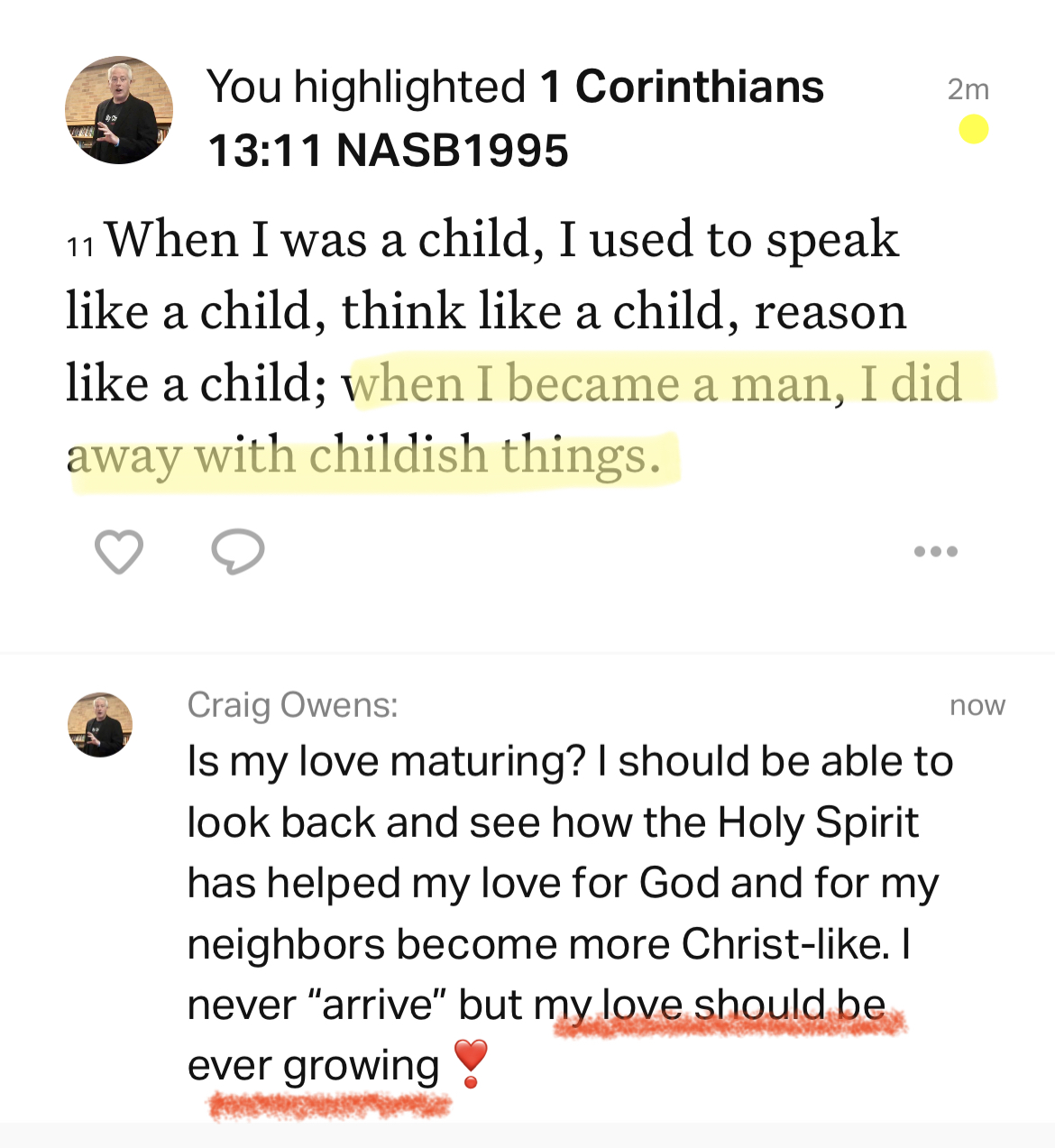
We continue to grow in our love and produce fruit by being connected to the Vine of Love (1 Corinthians 13:11-12; 1 John 3:1-2 ; Hebrews 10:23-24). 

We need to let our love be continually supplied by Love Himself so that our fruitfulness can shine as a bright testimony. Jesus said, He was the Light of the world, and then He called us to be the light to our part of the world where He has placed us (John 8:12; Matthew 5:14-16). 

Always remember that we celebrate the First Advent and look forward to the Second Advent by staying connected to Jesus, growing in our love for Him and for others, and allowing the fruit of hope, peace, and joy to shine brightly for God’s glory. 

If you’ve missed any of the other messages in our Advent series, you can find them all by clicking here

►► Would you please prayerfully consider supporting this ministry? My Patreon supporters get behind-the-scenes access to exclusive materials. ◀︎◀︎
Is Your Love Growing?

Listen to the podcast of this post by clicking on the player below, and you can also subscribe on AppleSpotify, or Audible. 

Are you a more loving person today than you were a year ago? If you said, “Yes,” how do you know?

Check out this episode of The Podcast.

Resources mentioned in this video:

►► Would you please prayerfully consider supporting this ministry? My Patreon supporters get behind-the-scenes access to exclusive materials, like a 10-minute video I just shared on study tips for the poetic books of the Bible. ◀︎◀︎

❤️ The Love Test

The description of love that Paul gives in 1 Corinthians 13 is well known, and I think most people would agree that this is an outstanding definition of true love. But the ultimate test is this: can this definition of love be said of me?

God wants you to be able to say “yes!” and so the Holy Spirit works on us to make this definition more and more consistently true of us. Here’s how we can test ourselves and find out where we need to allow the Spirit to work on us—put your name in this passage everywhere you find the word “love.”

Can this be truly said of me:

“Craig is patient. Craig is kind. Craig isn’t jealous. Craig doesn’t sing his own praises. Craig isn’t arrogant. Craig isn’t rude. Craig doesn’t think about himself. Craig isn’t irritable. Craig doesn’t keep track of wrongs. Craig isn’t happy when injustice is done, but he is happy with the truth. Craig never stops being patient with others, he never stops believing the best for others, he never stops hoping for the best for others, he never gives up on others. Craig’s love never fails.”

If you put your name in that passage, how well do you do on the love test? If you will let Him, the Holy Spirit will help you get all As on these tests.

Is Love Touchy-Feely?

mowt-loveOne of my greatest joys is investing in people, and then watching them develop their God-given gifts. One such man is my friend Scott Troost.

I began a series at the beginning of the month talking about things I have come to appreciate, and I asked a couple of my friends to join with me. Last week Josh Schram shared his appreciation with wise counsel, and this week Scott shared what he’s come to appreciate about love.

Is “puppy love” real love? Is love even supposed to have a feeling? If there are no feelings associated with love, how can you know that you are indeed loving? Scott shares his personal journey on what he’s come to appreciate about love, and I sincerely hope you will watch this video of his message…

Mom, Your Prayers ARE Making A Difference

Mother's loveOne day a little girl was sitting and watching her mother do the dishes at the kitchen sink. She suddenly noticed that her mother has several strands of white hair sticking out in contrast on her brunette head. She looked at her mother and inquisitively asked, “Momma, why are some of your hairs white?” Spotting a teachable moment, her mother replied, “Well, every time that you do something wrong and make me cry or unhappy, one of my hairs turns white.” The little girl thought about this revelation for while and then asked, “Momma, how come all of grandma’s hairs are white?”

Mom, you have earned every one of those gray hairs or wrinkles through your loving care for us!

Gray hair is a mark of distinction, the award for a God-loyal life. (Proverbs 16:3)

The glory of the young is their strength; the gray hair of experience is the splendor of the old. (Proverbs 20:29)

Mom, your love for us can be summed up in one verse—Love always protects, always trusts, always hopes, always perseveres. (1 Corinthians 13:7)

And the Apostle Paul’s words to a young preacher are just as true for Moms as they were for Timothy: Keep a close watch on how you live and on your teaching. Stay true to what is right for the sake of your own salvation and the salvation of those who hear you. (1 Timothy 4:16)

Don’t give up, Mom! You need to persevere so that when you have done the will of God, you will receive what He has promised. (Hebrews 10:36)

What has God promised you about your family? Has He said your whole family will call on Jesus as their Savior? Then persevere in that. Has He said that your prodigal child will come home? Then persevere in that. Despite the odds, despite the obstacles, despite the setbacks, keep on loving them and praying for them. It IS making a difference!

Here’s an encouraging biblical example of a little-known Mom’s prayerful influence on a son that is listed in the genealogy of Jesus Christ…

Keep persevering in prayer, Mom. Your prayers ARE making a difference!

Catch ‘Em Doing Right

Listen to the podcast of this post by clicking on the player below, and you can also subscribe on AppleSpotify, or Audible. 

Ken Blanchard is right: we spend way too much time trying to catch someone doing something wrong (or worry that they’re going to do something wrong), and not enough time trying to catch them doing something right.

…if anything is excellent or praiseworthy, think about these things…. (Philippians 4:8)

…love rejoices in the truth…. (1 Corinthians 13:6)

I should be praying for and looking for praiseworthy things. Why? Because people generally live up to someone’s expectations (they live down to their expectations too)—especially someone who has demonstrated they care about them.

Listen to the apostle John’s right-catching statement:

It gave me great joy to have some brothers come and tell about your faithfulness to the truth and how you continue to walk in the truth. I have no greater joy than to hear that my children are walking in the truth. (3 John 3-4)

“The truth” is sometimes taught in a Christian home or in a church, or maybe it’s caught there. The child or the churchgoer has heard the truth, but then do we honestly believe the truth—along with the Holy Spirit reminding them of that truth—somehow becomes ineffectual?

We often act like that.

We seem to be more willing to believe the negative reports than the positive reports. Perhaps, like John, I need to be more ready to catch others doing right. Perhaps I need to be more ready to rejoice in the success stories. Perhaps I need to pray for greater discernment to see the positive changes the truth is making in those I love.

If we make this a matter of prayer, I believe the Holy Spirit will help us catch others doing right.

►► Would you please prayerfully consider supporting this ministry? My Patreon supporters get behind-the-scenes access to exclusive materials. ◀︎◀︎

Love Is… (part 3)

Love Is… worsheet 3True love—or the Greek word agape—is a hard-working verb. It’s not mushy. It’s not puppy love. It’s not even romantic. It’s a love that is determined to love another no matter what! It’s the kind of love God extended toward us when we weren’t doing anything worthy of His love, and it’s the kind of love Jesus told we as us His disciples would be known for.

We just wrapped up a series called Loving The Unloveable where we explored what the Bible says about how we are to live out this agape love, especially to those who seem “unloveable.” We went through a list of 15 facets of this love spelled out in 1 Corinthians 13.

You can read about the first five facets by clicking here.

You can read about the second set of attributes by clicking here.

Here are the final five—

Love is protecting

  • The King James Version says love bears all things. So we need to ask, “What does love bear?”
  • The Greek word means: “protecting by covering with silence.”
  • In other words, we bear with the insults of an unloveable/unloving person by refusing to talk about them in a negative way.
  • Agape doesn’t talk about people (unless it’s a conversation with God); agape only talks lovingly to people. Agape protects their reputation.

Love is trusting

  • Love has a high confidence in success. Not my success, but God’s success. So we keep believing for a breakthrough; keep trusting God to accomplish something; keep doing our part in pointing out the best (or the best that is yet to be) in others.

Love is hopeful 

  • The Amplified Bible says: love’s hopes are fadeless under all circumstances.
  • So we work now, but we are always looking forward to the future with joy and full confidence.
  • Think about a farmer: After he plants the seed, he doesn’t see it any more. But his outlook remains hopeful. So he waters a seed he cannot see. He fertilizes a seed he cannot see. He works the ground for a seed he cannot see.
  • Our acts of love may be planting a seed, or fertilizing, or watering. Every part is vital; no part can be skipped. And we remain hopeful of a harvest.
  • Let us not become weary in doing good, for at the proper time we will reap a harvest if we do not give up. (Galatians 6:9)

Love is persevering

  • I love the Greek definition: “enduring through every circumstance without ever weakening.”
  • Never let your love waver. Keep on being patient, and kind, and forgiving, and all of the other characteristics of agape listed in 1 Corinthians 13. All of them are irreplaceable and effective! 

Love is maturing

  • Love continues to grow up.
  • Agape is creative, never stagnant or stuck in a rut. Agape finds new ways to express itself.

Here’s where the real test comes in: How will you apply these attributes of love to someone in your life? More specifically: to someone you think is “unloveable”?

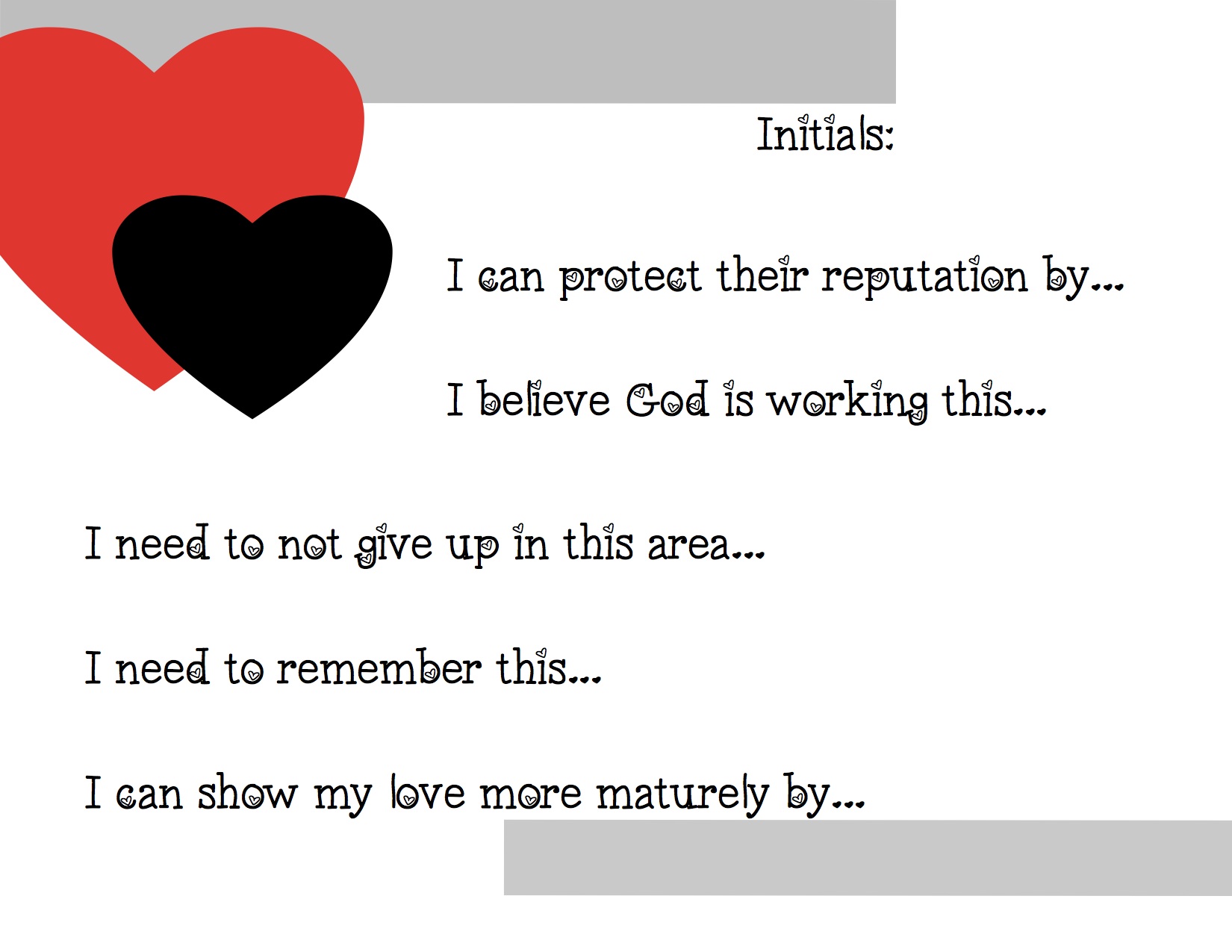
I know you have someone in your life that you think is unloveable. With that person’s face clearly in mind, how will you fill in the blanks:

  1. I can protect their reputation by…
  2. I believe God is working in this…
  3. I need to not give up in this area…
  4. I must remember this…
  5. I can how my love more maturely by…

If you would like a downloadable PDF of this worksheet, click here -–> Love Is… worsheet 3

If you would like to download the other worksheets, or if you missed any of the messages in our Loving the Unlovable series, you can check them all our here.

Love Is… (part 2)

Love is… worksheet 2We are taking a practical look at the incredible definition of love in 1 Corinthians 13. We’re doing this in the context of learning how to love the “unloveable”—or maybe I should say, loving those who are the most resistant to real love. If we can show them love, how much more will the love of Jesus be seen!

All of these verbs are present tense verbs. That means they aren’t exhausted in the past, and they aren’t waiting for future conditions to improve—they are in operation NOW.

Far too many people know Christians more by what we’re against than by what we’re for. So where the biblical text say “love does not” or “love isn’t,” I’ve changed it into the positive “love is.”

You can read about the first five attributes love love by clicking here.

The next five attributes are:

Love is graceful

  • The root word means something that should be covered up, or something we’re ashamed of. Because our words and actions are graceful, they are things we wouldn’t have to defend, or explain, or apologize for later. They are words and actions that wouldn’t embarrass us.
  • Agape will do nothing that misbecomes it.” —Matthew Henry

Love knows our relationship > my rights

  • True love “does not demand its own way” (New Living Translation) nor does it “insist on its own rights” (Amplified Bible). Instead it always seeks ways that the relationship can be repaired or enhanced, even if that means giving up something I consider to be “my right.”
  • NOTE: I’m not saying that you become a doormat. This is not a license for someone to abuse you, but it is a call for us to balance our responses. Romans 12:18 says as far as it depends on you, live at peace with everyone.
  • Here are some great balancing verses. Balance Proverbs 26:4-5 (here is a video where I expand on this idea), and then balance Philippians 2:3-4.

Love is even-tempered

  • The Amplified Bible says it well: love is not touchy or fretful or resentful.
  • This Greek word means not getting stirred up or exasperated. So we need to lighten up!
  • There are some places where we’ve become too sensitive, too touchy, too short-fused. The fire of hurt has replaced the fire of love. So Matthew Henry advises us: “Where the fire of love is kept in, the flames of wrath will not easily kindle, nor long keep burning.”

Love is forgiving

  • The New International Version says love keeps no record of wrongs.
  • This Greek phrase speaks of an accountant tallying up the hurts (where there is an overdrawn account), seeing there is a debt to be paid back, and then appointing himself as the bill collector. True love cancels those IOUs.
  • We don’t forgive others because they deserve forgiveness, but we forgive others because we received forgiveness from God that we did not deserve!
  • For if you forgive people their trespasses [their reckless and willful sins, leaving them, letting them go, and giving up resentment], your heavenly Father will also forgive you. (Matthew 6:14 AMP)

Love is God-honoring

  • Agape loves what God loves and hates what God hates.
  • Agape loves when people find God’s truth, and hates anything that blocks that pursuit.
  • Agape loves the sinner and hates the sin.
  • “The sins of others are the grief of an agape spirit [not] its sport or delight; they will touch it to the quick….” —Matthew Henry

Here’s where the real test comes in: How will you apply these attributes of love to someone in your life? More specifically: to someone you think is “unloveable”?

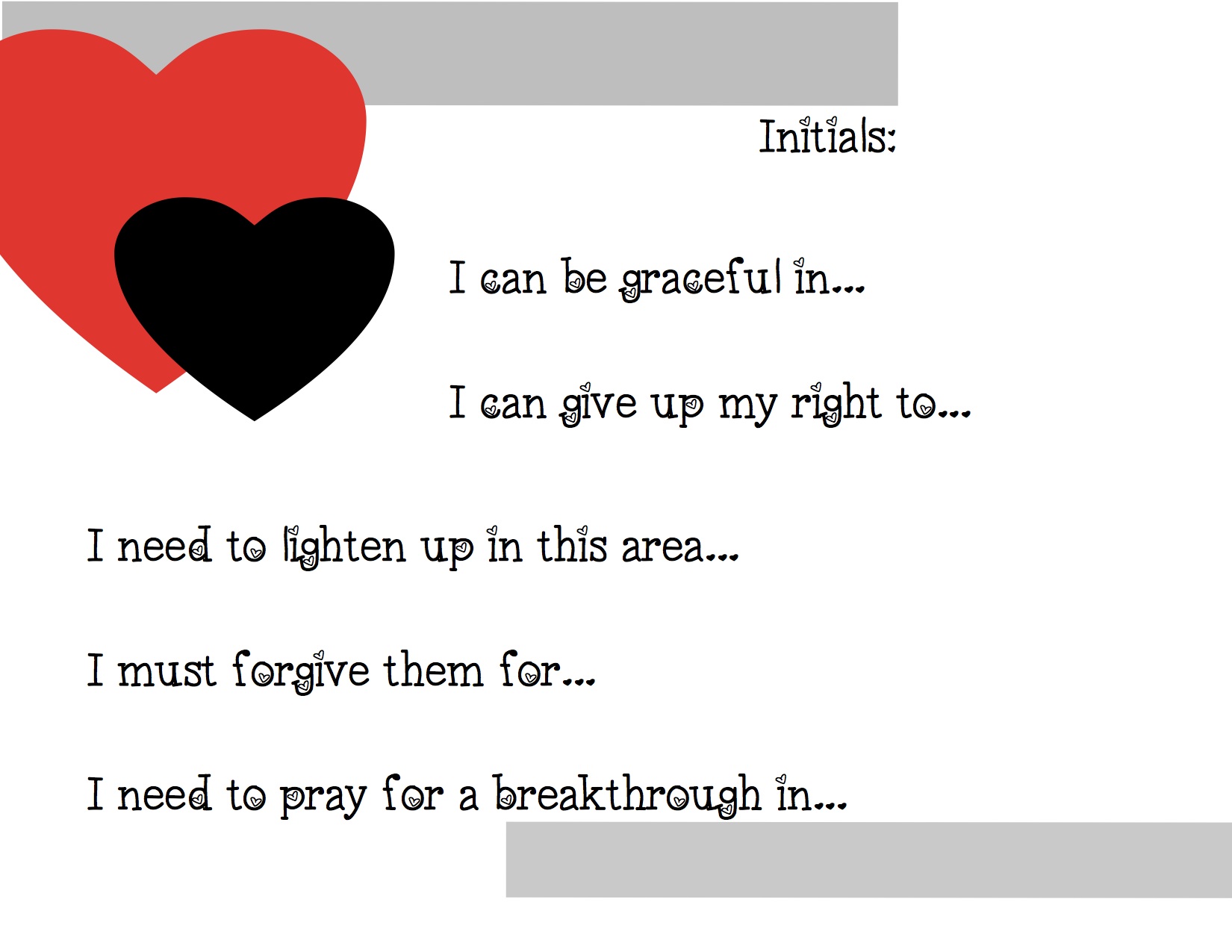
I know you have someone in your life that you think is unloveable. With that person’s face clearly in mind, how will you fill in the blanks:

  1. I can be graceful in…
  2. I can give up my right to…
  3. I need to lighten up in this area…
  4. I must forgive them for…
  5. I need to pray for a breakthrough in…

If you would like a downloadable PDF of this worksheet, click here –> Love is… worksheet 2

If you missed any of the messages in our Loving the Unlovable series, you can check them all our here.