[19:25] What can we do with the notes from the books that we read?
[21:53] Greg has a new book coming out soon. Stay tuned for Sage Advice
Check out this episode and subscribe on YouTube so you can watch all of the upcoming episodes. You can also listen to our podcast on Spotify and Apple.
Listen to the podcast of this post by clicking on the player below, and you can also subscribe on Apple, Spotify, or Audible.
Jesus told us twice, “Your Father knows what you need before you ask Him” (Matthew 6:8, 32). He knows the good we need.
When we were children, our parents tried to give us good-for-you food, but sometimes it wasn’t necessarily good. It might have given us nutrients, but perhaps it wasn’t as tasty as we would have liked. Let’s be honest: most junk food tastes really, really good—probably better than the good-for-you food. As a result, sometimes we eat just to eat. We eat because we have to. We choke down the vegetables just so we can get to the dessert.
As parents, we want our kids to have good-for-you food. God wants that too, but He wants more than that for us: He wants it to be savory as well. Jesus talked about how evil parents knew enough to give good things to their children, but then He reminded us how much more does God want to give us (Luke 11:11-13)!
It usually takes much longer to prepare food than it does to eat it. This is especially true for more savory gourmet meals. When we gulp down our food, we don’t really appreciate or savor the tastes, the subtle hints the chef has mixed in, and certainly not the time involved to prepare such a lovely feast.
When we gulp down our food without savoring it…
…we don’t honor the one who prepared the food
…we don’t savor the goodness so we don’t appreciate the goodness
…we move on to dessert (or junk food) before our body is ready for it
In Psalm 106 we read a history lesson of Israel’s ups-and-downs—the trouble they were in and the deliverance God prepared for them. The psalmist directly connects their lack of savoring God’s good things to their rebellion and their carnal, godless cravings. Instead of slowing down to be grateful for what God had given them, they just wanted to move on to the next dessert. That attitude may have been what was behind the spoiled girl named Veruca Salt in the movie “Willy Wonka and the Chocolate Factory” who sang the song “I Want It NOW!”
David gives us the antidote for this tasteless gulping of God’s good and good-for-us food: “Taste and see that the Lord is good…” (Psalm 34:8a). This deliberate tasting allows us to see how excellent the things of God are, better than anything else the world has to offer!
David concludes his counsel with these words, “Blessed is the man who takes refuge in Him. Fear the Lord, you His saints, for those who fear Him lack nothing” (Psalm 34:8b).
In the New Testament, the apostle Peter gives us a similar word: “Like newborn babies, you must crave pure spiritual milk so that you will grow into a full experience of salvation. Cry out for this nourishment, now that you have had a taste of the Lord’s kindness” (1 Peter 2:2-3 NLT).
It’s this savoring that will help us appreciate the sweet and the bitter. It’s this appreciation that brings glory to God and keeps us craving more of the ultimate good that only He has for us.
If we will slow down to savor God’s Word, if we will delight to spend time in prayer, if we won’t rush through the good-for-you trials, we will taste and see that there is nothing that can satisfy like our Savior!
There is a psychological term called “projection” where we see in others what is really in ourselves. This is something Christians MUST guard against doing. Instead of going to the other person first, let’s go to our knees in prayer first. This is a short clip from a full-length teaching video I provided exclusively for my Patreon supporters.
“Blessed are those who can give without remembering and can take without forgetting.” —Elizabeth Bibesco
Listen to the podcast of this post by clicking on the player below, and you can also subscribe on Apple, Spotify, or Audible.
I’ve discussed quite a bit the two ways that organizations—especially churches and non-profit ministries—can measure success: By quantity or by quality. And I think a good case can be made for both of these metrics from the Bible.
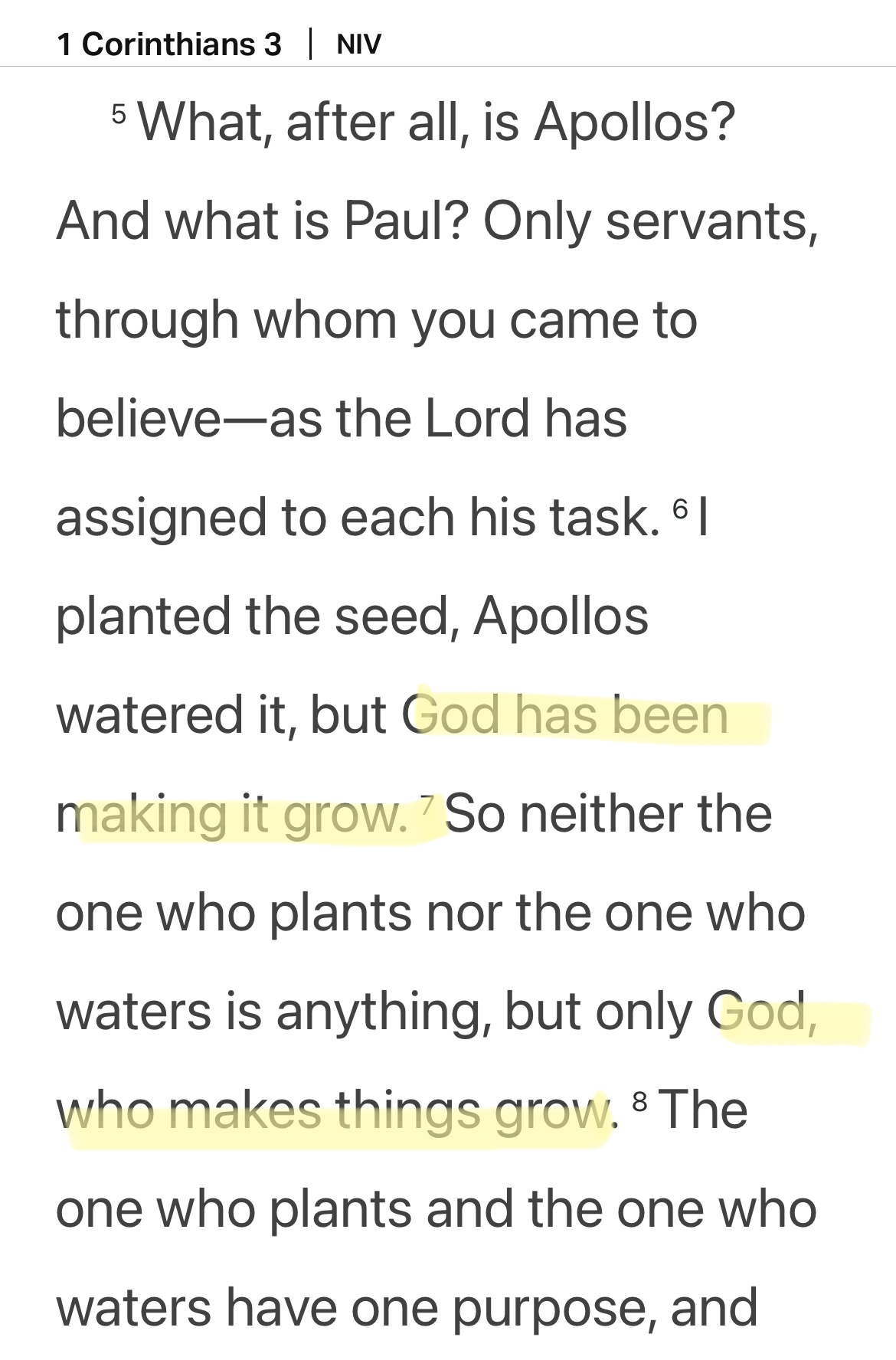
My bigger concern is when we try to use bigger numbers as the sole gauge of success. In a training time I had with some ministry interns, we took a deep dive into the reasons why the metric of bigger and ever-increasing numbers became the sole measurement for success in our churches. During this training time, I took these interns to Paul’s teaching in 1 Corinthians and two Old Testament examples where people got this wrong. Take a listen…
This is a weekly series with things I’m reading and pondering from Charles Spurgeon. You can read the original seed thought here, or type “Thursdays With Spurgeon” in the search box to read more entries.
Listen to the podcast of this post by clicking on the player below, and you can also subscribe on Apple, Spotify, or Audible.
Cutting The Root Of The Weed Of Sin
I acknowledged my sin to You, and my iniquity I have not hidden. I said, “I will confess my transgressions to the Lord,” and You forgave the iniquity of my sin. Selah. (Psalm 32:5)
We must confess the guilt as well as the fact of sin. It is useless to conceal it, for it is well known to God; it is beneficial to us to own it, for a full confession softens and humbles the heart. I will confess my transgressions to the Lord. Not to my fellow human beings or to the high priest, but to Jehovah. …
When the soul determines to lay low and plead guilty, absolution is near at hand; hence we read, “And You forgave the iniquity of my sin.” Not only was the sin itself pardoned, but so was the iniquity of it; the virus of its guilt was put away at once, as soon as the acknowledgment was made. God’s pardons are deep and thorough: the knife of mercy cuts at the roots of the ill weed of sin.
But the devil loves to condemn us, to whisper the lie that we’ve sinned one too many times for God to forgive us again. This is truly a lie because a forgiven sin is a forgotten sin. So in essence when we ask God to forgive us for our most recent sin, He views it as our only sin!
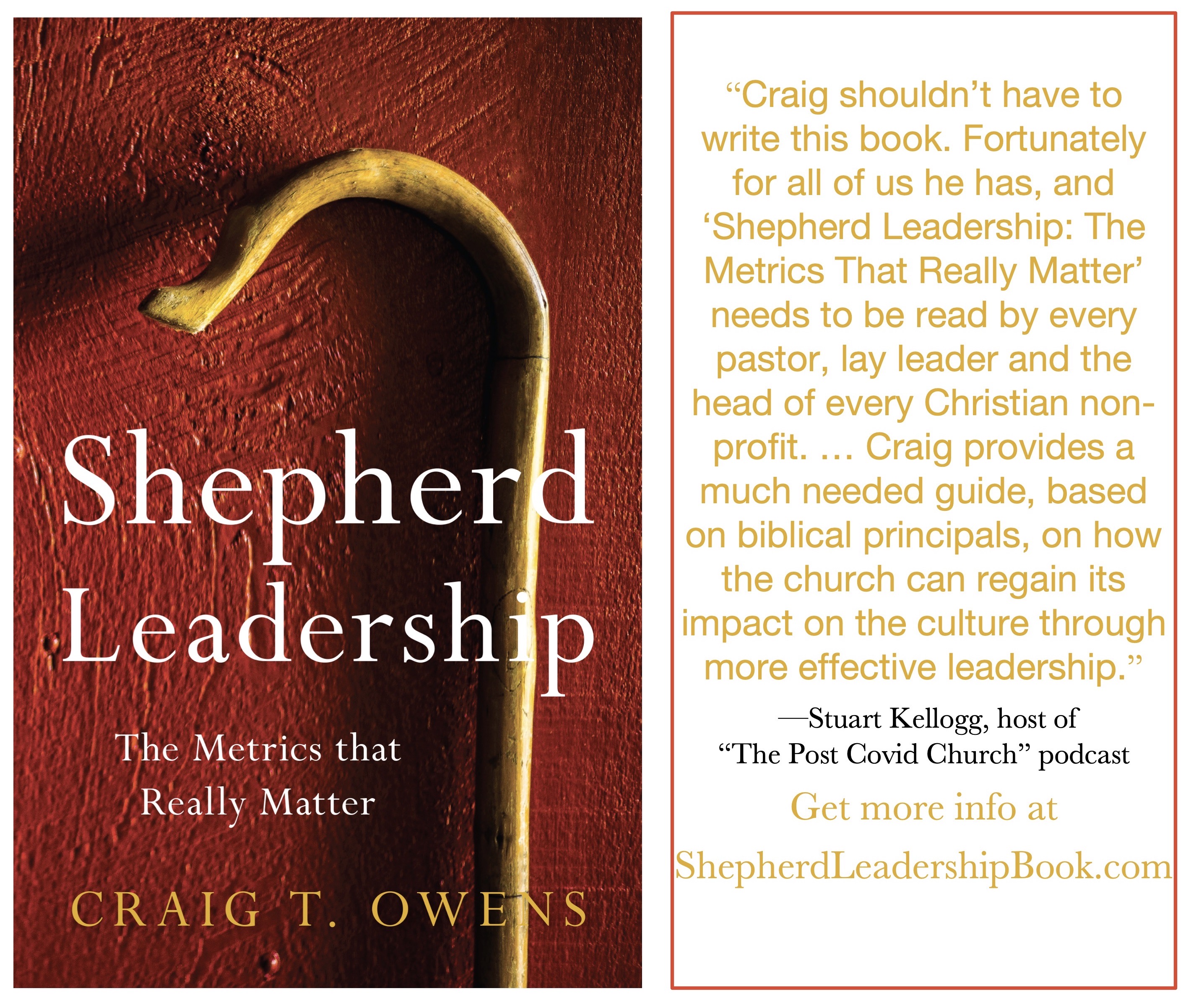
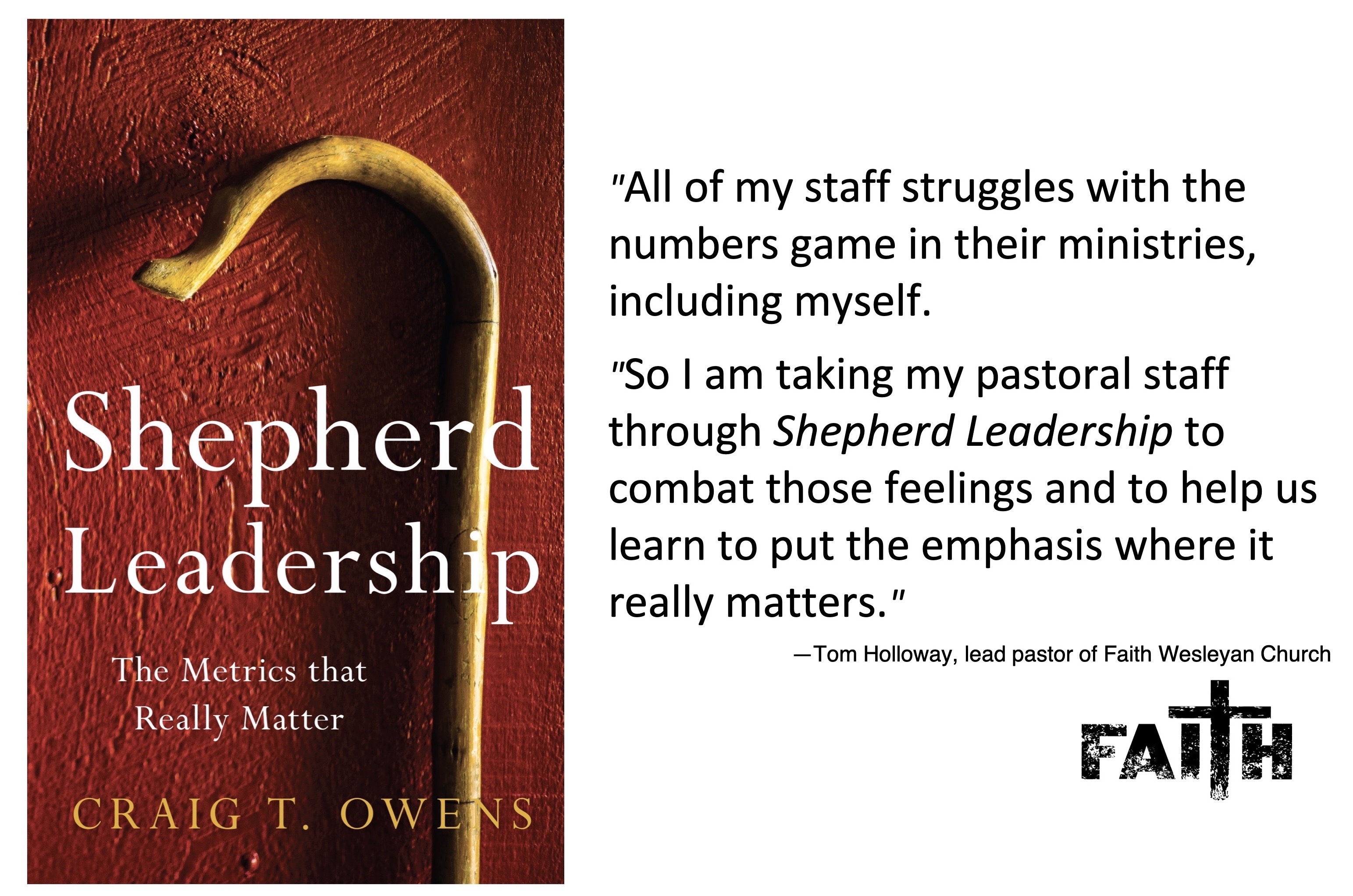
In my book Shepherd Leadership, I challenged pastor-shepherds to make good use of confession:
When your reactions aren’t Christlike, admit it. Someone might want to push back, “But if I say I was wrong, then I may lose some leadership credibility.” I would agree that you will lose credibility if you believe you are a self-made leader and if you are climbing up a career ladder that you designed. But if you are truly living and leading as a servant that God has equipped and placed among this flock, admission of an un-Christlike action or reaction triggers something extraordinary: God’s help. Peter said it this way: “All of you, clothe yourselves with humility toward one another, because, ‘God opposes the proud but shows favor to the humble’” (1 Peter 5:5).
Did you catch that? God stands back from the proud person who will not admit his error nor ask for help, let alone ask for forgiveness. On the other hand, God lavishes His grace on the humble one who admits both his error and his need for help. Admission of an inappropriate action or reaction brings God’s help!
Friends, the mark of a maturing shepherd is not one who never misspeaks or never makes a mistake. No, the mark of a maturing shepherd is the one who is closing the gap between his mess up and his confession, and one who is experiencing fewer mess ups over time because the Holy Spirit is helping him get healthier and more mature. —an excerpt from chapter 12 of Shepherd Leadership
Don’t listen to the devil’s lies, but hear the loving voice of the Holy Spirit calling you to confess your sin and receive immediate absolution from it. As Spurgeon said, “God’s pardons are deep and thorough: the knife of mercy cuts at the roots of the ill weed of sin.”
If you would like to know more about Shepherd Leadership, please click here.
Listen to the podcast of this post by clicking on the player below, and you can also subscribe on Apple, Spotify, or Audible.
When God spoke to the “princes of Israel,” He was speaking to those in leadership positions. They were men who had wealth, position, and a high level of influence. God called them to live up to their title as “prince” because leadership is a high and holy calling given by God.
They are to be peacemakers, never men of violence nor oppression (45:9).
They are to be fair, consistent, and impartial in their interactions with others (45:10).
They are to generously provide for the people under their care (45:15-17, 22; 46:13-14).
They are to have a “get to do it” attitude toward their duties, not a “have to do it” attitude” (46:5, 7, 11).
They are to be among their people, not aloof nor isolated from them (46:10).
They are to provide for their family without impoverishing the people under their care (46:18).
Since God calls leaders, He will also call them to account. Jesus made it clear that there are only one-of-two assessments that leaders will hear from God:
Well done, good and faithful servant
You wicked, lazy servant
Let me say it again: Leadership is a high and holy calling. So…
A mark of a godly leader is one who joyfully and faithfully fulfills God’s leadership call.
This is part 67 in my series on godly leadership. You can check out all of my posts in this series by clicking here.
Baseball was the first organized sport I learned to play and appreciate, largely due to Ernie Harwell and Paul Carey’s radio broadcast of the Detroit Tigers. I would sneak my small transistor radio under my pillow during the summer to listen to the games each night. Not only did I learn about the current Tigers, but I began to develop an appreciation for the Tigers of the bygone era.
One of the notable names to appear on the Tigers’ scorecard for a dozen seasons was “Hammerin’” Hank Greenberg. His story is told in his autobiography Hank Greenberg: The Story of My Life.
Tigers fans lost four-plus seasons of this dominant ballplayer when Hank served in the armed forces during World War II. And then the Tigers lost out again when a rift between two-time American League MVP Greenberg and Tigers owner Walter Briggs saw Hank traded to Pittsburg for the final year of his career.
Greenberg was not the first Jewish ballplayer in the Major Leagues, but he was the first one who was almost perpetually in the spotlight. From the moment he stepped on the field, he vaulted to the top of nearly every offense category.
In 1938, Hank was chasing Babe Ruth’s single-season home run record, and many feel he didn’t break it because many pitchers didn’t want to see a Jew steal The Babe’s record, so they didn’t give him anything to hit. The previous year, Hank was chasing Lou Gehrig’s RBI record and ended up knocking in 184 runs (just one shy of Gehrig’s record), again in spite of the lousy pitches he was seeing.
Hank’s career stats are all the more amazing considering the four-plus seasons he missed during his military service. His enlistment period was actually up two days before Pearl Harbor was bombed. On hearing that news, Hank said, “That settles it for me, I am reenlisting at once,” making him the first Major Leaguer to enlist in the military after the attack on Pearl Harbor.
Thankfully for Tigers fans, Greenberg returned to the lineup in time to help the team win the World Series in 1945. In four World Series appearances, he had a .318 batting average, with 5 homers, and 22 RBIs.
After leaving the playing field, Hank moved into the front office with the Cleveland Indians and then the Chicago White Sox. He revolutionized the way teams used their minor league farm system, while still battling and overcoming the antisemitism that was so present even in the ranks of baseball team owners. Jackie Robinson was grateful for the encouragement and advice that Greenberg gave him while he faced very similar ugly treatment when he broke into the Major Leagues.
If you are a Detroit Tigers fan, this is an excellent book to add to your library.
Listen to the podcast of this post by clicking on the player below, and you can also subscribe on Apple, Spotify, or Audible.
I am always interested when I see contrasts in the Bible. Things like:
Live this way, not that way
These people are blessed, these people have trouble
If you do this, you won’t have this
So an interesting contrast caught my eye in the story where Jesus calms the storm (Matthew 8:23–27). Jesus is sleeping peacefully in the middle of a storm that is described as “furious [where] the waves swept over the boat.” The disciples were anything but peaceful—they thought they were going to drown—so they yelled for Jesus to wake up.
Before Jesus calmed the storm, He says, “You of little faith, why are you so afraid?”
That’s the phrase that caught my attention. Notice the contrast between “little faith” and “so afraid.” In other words, small faith means big fear!
Strong’s Greek dictionary defines “little faith” as “dread (by implication) faithless.” So it appears there is an inverse proportion between faith and fear.
The word that Jesus used for “afraid” is only used here and in the same story in Mark 4:40, and in Revelation 21:8 which lists people who will be excluded from entrance into heaven.
The phrase “so afraid” (or “O ye of little faith” in the King James Version) is just one word in Greek: olgiopistos. The root word pistos is faith, but I find the prefix oligos very descriptive. It means:
small in quantity
short in time
slight in intensity
In other words, it is faith that is immature, or hasn’t been used much, or hasn’t been applied to a particular circumstance. This word olgiopistos is used five times in the New Testament, and only used by Jesus.
In addition to this story, it is used in Matthew 6:30 and Luke 12:28 when Jesus tells us not to worry about the things that God will provide for us—things like food, clothing, and shelter. Jesus uses this word for Peter when he began to sink in the water after walking a few steps toward Jesus. And Jesus uses it in Matthew 16:8 when He warns His disciples about the “yeast” of the Pharisees and Sadducees that can creep into their hearts and spoil their faith. (Check out all of these verses here.)
In mathematical circles, this relationship between faith and fear is one that would be called inversely proportional. When our faith is high, our fear is low; when our fear is high, our faith is low. I also think it is very eye-opening that the mathematical symbol for inverse proportionality (∝) is the same symbol called ichthus that the early church used to represent Jesus.
Faith and fear cannot coexist in the same heart. Sometimes our faith is small in quantity because we haven’t fed our faith with God’s promises. Sometimes our faith is short in time because we want things done on our time schedule. And sometimes our faith is slight in intensity because we are unsure if God can “come through” in this particular situation.
Whatever the case, when we feel any fear, we need to ask for faith. We need to return to God’s Word and be assured that His promises are applicable regardless of the situation we are in. As our faith grows, our fear has to diminish!
Listen to the podcast of this post by clicking on the player below, and you can also subscribe on Apple, Spotify, or Audible.
We see a pattern throughout the history of the Israelites in the Old Testament: They wanted to have all their bases covered, so they kept up the pretense of worshiping Jehovah, but they also added the idolatrous practices of the nations around them. It got pretty vile (see Jeremiah 2:23-25 as an example).
These cravings for more than God had provided led to their punishment. As we quoted last week from Isaiah, they lost their “matchless, unbroken companionship” with God (Isaiah 30:18 AMP).
Craving for our self-created idols creates anxiety in our hearts that shows up in three nagging questions.
(1) What will others think of me if they have things I don’t have?
Worrying about what others think of us has always been a trap. We play games, posture, and frequently hide the truth so that we “look right” to others. But this dishonesty only hurts us in the long run.
Dr. Tony Evans noted, “satan uses our legitimate need for acceptance in an illegitimate way that can result in us living under a false identity.” Jesus warned us not to show off to try to get others to think well of us (Matthew 6:1) and He lived this out in His own life. He said, “I receive not glory from men—I crave no human honor, I look for no mortal fame” (John 5:41 AMP).
To avoid this trap remember: Recognition from God > Recognition from men. We should be living to hear Jesus say, “Well done, good and faithful servant!” (Matthew 25:21, 23).
(2) Will I have enough to survive?
Because the things of this earth pass away, it is natural to think that our supply may just <poof!> be gone in an instant. So we can crave the security of having our shelves fully stocked for the future.
Jesus twice tells us that our Heavenly Father knows what we need (Matthew 6:8, 32). Then over a span of ten verses, Jesus tells us four times, “Do not worry” (Matthew 6:25-34). He can assure us of this because of this rock-solid reality: Heaven’s provisions > Earth’s provisions.
(3) Will God accept me?
Just as satan tried to get Jesus to doubt that He was the Son of God, the devil will also try to get you to doubt whether or not you measure up in God’s sight. But in the Sermon on the Mount, Jesus emphasizes the Fatherhood of God thirteen times—usually calling Him “your Father.”
This tells me that we can cling to this: Being accepted by your Father > Being accepted by anyone else. Paul uses a wonderful description in Ephesians when he tells us we are “accepted in the Beloved” (Ephesians 1:6 NKJV).
Isaiah told us that God longs to be gracious to us, and Jesus emphasizes that idea when He says, “Only aim at and strive for and seek His kingdom, and all these things shall be supplied to you also. Do not be seized with alarm and struck with fear, little flock, for it is your Father’s good pleasure to give you the kingdom!” (Luke 12:31-32 AMP)
Just as God craves to bless you, so you are to crave your fulfillment in what He alone can supply. You must crave the only One Who can eternally satisfy you, Who longs to reward you, and Who delights to give you the inestimable rewards of His kingdom!
Immature people only want to do the bare minimum, but mature people want to do more than is expected of them. Jesus called these people those that went the second mile. That was a topic in my most recent Monday Motivation series.
I am a big fan of The Babylon Bee. If you haven’t checked out their satirical wit, please do so! One post that caught my eye this week is called What Your Favorite Book Of The Bible Says About You. Wow, did this one make me laugh! If you would like to check out some real Bible studies, I have some here and here.
Cold-case detective and Christian apologist J. Warner Wallace discusses how Jesus impacted other world religions—
The drought in north Texas has revealed some more dinosaur tracks, raising some new questions about these massive animals that roamed Earth.
The devil loves to try to pervert the conviction of the Holy Spirit into condemnation. Here is the freeing truth we can stand on: There is NO condemnation for those who are in Christ Jesus.



 On this episode of “The Craig And Greg Show” we talk about:












 Craig T. Owens