William Shakespeare was a master at a well-timed insult when one of his characters zinged another! Reader’s Digest has a list of 53 Shakespearian insults that are still good today!
What happens when you hold your breath? Among other things “your blood is delivering the last of oxygenated blood cells to your tissues while carbon dioxide is rapidly building up (hypercapnia). At the same time, there is a steady decrease of blood oxygen (hypoxia). The pH of your blood is getting slightly lower (acidic), and your heart starts to beat faster. God designed your brain to sense the increased carbon dioxide levels and initiates the effort for you to breathe. This will last for about a minute before there will be an involuntary intake of air via the contraction of your diaphragm.” And yet God designed aquatic mammals in a way uniquely suited to thrive in water. Amazing!
When the Bible says that God’s hand was against His people, that is actually a very loving thing! Consider this example of a parent with a small child. Please watch this full sermon.
I have been sharing a series of messages with my church about how God turns our grief into joy. As a tie-in with this series, John Piper has Fifteen Tactics for Joy.
I presented a whole series of posts and videos on a Christian’s mental health. Please check it out here. You can replace your anxious thoughts with comforting and delightful thoughts!
Listen to the podcast of this post by clicking on the player below, and you can also subscribe on Apple, Spotify, or Audible.
If an organization is going to grow in a healthy way, leaders must learn how to correctly address wrong attitudes and behaviors. They do this best when they use confrontation only as a means to restoration.
The verb Luke uses here is suggestive of a time when the devil may think he has an advantage over his intended victim. The KJV says the devil departed for “a season.” Just like farmers know the proper season to plant, to weed, to harvest, and to rest, so does our adversary.
Check out how some other translations of the Bible render Luke 4:13—
another more opportune and favorable time (AMPC)
until the next opportunity came (NLT)
lying in wait for another opportunity (the Message paraphrase)
Jesus warned Peter that the devil wanted to sift him as wheat (Luke 22:31-32). Although Peter knew the “opportune time” was coming, he was unprepared when it did come and he failed in his initial time of temptation. Jesus restored Peter and told him that he was going to be the one to help prepare others to be victorious when the devil attacked them.
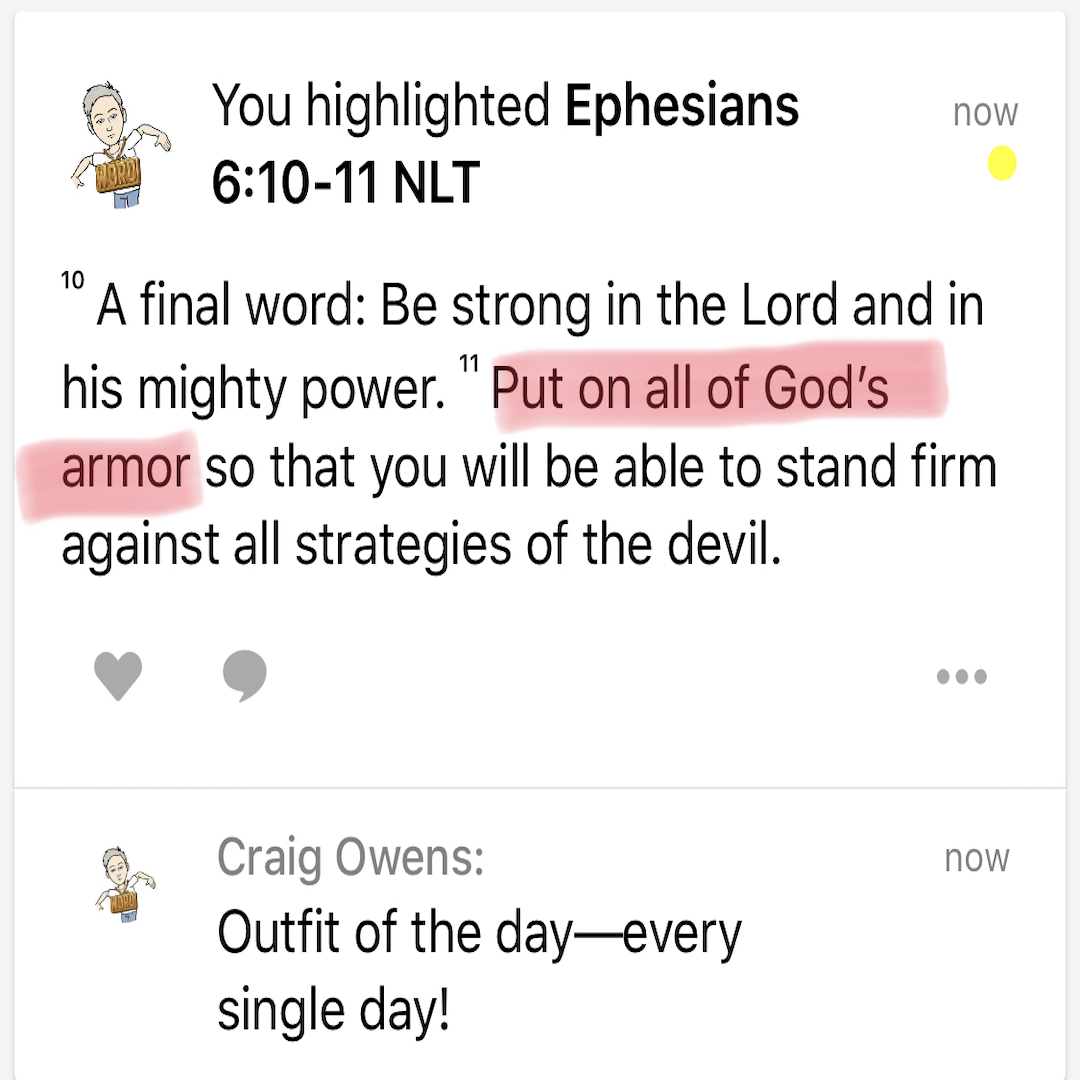
Peter may have had this in mind when he warned us to be alert for our prowling enemy (1 Peter 5:8). The apostle Paul also tells us to be aware of the devil’s schemes, and to never be without our spiritual armor (2 Corinthians 2:11; Ephesians 6:11).
There is never a time when I am invulnerable to a spiritual attack.
The moment I think I am self-secure is an opportune season for the devil to unleash his attack on me. “If you think you are standing firm, be careful that you don’t fall” (1 Corinthians 10:12).
Peter tells us to “resist [the devil], standing firm in the faith” (1 Peter 5:9). In the preceding three verses, Peter tells us just how to do this:
humble yourself before God—no feelings of self-sufficiency
Don’t be caught off-guard by giving the devil “an opportune time,” but stay utterly dependent on God. As James says, we have to first submit ourselves to God and then we will be prepared to resist the devil and watch him flee from us (James 4:7).
Listen to the podcast of this post by clicking on the player below, and you can also subscribe on Apple, Spotify, or Audible.
Sir Isaac Newton may have said for every action there was an equal and opposite reaction, but that’s not true for God-fearing leaders.
Check out this episode of The Podcast.
The story of Paul and Barnabas that I reference in this video is found in Acts 14:1-21.
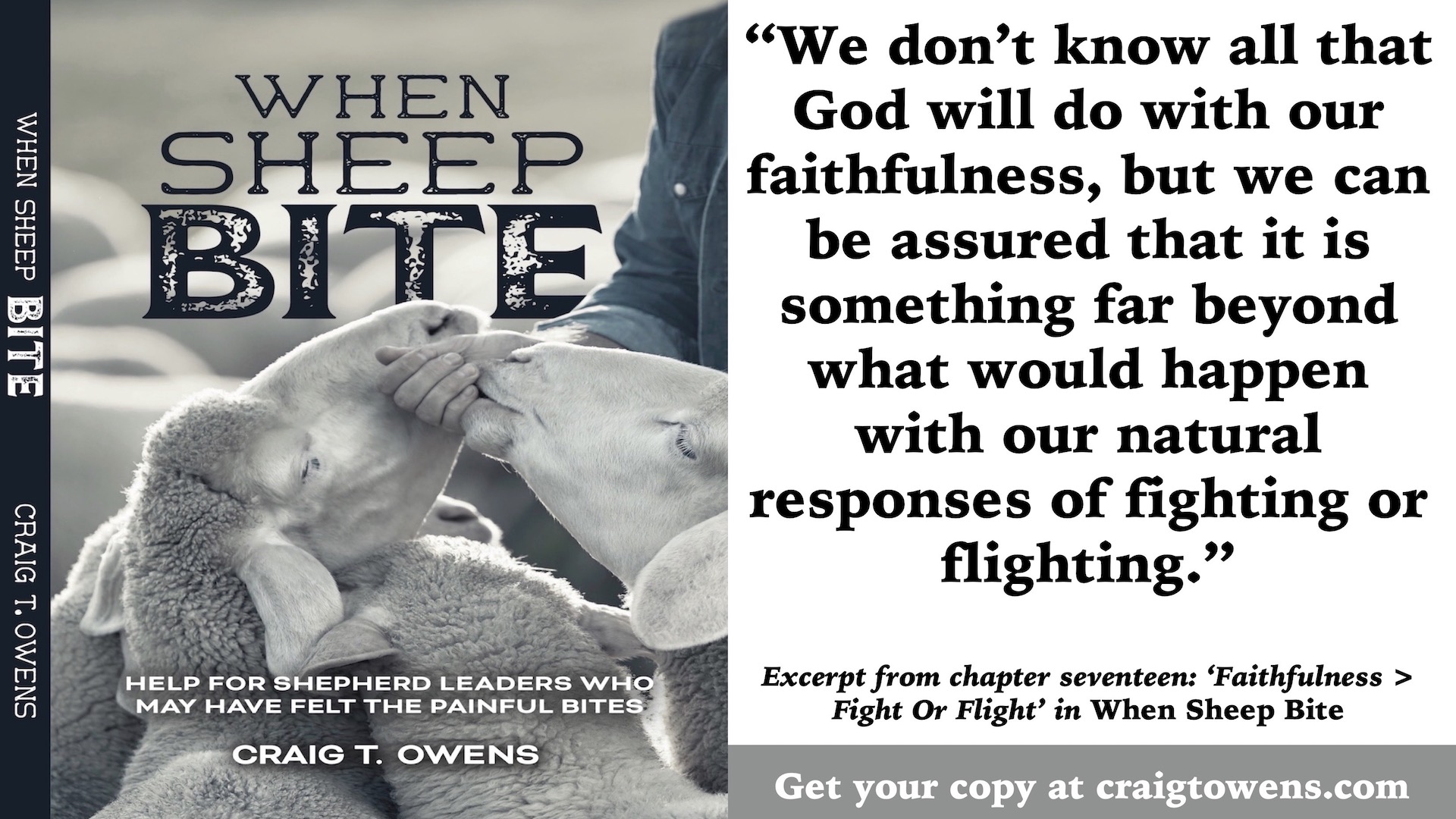
My book When Sheep Bite is divided into three section. In the first section I talk about a shepherd leader’s heart and section two diagnosis the sheep bites leaders endure. The final section is all about the faithfulness to finish well—not giving in to the natural responses of fight or flight.
I open that final section of the book like this—
Psychologists and medical doctors have all described what happens to our minds and bodies when we are under attack. They are universal responses that our loving Creator has implanted in all of us to be able to respond to threats that come at us. When confronted with a biting sheep, without consciously thinking about it our minds and bodies prepare for fight or flight.
But let’s consider those responses in the context of a shepherd pasturing his sheep. Is it an effective strategy for the shepherd to fight his sheep? No, of course not. Paul told Timothy that a shepherd is “not quarrelsome but forbearing and peaceable” (1 Timothy 3:3 AMPC).
Is it allowable for the shepherd to run away from the threat, leaving the flock without a shepherd? Again, no, as Jesus told us that one who resorts to flight isn’t worthy to be called a shepherd but is considered a mere “hired hand [who] cares nothing for the sheep” (John 10:12-13).
So if godly shepherds cannot give in to the natural responses of fight or flight, what are we to do? Since we serve an all-power, all-loving Chief Shepherd we must look to Him for the supernatural response of faithfulness.
Listen to the podcast of this post by clicking on the player below, and you can also subscribe on Apple, Spotify, or Audible.
The insidious thing about leprosy is that it kills the body’s pain receptors. Lepers may walk on a broken ankle, utterly mangling their foot. Or they may stick their hand in the first without realizing it.
Pain is important to us—it tells us that something isn’t right and that we should seek help. Just as there is a danger if we ignore physical pain, there is a greater danger if we ignore spiritual pain. It’s a greater danger because eternal separation from God is far more deadly than mere physical death.
Moses warned the Israelites of the danger of spiritual complacency, or we could call it spiritual leprosy. Check out the warning in Deuteronomy 8:10-14, 17. It didn’t take too long for this spiritual numbness to set it (see the fulfillment of Moses’ words in Judges 2:10-15).
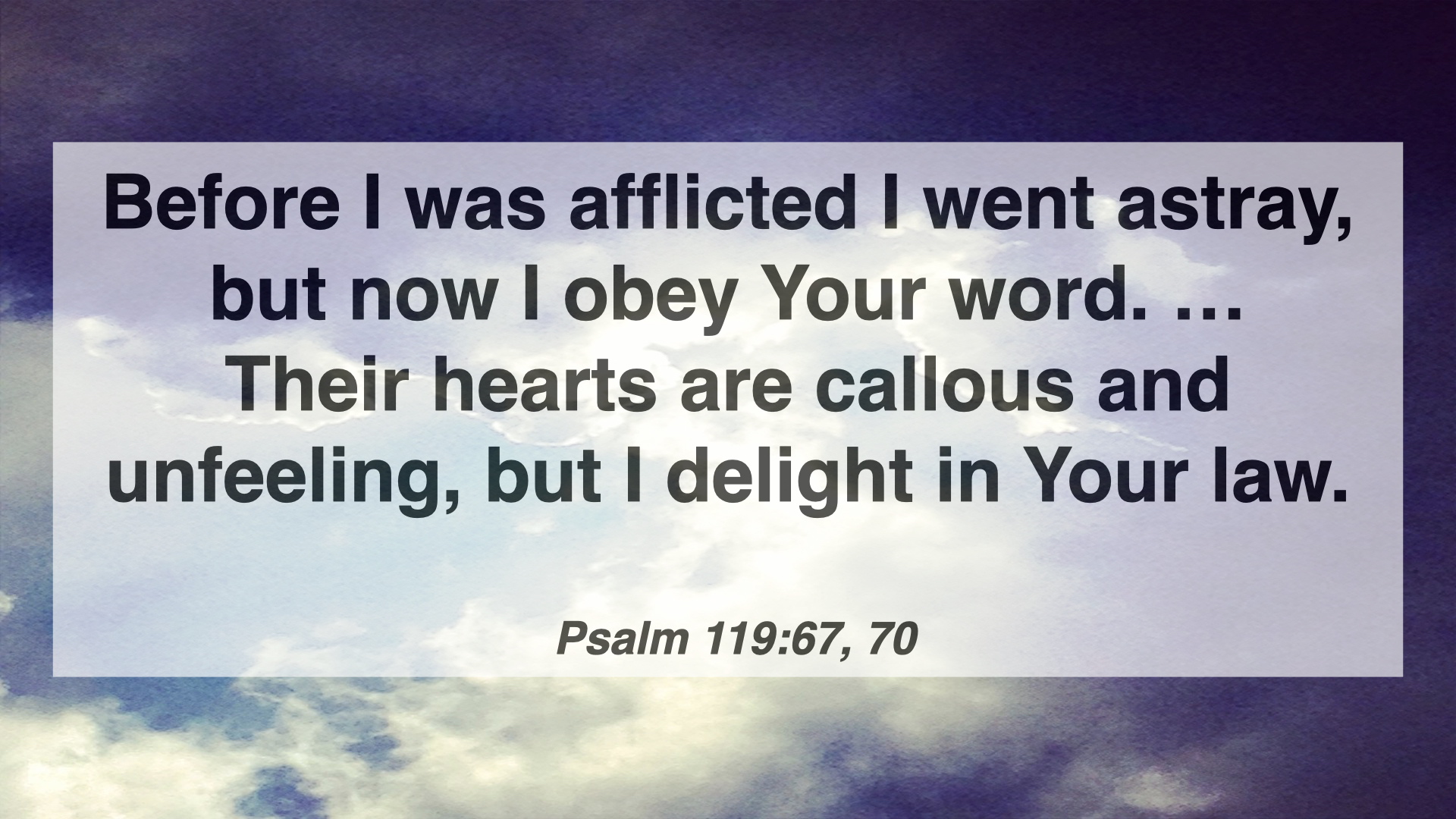
When we read in Judges 2, “The hand of the Lord was against them,” this is actually a very loving statement. Think about it: What would happen if God continued to give them success in their sinful endeavors?
We can see this a little more clearly in Isaiah 63:7-10 where we see that God’s love is both redemptive and corrective. His fighting against His people caused them to recall God’s ways and wait on Him once again (63:11; 64:4-5). Notice the last question of verse 5, “How can we be saved?”
It starts with remembering—that’s what Moses said at the beginning of this journey, and it’s also what Jesus says at the end (Revelation 2:5).
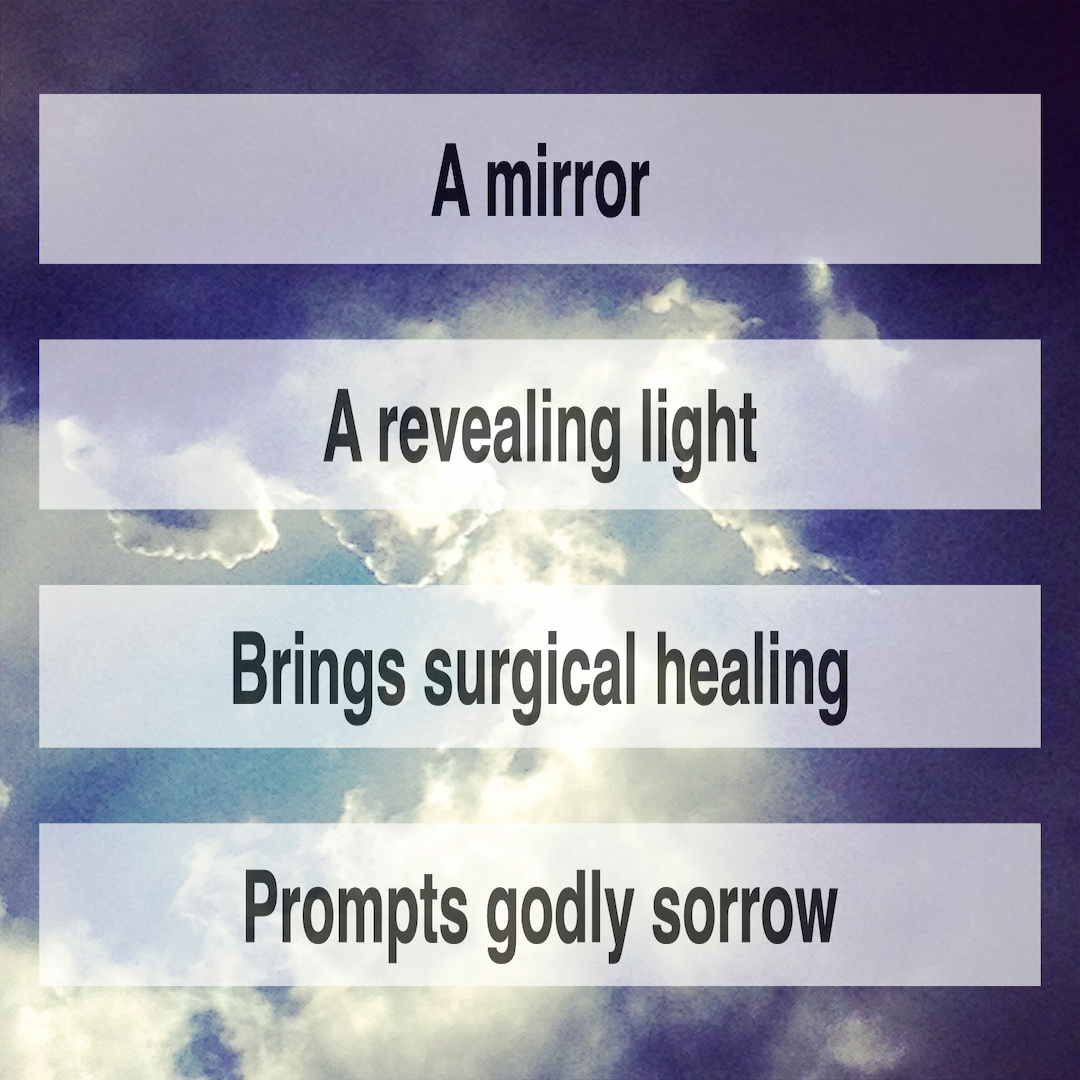
…prompts godly sorrow without condemnation (Romans 8:1-2; 2 Corinthians 7:8-9)
Only when this grief is turned to joy again can God use us to minister to others. We are able to comfort and redirect others because God has comforted and redirected us back onto His path.
David became enamored with his spiritual success and forgot God’s laws. His sin caused God to turn and fight against him. In his deep grief, David cried out to God (Psalm 51:7-13). It was only after David repented that his grief was lifted and he was able to teach others about our loving God.
Let’s not ignore our grief, but instead let’s ask God what He is trying to tell us through that grief. Remember, in our distress He is distressed and will carry us. But if our spiritual leprosy has taken us away from God, He will lovingly fight against us to get us to return to Him!
You can check out all of the other messages in this series by clicking here.
“The important thing is not to stop questioning. Curiosity has its own reason for existing. One cannot help but be in awe when he contemplates the mysteries of eternity, of life, of the marvelous structure of reality. It is enough if one tries merely to comprehend a little of this mystery every day. Never lose a holy curiosity.” —Albert Einstein
“A steady and balanced diet of God’s Word provides the spiritual energy disciples need for the work of the Lord. … Preachers and teachers must always bear this in mind. Disciples don’t grow into Christlikeness in leaps and bounds, but incrementally, here a little and there a little. We must teach the glory and majesty and scope of the whole counsel of God, but we must teach the disciples how to discern what that requires for every next step in their lives.” —T.M. Moore
Some skeptics of Christianity try to push their claim that Easter is really a pagan holiday co-opted by Christians. But reading the historical records shows that this is clearly not the case. Check out this helpful article from Michael A.G. Haykin.
Listen to the podcast of this post by clicking on the player below, and you can also subscribe on Apple, Spotify, or Audible.
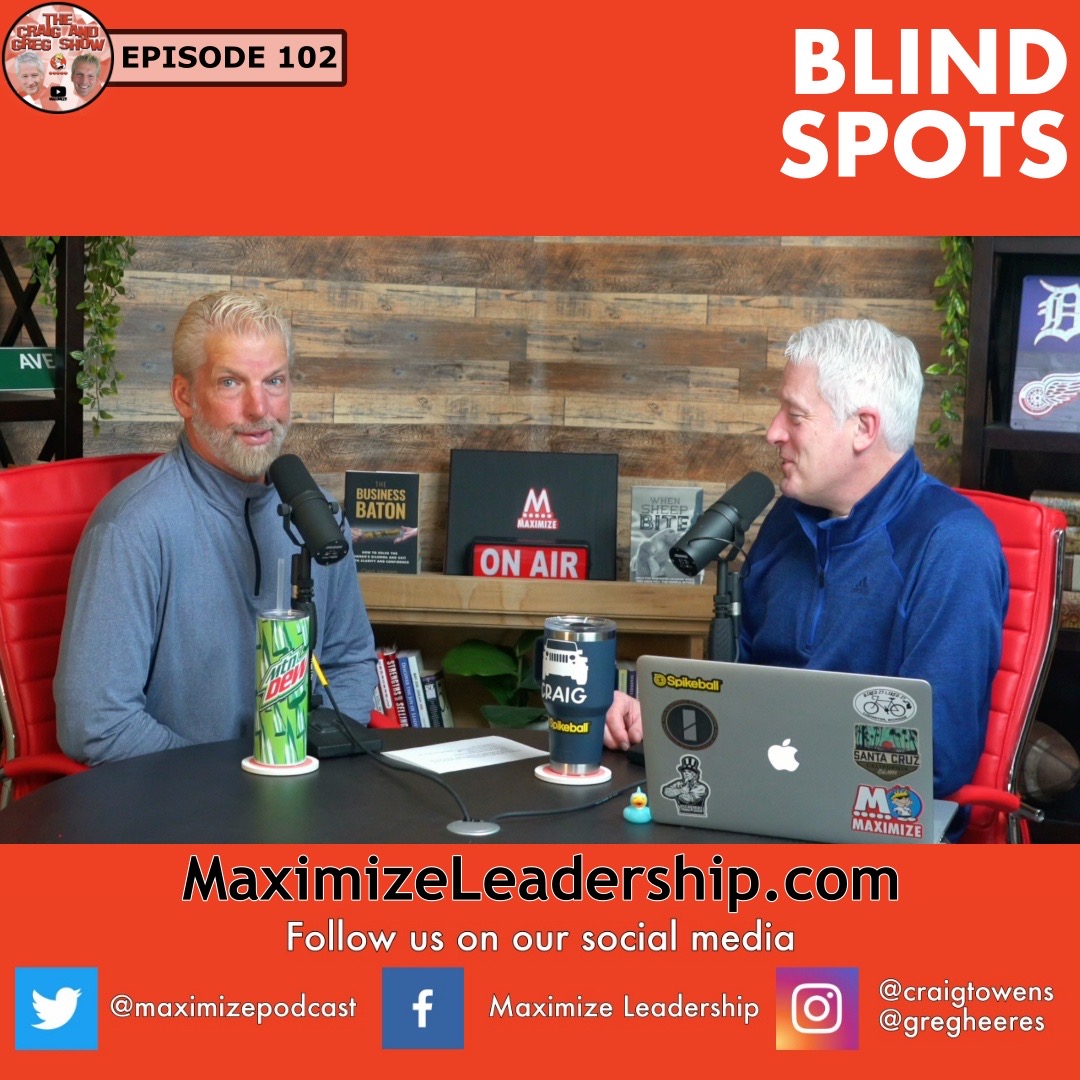
In our last episode, Greg and I discussed how vital it is to focus on your own internal development. If you’ve been doing that, chances are you have identified a few blind spots in yourself. While it might feel more comfortable to simply hide these away and hope nobody notices, we would like to encourage you to be vulnerable: Drag your blind spots into the light, address them, and watch how your leadership improves as a result.
[1:30] Leaders have to get comfortable with being vulnerable if they are going to make any meaningful changes in their life.
[2:17] Blind spots have to be brought out into the light.
[5:44] Paying attention to the feedback from others requires us to slow down to process what we need to change.
[7:35] Leaders need to understand the speed of their team in the area of productivity.
[8:34] Greg shares a “blind spot” example from one of his kids.
[9:53] Why do leaders avoid their blind spots?
[11:45] Peripheral vision isn’t good just for athletes, but for leaders too.
[13:11] I share how asking good questions has helped my teammates with their blind spots.
[14:50] If leaders assume things about their teammates or work with their favorite teammates, they will never improve the morale of the team.
[18:17] Greg talks about the movie “Blindside” as a learning point about having the right people watching out for us.
[20:10] We need to be thinking about the kind of people we need around us.
[25:42] The one word most people are afraid to say.
[26:59] Sometimes a fresh set of eyes is necessary to see a blind spot. Maximize coaching would love to be a resource for you in this area.
Check out this episode and subscribe on YouTube so you can watch all of the upcoming episodes. You can also listen to our podcast on Spotify and Apple.
Listen to the podcast of this post by clicking on the player below, and you can also subscribe on Apple, Spotify, or Audible.
I don’t know if this ever happens to you, but I’ve lost count of the number of times that this happens to me. I open up my Bible and begin reading right where I left off the day before, and as I’m reading, my attention is riveted by words that seem to pop off the page!
I look at them again and see that this passage contains highlights or underlining or notations from when I read here before. Yet I’m left scratching my head saying, “How did I miss this when I read this passage earlier?!”
I know this is because I’m a different person now than I was the last time I was reading this passage. I’ve learned some things and hopefully I have grown in the process. Quite simply, the Holy Spirit knew I wasn’t ready earlier for the new concept that jumped off the page at me.
The other day I was reading in the Book of Romans and I noticed something that Paul wrote—
And, moreover, that the Gentiles might glorify God for His mercy. As it is written: “Therefore I will praise You among the Gentiles; I will sing the praises of Your name.” Again, it says, “Rejoice, you Gentiles, with His people.” And again, “Praise the Lord, all you Gentiles; let all the peoples extol Him.” And again, Isaiah says, “The Root of Jesse will spring up, One who will arise to rule over the nations; in Him the Gentiles will hope.” (Romans 15:9-12)
Look at that wording: “As it is written … again it says … and again … and again….” Paul is telling us that God tells us the same thing in different ways, at different times, and through different voices. It’s the same message, but it resonates a little differently in each place. As God’s Word speaks to us again and again and again, we see the richness and fullness of the message.
In v. 9, Paul quotes David in 2 Samuel 22:50 and Psalm 18:49.
In v. 10, the quotation is fromMoses in Deuteronomy 32:43.
In v. 11, an anonymous psalmist in Psalm 117:1 is quoted.
And in v. 12, Paul quotes the prophet Isaiah in Isaiah 11:10.
The Jews considered the Holy Scripture to be divided into three sections: The Law, the Prophets, and the Writings. Look again what Paul did:
He quotes Moses from the Law
He quotes Isaiah from the Prophets
He quotes David and the anonymous psalmist from the Writings
Jesus said, “Do not think that I came to destroy the Law or the Prophets. I did not come to destroy but to fulfill” (Matthew 5:17). And after His resurrection, as He walked and talked with a couple of disciples, He reminded them, “This is what I told you while I was still with you: Everything must be fulfilled that is written about me in the Law of Moses, the Prophets and the Psalms” (Luke 24:44).
One of the reasons that the consistent message of the Scripture is repeated again and again and again is so that everyone will have a chance to hear it and believe it.
There is such a beauty in this! I encourage you to take the time to look up the cross-references that many Study Bibles have put together. As you read the “it is written” statements in the Bible, I hope you will be encouraged as you see it throughout all the Bible again and again and again!
Check out the book reviews I’ve shared on these study Bibles:



 I’ve found that in helping my teammates receive feedback about areas that need to be addressed, asking questions is the best way to do this. Check out the full conversation Greg and I had about blind spots.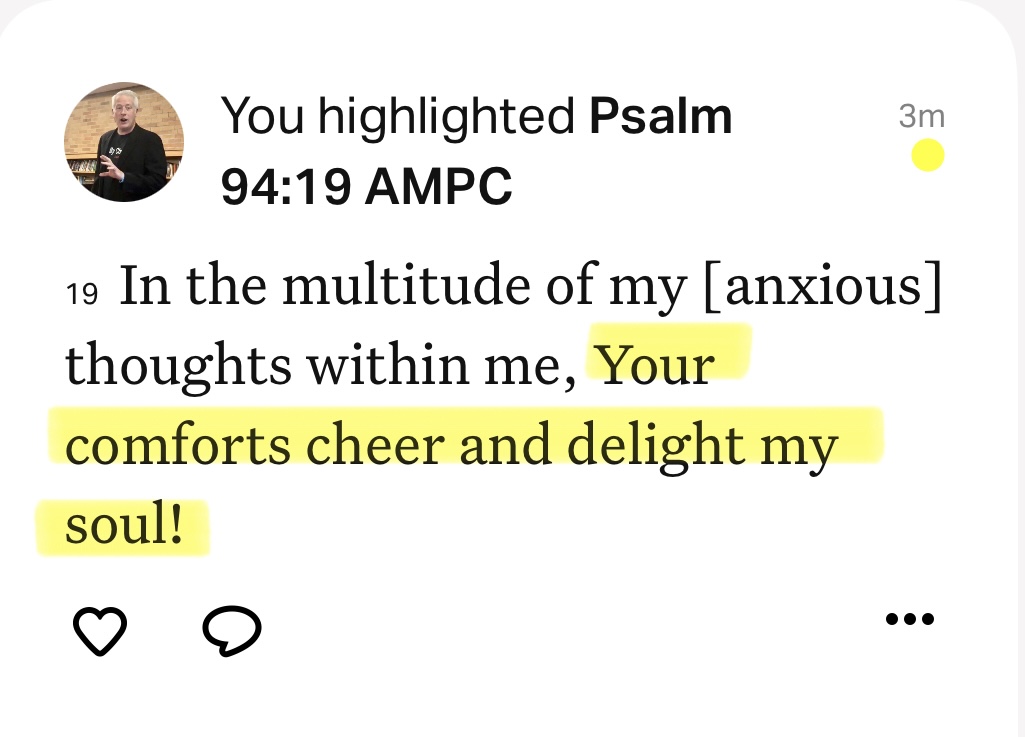



 Craig T. Owens