10 Quotes From “Praying The Promises”

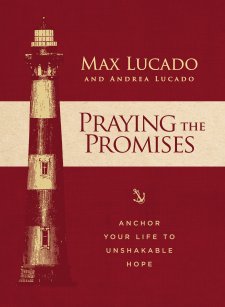
There is something special about turning God’s Word into a prayer to our Heavenly Father, and Max Lucado shows us how in his book Praying The Promises. You can check out my full book review by clicking here. 

“We do not need more opinions or hunches; we need the definitive declarations of our mighty and loving God. He governs the world according to these great and precious promises. Let’s be who we were made to be: People of the Promise. Let’s keep these promises handy. Praise Him out loud. Fill our lungs with air and hearts with hope and declare our belief in God’s goodness.” 

“Everything in creation gives evidence of God’s existence. The intricacy of snowflakes, the roar of a thunderstorm, the precision of a honeybee, the bubbling of a cool mountain stream. These miracles and a million more give testimony to the existence of a brilliant, wise, and tireless God (Psalm 19:1-4). Everything shows evidence of a purposeful design. The facts lead to a wonderful conclusion. God is…and God is knowable. … We can know more than simple facts about our Creator; we can know His heart, His joy, His passion, His plan, and His sorrows. … The mark of a saint is that he or she is growing in the knowledge of God.” 

“As we fellowship with God, read His Word, obey His commands, and seek to understand and reflect His character, something wonderful emerges. Or, better stated, Someone wonderful emerges. God comes out of us. We say things God would say. We do things God would do.” 

“When we pray, we engage the power of God against the devil. When we worship, we do what satan himself did not do: we place God on the throne. When we pick up the sword of Scripture, we do what Jesus did in the wilderness. He responded to satan by proclaiming truth (Matthew 4:1-11).… satan will not linger long where God is praised and prayers are offered.” 

“We don’t need a large army. We don’t need abundant resources. God’s presence tilts the scales in our favor.” 

“If you have taken on the name of Christ, you have clout with the most powerful Being in the universe. When you speak, God listens. … Your prayers matter to God because you matter to God.” 

“When nothing quenches your deepest thirsts, when droughts turn your fields into deserts and retirements into pocket change, what can you do? Evaluate your priorities: Is God’s big thing my big thing? 

“Guilt simmers like a toxin in far too many souls, but you don’t need to let it have a place in yours. Internalize this promise: ‘There is now no condemnation for those who are in Christ Jesus’ (Romans 8:1). Not ‘limited condemnation,’ ‘appropriate condemnation,’ or ‘calculated condemnation.’ That is what people give people. God gives His children no condemnation.” 

“The greatest news in the world is not that God made the world but that God loves the world. He loves you. You did not earn this love. And His love for you will not fade if you lose your way. His love for you will not diminish if your discipline does. You have never lived one unloved day. God loves you, and because He does, you can be assured joy will come.” 

“I will fix my eyes on things above. Because I know that this world is not my home, I will keep eternity in sight.” 

These are quotes from the section of Praying The Promises called “unshakable hope.” Stay tuned because I will be sharing soon some of the model prayers Max gave us in this helpful book. 
10 More Quotes From “Yours, Jack”

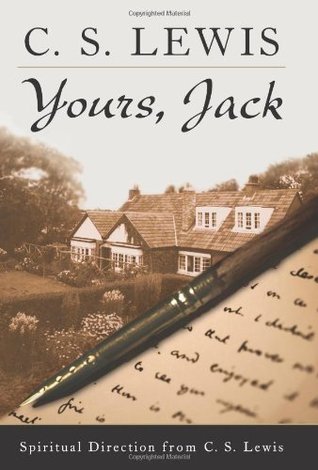
I love reading C.S. Lewis’ books, and I loved learning more about Lewis himself through his personal correspondence. Here are a few more quotes from Yours, Jack. 

“Indeed the best thing about happiness itself is that it liberates you from thinking about happiness—as the greatest pleasure that money can give us is to make it unnecessary to think about money. And one sees why we have to be taught the ‘not thinking’ when we lack as well as when we have.” 

“Read your New Testament (preferably a modern translation) intelligently. Pray for guidance, obey your conscience, in small as well as great matters, as strictly as you can. Don’t bother much about your feelings. When they are humble, loving, brave, give thanks for them: when they are conceited, selfish, cowardly, ask to have them altered. In neither case are they you, but only a thing that happens to you.”

“The Bible itself gives us one short prayer which is suitable for all who are struggling with the beliefs and doctrines. It is: ‘Lord, I believe, help Thou my unbelief.’ Would something of this sort be any good: Almighty God, who art the Father of lights and who has promised by Thy dear Son that all who do Thy will shall know Thy doctrine: give me grace so to live that by daily obedience I daily increase in faith and in the understanding of Thy Holy Word, through Jesus Christ our Lord. Amen.” 

“I would prefer to combat the ‘I’m special’ feeling not by the thought ‘I’m no more special than anyone else’ but by the feeling ‘Everyone is as special as me.’ In one way there is no difference, I grant, for both remove the speciality. But there is a difference in another way. The first might lead you to think, ‘I’m only one of the crowd like anyone else.’ But the second leads to the truth that there isn’t any crowd. No one is like anyone else. All are ‘members’ (organs) in the Body of Christ. All different and all necessary to the whole and to one another: each loved by God individually, as if it were the only creature in existence. Otherwise you might get the idea that God is like the government which can only deal with the people as a mass.” 

“As to the ‘state of the world’ if we have time to hope and fear about it, we certainly have time to pray. I agree it is very hard to keep one’s eyes on God amid all the daily claims and problems. I think it wise, if possible, to move one’s main prayers from the last-thing-at-night position to some earlier time: give them a better chance to infiltrate one’s other thoughts.” 

“One can’t help momentary wishes: guilt begins only when one embraces them. You can’t help their knocking at the door, but one mustn’t ask them in to lunch.” 

“I take it as a first principle that we must not interpret any one part of Scripture so that it contradicts other parts: and specially we must not use an Apostle’s teaching to contradict that of Our Lord.” 

“Any honest workmanship (whether making stories, shoes, or rabbit hutches) can be done to the glory of God.” 

“It is important to keep on giving thanks. Otherwise, as one continues to pray for the others who have not yet been relieved, one simply fails to notice how many of one’s intercessory prayers have been granted—never notices how the list of Thank-you’s grows and perhaps outstrips the list of mere Please’s.” 

“The only thing one can usually change in one’s situation is oneself. And yet one can’t change that either—only ask Our Lord to do so.” 

You can read my review of Yours, Jack by clicking here. And be sure to check out the first set of quotes I shared from this book by clicking here. 

Praying The Promises (book review)

There is no more powerful way to pray than to pray using the Scriptures. If you are a parent, you probably know what it is to have a child say to you, “Mom/Dad, you said….” When we pray to God using God’s Word we’re essentially doing the same thing. A great resource to help you learn how to do this is Max Lucado’s newest book Praying The Promises. 

In the introduction, Max says, “As people who believe God’s promises, we have an advantage. We can determine to ponder, proclaim, and pray the promises of God. We can be like Abraham, who ‘didn’t tiptoe around God’s promise asking cautiously skeptical questions. He plunged into the promise and came up strong’ (Romans 4:20 The Message). We can choose to filter life through the promises of God. For every problem in life, God has given us a promise. When struggles threaten, we can find hope by praying those promises.”

Every chapter contains: 

  • a short “unshakable hope” reminder, 
  • a handful of biblical passages that are the foundation for our unshakable hope, 
  • a model prayer using those passages of Scripture, 
  • a simple declarative “I am” or “I will” statement to carry with you the rest of the day. 

In our hurly-burly, topsy-turvy, anxiety-prone world we need something that can put our feet on solid ground. There can be no more unshakable truth than to know that God keeps His Word, and that we can stand on those rock-solid promises. The prayers in Praying The Promises will, I trust, help you read the Bible in a new light, as you see more and more promises which you can turn into prayer to our All-loving, All-powerful Heavenly Father. 

I am a Thomas Nelson book reviewer.

Let’s Put That In Perspective!

How long is your life? If you’re a man living in the United States on average your life is 689,412 hours. But how long is that really? 

Here’s some perspective—if you drew a timeline 50 feet long that represented all of Earth’s recorded history, your life would cover about the breadth of your hand. But that’s only recorded history—what about the eternity that existed before history started and the eternity that will continue after history ends? 

Twice in Psalm 39, David described our brief life like this: each man’s life is but a breath. 

So what do we do with our breath-long life? Fortunately for us, David gives us godly perspective in five areas. 

  1. Perspective on the weight of my words and my silence (vv. 1-3) 

David had a good start: I will keep my tongue from sin, but what happens when sinful words slip out? I would suggest we count those as a gift. Really?! Yes, because those “slips” make us aware of what’s really in our heart (see Matthew 15:19) so that we can confess them. 

David also suggests putting a muzzle on our mouths when we’re around certain people. In other words, don’t get into petty fights with people who aren’t going to receive the wisdom we may have to share with them. 

  1. Perspective on the use of my time (vv. 4-5)

Why do we procrastinate doing good things? Some of our simple cliches reflect this, like TGIF. Why wait until Friday to get happy? Why not say TGIT—thank God it’s today! Do something memorable today… do something life-altering today… do something for God today.

  1. Perspective on my possessions (v. 6) 

David reminds us that we work so hard to accumulate stuff “not knowing who will get it.” Jesus had another word for someone who only wanted to get stuff to make his life easier: fool (see Luke 12:16-21). Use stuff to serve others. 

  1. Perspective on forgiveness (vv. 7-11)

Why oh why, would we spend one minute longer than we have to with unconfessed, unforgiven sin? I blogged last week about the freedom that immediately comes when we receive forgiveness from our confessed sin. Let’s do this quickly! 

  1. Perspective on the purpose of my life (vv. 12-13)

If I only have a breath-long life, I want to make every moment count. I love what C.T. Studd wrote: “Only one life will soon be past. Only what’s done for Christ will last. … Let us not glide through this world and then slip quietly into heaven without having blown the trumpet loud and long for our Redeemer, Jesus Christ. Let us see to it that the devil will hold a thanksgiving service in Hell when he gets the news of our departure from the field of battle.”

Here’s my prayer for all of us—Lord, help me to know how few days I have so I can live every one for Your glory. 

Saturday In The Proverbs—God Gets The Final Say (Proverbs 21)

[Each chapter in the Book of Proverbs contains thoughts that fit into a theme; they are not just random thoughts gathered together. In this “Saturday In The Proverbs” series, I will share a theme that I see in each chapter. But the cool thing about God’s Word is that you may see an entirely different theme. That’s great! If you do, I would love for you to share it in the comments below.]

The king’s heart is in the hand of the Lord, like the rivers of water; He turns it wherever He wishes (Proverbs 21:1).


I may be in charge of something, but I am never in complete control. God has the final say in my…

  • …affections (vv. 1, 17, 24)
  • …motives (vv. 2, 6, 10, 13, 14, 22, 27)
  • …righteousness (vv. 3, 4, 7, 8, 12, 15, 16, 18, 21, 29)
  • …plans (vv. 5, 31)
  • …household management (vv. 9, 19)
  • …attitude toward correction (v. 11)
  • …stewardship (v. 20)
  • …words (vv. 23, 28)
  • …work ethic (vv. 25, 26)

“There is no wisdom or understanding or counsel against the Lord” (v. 30). God always has the final say.

A Leader’s Sincere Apology

…I’m sorry, brothers… (Acts 23:5). 

It started off innocently enough. Paul was addressing the Jewish high counsel and simply said, “Brothers, I have always lived before God with a clear conscience!” 

That doesn’t seem too controversial nor insensitive, but the next move does—Instantly Ananias the high priest commanded those close to Paul to slap him on the mouth. What?! That seems like a bit of an over-reaction on the part of the high priest, or maybe a bit of show of force to let Paul know who was really in charge here. 

If you were Paul and got slapped in the face for a pretty simple and true statement, how would you respond? Paul responded like I think I may have, with a little verbal “slap” of his own: “God will slap you, you corrupt hypocrite! What kind of judge are you to break the law yourself by ordering me struck like that?” 

Yeah, take that, you big meanie! 

Those standing closest to Paul must have gasped in horror as they said, “Do you realize who you’re talking to?” 

Paul is an old man by this time. He’s been through shipwrecks, beatings, imprisonments, without food, traveled more miles than he can count, preached more sermons than he can remember. His body was giving out on him, and his eyesight was especially weak. Clearly, Paul didn’t realize to whom we was addressing his remarks. 

But Paul immediately owned up to his mistake. “I’m sorry, brothers. I didn’t realize he was the high priest, for the Scriptures say, ‘You must not speak evil of any of your rulers.’” 

A mark of a godly leader is one who is quick to apologize.

Paul could have made excuses. He could have justified what he said by explaining, “He deserved it because of how he spoke to me!” or “He started it!” 

But Paul offered no excuses or justifications, just a quick, simple, sincere apology. 

Oh, that all Christian leaders were as sensitive as Paul and as quick to apologize!

This is part 26 in my series on godly leadership. You can check out all of my posts in this series by clicking here.

Thursdays With Oswald—Jeremiah 17

Oswald ChambersThis is a weekly series with things I’m reading and pondering from Oswald Chambers. You can read the original seed thought here, or type “Thursdays With Oswald” in the search box to read more entries.

Jeremiah 17

[These are notes from Oswald Chambers’ lecture on Jeremiah 17.] 

     All sin is unpardonable, every sinner is pardonable. … 

     God cannot pardon sin, but He instantly receives the sinner when the sinner leaves his sin and comes to Him. The Atonement of the Lord Jesus Christ does not mean that God forgives the sinner and leaves him in his sin; God forgives a man for being a sinner and puts him in the place where he need never be a sinner any more. …  

     God is only after one thing, a right relationship to Himself, and He does not care about our physical comforts. Until we are rightly related to Him, God will play ruthless havoc with every comfort and relationship we have. … 

     When we are sanctified the perpetual temptation is to do what Jesus did not do—“Now I am sanctified I can do what I like.” I cannot. My natural life and natural gifts are to be turned into a spiritual possession by offering them to God. 

From Notes On Jeremiah

God cannot tolerate sin, but He loves the sinner so much that He sent His Son to die in our place as payment for our sin. While we are still wallowing and trapped in our sin, God will not leave us alone; He will not make life comfortable for us; He will ruthlessly ruin everything that we try to use as a substitute for a relationship with Him. 

Once we do confess our sin and receive the Atonement that Jesus purchased on the Cross for us, the Holy Spirit will continue to harass our old nature. Our sinful flesh wants to return to wallowing in the muck of sin, but the Holy Spirit will make it tremendously uncomfortable for us to go there. 

Don’t strive for a comfortable life; strive for a God-honoring life. Pay attention to those areas of discomfort or dissatisfaction, because God is speaking to you through those and calling you into a deeper, more vibrant life in Him.

10 Quotes From “Yours, Jack”

Reading the collection of letters in Yours, Jack was a real treat, helping me to get to know the personality of the man behind so many of my favorite books. To read my full book review on these letters from C.S. Lewis, please click here. 

“Now the story of Christ is simply a true myth: a myth working on us in the same way as the others, but with this tremendous difference that it really happened: and one must be content to accept it in the same way, remembering that it is God’s myth where the others are men’s myths: i.e., the Pagan stories are God expressing Himself through the minds of poets, using such images as He found there, while Christianity is God expressing Himself through what we call ‘real things.’” 

“God not only understands but shares the desire which is at the root of all my evil—the desire for complete and ecstatic happiness. He made me for no other purpose than to enjoy it. But He knows, and I do not, how it can be really and permanently attained. He knows that most of my personal attempts to reach it are actually putting it further and further out of my reach. With these therefore He cannot sympathize or ‘agree’: His sympathy with my real will makes that impossible.” 

“The truth is that evil is not a real thing at all, like God. It is simply good spoiled. That is why I say there can be good without evil, but no evil without good. … Evil is a parasite. It is there only because good is there for it to spoil and confuse.” 

“So few of us will really rest all on Him if He leaves us any other support.” 

“The practical problem about charity (in our prayers) is very hard work, isn’t it? When you pray for Hitler and Stalin, how do you actually teach yourself to make the prayer real? The two things that help me are (A) A continual grasp of the idea that one is only joining one’s feeble little voice to the perpetual intercession of Christ, who died for those very men (B) A recollection, as firm as one can make it, of all one’s own cruelty which might have blossomed, under different conditions, into something terrible. You and I are not, at bottom, so different from these ghastly creatures.” 

“No amount of falls will really undo us if we keep on picking ourselves up each time. We shall of course be very muddy and tattered children by the time we reach home. But the bathrooms are all ready, the towels put out, and the clean clothes are in the airing cupboard. The only fatal thing is to lose one’s temper and give it up. It is when we noticed the dirt that God is most present to us: it is the very sign of His presence.” 

“I think we are meant to enjoy our Lord and, in Him, our friends, our food, our sleep, our jokes, and the bird’s song and the frosty sunrise.” 

“Keep clear of psychiatrists unless you know that they are also Christians. Otherwise they start with the assumption that your religion is an illusion and try to ‘cure’ it: and this assumption they make not as professional psychologists but as amateur philosophers. Often they have never given the question any serious thought.” 

Away with tears and fears and troubles! United in wedlock with the eternal Godhead Itself, our nature ascends into the Heaven of Heavens. So it would be impious to call ourselves ‘miserable.’ On the contrary, Man is a creature whom the Angels—were they capable of envy—would envy.” 

“Notice how we are perpetually surprised at Time. (‘How time flies! Fancy John being grown-up and married? I can hardly believe it!’) In heaven’s name, why? Unless, indeed, there is something in us which is not temporal.” 

More C.S. Lewis quotes coming soon. And you can also check out some of the quotes I’m sharing on Tumblr and Facebook. 

The Power Of Praying Scripture

I have always been a huge proponent of allowing the Scriptures to help form my prayers. I think there is great value in speaking God’s Word back to Him. 

“Knowing God’s Word helps us pray, and praying helps us know God’s Word.” —Craig T. Owens

I am currently reading Max Lucado’s book Praying The Promises in which he makes the same case. For instance, consider the following passages—

The rain and snow come down from the heavens and stay on the ground to water the earth. They cause the grain to grow, producing seed for the farmer and bread for the hungry. It is the same with My word. I send it out, and it always produces fruit. It will accomplish all I want it to, and it will prosper everywhere I send it. (Isaiah 55:10-11) 

[Abraham] was fully convinced that God is able to do whatever He promises. (Romans 4:21) 

For no matter how many promises God has made, they are “Yes” in Christ. And so through Him the “Amen” is spoken by us to the glory of God. (1 Corinthians 1:20) 

Here’s how Max Lucado turned those passages into a prayer—

Lord, You are the Maker and Keeper of promises. Your Word does not return void. When You say You will do something, You do it. You are able to do whatever You promise. So many years ago You made a covenant with Your people, and You have been faithful to the covenant.

Sometimes it is easier to put my faith in my circumstances rather than in Your promises. I want to rely on myself, my earthly possessions, and the people in my life, but these so often fail me. But Your promises will never fail me!

As I read through Your promises, give me a new passion for them. Show me what promises I have forgotten over the years and need to cling to again. Reveal Your true character to me. Remind me of the power of Your love and Your grace. Strengthen my faith, and teach me to lean on Your Word rather than on myself.

Thank You for keeping Your promises. I’m grateful for the ultimate promise I have in Your Son, Jesus. Amen.

Why don’t you start making this a regular habit yourself.

Yours, Jack (book review)

C.S. Lewis might be one of the best known Christian apologists of the twentieth century, but he started out as an avowed atheist scholar. I’ve read biographies about Lewis’ conversion, but in Yours, Jack you can read in his own words the transformation in his thinking. 

Paul F. Ford served as the editor for this book and has compiled a marvelous collection of personal correspondence from C.S. Lewis (or Jack, as most called him) to inquirers from all over the world. The letters cover samples of his letters from 1916 to 1963, and have been selected to give us insights into Lewis’ spiritual maturing, as well as to read some of the “seed thoughts” that would show up as fully-formed ideas in later books. 

Ford wrote, “The purpose of this collection of letters are (1) to draw attention to how, indirectly and directly, C.S. Lewis experienced spiritual direction, wrote about it, and practiced it, and (2) to allow the reader to benefit from having Lewis as a director.” 

But I got so much more out of these correspondences. I could see relationships deepening, spiritual thoughts being forged and sharpened, and feel the tenderness that comes out of Lewis’ pen to each and every person to whom he wrote. And for those who have read any of the other books C.S. Lewis authored, you will smile as you see the fledgling thoughts being tested out on his friends before they appear in his classic and well-loved books. 

This book is a must-read for all fans of C.S. Lewis.