Thursdays With Spurgeon—“Got To” To “Get To”

This is a weekly series with things I’m reading and pondering from Charles Spurgeon. You can read the original seed thought here, or type “Thursdays With Spurgeon” in the search box to read more entries.

“Got To” To “Get To” 

     What a glorious covenant the second covenant is! Well might it be called “a better covenant, which was established on better promises” (Hebrews 8:6). … 

     It is better, for it is founded upon a better principle. The old covenant was founded on the principle of merit. It was “Serve God and you will be rewarded for it. If you walk perfectly in the fear of the Lord, God will walk well toward you and all the blessings of Mount Gerizim will come upon you and you will be exceedingly blessed in this world and the world that is to come.” But that covenant fell to the ground, because, although it was just that man should be rewarded for his good works, or punished for his evil ones, yet man being sure to sin and since the fall infallibly tending toward iniquity, the covenant was not suitable for his happiness, nor could it promote his eternal welfare.

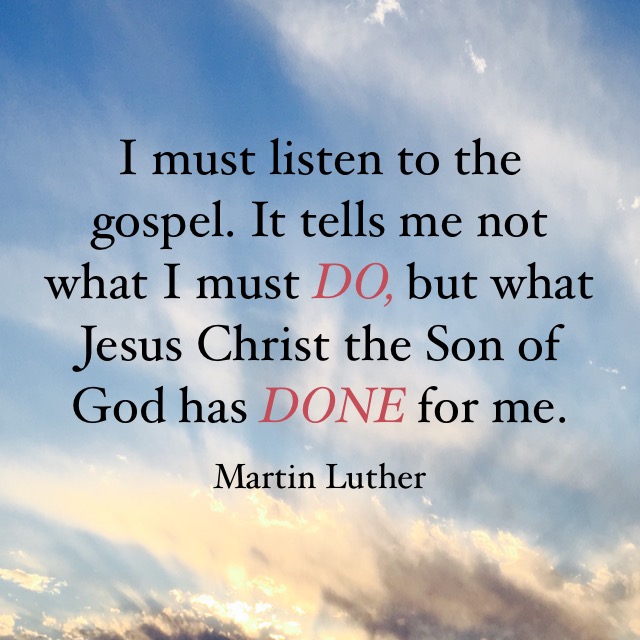
     But the new covenant is not founded on works at all. It is a covenant of pure unmingled grace. You may read it from its first word to its last, and there is not a solitary syllable as to anything to be done by us. The whole covenant is a covenant, not so much between man and his Maker, as between Jehovah and man’s representative, the Lord Jesus Christ. The human side of the covenant has been already fulfilled by Jesus, and there remains nothing now but for the covenant of giving, not the covenant of requirements.

From God In The Covenant 

The old covenant was—you’ve got to do this. The new covenant is—you get to do this! 

The old covenant made requirements. The new covenant invites joyful participation. 

The old covenant needed men to do rituals of sacrifice. The new covenant was done once for all when Jesus said, “It is finished!” 

Under the new covenant, we are free to worship God and enjoy His blessings without having to complete a checklist of religious duties. Have you traded GOT TO for GET TO?
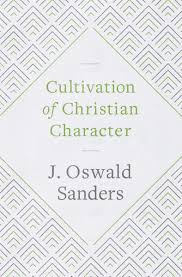
10 Quotes From “Cultivation Of Christian Character”

J. Oswald Sanders has given us a short but powerfully effective book for developing more Christlikeness in each and every Christian. Check out my full book review by clicking here. 

“In a word, spiritual maturity is Christlikeness.” 

“Christ set the standard in everything. He was never petulant, always calm; never rebellious, always obedient; never fearful, always courageous; never vacillating, always resolute; never pessimistic, always cheerful; never subtle, always sincere; never grasping, always generous; never acting from expediency, always from principle. He is the pattern of spiritual maturity.” 

“So then our spiritual maturity or immaturity is seen in the manner in which we react to the changing circumstances of life. … It has to be learned. Is it not striking that it is recorded of Christ that ‘though He were a Son, yet He learned obedience by the things which He suffered; and being made perfect, He became the author of eternal salvation’ (Hebrews 5:8-9)? He alone was fully mature. The rest of us are ‘going on to maturity.’ In all of us there are some expressions of our personality in which we react immaturely instead of as mature men of God.” 

“The highest manifestation of spiritual maturity is love. We are only as mature as we are mature in love.” 

“God forbid that we should ever cease to love the gospel in its simplicity, but we must not be content to stay there. We must go on to appreciate increasingly the gospel in its profundity.” 

“There is a place for a constructive contending for the faith. The church has degenerated sadly since Pentecostal days and the servant of the Lord has an important part to play in its revival.” 

“It is possible to get to heaven without living a consecrated life, but the journey there will be barren and disappointing, since consecration is the doorway to undreamed-of joy. Neglect it, fail to seek it, and life will be greatly impoverished. Welcome it, and life becomes inexpressibly enriched.” 

“When we dedicate our lives to God, He consecrate us to His service. We dedicate our lives to Him that He may work His will in us. He consecrates us to Himself that He might make us holy.” 

“It has been suggested that in consecration we bring our lives to God as a blank sheet of paper with our names signed at the bottom. Confident of His love, we invite Him to fill in the details as He will.” 

“It is a life separated to the glory of God. Inherent in the word ‘consecration’ is the idea of separateness. There must of necessity be separation from sin if there is to be separation to God. … The consecrated Christian hates evil, but he has a passion for the right and for the glory of God and Christ. He tests all his actions by the one standard, ‘Is this for the glory of God?’ He will do anything, suffer anything, if only God is glorified. Nothing is too costly to give to the Master.” 

Cultivation Of Christian Character (book review)

I’ve always enjoyed reading J. Oswald Sanders. Let me rephrase that: I enjoy the new insights on God’s Word that Sanders’ books have given me, but the confrontation of the Holy Spirit that comes while reading these books can be quite painful at times. Cultivation Of Christian Character is no exception! 

In his opening words, Sanders explains the purpose of “this little volume” (as he calls it)—

“The genuine disciple of Christ earnestly desires a closer walk with God and a greater conformity to Christ. If these are absent, there is reason to doubt the genuineness of the discipleship. But many true lovers of the Lord are beset with a sense of inadequacy and failure in living the Christian life as it ought to be lived. They are very conscious with Paul that they have not already attained, neither are already perfect, but they yearn to know Christ better and to serve Him more worthily.” 

There you have it in a nutshell: If you yearn to be more Christlike, and yet at the same time struggle with how far you still have to go to see the fruits of Christlikeness in your life, this is the book for you. 

The chapters are short enough to read in just a few minutes. But the thought processes and the heart-searching that these short chapters will stimulate will undoubtedly take a long time to assimilate into your daily life. At least, this is the case for me. 

None of J. Oswald Sanders’ books are long books, but all of his books live long inside of me. Dive into Cultivation of Christian Character with an attitude of ready submission to the Holy Spirit, and then watch the amazing fruitfulness and Christlikeness that will begin to blossom from your life. 

I am a Moody Publishers book reviewer. 

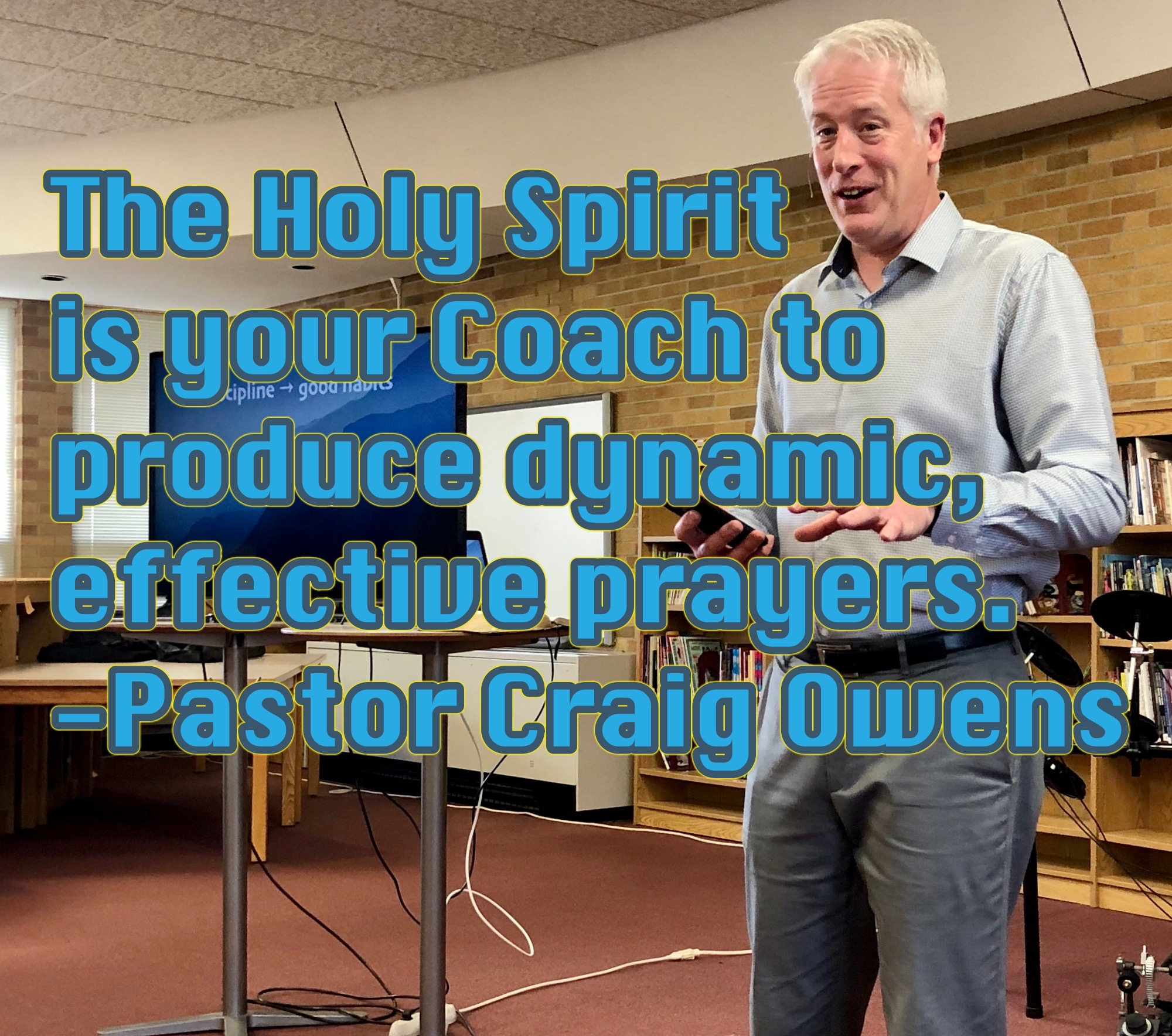
Our Prayer Coach

I love football! 

The plays that the quarterback calls in the huddle are very creative. It may sound something like this: “soultrain alert 13 trap on 1.” Then after the team breaks the huddle with the play that they just know will be successful, the quarterback may look over the other team’s defense and callout something like, “check” or “sally” or “Omaha.” This is called an “audible” and it’s communicating to the team how they are now going to modify the play that they just called. The quarterback calls this audible because it appears to him that the defense may know what sort of play they were planning to run. 

The teams that can adjust better on-the-fly—or call audibles—usually win the game. 

None of this happens without lots of practice! Practice builds good habits. Practice helps teams learn from their mistakes and develop even better habits. All of this practicing also requires a good coach overseeing the process, and individual team members who are willing to submit to the coach’s direction and correction. 

Have you noticed that there are some Christians who “audible” well? Unexpected things pop up that seem to throw many people off their game plan, but these Christians seem to adapt so easily. Why is that? It’s definitely not because they are wired that way, or have a higher spiritual IQ, or they can think faster. It’s because they’ve practiced good habits, they’ve learned from past experiences which have developed better “audibling” habits, all under the guidance of a perfect Coach. 

Jesus told us about the amazing prayers that we would be able to pray, and how the Holy Spirit can be our perfect Coach in this process (John 14:12-17, 26; 16:13-15). 

There are some incredible things that happen when we pray consistently, when we pray boldly, and when we pray in the character of Jesus. 

John Piper asks, “Why do God’s children so often fail to have consistent habits of happy, fruitful prayer?” He answers his own question like this: “Unless I’m badly mistaken, one of the reasons is not so much that we don’t want to, but that we don’t plan to.” 

Successful football teams don’t simply show up on game day and compete successfully. They plan to be successful. They practice and study the coach’s game plan so that they can be ready to audible when necessary. So too for Christians—we can’t just show up for spiritual battle and expect to be successful. We must also practice, and study the game plan laid out in the Bible, and listen to the Holy Spirit as He coaches us. That’s the only way we can successfully handle all that life and even the devil throws at us. 

Over the next couple of weeks, I’m going to be sharing some hindrances that I see that can derail our practice of prayer. In the meantime, I want to challenge you—as I’ve challenged myself personally—to think on three questions:

  1. Do I really want to pray effectively? 
  2. Am I willing to put in the energy necessary to pray this way?
  3. Am I willing to let the Holy Spirit coach and discipline me in my prayer practice? 

If you can, please join me at Calvary Assembly of God on Sunday as we continue our series called Prayer Plan. 

Poetry Saturday—Out Of Touch With Your Lord

Only a smile, yes, only a smile,
That a woman o’er burdened with grief
Expected from you; ‘twould have given relief
For her heart ache sore the while;
But weary and cheerless she went away,
Because as it happened, that very day
You were “out of touch“ with your Lord.

Only a word, yes, only a word,
That the Spirit’s small voice whispered, “Speak”;
But the worker passed onward, unblessed and weak,
Whom you were meant to have stirred
To courage, devotion and love anew,
Because when the message came to you,
You were “out of touch“ with your Lord.

Only a note, yes, only a note,
From a friend in a distant land;
The Spirit said, “Write,” but then you had planned
Some different work, and you thought
It mattered little, you did not know
‘Twould have saved a soul from sin and woe;
You were “out of touch“ with your Lord.

Only a song, yes, only a song,
That the Spirit said, “Sing tonight—
Thy voice is thy Master’s by purchased right“;
But you thought, “Mid this motley throng
I care not to sing of the City of Gold,”
And the heart that your words might have reached grew cold;
You were “out of touch“ with your Lord.

Only a day, yes, only a day!
But, oh, can you guess, my friend,
Where the influence reaches, and where it will end
Of the hours that you frittered away?
The Master’s command is, “Abide in Me,”
And fruitless and vain will your service be,
If “out of touch“ with your Lord. —Jean H. Watson

Thursdays With Spurgeon—Not Puffed Up, Not Despised

This is a weekly series with things I’m reading and pondering from Charles Spurgeon. You can read the original seed thought here, or type “Thursdays With Spurgeon” in the search box to read more entries.

Not Puffed Up, Not Despised 

     We magnify our office, though we would not magnify ourselves. We hold that nothing can dignify a man more than being appointed to an office in a Christian church. I would rather be a deacon of the church than lord mayor of London. A minister of Christ is, in my estimation, an infinitely higher honor than the world can bestow. My pulpit is to me more desirable than a throne, and my congregation is an empire more than large enough. An empire before which the empires of the earth dwindle into nothing in everlasting importance.

     Why does God give to one man a special call by the Holy Spirit to be a minister and pass by another? There is another man more gifted, perhaps, but we dare not put him in a pulpit because he has not had a special call. … The man whom some would perhaps think most suitable for the office is passed by and another chosen. There is a manifestation of God’s sovereignty in the appointment to office in putting David on a throne, and making Moses the leader of the children of Israel through the wilderness, in choosing Daniel to stand among princes, in electing Paul to be the minister to the Gentiles and Peter to be the apostle of the circumcision. And you who have not the gift of honorable office must learn the great truth contained in the question of the Master, “Is it not lawful for Me to do what I wish with My own things?” [Matthew 20:15]

     We say again, the sovereignty of God is here displayed in the distribution of gifts honorable. Learn here, O Christian man, if you have gifts, to cast the honor of them at the Savior’s feet, and if you possess them not, learn not to murmur. Remember that God is equally as kind when He keeps back as when He distributes His favors. If any among you is exalted, let him not be puffed up. If any is lowly, let him not be despised. For God gives to every vessel His measure of grace. Serve Him after your measure and adore the King of heaven who does as He pleases.

From Divine Sovereignty

  • Why does one person have one gift, and not another gift? 
  • Why does one Christian have one gift and another Christian many gifts? 
  • Why does one person rise to notoriety and another remains anonymous? 
  • Why did God choose David? Or Moses? Or Joshua? Or Saul/Paul? 

God is sovereign and He knows what He is doing! 

This should awaken in us a humble confidence. We are humbled that God would choose us for anything, but we are also confident that since He did choose us and place us where we needed to be that nothing can remove us or diminish what God is doing through us. 

Don’t get puffed up. Don’t feel despised. God knows exactly what He is doing! 

Prayer Plan

“Why do God’s children so often fail to have consistent habits of happy, fruitful prayer? Unless I’m badly mistaken, one of the reasons is not so much that we don’t want to, but that we don’t plan to.” —John Piper  

The word strategy carries in its definition the idea of the preparation that takes place before the actual engagement begins. A coach’s strategy is worked out on the practice field. A general’s strategy is worked out in the training of his soldiers. A CEO’s strategy is worked out in the board room. 

And a Christian’s strategy is worked out in the prayer closet. 

Sadly, many Christians fall short in the time of battle simply because they hadn’t trained ahead of time—they didn’t make a plan to pray. 

Join me this Sunday as we begin a new series called Prayer Plan where I hope everyone will end up being able to say an enthusiastic “yes” to the question: Are you ready to pray? 

If you cannot join us in person at 10:30am on Sunday mornings, please check out our Facebook Live broadcast. 

If you have missed any of the messages in this city, be sure to check them out here:

How Will You Respond To Jesus?

Although most nativity scenes show the wise men visiting Jesus alongside the shepherds the night He was born, in reality the Magi showed up much later. 

They came first to Israel’s capital city—Jerusalem—and went to the man who currently bore the title King of the Jews—Herod—with an odd question, “Where is He who has been born King of the Jews? We’ve come to worship Him.”

The call to come to worship the Christ has always stirred different responses in people’s hearts. But I have noticed that the responses today aren’t any different than they were over 2000 years ago at Christ’s first Advent. 

Notice these four responses in the Gospel of Matthew:

  1. King Herodwhen King Herod heard this he was disturbed.

The word disturbed means an inward commotion, someone robbed of any calmness; someone who has become restless and agitated. 

King Herod wasn’t all that different from a lot of people today who have their personal lives organized according to their own plans. They have everything figured out. They are masters of their own fate. They know how everything is supposed to work. They are god of their own world. 

But inside it’s a different story. They may not acknowledge it to anyone else, but they are uneasy. King Herod was political, not religious. He knew how to play the games with the right Jewish leaders and Roman politicians to get and keep his throne. So when he hears, “Where is He who is born KING OF THE JEWS?” you can understand why he instantly becomes so agitated! He feels like his well-ordered world and best-laid plans are about to crash in on him! 

  1. All JerusalemKing Herod…was disturbed, and all Jerusalem with him. 

The people of Jerusalem had a love-hate relationship with King Herod. If you were on his side, he could be quite generous with his gifts and favorable with his influence. But if you were against him, he could be incredibly cruel (just take a look at verse 16!). 

So when Herod got upset, you can imagine why the citizens of Jerusalem were as well. They all longed for the Messiah—the Christ—to come and set them free, but in the meantime they were trying to keep their options open. They wanted the Messiah, if they could have Him, but they didn’t want to abandon Herod yet, just in case the Messiah couldn’t follow through.  

  1. Religious leadersHerod…called together all the people’s chief priests and teachers of the law. 

Of all the people looking for the Christ, you would think the chief priests and teachers of the law would be the most excited! When Herod asked them for the birthplace of the Messiah, they immediately knew the answer, but after they delivered this information to King Herod they aren’t mentioned again in this narrative. Bethlehem was only 6 miles away, but they didn’t do a single thing! The Messiah being born in such a lowly manner didn’t fit the image they had concocted in their minds. Later on, Jesus would challenge them on this (see John 5:38-40). 

  1. MagiMagi from the east came to Jerusalem. 

Whereas the Jewish religious leaders were only 6 miles away, the Magi that came from the east might have been anywhere from 400-800 miles away. They left the comforts of their home to travel perhaps as long as 4 months. But, Oh! the journey was so worth the effort! They got to see the Christ with their very own eyes! We read that they were overjoyed, and that they bowed down and worshiped Him and opened their treasures. 

What’s your idea about Jesus? 

  • King Herod wanted a Savior that would enable him to continue to run his own life, but he didn’t want a King that would call the shots. 
  • The people of Jerusalem wanted access to God’s power, but they didn’t want to give their full allegiance to Jesus. 
  • The religious leaders wanted Jesus to fit their mold, but they didn’t want to have to change anything about their own lives. 
  • Only the Magi accepted Jesus as both Savior and King, willingly laying everything at His feet. 

What about you? What’s your idea about Jesus? He isn’t just a Baby in a manger; He’s also King and Judge and Ruler and Lord. When you hear the call to come worship Him, what will your response be? 

Year-End Review (2019 edition)

Ten years ago God called me to pastor at Calvary Assembly of God, and we have so thoroughly enjoyed our time in Cedar Springs! One of the really cool things I get to do is teach an amazing group of people every Sunday. Here’s a recap of the series and messages from 2019.

Boldly Praying—As a general rule, God would like us to pray much more boldly than we typically do. Jesus told us that we could pray mountain-moving prayers, but C.S. Lewis rightly observed, “If we consider the unblushing promises of reward and the staggering nature of the rewards promised in the Gospels, it would seem that our Lord finds our desires, not too strong, but too weak.” 

Christ’s Passionate Journey—In action movies, the crucial moment usually is filmed in slow motion. The Gospels do the same as Jesus approaches the Cross. For example, Mark doesn’t mention anything about the birth of Jesus and only gives us one verse to tell about satan’s temptation of Jesus in the wilderness. But he uses nearly 40% of his writing to describe the last week of Christ’s life. 

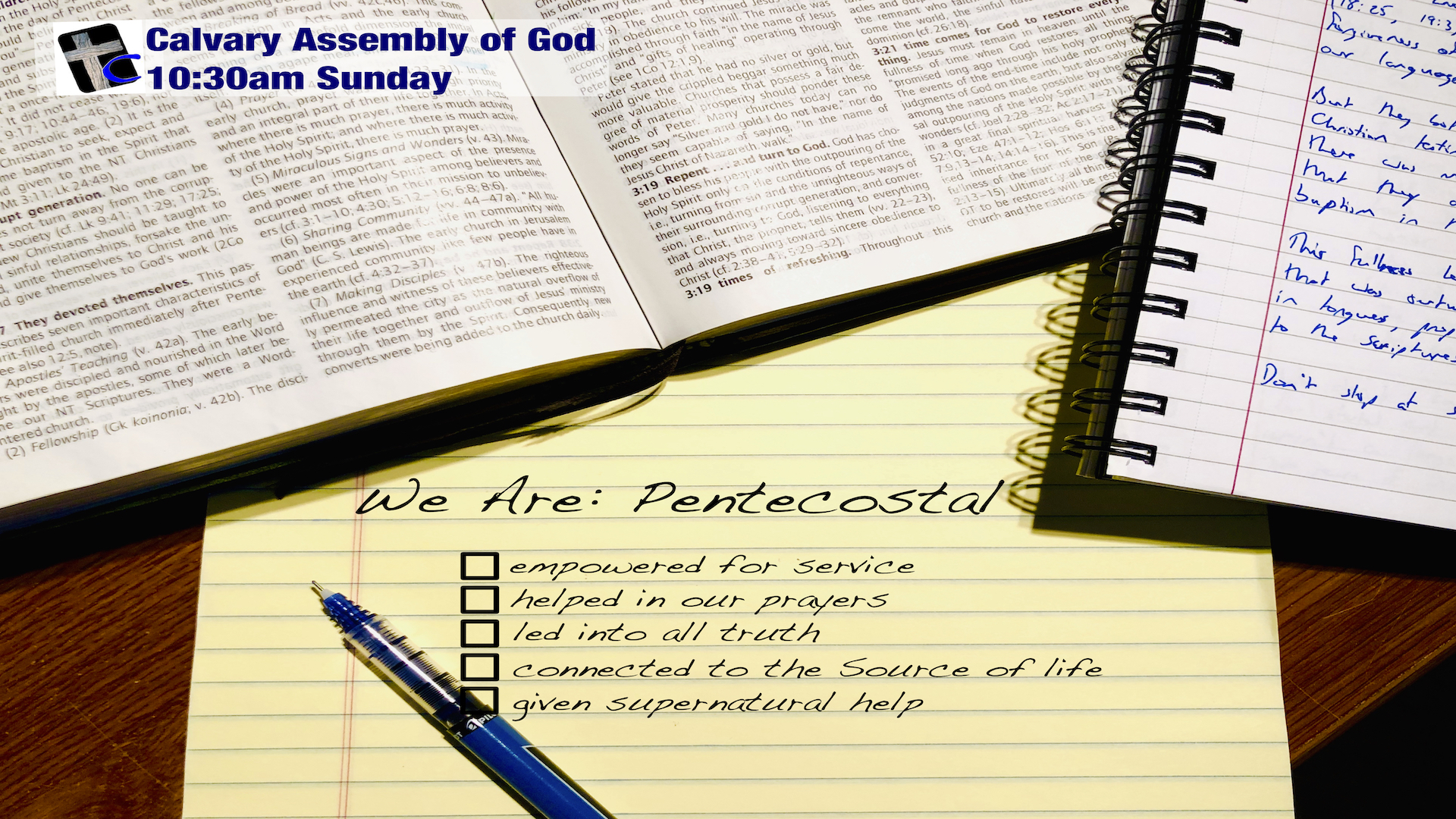
We Are: Pentecostal—Pentecost for over 1000 years was a celebration in Jerusalem that brought in Jews from all over the world. But on the Day of Pentecost that came just ten days after Jesus ascended back into heaven, the meaning of Pentecost was forever changed! 

Is That In The Bible?—Sometimes things that sound “biblical” aren’t actually in the Bible at all, and sometimes they are there but are misquoted. 

Selah—When you see this word in the Bible it can mean either a pause from the noise to reflect on something, a preparation for an exciting accent, or a reflective time of consideration. We are working our way through the Selahs in the Psalms.

Major Lessons From Minor Prophets—The five major prophets consist of 182 chapters, whereas the 12 minor prophets only have 67 chapters. The volume of these prophets writing may be minor, but their content carries major messages of meteoric power!  

Fading Gratitude—Looking back at the history of God’s people in the Bible, there is a distinct up-and-down cycle. I believe their slipping away from God can be directly linked to their forgetfulness. If there is a peril in our forgetfulness, there is also a power in our thankfulness!

The Carols Of Christmas—How many “old familiar carols” have you heard Christmas after Christmas until the words have almost lost their meaning? If we’re not careful, any song repeated too often can lose the richness of its original intent. 

We will be returning to a couple of these series in 2020, and we’ll be launching some brand new ones as well. In either case, if you don’t have a home church in the northern Kent County area, I would love to have you join us! 

Poetry Saturday—Like A River Glorious

Like a river, glorious
Is God’s perfect peace,
Over all victorious
In its bright increase;
Perfect, yet it floweth
Fuller every day,
Perfect, yet it groweth
Deeper all the way.

Stayed upon Jehovah,
Hearts are fully blest;
Finding, as He promised,
Perfect peace and rest.

Hidden in the hollow
Of His blessed hand,
Never foe can follow,
Never traitor stand;
Not a surge of worry,
Not a shade of care,
Not a blast of hurry
Touch the spirit there.

Stayed upon Jehovah,
Hearts are fully blest;
Finding, as He promised,
Perfect peace and rest.

Every joy or trial
Falleth from above,
Traced upon our dial
By the sun of love;
We may trust Him fully
All for us to do—
They who trust Him wholly
Find Him wholly true.

Stayed upon Jehovah,
Hearts are fully blest;
Finding, as He promised,
Perfect peace and rest. —Frances Ridley Havergal