Thursdays With Oswald—Swine And Testimonies

Oswald ChambersThis is a weekly series with things I’m reading and pondering from Oswald Chambers. You can read the original seed thought here, or type “Thursdays With Oswald” in the search box to read more entries.

Swine And Testimonies

     Jesus Christ is inculcating the need to examine carefully what we present in the way of God’s truth to others [Matthew 7:6]. … 

     Over and over again men water down the Word of God to suit those who are not spiritual, and consequently the Word of God is trampled under the feet of “swine.” Ask yourself, “Am I in any way flinging God’s truth to unspiritual swine?” “Be careful,” Jesus says, “not to give God‘s holy things to ‘dogs.’” …  

     Our Lord never tells us to confess anything but Himself, ‘Whosoever…shall confess ME before men…’ (Matthew 10:32). Testimonies to the world on the subjective line are always wrong, they are for saints, for those who are spiritual and who understand; but our testimony to the world is our Lord Himself, confess Him, “He saved me, He sanctified me, He put me right with God.” … 

     If we are only true to a doctrine of Christianity instead of to Jesus Christ, we drive our ideas home with sledge-hammer blows, and the people who listen to us say, “Well, that may be true”; but they resent the way it is presented. When we follow Jesus Christ the domineering attitude and the dictatorial attitude go and concentration Jesus comes in. 

From Studies In The Sermon On The Mount

The apostle Paul also talked about wanting to make sure that Jesus was seen above all else. More harm than good is done when we talk about our personal experiences with God, which have now become our personal doctrines about God. 

Let God be as unique with others as He is with you. Don’t make other people fall in line with what you believe. Just point them to Jesus. As Chambers says, our testimony should be nothing but “He saved me, He sanctified me, He put me right with God.” Anything else, and we run the risk of casting pearl before swine. 

9 Quotes From “God’s Promises”

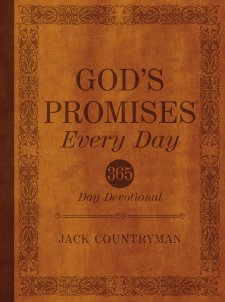
God’s Promises by Jack Countryman is a wonderful resource to help you use the Bible to enhance your prayer life and build your faith. Check out my full review of this fantastic book by clicking here.

“Each day we can look forward to God’s Spirit going before, clearing the way, leading the path, and giving us the guidance we need. … But God doesn’t stop at mere survival. He doesn’t just satisfy and strengthen. Though there will be difficulties and times of drought in our lives, God guides us to His living waters. He enables us to flourish ‘like a watered garden,’ where His blessings always bloom.” [Isaiah 58:11] 

“When life darkens our door with its troubles and trials, satan wants nothing more than for us to feel forsaken and alone—but we are not! God stands by our side; He guides, counsels, and comforts. Rest assured, no matter what you face in the coming year, nothing can separate you from the love of your Father (Romans 8:38-39). Therefore walk boldly into each new day, knowing that you follow the footsteps of the One who never leaves you.” [Deuteronomy 31:8] 

“Troubles are never pleasant at the time, but they quickly turn into tools when entrusted to God. Our Lord will take our times of troubles and trials—even the hard feelings we experience in them—then use them to teach us to fully rely on Him and His provision.” [Psalm 138:7] 

“Our God is a loving God, but He isn’t Santa Claus or a genie in a bottle. Our God loves to give good gifts, but in His economy the best gifts are not tangible or material. Yes, our God feels compassion when we hurt, but He still allows hardships into our lives that will refine our character and strengthen our faith. Against the backdrop of these truths, we can better understand the often-misread statement that God will give us the desires of our hearts. The real promise of this verse is that, as we pray, read His Word, and grow closer to the Lord, He will change our hearts so that what we desire for ourselves is what He desires for us.” [Psalm 37:4] 

“Mercy. We don’t deserve it. We haven’t done—can’t possibly do—anything to earn it. And yet we are promised that this unbelievably lavish gift is ours when we choose to follow Jesus. Why? Why would such a perfect and powerful God gives such a gift to ones so undeserving? He tells us in Titus 3:4: because of ‘the kindness and love of God our Savior toward man.’ And He not only gave us mercy, He also ‘poured out on us abundantly’ His own Spirit, to live and work within us, making us more and more like the Savior who died to save us.” [Titus 3:4-6] 

“Our God is not some fickle, capricious, changeable sort of God. He does not search out ways to be angry or displeased with His people. In fact, He so wants to be pleased with us that He gave us the example of His Son to follow.” [Ephesians 5:2] 

“When our burdens and sorrows seem too heavy for us to bear, God offers to carry them for us, inviting us to cast them upon Him (Psalm 55:22). And when the sorrow is so great that we feel we cannot put one foot in front of the other, God gives us this promise: ‘I will carry you; I will sustain you’ (Isaiah 46:4).” 

“Perhaps nothing is as devastating as being betrayed by someone you love and trust. Know that Jesus—betrayed by Judas, denied by Peter—fully understands. He will enable you to recover. The key, as hard as it is, is to pray for that person and ask God to bless him or her. When you pray to God—and you may have to do this again and again—you release the anger and disappointment that come with being betrayed. It is difficult to despise someone you lift up in prayer. And though retaliating is a natural response, it’s not a godly one. Praying is always the best option. Allow the Lord to receive your hurt and to replace it with His peace.” [Psalm 3:4, 6] 

“When we place our faith in Christ, the stormy seas of our lives—churned up by our own sins—are stilled. And while the storms may still rage around us in this sin-plagued world, they do not rage within us. That does not mean our troubles and tribulations are over, but it does mean we can rest in knowing God will see us through them.” [Romans 5:1] 

Be The 1-In-10

“…ten men who were lepers…” (Luke 17:12). 

Lepers were outcasts in society. Unable to participate in normal daily activities, unable to go to the temple to worship God, even unable to be with their family. These ten lepers encountered Jesus and did two positive things. But 9-of-10 lepers also did two sad things. 

(+) They knew to call on Jesus for help—“Jesus, Master, have pity on us!” 

(+) They took Jesus at His word. Their healing happened as they obeyed Christ’s words—“‘Go, show yourselves to the priests.’ And as they went, they were cleansed.” 

(-) Only one cleansed leper came back to praise God for his healing. 

(-) Only one was pronounced “well” by Jesus. All ten lepers were “cleansed,” which simply meant they were ceremonially clean and could once again participate in daily life and temple worship. But only one was made completely “well.” The Greek word is sozo, which means saved from eternal destruction. The same word is used to describe what Jesus came to do for us: “You shall call His name Jesus, for He shall save [sozo] His people from their sins” (Matthew 1:21). 

“What a rare thing is thankfulness.… ‘Were there not ten cleansed? But where are the nine?’ The lesson before us is humbling, heart-searching, and deeply instructive. The best of us are far too like the nine lepers. We are more ready to pray than to praise, and more disposed to ask God for what we have not, than to thank Him for what we have. … If we would be anxious for nothing, we must make our requests known to God not only with prayer and supplication, but with thanksgiving (Philippians 4:6).” —J.C. Ryle (emphasis mine) 

Probably all of us experience daily blessings from our good God, yet many of us never acknowledge Him as the Source of those blessings. We just accept the blessing and then keep on walking. 

Let’s be the 1-in-10! 

Let’s be quick to recognize God’s blessings. Let’s always remember that He does more than give us strength for today, but He saves [sozo] us entirely from eternal destruction. Let’s be the ones who always return—day after day after day—to give glory to God! 

God’s Promises Every Day (book review)

Psychologists tell us that babies are only born with two innate fears, yet many people’s lives are constricted because of numerous fears that they have allowed to creep in. A great way to begin defeating those fears is by learning what God has to say about them, and a great place to begin that journey is with Jack Countryman’s book God’s Promises Every Day.

It’s not very effective to simply tell ourselves, “Don’t be afraid of that.” Instead, we need something with more authority—like God Himself. The Bible is jam-packed with promises that God has given us; promises that will counteract our limiting fears. 

Jack Countryman has put together a marvelous resource to bolster your fight against crippling fears every single day. Each day’s reading begins with a short portion of Scripture, followed by just a couple of short paragraphs unpacking the truth in that Scripture, and then concluding with a one-sentence-long prayer based on that biblical truth. 

Short, but very powerful and effective! The Bible itself says that faith is built by hearing and applying God’s Word, and that’s exactly what God’s Promises Every Day makes so accessible to us.

It’s interesting to note that Jesus refuted every one of satan’s attack by quoting a portion of Scripture. Reading this book every day will similarly arm you to attack the temptations and fears that the enemy wants to throw at you as well. 

I am a Thomas Nelson book reviewer. 

Winning The Unseen Spiritual Battles

C.S. Lewis said, “If satan’s arsenal of weapons were restricted to a single one, it would be discouragement.” How true! In relation to our prayer time, satan tries to discourage with lies like—

    • “God has bigger things on His mind than your puny request!” 
    • “God helps those who help themselves; what have you done for yourself?”
    • “You created this situation and now you think God is going to bail you out?!?”
    • “Haven’t you prayed about this long enough already?” 
    • “Your prayers don’t really make a difference.” 

All of these lies are designed to discourage you, but always remember this—they are all lies! David said to God, “You keep track of all my sorrows. You have collected all my tears in Your bottle. You have recorded each one in Your book. My enemies will retreat when I call to You for help. This I know: God is on my side!” (Psalm 56:8-9) 

A great example of a man who prayed long and hard—and fought off the things that might discourage him to give up—was Daniel. 

Daniel had previously been given insight from God to interpret dreams, visions, and other messages from heaven, but on one particular instance, he was stuck. God gave Daniel a vision, but not the meaning of that vision. 

Daniel began to do two things in the physical realm that results in two unseen spiritual victories taking place. 

First, Daniel prayed. Daniel not only prayed boldly, but he also prayed long. Although Daniel prayed for 21 days, when an angel arrived with God’s answer, the angel said, “From the moment you decided to humble yourself to receive understanding, your request was heard in heaven. I have come in answer to your prayer.” 

Second, Daniel fasted. The word fast literally means “to cover the mouth.” In Daniel’s case, we know that for 21 days he abstained from meat and wine. But he also abstained from “choice food” (NIV). What are those? I think these might be our “comfort foods.” Foods we go to to help relieve stress. Foods that become substitute sources of help, instead of humbling ourselves to go to God and ask for wisdom. 

As Daniel was praying and fasting, it appeared that nothing was happening. But there were actually two victories won out of human sight. 

First, a spiritual battle was won. The angel sent to Daniel was locked in combat with a demon for 21 days before he broke free to come to Daniel. We are still involved in that kind of spiritual warfare today (see Ephesians 6:12-18). 

Second, Daniel was being refined and strengthened. When the angel arrived, he called Daniel “highly esteemed.” Don’t miss this—this greeting is the same Hebrew word used for what Daniel fasted (“choice food”). In other words, the temporary thing Daniel fasted turned into something of invaluable strength. 

What if Daniel had stopped praying after 2 days? 10 days? 20 days? 

Daniel—and you and I—may not see with our natural eyes the victories that are being won, but make no mistake about it: Our fasting and praying IS doing something amazing. 

Your prayers are being heard. Spiritual battles are being won. You are being refined. God IS going to accomplish something great. God IS being glorified. Don’t stop praying and fasting until God comes through!

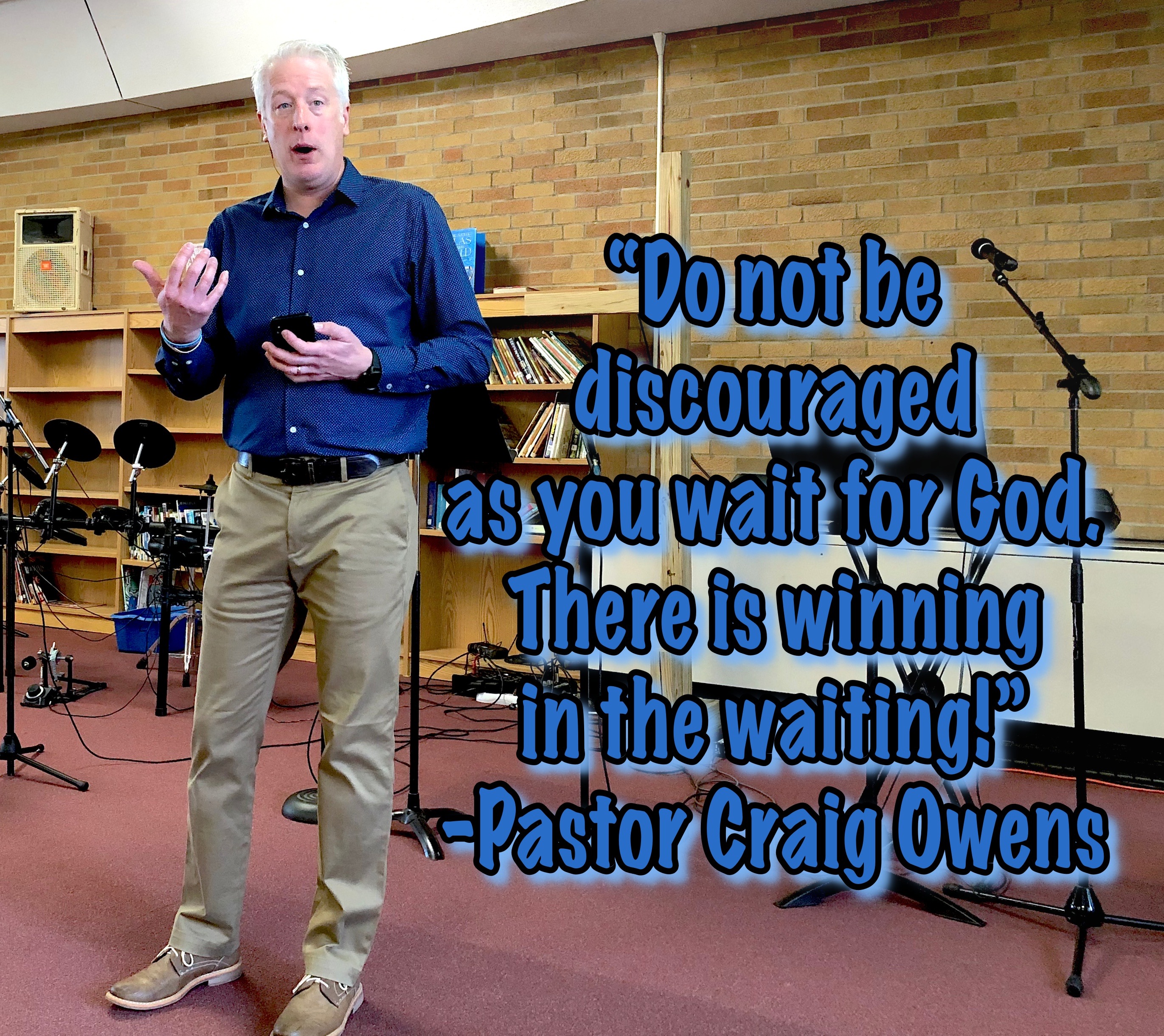
Do not be discouraged as you wait on God. There is winning even in the waiting!

Join me this Sunday as we conclude on series looking at the bold pray-ers in the Bible. 

Poetry Saturday—Awake My Soul

Awake, my soul, and with the sun 
Thy daily stage of duty run; 
Shake off dull sloth, and joyful rise, 
To pay thy morning sacrifice. 
Thy precious time misspent, redeem, 
Each present day thy last esteem, 
Improve thy talent with due care; 
For the great day thyself prepare. 
By influence of the Light divine 
Let thy own light to others shine. 
Reflect all Heaven’s propitious ways 
In ardent love, and cheerful praise. 
In conversation be sincere; 
Keep conscience as the noontide clear; 
Think how all seeing God thy ways 
And all thy secret thoughts surveys. —Thomas Ken

God’s Call On A Leader’s Life

For this is he who was spoken of by the prophet Isaiah… (Matthew 3:3).

There is no doubt about: John the Baptist was called by God.

God uses people to fulfill His purpose. Some, like John, are mentioned by prophets, but all of us have our lives written in God’s Book before we are born (Psalm 139:13-16; Jeremiah 1:5; Ephesians 2:10; Luke 1:13-17).

Just as John was obedient to his calling, I need to be obedient to God’s calling as well.

John spoke God’s word clearly. He lived it out. He didn’t water down nor compromises his message. He didn’t let “ministry success” lead to pride. His whole life pointed everyone to Jesus.

This I must do too!

A mark of a godly leader is one who is humbly confident that God has a call on his life.

This is part 33 in my series on godly leadership. You can check out all of my posts in this series by clicking here.

Thursdays With Oswald—Don’t Judge Others

This is a weekly series with things I’m reading and pondering from Oswald Chambers. You can read the original seed thought here, or type “Thursdays With Oswald” in the search box to read more entries.
Don’t Judge Others

     This statement of our Lord’s [Matthew 7:2] is not a haphazard guess, it is an eternal law which works from God’s throne right down (see Psalm 18:25-26). … Life serves back in the coin you pay; you are paid back not necessarily are the same person, but the law holds —“for in the same way you judge others, you will be judged, and with the measure you use, it will be measured to you.” …

     In Romans 2, this principle is applied still more definitely—I am guilty myself of what I criticize in another. Every wrong I see in you, God locates in me; every time I judge you, I condemn myself. “You, therefore, have no excuse, you who pass judgment on someone else, for at whatever point you judge the other, you are condemning yourself, because you who pass judgment do the same things” [v. 1]. …

     We have judged our fellow-men as sinners; if God had judged us like that we would be in hell. God judges us through the marvelous Atonement of Jesus Christ.

From Studies In The Sermon On The Mount

Jesus warns us against judging people by a different standard that even God Himself uses! Can you imagine that we think we actually know better than God does who should be punished and who should be spared?!

The trouble is, we cannot see inside the other person’s heart so we judge by mere outward appearances. We ended up judging the other person by their actions, but we judge ourselves by our intentions. How utterly unfair! 

We are in a far better place to simply let the Holy Spirit help us deal with the beams in our own eyes (Matthew 7:3-5), and let the Holy Spirit deal with others too. There is no good in my being involved in any judgments at all! 

What Place Does Prayer Have?

What is the place of prayer in your life? What prominence does it have in our lives? It is a question that I address to all. It is as necessary that it should reach the man who is well versed in the Scripture, and who has a knowledge of its doctrine and its theology, as that it should reach anyone else. What part does prayer play in our lives and how essential is it to us? Do we realize that without it we faint? Our ultimate position as Christians is tested by the character of our prayer life.

“It is more important than knowledge and understanding. Do not imagine that I am detracting from the importance of knowledge. I spend most of my life trying to show the importance of having a knowledge of truth and an understanding of it. That is vitally important. There is only one thing that is more important, and that is prayer. The ultimate test of my understanding of the Scriptural teaching is the amount of time I spend in prayer. As theology is ultimately the knowledge of God, the more theology I know, the more it should drive me to seek to know God. Not to know about Him, but to know Him. The whole object of salvation is to bring me to a knowledge of God. I may talk learnedly about regeneration, but what is eternal life? It is that they might know Thee, the only true God in Jesus Christ whom God has sent.

If all my knowledge does not lead me to prayer there is something wrong somewhere. It is meant to do that. The value of the knowledge is that it gives me such an understanding of the value of prayer, that I devote time to prayer and delight in prayer. If it does not produce these results in my life, there is something wrong and spurious about it, or else I am handling it in a wrong manner.” —Dr. Martyn Lloyd-Jones (emphasis added)

When Fear Must Go

Listen to the podcast of this post by clicking on the player below, and you can also subscribe on AppleSpotify, or Audible.

I love the balancing thought of being humbly confident in God’s presence (or if you like: being confidently humble).

Humble to know I have nothing in myself that gives me access to God’s presence and love and power, but confident to know that God through Christ’s work on the Cross desires to have me with Him. 

C.S. Lewis wisely noted: “Humility is not thinking less of yourself, it’s thinking of yourself less.” Fear comes in when I’m thinking about me—how unworthy I am, how I messed up, how I wish I would have….

Fear leaves when I set my thoughts on Christ—how absolutely worthy He is, how He has accomplished everything for me, how He is working all things together for good. 

There is no fear in love—dread does not exist—but full-grown, complete, perfect love turns fear out of doors and expels every trace of terror! For fear brings with it the thought of punishment, and so he who is afraid has not reached the full maturity of love—is not yet grown into love’s complete perfection. (1 John 4:18)

It is humbly confident (and confidently humble) to keep my mind off me and take all my thoughts to His perfect love. That’s when fear must go!

“The mark of God’s people is not incapacitating fear, but rather contrite courageous confidence in God. … The good news of the Bible is not that we are not worms, but that God helps worms who trust Him.” —John Piper, commenting on Isaiah 41:14

►► Would you please prayerfully consider supporting this ministry? My Patreon supporters get behind-the-scenes access to exclusive materials. ◀︎◀︎