My Theme Song

Listen to the podcast of this post by clicking on the player below, and you can also subscribe on AppleSpotify, or Audible. 

… my hands … my mouth … my lips … my heart … my head … my words … my eyes … (Psalm 141) 

David’s all-in attitude toward God reminds me of the words of Jesus: Love the Lord your God with all your heart and with all your soul and with all your mind and with all your strength (Mark 12:30). 

Clearly, David wants God to have full access—no part of his life is exempt from God’s lordship:

  • hands lifted in worship
  • mouth and lips free from ungodly words 
  • heart not drawn to unrighteousness 
  • head receptive to godly correction 
  • words always well-spoken and God-pleasing 
  • eyes fixed steadfastly on God 

This is also what the Holy Spirit wants to do for me in the process of sanctification: Bringing me into the place where no part of my life is exempt from His lordship. This reminds me of the words of an old hymn, “All to Jesus I surrender, all to Him I freely give.” 

May this ever be the theme song of my life! 

►► Would you please prayerfully consider supporting this ministry? ◀︎◀︎

The Craig And Greg Show: Leaders And Friends

On this episode of “The Craig And Greg Show” we talk about: 

  • some people wear the cliche “It’s lonely at the top” like a badge of honor, but it’s not [0:40] 
  • the best leaders are always developing new leaders [1:25] 
  • do people say, “It’s lonely at the top” because they don’t want others alongside them or because they don’t know how to develop people? [1:55]
  • some people are talented in leading but not talented in friending … what kinds of friends do leaders need? [2:52]
  • what are the differences and similarities between friends, peers, and colleagues? [4:57]
  • a huge leadership challenge in a new position or a new organization is quickly identifying your allies [6:00]
  • a teammates’ participation in team sports can give a leader great insights into that teammates’ leadership potential [7:00]
  • leaders that try to fly solo set themselves up for failure … what are the common traits of leaders who successfully raise up new leaders? [8:08]
  • Greg confesses a leadership mistake he had to correct in himself [9:20]
  • character is vital in emerging leaders [10:59]
  • compassion is valuable in emerging leaders [11:44]
  • consistency helps emerging leaders develop into solid leaders, and it helps the team leader to excel … great insight from Patrick Lencioni about being present [12:15]
  • teams must embrace diversity and find commonality [13:08]
  • I elaborate on Greg’s point about a leader’s presence and consistency [14:10]
  • the team leader has to take the initiative in identifying and raising up new leaders [15:47]
  • leaders need to continue to replenish themselves [17:22]
  • Greg shares a great leadership example from the life of Moses [17:50]
  • we are here to encourage you—check out information on our leadership huddles [18:20]

Check out this episode and subscribe on YouTube so you can watch all of the upcoming episodes. You can also listen to our podcast on Spotify and Apple.

Godly Leaders Do God’s Justice

Listen to the podcast of this post by clicking on the player below, and you can also subscribe on AppleSpotify, or Audible. 

How long will you judge unjustly, and show partiality to the wicked? (Psalm 82:2)

It’s been said that those who attain a position of authority or leadership will make it their sole focus to retain that position of leadership, even to the point of judging unjustly or showing partiality to the wicked. 

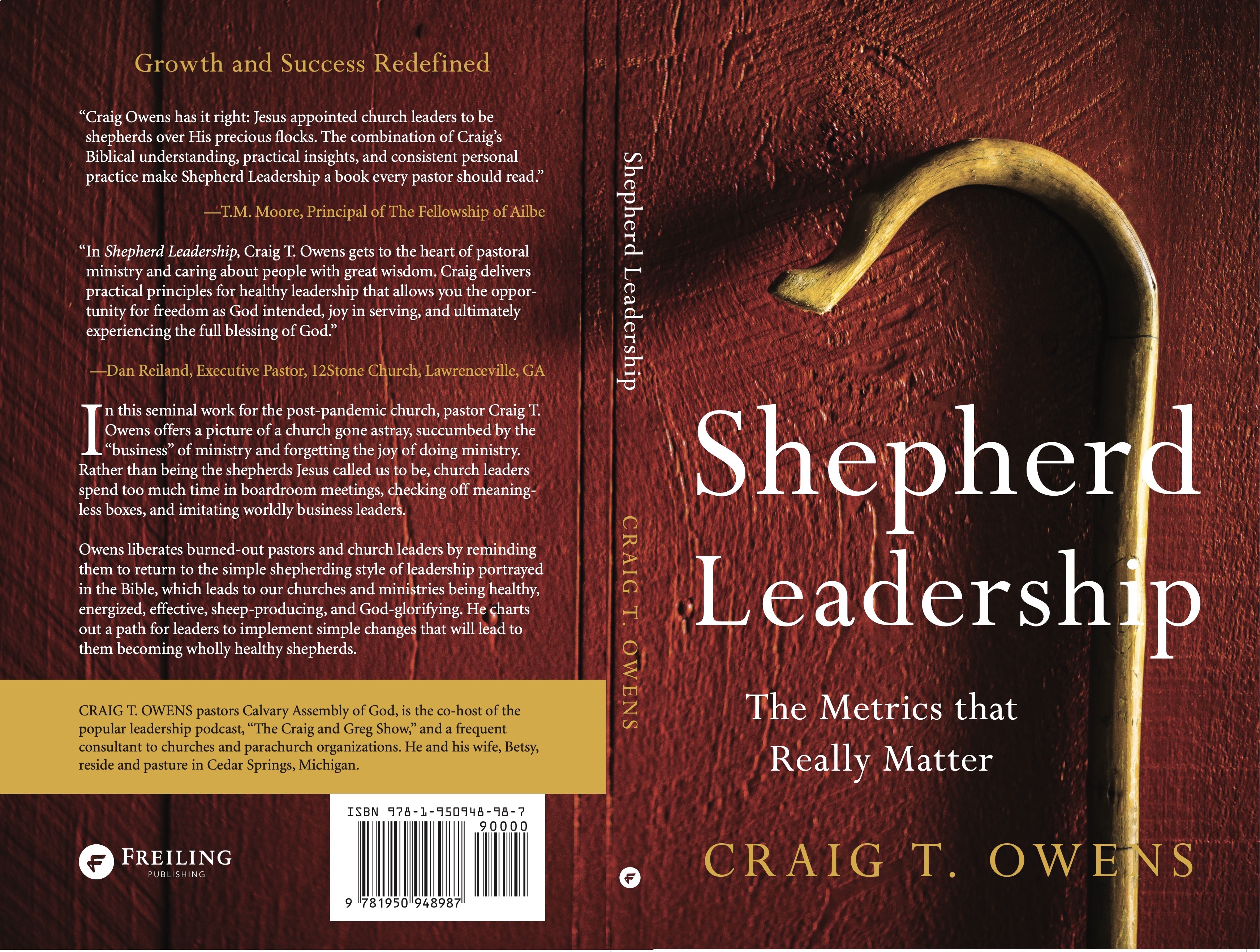
In my book Shepherd Leadership: The Metrics That Really Matter, I wrote, “When God uses the word ‘Woe!’ we should definitely take that seriously. He uses that very word to warn shepherd leaders who were shirking their responsibility when He said, ‘Woe to those shepherds who only take care of themselves’ (Ezekiel 34:2).” 

God is the Ultimate Judge, yet while we are here on earth He chooses to allow men and women to be leaders and judges. We can do this in a God-honoring way only when we lead and judge like God. 

In this psalm, God Himself calls out the ungodly practices that self-serving leaders employ to keep themselves popular and in their positions of leadership: 

  • partiality = wickedness 
  • biases = wickedness 
  • apathy = wickedness 
  • injustice = wickedness 
  • ignoring = wickedness 
  • seeking earthly applause = wickedness 
  • taking advantage of others = wickedness 

Instead, God calls on leaders to lead according to the principles He both exhibits Himself and lists for us in the Bible. Things like…

  • defending the poor 
  • serving as a father to the fatherless
  • dispensing justice to the disempowered 
  • speaking up for the voiceless
  • standing up to the wicked 
  • and doing all of these things in a way that God is glorified 

I must always remember why I am in any position of leadership: God chose me for that position and placed me there to do His justice in the world. 

A mark of a godly leader is one who is doing God’s justice in God’s way.

This is part 57 in my series on godly leadership. You can check out all of my posts in this series by clicking here.

►► Would you please prayerfully consider supporting this ministry? ◀︎◀︎

Perspective On Persecution

Listen to the podcast of this post by clicking on the player below, and you can also subscribe on AppleSpotify, or Audible.

Around the world we hear of Christians being persecuted for their faith in Jesus: Afghanistan … N. Korea … China … even in the USA, Christians like Jack Phillips and Barronelle Stutzman are being persecuted for standing up for what they believe. 

Here’s an important principle to keep in mind: In times like these, we need to remember there have always been times like these. Especially because the psalmist Asaph, Jesus, and the apostle Paul all forewarned us about persecution (Psalm 83; Mark 13:9, 12-13; 2 Timothy 3:12-13). 

Jesus said that our persecution should only come “on account of Me.” And Asaph notices the same thing in his prayer, using phrases like “Your enemies,” “Your foes,” “they conspire against Your people,” and “they form an alliance against You.” 

Asaph also recognized that times like these call for a Selah pause—a pause to calmly consider. (You may also be interested in this flowchart on persecution.) 

I think the first thing we need to consider is our part in bringing on the persecution. I need to ask the Holy Spirit to reveal if I may have been the trigger to the anger of these wicked people. If I have done something, I need to repent, ask forgiveness, and see what I can do to make restitution. 

Next, we need to Selah to consider this: It might look desperate, but God has handled these kinds of evil people before. Asaph mentions several enemies of God’s people whom God decisively defeated in the past. Our Selah pause will help us recall that God is the same today as He was yesterday—He is more than able to handle these persecutors. 

With all of these bullies ganging up on Israel, you can understand why Asaph cries out for God’s strong action against them. But I want you to notice that the call for judgment is NOT vindictive but redemptive. Asaph asks for punishment “so that men will seek Your name, O LORD” and that they may “know that You, whose name is the LORD—that You alone are the Most High over all the earth. 

In other words, this isn’t a “Get ‘em, God” prayer, but a “Save ‘em, God” prayer! 

We’re not looking for relief for ourselves—that’s only temporary—but we’re looking for glory for God—that’s eternal!

Jesus and the apostle Peter both tell us that God’s desire is for no one to perish apart from a relationship with Him through Jesus Christ (John 3:16-17; 2 Peter 3:9). 

The reason we need to Selah and ask that introspective question about our words or actions triggering our persecutor’s anger is because God will use our righteous response to persecution as a testimony. 

Jesus said our persecution should be because of Him, but He also told us that there would be a blessing in it (Matthew 5:11-12; Mark 13:13; Luke 21:17-19). And Paul tells us that this reward isn’t just a silver lining to a dark cloud, but a reward beyond compare (Romans 8:18). 

Asaph went to prayer when Israel was attacked, and that should be our first response too. 

But let’s Selah in that prayer to make sure we’re not the trigger, and then may our prayer be more for God’s eternal glory than it is for our temporary relief. 

If you’ve missed any of the messages in our series looking at the Selahs in the Psalms, you can access the full list by clicking here.

►► Would you please prayerfully consider supporting this ministry? ◀︎◀︎

Poetry Saturday—The Wond’ring World Inquires To Know

Listen to the podcast of this post by clicking on the player below, and you can also subscribe on AppleSpotify, or Audible.

The wond’ring world inquires to know
Why I should love my Jesus so:
What are His charms,” say they, “above
The objects of a mortal love?”

Yes! my Beloved, to my sight
Shows a sweet mixture, red and white:
All human beauties, all divine,
In my Beloved meet and shine.

White is His soul, from blemish free;
Red with the blood He shed for me;
The fairest of ten thousand fairs;
A sun amongst ten thousand stars.

His head the finest gold excels;
There wisdom in perfection dwells,
And glory like a crown adorns
Those temples once beset with thorns.

Compassions in His heart are found,
Hard by the signals of His wound:
His sacred side no more shall bear
The cruel scourge, the piercing spear.

His hands are fairer to behold
Than diamonds set in rings of gold;
Those heav’nly hands, that on the Tree
Were nailed, and torn, and bled for me!

Though once He bowed His feeble knees,
Loaded with sins and agonies,
Now on the throne of His command
His legs like marble pillars stand.

His eyes are majesty and love,
The eagle tempered with the dove;
No more shall trickling sorrows roll
Through those dear windows of His soul.

His mouth, that poured out long complaints,
Now smiles and cheers His fainting saints
His countenance more graceful is
Than Lebanon with all its trees.

All over glorious is my Lord
Must be beloved, and yet adored;
His worth if all the nations knew,
Sure the whole earth would love Him too. —Isaac Watts

►► Would you please prayerfully consider supporting this ministry? ◀︎◀︎

Thursdays With Spurgeon—Such Love!

This is a weekly series with things I’m reading and pondering from Charles Spurgeon. You can read the original seed thought here, or type “Thursdays With Spurgeon” in the search box to read more entries.

Listen to the podcast of this post by clicking on the player below, and you can also subscribe on iTunes or Spotify.

Such Love!

     Our Savior so loved us that He stripped Himself of His robes of radiance. Listen, you children of God, it is the old story over again, but it is always new to you. He stripped Himself of His bright array. He laid aside His scepter and His crown and became an infant in Bethlehem’s manger among the horned oxen. Thirty years of poverty and shame the King of heaven spent among the sons of men, and all out of love to us. Jesus the heavenly lover, panting to redeem His people, was content to abide here without a place to rest His head that He might rescue us!

     Do you see Him yonder in the garden in His agony? His soul is exceedingly sorrowful even to death! His forehead, no, His head, His hair, and His garments are red with bloody sweat. Do you see Him giving His back to the smiters and His cheeks to them who pluck off His hair? See Him, as He hides not His face from shame and spitting, dumb like a sheep before her shearers and like a lamb that is brought to the slaughter! He opened not His mouth but patiently bore it all on our behalf. See Him with the Cross upon His mangled shoulders, staggering through Jerusalem’s streets, unwept for and unpitied, except by poor feeble women! 

     See Him, you who love Him, and love Him more as He stretches out His hands to the nails and gives His feet to the iron. See Him, as with power to deliver Himself He is made captive. Behold Him as they lift up the Cross with Him upon it and dash it down into its place and dislocate His bones. Hear that cry, ‘I am poured out like water, and all My bones are out of joint’ (Psalm 22:14). Stand, if you can, and view that face so full of grief. Look till a sword will go through your own heart as it went through His mother’s very soul. Oh, see Him as He thirsts and has that thirst mocked with vinegar! 

     Hear Him as He prays and has that prayer parodied, ‘Look, He is calling for Elijah! … Let us see if Elijah will come to take Him down’ (Mark 15:35-36). See Him as they who love Him come and kiss His feet and bathe them with their tears. Will you not love Him who did all that friend could do for a friend? He who gave His life for us?

From The Church’s Love To Her Loving Lord

My friend, if you don’t know Jesus as your personal Lord and Savior, I ask that you would consider this amazing act of love all for you. Jesus went through all of this for you! Won’t you accept His love and invite Him into your heart today? 

If you do have a personal relationship with Jesus, look again at your Beloved Savior. Let this love rekindle your heart to share Christ’s love with everyone around you.

►► Would you please prayerfully consider supporting this ministry? ◀︎◀︎

Why We Need Loving Friends

Listen to the podcast of this post by clicking on the player below, and you can also subscribe on AppleSpotify, or Audible. 

Check out this excerpt from chapter 13 of my book Shepherd Leadership: The Metrics That Really Matter

David was the gold standard for every king of Israel who followed him. Numerous times throughout the history of Israel, we will see a note that a certain king either followed God like David, or turned from God unlike David. Yet there exists a wart on David’s portrait: an adultrous affair with the wife of a man in his inner circle, and then subsequent lies and a murder to cover up the affair. “The thing David had done displeased the Lord” (see 2 Samuel 11). 

But I’d like to turn your attention to when this affair occurred: “In the spring, at the time when kings go off to war … David remained in Jerusalem” (2 Samuel 11:1). He was without his usual comrades. The men who knew David best, who could probably sense if something was amiss, weren’t around to warn him. When David tried to find out the identity of the bathing beauty on the roof next door to his palace, an unnamed attendant tried to remind him, “Isn’t that Bathsheba, the wife of Uriah?” but David dismissed him. 

Elijah was arguably the most forceful and fearless prophet in Israel’s history. Not only did he stand up to the evil kings of Israel, but he spoke out against the kings of surrounding nations, too. In answer to Elijah’s prayer, God brought a drought on the land, and again in answer to Elijah’s prayer, God sent rain. Elijah challenged the 450 prophets of the god Baal and the 400 prophets of the goddess Asherah to a duel to the death, which ended up in a decisive victory for Yahweh. Yet, shortly after this massive victory, Elijah was depressed to the point that he wanted to die. 

What led to Elijah’s depression? Something very similar to David’s slide into adultery: He was alone. Elijah ran away from Queen Jezebel’s death threat, left his servant behind, and proceeded all by himself into the desert. It was when he was without a comrade that he prayed to God, “I’ve had enough. Take my life” (see 2 Kings 17–19). 

And what about Peter? He boldly claimed his loyalty to Jesus, even to the point of wielding a sword at the guards who came to arrest his Master. But when Peter was alone, after the other disciples fled, he denied three times that he knew Jesus (Matthew 26:33, 51, 69–75). 

God designed us to be in relationship with others. His statement to Adam in some of the earliest words of the Bible—“It is not good for you to be alone”—are words for us still today. 

In a recent episode of “The Craig And Greg Show,” Greg and I discussed one of our favorite verses in the Bible: Wounds from a friend can be trusted, but an enemy multiplies kisses (Proverbs 27:6). 

If you want to go far, don’t try to go alone. If you want an accountability partner that can keep warts away from your leadership legacy, don’t go alone. If you want to extend your leadership influence, don’t go alone. If you want to honor God’s investment in you, don’t go alone. Get those friends around you who love you enough to speak the truth! 

►► Would you please prayerfully consider supporting this ministry? ◀︎◀︎

Washington’s Immortals (book review)

Listen to the podca

st of this post by clicking on the player below, and you can also subscribe on AppleSpotify, or Audible. 

There’s an old proverb that says,

For want of a nail the shoe was lost,
for want of a shoe the horse was lost,
for want of a horse the knight was lost,
for want of a knight the battle was lost,
for want of a battle the kingdom was lost.
So a kingdom was lost—all for want of a nail.

I thought of this proverb as I began reading Washington’s Immortals by Patrick K. O’Donnell, which recounts the history of a regiment from Maryland that not only turned the tide of a crucial battle in the American Revolutionary War, but who were at the center of nearly every vital battle throughout the war. 

At the outset of the war, the British army and navy nearly overwhelmed George Washington’s forces in New York. One regiment from Maryland stood their ground, keeping the British bottled up for just one hour. But that one hour allowed General Washington precious time to get his retreating army to safety. Without the bravery and tenacity of these Marylanders, the war could have been over almost before it started. So to paraphrase the old proverb above, for want of the brave stand of the Marylanders, the American cause could have been lost! 

As General Washington watched those brave men not only stand their ground, but repeatedly counterattack the far superior British forces, he said, “Good God! What brave fellows I must this day lose!” 

If that were the only service to the American colonies that this elite group had supplied, it would have been enough. But time and time again, General Washington and General Nathaniel Green placed the Marylanders in the most vulnerable or the most crucial places on the battlefield, knowing that these men would not fail to come through. 

O’Donnell follows the movements of the Marylanders from the beginning of the war all the way through to its conclusion in a very readable manner. He shares just enough of the details of the battle for us to get a feel for the gravity of the situation, but not so many details that it becomes laborious reading. 

Any students of American history, military history, or leadership-under-fire will appreciate reading Washington’s Immortals. 

►► Would you please prayerfully consider supporting this ministry? ◀︎◀︎

Judging Like God

Listen to the podcast of this post by clicking on the player below, and you can also subscribe on AppleSpotify, or Audible.

I may have heard more confusion, bad preaching, and even heresy based on Psalm 82 than almost any other passage! Most of the confusion comes from just verses 1 and 6, but if we read the entire psalm, I think confusions are quickly cleared up.

The biggest point of confusion is the use of the word “gods.” The Hebrew language doesn’t have capital and lowercase letters like we do. So the word God (with or without a capital “G”) is the same Hebrew word—el (singular) or elohiym (plural)—which means mighty One or mighty ones. Humans can be mighty ones, but only Yahweh is the Mighty One. 

Further adding to the confusion for some people is that Yahweh God is sometimes referred to in the plural in Hebrew: elohiym. This is understandable because we believe God is Three-in-One. Not three gods, but one God in three Persons. 

Bible translators have to use context clues to determine whether the biblical authors are referring to Yahweh or a pretend deity. Thankfully, English Bible translators have helped us out:

  • when the Hebrew word is Yahweh, most Bibles print it LORD 
  • when the Mighty One is implied in the text it’s God (with a capital “G”), and when it’s just a mighty person it’s typed god/gods (with lowercase a “g”). 
  • the NIV translators really helped us in Psalm 82 by designating the false deities in quotation marks (“gods”), almost as if they’re saying “the so-called gods.” 

When we were looking at the Selah in Psalm 81, I pointed out the importance of remembering that context is king. Clearly, from the context in Psalm 82, these are false gods (lowercase “g” and inside quotation marks).  

Asaph only speaks in the first and last verses of this psalm, but notice his commentary that “God presides…He gives judgment.” As in, God gets the final and decisive word. In fact, God does the most speaking in this psalm (in verses 2-7). God indicts wicked people for…

  • defending the unjust 
  • showing partiality to the wicked 
  • knowing nothing, understanding  nothing, walking around in darkness 
  • and notes “you will die like mere men” 

Now notice what the Selah pause connects. This is a pause for us to contrast two things: the righteous way and the wicked way. Or maybe we could say the contrast is between the way of the righteous Mighty One and His followers, and the way of wicked mighty ones. 

The Selah really begs an important question, “How long will your pride keep you doing these wicked things?” Notice what God calls on people to do in opposition to what the wicked are doing:

  • the wicked defend the unjust vs. the righteous are to defend the weak and fatherless 
  • the wicked show partiality to the wicked vs. the righteous maintain the rights of the poor and oppressed 
  • the wicked are concerned only about themselves vs. the righteous rescue the weak and needy from the hand of the wicked 

The Selah is intended to prompt us to ask ourselves: “Which are we? What am I doing or not doing?” 

The word for rendering a judgment is used four times in Psalm 82: 

  • God gives judgment on the activities of the “gods” 
  • the wicked defend the unjust, meaning that they condone their unjust activities 
  • the righteous defend the weak, meaning they speak up for those being oppressed by the “gods”
  • finally, Asaph declares in verse 8 that God renders the final and decisive judgement 

God wants us to exercise His righteous judgment on the earth. We have to Selah to examine ourselves first (see Matthew 7:1-5 and this short video), but then we need to act boldly and righteously (see Micah 6:8; Leviticus 5:1; Proverbs 31:8-9). 

We can judge like we are “gods,” or we can judge, defend, and speak up like ambassadors of the Mighty One—the Ultimate Judge.

Wicked people are punished for judging like “gods.” Righteous people are rewarded for judging like God. 

If you’ve missed any of the messages in our series exploring the Selahs in the Psalms, you can access the full list by clicking here. 

►► Would you please prayerfully consider supporting this ministry? ◀︎◀︎

Poetry Saturday—Love Asserting Herself

Listen to the podcast of this post by clicking on the player below, and you can also subscribe on AppleSpotify, or Audible.

And have I, Christ, no love for Thee,
No passion for Thy charms?
No wish my Saviour’s face to see,
And dwell within His arms?

Is there no spark of gratitude
In this cold heart of mine,
To Him whose generous bosom glow’d
With friendship all divine?

Can I pronounce His charming name,
His acts of kindness tell;
And while I dwell upon the theme,
No sweet emotion feel?

Such base ingratitude as this
What heart but must detest!
Sure Christ deserves the noblest place
In every human breast.

A very wretch, Lord! I should prove,
Had I no love for Thee:
Rather than not my Saviour love,
Oh may I cease to be! —Samuel Stennett

►► Would you please prayerfully consider supporting this ministry? ◀︎◀︎