I love that our Assembly of God national leadership calls us to begin each new year with a week of prayer! I would like you to pray along with us. We will be joining together for a half-hour each evening at 6:00 PM to pray together.
I grew up with a powerful axiom that still rings in my heart today: The Church moves forward on its knees.
If you would like to join in our prayer times January 2-8, please email me for a Zoom link.
Listen to the podcast of this post by clicking on the player below, and you can also subscribe on Apple, Spotify, or Audible.
I love reading, and I love sharing my love of good books with others! Here is a list of the books I read and reviewed in 2021. Click on a title to be taken to that review.
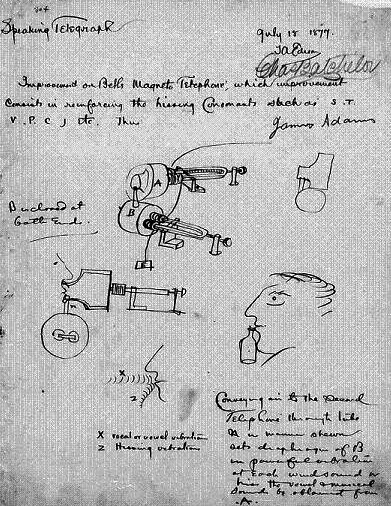
From this book I learned that Thomas Edison’s most-used notation in his journals documenting his experiments was “T.A.” That stood for “try again.” This requires a certain amount of perseverance, or what I like to call stick-to-it-iveness.
Let’s be honest: caring for sheep is frequently a thankless role. Just as soon as they are brought to a green pasture, some of them decide they don’t like this particular pasture, or the water is too cold, or they would rather be with another shepherd. The long hours that shepherds put in are only rarely recognized by the sheep, and often the sheep ask why the shepherd wasn’t available more.
This is the reason why shepherd leaders need to be secure in our simple statement: ‘God chose me.’ If God chose you for this role, He also equipped you for this role. And if He equipped you for this role, He also expects a return on His investment. This security of God’s calling and equipping and the weighty understanding of bringing to God a return on His investment should be our motivators to help us stick with our joyful responsibility. …
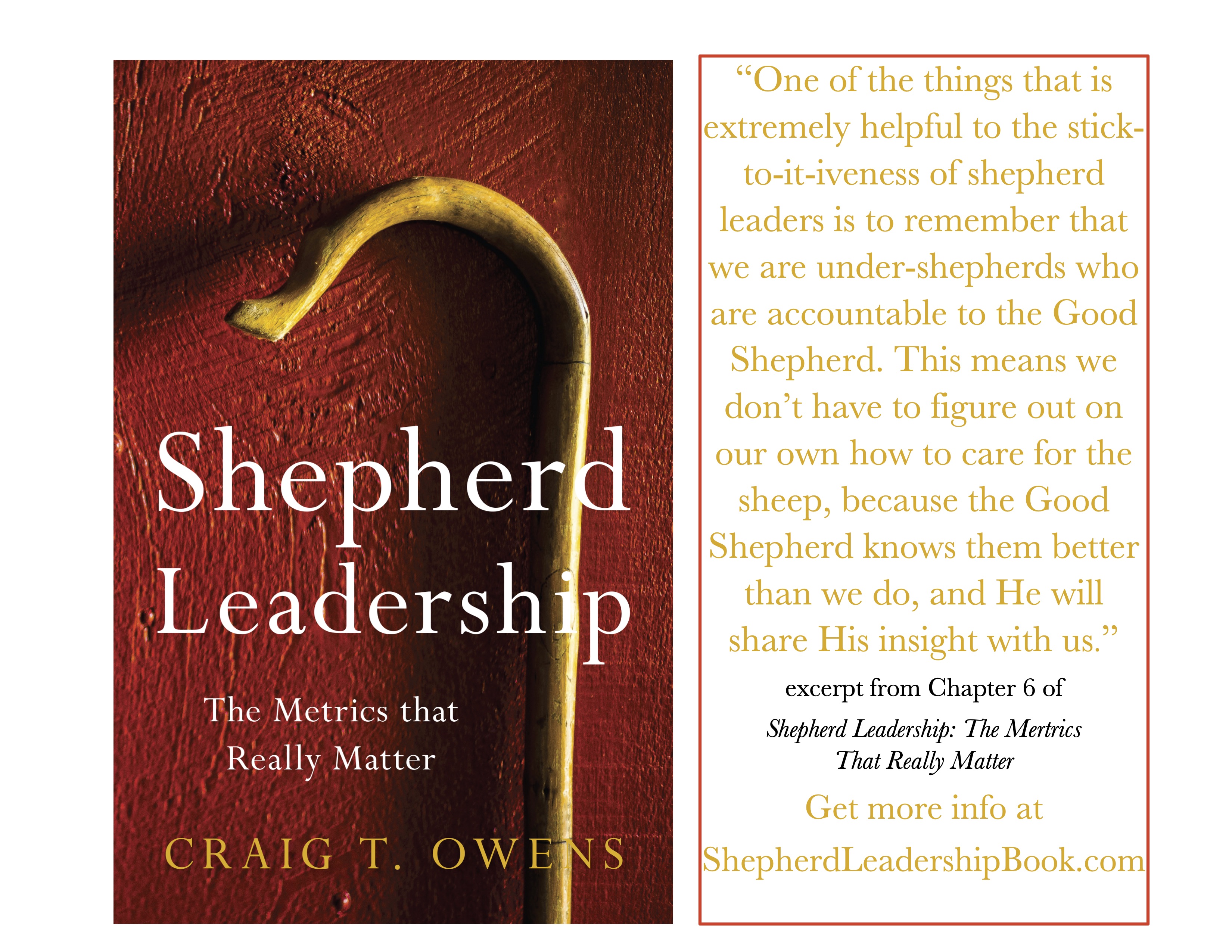
One of the things that is extremely helpful to the stick-to-it-iveness of shepherd leaders—especially in those times we may be battling a pity party—is to remember that we are under-shepherds who are accountable to the Good Shepherd. This means that we don’t have to figure out on our own how to care for the sheep, because the Good Shepherd knows them better than we do, and He will share His insight with us. Neither do we need to learn the shepherding ropes on our own, because both God the Father (the Shepherd of Israel) and Jesus the Son have already demonstrated for us all that we need to do, and the Holy Spirit will continually impart to us the ways we can apply those practices to our particular sheepfold.
I close this chapter with an attitude-correcting, security-building prayer that I wrote using Psalm 23 as my guide.
Leaders especially need to be T.A. people—try again, and try again, and try again. Stick with it, and with God’s help you will be successful.
I invite you to check out my book for yourself. You can read some reviews and additional excerpts by going to ShepherdLeadershipBook.com.
“Stunningly, the Good Shepherd has put the care of His foolish flock into the hands of under-shepherds who tend to be somewhat stupid ourselves. The grand gamble only works if under-shepherds studiously lead in the way that Jesus instructed us to—and therein is the rub, for none of us naturally agrees with His model. Our flesh, culture, ambitions, and propensities all fight Shepherd Leadership like the plague. We may kiss the concept theoretically, but we fundamentally flee from it functionally. …
“It is good to be a sheep; it is good to be an under-shepherd. Just remember you are stupid, chosen by the Wise One, and as long as you serve as a shepherd, you and your flock will be safe.
“The book you are about to read is a refreshing look at leading as a sheep, of serving like our Chief Shepherd. I trust you will benefit from it as much as I did.”
Listen to the podcast of this post by clicking on the player below, and you can also subscribe on Apple, Spotify, or Audible.
Our Advent series this year has been called “People Will Talk,” but we have one more person to learn from who says nothing. We have none of her words inside quotation marks, and yet Luke was inspired by the Holy Spirit to share her story with us. Her wordless message speaks volumes, if we’re willing to listen.
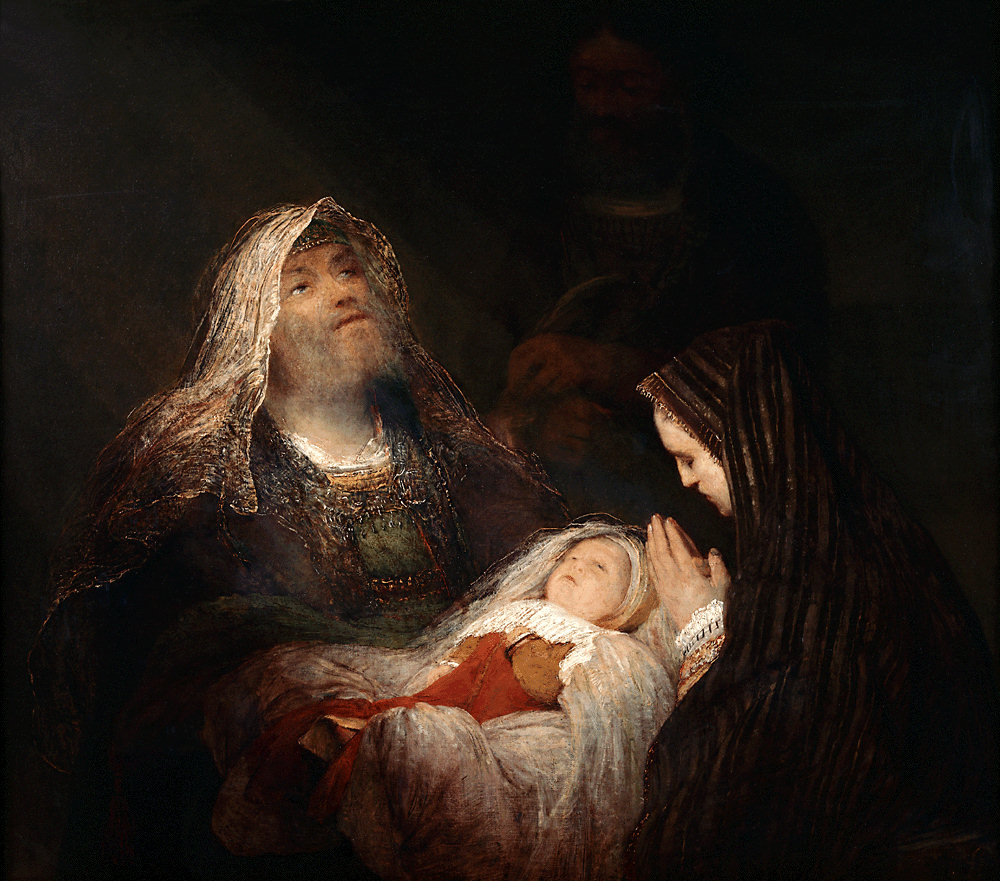
Anna, like Simeon, was one of the “Quiet in the Land.” Luke describes her as “very old.” The Greek phrase can either mean that she was a widow for 84 years after seven years of marriage, or simply that she was 84 years old. In either case, we don’t see her sitting withdrawn and inactive because of her old age, but we see her taking the initiative. She is the one who comes up to Joseph, Mary, and Jesus.
Luke also calls her a “prophetess.” Not someone bitter about her widowhood, but someone who truthfully and lovingly spoke God’s Words. Throughout the Bible, we see that a prophet or prophetess is less foretelling the future than they are forth-telling the promises of God. Of course the “-ess” at then end of “prophet” reminds us that Anna is a woman. As a woman she was excluded from certain parts of the temple, but instead of picketing or making a scene Luke says she spends her time worshipping, fasting, praying, and waiting for the fulfillment of God’s promised Messiah.
I imagine that her mere presence must have changed the atmosphere wherever she went!
I’m not sure if Charles Dickens had Anna in mind when he wrote A Christmas Carol, but the way the Ghost of Christmas Present added his blessing to busy people is what I imagine Anna’s role being in the temple—
“But soon the steeples called good people all, to church and chapel, and away they came, flocking through the streets in their best clothes, and with their gayest faces. And at the same time there emerged from scores of bye-streets, lanes, and nameless turnings, innumerable people, carrying their dinners to the bakers’ shops. The sight of these poor revelers appeared to interest the Spirit very much, for he stood with Scrooge beside him in a baker’s doorway, and taking off the covers as their bearers passed, sprinkled incense on their dinners from his torch. And it was a very uncommon kind of torch, for once or twice when there were angry words between some dinner-carriers who had jostled each other, he shed a few drops of water on them from it, and their good humor was restored directly. For they said, it was a shame to quarrel upon Christmas Day. And so it was! God love it, so it was!”
Both Anna in the New Testament and Hannah in the Old Testament mean graceful. Or as I like to remember that word: someone full of grace. When she approaches Joseph, Mary, and Jesus, Luke says she “gave thanks.” This comes from a unique Greek word in the New Testament. The root word is usually translated confession, which means saying the same words as others. But the prefix Luke adds means “in place of.” This means that Anna was speaking thankful words in place of the other words being spoken around her.
Anna spoke counter-culturally. Instead of being a cultural thermometer, she was serving as a thermostat to change the culture around her. This is the same kind of lifestyle that Jesus calls us to live. And it’s a lifestyle that Paul sums up in one succinct verse: “Let your gentleness [or we could say ‘grace-fullness’] be evident to all. The Lord is near” (Philippians 4:5).
After Ebenezer Scrooge’s encounter with the three spirits, his life was transformed—
“Scrooge was better than his word. He did it all, and infinitely more.… He became as good a friend, as good a master, and as good a man, as the good old city knew, or any other good old city, town, or borough, in the good old world.
“Some people laughed to see the alteration in him, but he let them laugh, and little heeded them; for he was wise enough to know that nothing ever happened on this globe, for good, at which some people did not have their fill of laughter in the outset; and knowing that such as these would be blind anyway, he thought it quite as well that they should wrinkle up their eyes in grins, as have the malady in less attractive forms. His own heart laughed: and that was quite enough for him.
“…And it was always said of him, that he knew how to keep Christmas well, if any man alive possessed the knowledge. May that be truly said of us, and all of us! And so, as Tiny Tim observed, God bless Us, Every One!”
As Christians, may both our actions and our reactions be so grace-filled, and may our gentleness be so evident to everyone all year long, and may we live so counter-culturally that people cannot help but see that we are grace-filled by the Spirit of Jesus Christ!
Listen to the podcast of this post by clicking on the player below, and you can also subscribe on Apple, Spotify, or Audible.
Christmas time finds me sampling a whole lot of delicious treats, and I’m not complaining at all! But I’m a pretty simple guy, so one of my favorite treats is just plain old peanut butter. I love it! Sometimes I stick my spoon right in the jar and eat a big spoonful.
But then there’s the age-old problem: How do you get peanut butter off the roof of your mouth? You can use your tongue or try blowing on it. Or you can use your finger!
But then there’s another problem: How do you get peanut butter off your finger? Blow it? Shake it? Or eat it!
Hmm, now I seem to be back to the original problem: How do you get peanut butter off the roof of your mouth?
Maybe you’ve tried to solve one problem, only to create another problem. And then when you solve that problem you find yourself right back where you started! Round and round it goes!
The Israelites were facing much the same situation. They sinned, God punished them through King Nebuchadnezzar, they tried to rebel, they were taken into captivity, and then they were finally allowed to return to Jerusalem after 70 years. But they still weren’t in charge of their own fate. First it was the Babylonians calling the shots, then the Medians, then the Persians, and then the Romans. Luke begins the birth story of Jesus with the words “in the days of Caesar Augustus” (Luke 2:1).
The Israelites were waiting for God to restore their Promised Land to them. Some people believed a miraculous champion was going to come on the scene (much like Samson of old), and some thought a new anointed king from King David’s line would appear and rally an army to himself.
We can understand this because of one of the prophecies from Isaiah 9 that talks about a warrior and God’s zeal.
That word “warrior” got people pumped up! As did the promise that “the zeal of the LORD Almighty will accomplish this”! For many, this was their proof that God wanted His people to rule this Promised Land for themselves
We’ve been going through a series called People Will Talk, and these voices of a miraculous champion or a new king from David’s line were loud voices to be sure. But interestingly, the Bible doesn’t record much of what these loud voices were saying.
Also among the people of this time there was another group that were called “the Quiet in the Land.” These were people who didn’t talk very much, but instead they clung to the promise spoken by God Himself of the Messiah. One of these quiet ones was a man named Simeon.
He was called “righteous and devout” and someone “waiting for the consolation of Israel.” Which meant he carefully attended to the prophecies of Scripture. The Amplified Bible says that Simeon “lived in prayerful expectancy [of] the Lord’s Christ.”
I left out an important part of that prophecy in Isaiah 9—something that I think the loud ones overlooked or downplayed too. In between those words about “warrior” and “God’s zeal” we read this: “For to us a Child is born, to us a Son is given. The government will be upon His shoulders. And He will be called Wonderful Counselor, Mighty God, Everlasting Father, Prince of Peace” (Isaiah 9:6).
What does the “Prince of Peace” have to do with a warrior? Quite simply, when Jesus the Messiah came, the struggle was over. Jesus was the Warrior King who defeated the enemy of sin that kept us out of God’s presence.
The loud Israelites believed God wanted His people to rule their Promised Land for themselves. But God wanted a people exclusively for Himself. ALL people—Jews and Gentiles alike—regardless of where or when they lived!
Jesus is the way into God’s presence. He told us, “I am the way, the truth, and the life” (John 14:6).
You can try to solve your own problems, but only Jesus can bring the ultimate salvation. In the Christmas carol Come, Thou Long-Expected Jesus, check out the lyrics of the second stanza:
Born Thy people to deliver,
Born a child and yet a King,
Born to reign in us for ever,
Now Thy gracious kingdom bring.
By Thine own eternal Spirit,
Rule in all our hearts alone;
By Thine all sufficient merit,
Raise us to Thy glorious throne.
A relationship with Jesus means there is no more struggle of trying to solve our own problems, or figure out how things are supposed to work, or pushing down one problem only to have another one pop up. We come to the One and Only One who can raise us to His glorious throne forever and ever!
Advent is a celebration of the end of our struggle because Jesus has made the way for us to have peace with God.
This is a weekly series with things I’m reading and pondering from Charles Spurgeon. You can read the original seed thought here, or type “Thursdays With Spurgeon” in the search box to read more entries.
Listen to the podcast of this post by clicking on the player below, and you can also subscribe on Apple, Spotify, or Audible.
When God Seems Distant
You may possibly be in such a condition that every promise scowls at you as though it were transformed into a threat. When you turn over the pages of the Book once so full of comfort to you, it seems withered into a howling wilderness. …
Even those promises that you have been accustomed to offer to others in their time of need appear to shut their doors against you. ‘No admittance here,’ says one promise. Unbelief puts its burning finger right across another. Past sin accuses you and cries, ‘You cannot claim this word, for your transgression has forfeited it.’ So you may look through the whole Bible and find nothing upon which your souls may rest. … The fault is not in the promise but in us. …
Why does our gracious God permit this? Perhaps it is because you have been living without Him, and now He is going to take away everything upon which you have been in the habit of depending. Another reason may be that He wishes to drive you to Himself. … The prodigal was never safer than when he was driven to his father’s bosom, because he could find sustenance nowhere else. And, brothers and sisters, I think our Lord favors us with a famine in the land that it may make us seek after the Savior more. …
When everything goes well with us, we frequently run a long way from God, but as soon as we are overtaken by trouble or see a lion in the way, we fly to our heavenly Father. I bless God for the mire and for my sinking in it, when it makes me cry out, ‘Deliver me, O my God, out of the deep mire, and let me not sink.’
From The Believer Sinking In The Mire
David said, “I keep my eyes always on the Lord. With Him at my right hand, I will not be shaken” (Psalm 16:8). And in another psalm he elaborated on this by saying,
Yes, my soul, find rest in God; my hope comes from Him. Truly He is my rock and my salvation; He is my fortress, I will not be shaken. My salvation and my honor depend on God; He is my mighty rock, my refuge. Trust in Him at all times, you people; pour out your hearts to Him, for God is our refuge. (Psalm 62:6-8)
God allows shaking so that we will recognize that He is the only sure foundation. The only things that shake and prove themselves to be untrustworthy are those things not standing on God. So if God seems distant, ask the Holy Spirit to show you if there are any idols in your heart. If there are, repent from trusting those and return to God alone.
After this, the next step is to silence the voice of the enemy. Jesus said satan’s native language is lies and slander. As Spurgeon said, the enemy of your soul would love to tell you that God’s promises aren’t for you—that somehow you are disqualified from claiming them.
[18:30] Legacy is determined by what our family says about us
[19:56] How leaders can set family leadership goals for the New Year
Check out this episode and subscribe on YouTube so you can watch all of the upcoming episodes. You can also listen to our podcast on Spotify and Apple.
Listen to the podcast of this post by clicking on the player below, and you can also subscribe on Apple, Spotify, or Audible.
On a recent episode of The Craig And Greg Show, Greg and I discussed the vitally important role of leading in our families.
Most parents know they should do this, but one of the things that gets in the way is trying to determine just how “success” should be defined in a family setting.
Greg and I talk about the distractions to meaningful interactions with our spouse and kids, and I share a story about how I helped my church board understand this concept so that they could support me in this.
The bottom line: Someone else can do our jobs, but we are the only ones who can be the godly spouse for our husband or wife, and the godly parent for kids. Let’s make sure this is always our priority!
If you would like to watch this full episode of The Craig And Greg Show, please click here. And if you would like to know more about my book which I mentioned in this podcast, please click here.
Listen to the podcast of this post by clicking on the player below, and you can also subscribe on Apple, Spotify, or Audible.
What people were saying about Jesus from His birth—before He preached a sermon, performed a miracle, or stepped on the toes of religious or political leaders—was revealing the truth. I’ve already discussed the words of the Magi and King Herod the Great, but all of these men also interact with another group (Matthew 2:1-6). Matthew calls them “all the people’s chief priests and teachers of the law.”
This group was commonly called the Sanhedrin. It was an influential body of 70 + 1 leaders (Numbers 11:16), whose influence was felt in the temple in Jerusalem, in the synagogues in small villages, in King Herod’s throne room, and in the palace of the Roman governors.
Notice that Matthew says “chief priests” in the plural. At the time of the birth of Jesus, Caiaphas was high priest and Annas his father-in-law was the former high priest. In the time of the early church, Annas is again called the high priest (Luke 3:2; John 18:13; Acts 4:6)
Even under the Roman government the Sanhedrin held tremendous power…
they were experts in the Mosaic law and its application (Matthew 22:35)
Jesus said, “the teachers of religious law and the Pharisees are the official interpreters of the law of Moses” (Matthew 23:2 NLT)
Jesus also said they had storehouses of helpful knowledge (Matthew 13:52)
they decided who would get to use their authority (Mark 11:27-28; 1:22)
they were keepers of the traditions and became “indignant” when those traditions weren’t followed (Mark 7:5; Matthew 21:15)
they were exorcists (Mark 9:14-17; Acts 19:13-14)
Jesus said these leaders would be instrumental in His death (Matthew 16:21)
they had their own armed guards and prisons (Mark 14:43; Acts 4:1; 5:18)
yet they were afraid of the opinions of the people (Luke 22:1-2; Mark 11:31-32)
Jesus said they were “the official interpreters of the law,” yet they oftentimes interpreted the law to benefit themselves.
When Herod asks them where the Messiah is to be born, they quote Micah 5:2 as saying, “a Ruler who will be the Shepherd of My people Israel.” But the word they use for “Ruler” means a leader with authority, or a governor (the same word is used for Joseph in Acts 7:10). Remember Herod’s violent temper and his insane suspicion? The word these religious leaders used gave them an “out.” They were almost saying to Herod, “When the Messiah does come, He will be a governor, which means there’s a good chance that He would report to you.” This “tame” interpretation was an attempt to keep them in the good graces of King Herod the Great
But Micah himself uses the word for “Ruler” that means one with absolute dominion. Jesus will be THE Sovereign King.
After hearing that this long awaited Messiah had finally been born in fulfillment of the prophecies, take a look at their response—
they said .
they did . (even though Bethlehem was only 6 miles away!)
How sad!
But I think this is because they believed themselves to be “in” with Jehovah because they so carefully kept the rules. They didn’t need a Messiah to save them because—in their minds—they believed they were already saved from God’s punishment.
Keeping religious rules doesn’t save anyone.
Honoring age-old traditions doesn’t save anyone.
Only coming to Jesus saves anyone!
A key prophecy about Jesus in Isaiah 9:2 says that the Messiah will save us from darkness and shadows. What exactly are these?
The writer of Hebrews tells us that the law and rules are merely shadows of the True Substance. God said through Isaiah that relying on the rules keeps us trapped in meaningless religious traditions. But Jesus came as the Light and as the Substance that set us free. His death and resurrection made it possible for our sins to be forgiven (see Hebrews 10:1-7; Isaiah 1:11-14, 18).
Rules don’t take us into God’s presence, but Jesus does. Not just talking about Jesus, but coming to Jesus as our Savior and Lord.
People will talk about Jesus—even you may talk about Him. That doesn’t do anything. But when we do more than talk—when we come to Him to follow Him as our Ruler and Shepherd—then we find forgiveness and freedom.
Let’s not just talk about Jesus, but let’s be actively obedient!














 Craig T. Owens