Jeff and I spent a good chunk of our time talking about the health of pastors. I think it is very important for shepherd leaders to be wholly healthy because we cannot give to our flocks what we don’t possess ourselves.
One of the things that is very interesting to me is the parallels between maintaining our physical health and maintaining our spiritual health. When it comes right down to it, our physical health can be optimized by getting a handle on four key elements: (1) proper diet, (2) regular exercise, (3) appropriate rest and recovery, and (4) regular times of evaluation and adjustment.
Our spiritual health is optimized with these same four elements.
As my friend Josh Schram reminded me, “Health is not just a big one-time choice. Health is small daily choices.” Jesus made these daily choices to eat well, exercise regularly, rest when needed, and make the adjustments His Father spoke to His heart. He set us an example for healthy spiritual growth that will keep us in a place to grow our shepherd leadership capacities.
I have found that we are much more likely to make and stick to a plan to get physically healthy when we have a workout friend or someone who is holding us accountable. The same is true for our spiritual health. So pastor, don’t try to get and stay healthy on your own, but get a trusted friend or two working out alongside you.
In my book Shepherd Leadership, I have five chapters that focus on a leader’s mental, physical, spiritual, and relational health. I hope you will pick up a copy to help you operate at peak healthiness.
If you want to catch up on some of the other clips I’ve already shared from this interview, you can find them here, and I’ll be sharing more clips from this 200churches interview soon, so please stay tuned. Shepherd Leadership: The Metrics That Really Matter is available in print or ebook, and in audiobook through either Audible or Apple.
[13:56] How do leaders “call out” what’s in our team members?
[16:01] A leader’s self-assessment is key to how well we motivate others.
[18:23] Are company-wide benefits demotivating? How can we switch this up?
[20:30] Does the carrot-or-stick method of motivation actually work?
[21:10] Greg shares a quote about how dreams can help motivation.
[22:51] Great leaders don’t assume, but they ask important questions.
[23:53] Our coaching huddles can help you individualize your leadership motivational skills and practices.
Check out this episode and subscribe on YouTube so you can watch all of the upcoming episodes. You can also listen to our podcast on Spotify and Apple.
Listen to the podcast of this post by clicking on the player below, and you can also subscribe on Apple, Spotify, or Audible.
I have probably heard this verse quoted more by non-Christians than any other verse: “Do not judge, or you too will be judged” (Matthew 7:1).
Does Jesus mean that we can never point out to anyone else an area of concern? No, because Jesus Himself did this as well as nearly every epistle writer of the New Testament. What it does mean is that confrontation needs to be truly corrective and never condemning.
Correcting means that I am never serving as the judge and jury. But it does mean that I can lovingly help someone before they have to stand before God on Judgment Day. Jesus said that if I am a mean, self-serving judge of others, I can expect to receive that same treatment (v. 2).
Instead, I need to first recognize that what I may see in another person may only be apparent to me because I am afflicted with the same thing. So my first response when I see “a speck” in someone else’s eye is to ask the Holy Spirit to show me a possible “plank” in my own eye. Only after I have dealt with this through repentance and making appropriate changes, will I have the necessary empathy and gentleness to help my brother or sister deal with their own eye speck (vv. 3-4).
Jesus said that trying to get someone else to repent of something that still exists in my own life is being a hypocrite. It’s playing a role that isn’t me. So Jesus says “first” deal with my own sin, “then” I may help a brother or sister (v. 5).
Notice that I have been very careful to use the phrase “brother and sister.” I believe that Christians should deal with fellow Christians, but we shouldn’t try to bring correction to those who don’t come from the same biblical paradigm that we have. In legal terms, I may say that we have no standing, or that non-Christians are out of my jurisdiction.
One final thought. I think I need to treat a concern that another person brings to me in a very similar fashion as I would treat an eye speck in someone else. Perhaps God sent them to me, so I need to ask the Holy Spirit to show me any “plank” that may be in my eye, even if it has been brought to my attention through a judgmental person. It is very God-honoring for me to give that person the benefit of the doubt by saying that they cared enough for my well-being that they would be willing to point something out to me.
Correction is an important aspect of Christian maturity. But we need to make sure we do it in a Christlike way.
Listen to the podcast of this post by clicking on the player below, and you can also subscribe on Apple, Spotify, or Audible.
There is a mistaken belief that urges or yearnings or cravings that humans have are sinful and must be quickly squelched. To that end, many will deny themselves absolutely anything that brings them pleasure.
But what God creates, He calls “good” and even “very good” (Genesis 1:4, 10, 12, 18, 21, 25, 31). In one part of the Creation account, we read that God created “trees that were pleasing to the eye and good for food” (2:9). Things used in the way God created them are both good and good for us. The Creator knows the best uses, and He shares these with us. He also knows the harmful misuses, and He warns us of these.
He still uses the same tactic today: he attempts to turn a craving for a legitimate good into an irresistible, entitled pursuit for more. This is what he did with Adam and Even in the Garden of Eden, trying to get them to doubt God’s wisdom in forbidding them from eating that one tree (Genesis 2:16-17, 3:1-6).
Adam and Eve needed food, and God gave them a craving for good food. But they didn’t need the fruit from the Tree of the Knowledge of Good and Evil—they just wanted that forbidden fruit.
When wants become “needs,” “needs” become idols.
Once again, satan tried the same strategy with Jesus. Jesus had a craving for food after 40 days of fasting, but His Father said, “Not yet.” Notice how satan again tried to get Jesus to question God’s wisdom with his “if” questions at each temptation. He even quotes a Scripture out of context to try to legitimize turning a want into a need (Luke 4:3, 7, 9).
When wants become “needs,” “needs” become idols. And when “needs” become idols, our unfulfilled cravings create anxiety. And when anxiety persists, sin is usually not too far behind.
So any anxiety in our hearts should alert us to the idols of wants-turned-to-“needs.” In other words, make sure what you are calling “needs” aren’t just wants in disguise.
How can you do this? By asking yourself these four questions:
Is this an earthly craving or an eternal craving? Cravings for earthly things will ultimately fail because this world is temporary (1 John 2:17).
If I don’t get this thing, will I die? If I answer “no,” it’s probably a want.
Will this craving bring me closer to God? Jesus said, “Your Father knows what you need before you ask Him” (Matthew 6:8). So let’s ask ourselves, “If this longing is fulfilled, will it make me more dependent on God?” If the answer is “no,” then it’s probably a want.
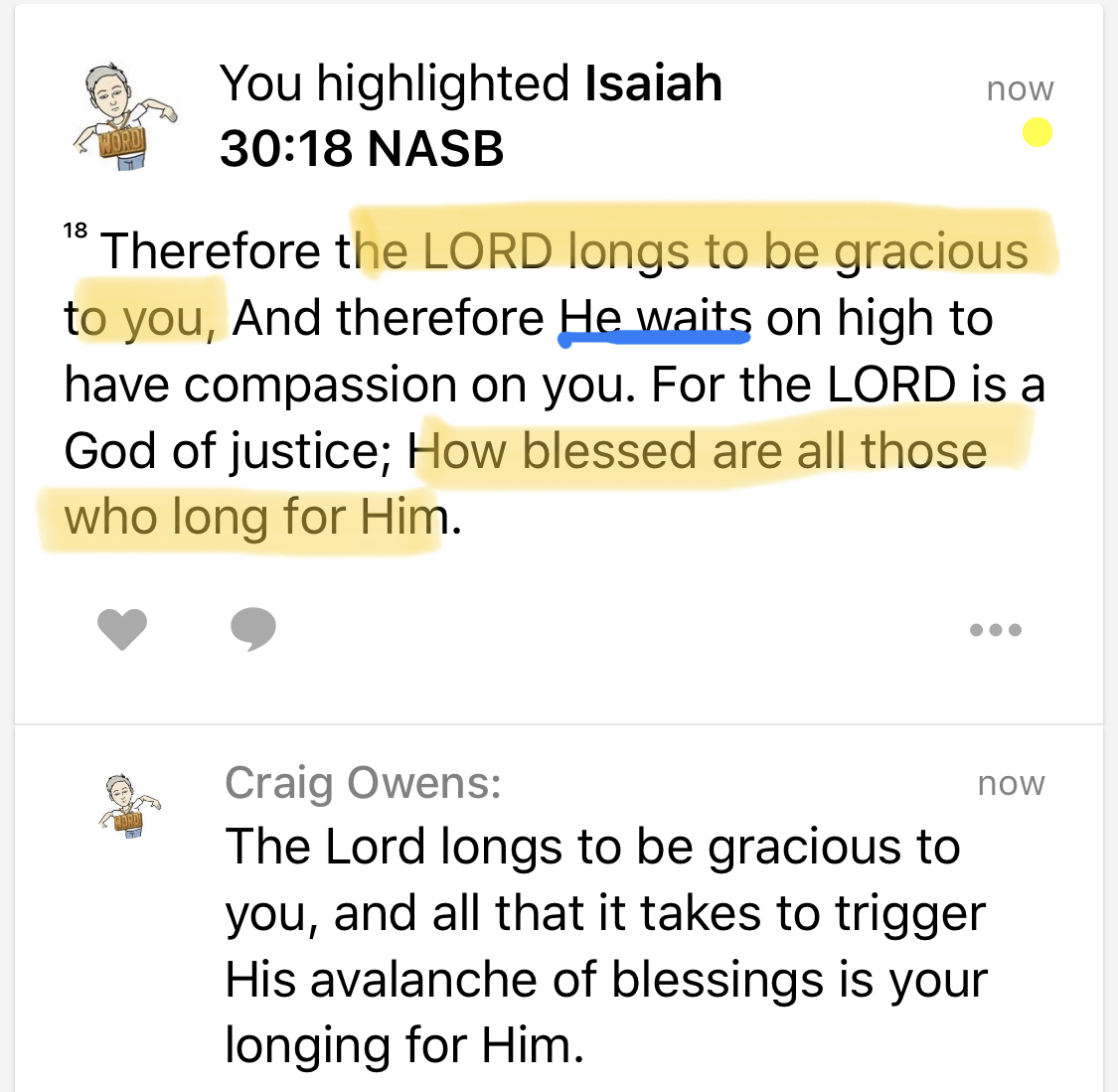
Will this craving glorify God’s name? Jesus taught us to begin our prayer with an attitude of longing for God’s name to be glorified (Matthew 6:9-10). We can definitely spot wants we’ve turned into “needs” when we are looking for personal gain. Check out this verse from the prophet Isaiah—
And therefore the Lord earnestly waits, expecting, looking, and longing to be gracious to you; and therefore He lifts Himself up, that He may have mercy on you and show loving-kindness to you. For the Lord is a God of justice. Blessed—happy, fortunate, to be envied—are all those who earnestly wait for Him, who expect and look and long for Him—for His victory, His favor, His love, His peace, His joy, and His matchless, unbroken companionship! (Isaiah 30:18 AMP)
God longs to be gracious to you, so He puts cravings in your heart that can only be satisfied by His presence. Lucifer and Adam and Eve all lost God’s “matchless, unbroken companionship” when they tried to appease the wants-turned-to-“needs” idol. It doesn’t have to be like that for us! Ask the Holy Spirit to help you spot those wrong cravings and turn them into cravings that only God can satisfy.
Jesus said we are hypocrites when we give, pray, or fast only outwardly. He called our prayers “pagan” when we try to pray unnaturally. Jesus desires for our giving, praying, and fasting to be natural parts of who we are.This is a short clip of a full-length teaching called “Keepin’ it real” that I shared exclusively with my Patreon supporters. If you would like to sponsor me too for just $5/month, check out the details here.
“Nothing is impossible, the word itself says ‘I’m possible’!” —Audrey Hepburn
“Astronomers are thrilled by the extraordinary images provided by the new James Webb Space Telescope (JWST)—but some of the data already contradict Big Bang expectations. … Creationists have long noted that the Big Bang suffers from the mature distant galaxy problem. Big Bang theorists assume that light from the most distant galaxies took more than 13 billion years to reach Earth. By Big Bang reckoning, we should be seeing these very distant galaxies, not as they are today, but as they were more than 13 billion years ago. Hence, these galaxies should look ‘unevolved’ and ‘immature.’ Yet this expectation is routinely contradicted, and preliminary data from Webb continues the trend.” Check out more from this ICR article.
“Our leadership will always be second to our followership of Jesus.” —Pastor Ben Stoffel
Have you ever been cursed out? Here’s how Jesus wants Christians to respond. It’s pretty easy to say something nice to someone who has done something nice for you. But Jesus tells us to say nice things to people regardlessof how they have treated us.
“The battles that count aren’t the ones for gold medals. The struggles within yourself—that’s where it’s at.” —Jesse Owens
“Your walk walks, and your talk talks, but your walk talks more than your talk talks.” —Anonymous
John uses the word “fellowship” four times in 1 John 1:3, 6-7. This is the Greek word koinonia,which means intimacy of relationship. The whole purpose of the motivational gifts, the operational gifts, and the leadership gifts is to bring maturity and unity to the Body of Christ. This maturity brings out the fruit of the Spirit.
All of these gifts of the Holy Spirit are intended to help us demonstrate the fruit of the Spirit in ways that make the Kingdom of God visible and desirable. A key component is our koinonia that draws us together as one Body. Two key phrases that appear generously throughout the New Testament Church are one another and each other.
Patiently bearing with one another—Ephesians 4:2; Ephesians 4:3 TLB
Speaking the truth in love to one another—Ephesians 4:15; Colossians 3:9
Forgiving one another—Ephesians 4:32; Colossians 3:13
Submitting to one another—Ephesians 5:21
Acting like Jesus toward each other—Philippians 2:5
Doing what is good for one another—1 Thessalonians 5:15
Spurring one another on—Hebrews 10:24
Regularly meeting with one another—Acts 2:46; Hebrews 10:25
Looking after each other—Hebrews 12:15 AMP
Confessing sins to one another—James 5:16
Showing hospitality to each other—1 Peter 4:9
Doing the hard work of getting along with each other—James 3:17-18 MSG
Those things lead to #26, which starts the cycle over again at #1.
Increasing our love for one another—1 Thessalonians 3:12; 2 Thessalonians 1:3; Hebrews 13:1; 1 Peter 4:8
Our koinoniain the church is encouraging for the saints and it is a blessing for the unsaved because of all of the good things a unified, strong, loving church can do. Koinonia ultimately becomes one of the greatest witnessing tools. Jesus prayed—
My prayer is not for them alone. I pray also for those who will believe in Me through their message, that all of them may be one, Father, just as You are in Me and I am in You. May they also be in Us so that the world may believe that You have sent Me. (John 17:20-21)
After I had shared a little of my background about how God directed me into the pastorate, John asked us our thoughts about pastors working some sort of vocational job before stepping into the role as a pastor.
I thought this exchange of ideas was pretty solid. Check this out…
One of the things I highlight in my book Shepherd Leadership is the danger of business metrics creeping into our churches. I think a pastor who has both vocational and ministry training is better equipped at spotting this shift of metrics and then making the necessary adjustments. If you are a pastor, I highly recommend that you pick up a copy of my book.
I’ll be sharing more clips from this Leading From Alignment interview soon, so please stay tuned. Shepherd Leadership: The Metrics That Really Matter is available in print or ebook, and in audiobook through either Audible or Apple.
This is a weekly series with things I’m reading and pondering from Charles Spurgeon. You can read the original seed thought here, or type “Thursdays With Spurgeon” in the search box to read more entries.
Listen to the podcast of this post by clicking on the player below, and you can also subscribe on Apple, Spotify, or Audible.
Aids Of Self-Judgment
My soul is consumed with longing for Your laws at all times. (Psalm 119:20)
Spiritual desires are the shadows of coming blessings. What God intends to give us, He first sets us longing for. Therefore, prayer is wonderfully effective because it is the embodiment of a longing that is inspired by God because He intends to bestow the blessing prayed for! What are your longings, then, my hearer? Do you long to be holy? The Lord will make you holy! Do you long to conquer sin? You will overcome it by faith in Jesus! Are you pining after fellowship with Christ? He will come and make His abode with you! Does your soul thirst, yes, even pant after God as the hart for the water brooks? Then you will be filled with all His fulness….
I say not that it is so with all human wishes, for ‘the sluggard desires and has nothing’ [Proverbs 13:4] and many a man has such evil cravings within his heart that it were contrary to the purity of God for Him to grant them. But where there are intense, heartbreaking earnings of a holy order, depend upon it, they are tokens of good things to come!
Where the grace of God reigns in the soul, it makes a man become a stranger among his fellows…. Worldly men care nothing for the judgments of God. No, they care nothing for God Himself! But when a man becomes born anew, a citizen of heaven, there grows up within his spirit a spiritual appetite of which he had felt nothing before—and he longs after God and His Holy Word. See to it, brothers and sisters, whether your souls cry out for God, for the living God, for again I say, by your longings you may test yourselves—by your heart’s desires you may forecast the future—and by your hungering and thirsting you may judge whether you are men of this world or citizens of the world to come. With such aids to self-judgment, no man ought to remain in doubt as to his spiritual condition and eternal prospects.
From Holy Longings
I am currently teaching a series of lessons called Craving. We are learning in these sermons that God created our souls to long intensely, to have cravings. But we go astray when what we crave are things that will merely last during this world.
John told us, “This world is fading away, along with everything that people crave. But anyone who does what pleases God will live forever” (1 John 2:17 NLT). So by its very definition, worldly things will never satisfy our cravings because the world is temporary. Only an eternal God can give us eternal satisfaction.
As Spurgeon teaches us here, examining our longings is the best aid of self-judgment and will help us determine our future. Craving God’s presence will bring God’s blessing and His eternal fulfillment of our cravings. Craving anything else will lead to frustration and eternal disappointment.
God longs to bless us (Isaiah 30:18) as long as we are craving Him!
Listen to the podcast of this post by clicking on the player below, and you can also subscribe on Apple, Spotify, or Audible.
Perhaps you’ve heard the phrase, “The best laid plans of mice and men often go awry.”
This is a line from a poem written by Robert Burns in 1785 called To A Mouse. The story behind the poem is Burns had been plowing his field and destroyed a nest that a mouse had been working all day to build. His poem was written as an apology. The famous line from the Scottish poet actually is written like this—
The best laid schemes o’ Mice an’ Men
Gang aft agley,
An’ lea’e us nought but grief an’ pain,
For promis’d joy!
That phrase “gang aft agley” means often go awry.
Do you ever feel this way? Like your perfectly planned agenda got derailed before you even finished breakfast? Or that your To Do list never quite gets “To Done” by the end of the day?
I had a great time on the Thriving In Ministry podcast with Kyle Willis while his podcast partner Dace Clifton was on sabbatical. We had planned to discuss how to help pastors get some rest so they could be at their optimal health, but our best laid plans definitely “gang aft agley”! We had multiple technical issues before we could even start recording, and then just as we talked about how pastors could find a way to rest, well, this happened…
Ah yes! Plans gone awry, indeed!
But here is an important principle for all of us to remember. The Bible says this: We can make our plans, but the Lord determines our steps (Proverbs 16:9). That means the thing that I call “an interruption” may be something or someone God has sent my way.
I used to really struggle with this, saying things like, “My plans never work out.” Until one day I heard the distinct voice of the Holy Spirit ask me, “Whose plans?”
Now listen, you who say, “Today or tomorrow we will go to this or that city, spend a year there, carry on business and make money.” Why, you do not even know what will happen tomorrow. What is your life? You are a mist that appears for a little while and then vanishes. Instead, you ought to say, “If it is the Lord’s will, we will live and do this or that.” (James 4:13-15)
Pastor, look at the life of Jesus. He often tried to get away for a time of rest, but people with needs showed up. His well-laid plans appeared to go awry. But He had compassion on them because He viewed them “like sheep without a shepherd” (Matthew 9:36; Mark 6:34). Jesus then found time to sabbath later.
Don’t view people with needs as an interruption or as something that derails your plans, but thank God for sending them your way. Then listen to the Holy Spirit showing you how and when you can get the rest you need to be energized to accomplish the rest of the items on your agenda.
I’ll be sharing more clips from this Thriving In Ministry interview soon, so please stay tuned. Shepherd Leadership: The Metrics That Really Matter is available in print or ebook, and in audiobook through either Audible or Apple.
Listen to the podcast of this post by clicking on the player below, and you can also subscribe on Apple, Spotify, or Audible.
I think the story of Jonah is pretty well-known. God calls Jonah to take His message to Nineveh. Jonah agrees to do this, but then promptly boards a ship heading in the opposite direction. To get his attention, God sends a storm that rocks this boat so violently that the sailors can do nothing to make any headway. Ultimately, Jonah asks the sailors to throw him overboard. As soon as Jonah hits the water, the storm stopped and Jonah is swallowed alive by a great fish that God had provided.
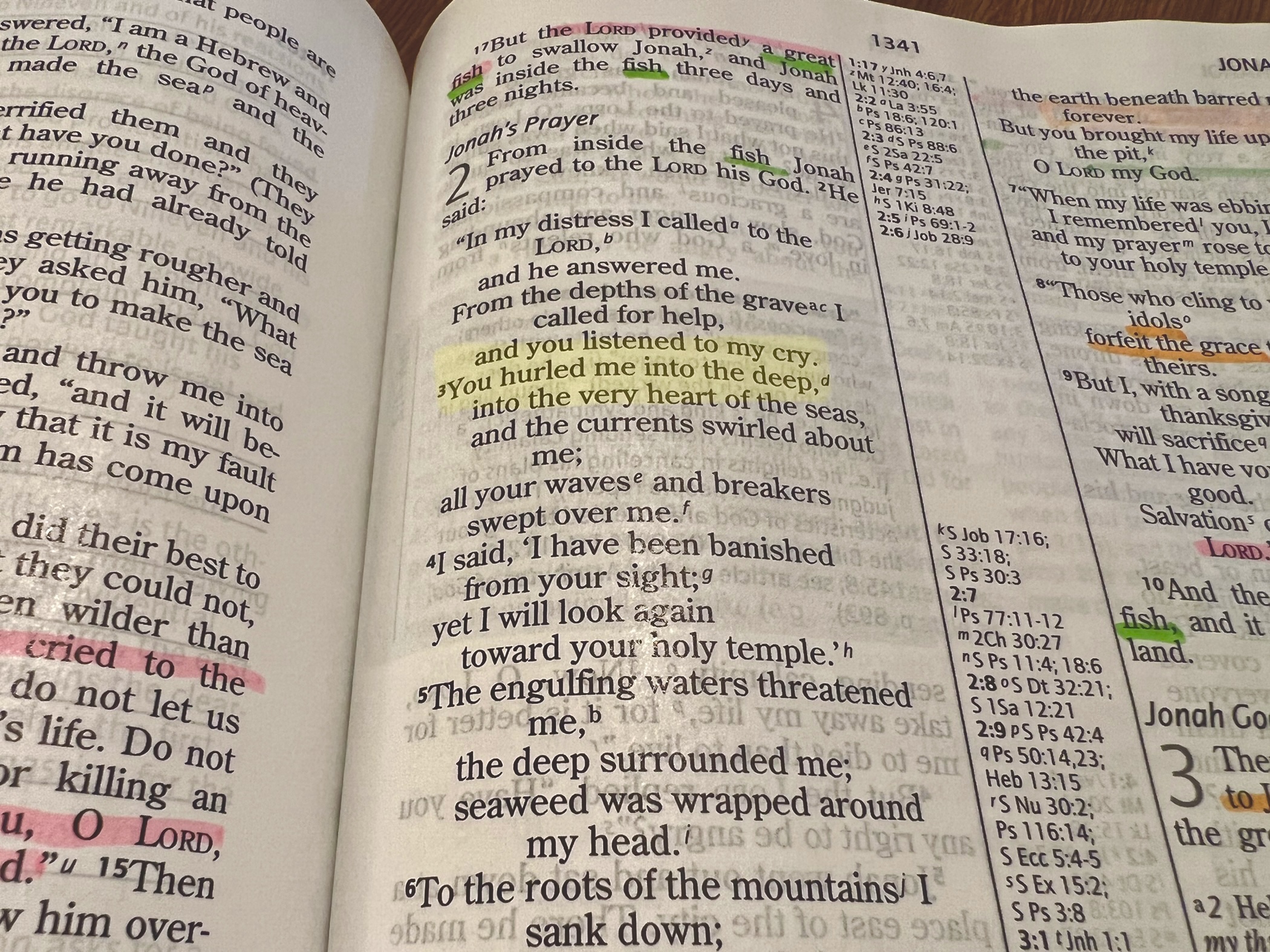
The story continues with this narrative: “From inside the fish Jonah prayed to the Lord his God” (Jonah 2:1). In the next verse, Jonah repeats, “In my distress, I called to the Lord, and He answered me.”
It appears that Jonah’s first prayer may have been on the deck of the storm-tossed ship. Perhaps he prayed something like, “God, I know I have sinned against You. Please have mercy and get me out of this! I promise I’ll obey You this time.”
How did God answer that prayer? Jonah says God answered like this: “You hurled me into the deep.”
That probably is not the answer to prayer that Jonah was expecting!
I remember when my friend was in a similar place. He had sinned against both God and his employer, and found himself in a whole lot of hot water. As a result, he lost his job.
That probably is not the answer to prayer that my friend was expecting! And yet it was the best answer. He shared with me several months later that getting fired not only got his attention, it helped him put his focus back on God, and put him on a path where God could use him again.
My friend learned what Jonah also learned: Even in our sinful state, God hears our prayers and He answers our prayers. The answer may not immediately be what we would have selected! But our sovereign God knows the best answer, and we must always trust Him.
Jonah declared, “Salvation comes from the Lord,” and he also promised God, “What I have vowed I will make good” (Jonah 2:9). And he did. This time Jonah did go to Nineveh, he delivered the message God had given, and he called those people to repentance. They responded by humbly turning to God, and God showed them mercy.
My friend, the next time you find yourself in hot water, or in an inescapable storm at sea, or a dire situation at work, remember that you can always call to God. He will answer you. His answer may not be exactly what you expected, but it will be the best answer!



 I had a great time on the 200churches podcast with Jeff Keady.
  I have found that we are much more likely to make and stick to a plan to get physically healthy when we have a workout friend or someone who is holding us accountable. The same is true for our spiritual health. So pastor, don’t try to get and stay healthy on your own, but get a trusted friend or two working out alongside you.











 Craig T. Owens