The Enemy Within

Listen to the podcast of this post by clicking on the player below, and you can also subscribe on AppleSpotify, or Audible.

Confuse them, Lord, and frustrate their plans, for I see violence and conflict in the city. Its walls are patrolled day and night against invaders, but the real danger is wickedness within the city… (Psalm 55:9-14 NLT) 

David sees violence and conflict, but he is quick to conclude that the enemy is not “out there” but “in here.” Notice the phrases “in the city” and “within the city.” 

This is why Jesus tells us to deal with the plank in our own eye first (the things in here), and then I can see clearly to address what may be out there (see Matthew 7:1-5). He also tells us to pay attention to the clear indicators that something is wrong “in here” in Matthew 15:18-20. 

Yes, we should address false gods and evil practices. But G.K. Chesterton warns us to make sure we are addressing the right things—

“Idolatry is committed, not merely by setting up false gods, but also by setting up false devils; by making men afraid of war or alcohol, or economic law, when they should be afraid of spiritual corruption and cowardice.” 

God-fearing leaders must always address their own areas of corruption as the first and highest priority. It’s only after this heart-check that we can truly lead people away from things which are holding them back from fully following God. 

Holy Spirit, if I feel the need to point my finger at what’s wrong “out there,” may I first yield to Your finger pointing out what’s wrong “in here” in my own heart. Once I have recognized, confessed, and corrected what’s wrong in me, equip me to be a lovingly-strong and empathetic guide to help others around me. 

►► Would you please prayerfully consider supporting this ministry? My Patreon supporters get behind-the-scenes access to exclusive materials. ◀︎◀︎
Why?

Listen to the podcast of this post by clicking on the player below, and you can also subscribe on AppleSpotify, or Audible. 

We had our final service of the summer joining with Hillcrest Community Church in Morley Park. Pastor Caleb Claybaugh shared a message that challenged me.

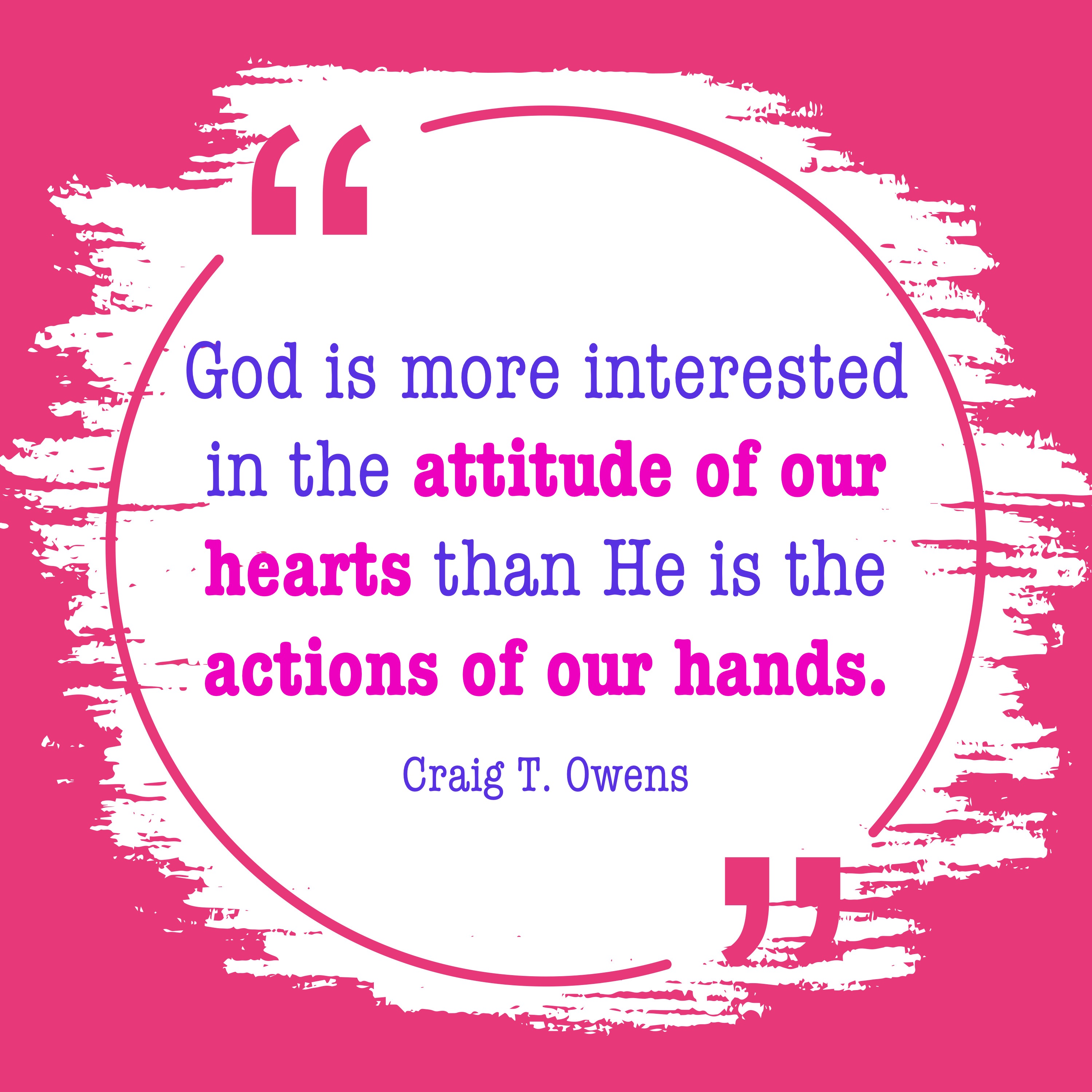
He started out with a simple question: Why do we do ministry? “Because the Bible says so” is a good start but it’s not enough. It’s not just doing but having the right attitude. 

God is more interested in the attitude of our hearts than He is the actions of our hands. 

First, we have to love others as Jesus loved: So now I am giving you a new commandment: Love each other. Just as I have loved you, you should love each other. Your love for one another will prove to the world that you are My disciples (John 13:34-35 NLT).

When people hurt, Jesus hurts. When Jesus saw her weeping and saw the other people wailing with her, a deep anger welled up within Him, and He was deeply troubled. … Then Jesus wept (John 11:33, 35 NLT). So, too, when we see people hurting, we should hurt with them, and our pain should move us to action—When [Jesus] saw the crowds, He had compassion on them because they were confused and helpless, like sheep without a shepherd (Matthew 9:36 NLT). 

Christ’s compassion prompted Him to preach the Good News and to heal the sick (v. 35). And then Jesus prayed that more of us would be involved in this type of compassion-driven ministry (vv. 37-38). 

Although this was a word Peter spoke to pastors, it’s a good challenge for all of us about checking out attitude: Care for the flock that God has entrusted to you. Watch over it willingly, not grudgingly—not for what you will get out of it, but because you are eager to serve God (1 Peter 5:2 NLT). 

May our prayer be for God to give us both the heart of compassion that Jesus has, and also the hands of compassion that meet the needs of hurting people. 

Some related posts:

►► Would you please prayerfully consider supporting this ministry? My Patreon supporters get behind-the-scenes access to exclusive materials. ◀︎◀︎

When I Feel Afraid

Listen to the podcast of this post by clicking on the player below, and you can also subscribe on AppleSpotify, or Audible. 

Can we take just a couple of minutes to talk about fear? This isn’t on the list of anyone’s favorite topics, but it is something we all have to confront. 

The Scriptures I reference in this episode are from John 8:12, 9:5; Revelation 1:8; and Psalm 56:3-4, 10-11. 

I also mentioned how many times the Bible shows us God saying, “Do not be afraid.” Here are several of those instances. 

I shared a whole series of messages called “Do Not Be Afraid” which you can check out here. Some other related posts are: 

But when I am afraid, I will put my trust in You. I praise God for what He has promised. I trust in God, so why should I be afraid? What can mere mortals do to me? … I praise God for what He has promised; yes, I praise the Lord for what He has promised. I trust in God, so why should I be afraid? What can mere mortals do to me? (Psalm 56:3-4, 10-11 NLT)

►► Would you please prayerfully consider supporting this ministry? My Patreon supporters get behind-the-scenes access to exclusive materials. ◀︎◀︎
Links & Quotes

When Christian saints get together, there are fewer gaps and fewer blind spots. Don’t isolate yourself, but stay involved with a group of saints!

I have a lot of new video content on my YouTube channel every week. Please check it out and subscribe so you don’t miss anything.

“Tragedy is the highest expression of the infinite value of human life.” —G.K. Chesterton

Clinton Manley says, “Though we often read by ourselves, we never read alone. When you open up a book, you sit down with an author. The book is fundamentally a technology of conversation; it fosters the meeting of minds across time and space.” Referencing several classical works and the Scripture, Manley reminds us that we become what we read.

“It has always been easy to hate and destroy. To build and to cherish is much more difficult.” —Queen Elizabeth II 

“Those of us who have been true readers all our life seldom fully realise the enormous extension of our being which we owe to authors. We realise it best when we talk with an unliterary friend. He may be full of goodness and good sense but he inhabits a tiny world. In it, we should be suffocated.” —C.S. Lewis

Leaders Slow Down

Listen to the podcast of this post by clicking on the player below, and you can also subscribe on AppleSpotify, or Audible. 

On the Church Lobby podcast, Karl Vaters asked me for the best piece of advice I have received as a pastor. Here’s what a wise mentor told me that changed my leadership style. 

Leaders can individualize their care for those around them by slowing down. Here’s another conversation I had with Karl on this topic. 

You may also be interested in my full interview on The Church Lobby podcast.

►► Would you please prayerfully consider supporting this ministry? My Patreon supporters get behind-the-scenes access to exclusive materials. ◀︎◀︎

Walk By The Spirit

Listen to the podcast of this post by clicking on the player below, and you can also subscribe on AppleSpotify, or Audible. 

Paul makes it so clear that the Holy Spirit is a Person with Whom I should be in regular and intimate conversation. In the span of just a few verses in Galatians, Paul uses five different Greek words to fill out the definition for what it means for a Christians to walk by the Spirit. 

(Check out all of the Bible verses in this post by clicking here.) 

(1) Walk by the Spirit (Galatians 5:16). This word means to conduct my life at the Spirit’s speed. Not rushing ahead; not lagging behind. As Solomon might say, “Trust the Holy Spirit with all your heart, and do not depend on your own understanding. Seek His will in all you do, and He will show you which path to take” (paraphrase of Proverbs 3:5-6). 

(2) Led by the Spirit (5:18). This means to be attached to the One Who is conducting my life. Just like Jesus explained about branches staying connected to the Vine in John 15:1-5. 

(3) Live by the Spirit (5:25). To consider the Holy Spirit as my one and only vitalizing Source. He is more important than the air I breathe, the food I eat, or the water I drink. 

(4) Keep in step with the Spirit (5:25). I march obediently as a soldier under direction from my Superior Officer; attuned to His voice to obey His every direction. 

(5) Live by the Spirit (6:1). This describes one who is filled with and governed by the Holy Spirit’s life-force. 

Christians who live this way cannot help but exhibit the fruit of the Spirit in such abundance that their very lives become a living, breathing testimony to others of the delight in walking by the Spirit on every single step of our life’s journey (5:22-23). 

!For me, there’s no other way to live! 

►► Would you please prayerfully consider supporting this ministry? My Patreon supporters get behind-the-scenes access to exclusive materials. ◀︎◀︎

Don’t Undo The Good

Just one moment of indulgence…

Just one small compromise in values…

Just a little bit of childish folly…

…and you undo all that you had done so well. 

Dead flies cause the ointment of the perfumer to putrefy and send forth a vile odor; so does a little folly in him who is valued for wisdom outweigh wisdom and honor. (Ecclesiastes 10:1 AMPC) 

You can go a bit deeper on this in my posts Don’t Putrefy Your Leadership

Recovery Time

Listen to the podcast of this post by clicking on the player below, and you can also subscribe on AppleSpotify, or Audible. 

Anyone who has been verbally or emotionally attacked needs time to recover. Your self-care is absolutely essential to your personal health and the health of the people with whom you live and work. Your pain will eventually become their pain if you remain in a bruised and weakened place. 

Chapter 12 in my book When Sheep Bite is entitled ‘Self-care is Not Selfish.’ In that chapter I wrote—

     When you are recovering from biting sheep, you will need to be very intentional about self-care. I said earlier that self-care is not selfish. What is selfish is self-centeredness and self-reliance. When you think, “I cannot possibly take a break right now; too many people need me—besides, how will the work get done if I step away,” you are attempting to be self-reliant. This is a natural response, but it doesn’t give us the supernatural, refreshing oxygen that comes from sabbathing with Jesus. 

     This isn’t to diminish the importance of the true Sabbath Day, and I am not saying that sabbathing can be anything you want it to be. For Jesus, it was time alone with His Father—both set times and spontaneous times. But sometimes you will need a nap (like Elijah) or a meal with a trusted friend (as the disciples had with Jesus in Mark 6:30-32). These sabbathing breaks have a singular agenda: To get you to the place physically and emotionally where you can concentrate on your prayer time. After all, it’s hard to receive refreshing from God when you cannot keep your eyes open or your thoughts from straying. 

You can check out the article I wrote for Influence magazine here, and then pick up a copy of When Sheep Bite to help your recovery time. Check out what the public ministry of Jesus teaches us about the healthy practice of sabbathing. 

I also recommend these related posts and videos about self-care: 

►► Would you please prayerfully consider supporting this ministry? My Patreon supporters get behind-the-scenes access to exclusive materials. ◀︎◀︎

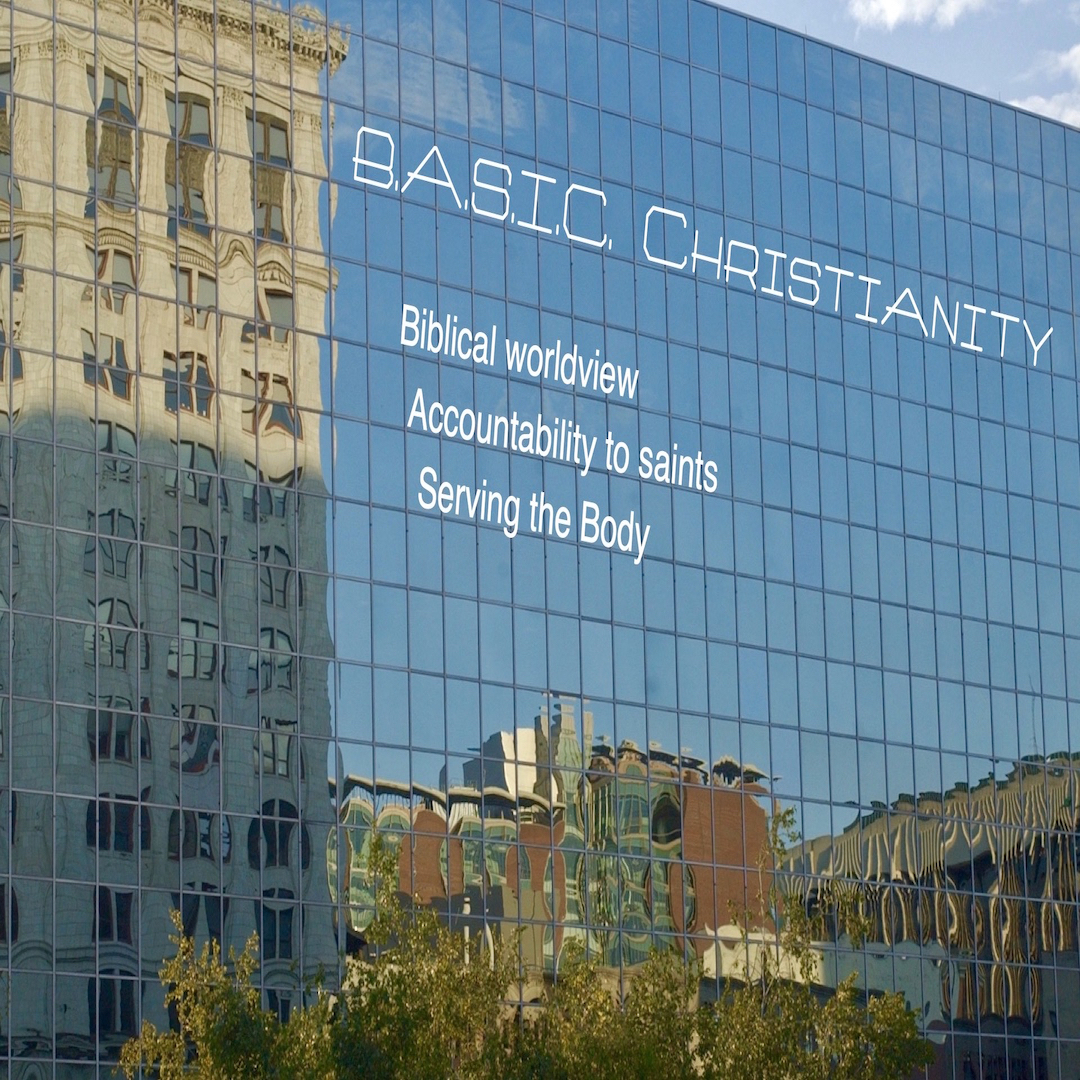
Serving The Body

Listen to the podcast of this post by clicking on the player below, and you can also subscribe on AppleSpotify, or Audible. 

Last week we were reminded that sanctification (or as I call it “saint-ification”) is an ongoing process that usually involves the help of other saints. There is something else we need to do with other saints: serve them. 

We are all a part of the same Body so it is beneficial for the whole Body if we care for every part of the Body (1 Corinthians 12:25 AMPC; Ephesians 5:30). 

(Check out all of the Scriptures in this post by clicking here.) 

In order to serve others, we are going to have to check our attitude. We have been called to have the attitude that Jesus had about the Church (Ephesians 5:29; Philippians 2:3-7; John 13:3-5, 14-17). 

We must all know: 

  • I have a gift—notice the phrase each of you in 1 Peter 4:10 
  • I must use my gift to serve the Body of Christ (Luke 17:10)

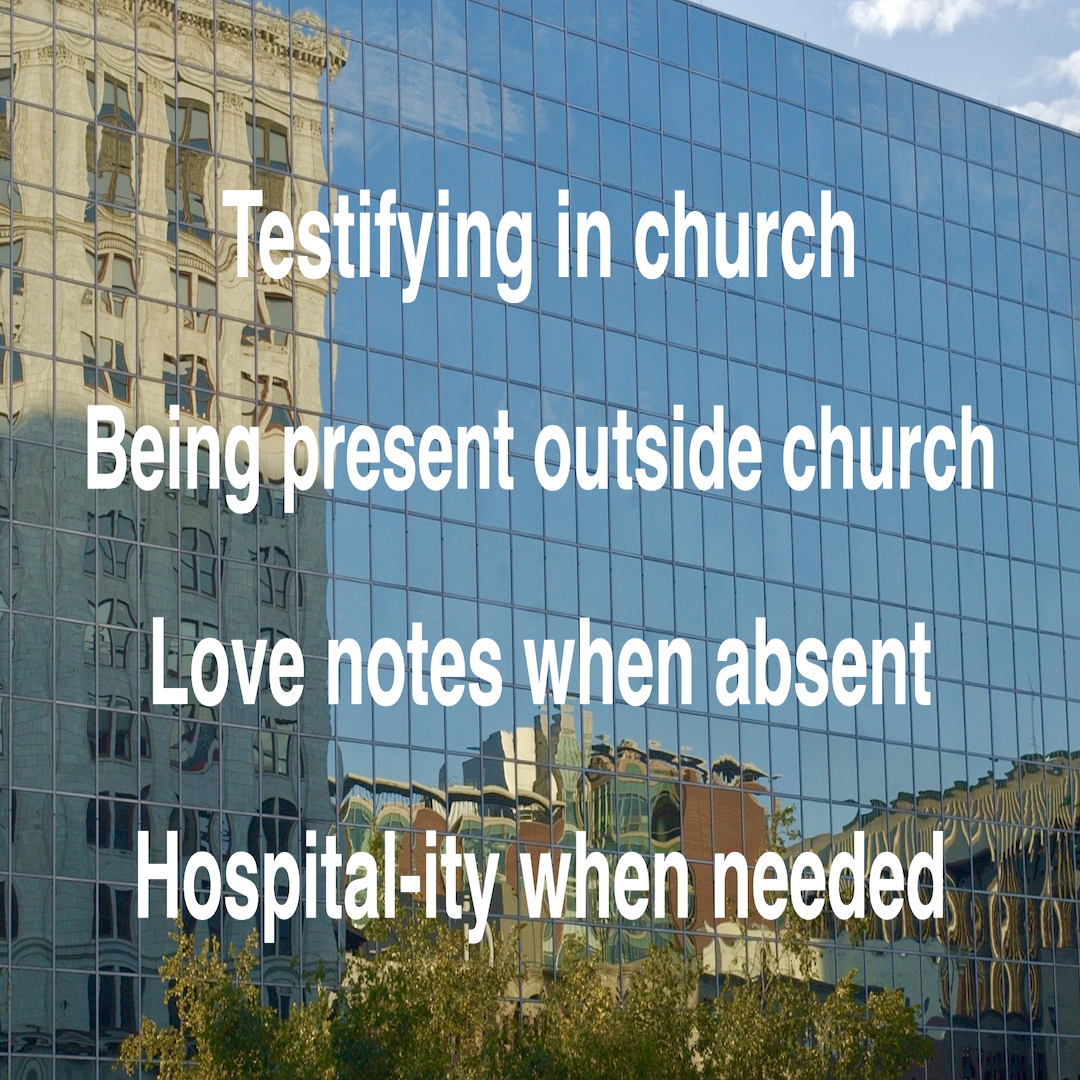
In the early Church, we see so much togetherness that they rewrote the definition of the Greek word koinonia (see Acts 2:42). Here’s what koinonia looks like in the Church:

(1) Testifying in church (Psalm 40:9-10 NLT) 

(2) Being present with saints outside of church. From Acts 20-28, the pronouns “we” and “us” are used over 80 times! Paul was blessed simply by Luke being with him, just as saints are blessed when you are truly with them. 

(3) Love notes when a saint is absent. The apostle John was brilliant at this. Look at his three epistles: 

  • dear children 9x in 1 John  
  • chosen / dear lady 2x in 2 John  
  • dear friend 4x in 3 John  

(4) Hospital-ity whenever it’s needed. Be a place of healing and refreshment for the saints God has placed in your life, just as Philemon did (Philemon 2-7, 22). 

What a testimony it is when we live this way (Romans 12:10, 13)! 

Remember the saint-ification process brings fruitfulness, joy-fullness, and an enhanced testimony. I love this quote from Richard Stearns, “The beautiful simplicity of our faith is that it distills down to the exact same bottom line for both the brilliant theologian and the five-year-old child: love God and love each other—period. Everything else derives from that.” 

If you’ve missed the “B” or “A” in our series B.A.S.I.C. Christianity, you can check those out here. 

►► Would you please prayerfully consider supporting this ministry? My Patreon supporters get behind-the-scenes access to exclusive materials. ◀︎◀︎

Links & Quotes

Whether we see the world through a naturalistic lens or a biblical lens makes all the difference!

I have a lot of new video content on my YouTube channel every week. Please check it out and subscribe so you don’t miss anything.

Columba was a powerful Christian leader in history. Even the legends about him are pretty cool! 

Isaac Newton said, “This most beautiful system of the sun, planets, and comets, could only proceed from the counsel and dominion of an intelligent and powerful Being.” Isaac Newton and Johannes Kepler are two gigantic figures in the world of science. These men were both devout Christians. Check out these mini-biographies from the ICR.

“What made David’s heart remarkable wasn’t the absence of sin but his unrelenting pursuit of restoration with God.” —YouVersion reading plan Men of God: Ancient Virtues for Modern Warriors 

It’s always fascinating to read about archeological discoveries that overlap with the historical accounts of the Bible.

Whether you are a pastor, a Sunday School teacher, or just a Christian sharing your testimony with your friend, we need to handle God’s Word correctly. John Piper’s lesson on 2 Timothy 2:14-15 is spot-on.