
Eternally Confident

Listen to the podcast of this post by clicking on the player below, and you can also subscribe on AppleSpotify, or Audible. 

When we hear the word “if” we hear something that is uncertain: “If only I get that job” or “If I have enough money at the end of the month” or “If we get there in enough time.” 

The dictionary tells us “if” has an element of uncertainty. Like when King George III said of George Washington’s decision to step down as the president, “If he does that, he will be the greatest man in the world.” 

Sometimes we think of “if” as a condition to receive some sort of award or recognition. Like Rudyard Kipling’s famous poem If

If you can keep your head when all about you are losing theirs and blaming it on you … [then] Yours is the Earth and everything that’s in it, and—which is more—you’ll be a Man, my son! 

We need to be careful of those paradigms when we come to the next song of ascent in Psalm 124, since the word “if” appears twice in the opening two verses. 

David is not saying, “Weren’t we lucky that God was there for us” or “I wonder if He will be for us again in the future.” I like how the New Living Translation renders this verse: “What if the Lord had not been on our side?” In other words, He was on our side, therefore look what we avoided! 

Far from being a statement of uncertainty, this is a statement of total assurance: It’s saying, “I’m confident of what would have happened if God wasn’t there, and I’m assured of what will happen in the future.” This is why in the next verses David calls on us to praise God in the present tense. 

Every one of these songs of ascent can be sung as stand-alone songs, but the Jewish sages believed that these 15 songs are like the 15 steps that go up to the center of the courtyard. No one climbs the steps from their basement, stops after three or four steps, and says, “I was lucky that the first steps held me! Now I’m wondering if the next step is going to fail me or not.” No, the fact that we have already climbed some steps gives us assurance of the stability of the next step. 

Look at a quick review of the previous steps: 

  • in Psalm 120 pilgrims climb away from the pull of the dark valleys 
  • in Psalm 121 we read the phrase, “I lift my eyes up to the One who is watching over me”  
  • in Psalm 122 we climb the steps knowing that we aren’t climbing to a throne of judgment but a throne of shalom because of the peace Jesus purchased for us
  • in Psalm 123 we are called to only have eyes for our Savior who has lavished His grace on us, and who continues to lavish His grace on us
  • now in Psalm 124 we continue to climb up in growing assurance 

The devil loves to use “if” as a weapon to keep us from this confidence. Perhaps the doubt comes like this, “This song was written by David. If I’m not King David—or even a part of the Jewish nation—can I be assured that God is on my side?” 

Yes, you can! Remember that God’s grace is unearned, undeserved, and unending. And it’s for anyone and everyone who puts their faith in Jesus (Romans 4:23-24; 1 Corinthians 1:30; Romans 8:31-32). 

Or perhaps the devil’s doubt comes like this, “If I sin, will God no longer be on my side?” 

No, neither our efforts nor our shortcomings increase nor decrease God’s love for us. He loved us before we even knew we needed Him, and our sin cannot diminish His love one iota (Romans 5:20-21; 2 Corinthians 5:21; Ephesians 2:4-5). 

When the devil confronted Jesus, he used that little weapon “if” with all three of his temptations. Jesus dismantled those temptations to doubt God by quoting Scripture. So too with Joshua. As he contemplated leading the Israelites into the Promised Land, he may have felt a bit insecure. God told Joshua to continue to meditate on His Word and as a result, Joshua would be strong and courageous. 

David’s closing words in Psalm 124:8 is the Source of our doubt-destroying confidence: “Our help is in the name of the Lord, the Maker of heaven and earth!” 

Whenever the devil plagues you with doubts, keep your eyes on your Maker, keep His Word in your mouth, and then feel His confidence grow in your heart. 

If you’ve missed any of the messages in our Ascending series, you can find all of them here. 

►► Would you please prayerfully consider supporting this ministry? My Patreon supporters get behind-the-scenes access to exclusive materials. ◀︎◀︎

Links & Quotes

God’s grace is so amazing. It keeps coming in like waves on a shore. God’s grace is unearned by our efforts, undeserved despite our sins, and unending for all of eternity! Check out this full message hereI have lots of new content every week, which you can check out on my YouTube channel.

“The humble servant of God is grateful for God’s past blessings, unashamed of his daily dependence on God, and confidant of God’s loving reply to every new request.” —Craig T. Owens

“There’s no shame in failing. The only shame is not giving things your best shot.” —Robin Williams

I’ve often said that praying, “God, here are my plans; please bless them” is an arrogant prayer. Instead, humility prays, “God, what would You have me do.” Proverbs 19:21 makes this point clearly. In his commentary on The Book of Proverbs, Dick Brogden noted on this verse, “God always gets His way over man’s ideas. In our hubris we think we know better than God, so we either make plans and then ask for His endorsement or we stand in judgment of what He is doing as if He should have asked us to endorse His plans. Folly judges only by results in Machiavellian crudity, but things going right doesn’t necessarily mean they were right, and things going wrong doesn’t necessarily mean we were wrong. Let us remember we are prophets, priests, and proclaimers, not pragmatists.”

“You don’t have to be a fantastic hero to do certain things—to compete. You can be just an ordinary chap, sufficiently motivated to reach challenging goals.” —Sir Edmund Hillary

Speaking of an exemplary work ethic, David Mathis writes, “However firsthand your experience as a soldier, athlete, or farmer, Scripture stands ready to fill in, supplement, recast, or override our personal experiences (or lack thereof) and teach us a Christian work ethic—for our own joy, the good of others, and the glory of Christ.” The biblical text Mathis uses to help us learn this Christian work ethic is 2 Timothy 2:1-7.

Marvin Olasky has a sobering and insightful post entitled “United States of Abortion.” He wrote, “For nearly four centuries, the frequency of abortion in America has depended on how citizens and residents answered five questions.” The five questions—and his five answers—are a mini history lesson on which all Christians should reflect.

Wave Nunnally has a fascinating look at the ritual purity that was required in order to enter various parts of the Temple in Jerusalem.

“If you are ever inclined to pray for a missionary, do it at once, wherever you are. Perhaps he may be in great peril at that moment.” —Amy Carmichael

From the vastly large solar system to the microscopic level, the beauty and genius of our Creator is seen. A new report published in the journal Nature delves into the complexity of our tiny cilia. Only an all-wise Creator could fashion something so precise!

If you are looking for an easily accessible online library (especially for researching older books), check out the Internet Archive.

Though a professing atheist, Richard Feynman poetically mused that “you might say the ‘hand of God’ wrote that number, and ‘we don’t know how He pushed His pencil.’” What number is that? Physicists call it alpha (α): “That number is 0.00729735256—approximately 1/137. This is the fine-structure constant. It appears everywhere in the equations of quantum physics.” Another remarkable signpost to a magnificent Creator!

The Craig And Greg Show: Reframe Your Fear

Listen to the audio-only version of this podcast by clicking on the player below, or scroll down to watch the video.

Fear is something every leader struggles with, but great leaders learn to reframe that fear into an opportunity to grow. Join Greg and me as we discuss overcoming fear, reframing fear, and helping your team to do the same.

  • [0:23] Good leaders learn how to frame their fear in a different way.
  • [1:09] Greg and I talk about our biggest fears.
  • [2:21] I share about having to overcome fears about making a decision.
  • [3:38] Most of fear is rooted in past experiences, but reframing as a learning experience can help you grow.
  • [6:17] Attempting to use fear as a motivation tool will backfire and restrict your team’s potential.
  • [7:23] Reducing the fears of your team begins with leading from a place of transparent humility.
  • [9:20] Self talk is important in your battle over fear. Lead by example and show your team how to reframe their mentality. 
  • [11:55] Pride is a big stumbling block for leaders, don’t be afraid to include others in the decision making process.
  • [13:50] The top fears that paralyze leaders.
  • [19:55] Good leaders game-plan for future conflict, so when it comes their team is ready.
  • [20:34] Give your team opportunities to battle their fears and grow from them.
  • [22:51] Greg shares a quote from Henry Ford.
  • [24:11] I share a Little League story.
  • [25:03] Greg and I would love to come alongside and help coach you!

Check out this episode and subscribe on YouTube so you can watch all of the upcoming episodes. You can also listen to our podcast on Spotify and Apple.

Interviewing The Author Of “Sage Advice” (part 1)

Listen to the podcast of this post by clicking on the player below, and you can also subscribe on AppleSpotify, or Audible.

I am thrilled to introduce Greg Heeres to you! He’s not only a great friend and my podcast partner on The Craig And Greg Show, but he is also a published author. We chatted recently about why he wrote “Sage Advice” and how it can benefit every reader. 

Check out this episode of The Podcast.

Resources:

►► Would you please prayerfully consider supporting this ministry? My Patreon supporters get behind-the-scenes access to exclusive materials. ◀︎◀︎

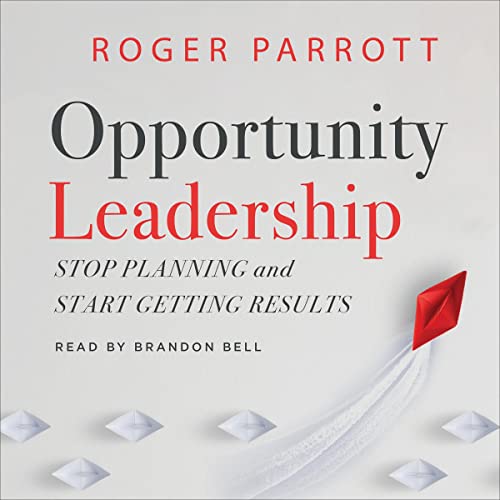
Opportunity Leadership (book review)

Listen to the podcast of this post by clicking on the player below, and you can also subscribe on AppleSpotify, or Audible. 

When I wrote my book, I was attempting to bring church leaders back to the biblical foundation for what it means to be a pastor. In a very similar fashion, Roger Parrott does this same thing for ministry leaders in his book Opportunity Leadership. 

Parrott is the president of a vibrant Christian university. As anyone who has been in the arena of higher education will tell you, making long-range plans is at the foundation of everything the administration and faculty do. But Parrott asks where did we get this model? Is this something we see in the Bible? 

Actually, we see verses that subordinate human plans to God’s plan. Verses like, “Many are the plans in a person’s heart, but it is the Lord’s purpose that prevails” (Proverbs 19:21) or, “They tried [planned] to enter Bithynia, but the Spirit of Jesus would not allow them to” (Acts 16:7). This is why Parrott makes the case that we are missing out on what God has in store for us because we only want Him to work on our carefully-made plans.

Parrott makes the case that their university has grown and seized opportunities because they were open and responsive to the doors God presented them, instead of missing out because they were blinded by their plans. 

Obviously, switching to this model will take tremendous buy-in from the point leader all the way through the entire organization. So the bulk of Opportunity Leadership helps prepare Christian leaders to change their paradigm, prepare for the inevitable pushback, and help their teammates move forward. 

I thoroughly enjoyed this book—finding myself saying, “Yes!” frequently as I was reading it—and I am confident all Christian leaders will benefit from reading this insightful work. 

►► Would you please prayerfully consider supporting this ministry? My Patreon supporters get behind-the-scenes access to exclusive materials. ◀︎◀︎
I Only Have Eyes For You

Listen to the podcast of this post by clicking on the player below, and you can also subscribe on AppleSpotify, or Audible. 

Love should be blind. That is, we should be so enamored with the one we love that we are blind to all others. There are some sweet lyrics to a 1932 song called “I only have eyes for you”—

My love must be a kind of blind love
I can’t see anyone but you
and, dear, I wonder if you’ll find
love an optical illusion too

Are the stars out tonight?
I don’t know if it’s cloudy or bright
‘cause I only have eyes for you, dear
The moon may be high
But I can’t see a thing in the sky
‘cause I only have eyes for you

I don’t know if we’re in a garden
or on a crowded avenue
you are here and so am I
maybe millions of people go by
but they all disappear from view
‘cause I only have eyes for you

Instead of having dedicated eyes, what would you think of someone who was constantly “checking out” those other than their sweetheart? That’s what the song of ascent in Psalm 123 calls on us to contemplate. 

Notice the use of the word “eyes” four times in just the opening two verses. The psalmist is asking us, “Do you only have eyes for God, or are you glancing elsewhere?” 

The call throughout the Bible, from beginning to end, has always been for a steadfast, loving eye for our loving God. From Moses to Jesus, the call is to love God above all else—to only have eyes for Him (Deuteronomy 6:5; Mark 12:30). I think this is why Jesus taught us to pray for a daily look to our Father’s hand for each moment’s provision (Matthew 6:11). 

This is not a begrudging “have to look” but an “I cannot help but continually look.” David said it this way, “Blessed be the Lord, Who daily loads us with benefits” (Psalm 68:19)!  

When we continually keep our eyes on our loving Heavenly Father, we see more and more of His graceful favor toward us. It’s the proud and arrogant (in verses 3-4) that think they have to take care of themselves, or that they have to keep their eyes open to other possibilities. 

God loves to shower His favor on those who only have eyes for Him: “Out of His fullness we have all received grace in place of grace already given” (John 1:16). This reminds me of the waves on the shore, where one wave of grace continually follows the previous wave of grace, which is quickly followed by yet another wave of grace. In fact, this idea is beautifully captured in the Amplified Bible’s rendering of this verse—

For out of His fullness (abundance) we have all received—all had a share and we were all supplied with—one grace after another and spiritual blessing upon spiritual blessing and even favor upon favor and gift heaped upon gift. 

God’s grace is unearned by our efforts, undeserved despite our sins, and unending for all of eternity!  

This song of ascent assures us that the humble servant who only has eyes for God is:

  • grateful for past blessings 
  • unashamed of his total dependence on God’s provision 
  • confidant in God’s favorable reply for every single request (Matthew 6:8; Luke 12:32)

So the questions we need to ask ourselves are simply, “Where are my eyes? Do I only have eyes for my God, or do I keep my options open? Do I humbly and confidently bring my petitions to God, or do I take matters into my own hands?” 

Since this is a song of ascent, let’s make sure that our song to God is always, “I only have eyes for You!” 

If you’ve missed any of the other messages in our series looking at these Psalms of Ascent, you can find them all by clicking here. 

►► Would you please prayerfully consider supporting this ministry? My Patreon supporters get behind-the-scenes access to exclusive materials. ◀︎◀︎

Links & Quotes

There are two invaluable resources for Christians to process difficult situations the right way: the prayers in the Psalms and journaling. I have lots of new content every week, which you can check out on my YouTube channel.

“…[T]here is an enabling grace from God to endure in the strength he supplies and to do what ought to be done. Call it leadership for the long haul. And since great leadership serves the people, great leadership is servanthood, so we could also call it servanthood for the long haul. Meanwhile, merely enduring falls short. There’s something better. Great servants don’t endure merely. They endure by ‘being strengthened with all power, according to his glorious might, for all endurance and patience with joy’ (Colossians 1:11).” —Sam Crabtree 

I love the priestly blessing found in Numbers 6:24-26. This post dives deep into this blessing, and as an added bonus also tells of an archeological discovery that marks these verses as “the earliest biblical verses” for which we have archeological evidence.

…and here is even more archeological evidence of the Bible’s historicity. Once again, it can be stated that no archeological discovery has ever contradicted a biblical claim.

It’s not just archeology, but astronomy as well that points to a perfect Creator. “Life requires many parameters in order to survive and thrive. The more data that are uncovered, the more evidence there is that Earth and its environs were specifically designed with the exact conditions needed for life.” This ICR article goes on to describe the perfection with which the sun’s radiation is used by Earth’s plants.

…and an extensive study of a species of octopi also demonstrates the genius of our Creator. “For an animal to adapt to its environment, evolution requires that animal’s DNA to mutate, giving the animal some new ability that helps them survive better. Mutations are permanent. According to evolutionary theory, over long periods of time and after several DNA mutations, a new animal arises that’s better adapted to its environment. But that is not how the octopus adapts to its environment. The changes in the created proteins are made by RNA, not DNA. These changes are not permanent and the DNA remains the same….” Check out the rest of this post.

The Power Of Using Names

Listen to the podcast of this post by clicking on the player below, and you can also subscribe on AppleSpotify, or Audible.

It is important for leaders to use the right words to encourage their teammates. The most memorable, motivating, and beautiful word a leader can use is their teammates’ names. 

You can check out this full conversation Greg and I had about taking people up with our words on this episode of The Craig And Greg Show.

And I would also invite you to check out this blog post and this blog post about significant name changes recorded in the Bible.

►► Would you please prayerfully consider supporting this ministry? My Patreon supporters get behind-the-scenes access to exclusive materials. ◀︎◀︎

The Leadership-Followership Paradigm

Listen to the podcast of this post by clicking on the player below, and you can also subscribe on AppleSpotify, or Audible.

I read something which is really challenging my leadership paradigm. It’s a challenge to look at successful organizations through the lens of both a servant-hearted leader and a servant-hearted follower. 

Check out this episode of The Podcast. 

Resources I mentioned in this podcast:

►► Would you please prayerfully consider supporting this ministry? My Patreon supporters get behind-the-scenes access to exclusive materials. ◀︎◀︎

Not Succumbing To The Mob Mentality

Listen to the podcast of this post by clicking on the player below, and you can also subscribe on AppleSpotify, or Audible. 

Mobs are scary things! Almost anyone can get caught up in the ugly mentality, vile words, and inexcusable actions. 

Even professional soldiers. When Jesus was arrested, He was turned over to “the governor’s soldiers” (Matthew 27:27). These are professional soldiers. Punishing people—even carrying out capital punishment—was their job. But they gave in to the mob’s thirst for blood and made a sport out of punishing Jesus, doing what was outside of their job description.

The mob outside Pilate’s courtroom was stirred up by the religious leaders, and they “shouted all the louder” for a murderer to be released to them instead of a Healer (vv. 20, 23). 

Even as Jesus hung helpless and dying on the Cross, the religious leaders continued to incite the crowds with their taunting, prompting even other condemned men to join in (vv. 39–44). 

How easy it is to get caught up with the loud voices of the hour and to join our voices and actions with theirs! Mobs are hungry things and they continually devour almost anyone around them.

But Jesus didn’t succumb to the mob mentality. He didn’t even say a single word to those who taunted Him so mercilessly. Instead, as Peter recorded for us,

“To this you were called, because Christ suffered for you, leaving you an example, that you should follow in His steps. ‘He committed no sin, and no deceit was found in His mouth.’ When they hurled their insults at Him, He did not retaliate; when He suffered, He made no threats. Instead, He entrusted Himself to Him who judges justly.” (1 Peter 2:21-23) 

The unexpected way that Jesus responded got people’s attention. A professional soldier, a centurion, after watching how Jesus conducted Himself as He died, had to admit He was the Son of God. 

A condemned thief that hung on a cross next to Jesus, who just moments before had been joining in the taunting of Jesus, used his nearly last breath to ask Jesus for forgiveness and for entrance into heaven.

Even Governor Pontius Pilate was so moved by the silence of Jesus, that he marveled!

It’s so tempting to join with the loud voices around us. It’s even more tempting to shout back at those who are insulting us. But let us remember the example of Jesus, and perhaps offer a prayer like this: 

“Holy Spirit, help me to not succumb to the loud voices, nor to lash out against people who torment me. But, like Jesus, may I entrust myself “to Him who judges justly.” May my quiet lifestyle be a testimony that gets the attention of others. In the name of Jesus I pray this. Amen!” 

►► Would you please prayerfully consider supporting this ministry? My Patreon supporters get behind-the-scenes access to exclusive materials. ◀︎◀︎