Poetry Saturday—The Children’s Hour

Between the dark and the daylight,
      When the night is beginning to lower,
Comes a pause in the day’s occupations,
      That is known as the Children’s Hour.

I hear in the chamber above me
      The patter of little feet,
The sound of a door that is opened,
      And voices soft and sweet.

From my study I see in the lamplight,
      Descending the broad hall stair,
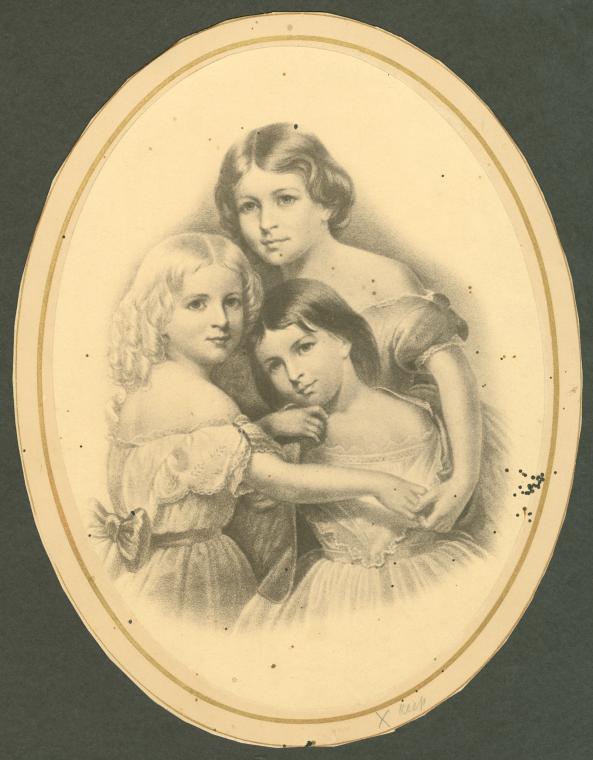
Grave Alice, and laughing Allegra,
      And Edith with golden hair.

A whisper, and then a silence:
      Yet I know by their merry eyes
They are plotting and planning together
      To take me by surprise.

A sudden rush from the stairway,
      A sudden raid from the hall!
By three doors left unguarded
      They enter my castle wall!

They climb up into my turret
      O’er the arms and back of my chair;
If I try to escape, they surround me;
      They seem to be everywhere.

They almost devour me with kisses,
      Their arms about me entwine,
Till I think of the Bishop of Bingen
      In his Mouse-Tower on the Rhine!

Do you think, O blue-eyed banditti,
      Because you have scaled the wall,
Such an old mustache as I am
      Is not a match for you all!

I have you fast in my fortress,
      And will not let you depart,
But put you down into the dungeon
      In the round-tower of my heart.

And there will I keep you forever,
      Yes, forever and a day,
Till the walls shall crumble to ruin,
      And moulder in dust away! —Henry Wadsworth Longfellow

Thursdays With Spurgeon—The Wonderful Works Of God

This is a weekly series with things I’m reading and pondering from Charles Spurgeon. You can read the original seed thought here, or type “Thursdays With Spurgeon” in the search box to read more entries.

The Wonderful Works Of God

Now there were staying in Jerusalem God-fearing Jews from every nation under heaven. … Utterly amazed, they asked “Are not all these men who are speaking Galileans…declaring the wonders of God in our own tongues!” (Acts 2:5-11) 

     The Holy Spirit being thus at work, what was the most prominent subject that these full men begin to preach about with words of fire? Suppose that the Holy Spirit should work mightily in the church. What would our ministers preach about? We should have a revival, should we not, of the old discussions about predestination and free agency? I do not think so! These are happily ended, for they tend toward bitterness, and, for the most part, the disputants are not equal to the task. We should hear a great deal about the premillennial and the postmillennial advent, should we not? I do not think so! I never saw much of the Spirit of God in discussions or dreams upon times and seasons that are not clearly revealed. Should we not hear learned essays about advanced theology? No, sir. When the devil inspires the church, we have modern theology—but when the Spirit of God is among us, that rubbish is shot out with loathing! 

     What did these men preach about? Their hearers said, ‘We hear them speaking in our own tongues the wonderful works of God’ (Acts 2:11). The subject was the wonderful works of God! Oh, that this might be, to my dying day, my sole and only topic: ‘the wonderful works of God.’

From Pentecostal Wind And Fire

Whether we are pastors or parishioners, may our heart cry echo that of Charles Spurgeon: May all that comes from my lips be words that tell of the wonderful works of God! 

After the Church was born on that Pentecost Sunday, their message wasn’t one of doctrinal differences or the ills of society. No! These Spirit-baptized Christians went everywhere proclaiming how wonderful it was to be in a personal relationship with our Heavenly Father through the way opened to us by the death and resurrection of Jesus. 

May we emulate their example today: Empowered by the Holy Spirit to go everywhere and tell everyone how wonderful our God is!


Obedience Is Success

David said, “…I had it in my heart to build a house as the place of rest for the ark of the covenant of the Lord. … But God said to me, ‘You are not to build a house for My name…’” (1 Chronicles 28:2-3).

David’s son Solomon would later write about how we make plans in our hearts, but God directs all our steps (Proverbs 16:9, 19:21). 

David not only had the desire to build this temple for God but he said the Holy Spirit gave him the plans (1 Chronicles 28:12, 19). As a result of this, David began amassing resources and organizing personnel. All of this David could then hand over to Solomon, the man who would build the house for the ark of the covenant of the Lord. 

I am sure David felt a twinge of disappointment when God said “no.” Still, David continued to work the plan the Spirit had given him. Who knows how Solomon would have begun his reign as king if David hadn’t done all of this for him. Many of the plans God gives me will not be for me but for the following generations who will benefit from my diligence in those plans.

A mark of a godly leader is one who knows that obedience to God IS success. 

In one of David’s psalms, he prays for success and for his heart’s desire to be fulfilled, but he also acknowledges God’s sovereignty over these things (Psalm 20). May I always keep in mind that obedience IS success. Success isn’t limited only to what I can see and measure during my lifetime.

This is part 53 in my series on godly leadership. You can check out all of my posts in this series by clicking here.

Be A First Responder

There is a line in an old hymn that convicts me every time I sing it: “Oh, what peace we often forfeit; Oh, what needless pain we bear all because we do not carry everything to God in prayer.” 

Why are we so slow to drop to our knees in prayer when trouble strikes? It seems we fool ourselves into thinking the problem is small enough to handle on our own, or we think God isn’t concerned with something that may seem trivial, or we’ve been-here-done-this before and know the way to go. But this isn’t what our Heavenly Father desires; instead, He wants us to come to Him before we try anything else. 

Instead of making prayer our last resort, why don’t we strive to make it our first response! 

Join me as we begin our series on prayer called Be A First Responder. We will be learning the value of praying fast and praying often, and we will see how being a prayer first-responder will benefit those around us too. 

If you have missed any of the messages in this series, you can check them out here:

To The Work! (book review)

Dwight Moody wasn’t a trained theologian nor a polished orator. He was a former shoe salesman-turned-preacher who spoke the common language of his parishioners. To The Work: Exhortations to Christians perfectly captures his voice and style. 

The definition of exhortation means to persuade, inspire, or encourage, but it usually carries the idea that those things are being delivered with some urgency. Perhaps the one being exhorted is moving too slowly, or too recklessly, or too immaturely. The exhortation is intended to get their attention and get them back on track. 

This book is a collection of addresses to folks in the church. Moody exhorts them to get to the work of telling others about Jesus. In address after address, he dismantles all the excuses folks have used through the years. Things like: I’m not skilled, I am afraid, I don’t know very many people, why would anyone listen to me, is my life even making a difference? Moody’s exhortation is consistent: You are empowered and commanded by Jesus to get to the work! 

This is an excellent book to use as a means of encouraging both yourself and fellow Christians to fully embrace the mandate that Jesus gave to all of us: Go into ALL the world and preach the Gospel! 

The Inspiration Of Scripture

In 2021, I am discussing our 16 foundational beliefs, attempting to illuminate why we believe what we believe. 

Foundation belief #1: “The Scriptures, both the Old and New Testaments, are verbally inspired of God and are the revelation of God to man, the infallible, authoritative rule of faith and conduct.” 

The phrase “verbally inspired” comes directly from the apostle Paul who said, “all Scripture is God-breathed.” The Greek word theopneustos that he uses literally means “breathed out by God” (see 2 Timothy 3:16-17; 1 Thessalonians 2:13; 2 Peter 1:20-21).  

In our culture today, it seems as if science is opposed to Scripture, but let me attempt to clarify this point. Science can answer the what/how questions (like how did the universe come into existence) but it cannot answer the why questions (like why did the universe come into existence). 

On the other hand, the Scripture can tell us not only what exists but also why it exists. That means Scripture can also tell us how to live our daily lives. 

Consider a scientific philosophy of life versus a Scriptural philosophy of life. 

Philosophy ponders beginnings and endings, and from those, it then proposes how to live today. Science says we are here by lucky coincidence, and that our life after death is unknowable. A scientific philosophy must therefore conclude that we should live today looking out for #1: survival of the fittest, do what’s best for me, pragmatically, unconcerned about the consequences. 

Scripture says God created our universe—and each individual human—on purpose, and that our life after death is not only knowable but can be determined based on the choices we make. A Scriptural-based philosophy must therefore conclude that we can know how to live our lives today to receive entrance to Heaven afterward. 

There is also other apologetic evidence that I believe makes it reasonable to believe the Bible is truly the inspired Word of God. Things like the accuracy of biblical texts over thousands of years, extra-biblical corroboration, fulfilled prophecy, the discoveries of archeologists, and so forth. You can check out some of these pieces of evidence by clicking here and here. 

But I think the best proof of the life-changing power of the Word of God is a life changed by the God of the Word. The one with an experience is never at the mercy of the one with an argument. I love being able to tell people how my personal relationship with the God of the Bible has made all the difference! 

Check out the video of this full message, and be sure to check out all of the messages in this Foundation Stones series by clicking here.

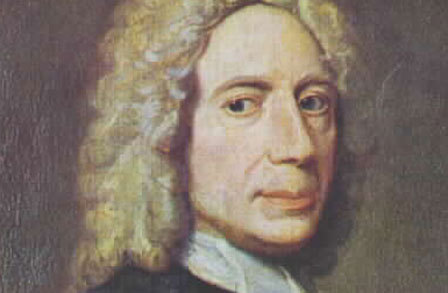
Poetry Saturday—Hymn #120

What shall the dying sinner do
That seeks relief for all his woe?
Where shall the guilty conscience find
Ease for the torment of his mind?

How shall we get our crimes forgiv’n?
Or form our natures fit for heav’n?
Can souls all o’er defiled with sin
Make their own powers and passions clean?

In vain we search, in vain we try,
Till Jesus brings His gospel nigh;
‘Tis there such power and glory dwell
As save rebellious souls from hell.

This is the pillar of our hope
That bears our fainting spirits up:
We read the grace, we trust the Word,
And find salvation in the Lord.

Let men or angels dig the mines,
Where nature’s golden treasure shines;
Brought near the doctrine of the Cross,
All nature’s gold appears but dross.

Should vile blasphemers with distain
Pronounce the truth of Jesus vain,
I’ll meet the scandal and the shame,
And sing and triumph in His name. —Isaac Watts

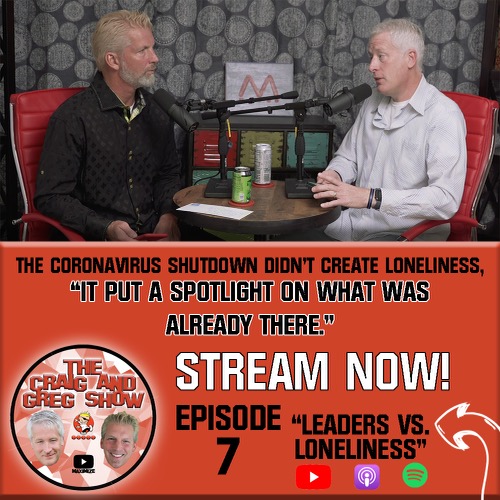
The Craig And Greg Show: Leaders Vs. Loneliness

On this episode of “The Craig And Greg Show” we talk about: 

  • the winner of last month’s winner of our drawing  
  • busyness can actually lead to loneliness 
  • how leaders can guard against loneliness  
  • insight from Josh McDowell on how coronavirus impacts feelings of loneliness  
  • some strategies to eliminate busyness  
  • how leaders can empower others to overcome isolation
  • the importance of a leader’s presence
  • the New Testament only uses “saints” in the plural because we need each other
  • Greg tries to get me to name names
  • leaders need to boldly initiate even with people who seem closed off
  • the new coaching page on our website
  • more ways to be entered into our January drawing

Check out this episode and subscribe on YouTube so you can watch all of the upcoming episodes. You can also listen to our podcast on Spotify and iTunes.