“How much we lose by the closed ear! … Other speakers may win the ear of the multitude, but it is to God the Lord that the saint listens. His voice is powerful. Its tones are penetrating; its words attractive. God speaks as One entitled to be heard, expecting to be heard. He speaks with authority, waiting for our obedience to the heavenly voice. …
“A saint then is one who has listened to God; who has heard the words of peace from His lips; who has believed them; who has been reconciled; and who knows that he is so. Therefore he seeks to be holy. He hates his former folly. He does not return to it. He does not make his free pardon a reason for returning to it.
“Brethren, be consistent! Beware of sin, folly, unholiness of every kind. Be Christians out and out. Show that the peace you have received is a holy peace.” —Horatius Bonar, in Light & Truth—The Old Testament
So the people grumbled against Moses … The people gathered in opposition to Moses and Aaron (Exodus 15:24; Numbers 20:2).
People with limited vision have limited faith too. As a result, they frequently grumble when things don’t go their way. Ironically, their grumbling is almost always directed at the leader who does have far-reaching vision and God-honoring faith!
For most of his tenure as leader, Moses handled the grumbling of the people well. Sometimes, though, the complaints seemed more personal:
…in opposition to Moses and Aaron
…they quarreled with Moses
…“Why did you…?”
These complaints may seem like a personal attack, but in the end, we find out that these attacks weren’t really against Moses at all—“the Israelites quarreled with the Lord” (Numbers 20:13).
God tried to help Moses and Aaron see that this was not a personal attack on them. He instructed them to “speak to that rock” so that water would be provided for the grumbling people. But sadly, Moses and Aaron missed this point. They said to the Israelites, “must we bring you water out of this rock?” And then in total frustration with the quarrelsome Israelites, Moses “struck the rock” instead of speaking to it.
Moses made himself the focal point, not God. God responded: “you did not trust in Me enough to honor Me as holy in the sight of the Israelites” (v. 12).
A mark of a godly leader is one who doesn’t take personal attacks personally.
Previously, Moses responded to the grumblers better—
He “cried out to the Lord” and received directions
He obeyed God’s directions to the letter
He reminded the people that their grumbling was really “against the Lord” (Exodus 16:6-8)
He humbled himself before the people and pleaded with them not to rebel against God
He humbled himself before God and interceded for the people
If God has called you to lead, people will bring their quarrels and complaints to you. It will feel like a personal attack, but it’s not. When attacked or when people grumble, you need to humble yourself before the Holy Spirit and ask, “Did I do something wrong?” and then listen attentively for His answer.
If the answer is yes: repent, ask forgiveness, make things right.
If the answer is no: don’t take it personally, stay humble before God and the people, and obey the specific directions God will give you. Don’t get frustrated and cut short your tenure as a leader.
This is part 44 in my series on godly leadership. You can check out all of my posts in this series by clicking here.
I’m sure you’ve experienced what I’ve experienced. My nice, orderly world came crashing down all around me. It totally blindsided me! I got on my knees to do some serious soul searching and I prayed, “God I know you called me here. I know I’ve done what You’ve asked me to do. What’s happening? Why am I being attacked? Where are You, God?”
I’m sure you’ve been there too. “Where’s God?” has been the cry of countless people from the oldest book of the Old Testament until this very day. In dark times our world seems to shrink, and the weight of the entire world seems to rest on our shoulders. We begin to at first sigh and say, “Why me?” and then those sighs become sobs of “God, where are You?!”
“Left to ourselves we tend immediately to reduce God to manageable terms. We want to get Him where we can use Him, or at least know where He is when we need Him. We want a God we can in some measure control. We need the feeling of security that comes from knowing what God is like.…” —A.W. Tozer
Here’s the truth: We are always in a spiritual battle. It’s just hard to see it in the “good ol’ days.” But in the “bad ol’ days” we realize we don’t have it all figured out! The dark days are simply the reality of spiritual warfare revealed.
Answers don’t come easily because there are no easy answers!
One of Job’s friends named Zophar thought he had God all figured out. He concluded his easy answer that the wicked have a bad life and the righteous have a good life. So if things were going badly for Job, he must have messed up somewhere. Except Zophar was wrong! God Himself pronounced Job righteous (see Job 20:1-8; 1:8). Zophar’s easy answer now doesn’t seem so easy, does it?
I’ll say it again: In the hard times, answers don’t come easily because there are no easy answers.
In fact, Jesus told us, “I have told you these things, so that in Me you may have peace. In this world you will have trouble. But take heart! I have overcome the world” (John 16:33).
How did Jesus overcome the world of hurt and pain? He did it by taking a hands-on approach—Since the children have flesh and blood, [Jesus] too shared in their humanity…. For this reason He had to be made like His brothers in every way…. Because He Himself suffered when He was tempted, He is able to help those who are being tempted (Hebrews 2:14, 17-18).
The phrase “He is able to help” literally means that He runs to the cry!
In order to be able to run to our cry, Jesus has to know what our cries sound like and what our pain feels like. He had to taste all our pain for Himself. He had to feel all of them in a human body. The Limitless God was incarnated in limited flesh to experience everything we would ever feel.
Now that Jesus has died and been resurrected, our cries bring Him running to us with ALL of His LIMITLESS love and power and empathy!
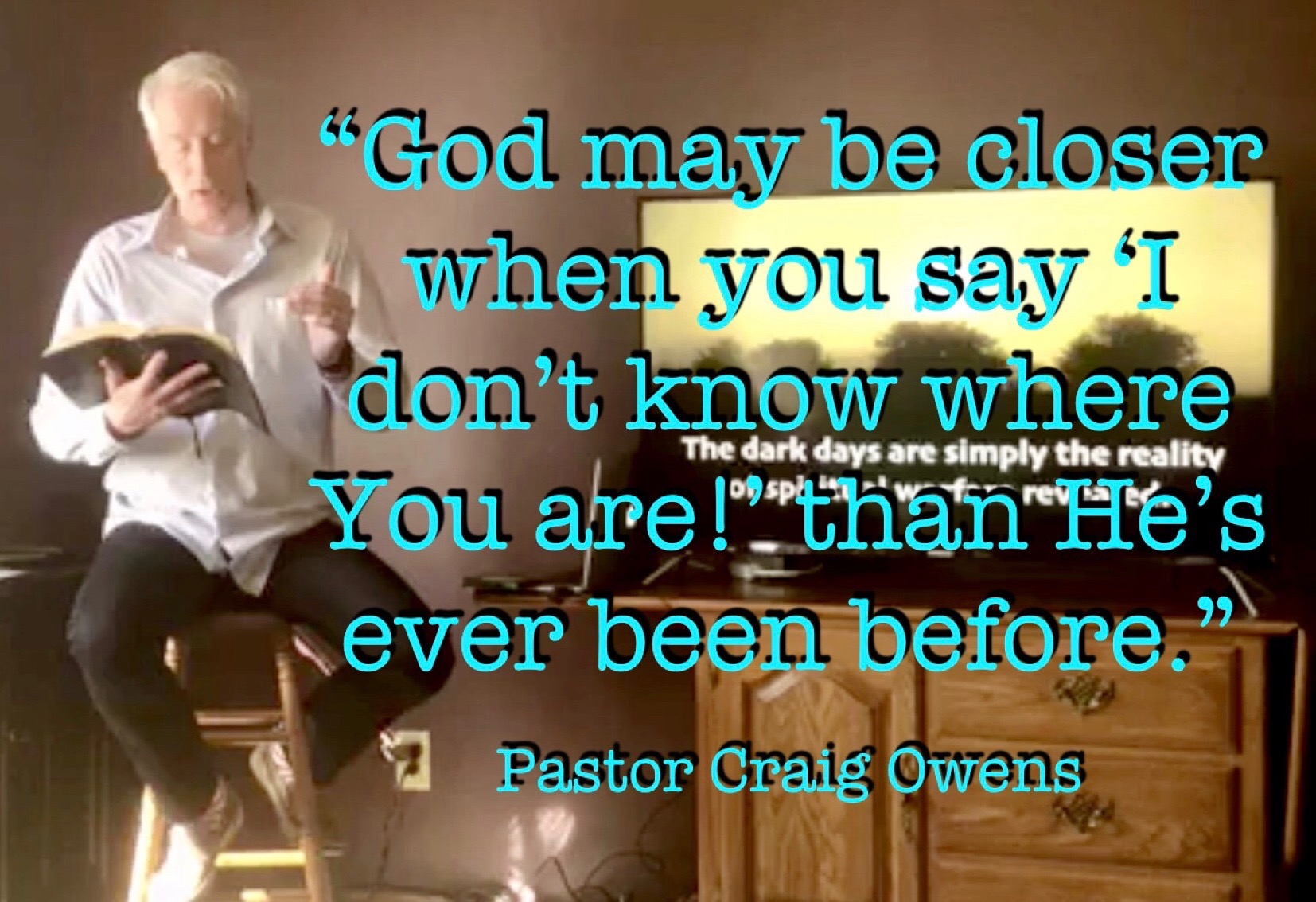
In the good ol’ days we may not recognize just how close God is to us. But when the bad days come and we cry out to Him, He comes running. Jesus may be closer when you say, “I don’t know where You are!” than He’s ever been before.
Go ahead and cry out. Jesus knows those cries. He hears you, He knows your pain, He runs to your cries, He comes close to help.
Join me next week as we continue this series asking “Where’s God?” in the specific difficulties that we face. We’ll ask questions like, “Where’s God in my depression?” and “Where’s God in my divorce?” and “Where’s God in this national calamity?” Please don’t miss these encouraging messages!
This is a weekly series with things I’m reading and pondering from Charles Spurgeon. You can read the original seed thought here, or type “Thursdays With Spurgeon” in the search box to read more entries.
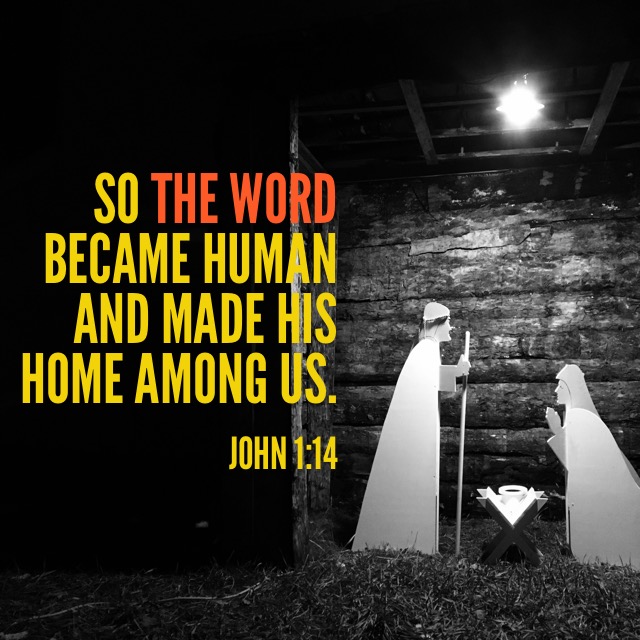
The Humility Of Christ’s Birth
Moreover, there was a peculiar wisdom ordaining that Jesus Christ should be the Son of the woman, and not of the man, because ‘that which is born of the flesh is flesh’ (John 3:6). Had He been born of the flesh, and merely flesh, He would, naturally, by carnal generation, have inherited all the frailties and the sins and the infirmities that man has from his birth. He would have been conceived in sin and shaped in iniquity, even as the rest of us. Therefore He was not born of man, but the Holy Spirit overshadowed the virgin Mary and Christ stands as the one man, save one other, who came forth pure from His Maker’s hands, who could ever say, ‘I am pure.’ Yes, and He could say far more than that other Adam could say concerning his purity, for He maintained His integrity and never let it go! And from His birth down to His death He knew no sin, neither was guile found in His mouth….
Let us take courage here. If Jesus Christ was born in a manger in a rock, why should He not come and live in our rocky hearts? If He was born in a stable, why should not the stable of our souls be made into a house for Him? If He was born in poverty, may not the poor in spirit expect that He will be their friend? If He thus endured degradation at the first, will He count it any dishonor to come to the very poorest and humblest of His creatures and tabernacle in the souls of His children? Oh no!
From The Birth Of Christ
If Jesus was only God, He would never have been able to stoop to love us.
If Jesus was only Man, He would never have been able to help us.
Only the God-Man has both the power and the love to save use. Truly there is no one like Jesus!
No one like Jesus our troubles can see
No one can feel them so keenly as He
No one like Jesus our burdens will bear
He and He only can answer our prayer
No one like Jesus could die for our sins
No one but Jesus can make the heart clean
No one but Jesus such mercy can show
He and He only such love can bestow
Jesus, Jesus
Precious Savior
Oh, how I love You
Love and adore You
Thank You, thank You
Precious Jesus
Oh, how You love me
Oh, what a Savior to me —Fanny J. Crosby, No One Like Jesus
We’ve all asked that question. Something happens that rocks our world, and we wonder where in the world God is.
We call out to God and He seems silent. We search our hearts to see if we can discern something we’ve done wrong, and seeing nothing amiss we cry out again, “God, where are You?”
So where is God in our heartache? In our abandonment? In our sorrows? In our distress? In death? Believe it or not, God may be closer in His silence than you’ve ever perceived before.
Join me this Sunday as we begin a new series called Where’s God? I hope you can join me in person, but if you can’t, please join me on Facebook Live.
In case you missed any of the posts in this series, you can find them all here:
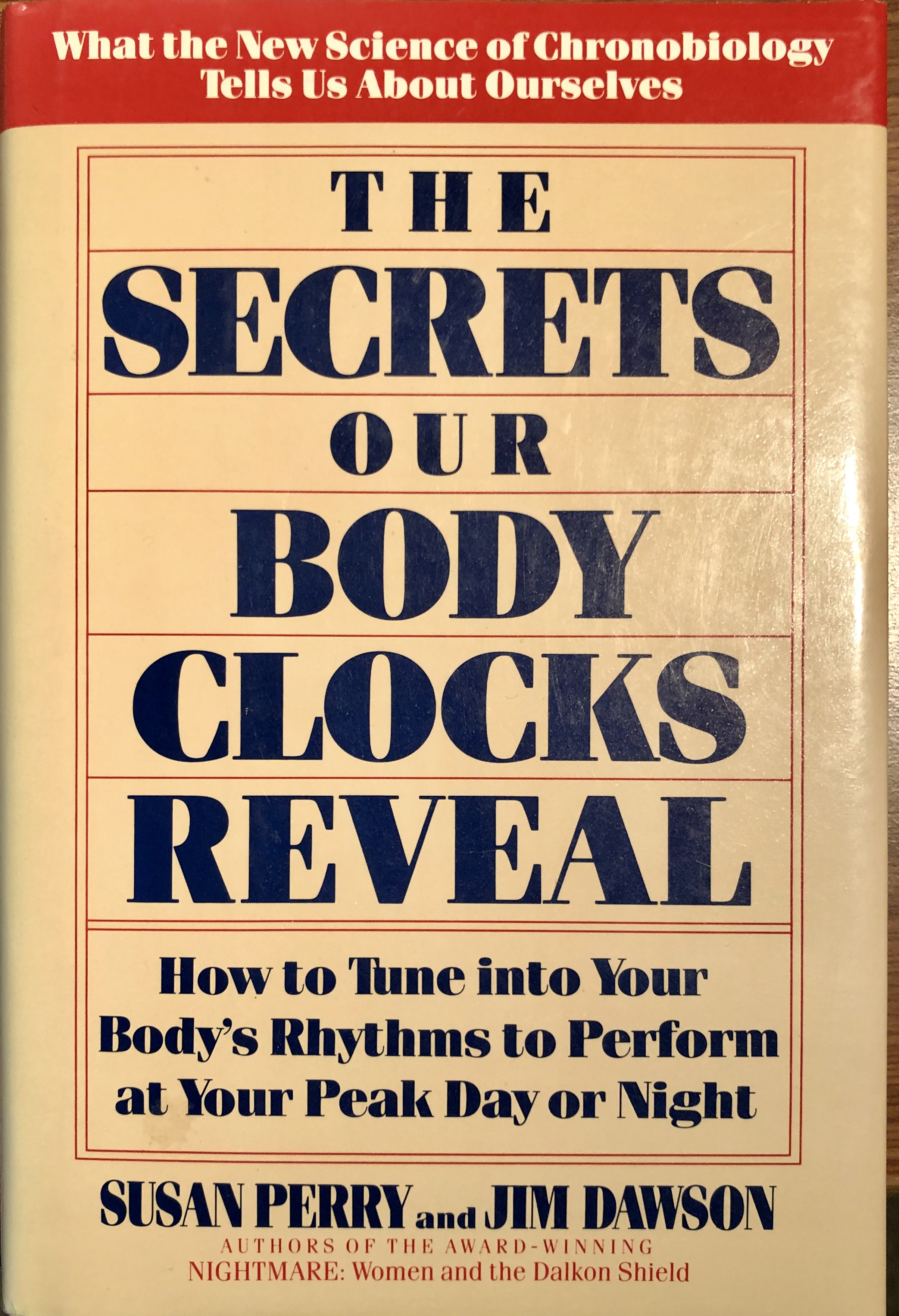
Sleep is so important for maintaining good physical and emotional health. In the book The Secrets Our Body Clocks Reveal, the authors share some interesting information on sleep.
“The clearest ninety-minute rhythm is the ‘sleepability’ cycle. About every ninety minutes, you enter a short period during which you are vulnerable to fatigue and sleepiness. …
“These rhythmic periods of sleepability are shorter during the morning hours than in the afternoon. That’s why it’s usually more difficult to take a nap in the morning than later in the day. Some of the time, you can fight off this fatigue—particularly if what you are doing is interesting or different. However, most of the time you would do best to give in to the rhythm and take a short break from your work—especially around the lunch hour, when you are already battling the early afternoon let down.”
“Scientists have found that when we are bored, under stress, or short of sleep, our ninety-minute cycles tend to shorten to roughly sixty minutes. That may explain why we eat and smoke more under stressful or boring circumstances.”
What deep sleep does for you:
Restores body and brain
Stimulates growth
Maintains mental health
What dream sleep does for you:
Consolidates and sorts memory
Enables learning
Ensures our physical safety
Things that can disrupt your sleep rhythms:
Dieting (loss of weight can cause more frequent awakenings during the night)
Caffeine
Alcohol
Low-sodium diet (elderly people only)
Cigarettes
Sleeping pills
Exercising vigorously if you’re not accustomed to it
A sleeping partner who snores or thrashers about in the night
Pets moving about in your bedroom
Sporadic, unpredictable noises
A room that is too warm (more than 75° F) or too cool (less than 60° F)
Hunger
Stress
Things that can enhance your sleep rhythms:
Regular aerobic exercising (at least twenty continuous minutes) particularly in the late afternoon
Sex right before bedtime
Following a bedtime ritual
Relaxation exercises right before bed
A bedtime snack high in carbohydrates
A dark and quiet bedroom
A “white noise”
“Many scientists now believe that we were meant to sleep twice a day, once during the afternoon and again at night. … In one study, college students who regularly napped showed improved scores on skill and memory tests taken just after a nap.”
“Scientists have also discovered that short naps (twenty minutes or less) are just as revitalizing as long ones—and less disruptive to regular sleep rhythms. In addition, regular nappers wake up more refreshed than those who take only an occasional nap. When naps are part of the regular daily rhythm, they are less disruptive.”
You can check out my full book review of The Secrets Our Body Clocks Reveal by clicking here. Some other quotes and statistics I shared from this book can be found here.
Another great book is Sleep: It Does A Family Good. That book review is here.
Listen to the podcast of this post by clicking on the player below, and you can also subscribe on Apple, Spotify, or Audible.
…to the church of the Thessalonians (2 Thessalonians 1:1).
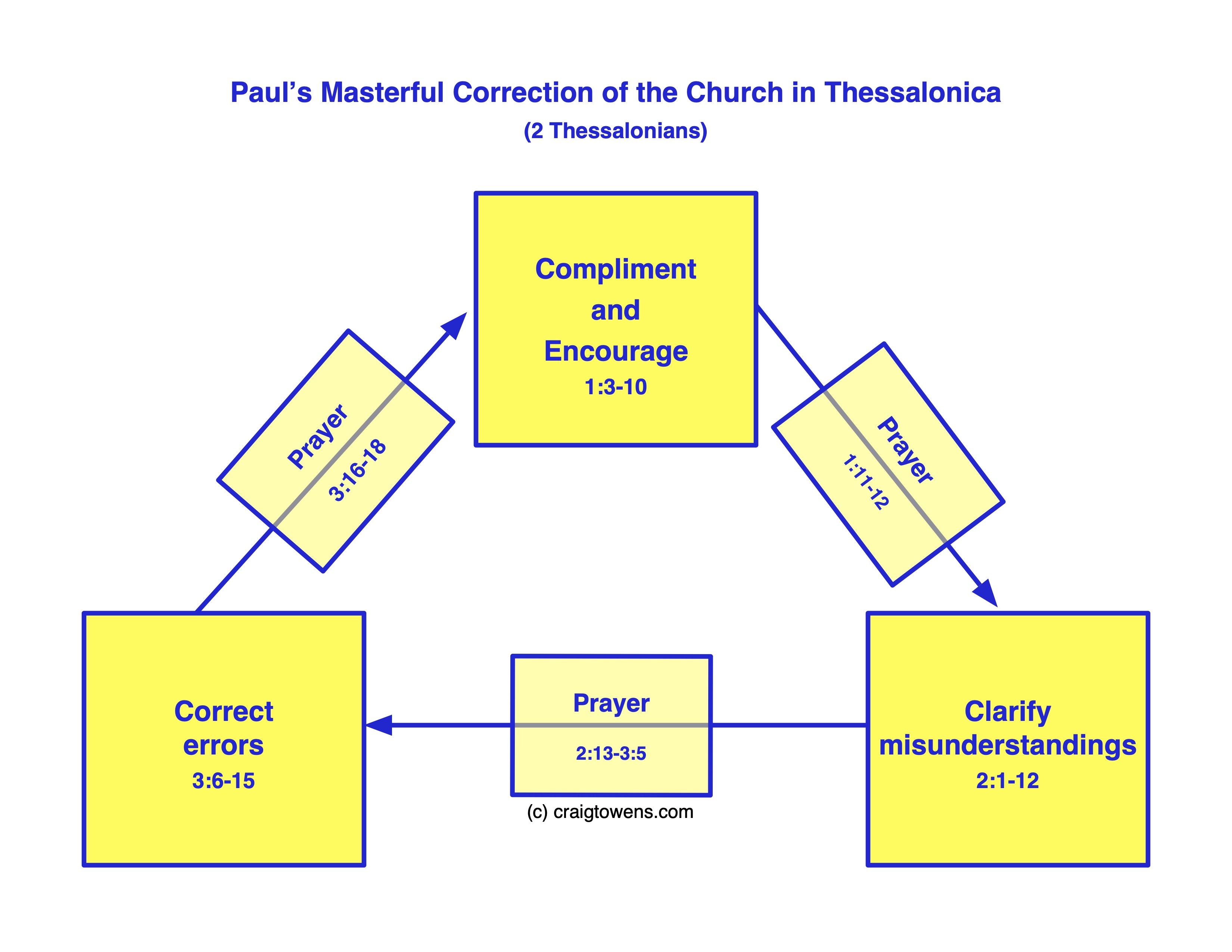
This short letter from the apostle Paul to the church in Thessalonica is a masterpiece on how to correctly correct fellow Christian brothers and sisters.
The entire letter follows this pattern: 3 Cs surrounded by prayer—
(1) Compliment and encouragement—“We are bound to thank God always for you…because your faith grows exceedingly” (1:3). Paul complimented their love for each other, their patience and endurance in persecution, and their future glorification. He encouraged them that Jesus IS coming, and He will deal with their persecutors and take the righteous into glory with Him (1:3-10).
(2) Prayer—And then he prays for them to be equipped to endure to the end and finish well (1:11-12).
(3) Clarify misunderstandings—“Let no one deceive you by any means” (2:3). Paul reminds them of what he taught them about the end times and the Second Coming of Christ, clarifying that watchful Christians will by no means miss out on the signs (2:1-12).
(4) Prayer—Paul again praises their acceptance of the gospel and launches into another prayer for them to finish well (2:13-3:5).
(5) Correct errors of understanding—“But we command you” (3:6). There were those who were departing from the faith, growing slack in their work ethic, being disorderly, and meddling as busybodies. Paul said, “We command and exhort through our Lord Jesus Christ” that you knock it off! He even told the church to “not keep company” with such people (3:6-15).
(6) Prayer—Finally, Paul closes with a prayer for God’s peace to be with his brothers and sisters (3:16-18).
This is such a masterful pattern for all of us in church ministry to follow!
If you are in a leadership role, I hope your ongoing prayer would be the same as mine: “Holy Spirit, in all my interactions with my fellow saints, remind me of this godly, practical plan for confrontation, and help me to live it out for God’s glory. In Jesus’ name, amen.”
P.S. You can also learn a lesson from the way the prophet Samuel handled correction in this post.
This is why we need to make prayer an ongoing discipline. If we do, we will be much more likely to turn to prayer when we feel the intense moments, and our faith in those intense moments will be strengthened and ready to respond.
Every day we are either preparing or repairing. Prayer is either helping us prepare for the challenges we will be facing, or it’s helping us recover from the battle we just fought. Believe me: it’s much better to be preparing than it is to be repairing!
One time the disciples of Jesus got stymied in a spiritual battle. A father brought his demon-possessed son to them, asking that they cast out the demon. But this distraught father then had to report to Jesus, “They couldn’t do it” (see Matthew 17:14-21).
Why couldn’t they? These men had been taught how to pray by Jesus Himself, and they already had experienced ministry success (Matthew 6:9-13; Mark 6:13). So were they stumped now?
Jesus told them, “It’s because you have so little faith.” He went on to tell them that these intense spiritual battles require an ongoing lifestyle of prayer. Jesus wasn’t suggesting that they should have said to that father, “Come back in a few days after we have prayed and fasted.”
But what Jesus was really saying was that all of us need to stay connected to the Source of our spiritual power at every single moment (John 15:5, 7). Sometimes this requires taking our eyes off ourselves and our own appetites.
In a word: we need to fast.
The wordfasting means “to cover the mouth” or “to close the mouth.”
often fasting is in response to calamity or as a sign of mourning
sometimes it’s alongside an intense prayer
ideally it should be a regular discipline in our lives. In Matthew 6:16-18, notice the phrase “when you fast.” Not “if you fast,” but when. Jesus assumed that we would do this, and since this teaching appears right after Jesus teaches us how to pray, it makes sense that prayer and fasting go well together.
Fasting intensifies our focus on God in the quiet times so that we can keep our eyes on Him in the crashing storms.
Fasting helps us tune in to the unmistakable Voice of the Holy Spirit in the peaceful moments so that we can still recognize His Voice in the tumult of battle.
Is there a comfort food you tend to run to? Is there a coping activity that you typically use to de-stress? Is there someone or something other than God that is your go-to in times of trouble? Perhaps we should start there and fast from those things for a short period of time.
Fasting in the quiet times will strengthen us for the intense battle times.
Let’s prepare daily for victory, instead of having to repair after a failure.



 “How much we lose by the closed ear! … Other speakers may win the ear of the multitude, but it is to God the Lord that the saint listens. His voice is powerful. Its tones are penetrating; its words attractive. God speaks as One entitled to be heard, expecting to be heard. He speaks with authority, waiting for our obedience to the heavenly voice. …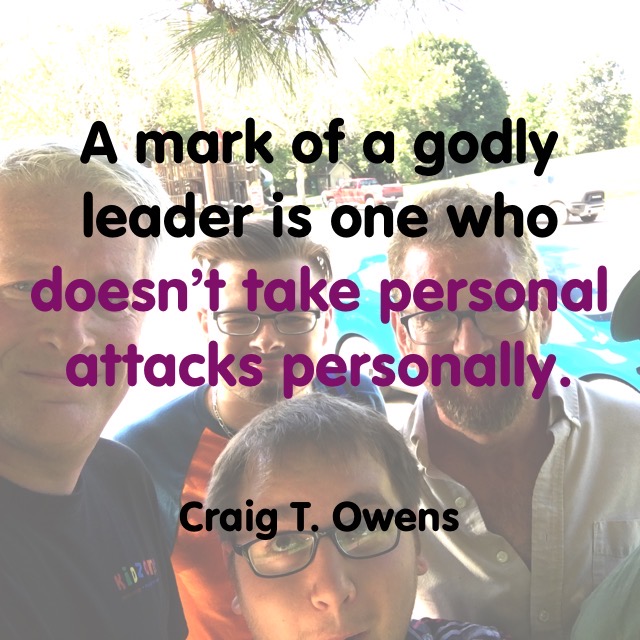





 Craig T. Owens