Who’s Driving Your Bus?

“So who’s driving your bus? You … or your what-if thoughts of cancer? Feel free to have a conversation with the disease and put it in its proper place. …

“If you want to empty your mind of those awful cancer what-ifs, you need to find something else to put in their place. Because if all you do is try really hard not to think about something, you’ll think about it all the more! … You need to crowd cancer what-ifs right out of your mind by pouring in much more productive thoughts. …

A mind filled with the best doesn’t have room for the worst. A mind filled with the beautiful doesn’t have space for the ugly. A mind filled with things to praise doesn’t have a spot for cursing.” —Lynn Eib, in Peace In The Face Of Cancer (emphasis mine)

Whatever things are true, whatever things are noble, whatever things are just, whatever things are pure, whatever things are lovely, whatever things are of good report, if there is any virtue and if there is anything praiseworthy—meditate on these things. (Philippians 4:8)

For some other beautiful things on which to meditate, check out some other quotes from Lynn Eib here and here.

Thursdays With Oswald—God’s Purpose For Israel And Me

Oswald ChambersThis is a weekly series with things I’m reading and pondering from Oswald Chambers. You can read the original seed thought here, or type “Thursdays With Oswald” in the search box to read more entries.

God’s Purpose For Israel And Me

     God created the people known as Israel for one purpose, to be the servant of Jehovah until through them every nation came to know Who Jehovah was. … The election of the nation by God was not for the salvation of individuals; the elect nation was to be the instrument of salvation to the whole world. The story of their distress is due entirely to their deliberate determination to use themselves for a purpose other than God’s. … Israel is still in the shadow of God’s hand, in spite of all her wickedness. God’s purposes are always fulfilled, no matter how wide a compass He may permit to be taken first. … 

     When we are born from above the realization dawns that we are built for God, not for ourselves. … 

     The creative purpose of God for the missionary is to make him His servant, one in whom He is glorified. When once we realize this, all our self-conscious limitations will be extinguished in the extraordinary blaze of what the Redemption means. We have to see that we keep the windows of our soul open to God’s creative purpose for us, and not confuse that purpose with our own intentions. … 

     A saint is made by God…. Then do not tell God He is a bungling workman. We do that whenever we say “I can’t.” To say “I can’t” literally means we are too strong in ourselves to depend on God. “I can’t pray in public; I can’t talk in the open air.” Substitute “I won’t,” and it will be nearer the truth. The thing that makes us say “I can’t” is that we forget that we must rely entirely on the creative purpose of God….

From So Send I You

Oswald Chambers draws the analogy between why God called Israel, and why He called you. God desired to use Israel to show all nations His love, and He still desires to do the same thing with every single one of His saints today.

In order for God to use you, first be aware that He does indeed want to use you. He created you for His plan and purpose. Next, be open to how your life can glorify God. Take your eyes off you and put them on Him. Finally, stop saying “I can’t.” If God has created you to do something for Him, you most certainly can do it in His power and anointing.

Will you let God use you for His glory today?

Tozer On Sound Doctrine

“When the Holy Scriptures are rejected as the final authority on religious belief something must be found to take their place. Historically that something has been either reason for sentiment: if sentiment, it has been humanism. …

“Certain of our evangelical brethren appear to be laboring under the impression that they are advanced thinkers because they are rethinking evolution and reevaluating various Bible doctrines or even divine inspiration itself; but so far are they from being advanced thinkers that they are merely timid followers of modernism. …

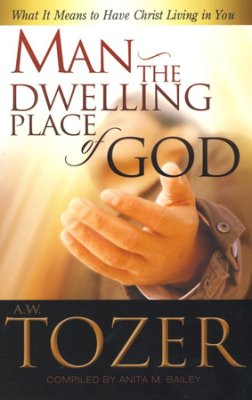
“A new Decalogue has been adopted by the neo-Christians of our day, the first word of which reads ‘Thou shalt not disagree’; and a new set of Beatitudes too, which begins ‘Blessed are they that tolerate everything, for they shall not be made accountable for anything.’” —A.W. Tozer, in Man—The Dwelling Place Of God

What We Believe

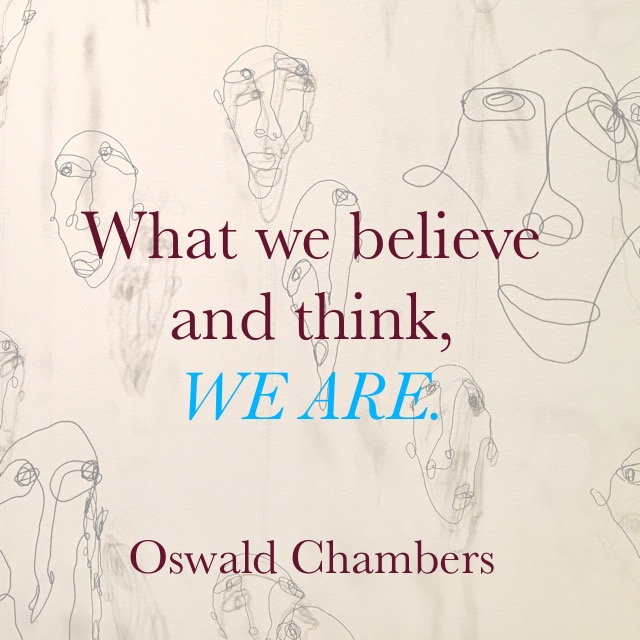
“Never run away with the idea that it doesn’t matter much what we believe or think; it does. What we believe and think, we are; not what we say we believe and think, but what we really do believe and think, we are; there is no divorce at all.” —Oswald Chambers, in Run Today’s Race

A Leader’s Integrity

…for I have not concealed the words of the Holy One (Job 6:10).

Job is making a case for his integrity. One of the evidences he produces is this: He responds to God’s voice. He doesn’t ignore Him, or pretend he didn’t hear Him, or offer justifications for why he’s not obeying God. “I have not concealed anything God has said to me!”

Not only that, but he invites God to continue to speak to him—

Teach me, and I will hold my tongue; cause me to understand wherein I have erred. How forceful are right words! (v. 24)

What is man, that You should exalt him, that You should set your heart on him, that You should visit him every morning, and test him every moment? (7:17-18)

It’s amazing to think that God cares enough about me that He would speak to me, test me, and correct me if I err or go astray!

A mark of a godly leader is one who lives in complete integrity in God’s sight.

Or as John Maxwell says, “Being God’s kind of leader means refusing even the smallest compromise in what you believe.”

My desire is this … May I, like Job, be able to say that I have not concealed nor ignored any of Your words, O God, but that I respond quickly and obediently to all Your loving words to me.

This is Part 15 in my series on godly leadership. You can check out all of my posts on this topic by clicking here.

The Power In Rejoicing

Rejoice in the Lord always. I will say it again: Rejoice! … Do not be anxious about anything, but in everything, by prayer and petition, with thanksgiving, present your requests to God (Philippians 4:4, 6).

Paul isn’t playing around here—when he says to rejoice, it’s not a suggestion or a good idea. He says REJOICE with the force of a commandment!

Even the Greek word for rejoice isn’t a mild “yea!” It carries with is the idea of big joy! It’s the kind of rejoicing that is…

  • exceedingly great!
  • overflowing!
  • bubbling up!
  • never ending!
  • continuously gushing!

Why would Paul make this kind of rejoicing a command? Because God is serious about pointing us to the only path that will guard our hearts and minds. When we are rejoicing, praying, and thanksgiving, then the peace of God, which transcends all understanding, will guard your hearts and minds in Christ Jesus (Philippians 4:7).

Do you realize how much of our worrying is pointless? My friend Scott pointed out the following research:

  • 40% of the things we worry about will never even happen
  • 30% of the things we worry about happened in the past and cannot be changed
  • 12% of our worries are regarding health issues we don’t even have
  • 10% of our worries are about our friends and loved ones which are based on rumors

That means … only 8% of the things we worry about have any basis in reality!

Think about that—9 out of 10 things that consume our minds with worry aren’t even worth our time!

That’s why Paul commands rejoicing as a means to freedom and peace.

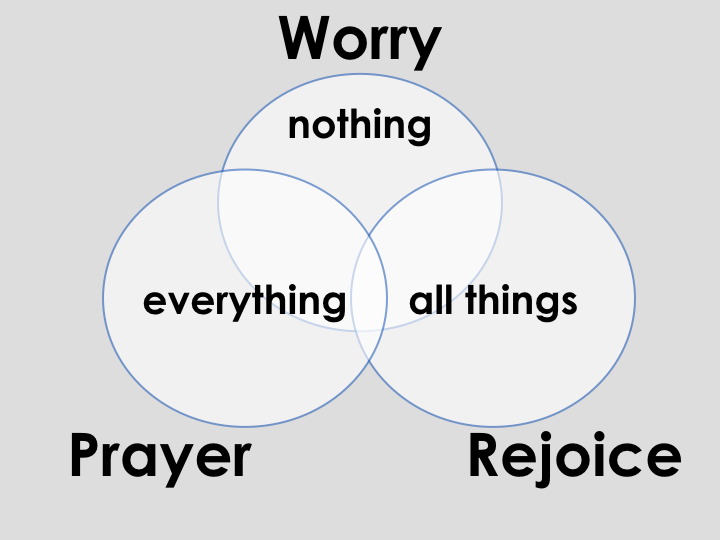
  • What should we worry about? Nothing! 
  • What should we pray about? Everything!
  • What should rejoice about? All things!  

This is the one and only path to transcendent peace! 

This is part two in our series The Antidote For Anxiety. Be sure to check out the video below, and also check out the first part of this series—Honk! Honk! Honk!

Saturday In The Psalms—Joy In The Desert

A psalm of David when he was in the wilderness of Judah (preface to Psalm 63).

Being in a desert place, you would expect David to say things like, “my soul thirsts,” “my flesh longs,” and “I am in a dry and thirsty land where there is no water.”

But what’s unexpected is what David found that satisfied. Not food and water, but “my soul thirsts for You,” “my flesh longs for You,” and “O God, You are my God.”

David knew that when outward conditions were at their worst, his focus needed to be at its best—and it needed to be on God. So David made the following commitments:

  • Early will I seek You
  • I have looked for You
  • I remember You on my bed
  • I meditate on You in the night watches
  • My lips shall praise You
  • My soul follows close behind You
  • I shall rejoice in God

Because of these commitments, David could reach the following conclusions:

  • Your lovingkindness is better than life
  • My soul is satisfied
  • I will rejoice in the shadow of Your wings
  • Your right hand upholds me

David found joy in the desert by changing his focal point!

I can reach the same conclusions that David reached, IF I am willing to make the same commitments David made.

In the desert places, I must deliberately and continually turn my eyes and thoughts FROM the desert TO God’s goodness.

The Church Doesn’t Need The World

“Israel did not need the world’s help. The nations were stronger than she, but she did not require their strength to lean upon. Their strength was their weakness; her weakness was her strength. They would have helped her, but she would not be helped; and when at last she did accept their aid, it was her ruin. Her help was in Jehovah. Her security was in His favor.

Neither does the Church need the help of the world. The less of the world there is in her schemes, her enterprises, her hopes, the better. Never has she prospered when she betook herself to an arm of flesh, or to the strength of human greatness, or to the influence of the world’s smile. For the world cannot really help one who is not of this world, who has nothing in common with her joys, or cares, or ambitions. And never has the world helped the Church without exacting a favor in return; insisting on or tacitly giving it to be understood that she expects some compromise, some relaxation of her testimony, less of strictness and spirituality—more of genial fellowship and participation in her pleasures, if not her lusts and sins.” —Horatius Bonar, in Light & Truth—Revelation (emphasis mine)

Thursdays With Oswald—What Does It Mean To ‘Confess’ Christ?

Oswald ChambersThis is a weekly series with things I’m reading and pondering from Oswald Chambers. You can read the original seed thought here, or type “Thursdays With Oswald” in the search box to read more entries.

What Does It Mean To ‘Confess’ Christ? 

     We receive the Spirit of Christ as a gift, but we do not receive His mind, we have to construct that [see Philippians 2:5], and this is done in the same way that we construct the natural mind, viz., by the way our disposition reacts when we come in contact with external things. …  

     “You call Me Master and Lord, and rightly so, for that is what I am”; but does it mean any more to us than the mere saying of it? “Now that I, your Lord and Teacher, have washed your feet, you should do as I have done for you” and we cannot do it by sentiment. It was in the hour when Jesus knew “that the Father had put all things under His power, and that He had come from God and was returning to God” that He began to wash the disciples’ feet; and it is when we realize our union with Jesus Christ as our Lord and Master that we shall follow His example. [see John 13:1-4, 12-15] … 

     To “confess” Christ means to say, not only with the tongue, but with every bit of our life, that Jesus has come into our flesh.

From So Send I You

It’s one thing to say, “I am a Christian,” and it’s a completely different thing to live like Christ.

The Holy Spirit will continually bring a Christian into situations where we had the opportunity to develop the mind of Christ. As we develop His mind in us, it will naturally mean that we will “confess” Christ with our thoughts, words, and actions.

My prayer is that we will continually be focused on our Christ-like “confession.”

4 Quotes On Religious Freedom

“Religious freedom is a human birthright. Everyone on the globe is entitled to religious freedom simply by having been born. Governments, if they are just, will recognize that birthright.” —James Tonkowich

“The religion then of every man must be left to the conviction and conscience of every man; and it is the right of every man to exercise it as these may dictate. This right is in its nature an unalienable right.” —James Madison

“Religious freedom includes the right to believe as you wish, live according to your beliefs, raise your family according to your beliefs, petition the government according to your beliefs, evangelize, and convert from one faith to another, and all without government interference. Is that because of the First Amendment? No. It is because religious freedom is our birthright as human beings. The First Amendment simply forbids the government from robbing us of that inalienable birthright.” —James Tonkowich

“The same First Amendment that first and foremost guarantees religious freedom also guarantees freedom of speech, freedom of the press, freedom to assemble, and freedom to petition the government for change. To that list we can add economic freedom, freedom to choose our friends and associates, and the freedom to make a myriad of other legitimate choices.

“Consider: what if you are granted ‘freedom of speech,’ yet are not permitted to articulate your most deeply held religious beliefs? You could talk about sports, the weather, celebrities, and TV shows, but not about the ideas that inspire and motivate your life. That kind of freedom of speech would be hollow and meaningless.

“Freedom of assembly is not free if you cannot assemble over the truths that are most dear to you. Freedom to petition the government does us no good if we can petition the government only for things that have nothing to do with our faith. Traffic laws or banking regulations might be okay topics for petition, but not issues of life or marriage or war or the poor since our advocacy may be the result of our religious convictions.

“So it goes with all our freedoms. Take away the right to make up our own mind about matters relating to life, morality, and God and what is left is servitude, not freedom.” —James Tonkowich

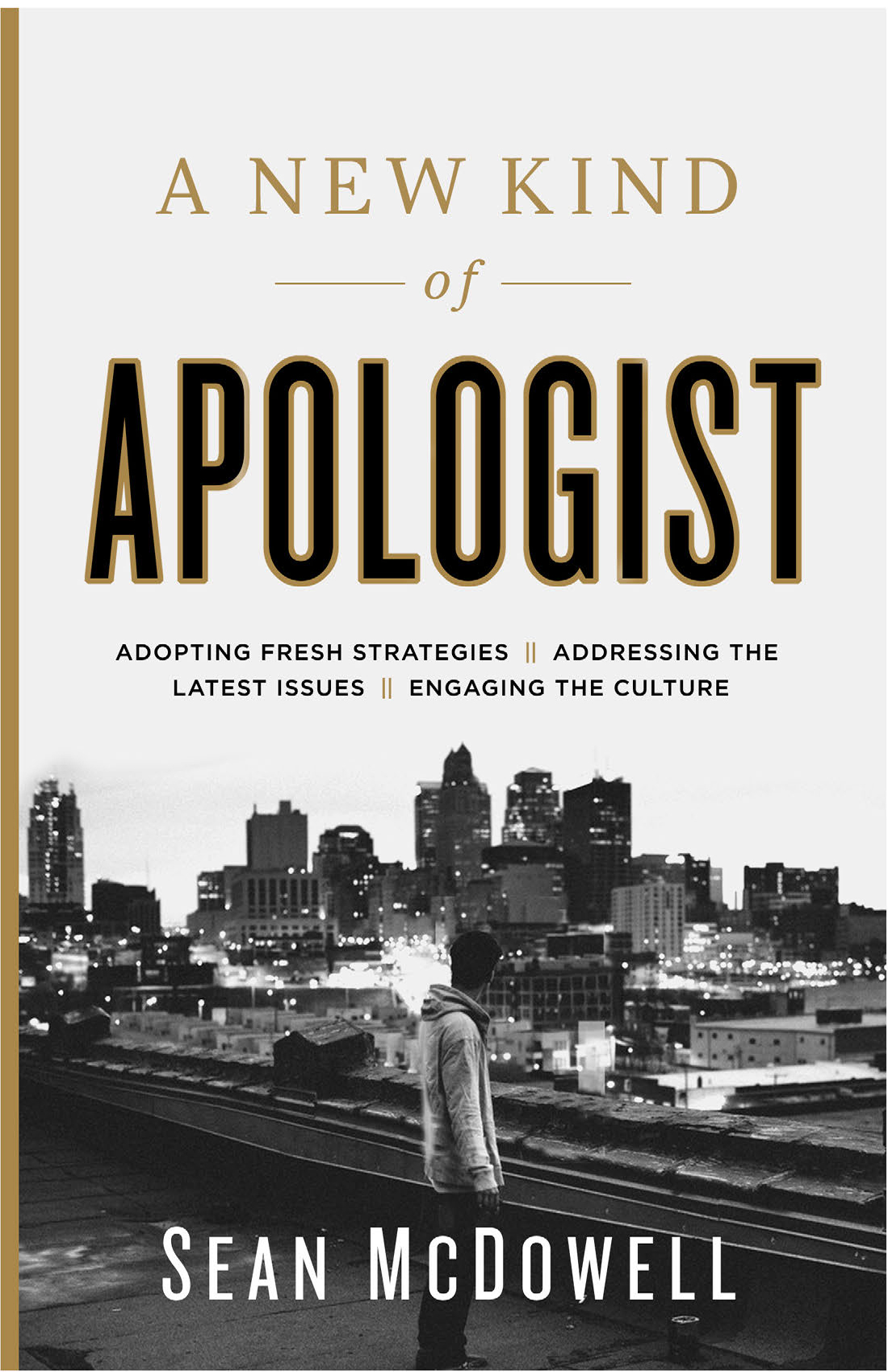
(these quotes are taken from A New Kind Of Apologist)