Thursdays With Oswald—Working Out God’s Will

Oswald ChambersThis is a weekly series with things I’m reading and pondering from Oswald Chambers. You can read the original seed thought here, or type “Thursdays With Oswald” in the search box to read more entries.

Working Out God’s Will

     We do not enter into the life of God by imitation, or by vows, or by ceremonies, or by Church membership; we enter into it by its entering into us at Regeneration. The Cross of Jesus Christ is the gateway into His life. … 

     The world is that system of things which organizes its life without any thought of Jesus Christ. … 

     Nothing blinds in the mind to the claims of Jesus Christ more effectually than a good, clean-living, upright life based on self-realization. For a thing to be satanic does not mean that it is abominable and immoral. The satanically managed man is moral, upright, proud, and individual; he is absolutely self-governed and has no need of God. … 

     When by the Cross of Christ we have entered into the experience of identification with our Lord, then there comes the practical working out of Matthew 11:29, “Take My yoke upon you, and learn of Me; for I am meek and lowly in heart.” … 

     God will bring across our path people who embody the characteristics that we have shown to Him—stubbornness, pride, conceit, opinionatedness, sensuality, a hundred little meannesses. “Now,” He says, “love them as I have loved you.” 

From The Psychology Of Redemption

So God’s will is not something we learn by going to church, or imitating someone we think to be a godly person. God’s will is living like Jesus:

  • Totally abandoned to God’s will
  • Staying linked to Jesus
  • Loving the people that God brings across our path like God loves us

How are you doing?

7 Quotes From “Hope … The Best Of All Things”

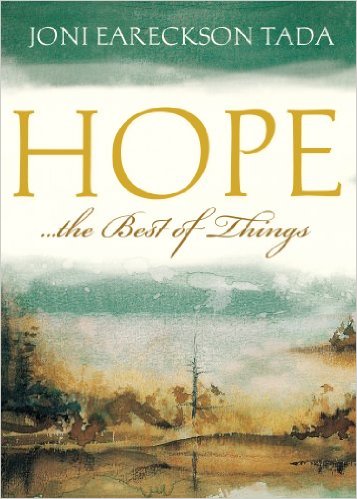
HopeJoni Eareckson Tada knows what it is to battle darkness and depression. And she also know the power of hope in those dark places. Hope … The Best Of All Things is an encouraging book for anyone going through a difficult place (please check out my book review here).

Here are some of the quotes from Hope which especially stood out to me.

“People are angry; cynicism and despair are on the rise, and the nightly news reminds us we are only one terrorist plot away from another national nightmare. Oh, how we need to grasp the soul-settling hope found in the pages of God’s Word—not only grasp it, but allow the hope of God to fill and overflow our hearts, transforming us into people who are confident and at peace with themselves, their God, and their circumstances.”

“For me, suffering is still that jackhammer breaking apart my rocks of resistance every day. It’s still the chisel that God is using to chip away at my self-sufficiency and my self-motivation and my self-consumption. Suffering is still that sheepdog snapping and barking at my heels, driving me down the road to Calvary where otherwise I do not want to go. My human nature, my flesh, does not want to endure hardship like a good soldier (2 Timothy 2:3) or follow Christ’s example (1 Peter 2:21) or welcome a trial as friend. No, my flesh does not want to rejoice in suffering (Romans 5:3) or be holy as He is holy (1 Peter 1:15). But it is at Calvary, at the Cross, where I meet suffering on God’s terms.”

“Do you know who the truly handicapped people are? They are the ones—and many of them are Christians—who hear the alarm clock go off at seven-thirty in the morning, throw back the covers, jump out of bed, take a quick shower, choke down breakfast, and zoom out the front door. They do all this on automatic pilot without stopping once to acknowledge their Creator, their great God Who gives them life and strength each day. Christian, if you live that way, do you know that James 4:6 says God opposes you? ‘God opposes the proud, but gives grace to the humble.’”

“Take up your cross daily and follow the Lord Jesus (Luke 9:23). I must qualify that statement. Please know that when I take up my cross every day I am not talking about my wheelchair. My wheelchair is not my cross to bear. Neither is your cane or walker your cross. Neither is your dead-end job or your irksome in-laws. Your cross to bear is not your migraine headaches, not your sinus infection, not your stiff joints. That is not your cross to bear. My cross is not my wheelchair; it is my attitude. Your cross is your attitude about your dead-end job and your in-laws. It is your attitude about your aches and pains. Any complaints, any grumblings, any disputings or murmurings, any anxieties, any worries, any resentments or anything that hints of a raging torrent of bitterness—these are the things God calls me to die to daily.”

“You see, we are to God the fragrance of Christ. The world can’t see Jesus endure suffering with grace because He’s not here on earth, but you and I are. And we can fill up in our flesh what is lacking in His afflictions (Colossians 1:24), and in so doing become that sweet fragrance, that perfume, that aroma of Christ to God.”

“God mandates that we go out into the streets and the alleys and the highways and the byways. He mandates that we find the poor, the blind, the disabled, and the lame, and help them get busy living, because misery might love company, but joy craves a crowd. And the Father and the Son and the Holy Spirit crave a crowd of joy, joy spilling over and splashing and filling the hearts of thirsty people in this world who are absolutely dehydrated from a lack of hope.”

“The hope we wait for is our only hope, the blessed hope, the glorious appearing of our great God and Savior, Jesus Christ (Titus 2:13). It is Jesus for Whom we have prevailed through all of this suffering, and, oh, for the sweetness of melding one heart into His in that intimacy that is so precious. … Our hope is for the Desire of the nations. Our hope is the Healer of broken hearts, the Friend of sinners, the God of all encouragement, the Father of all comfort, the Lord of all hope. And it is my prayer that the eyes of your heart might be enlightened so that you might know this hope to which He has called you.”

5 Quotes To Protect Your Marriage From Pornography

Focus On The FamilyI recently finished reading a Focus On The Family reading plan on YouVersion called Infidelity: Protecting Your Marriage From Pornography. This is one part of a multi-part reading plan on healthy sexuality. I encourage you to check out all of these plans.

Here are some of the quotes I appreciated from this reading plan.

“Porn is powerful primarily because it offers a counterfeit form of intimacy and attachment—a replacement for the one-flesh bond between man and woman that God designed to function as the glue that holds the marriage relationship together (Genesis 2:24).”

“Mental health professionals report that the road to recovery is likely to be much longer and far more complicated for an individual engaged in an ongoing interpersonal cyber-affair than it is for a porn addict. That’s because ‘relationship’ at any level implies a degree of emotional entanglement. When the heart gets drawn into that web, the potential for pathology is inevitably raised.”

“Many porn addicts are sexually anorexic when it comes to normal marital relations. That’s because, through habit and practice, their sexual impulses have been alienated from their natural context—i.e., a healthy, committed personal relationship—and re-oriented around impersonal objects or illicit lusts or fetishes.”

“[Pornography] addiction is based on neurochemical changes that occur in the brain as a result of prolonged exposure to stimulating sexual imagery. Because of its neuro-chemical basis, it’s tenacious, progressive and destructive in nature.”

“Don’t assume that normal marital sexual relations will take the place of porn in [an addict’s] life. No living, breathing, thinking woman can possibly fill that role without doing untold damage to herself as a person. That’s because pornography addiction, in the final analysis, is not about sex. It’s a symptom of an intimacy disorder—a comprehensive psychological illness that compels an individual to avoid deep, meaningful interaction with another flesh-and-blood human being and to replace it with impersonal sensual imagery. Unless this disorder is addressed and rectified, your relationship cannot move forward on a healthy footing. Marriage will not fix the problem. It will only complicate matters and increase your pain.”

For more help, visit pureintimacy.org or Focus on the Family’s Help Center.You can also call the ministry’s Counseling Department for a free consultation at 855-771-HELP (4357).

Hope… The Best Of All Things (book review)

HopeHow could any of us go on without hope? Perhaps you are in a difficult place right now, with problems weighing down heavily on you. Would you like some hope in this dark time? Joni Eareckson-Tada has some encouraging words for you in her book Hope… The Best Of All Things.

Joni knows a thing or two about hope. After suffering an accident as a teenager that left her a quadriplegic, she struggled with the loss of hope. But in that dark place, God met with her in a powerful way, and now Joni travels the world to minister to those in deepest hopelessness.

Hope is a short book, but it’s packed with new perspectives for those battling depression and darkness. Joni will share with you some of her own experiences—as well as the experiences and insights of others—to give your soul the oxygen it needs: a fresh breath of hope!

Whether you are going through a battle, or you know someone who is, Hope will be a welcome light for a dark place.

The Key Decision For Influential Men

Influence like JesusNo matter how you look at it, being a Dad is hard work! Men have this constant balancing act between being tough and being tender. Guys have to have their game face on at work, and their family face on at home. They’ve got to work hard knocking down work competitors, and then work just as hard building up their family members.

But there is one key decision that will determine how successful a man will be at work, at home, in his social circles, and even in his relationship with God. 

In Acts 10 we meet a centurion named Cornelius. Centurions were professional military officers in charge of a centuria (usually 100 soldiers). Centurions were always “on the clock,” never letting down their guard nor their professionalism.

All of the centurions mentioned in the New Testament have noble characteristics associated with them. Whereas someone might be uncertain how a typical Roman soldier would behave, people felt more assured when the centurion was on the scene. Even Roman governors like Pilate, and Jewish kings like Herod, all seemed to fully trust the judgement, honesty, and resourcefulness of centurions.

Centurions worked hard to get where they were, and had some well-earned perks:

  • Good pay (one built a temple, Luke 7:1-5).
  • “Men of authority” with soldiers and servants reporting to them (Matthew 8:8-9).
  • Opportunity for advancement (Rome was the dominate world force).
  • A certain degree of autonomy (they had their own residences (Matthew 8; Acts 10).

In order to keep this position, they would have to buy into kurios Caesar (Caesar is lord). To do otherwise was to put their position and future advancement at risk.

Yet Cornelius was different. 

He was a trusted centurion, but something unusual stood out about his life. Luke the historian describes him as devout and God-fearing, mentioning his pious activities of prayer and giving to the poor. Cornelius’ own soldiers referred to him as righteous and respected by notable people in the community.

But probably most telling of all: God noticed how committed Cornelius was (see Acts 10:3-4)!

Cornelius had a lot to lose by rejecting kurios Caesar for, as the Christians said, kurios Iesous (Jesus is Lord). Yet after carefully weighing his options, he saw that trusting God was the best thing he could do for his family. His view of the eternal outweighed anything that he could gain in the temporal.

This one decision changed everything! 

Because Cornelius trusted God, look at the expansiveness of his influence, not only at home, but at work, and among his friends and extended family, and throughout his community:

  • His family—ALL his family were devout and God-fearing (v. 2)
  • His employees—a devout soldier (v. 7)
  • His community—respected by ALL the Jewish people (v. 22)
  • His relatives and friends—his relatives and close friends (v. 24)
  • In fact everyone around him—we are ALL here in the presence of God (v. 33)
  • And most importantly, with God—your prayers and gifts have come up as a memorial offering before God (v. 4)

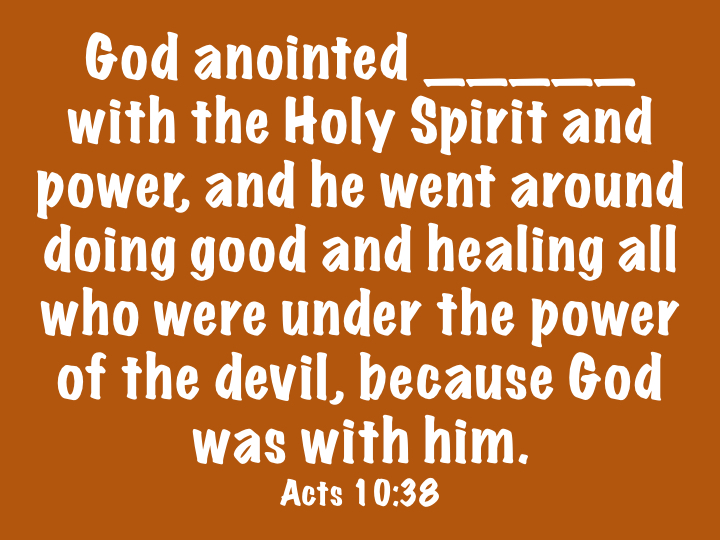
Fellas, you can have this same level of influence if you, too, will decide to live karios Iesous: Jesus is Lord. If you will do that, you can have said about your life what was said about Cornelius and Jesus: “God anointed ___________ with the Holy Spirit and power, and he went around doing good and healing all who were under the power of the devil, because God was with him!” (see Acts 10:38).

God’s Heavenly Choir

George Matheson“Certain songs can only be learned in the valley. No music school can teach them, for no theory can cause them to be perfectly sung. Their music is found in the heart. They are songs remembered through personal experience, revealing their burdens through the shadows of the past, and soaring on the wings of yesterday. … Therefore, dear soul, in this life you are receiving a music lesson from your Father. You are being trained to sing in a choir you cannot yet see, and there will be parts in the chorus that only you can sing. … Others have said that He sends sorrow to test you, yet this is not the case. He sends sorrow to educate you, thereby providing you with the proper training for His heavenly choir. … O dear soul, do not despise your school of sorrow. It is bestowing upon you a unique part in the heavenly song [Revelation 14:3].” —George Matheson

7 Quotes For Leaders Who Love The Church

Catalyst devotionsI recently completed an excellent reading plan on YouVersion called Catalyst: Devotions For Leaders Who Love The Church. Here are some quotes I especially liked…

“Too often we view leadership as purely outward, thinking only of how we will climb the next mountain, or overcome the next obstacle without considering who we will be when we do. But true leadership, great leadership, starts within.” 

“Your capacity for life changing leadership is directly related to your willingness to be led, not your eagerness to perform. Lean in to the promises of God, allow Him to mature you in goodness, knowledge, self-control, perseverance, and love; true hallmarks of a leader worth following.”

“The more we look, act, love, and lead like Jesus, the more impactful our leadership will be to the world around us.” 

“There is no choosing to lead through the Spirit of God without choosing to be changed by the Spirit. … What is not cultivated in secret cannot be called upon in public. We have to pray for the transformative power of the Spirit to work His way in our hearts and minds, changing us forever, so our leadership is not a facade, but a reflection of His power at work within us.”

“Jesus calls us further, calls us to more, and through His power we have to change the landscape of leadership in our world. We must demonstrate that leadership through Christ speaks life and value into people’s hearts. That the way we treat the Father’s children matters, and is our greatest end.” 

“Father, help me to see Your children the way You do. Give me eyes to look beyond what my flesh sees, and to focus on how to affirm, love, and care for those You’ve entrusted me to lead. Create in me a compassionate heart, one that turns first to You in worship and then towards Your children with love.”

“God, this world is Yours, everything in it is Yours. I am Yours, do with my life what You will. Help me to release the things of my flesh, so that I may be transformed according to Your Spirit. Give me a heart for those around me, a burden for my community that compels me to fulfill the mission You have may give me. Teach me to clothe myself in You, to speak Your words and offer Your hands. May my leadership radiate You, and draw people towards Jesus.”

Dads: Godly Influencers

Godly Influencer - fathers dayIt’s hard work being a Dad!

  • We have to be tough enough to kill spiders, yet tender enough to attend a princess tea party.
  • We have to bring home the bacon, yet not eat too much bacon so our cholesterol doesn’t get out of control.
  • We have to know the strategy of football, and the scoring for competitive cheerleading.
  • We have to be strong and gentle, smart and compassionate.
  • We have to climb the ladder at work, and build a solid foundation at home.
  • We have to knock down our competitors, and build up our children.

The Bible has a lot to say to encourage Dads to do all of these things, and to become the godly influencer God wants us to be in all aspect of our lives.

Please join me this Sunday as we learn from a man in the Bible who had everything to lose at work by doing things God’s way. Yet he chose God’s way and reaped some amazing results. Hope to see all the Dads this Sunday at 10:30am.

Jon Bloom On Humility

Jon Bloom“Humble people view other people as God’s marvelous image-bearers, windows to God’s glory, not as mirrors that enhance or diminish their own self-image. But this also means they aren’t absorbed by how others view them. …

“Humble people are unusually unaffected by this pressure to conform. They can be hard to categorize because they often don’t fit neatly into any cultural mold. They tend to eschew using trendy fashions or interests or social media as means of personal branding. They have preferences about those things, but they hold those preferences as ways of enjoying God’s manifold goodness rather than image-enhancers. …

“One of the things that can surprise us about truly humble people, which can sometimes be mistaken for pride, is that they can be quite offensive. Humble people, being without guile, say it like it is. And saying it like it is can sting, and even sound condemning. … But there is a qualitative difference between the offensiveness of the proud and the offensiveness of the humble. The proud offend to exalt or defend themselves and control or manipulate others. The humble offend in order to advance the truth for the glory of God and ultimate good of others. Humble offensiveness may not be popular, but it’s always loving.” —Jon Bloom

10 Quotes On The Difference Between Christianity And Islam

Nabeel Qureshi wrote a couple of outstanding books to help those in the West better understand Islam (Seeking Allah, Finding Jesus and Answering Jihad).

Answering JihadIn Answering Jihad, Nabeel invests several chapters in looking at the differences between Christianity as displayed in the Bible and Islam as displayed in the Quran. Here are some of the more noteworthy quotes I pulled from this book. The references in parenthesis in these quotes are references to a chapter and verse in the Quran.

“Christians believe Jesus is God, but the Quran is so opposed to this belief that it condemns Jesus worshipers to hell (5:72).”

“According to Jesus, God is our Father, yet the Quran very specifically denies that God is a father (112:1-4).”

“Islam roundly condemns worship of the Trinity (5:73), establishing in contrast its own core principle of Tawhid, the absolute oneness of God. Tawhid emphatically denies the Trinity, so much so that it is safe to say the doctrine of God in Islam is antithetical to the doctrine of God and Christianity. … The Trinity teaches that God is not a person, but three Persons: Father, Son, and Spirit. To assert that the God of Islam is the same person as the God of Christianity becomes almost nonsensical at this point, as the Christian God is tripersonal, two persons of Islam specifically denies in the Quran.”

“The Trinity is an elaboration of Jewish theology, not a rejection. By contrast, Tawhid is a categorical rejection of the Trinity, Jesus’ deity, and the Fatherhood of God, doctrines that are grounded in the pages of the New Testament and firmly established centuries before the advent of Islam. The earliest Christians were all Jews, incorporating their encounter with Jesus into their Jewish theology. Nothing of the sort is true of Muhammad, who was neither a Jew nor a Christian. Islam did not elaborate on the Trinity but rejected and replaced it.”

“Christians worship the triune God: a Father Who loves unconditionally, a Son Who incarnates and Who is willing to die for us so that we may be forgiven, and an immanent Holy Spirit Who lives in us. This is not who the Muslim God is, and it is not what the Muslim God does. Truly, Tawhid is antithetical to the Trinity, fundamentally incompatible and only similar superficially and semantically. Muslims and Christians do not worship the same God.”

“The warfare the Quran commands is not due to any evil action, but rather due to the beliefs of non-Muslims, such as the Christian belief that Jesus is the Son of God (9:29, 30).”

“Warfare in the Old Testament is not about subjugating inferior peoples. Yahweh does not promise the Jews that they are the best of people and that their enemies are less than they are. He makes this quite clear in Deuteronomy 9:4-6. … The Quran, by contrast, envisions Muslims as the best people: ‘You are the best of all people, evolved for mankind’ (3:110). It teaches that Jews and Christians who do not convert to Islam are the worst of all creation: ‘Those who do not believe [in Islam] from among the Jews and Christians and the idolaters will go to hell. They are the worst of creatures’ (98:6; see 98:1-5 for context). This is why the Quran in 9:33 commands Muslims to fight Jews and Christians, so that Allah may cause Islam ‘to prevail over all religions.’”

“Muhammad’s life moved from peaceful to violent in a crescendo, reflecting the trajectory of the Quran, and he died just after conquering the Arabian Peninsula. His words in the canonical collections were, ‘I have been ordered by Allah to fight against the people until they testify that none has the right to be worshiped but Allah and that Muhammad is Allah’s messenger. … [O]nly then will they save their lives and property from me’ (Sahih Bukhara 1.2.25). Muslims are commanded to follow Muhammad’s example, and his example was jihad.

“By contrast, the stories in the Old Testament do not enjoin Jews or Christians to fight today. Though commands to fight are recorded in the text, no Jew or Christian is commanded to memorialize these battles as ongoing conduct. They were a part of the history of Israel, certainly, not a mandate or continuing command going forward.”

“Violence has a very different place in Islam and Christianity’s theological frameworks. The final marching order of Islam is jihad. The final marching orders of Christians are grace and love.”

But I especially love this thought from Nabeel: “One can both love Muslims and insist that the God they worship is not the same as the Christian God.” Amen!

Other quotes from Answering Jihad are here and here.

Additional quotes from Seeking Allah, Finding Jesus are here.