After God had taken away his voice, Ezekiel picked up his pen and wrote chapters 25–32 as prophetic warnings. It was after all of these warnings were written down that God renewed His call to Ezekiel to be His watchman (33:7 and 3:17).
How many times do I want to check out because I am not able to do things as I had been doing them before? Any one of us can fall into that all-or-nothing mindset—if I can’t do everything as I have been doing it, I won’t do anything at all.
Ezekiel teaches us three important lessons:
No complaints to God
No excuses for discontinuing his ministry
Full obedience to God’s call on his life
What an outstanding lesson for all of us!
►► I dive deeper into this topic in a video that I shared exclusively with my Patreon supporters. Would you please prayerfully consider supporting this ministry? For just $5 per month you will be supporting all of the free content I make available on my blog, my podcast, and my YouTube channel, and you will be getting access to all of my exclusive content too. ◀︎◀︎
“[God] does not need us. If we stay away He is not impoverished. He does not need us in order to be happy in the fellowship of the Trinity. But He magnifies His mercy by giving us free access through His Son, in spite of our sin, to the one Reality that can satisfy us completely and forever, namely, Himself. ‘You make known to me the path of life; in Your presence there is fullness of joy; at Your right hand are pleasures forevermore’ (Psalm 16:11).” —John Piper
“Good preachers are good learners, and not just of the Scriptures. They need to understand the times and the ways the times impact the people they are called to serve. Preachers who know their sheep well, as our Good Shepherd exemplified for us, will hear their concerns, understand their thoughts, discern their hopes and fears, and be able to preach in a way that speaks directly to their souls with transforming grace and power. Let us strive to be sons of Issachar when it comes to the ministry of God’s Word.” —T.M. Moore
This week I shared another exclusive video with my Patreon supporters. Please consider supporting this ministry at just $5 per month. I also shared this public video especially for my fellow pastors:
John Stonestreet wrote about our amazing brain. What a marvelous thing our Creator has given us! Here is just one example: “In 2013, a collaboration between Japanese and German scientists created one of the most realistic brain simulations ever attempted. They used what was, at that time, the world’s fourth-largest computer, containing over 700,000 processor cores and producing an eye-popping 1.4 million gigabytes of RAM. The machine worked at top speed, crunching numbers for over 40 minutes. In the end, it produced just one second of simulated brain activity.”
Listen to the podcast of this post by clicking on the player below, and you can also subscribe on Apple, Spotify, or Audible.
How many times has fear constricted your world?
When I look back on some of my past decisions, I can see that often my procrastination in making that decision was from a fear-based, worst-case scenario. I held back because I was afraid of the outcome from my decision.
Also when I look back I see that even the things that didn’t go perfectly never turned out to be devastatingly bad, but something from which I could recover and learn valuable lessons.
Now, I’m not talking about shoot-from-the-hip, never-thought-it-through actions. Those things have frequently gotten me in hot water! What I’m talking about is thinking it through, getting good counsel, praying about it, and then still holding back from making a decision.
Fear would cause us to procrastinate, only see the negative possibilities, and maybe even become disobedient to God because we think we have to rely on our resources. On the other hand, hope wants us to see the possibilities, hear God’s voice, and then step out in confident faith.
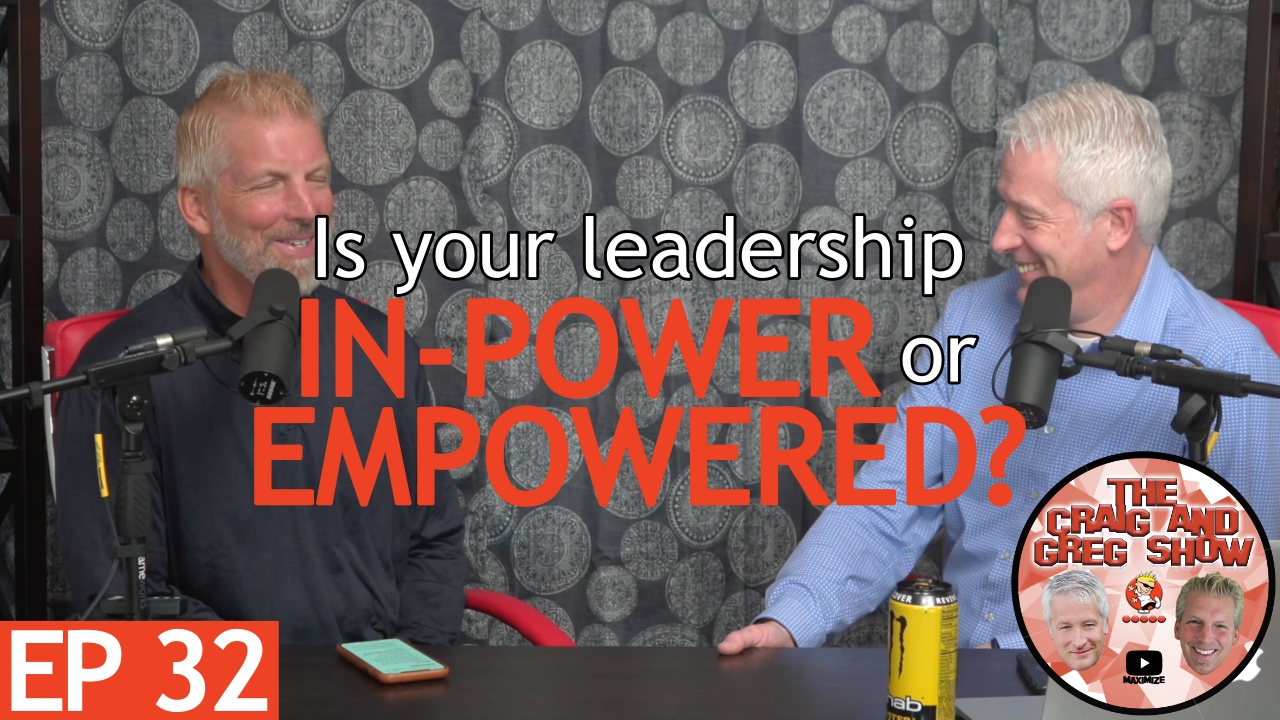
My friend Greg and I discussed this fear versus hope topic on an episode of our leadership podcast called The Craig And Greg Show.
[1:52] Does your empowerment show people you trust them?
[4:00] Craig tells a story about how the best mentors hold up a mirror.
[6:15] Do you believe you’re in-power, or do you empower?
[7:28] The guys talk about Patrick Lencioni’s leadership books.
[8:23] What is a habit that holds back a leader from empowering?
[10:27] Is your leadership trustworthy?
[12:10] Insecurity kills empowerment
[12:51] Getting Naked!!
[14:15] Are you admitting your mistakes first?
[14:50] Are you self-aware about what’s holding you back from empowering others?
[16:34] What is the difference between delegation and empowerment?
[17:45] Craig and Greg challenge leaders on examining their empowerment of others.
Check out this episode and subscribe on YouTube so you can watch all of the upcoming episodes. You can also listen to our podcast on Spotify and Apple.
Words mean something. It’s very important that we use the right word in the right context. This is especially true when we are talking about things that are or aren’t in the Bible.
Specifically, here are the three terms that I think are vitally important:
Biblical. These are things the Bible specifically tells us that we must do.
Unbiblical. These are things the Bible specifically tells us that we must not do.
Non-biblical. These are things the Bible doesn’t specifically address.
For example, I tell a story in my book Shepherd Leadership: The Metrics That Really Matter about a friend of mine who wanted to discuss particular titles for people in the church. I simply explained that the titles of “senior pastor” or “lead pastor” aren’t in the Bible, so I didn’t have a strong opinion on which one should be used. This is a non-biblical issue.
However, we can create a big problem if we insist on making non-biblical issues seem like they are biblical issues. Jesus confronted the Pharisee and the teachers of the law on this issue. These religious leaders had non-biblical traditions, but they gave them biblical authority (Mark 7:1-13). As a result, they begin to behave in unbiblical ways.
The ceremonial washing of hands is a tradition that is non-biblical. But the way that they looked down on people who didn’t wash their hands this way, is an unbiblical attitude.
One biblical commandment is to honor parents, but Jesus called out the Pharisees for honoring another one of their non-biblical traditions that caused them to turn their backs on their parents. As a result they became guilty of the unbiblical practice of dishonoring their parents.
Before you begin adopting certain attitudes, practices, or beliefs, it’s a good idea to make sure that you have learned whether they are biblical, unbiblical, or non-biblical.
Listen to the podcast of this post by clicking on the player below, and you can also subscribe on Apple, Spotify, or Audible.
It’s a bit scary to me to realize how many people have a scarcity mindset. As a result, far too many people are trying to figure out how to get their piece of the pie, but they don’t really want others to have their piece too. This should never be the mindset of a Christian! Our God has an unlimited supply, so we should be the most generous and abundance-minded people.
Sadly, sometimes I still encounter Christians who think that only some people can claim some of God’s promises.
This is part 5 in our series “Is that in the Bible?”
Statement #5—Old Testament promises are for the Jews, New Testament promises are for the Christians. Is that in the Bible? No!
Jesus Himself said, “Do not think that I have come to do away with or undo the Law or the Prophets; I have come not to do away with or undo but to complete and fulfill them” (Matthew 5:17 AMP).
Plato told a story about people chained in a cave in such a way that they could only see the shadows on the wall. He said that if the chains were unlocked, some would turn toward the opening of the cave, see the solid figures that had been creating the shadows, and move out of the cave. Plato also said that some would see the reality and choose to stay trapped in the cave—they would prefer shadows over reality.
Both John and the writer of Hebrews describe how Jesus came as the incarnate Reality of God. Jesus reveals that He is the Substance behind all of the shadows of worship in the First Testament (Hebrews 1:1-2; John 1:1-14).
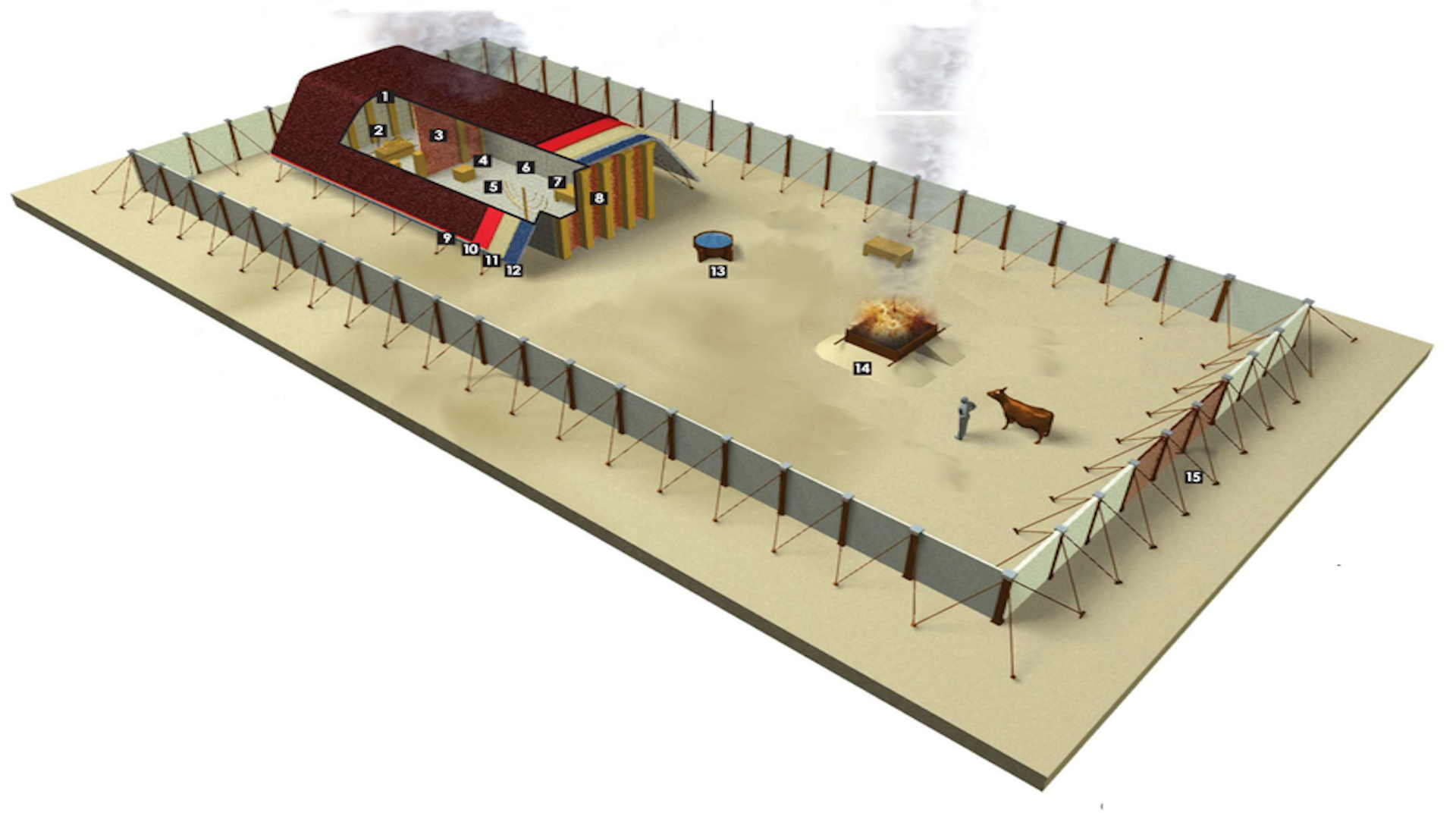
Look at the worship practices of the tabernacle, specifically the practices on the Day of Atonement. Two goats or lambs were brought into the outer court on that day—one had all of the sins of the people transferred to it and was sent into the wilderness as the scapegoat, and the other was sacrificed so its blood could make atonement for the sins of the people. The high priest would take this blood past the curtain separating the Holy Place from the Holy of Holies, and would sprinkle it on the atonement cover (also called the mercyseat) of the ark of the covenant of the Lord.
John said that Jesus came to make His dwelling among humans. The word John uses for “dwelling” is the same word for “tabernacle.” Jesus Himself became not only our High Priest, but every single item the earthly high priest used on the Day of Atonement. Jesus is the…
scapegoat—Leviticus 16:20-22; John 1:29
sacrificial lamb—Leviticus 16:15; 1 Peter 1:18-19
curtain in front of the Holy of Holies—Hebrews 10:22
By His life, death, and resurrection the shadows became Substance through Jesus. Hebrews 10:1-14 describes this, but especially note verse 12: “But when this High Priest [Jesus] offered for all time one sacrifice for sins, He sat down at the right hand of God.”
Look again at the picture of the tabernacle and note that there are no chairs. That was because the earthly priest’s work was never done. But our fully human, fully divine High Priest completed everything that needed to be done, so He could sit down.
This High Priest not only sits down in God’s presence, but He takes us with Him into the Holy of Holies: “God raised us up with Christ and seated us with Him in the heavenly realms in Christ Jesus” (Ephesians 2:6)!
So now ALL God’s promises are for ALL who are in Jesus! “For no matter how many promises God has made, they are ‘Yes’ in Christ. And so through Him the ‘Amen’ is spoken by us to the glory of God” (2 Corinthians 1:20).
I like how the Personalize Promise Bible turns that verse into this prayer: “My heavenly Father is faithful to His every Word. No matter how many promises He has made, in Jesus, He makes good on every one. I have God’s Word; therefore, I have God’s will. Every time that I pray in line with His Word, the answer is guaranteed.”
My friend, if you have placed your faith in the completed work of Jesus, then EVERY promise in the Bible is a promise you can claim for your life. Hallelujah! What an amazing thing God has done for us through His Son Jesus Christ!
Listen to the podcast of this post by clicking on the player below, and you can also subscribe on Apple, Spotify, or Audible.
Peter Drucker noted, “It wasn’t until the twentieth-century that we pluralized the word priority. For most of its history, the word has been singular.”
If we have too many priorities, we can frequently find them in conflict with each other. This forces us to make an extremely difficult decision: Which priority has a higher priority?!
Ultimately, whatever business or industry or profession we are in, we are in the people business. All of our efforts fail without good investment in people. So our overriding priority must be on the people God has placed around us.
“The human brain is simply not designed to multitask. You can get by doing multiple things at once, but you can’t do them well. Your brain is physically unable to process more than one set of instructions at a time, so while you are juggling all of those actions at once, your brain is scrambling to keep up. Through a variety of experiments measuring brain activity, scientists have discovered that the constant switching back and forth from one activity to another energizes regions of the brain that specialize in visual processing and physical coordination, while simultaneously disrupting the brain regions related to memory and learning. According to the research, ‘We are using our mental energy to concentrate on concentrating at the expense of whatever it is that we’re supposed to be concentrating on.’ Got that?
“More simply: when we multitask we’re dumber. How much dumber? A recent study for Hewlett Packard exploring the impact of multitasking on performance revealed that the average worker’s functioning IQ drops ten points when multitasking…. (The analogy the researchers used is that a ten-point drop in IQ is equivalent to missing one night of sleep.)” —Marcus Buckingham
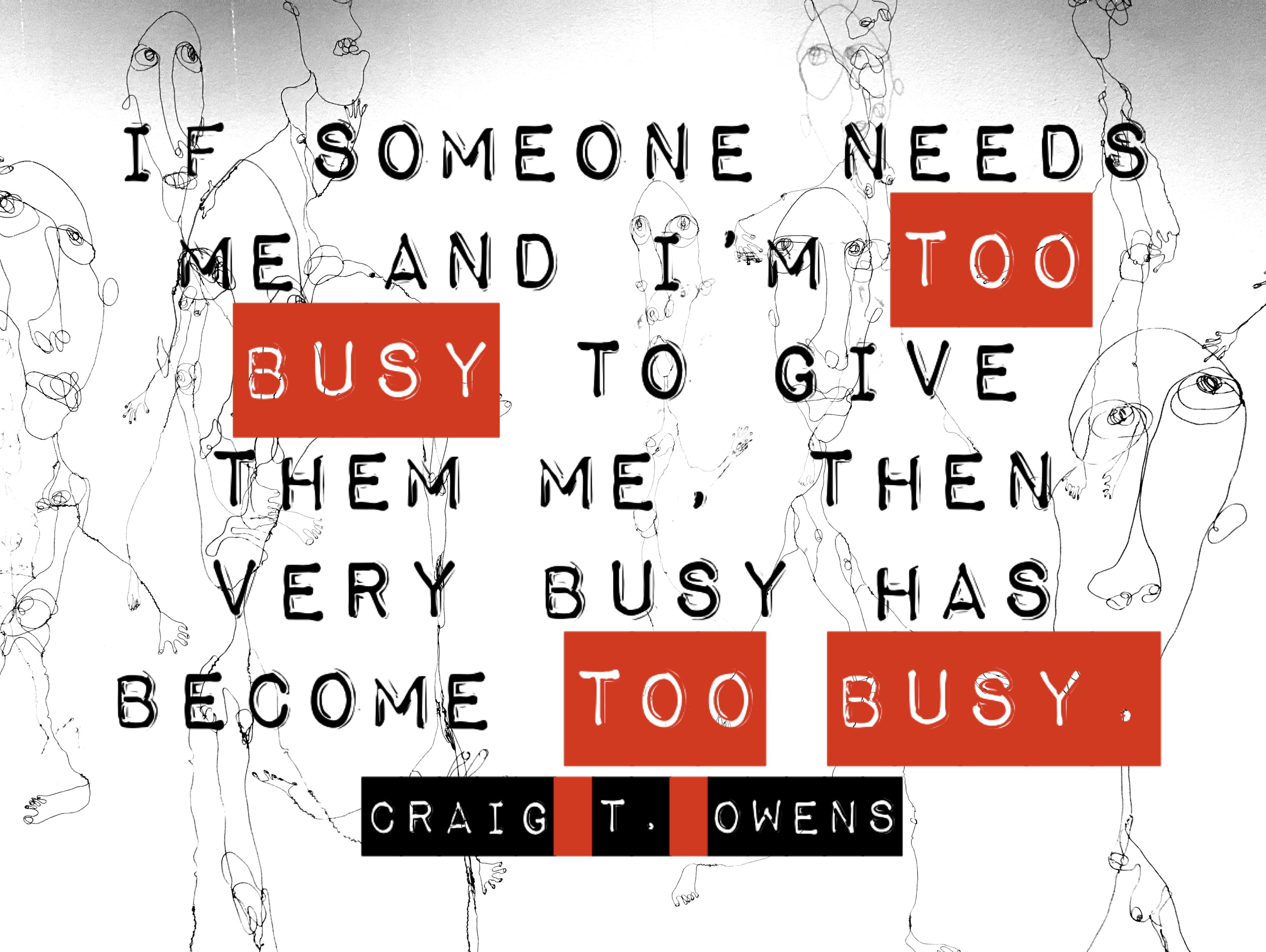
The biggest victim of attempting to multitask is your relationships. Those closest to you suffer the most. If someone needs me and I’m too busy to give them me, then very busy has become too busy and it’s time for me to evaluate who—not what—is my highest priority.
Friends, this is something that helped me with the apparent controversies not only in the Bible but in conversations with those who have differing opinions from me. I hope this helps you too!
You can help me help others by becoming one of my Patreon supporters. As my thanks for that support, you will receive exclusive content that only my supporters get access to. Please check out my Patreon page and support this ministry at just $5/month.
Listen to the podcast of this post by clicking on the player below, and you can also subscribe on Apple, Spotify, or Audible.
This is part 4 in our series “Is that in the Bible?”
Statement #4—Name it and claim it. Is that in the Bible? No!
But in fairness, even the proponents of this belief don’t usually say it this way. Instead they quote words from Jesus like: “I will do whatever you ask in My name” (John 14:13) or “Ask whatever you wish, and it will be given you” (John 15:7).
They really want this to be true, I think, because in their minds happy, prosperous Christians make God look good. On the other hand, struggling Christians make God look bad. There is a whole branch of theology called theodicy which literally means: “a defense of God’s goodness and omnipotence in view of the existence of evil.”
This is nothing new. Religious people have always tried to have pat answers. In the oldest book of the Bible, Job’s friends were convinced that suffering results from sin and blessing results from righteousness. And yet according to God, Job was a righteous man (Job 1:1, 8, 20-21).
At the advent of Jesus, the chief priests and scribes want the Messiah to be heroic so they modified a prophecy to make Bethlehem sound more impressive (compare Micah 5:2 with Matthew 2:6).
So it follows that this name-it-claim-it group wants God to look good because His people look good, dress well, drive nice cars, live in big homes, fly private jets, and never get sick.
But Jesus Himself told His followers to, “Sell your possessions and give to the poor” (Luke 12:33). And He said,“Blessed are you when people insult you, persecute you and falsely say all kinds of evil against you because of Me” (Matthew 5:11). And Jesus also said, “In this world you will have trouble” (John 16:33).
This is not to say that God opposes wealth: He gave wealth to His leaders, Job was doubly-wealthy after his trial, and wealthy people funded the ministry of Jesus and the early church. But this isn’t the same as pursuing—or even demanding—wealth, or of making the erroneous connection that poor people are somehow out of favor with God.
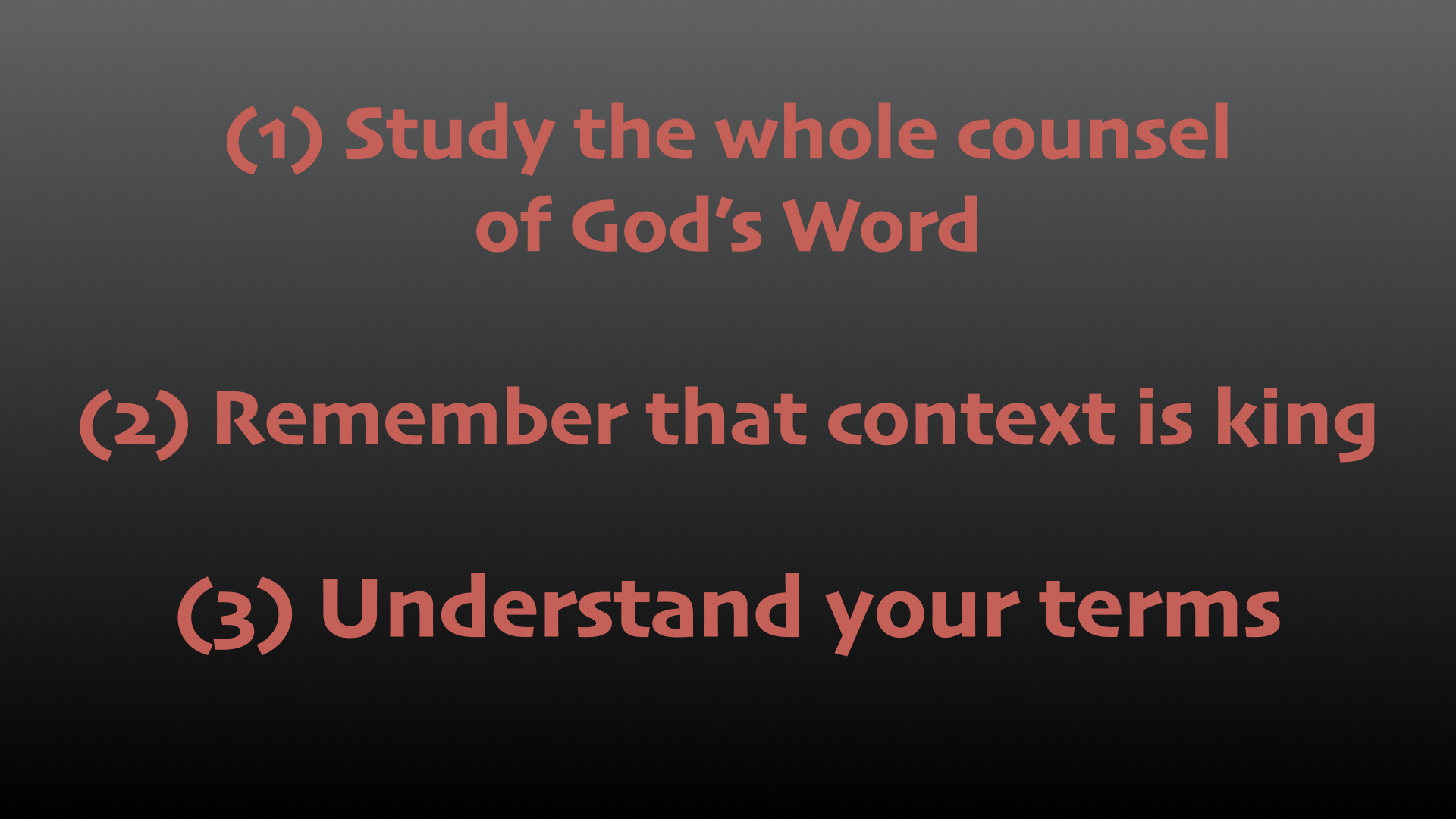
How do we avoid these errors? Here are three thoughts:
The word “eisegesis” means to read something into the Word. But that is like creating your own beliefs and then going to the Bible to find phrases that support what you already believe. On the other hand “exegesis” is to read the Bible and have it speak to us by the Holy Spirit.
Two of the phrases from Jesus that the name-it-and-claim-it folks use (John 14:13 and John 15:7) turn out to mean something entirely different than, “God will give me all of the things I demand from Him” when they are read within the context of the things Jesus was teaching at that time (see John 14:9-14 and 15:1-8).
(3) Understand your terms.
If something is biblical, that is something the Bible says yes to. Unbiblical things the Bible says no to. But non-biblical are those the Bible doesn’t explicitly address. We have to be very careful of trying to make non-biblical things sound biblical or it may lead to some unbiblical attitudes and actions.
This is exactly what the Pharisees did by giving their non-biblical traditions the weight of biblical statements, and then looking down on others in a very unbiblical way.
God is sovereign. We do not tell Him what to do. We do not demand Him to respond to our needs. We trust Him and and we abide in Him. Then in the abiding, asking and understanding and fruitfulness are as natural as a flower sprouting from a branch that is attached to the vine. We don’t name things and claim things for our personal comfort, but we desire solely for God’s glory to be seen—whether in wealth or poverty, health or sickness, peaceful times or tribulation.
Evaluating all biblical sounding statements by those three items—studying the whole counsel of God’s Word, understanding the context, and knowing our terms—will guide us from going astray.
Listen to the podcast of this post by clicking on the player below, and you can also subscribe on Apple, Spotify, or Audible.
A friend of mine who was in a position of leadership in the Assemblies of God used to joke with people, “Since you’re bowing and walking backwards out of my office, would you like to kiss my ring too?” There are some people that we feel are in a special class so that we have to approach them differently.
If we feel that way about certain people, what might we be thinking when we consider approaching the supreme, awesome, preeminent, incomparable Jesus?! It’s very likely that we could feel Him to be unapproachable, as though we aren’t worthy of His attention.
But when Jesus Himself told us, “When [not ‘if’] you pray,” He is assuming that we will pray. And then He adds this amazing thought: “And I will do whatever you ask in My name, so that the Father may be glorified in the Son” (John 14:13)!
Jesus loves to help us. He died a cruel death on the Cross so that He could help us! Jesus ties our trusting prayer with His willingness to serve us (Luke 12:22-37). Note this last line from our approachable Savior:
It will be good for those servants whose Master finds them watching when He comes. Truly I tell you, He will dress Himself to serve, will have them recline at the table and will come and wait on them. (v. 37)
Jesus serves us?! What an amazing thought! But does this make Jesus somehow less majestic? I like what John Piper has to say about this: “Does this belittle the risen Christ—to say that He was and is and will ever be the servant of His people? It would, if ‘servant’ meant ‘one who takes orders,’ or if we thought we were His masters. Yes, that would dishonor Him. But it does not dishonor Him to say that we are weak and need His help.”
The childlike attitude is one of wonder and trust. One that calls God, “Daddy.” One that is lovingly dependent on Him. One that says, “I don’t understand what I’m going through right now, but I trust Your wisdom.”
The childish attitude is one who treats majestic things flippantly. Perhaps the childish one talks about God as “the Big Guy upstairs.” Or one who remains selfishly independent, or who says, “Do it my way—now!”
The childlike attitude glorifies Jesus as our approachable Servant Savior.
Prayer not only unlocks deeper, proper intimacy with Jesus, but it conforms our heart more and more to His heart. As we are conformed to Him, we reflect His approachable glory to others (2 Corinthians 4:6, 3:18).
We approach the awesome Jesus reverently in childlike faith. It’s in God’s presence that the Holy Spirit matures our faith so that we become glory-reflectors that point others to Jesus.



 …so my mouth was opened and I was no longer silent (Ezekiel 33:22).
  I love the humanitarian work of Convoy of Hope wherever there is a need. They are on the front lines of Ukraine right now. If you are looking for a good organization to support financially,



 Craig T. Owens