Listen to the podcast of this post by clicking on the player below, and you can also subscribe on Apple, Spotify, or Audible.
On this episode of The Podcast, let’s talk about seeing something brighter in the darkest of times.
Check out all of the Scriptures I reference in this video here.
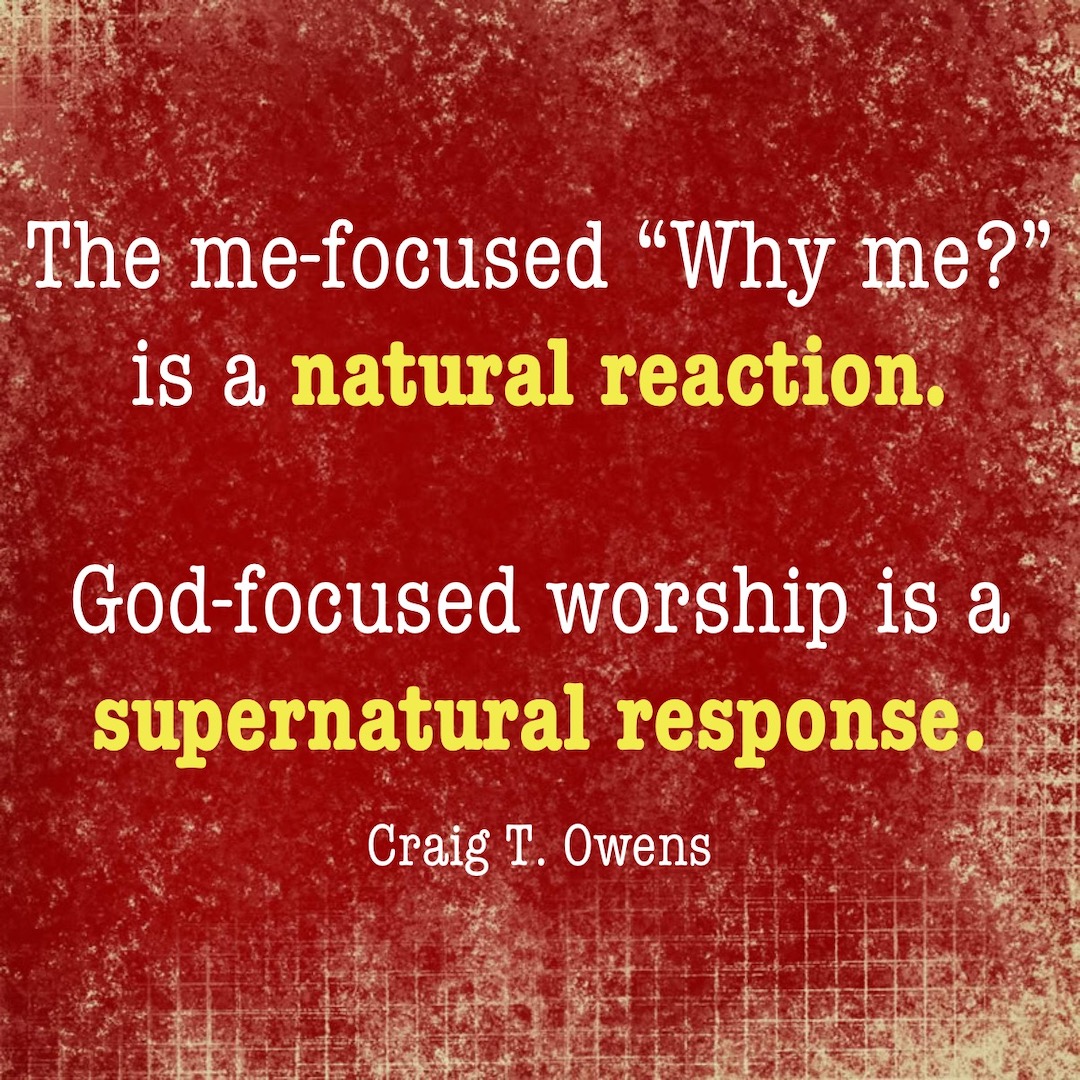
You may seem some glimmers of light in your dark place—like Paul did in the Roman prison—but even if you don’t see anything but darkness, make the choice to worship. I need to remind myself that God has a plan for my life and that He is working out all the details for my good and to bring glory to Himself.
Let’s change our self-focused “Why me?” to God-focused worship as we say, “Thank You, Jesus, that You are using me to build Your kingdom!”
If you want your heart to be able to perform better, you are going to have to stress it a bit—that’s called exercise. The same thing is true for the heart of leadership—we have to exercise our leadership so that it can rise to the challenge later.
J. Warner Wallace wrote, “Everyone, whether they realize it or not, is engaged in worship. We all adore something, elevating it above the rest, sometimes so much that we overlook its flaws.” Check out this post about being careful about what we worship.
“Nothing teaches us about the preciousness of the Creator as much as when we learn the emptiness of everything else.” —Charles Spurgeon
“We should avoid end-time hysteria and ‘not grow weary in doing good’ (2 Thessalonians 3:13). There will be good work to do (vocationally and socially and personally) right up to the Lord’s coming. Our normal earthly duties will not end until the Lord appears. The rule then, until he comes, is, ‘Whatever you do, work heartily, as for the Lord and not for men’ (Colossians 3:23).” —John Piper
Greg Morse has a fascinating post connecting the fable of Chicken Little with the historical account of Noah and the imminent return of Jesus. “I hope an acorn falls afresh on our heads as we observe an Old Testament saint who was the Chicken Little of his day. A man who remained awake and faithful with his back against the end of the world: a man named Noah.”
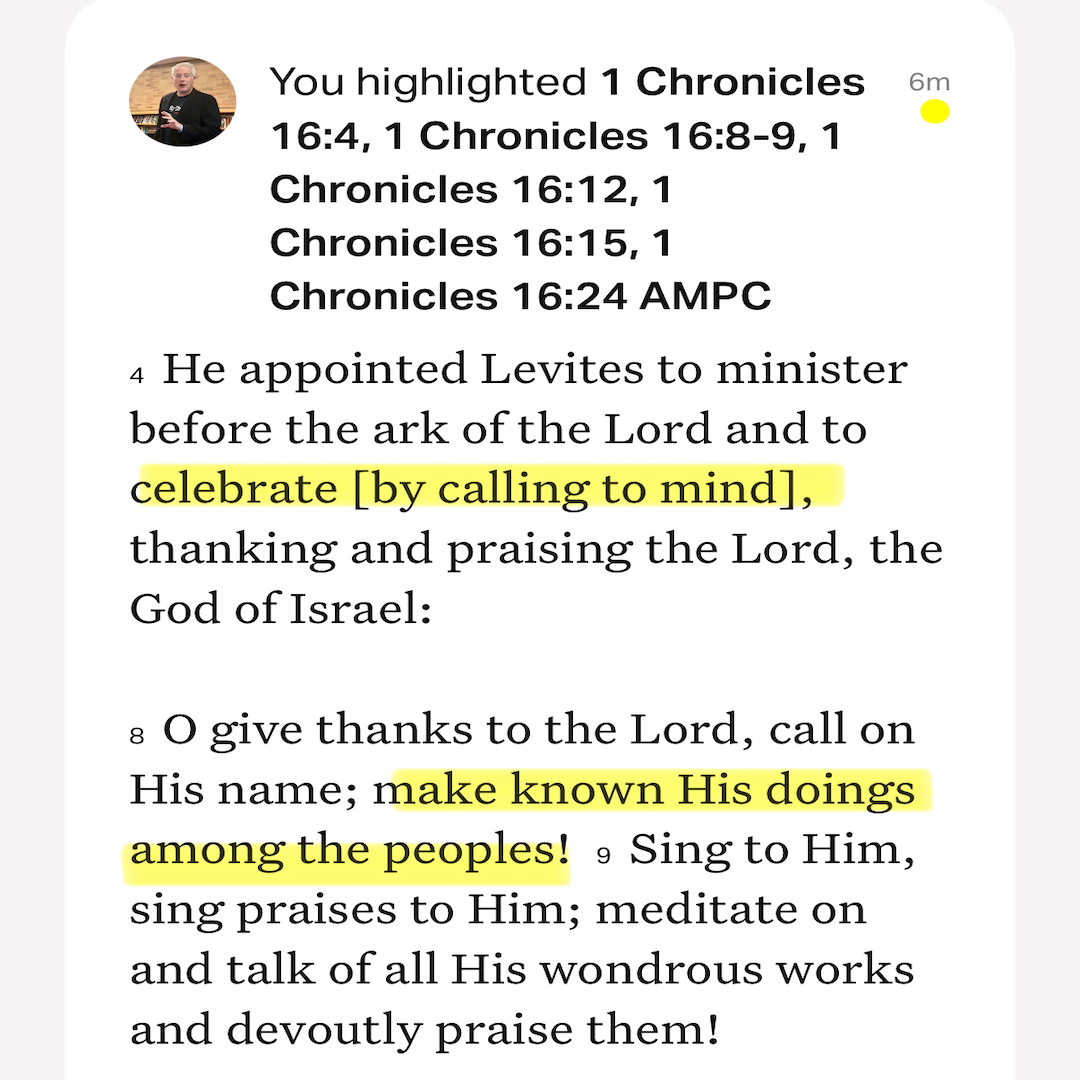
[King David] appointed Levites to minister before the ark of the Lord and to celebrate by calling to mind, thanking and praising the Lord, the God of Israel: … O give thanks to the Lord, call on His name; make known His doings among the peoples! Sing to Him, sing praises to Him; meditate on and talk of all His wondrous works and devoutly praise them! … Earnestly remember the marvelous deeds which He has done, His miracles, and the judgments He uttered as in Egypt. … Be mindful of His covenant forever, the promise which He commanded and established to a thousand generations. … Declare His glory among the nations, His marvelous works among all peoples. (1 Chronicles 16:4, 8-9, 12, 15, 24 AMPC)
Calling to mind … meditate … earnestly remember … be mindful. All these things lead to both worship and proclamation.
Recalling to mind all that God has done for us in the past, all that He is for us now, and all that He will do in the future gives us a song of praise. This praise is to be proclaimed among all people—both fellow worshipers and those who don’t know God as their Savior yet.
The more we meditate on Who God is, the more we praise Him; the more we praise Him, the more compelling our testimony to the nations becomes.
Listen to the podcast of this post by clicking on the player below, and you can also subscribe on Apple, Spotify, or Audible.
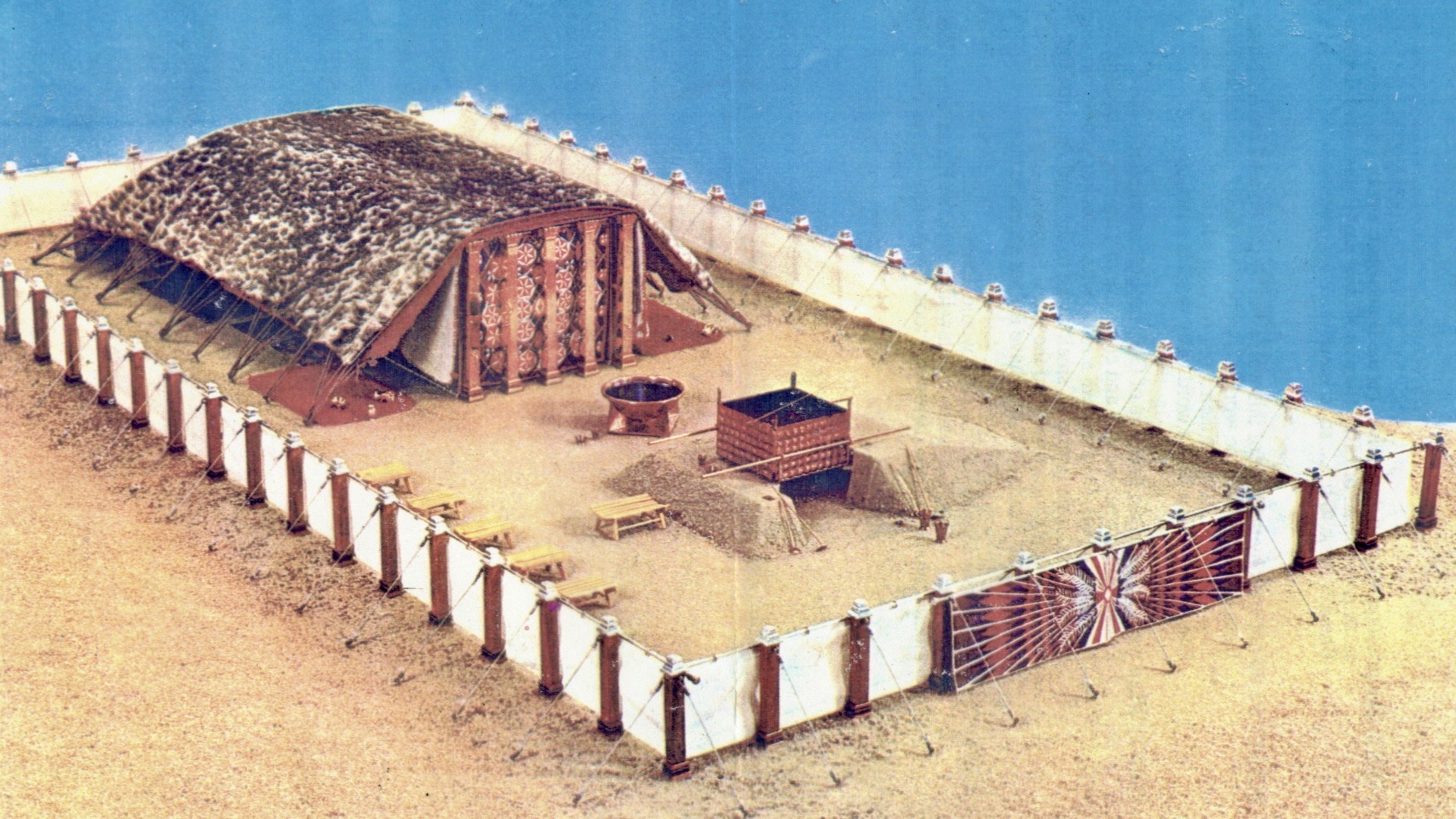
I was absolutely fascinated by a Messianic Jew’s insights on the Old Testament Tabernacle, and how every aspect of it pointed to Jesus the Messiah.
The overview of the construction of the Tabernacle starts in Exodus 25 and covers the next fifteen chapters in that book. Here are a few of my main takeaways from my friend’s teaching.
The materials for the Tabernacle are brought as a freewill offering given by freed slaves (Exodus 25:1-2). This gold, silver, bronze, linens, and other materials were gifts from the Egyptians when the Israelites left on the night of the Passover.
The Tabernacle is at the center of the Israelite camp (Numbers 2:1-34), signifying God’s presence in the center of our lives. When the Israelite community moved out, the tribe of Judah went first. Judah means “praise.” What a great reminder to let praise to God be at the forefront of all we do!
In Exodus 27:16, the materials to be used for the curtains compromising the entrance to the Tabernacle are blue, purple, and scarlet. The blue is for sky (Heaven), the purple designates royalty, and the scarlet signifies the blood of the sacrifices. Jesus came to earth as royalty from Heaven, and by His shed blood He opens the way for all of us to be with Him in Heaven forever! Jesus said He was the only way to Heaven (Hebrews 2:14-15; John 14:6).
The bronze altar for cleansing was just inside the entrance (Exodus 27:1-8). The worshiper offered this sacrifice in place of their sin. The priests would then move to the laver to wash off the dirt of the world. It’s important to note that the priests wash at the laver, not in the laver. Jesus is the One who washes us and cleanses us (Ephesians 5:26).
There are four different coverings over the Holy Place. As the priest progresses farther into the Holy Place, the coverings become thicker, so less outside light is visible.
First covering (Exodus 26:1) was blue, purple, and scarlet yarns (like the colors at the entrance) with cherubim woven into the fabric. The priests looking up would see these angels.
Second covering (v. 7) was goat’s hair. Goats were used for sin offerings, reminding the priests that there was a sacrifice to cleanse them so they could approach the presence of God.
Third covering (v. 14) was a red-dyed ram skin, showing the blood that covers us.
Fourth covering (v. 14) was the durable leather of a badger. Now there would have been very little light from outside, but the angels would still be seen for those inside the Holy Place.
In the Holy Place was the showbread (sometimes called the bread of presence) pointing to Jesus as our Bread of Life (Exodus 25:23-30; John 6:35). Also in the Holy Place was the lampstand filled oil (vv. 31-37). Only one stick holds the oil and supplies the other six branches. The priests could only work by the light of God. Jesus is our light (John 8:12). And we also find the altar of incense here (30:1-7). This was a unique perfume that wasn’t used anywhere else. The prayers of the saints that arise before the throne in Heaven as said to rise as incense (Psalm 141:2; Revelation 5:8). Worshipers in God’s presence are saturated with the aroma of Jesus (2 Corinthians 2:14-15).
In the Holy of Holies is the ark of the covenant of the Lord (25:10-22). Inside the ark were the stone tablets that contained the Ten Commandments. On top of the ark, overshadowed by the wings of two huge cherubim angels, was the mercyseat or atonement cover. Notice that mercy is over the Law, and that the blood of the sacrifice of Jesus covers my disobedience and makes me at one with God (the literal definition of atonement).
How beautifully all of these aspects of the earthly Tabernacle point to Jesus (Hebrews 8:5, 10:1)! And even more amazingly, Jesus fulfilled every requirement in this Tabernacle to make it possible for all who put their faith in Him to enter the Heavenly Tabernacle and remain in His presence for ever and ever!
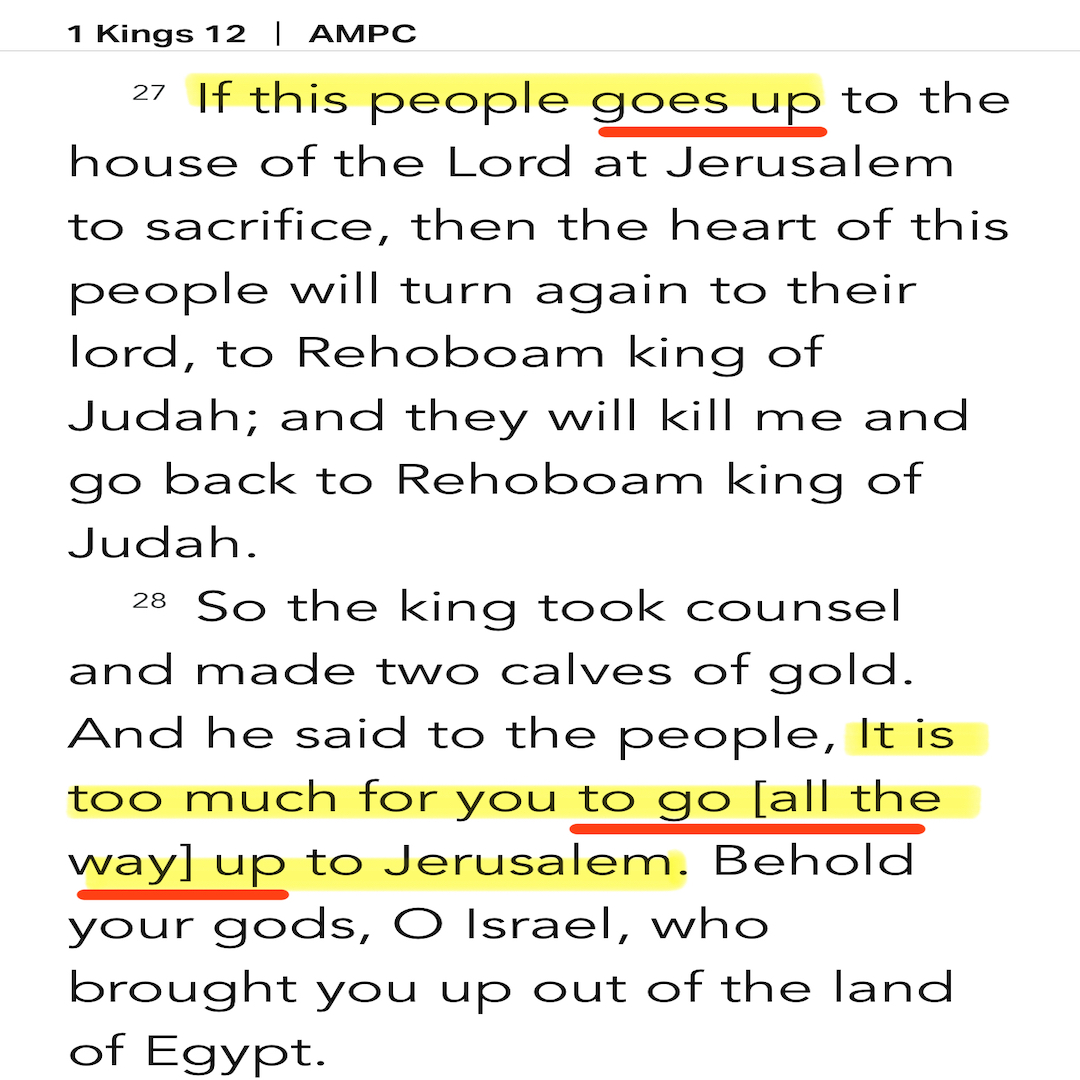
He first appeals to an easier option than the hard work it takes to travel all the way up to Jerusalem for the feasts of worship.
If this people goes up to the house of the Lord at Jerusalem to sacrifice, then the heart of this people will turn again to their Lord, to Rehoboam king of Judah; and they will kill me and go back to Rehoboam king of Judah. So the king took counsel and made two calves of gold. And he said to the people, “It is too much for you to go all the way up to Jerusalem.Behold your gods, O Israel, who brought you up out of the land of Egypt.” (1 Kings 12:27-28)
He then gave them replicas of the devoted things in Jerusalem—“behold your gods.” He tricked them to accept the counterfeit as the real thing.
Next, he appointed unqualified priests (v. 31; 13:33). These priests weren’t accountable to God, but only to Jeroboam.
Finally, he proposed an alternative date that they could gather to “worship” (vv. 32-33).
Jeroboam’s sin was to make true worship seem like burdensome work, and then to pass off cheap and easy substitutes to make it appear that the people were worshiping God. But the Bible says, “And this thing became the sin of the dynasty of Jeroboam that caused it to be abolished and destroyed from the face of the earth” (1 Kings 13:34).
Why do Christians lift their hands to God? This is a clip from one of the sermons in our series looking at the worship songs that Israelite pilgrims sang as they ascended to Jerusalem to celebrate the feasts.
“Civil governments are established by God [Romans 13:1] to restrain the criminal elements of human society—even though these officers are often filled and run by evil people. We must divorce our feelings about the people that hold these offices from the authority of the office itself.” —Dr. Henry Halley
“Outstanding leaders go out of their way to boost the self-esteem of their personnel. If people believe in themselves, it’s amazing what they can accomplish.” —Sam Walton
This article opens with this thought: “Scientists will probably never fully understand photosynthesis as additional research uncovers even more fascinating mysteries.” It then goes on to outline how plants use quantum mechanics nearly perfectly to manage the flow of energy during photosynthesis. Truly this is more evidence of an All-Wise Creator.
In sharing a mini-biography of Henry Martyn, this article outlines how God prepares missionaries for the field to which He has called them. “God used [Martyn’s] classical education at Cambridge alongside his spiritual maturity formed by intentional mentorship to get him ready for his unique task of engaging Muslims and translating the Bible.”
T.M. Moore has an outstanding series for pastoral leaders. In a recent post, Moore wrote, “Paul’s vision was too vast, too all-encompassing, too transformative, too urgent, and too other-worldly to stop with, say, a vision that focused on more members, better facilities, larger budgets, additional staff, or regular ‘growth.’ None of these, nor any of a thousand other ways church leaders might express their hopes for their churches, is a proper vision for church leaders.” I was grateful for T.M.’s endorsement of my book Shepherd Leadership where I talk about the biblical metrics for church leaders.
“One of the dangers of having a lot of money is that you may be quite satisfied with the kinds of happiness money can give, and so fail to realize your need for God. If everything seems to come simply by signing checks, you may forget that you are at every moment totally dependent on God.” —C.S. Lewis
When we pray the closing words of the prayer Jesus gave us—“For Yours is the kingdom, and the power, and the glory forever. Amen!”—we are both acknowledging God’s awesomeness and we are asking for our lives to display this reality.
“He who loves iniquity does not love his fellow man, for ‘he who loves iniquity does not love, but rather hates his own soul.’ And certainly he who does not love his own soul will in no way be capable of loving the soul of another.” —Aelred of Rievaulx (1109-1167)
Steven Lee shows us the biblical principles that God forms us through failure. One passage especially stood out to me because it is a central thought to both of my books. Lee writes, “God measures success according to faithfulness: ‘One who is faithful in a very little is also faithful in much’ (Luke 16:10). Do we strive for success as defined by God? Are we seeking to be faithful with all that he has entrusted to us—time, talents, and treasure? Or have we adopted the lying weights and measures of our world? Will our labors result in hearing the words ‘Well done, good and faithful servant’ (Matthew 25:23)? Put aside striving for the world’s facade of perfection.”
“The measure of who we are is what we do with what we have.” —Vince Lombardi
T.M. Moore teases us with this: “The most important question we can ask guides us in answering many other questions besides, questions such as, ‘Whom should I marry?’ and ‘How can I stop wasting time?’ and ‘What’s the best way to use my wealth?’’ Any question that helps us answer those and a myriad other questions that might arise during the day must be pretty important. Indeed, it must be the most important question any of us could ask.” What is that most important question? Check out his thought-provoking answer.
“Life is not a spectator sport. If you’re going to spend your whole life in the grandstand just watching what goes on, you’re wasting your life.” —Jackie Robinson
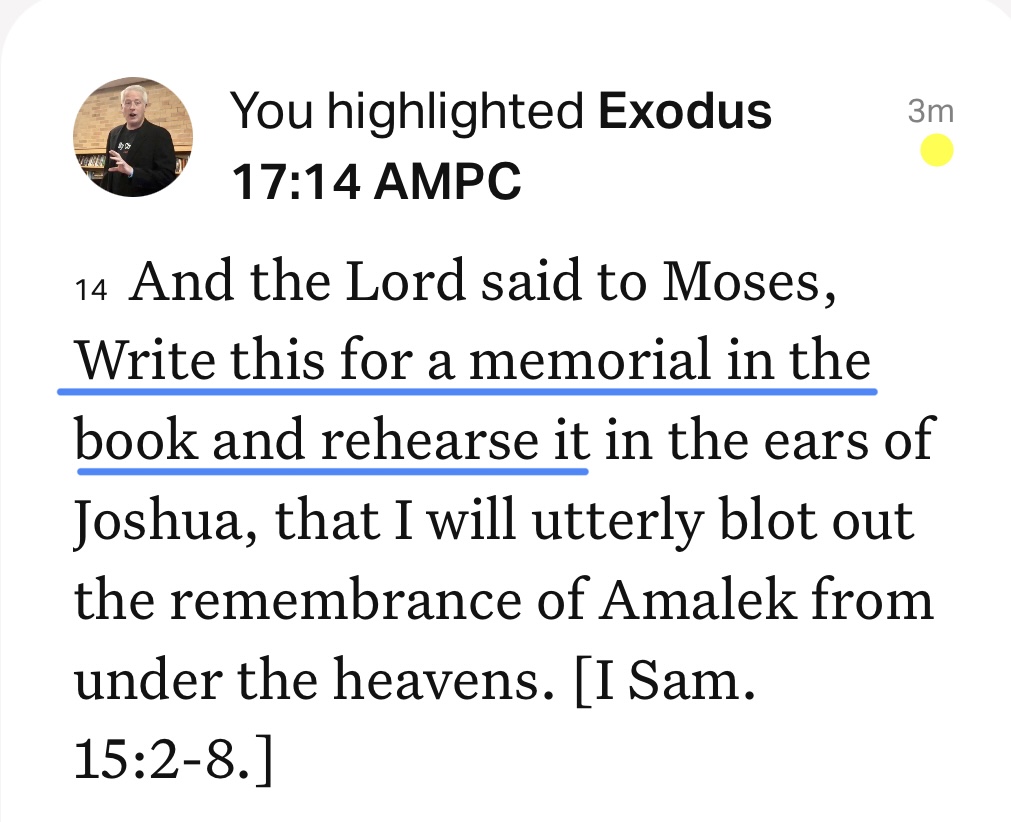
When God gives you a victory, write it down (see Exodus 17:14). When God gives you a promise, write it down. Then read it regularly so you don’t forget it. This will keep you grateful, it will keep you expectant, and it will keep you dependent on the victory-giving, promise-keeping God.
Listen to the podcast of this post by clicking on the player below, and you can also subscribe on Apple, Spotify, or Audible.
Last week we saw that if we make prayer our priority, we can expect that our eyes will be opened to the answers that God has for us. Hagar and Eliezer seemed to get pretty quick answers. Nehemiah had to wait four months for the answer to his prayer.
We saw in Psalm 5 that David laid his requests before God first thing in the morning, and then he went out of his prayer closet in expectation of an answer (Psalm 5:1-3). But how long did he wait?
Psalm 6 may not happen historically right after Psalm 5, but listen to David’s heart, “Have mercy on me, LORD, for I am faint; heal me, LORD, for my bones are in agony. My soul is in deep anguish. How long, LORD, how long? (Psalm 6:2-3). And then again in Psalm 13:1-3, David asks, “How long?” four times in the first two verses!
When we read the training Jesus gave His disciples about prayer in Luke 11:9-10, we see how He implores them (and us) to keep on praying. It becomes even more emphatic in the Amplified Bible—
So I say to you, ask and keep on asking and it shall be given you; seek and keep on seeking and you shall find; knock and keep on knocking and the door shall be opened to you. For everyone who asks and keeps on asking receives; and he who seeks and keeps on seeking finds; and to him who knocks and keeps on knocking, the door shall be opened.
But once again we have to ask: how long are we to continue asking, seeking, and knocking? This is what Job asked in the middle of his trial (Job 6:8, 11-13).
Charles Spurgeon said, “God has measured the crosses of all His children: Israel in Egypt, 430 years; Joseph in prison, 3 years; Judah in Babylon, 70 years.” That means that God knows what He is doing, God knows His timing for answering, and that our part is to simply to continue to ask, seek, and knock as we throw our total trust on Him!
I remember my affliction and my wandering, the bitterness and the gall.I well remember them, and my soul is downcast within me.Yet this I call to mind and therefore I have hope.Because of the LORD’s great love we are not consumed, for His compassions never fail.They are new every morning; great is Your faithfulness.I say to myself, “The LORD is my portion; therefore I will wait for Him.” (Lamentations 3:19-24)
During these times of waiting, we need to keep recalling what we know:
God’s love is unfathomable—Romans 5:5, 8:38-39
God’s timing is perfect—Deuteronomy 32:4
God’s method is flawless—Romans 8:28
God’s gifts are good—Luke 11:11-13, 12:32
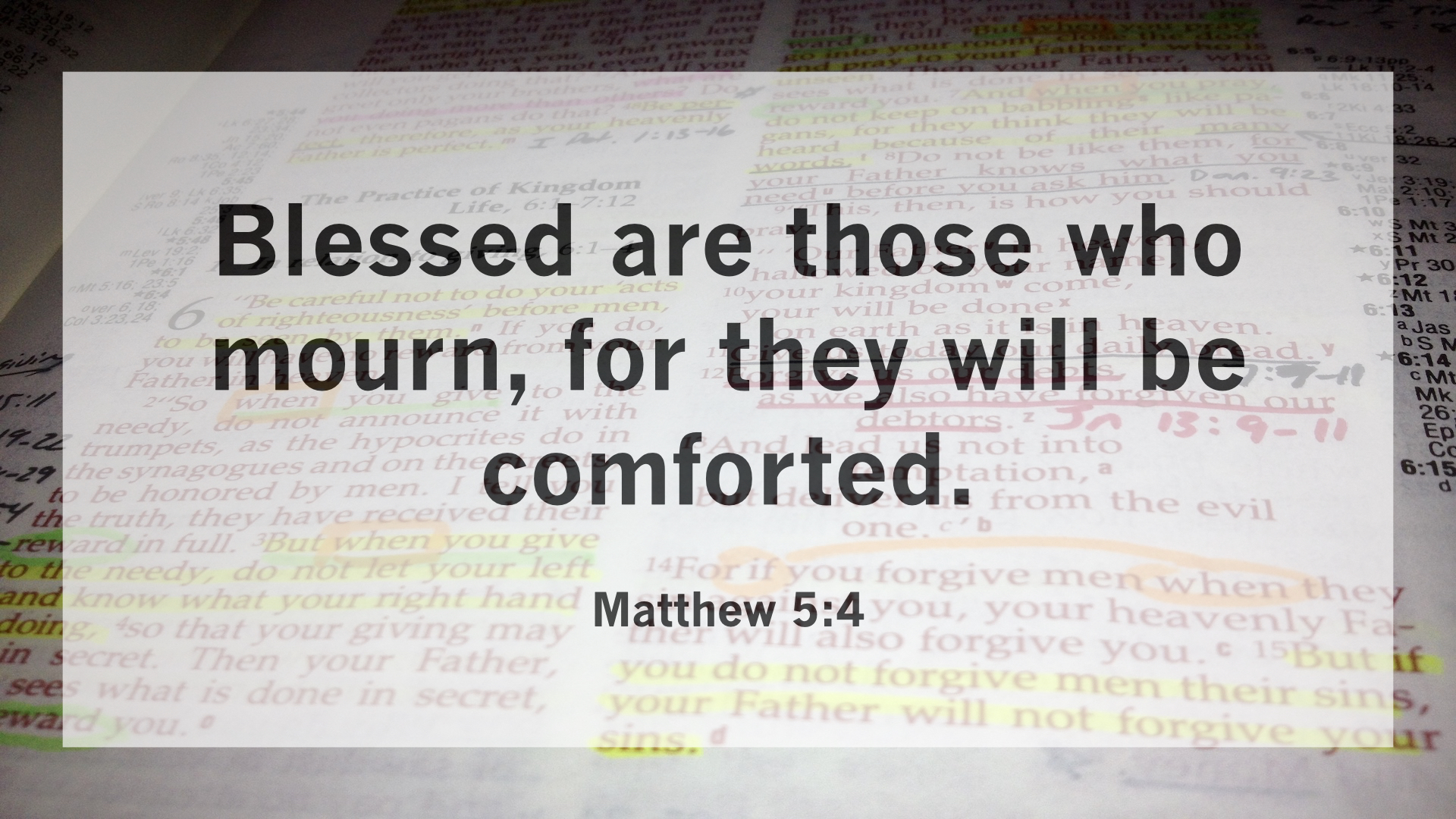
In Psalms 6 & 13, David doesn’t record any answers from God, but listen to this assurance from Jesus, “Blessed are those who mourn, for they will be comforted” (Matthew 5:4).
Jesus doesn’t tell us how or when God will bring us comfort, but He does assure us that we will be comforted!
In a couple of the examples from David, you can see this assurance as he continues his prayers (Psalm 6:2-4, 8-10; 13:1-6). Paul also experienced this confidence (2 Corinthians 12:7-10), and so did Jesus (Matthew 26:38-39, 50-54).
The writer of Hebrews assures us that Jesus was heard in His, “How long?” cries, and therefore He knows exactly how to intercede for us today as we lift up the same cry (Hebrews 5:7-8; 2:10, 14, 17-18)!
How long? Quite simply stated: Until God answers or until He lifts our burden.
In the meantime, the examples in Scripture and the assurance of Christ’s intercession for us us encourages us to…
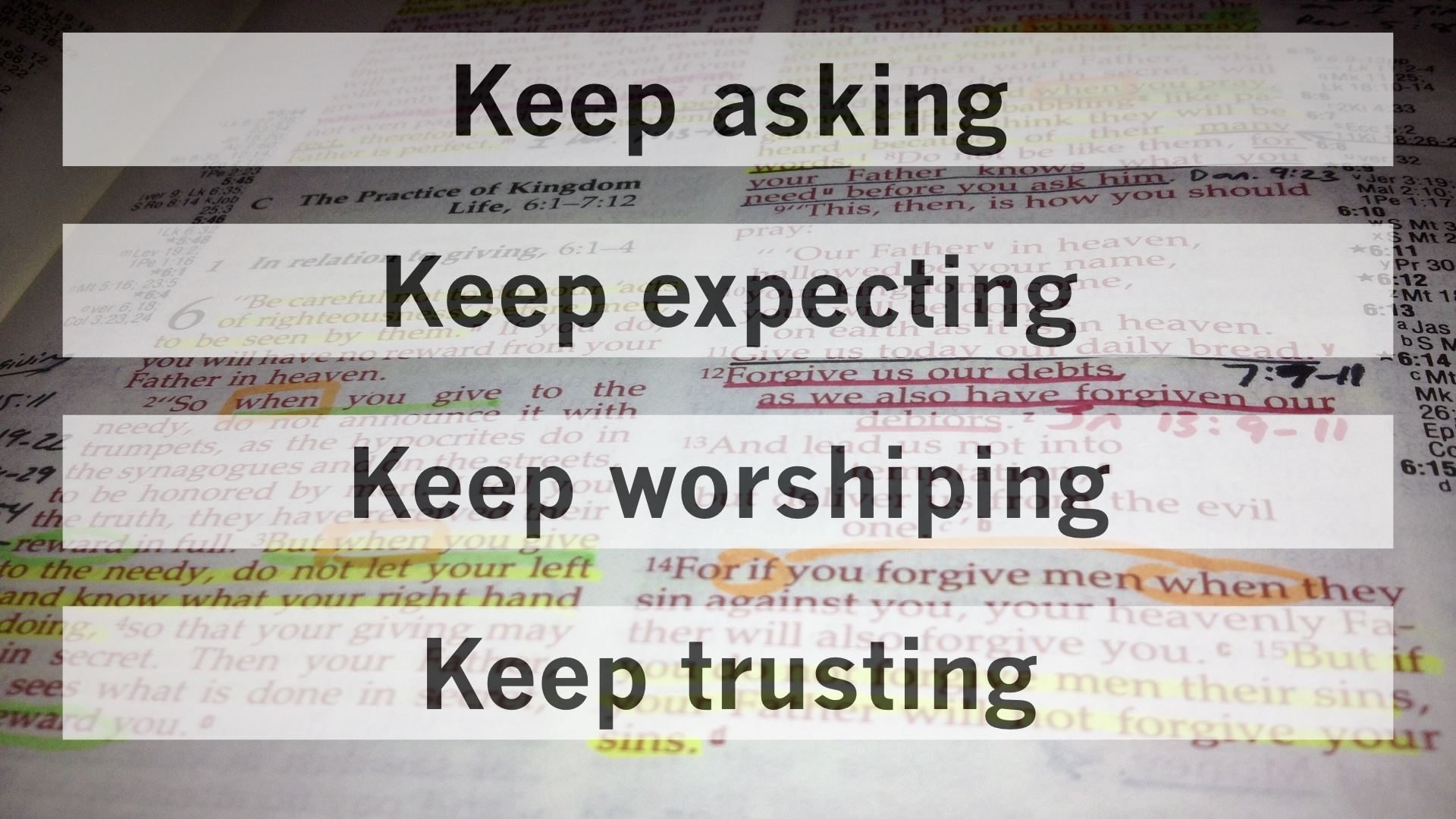
Keep asking with full confidence that God hears you
Keep expecting an answer
Keep worshiping God for Who He is
Keep trusting that your Heavenly Father wants to give you the very best!
This unity is seen during the outpouring of the Holy Spirit on the day of Pentecost recorded in Acts 2. But unity is not the same thing as conformity, as I shared in this message.
Listen to the podcast of this post by clicking on the player below, and you can also subscribe on Apple, Spotify, or Audible.
Last week I shared this thought with you from Pastor Tim Keller: “Your prayer must be firmly connected to and grounded in your reading of the Word. This wedding of Bible and prayer anchors your life down in the real God. … Without immersion in God’s words, our prayers may not be merely limited and shallow but also untethered from reality.”
“Untethered from reality” means that we determine the manner in which we come to God in prayer, the way prayer works, and the way God must respond to our prayer. But what we read in the Bible is the opposite of this (Isaiah 1:11-15).
I think there are two opposite and equal erroneous thoughts about how we approach prayer:
I’m not worthy to come into the presence of an all-holy God
I can waltz right into God’s presence whenever and however I please
Both are wrong and both are strategies the devil has used to keep us prayerless. Either we don’t go to God at all or our prayers are unheard because the Bible says that our arrogance has made our prayer ineffectual.
Our Prayer Book—the Bible—helps us find the balance. George Whitefield noted, “Reading the Bible is a good preparative for prayer, as prayer is an excellent means to render reading effectual.” So here’s what we read about those two errors.
I’m not worthy. God is unapproachable in His holiness, but Jesus has made it possible for us to enter in through His righteousness (1 Timothy 6:15-16; Isaiah 6:1-5; Hebrews 4:1, 14, 16; John 16:23-24).
I can come anyway I want to. Passages like Psalm 15:1-5 and Isaiah 58:2-4 make it clear that we cannot simply approach God in a way of our choosing.
Let’s unpack that second error a little more. We have to be clothed in righteousness in order to come into God’s presence, but we cannot be clothed in a righteousness that is apart from Jesus. When we say that we are praying in the name of Jesus, it means we are praying in the nature of Jesus and through the righteousness of Jesus. We must be wearing His righteous robe (Romans 3:22-24; Isaiah 61:10).
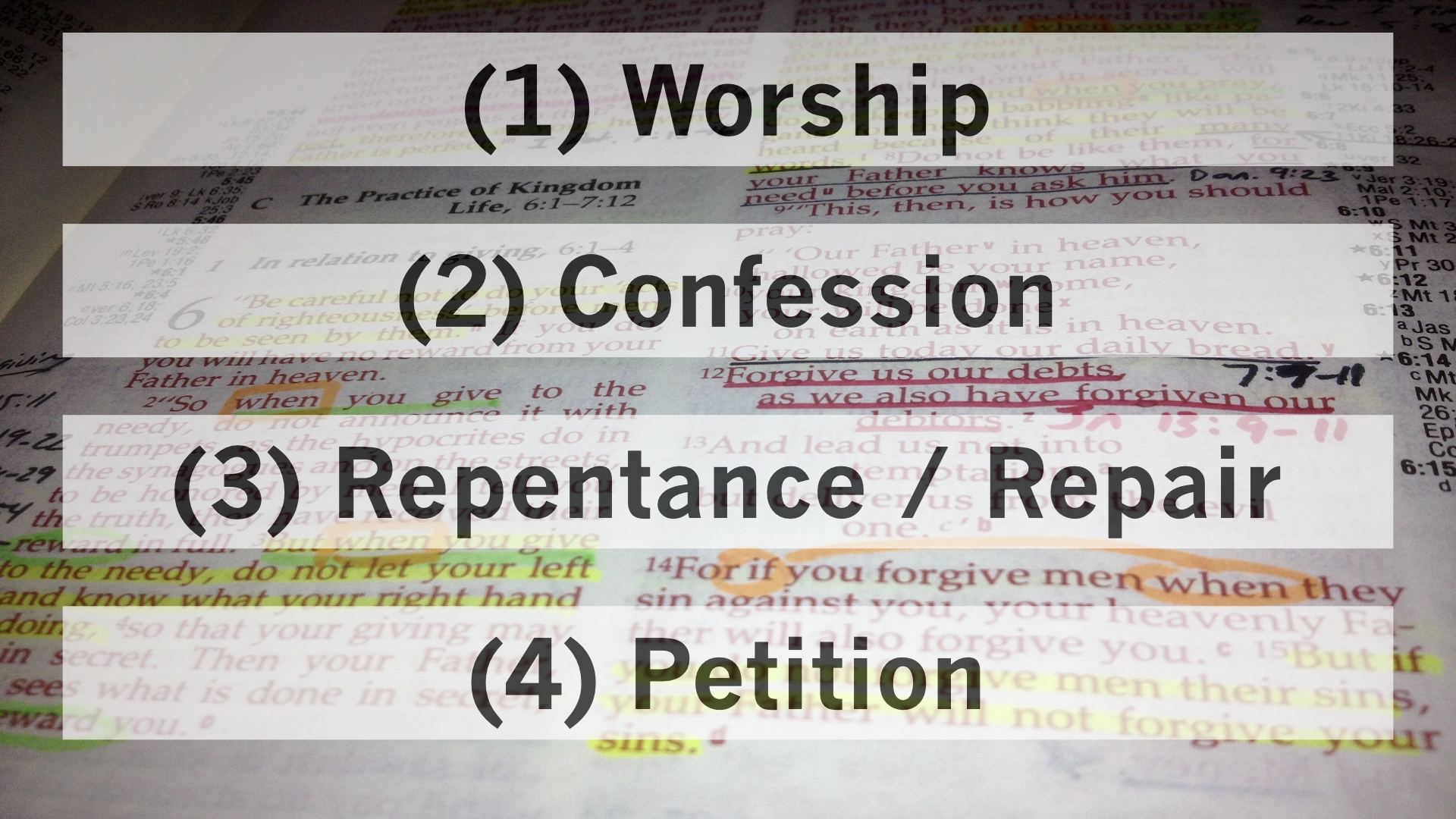
So I think we need to pray before we pray. Let’s try these actions which are tethered to the reality of our Prayer Book.
Worship. This is a deep pondering of who God is; it is humbly assigning Him the highest worth. In face, the Old English spelling of this word (“worthship”) gives us insight into what worship does. It is this kind of humility that God responds to (Isaiah 6:5-7; 57:15; Luke 18:9-14).
Confession. As we are worshiping, we will see our inadequacies (much like Isaiah did in Isaiah 6, or the tax collector did in Luke 18). We then need to confession these shortcomings. Dick Brogden wrote, “Confessed sin opens the portals of heaven into our darkness, and light and glory overwhelm shame. Confession is our glory for it lifts our heads and eradicates shame.” We see this so vividly lived out in the prayers of David (Psalm 139:23-24; 51:1-2; 19:12-14).
Repentance. I think we could also call this Repair. After confession where we have fallen short, we resolve now to both take a different path and repair what was damaged (Matthew 5:23-24; Mark 11:25-26; 1 Peter 3:7).
Petition. After worship, confession, and repentance / repair, our heart’s attitude is now in the place for God to heed our cries for His help (1 Peter 3:12).
Let’s learn to pray before we pray. Don’t just rush in and rush out of God’s presence. Take time to worship, confession any sins the Holy Spirit reveals, make things right, and then present your petitions.
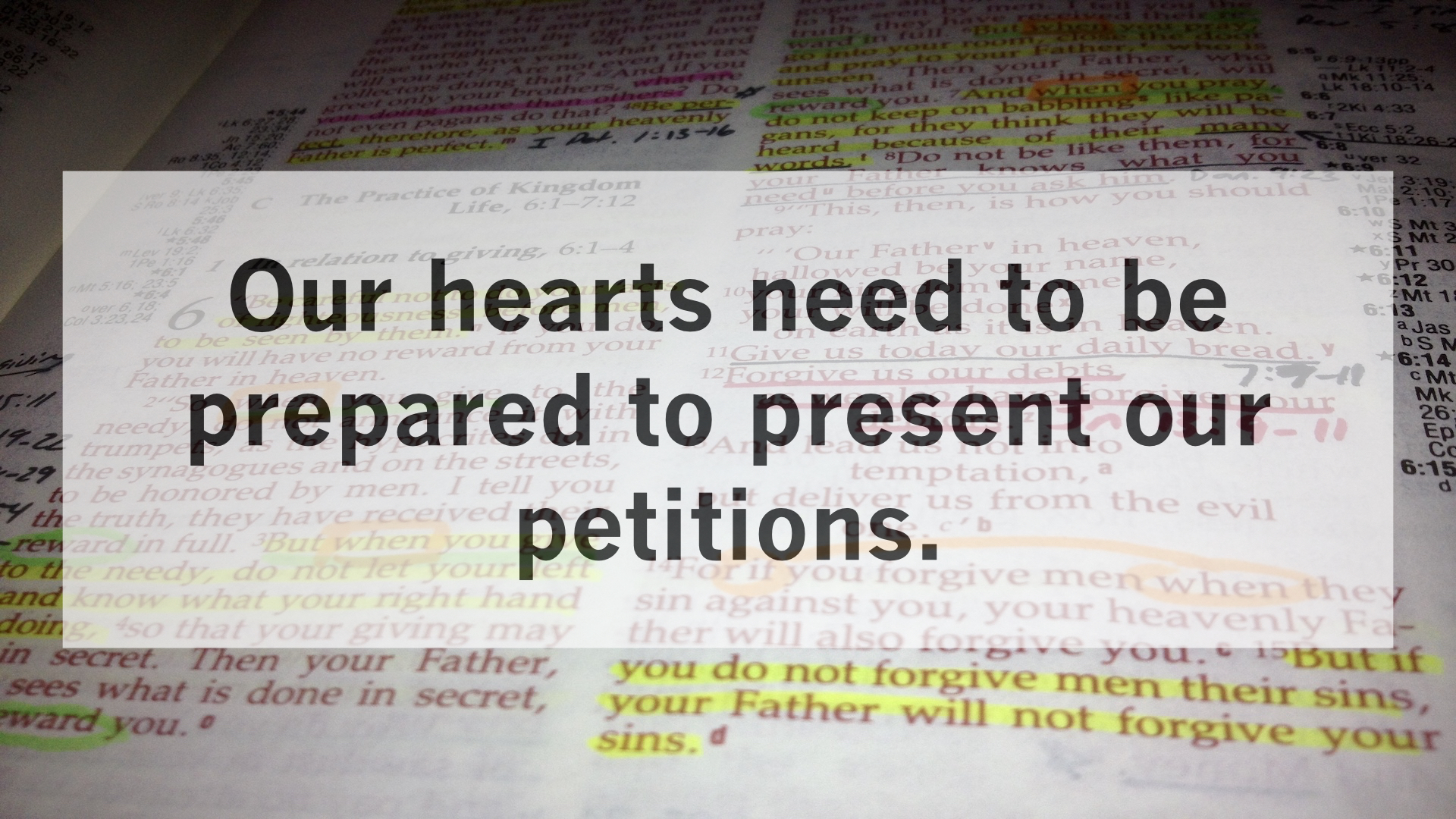
Our hearts need to be prepared to present our petitions. This is how we know that God will hear our voice.



 You may seem some glimmers of light in your dark place—like Paul did in the Roman prison—but even if you don’t see anything but darkness, make the choice to worship. I need to remind myself that God has a plan for my life and that He is working out all the details for my good and to bring glory to Himself.


 Craig T. Owens