I Stand At The Door And Knock (book review)

I Stand At The Door And KnockCorrie ten Boom is an amazing woman! She hid the Jews from the Nazis, was arrested for this “crime,” experienced unimaginable horrors in a concentration camp, and was miraculously released from prison just before all the women in her group were executed. And still she remained steadfast in her trust of God. I Stand At The Door And Knock is a collection of 40 of her radio broadcasts, especially directed to others going through difficult times.

Because these are radio transcriptions, each message feels very conversational and Corrie relates many of her personal experiences to her audience. All of this makes her message more believable to those struggling with challenges.

Each message concludes with a prayer that Corrie prayed for her listening audience, and I love how she ended nearly every prayer. She said, “Hallelujah! Amen.” In other words, she was already rejoicing in the answer to prayer as she finished praying it! What an inspiring woman!

If you are going through a difficult time—of if you know someone who is—and perhaps feel like no one knows how big your struggle is, this book will “speak your language.” These are honest, comforting words from someone who truly was battle-tested and came through victorious.

12 Quotes From “Churchill’s Trial”

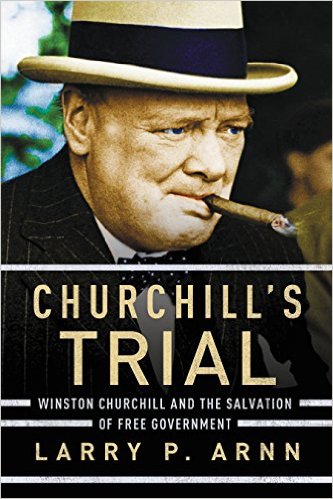
Churchill's TrialIn Churchill’s Trial, Larry Arnn has given us a fascinating look at Winston Churchill’s battle to keep freedom alive, both in the moment of crisis and after the crisis has passed. You can read my full book review by clicking here. Below are a few of the quotes I highlighted as I read.

“Mankind has never been in this position before. Without having improved appreciably in virtue or enjoying wiser guidance, it has got into its hands for the first time the tools by which it can unfailingly accomplish its own extermination. That is the point in human destinies to which all the glories and toils of men have at last lead them. They would do well to pause and ponder upon their new responsibilities. Death stands at attention, obedient, expectant, ready to serve, ready to shear away the peoples en masse; ready, if called upon, to pulverize, without hope of repair, what is left of civilization. He awaits only the word of command. He awaits it from a frail, bewildered being, long his victim, now—for one occasion only—his master.” —Winston Churchill 

“Science is necessary, and also science is a master. As the human ability to make grows, the human ability to control the engines by which we make diminishes. The logical problem is relentless: we may stay as we are and lead shorter lives of pain and trouble, or we may use our capacity to make our lives easier and safer. If we do that we will gain power, and we can use that power against ourselves.” —Larry Arnn

“No material progress, even though it takes shapes we cannot now conceive, or however it may expand the faculties of man, can bring comfort to his soul.” —Winston Churchill 

“We must never cease to proclaim in fearless tones the great principles of freedom and the rights of man which are the joint inheritance of the English-speaking world and which through Magna Carta, the Bill of Rights, the Habeas Corpus, trial by jury, and the English common law find their most famous expression in the American Declaration of Independence. …

“All this means that the people of any country have the right, and should have the power by constitutional action, by free unfettered elections, with secret ballot, to choose or change the character or form of government under which they dwell; that freedom of speech and thought should reign; that courts of justice, independent of the executive, unbiased by any party, should administer laws which have received the broad ascent of large majorities or are consecrated by time and custom. Here are the title deeds of freedom what should lie in every cottage home. Here is the message of the British and American peoples to mankind. Let us preach what we practice—let us practice what we preach.” —Winston Churchill

“There is enough for all. The earth is a generous mother; she will provide in plentiful abundance food for all her children if they will but cultivate her soil in justice and in peace.” —Bourke Cockran

“Human relations are not a contest in which the advantage of some requires the disadvantage of others. That means in turn that government need not have the authority to allocate resources, at least not comprehensively. A government with such power would be in one sense at war with any citizens who have more than others, effectively with all citizens but the few poorest.” —Larry Arnn

“In republics, the greater danger is that the majority may not sufficiently respect the rights of the minority.” —James Madison

“He who molds public sentiment goes deeper than he who enacts statutes or pronounces decisions.” —Abraham Lincoln

“Democracy properly understood means the association of all through the leadership of the best.” —Winston Churchill

“Our hearts will ache…if we have not a vision above material things.” —Winston Churchill

“If men were angels, no government would be necessary. If angels were to govern men, neither external nor internal controls on government would be necessary.” —James Madison

“We now watch the workings of a written Constitution enforced by a Supreme Court according to the letter of the law, under which anyone may bring a test case challenging not merely the interpretation of the law, but the law itself, and if the Court decides for the appellant, be he only an owner of a few chickens, the whole action of the Legislature and the Executive becomes to that extent null and void.” —Winston Churchill 

More quotes coming soon…

Churchill’s Trial (book review)

Churchill's TrialI have read so much written by and about Winston Churchill, that it’s hard to imagine learning something new about this remarkable man. And yet, I was amazed at how much more I learned in reading Churchill’s Trial by Larry Arnn.

It’s easy to take for granted the freedoms people have in countries like England and the United States because of the foresight of the framers of our Constitutions. But there are trials which put these freedoms in a precarious place, and if it were not for strong and insightful men—like Winston Churchill—those freedoms could have disappeared.

Churchill played key roles in his country, and in world politics, through two world wars, a global depression, the coming of age of new military super-powers, the dawn of the era of atomic warfare, and the rise of Communism. In all of these intense events, the temptation was there to make radical changes to meet the challenge of the moment. Churchill had the wisdom and foresight to leverage the strength of his country’s Constitution, without undermining it nor setting a precedent which would erode future freedoms.

In what Churchill did for England, he also helped strength the resolve of key leaders in the United States, who faced similar challenges in a shifting geopolitical climate. Churchill not only saved the world from the spread of fascism and communism, but he did so in a way that would guarantee freedom for millions of people in generations to follow. The question before us now is: Will we learn from Churchill’s example, or will we fail the trial we now face?

For history buffs, political junkies, and fans of Winston Churchill, Churchill’s Trial is an excellent read.

I am a Thomas Nelson book reviewer.

Links & Quotes

link quote

Some good reading from today…

“As long as you set yourself up as a little god to which you must be loyal there will be those who will delight to offer affront to your idol. How then can you hope to have inward peace? … Such a burden as this is not necessary to bear. Jesus calls us to His rest, and meekness is His method. The meek man cares not at all who is greater than he, for he has long ago decided that the esteem of the world is not worth the effort.” —A.W. Tozer

[PHOTOS] Some great photographs from the scientific world.

Dave Barringer has a great post about marriage and adultery: Affairs And Fruit.

[PHOTOS] Today marks the 73rd anniversary of Franklin D. Roosevelt’s “day of infamy” speech. Here are some memorable photos remembering that horrific day.

“It will not bother me in the hour of death to reflect that I have been ‘had for a sucker’ by any number of impostors: but it would be a torment to know that one had refused even one person in need. After all, the parable of the sheep and goats [Matthew 25:31-46] makes our duty perfectly plain, doesn’t it? Another thing that annoys me is when people say ‘Why did you give that man money? He’ll probably go and drink it.’ My reply is ‘But if I’d kept [it] I should probably have drunk it.’” —C.S. Lewis

10 Quotes From “How Do You Kill 11 Million People?”

How Do You KillAndy Andrews pulls no punches in this amazing book: How Do You Kill 11 Million People? You can read my full book review by clicking here. Below are some of the more noteworthy quotes I highlighted in this book.

“The punishment which the wise suffer who refuse to take part in the government, is to live under the government of worse men.” —Plato

“The past is what is real and true, while history is merely what someone recorded.”

“How fortunate for leaders that men do not think. Make the lie big, make it simple, keep saying it, and eventually they will believe it.” —Adolf Hitler

“It is a fact that fewer than 10 percent of Germany’s population of 79.7 million people actively worked or campaigned to bring about Hitler’s change. Even at the height of its power in 1945, the Nazi political party boasted only 8.5 million members. So the remaining 90 percent of Germans—teachers and doctors and ministers and farmers—did . . . what? Stood by? Watched? Essentially, yes.”

“The danger to America is not a single politician with ill intent. Or even a group of them. The most dangerous thing any nation faces is a citizenry capable of trusting a liar to lead them.”

“Have you ever wondered why America doesn’t have a balanced budget? Have you ever in your life heard of a politician who wasn’t for a balanced budget? Have you ever heard a politician speak in favor of a complicated tax code that ordinary citizens would find difficult to understand? Then why do we have a complicated tax code that ordinary citizens find difficult to understand? Meet the 545 men and women who enact every law, propose every budget, and set every policy enforced on the citizens of the United States of America: one president, nine Supreme Court justices, one hundred senators, and 435 members of the House of Representatives. By the way, have you ever noticed that if any one of us lies to them, it is a felony? But if any one of them lies to us, it is considered politics.”

“During the past quarter century, no presidential election has been won by more than ten million ballots cast? Yet every federal election during the same time period had at least one hundred million people of voting age who did not bother to vote!”

“History shows that any people who are sheeplike in following their leadership (so long as their personal self-interests are satisfied) may one day awaken to find that their nation has changed in dramatic ways.”

“If we don’t demand honesty and integrity from America’s leadership now—and reward that integrity with our votes—our leaders will lack the fortitude to make the hard decisions that must be made to change course.”

“Now, more than ever before, the people are responsible for the character of their Congress. If that body be ignorant, reckless, and corrupt, it is because the people tolerate ignorance, recklessness, and corruption. If it be intelligent, brave, and pure, it is because the people demand these high qualities to represent them in the national legislature. … If [one hundred years from now] the next centennial does not find us a great nation … it will be because those who represent the enterprise, the culture, and the morality of the nation do not aid in controlling the political forces.” —President James A. Garfield, in his address to Congress on the centennial of our country (1876)

10 Quotes From “C.S. Lewis In A Time Of War”

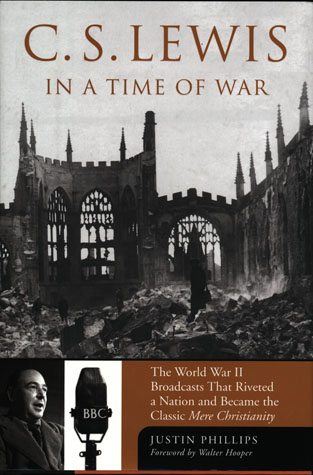
In A Time Of WarI loved C.S. Lewis In A Time Of War by Justin Phillips! It appealed to my interests in World War II history, old-time radio, and one of my favorite authors: C.S. Lewis. You can read my book review by clicking here. Below are 10 quotes from this book which will give you a little of the flavor of this work.

“In a time of uncertainty and questioning it is the responsibility of the church—and of religious broadcasting as one of its most powerful voices—to declare the truth about God and His relation to man. It has to expound the Christian faith in terms that can be easily understood by ordinary men and women, and to examine the ways in which that faith can be applied to present-day society during these difficult times.” —James Welch, the BBC director of religious broadcasting responsible for getting C.S. Lewis on the air

“It seems to me that the New Testament, by preaching repentance and forgiveness, always assumes an audience who already believe in the law of nature and know they have disobeyed it. In modern England we cannot at present assume this, and therefore most apologetic begins a stage too far on. The first step is to create, or recover, the sense of guilt. Hence if I gave a series of talks, I should mention Christianity only at the end, and would prefer not to unmask my battery till then.” —C.S. Lewis

“Having seen more of his original manuscripts than probably anybody else, Walter Hooper observes that there is next to no evidence of rewriting or of copious changes. The manuscript of The Screwtape Letters is a case in point. There was only the one draft.” —Justin Phillips

“A charitable trust was set up called The Agape Fund, using the Greek word for love. Until his marriage in 1957, two-thirds of all Lewis’s royalties went into this fund to help those in need—normally under the cover of anonymity.” —Justin Phillips

“If the whole universe has no meaning, we should never have found out that it has no meaning.” —C.S. Lewis

“Walter Hooper had discovered a calculation made by Warnie [Lewis] in 1967, described in his diary some four years after Jack’s [C.S. Lewis] death, that by the time the typewriter was finally packed up Warnie must have written at least 12,000 letters on it on his brother’s behalf.” —Justin Phillips

“Any amount of theology can now be smuggled into people’s minds under the cover of romance without them knowing it.” —C.S. Lewis 

“But if you will go to God just as you are, fully admitting that you care about Him very little, and put yourself in His hands, if you’re even ready to be made to care and leave Him to work, He’ll do the rest.” —C.S. Lewis

“All I am in private life is a literary critic and historian, that’s my job. And I am prepared to say on that basis if anyone thinks the Gospels are either legends or novels, then that person is simply showing his incompetence as a literary critic. I’ve read a great many novels and I know a few amount about the legends that grew up among early people, and I know perfectly well the Gospels are not that kind of stuff. They are absolutely full of the sort of things that don’t come into legends. Take one simple example. The passage in which Our Lord is scribbling in the dust before He gives His answer about the woman taken in adultery. Nothing whatever comes of it, no doctrine has ever been based on it, it has no point at all; there’s no conceivable reason why anyone should ever have written it down, unless he’s seen it happening. From first to last the things strike me as records of fact. And, in my opinion, the people who think that any of the episodes in the Gospels are imaginary are the people who have no imagination themselves and have never understood what imaginative story-telling is.” —C.S. Lewis

“Numbers vary, but in the year 2000 some estimates put worldwide sales of Lewis’ books at over 200 million copies in more than thirty languages.” —Justin Phillips

C.S. Lewis In A Time Of War (book review)

In A Time Of WarC.S. Lewis In A Time Of War by Justin Phillips combined several favorite things for me: World War II history, an inside look at old-time radio, a biography on one of my favorite authors, and a fascinating look at the repercussions of one man’s life.

The BBC Radio was just coming into its own during the lead up to World War II. England again was to play a major part on the world stage, and the radio became not only the primary means of communicating inside Great Britain, but also to the world as well. Radio was used to inform, to pass along vital information, to entertain, and to boost morale.

After having already endured The Great War (what we now call World War I), the English populace was largely dismayed at being forced into another bloody conflict. As anyone might imagine, morale was at an all-time low and questioning God’s role in these cataclysmic events was at an all-time high. The BBC felt duty-bound to try to raise morale and answer these questions.

Looking back on history, C.S. Lewis seems the perfect choice to be the voice of encouragement and reason that the BBC would use, but at the time Lewis was a little-known don at Magdalen College who had never written a script to be read over the airways (something far different than writing for someone else to read themselves in essay or book form). So not only did the BBC take a huge leap of faith, but so did Lewis, as a failure in this venture could have seriously damaged his reputation and future.

As it turned out, Lewis’ talks were immensely popular, and the text of those talks ended up being published in the book form we now know as Mere Christianity. C.S. Lewis also experienced one of the most productive times of his life, cranking out many other of his most popular books, sermons, and talks given to the Royal Air Force and other military personnel.

If you are a fan of C.S. Lewis, World War II history or old-time radio, there is much to enjoy in this well told story by Justin Phillips. Definitely a great read!

NOTE: Focus on the Family produced an excellent audio drama using this book as the source. Check out my review of that production by clicking here

Bonhoeffer (book review)

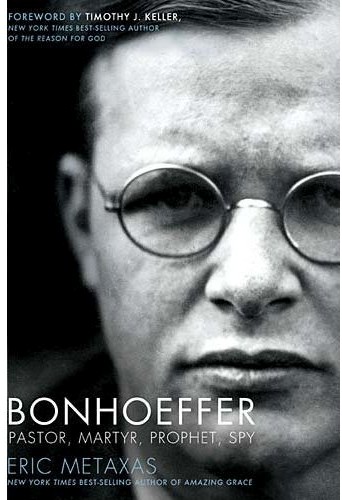
I’ve always been an admirer of Dietrich Bonhoeffer’s work, but Eric Metaxas’ sweeping biography has given me a whole new appreciation for this influential theologian.

Bonhoeffer: Pastor, Martyr, Prophet, Spy takes you behind the scenes that influenced this great man. You will see how his family helped encourage Dietrich to be such a deep thinker. Then you will read how Bonhoeffer’s thinking was sharpened as he challenged the Nazi’s co-opting of the church in Germany, leading him to call pastors back to a biblically-sound foundation.

By perhaps the most compelling storyline is how this pastor could join the band of German citizens who agreed that Adolph Hitler must be assassinated. Although to us now it may seem like an easy decision to make, to those who lived through the events leading up to Word War II, it was an excruciating decision. Eric Metaxas does a masterful job of taking us inside the thinking process that led Dietrich Bonhoeffer to his decision.

And through all of the turmoil swirling around him, Bonhoeffer found time to not only teach young pastors, but to leave behind some timeless teachings in his masterful books.

If you are already familiar with Bonhoeffer’s writings, this biography will give you a whole new appreciation into the man who crafted the books. If you aren’t yet familiar with Bonhoeffer’s books, Bonhoeffer will whet your appetite to know more. Don’t miss out on this one!

Patton: The Pursuit Of Destiny (book review)

Disclaimer: I am a huge admirer of General George Smith Patton, Jr. So it should come as no surprise that I thoroughly enjoyed Agostino Von Hassell and Ed Breslin’s biography Patton: The Pursuit Of Destiny.

It’s also no surprise that I relished reading about Patton’s military genius and his relentless preparation to be a man of destiny. What did surprise me was the candor with which the authors dealt with the shortcomings of Patton. For all of his military genius, there were areas of his life that always seemed to get the best of this general. On the battlefield, he had few equals, but away from the heat of battle, his insecurities could get the best of him. I appreciated how the authors showed Patton playing to his strengths while still struggling with his weaknesses. While many biographies show great men and women overcoming their struggles, Patton shows the general living with his struggles and still achieving greatness in spite of them.

I also learned more about Patton’s family lineage in this book that helped me understand what drove this military hero. I read about a man who was a voracious learner, highly competitive, and a man who set extraordinarily high standards for himself. His biggest weakness: he couldn’t abide those who didn’t share these same lofty goals for their own lives or profession.

If you enjoy military history, a study of a larger-than-life leadership persona, or a biography with an unflinching look at a great man’s angels and demons, you will enjoy reading Patton: The Pursuit Of Destiny.

I am a Thomas Nelson book reviewer.

Lead Like Ike (book review)

There is so much to like about Lead Like Ike by Geoff Loftus!

If you like military history, you will love the narrative of the strategies and implementation that Dwight D. Eisenhower (or “Ike”) oversaw. It is an amazing retelling of how Ike had to balance so many pressures from not only the Germans but within his own ranks as well, to lead the Allies to victory in Europe during World War II.

If you like business strategies, you will enjoy the way Loftus renames the military build-up in Europe during WWII “D-Day Inc.,” and assigns titles like Board of Directors, CEO, C-level staff, and competitors to the battles in Operation Torch, Operation Overlord, the Battle of the Bulge and others. You will see how Ike functioned as an effective CEO to lead D-Day Inc. in their head-to-head challenges with their German competition.

And if you like biographies about strong leaders, you will see the incredible leadership principles that Ike employed in his personal life and in his military career. You will see a man firmly fixed on his goal, but also a man who felt deeply about the individual soldier, sailor, and airman under his command.

Sprinkled throughout the book (and summed up nicely at the end of each chapter) are strategies for success, implementation plans, and tips for personnel management.

The only thing that disappointed me about this book was that it came to an end! I thoroughly enjoyed it, and I believe you will too. I give it five-out-of-five stars.

I am a Thomas Nelson book reviewer.