Listen to the podcast of this post by clicking on the player below, and you can also subscribe on Apple, Spotify, or Audible.
In someways, my new book When Sheep Bite came out of my first book Shepherd Leadership. And yet, in many ways I consider When Sheep Bite to be the prequel of Shepherd Leadership.
Check out this short clip from my interview on the Leading From Alignment podcast with John Opalewski and Jim Wiegand where I try to explain what I mean.
In whatever order you choose to read these books, I have been thrilled to hear back from pastors and other church leaders who have found encouragement from both of them.
You can watch the full Leading Form Alignment interview here.
Listen to the podcast of this post by clicking on the player below, and you can also subscribe on Apple, Spotify, or Audible.
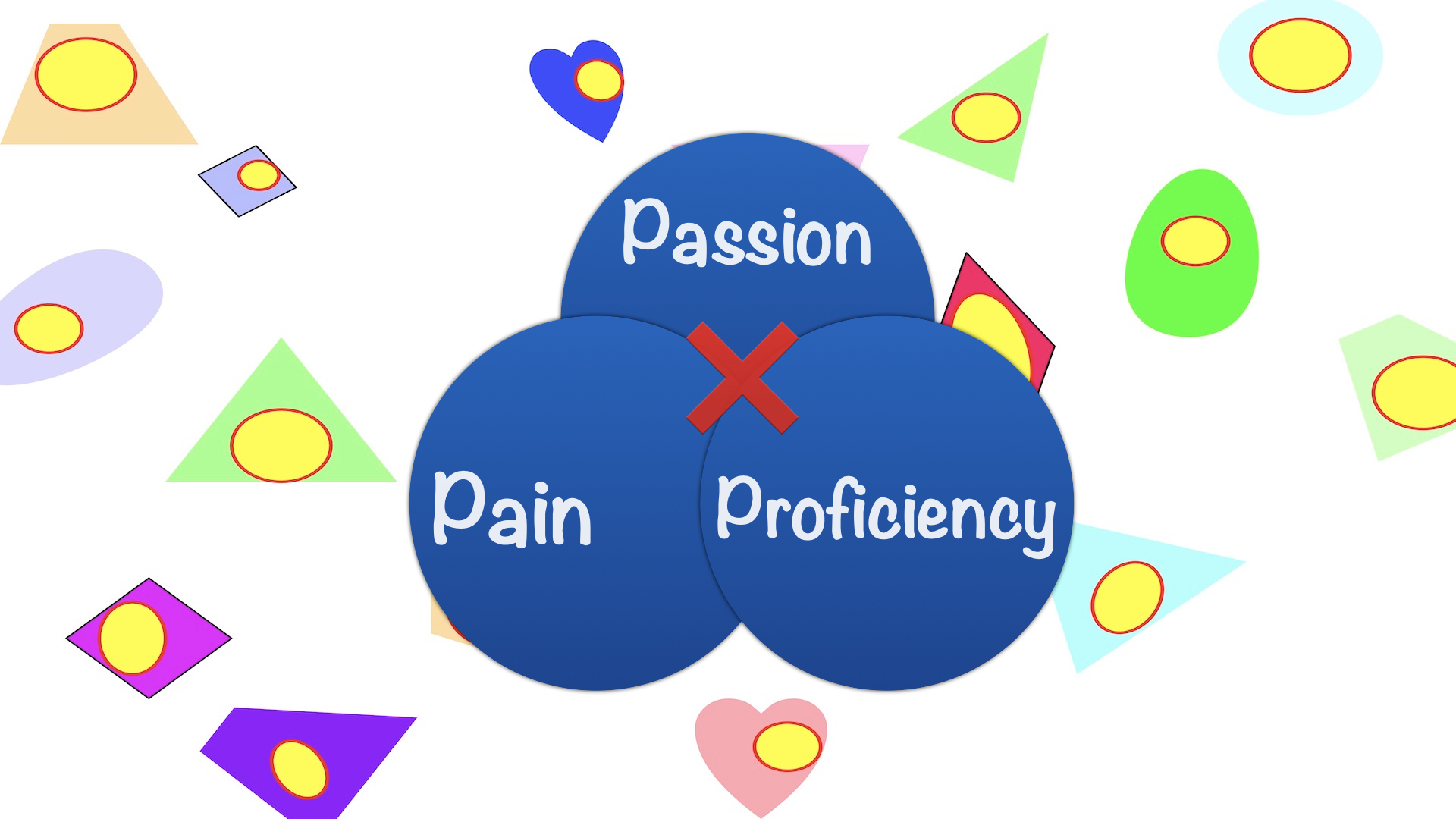
We’ve now learned about all three circles that help us discover our God-implanted gifts:
Passion—what thrills you?
Pain—what kills you?
Proficiency—what fulfills you?
What do you do with these gifts? What’s the whole purpose in learning about them? I think the goal as saints is to help the Body of Christ mature in ways that brings God glory (Ephesians 4:12-16).
Solomon also gives a great word picture of friends using their gifts for each other—“As iron sharpens iron, so a friend sharpens a friend” (Proverbs 27:17 NLT).
In an earlier message in this series, I talked about the thousands of enzymes in our human bodies. Each enzyme has just one task, and each task is indispensable to the health of the whole body. It is exactly the same in the Body of Christ—your gift-in-action is indispensable to the health of the whole Body.
How do you squander your grace gift? I think these are five basic ways:
Not discovering it—“I have a gift?”
Devaluing it—“My gift is nothing special.”
Overvaluing it—“My gift is super-important.”
Laziness—“My gift is fine just the way it is.”
Selfishness—“My gift is just for me.”
We need to discover our own gifts, but then we need to work on making the switch from “me” to “we.” I want to excel in using my gift so that I can help you excel in using your gift so that we can help another brother or sister excel in using their gift.
Oswald Chambers said, “The Book of God is insistent on this: we cannot develop a holy life alone, it would be a selfish life, without God in it and wrong. … Beware of isolation; beware of the idea that you have to develop a holy life alone. It is impossible to develop a holy life alone, you will develop into an oddity and a peculiarism, into something utterly unlike what God wants you to be. The only way to develop spiritually is to go into the society of God’s own children, and you will soon find how God alters your set.”
Frequently we need another brother or sister in Christ to help nudge us into discovering and using our gifts. For example, look how…
Mordecai assured Esther (Esther 4:13-14)
Matthias was chosen by those in the upper room (Acts 1:21-26)
The first deacons were unanimously chosen by the Church (Acts 6:3-6)
Barnabas and Saul were chosen by the Holy Spirit and confirmed by other prophets and teachers in the church (Acts 13:1-3)
Paul encouraged his proteges to appoint elders who were recognized by others in the church (Titus 1:5; 1 Timothy 3:1f)
Consider this poem—
For want of a horseshoe nail the shoe was lost.
For want of a shoe the horse was lost.
For want of a horse the rider was lost.
For want of a rider the message was lost.
For want of a message the battle was lost.
For want of a battle the kingdom was lost.
And all for the want of a horseshoe nail.
Listen to the Holy Spirit. Listen to the confirming words from fellow saints—words like “You are gifted,” “You are so good at…,” and “How did you know how to do that?” Then step out of your comfort zone and soar into your gift zone!
My book Shepherd Leadership has five chapters dedicated to the health and wellbeing of pastoral leaders. One important principle: Only healthy shepherds can help their sheep get healthy.
I have lots of new content every week, which you can check out on my YouTube channel.
Clinton Manley has a great post on the way the Holy Spirit empowers a Christian’s life. He tells of this work in terms of an adventure: “We were made to go to God, the Home for our souls, made to enjoy God more and more forever, to really live. And the only way to get there is by following the Way crossing the only Bridge that brings us to God (John 14:6; 1 Peter 3:18). And we can only walk that Way when God’s own breath fills our lungs and animates our steps, when His Spirit sets us walking in a new direction as new creations on new adventures.”
Even among the reformers, Conrad Grebel was consider something of a radical. “Grebel was convinced that the city councilmen should have no authority over the church and its practice — more so, they should have no authority over the word of God itself. On the flip side, he didn’t think the church should have authority over the state either, and he opposed compulsory tithing and the like. The seeds of a separation between church and state were germinating. To us, this separation is as familiar as the air we breathe; to them, it was revolutionary.” Read more about both Grebel and other reformers here.
“If we would rise into that region of light and power plainly beckoning us through the Scriptures of truth, we must break the evil habit of ignoring the spiritual. We must shift our interest from the seen to the unseen.” —A.W. Tozer
“Success is dangerous. One begins to copy oneself and to copy oneself is more dangerous than to copy others.” —Pablo Picasso
Christian apologist J. Warner Wallace has a great strategy for responding to skeptics who claim that the Bible contradicts itself.
Listen to the audio-only version of this podcast by clicking on the player below, or scroll down to watch the video.
As the saying goes, all good things must come to an end. You might be motivated by a feeling of limitation where you are, excited by a new opportunity, ready to retire and soak up some sun, or many other reasons. Whatever your reasons are, Greg and I would like to give you practical advice to apply when you’re considering moving on.
[0:15] Is it time?
[1:42] Greg goes negative first! Don’t make a move because of “greener grass.”
[2:54] Some better questions to ask about moving on.
[5:30] I always asks, “Why did you start here?” before asking, “Should you leave here?”
[8:01] Greg and I wonder about the value of getting “outside advice” when considering a move.
[10:40] We need to weigh both emotion and logic when thinking about the timing of a move.
[13:26] We can have regrets about leaving and we can have regrets about staying too long. A navigator can help you think through your options.
[18:40] Sometimes an owner is not ready to sell but a leader inside is ready to buy. How do we walk through this?
[21:16] Here’s the key takeaway on the timing of moving on.
Check out this episode and subscribe on YouTube so you can watch all of the upcoming episodes. You can also listen to our podcast on Spotify and Apple.
Listen to the podcast of this post by clicking on the player below, and you can also subscribe on Apple, Spotify, or Audible.
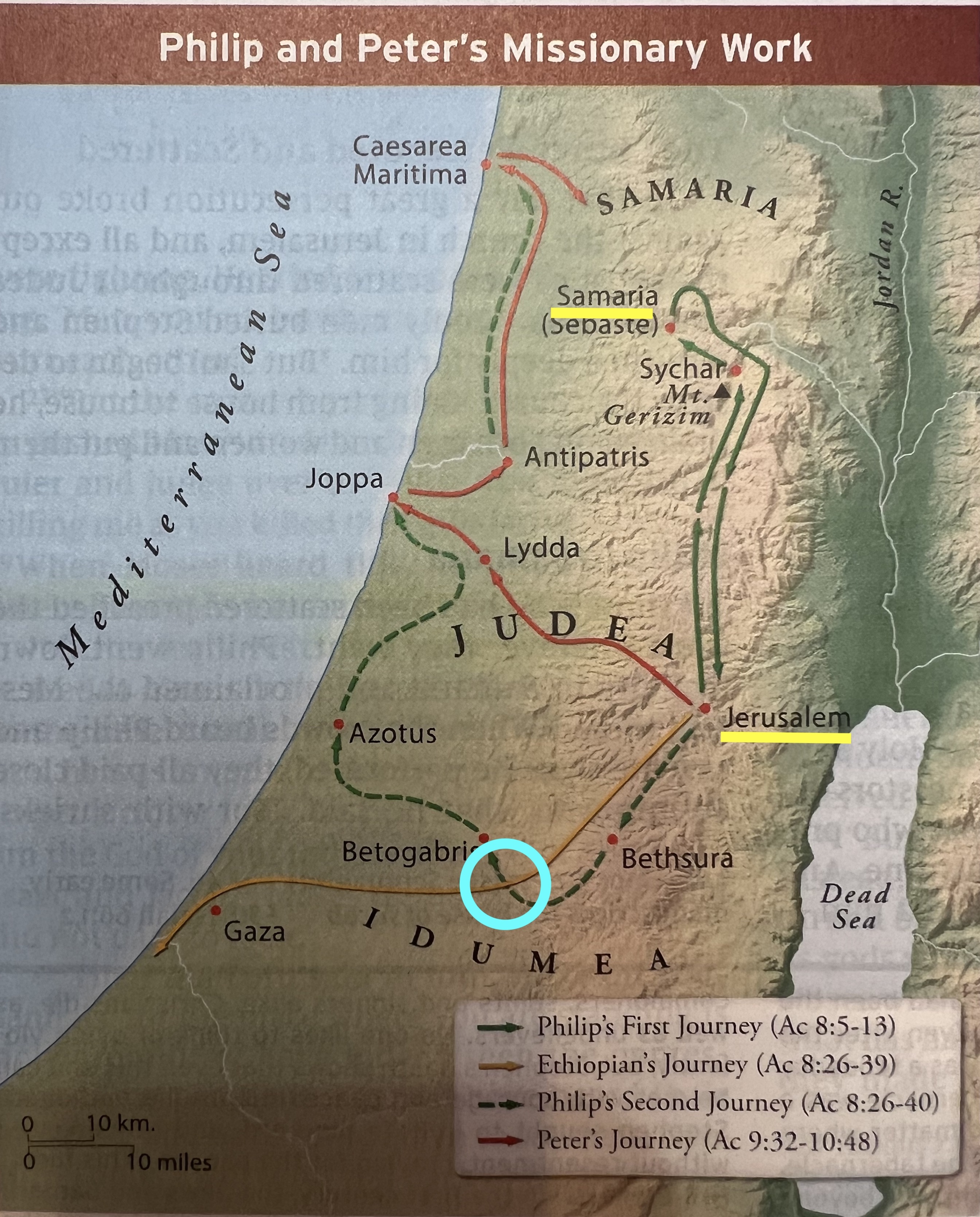
Ministry was booming in Samaria, and Philip was at the center of the activity. People were getting saved, healed, and set free from demonic possession.
And then an angel tells Philip it is time to move on. We don’t see Philip debating or negotiating, but we just see his immediate obedience. As Philip is traveling the route the angel gave him, he sees a chariot approaching. The Holy Spirit then speaks to Philip and says, “Get close to that chariot and stay near it.” It was then that Philip hears the man in the chariot reading aloud from the Book of Isaiah, so he asks him if he understands what he is reading. This high-ranking official from Ethiopia then invites Philip into his chariot to explain the meaning to him.
Philip had to leave Samaria in time to cross paths with the Ethiopian official who was heading home from Jerusalem—they met in the middle of a desert. An angel got Philip started. The Holy Spirit refined where Philip needed to be. And then Philip took it from there.
If Philip had been trying to “grow” a successful ministry, he may have downplayed or even ignore the messages he received. But Philip wasn’t concerned about bigger numbers, just quicker obedience.
Philip’s quick obedience placed him precisely where God needed him to be, precisely when he needed to be there! (See Acts 8:4-40.)
In my book Shepherd Leadership, I have a chapter entitled “Don’t Try to Grow Your Ministry.” A portion of what I wrote comes from Philip’s quick obedience—
Don’t try to grow your ministry. First, because it’s not yours, it’s His; and second, because your measure of success is probably more slanted toward quantitative measurements than qualitative. Jesus wasn’t concerned about bigger numbers: “What do you think?” He asked, “If a man has a hundred sheep, and one of them goes astray, does he not leave the ninety-nine and go to the mountains to seek the one that is straying?” (Matthew 18:12).
Philip went to Samaria to tell people about Jesus. He didn’t go there because it fit his plan, but because Jesus said, “You will be My witnesses in Jerusalem, and in all Judea and Samaria, and to the ends of the earth” (Acts 1:8). Philip’s obedience brought God’s success: hundreds turned to Jesus as their Savior, demon-possessed people were delivered, the sick were healed, and the new Christians were baptized in the Holy Spirit. Yet God called Philip to leave these “ninety-nine” and go to the desert to cross paths with just one confused and wondering sheep (Acts 8). After that, Philip virtually disappears from Luke’s historical record.
What’s the value of one government official’s life? God says that his value is incalculable. Apparently, God knew that Philip was the perfect shepherd to lead this Ethiopian to the pasture where he would accept Jesus as his Savior. Philip was obedient, a sheep was saved, and God was pleased. But I wonder how many people today might think Philip’s ministry was unsuccessful because he left a bigger ministry in Samaria to go to a smaller ministry in the desert? Bishop William C. Abney said, “I’m still waiting for a leader to say, ‘God called me to a smaller ministry.’ We usually only say, ‘God called me’ when it’s something bigger. God’s math doesn’t work our way.”
The Chief Shepherd made this commitment to His sheep: “And I will give you shepherds according to My heart, who will feed you with knowledge and understanding” (Jeremiah 3:15). My prayer is that we would much rather feed a few sheep where God has directed us and given us His heart than for us to try to manufacture success that is measured by how many nickels and noses we can count.
Philip demonstrates for us that it’s not about bigger numbers, it’s about obedience to God’s voice in the moment, and then hearing our Chief Shepherd’s voice at the end of our life saying, “Well done, good and faithful servant.”
Listen to the podcast of this post by clicking on the player below, and you can also subscribe on Apple, Spotify, or Audible.
We have been learning about how God gifts us so that He can use us to build His kingdom. Discovering these gifts and then living in this gift zone is going to require us to stretch out of our comfort zone. So far, we’ve looked at two factors:
As you look back, the things that thrill you and kill you have probably remained consistent through your life. You may recall moments where implementing your gifts went very well and times when it didn’t go so well. The former makes us ready to try again and maybe expand a little further, but the latter tempts us to shrink back into our comfort zone. The key is to find out how we can be more consistent in using our gifts productively.
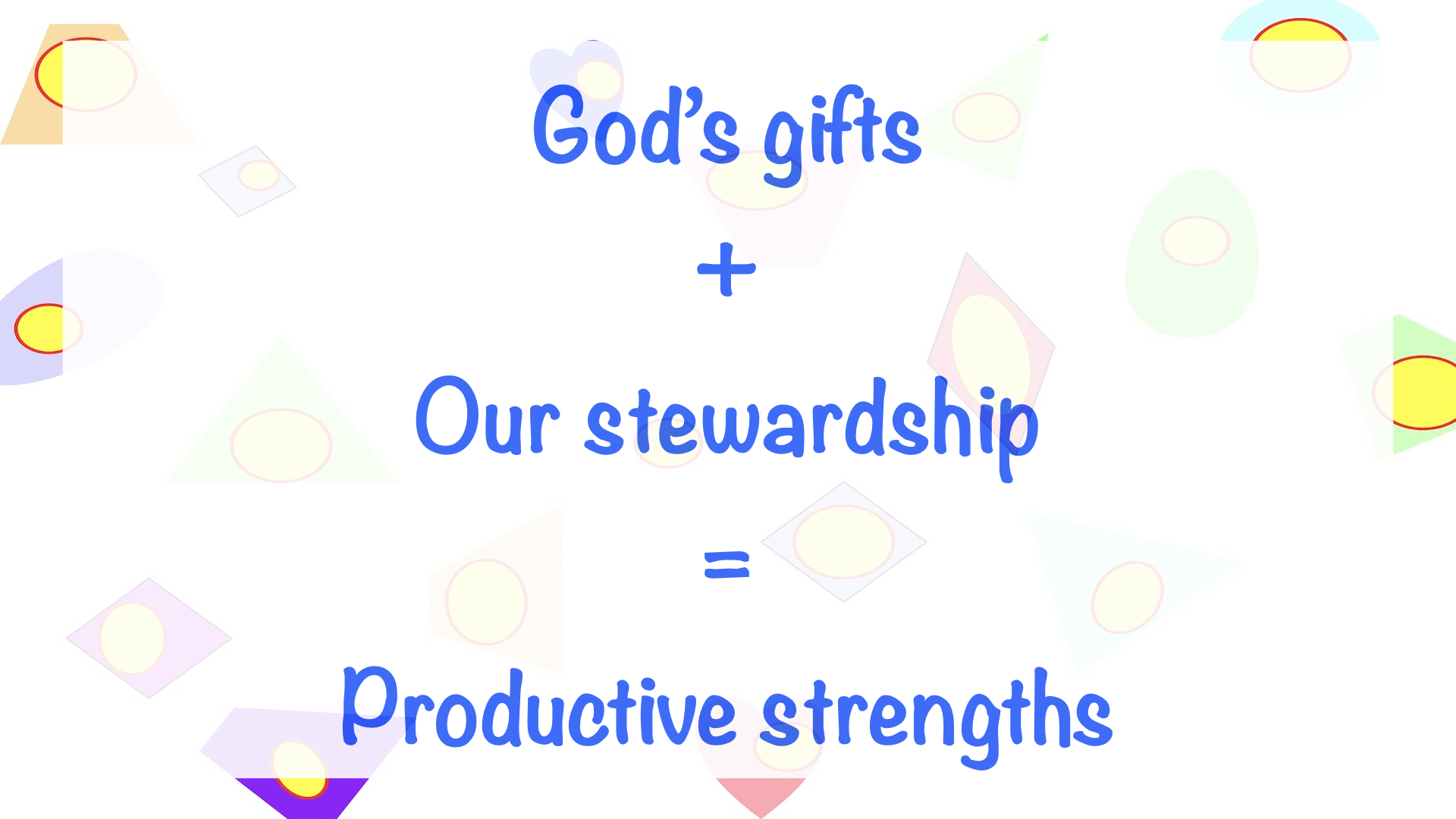
It looks like this: God’s gifts + Our stewardship = Productive strengths.
God gives the gifts as only He knows best (Psalm 139:16; Romans 12:6; 1 Corinthians 12:11) and then we steward these gifts into productive strengths.
The dictionary defines it as the responsible overseeing and protection of something considered worth caring for and preserving.
The Bible always portrays a steward as the one in charge of the precious things in a household—in our case, the Church.
Jesus makes the role of a steward very clear in his parable found in Matthew 25:14-27. Notice three important things:
The master gave gifts to everyone of his servants, but he gave “each according to his ability” (vv. 14-15).
The wise servants stewarded the master’s gift by that way they “put his money to work” (vv. 16-18)
The master demanded accountability of all of his servants. Two servants acknowledged “you entrusted me” with these gifts (vv. 19-23), while one said, “I was afraid” (vv. 24-27).
God created each of us on purpose and for a purpose. He gave us the gifts we need to accomplish that purpose. We will only find our fulfillment in life in stewarding those God-given gifts and opportunities in ways that glorify Him. Not only fulfillment here, but then eternal satisfaction when we hear our Savior say, “Well done, good and faithful servant! Enter into your Master’s happiness!”
The only servants that heard the “well done” from their master were those who realized it was “your money…entrusted” to me. I like how Eugene Peterson brings this out in his paraphrase:
Make a careful exploration of who you are and the work you have been given, and then sink yourself into that. Don’t be impressed with yourself. Don’t compare yourself with others. Each of you must take responsibility for doing the creative best you can with your own life. (Galatians 6:4-5 MSG)
So let’s add one more circle to the passion and pain circles, and that is the circle of proficiency. This is what fulfills us because we can do it so well; it feels so natural for us to be doing this. Proficiency is what really brings together the passion and the pain, and it helps us find the sweet spot.
Let me give you a couple of examples—one from the Old Testament and one from the New Testament.
Nehemiah was killed that Jerusalem was in shambles and the people were disgraced (Nehemiah 1:3-4)—that’s what killed him. Nehemiah didn’t go to wall-building school, but he effortlessly strategized, cast vision, organized, planned, procured, and adapted—that’s his proficiency. The wall was built in 52 days, Israel’s enemies were disgraced, and the people had a place to worship again (Nehemiah 6:15-16, 9:1-3)—that’s what thrilled him.
The apostles and the first deacons in the New Testament church saw that some of the widows were being overlooked in the food distribution (Acts 6:1)—this is what killed them. These new leaders didn’t go to food-distribution school, but they effectively strategized, cast vision, organized, planned, procured, and adapted (v. 3)—this is their proficiency. The widows were cared for, the Word of God spread, and more people became Christians (v. 7)—that’s what thrilled them.
God gives gifts—we feel that in what thrills us and what kills us. We steward those gifts into productive strengths—we stick with what we fulfilled in doing. Our productive strengths then glorify God as we strengthen and grow the Body of Christ.
Let me give you four things to consider about your area of proficiency:
What comes easily to me?
Where do I see both the steps and the completion before others do?
Where do I experience the greatest ROI of my time and efforts?
What do I do that thrills me because I ran to because it was killing me, and now it fulfills me to keep doing it?
With all three of these circles, please take some time to ponder what your sweet spot is. And if you’ve missed any of the messages in this series, you can find them all here.
Leaders need to give others confidence to try something new. We need to help people get moving so that we can coach what they are doing. For more great leadership insights, check out The Craig and Greg Show.
I have lots of new content every week, which you can check out on my YouTube channel.
A couple of thought-worthy quotes for pastors. First from David Mathis: “Pastors, observe that in and of itself, mocking is no clear reflection of the faithfulness or fruitfulness of preaching Christ. Wise preachers do not take mocking as an indicator of failure, nor as an indicator of success. Twice in Athens some mock Paul, which may seem like a failure compared to his homiletic triumphs elsewhere. However, others say, ‘We will hear you again.’ And then, in the end: ‘some men joined him and believed’ [Acts 17:32-34]. … How foolish it would be to distract ourselves with the mockers. Or to call special attention to the mocking as some great badge of our own faithfulness. Rather, we have the example of Paul at Mars Hill, who, so far as we can tell, wholly overlooks, with a holy disregard, these mockers and concerns himself instead with those asking honest questions.”
…and then one from John Piper: “Preaching is a happy business. Because even if the text is a hard word that devastates the hearers, the preacher connects the hard word with the gracious word and the hopeful word, and he catches them as they fall. So, in the end, all preaching is a happy business.
“A people that values its privileges above its principles soon loses both.” —Dwight D. Eisenhower
“For condemnation to work, we must say to God what the devil has said to us and believe it. If I want to stand before God with excuses that make what He said to me void, I’ll have to quote the devil to God. Does that sound like a good thing to do? God’s will for me is not to condemn me, but to liberate me from everything that holds me back from being what He created me to be through an ongoing relationship. To accomplish that, I need to do the opposite of what I used to do when I walked in condemnation. Instead of quoting to God what the devil is saying, I quote to the devil what God has said.” —Jim Wiegand, in Recruiting To Releasing
Another great story from the “Here We Stand” series of biographies of notable people during the Reformation. “An attendant asked [King Henry VIII] whom he wished to have at his bedside. The king asked for Thomas [Cranmer]. By the time Cranmer arrived, King Henry was unable to speak. Foxe tells the story. ‘Then the archbishop, exhorting him to put his trust in Christ, and to call upon His mercy, desired him though he could not speak, yet to give some token with his eyes or with his hand, that he trusted in the Lord. Then the king, holding him with his hand, did wring his hand in his as hard as he could (Foxe’s Book of Martyrs, 748).’ The scene sweetly punctuates the most important friendship in the English Reformation. Whatever King Henry believed when he squeezed Cranmer’s hand that day, God used the bond between them to break England free from Roman Catholicism and to recover the one true gospel.”
The ICR reports, “Genesis claims that people in the pre-Flood world routinely attained 900-year lifespans. The best-known example is Methuselah, who had the longest recorded lifespan of 969 years (Genesis 5:27). Skeptics dismiss these great ages as fanciful legends, but recent fossil data are providing unexpected, albeit indirect, corroboration of the Bible’s testimony.” Check out this full report.
“In my experience, each failure contains the seeds of your next success—if you are willing to learn from it.” —Paul Allen, cofounder of Microsoft
Listen to the podcast of this post by clicking on the player below, and you can also subscribe on Apple, Spotify, or Audible.
John Stonestreet used an interesting term (pre-political) that got me thinking about how many government programs would be unnecessary if the Church was doing what Jesus called the Church to do.
Here’s the full quote from John Stonestreet: “Christian political engagement should hit its fever pitch notduring elections. The only way to relieve the political pressures of our day is to build up the pre-political aspects of our life together, especially the family and the Church. When we care well for our children, our neighbors, and our communities, the state doesn’t have to.”
Listen to the podcast of this post by clicking on the player below, and you can also subscribe on Apple, Spotify, or Audible.
The Christians could have used the “great persecution” that broke out against them (Acts 8:1) as a great excuse to hide or to remain quiet. After all, Saul and his hoard were specifically targeting those who were known to be Christians, so keeping quiet or out of sight might have saved their lives.
Instead, these fearless Christians used this great persecution as a messenger from God to keep them on-mission in fulfilling the Great Commission (Matthew 28:18-20; Acts 1:8), taking the Gospel to even the despised Samaritans (Acts 8:4)!
Would they have taken this message to these folks without this “nudge” of persecution? Maybe, but then again, maybe they would have stayed in Jerusalem and delayed too long in sharing with those who lived in the capital city. It’s a really good bet that without this persecution they wouldn’t have come up with the idea of going to Samaria on their own!
I think we can learn some good lessons from this incident. When unexpected difficulties crash into our lives, let’s re-frame our thinking. Instead of using this hardship as an excuse to do less, let’s ask:
Do I need to re-evaluate what I have (or haven’t) been doing? Do I need to repent of anything?
Am I on-mission as a Christian witness? Am I consistently using my God-given gifts in God-glorifying ways to point others to Jesus?
How can I live out and proclaim the Word of God even in this unexpected place?
Let’s be like those Christians who didn’t grumble, who didn’t hide, who didn’t make excuses. But they said, “This is just another opportunity for us to invite people to meet Jesus as their Lord and Savior,” and then they joyfully moved forward.









 Craig T. Owens