Links & Quotes

When the Holy Spirit shines His light on a biblical promise, and you turn that into a prayer, write it down! You may need to go back to this again and again. When God answers your prayer, write it down again! This can become a testimony journal that you and others can use to recall God’s provision. 

I have a lot of new video content on my YouTube channel every week. Please check it out and subscribe so you don’t miss anything.

“The pathway to maturity and to solid biblical food is not first becoming an intelligent person, but becoming an obedient person.” —John Piper 

“Somehow or other an extraordinary idea has arisen that the disbelievers in miracles consider them coldly and fairly, while believers in miracles accept them only in connection with some dogma. The fact is quite the other way. The believers in miracles accept them (rightly or wrongly) because they have evidence for them. The disbelievers in miracles deny them (rightly or wrongly) because they have a doctrine against them.” —G.K. Chesterton 

“At every moment, we always have a choice, even if it feels as if we don’t. Sometimes that choice may simply be to think a more positive thought.” —Tina Turner 

Every day should be a day of thanksgiving!

“We are strangers on Earth; our homeland is in Heaven. Our walk is here; our hearts are there.” —Dr. Henry Halley

Did Jesus “confess” He was God? J. Warner Wallace says He did, but not as some people define the word “confession.” 

I have already shared the first two posts in the latest archeological research on the biblical city of Jericho. Here is part three.

“Success is no accident. It is hard work, perseverance, learning, studying, sacrifice, and most of all, love of what you are doing or learning to do.” —Pelé 

“The greatest leader is not necessarily the one who does the greatest things. He is the one who gets people to do the greatest things.” —Ronald Reagan 

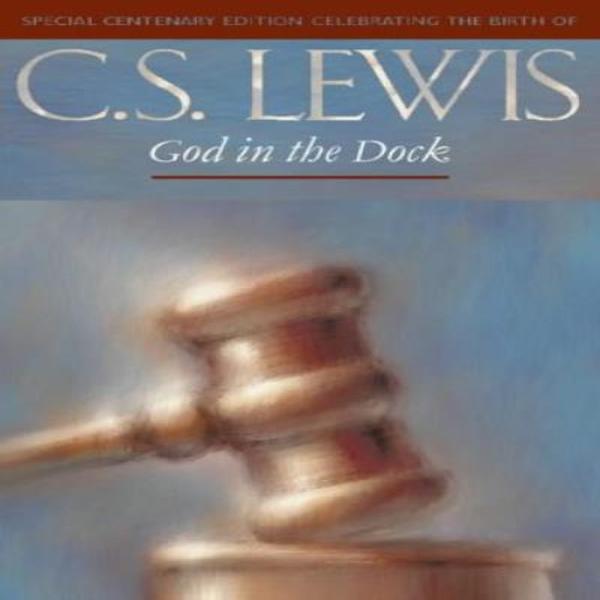
7 Quotes From “God in the Dock”

God in the Dock is quite a challenging read, but it has an amazing payoff for those who will persevere to grasp the immense intellect of C.S. Lewis. You can check out my full book review here. 

“The miracles in fact are a retelling in small letters of the very same story which is written across the whole world in letters too large for some of us to see. Of that larger script part is already visible, part is still unsolved. In other words, some of the miracles do locally what God has already done universally: others do locally what He has not yet done, but will do. In that sense, and from our human point of view, some are reminders and others prophecies.” 

“Men look on the starry heavens with reverence: monkeys do not. The silence of the eternal spaces terrified [Blaise] Pascal, but it was the greatness of Pascal that enabled him to do so. …  If the world in which we found ourselves were not vast and strange enough to give us Pascal’s terror, what poor creatures we should be! Being what we are, rational but also animate, amphibians who start from the world of sense and proceed through myth and metaphor to the world of spirit, I do not see how we could have come to know the greatness of God without that hint furnished by the greatness of the material universe. Once again, what sort of universe do we demand? If it were small enough to be cozy, it would not be big enough to be sublime. If it is large enough for us to stretch our spiritual limbs in, it must be large enough to baffle us. Cramped or terrified, we must, in any conceivable world, be one or the other. I prefer terror. I should be suffocated in a universe that I could see to the end of.” 

“The doctrines that God is love and that He delights in men, are positive doctrines, not limiting doctrines. He is not less than this. What more He may be, we do not know; we know only that He must be more than we can conceive. It is to be expected that His creation should be, in the main, unintelligible to us.” 

“Christianity does not replace the technical. When it tells you to feed the hungry it doesn’t give you lessons in cookery. If you want to learn that, you must go to a cook rather than a Christian. If you are not a professional Economist and have no experience of Industry, simply being a Christian won’t give you the answer to industrial problems.” 

“That definite distinction that Christians make between hating sin and loving the sinner is one that you have been making in your own case since you were born. You dislike what you have done, but you don’t cease to love yourself. You may even think that you ought to be hanged. You may even think that you ought to go to the Police and own up and be hanged. Love is not affectionate feeling, but a steady wish for the loved person’s ultimate good as far as it can be obtained.” 

“Now as myth transcends thought, Incarnation transcends myth. The heart of Christianity is a myth which is also a fact. The old myth of the Dying God, without ceasing to be myth, comes down from the heaven of legend and imagination to the earth of history. It happens—at a particular date, in a particular place, followed by definable historical consequences. We pass from a Balder or an Osiris, dying nobody knows when or where, to a historical Person crucified (it is all in order) under Pontius Pilate. By becoming fact it does not cease to be myth: that is the miracle. I suspect that men have sometimes derived more spiritual sustenance from myths they did not believe than from the religion they professed. To be truly Christian we must both assent to the historical fact and also receive the myth (fact though it has become) with the same imaginative embrace which we accord to all myths. The one is hardly more necessary than the other.” 

“We are defending Christianity; not ‘my religion.’ When we mention our personal opinions we must always make quite clear the difference between them and the Faith itself. St. Paul has given us the model in 1 Corinthians 7:25: on a certain point he has ‘no commandment of the Lord’ but gives ‘his judgement.’ No one is left in doubt as to the difference in status implied.” 

As always, my Patreon supporters had access to this quotes—and many, many more—ahead of time. Please consider joining them to get access to early releases and exclusive materials.


Links & Quotes

Controlling leaders shut down creativity among their teammates, which leads to higher turnover. If your team isn’t sharing their good ideas with you or if they are leaving you, that may be an indicator that you are too controlling. Check out the full conversation on The Craig and Greg Show

I have a lot of new video content on my YouTube channel every week. Please check it out and subscribe so you don’t miss anything.

“As a fact, men only become greedily and gloriously material about something spiritualistic. … Take away the supernatural, and what remains is the unnatural.” —G.K. Chesterton 

Astronomical technology like the James Webb Space Telescope (JWST) are providing breathtaking images. They are also creating problems for the scientific theories of the origins of our universe. University of California Santa Barbara physicist Caitlin Casey, said, “It makes sense—the Big Bang happens and things take time to gravitationally collapse and form, and for stars to turn on. There’s a timescale associated with that…. And the big surprise is that with JWST, we see roughly 10 times more galaxies than expected at these incredible distances.” There is a more straightforward answer found in Genesis 1:1, “In the beginning, God created the heavens and the earth.”

“Knowing where God wants people to be and taking the initiative to use God’s gifts and God’s methods to get them there, in reliance on God’s power through Christ, with God’s appointed people following.” —John Piper, giving his definition of godly leadership 

The Bible records the names of five Persian kings. One of them called “Darius the Persian” in Nehemiah 12:22 requires some historical cross-referencing to identify. The Bible Archeology Report presents another one of their fascinating archeological biographies on this Persian king. 

“The greatness of a leader is in his humility before God, not in his eloquence before men.” —Anonymous

The most viewed and downloaded resource on my blog is my chart of the kings of the united kingdom of Israel and the divided kingdoms of Israel and Judah. I was thrilled to discover this week that Jacob Edson at Biblegateway has taken my chart even deeper!

T.M. Moore has vital counsel for pastors, “Jesus must increase in us, and we must decrease. But that doesn’t just happen by carrying out whatever our ‘spiritual work’ requires of us week-in and week-out. Our ‘natural gifts’ cannot replace spiritual ones, and ‘mental powers’ are no match for the mind of Christ. It is a shepherd’s ‘duty’ to attend to the care and nurture of his soul, for unless we are diligent in this, we will not be able to lead the Lord’s sheep into a greater experience of our great salvation or a fuller realization of His Kingdom.”

Unexpected Faithfulness

Listen to the podcast of this post by clicking on the player below, and you can also subscribe on AppleSpotify, or Audible. 

Imagine you just preached a sermon that was so Holy Spirit-anointed that crowds of people turned to Jesus. This kind of activity made a big stir in town, and some supposedly religious people became quite jealous of the fruit of your ministry. In their jealousy, they begin slandering you to others in town, causing a huge backlash against your ministry. 

How would you respond? Would you give those jealous slanderers a piece of your mind? Would you give them some of their own medicine? Would you leave town?

The scenario I described isn’t make believe; it actually happened to Paul and Barnabas in the city of Iconium (Acts 14:1-2). In the very next verse, Luke describes Paul and Barnabas’ response: some biblical translations use the word “so” and some use the word “therefore” to indicate the natural connection—

So Paul and Barnabas stayed on there for a long time, speaking freely and fearlessly and boldly in the Lord” (v. 3). 

They didn’t fight their slanderers nor did they flee from Iconium; they remained faithful to the task to which God had called them! 

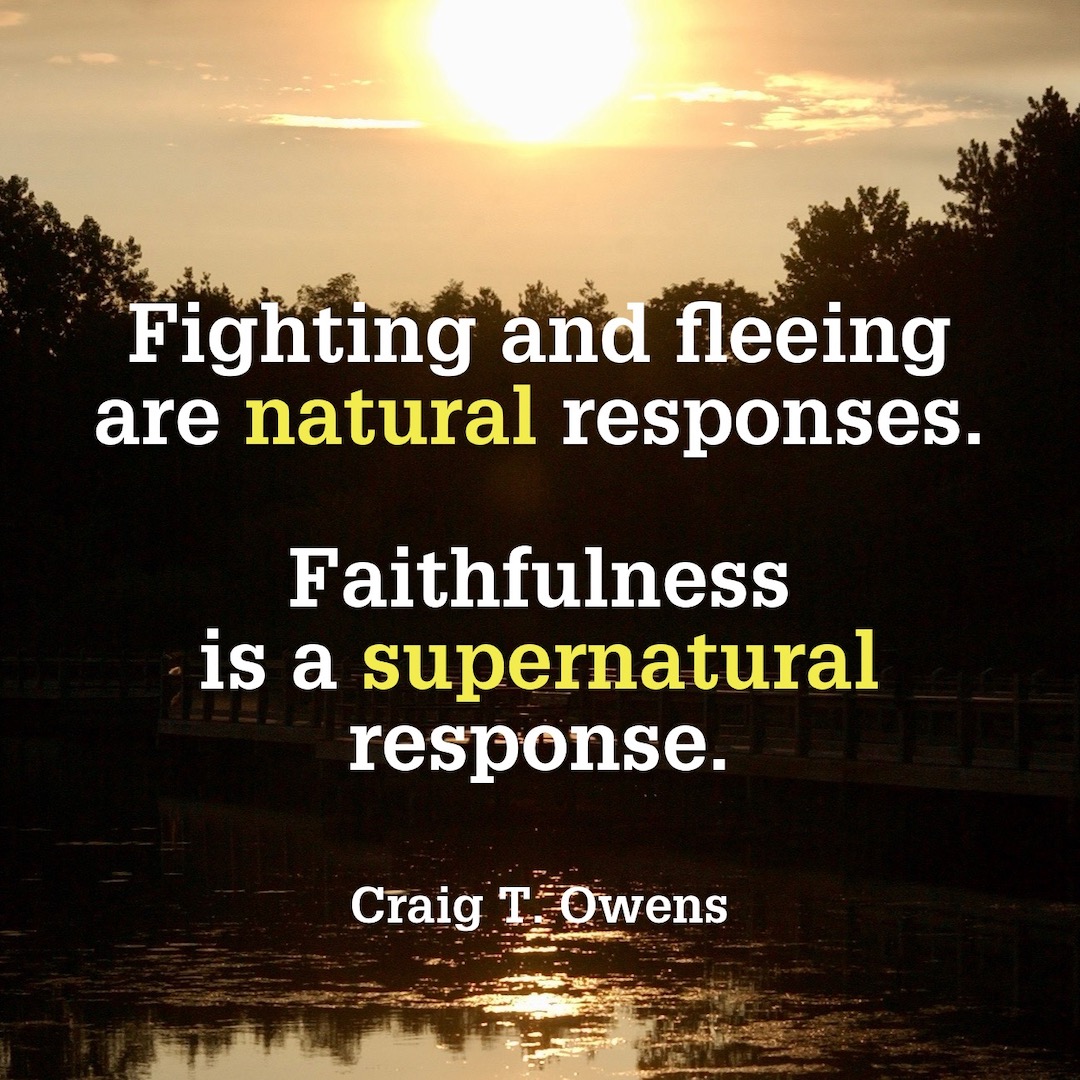
Fighting and fleeing are natural responses. 

Faithfulness, however, is a supernatural response. 

God honored the faithfulness of Paul and Barnabas by demonstrating His own supernatural power through them: “[God] continued to bear testimony to the Word of His grace, granting signs and wonders to be performed by their hands” (v. 3b). 

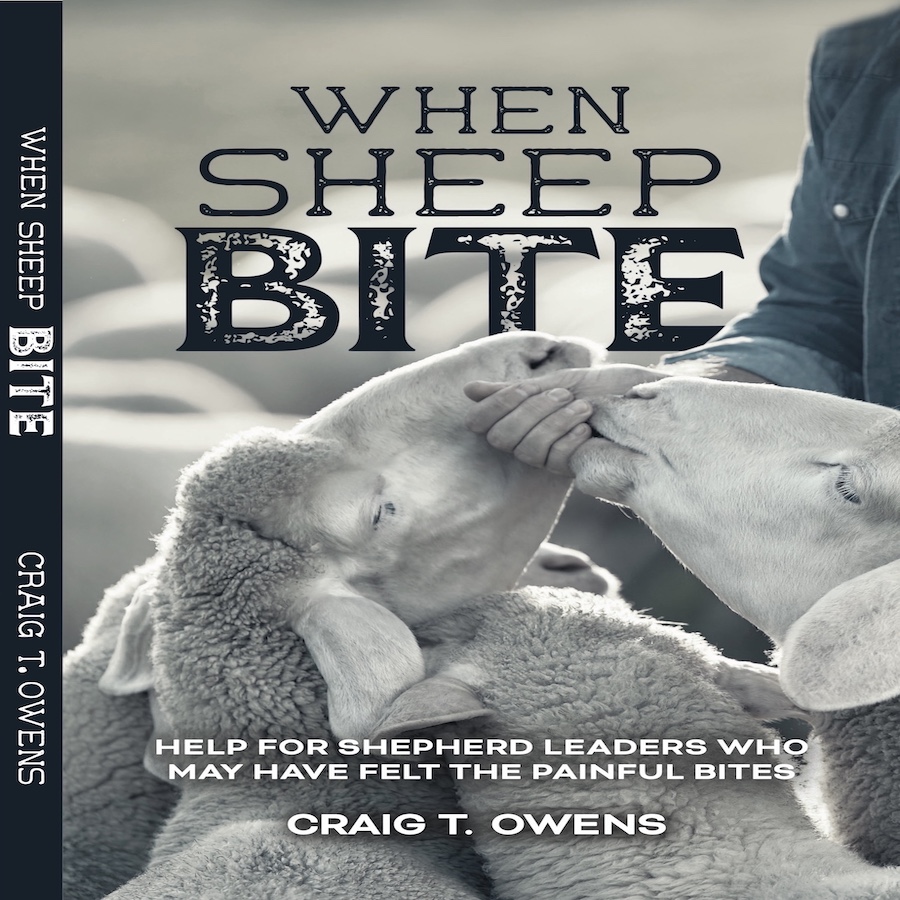
The scenario I described isn’t just something from long ago history, but it was a scene from my personal history too. In the Introduction of my book When Sheep Bite I wrote—

   I cannot pinpoint exactly what triggered their outburst or when their attacks started, but it seemed like almost overnight their teeth were bared. I was completely taken aback! I had assumed that seeing the new life and vitality in this pasture would be celebrated. When the exact opposite happened, I must admit that my knee-jerk reactions probably weren’t very Christlike. … 

     This was something I never imagined. I never saw anything like this in my home, nor had I experienced anything like this in my associate pastor’s role. In fact, even in the business world I had never seen people behave this egregiously. 

In the final chapter of my book I shared this thought, “Yes, fight-or-flight is our natural response, but with the empowerment of the Holy Spirit, we can respond in supernatural faithfulness. We don’t have to sit unmoving and unfeeling, but we can continue to serve even biting sheep until God removes us or them.” 

This whole idea of supernatural faithfulness to God’s calling versus giving in to the natural reactions of fight-or-flight is why I wrote this book. Once again, let me take you back to an excerpt from the Introduction—

     Would I ever want to relive this experience? No way! But there were lessons I learned during this walk through hell that I could have learned in no other way. It is those lessons that I hope to be able to unpack for you, my shepherding friends, in this book. … I would say to you something that C.S. Lewis wrote, “Think of me as a fellow-patient in the same hospital who, having been admitted a little earlier, could give some advice.” 

When you are under attack, I know it seems like you are alone, but you are not. Don’t give in to fight-or-flight, but ask God to supernaturally empower you to remain faithful. I believe When Sheep Bite can be a huge assistance to you as well. Please pick up a copy and reach out to me if I can be of assistance to you. 

►► Would you please prayerfully consider supporting this ministry? My Patreon supporters get behind-the-scenes access to exclusive materials. ◀︎◀︎

The Power Of Personal Experience

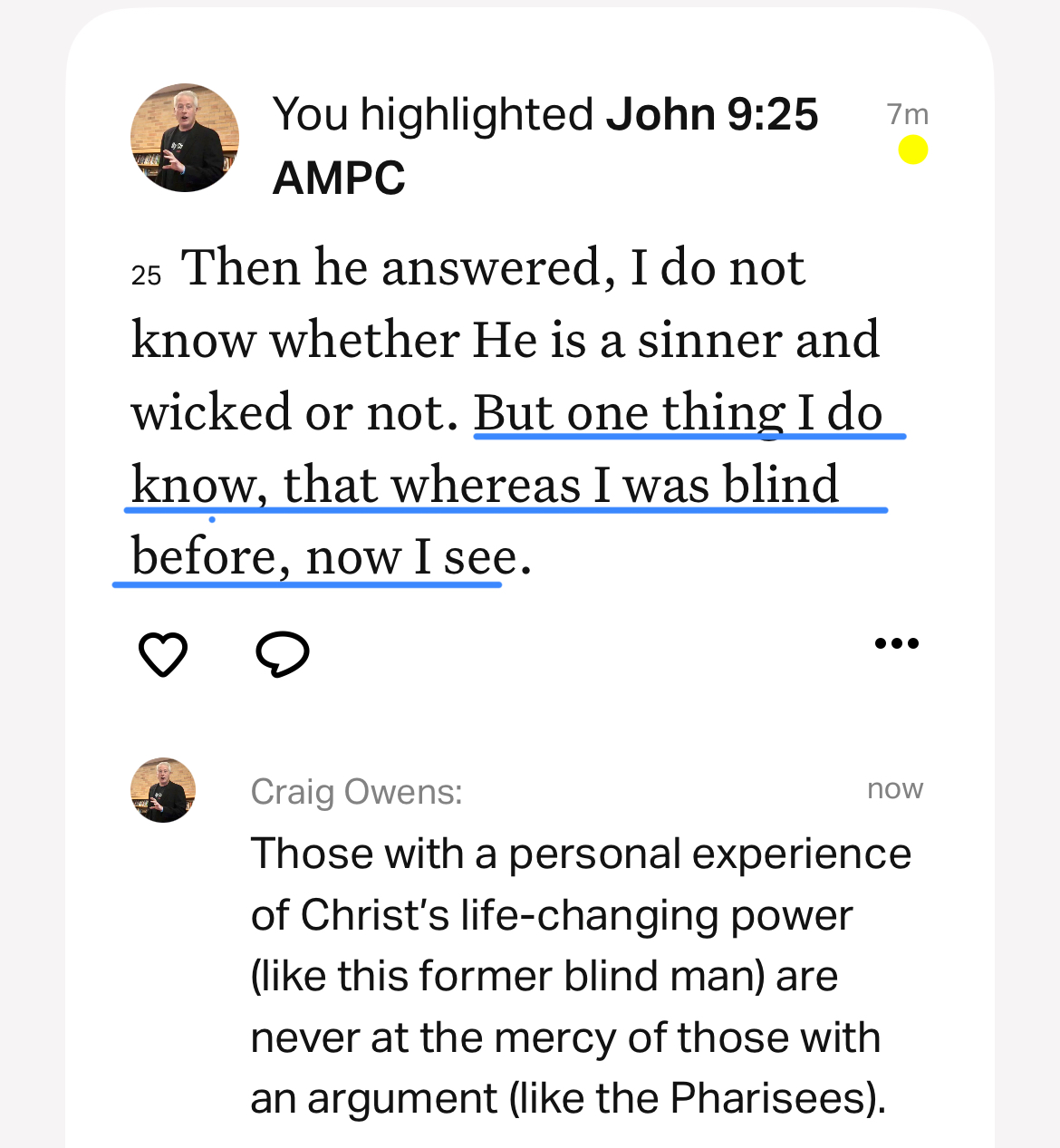
The religious leaders asked a man who had been healed by Jesus of his blindness  whether he though Jesus had sinned by healing on the Sabbath. He said, “I do not know whether He is a sinner and wicked or not. But one thing I do know, that whereas I was blind before, now I see” (John 9:25). 

I find it interesting that the Pharisees didn’t try to argue whether or not this man had truly been healed—that was obvious to everyone!—but they wanted to discredit Jesus and call Him a sinner because He healed on the Sabbath day.  

Those with a personal experience of Christ’s life-changing power (like this former blind man) are never at the mercy of those with an argument (like the Pharisees). 

In fact, this man who can now see not only has the most sound logic, but he has immediately become an evangelist for Jesus as well! 

The man replied, “Well, this is astonishing! Here a Man has opened my eyes, and yet you do not know where He comes from. That is amazing! We know that God does not listen to sinners; but if anyone is God-fearing and a worshiper of Him and does His will, He listens to him. Since the beginning of time it has never been heard that anyone opened the eyes of a man born blind. If this Man were not from God, He would not be able to do anything like this.” (John 9:30-33)

I love this truism: The man with an experience is never at the mercy of the man with an argument. I have blogged extensively about this. Check out these posts. 

What Can I Change In Me?

Listen to the podcast of this post by clicking on the player below, and you can also subscribe on AppleSpotify, or Audible. 

When a shepherd leader is bitten by a sheep under their care, it’s quite natural to say, “What’s wrong with them?” Let me highlight that word: natural. 

In my book When Sheep Bite, I contrast the natural response with the supernatural response. It takes a lot of work because “natural” comes just so, well, naturally. But to respond supernaturally is going to take some re-training. 

We need to be able to reflect after we’ve interacted with a biting sheep. If we reacted in an inappropriate way, we need to ask forgiveness and attempt to make things right. Then we need to engage in some Holy Spirit-led introspection to switch the natural question of, “What’s wrong with them” to the supernaturally-led question, “What can I change in myself?” 

In a recent interview with Karl Vaters on his Church Lobby Podcast, we talked a bit about this topic. 

One chapter in my book is titled ‘Is God Trying to Get My Attention?’ Here’s an excerpt—

     Pain always takes priority. It always gets our attention and demands to be attended to immediately. We don’t schedule painful things on our daily “To Do” list, but that painful item will become the one and only thing which clamors to be addressed. 

     The same thing is true when the sheep bite and kick their shepherd. It hurts, it demands an immediate response, and it seems to become the only item on our agenda. But I would like to advocate that we don’t respond immediately. Why? Because our primal, gut-level response is almost always very shortsighted, and frequently, upon reflection, we later end up second-guessing what we said or did. 

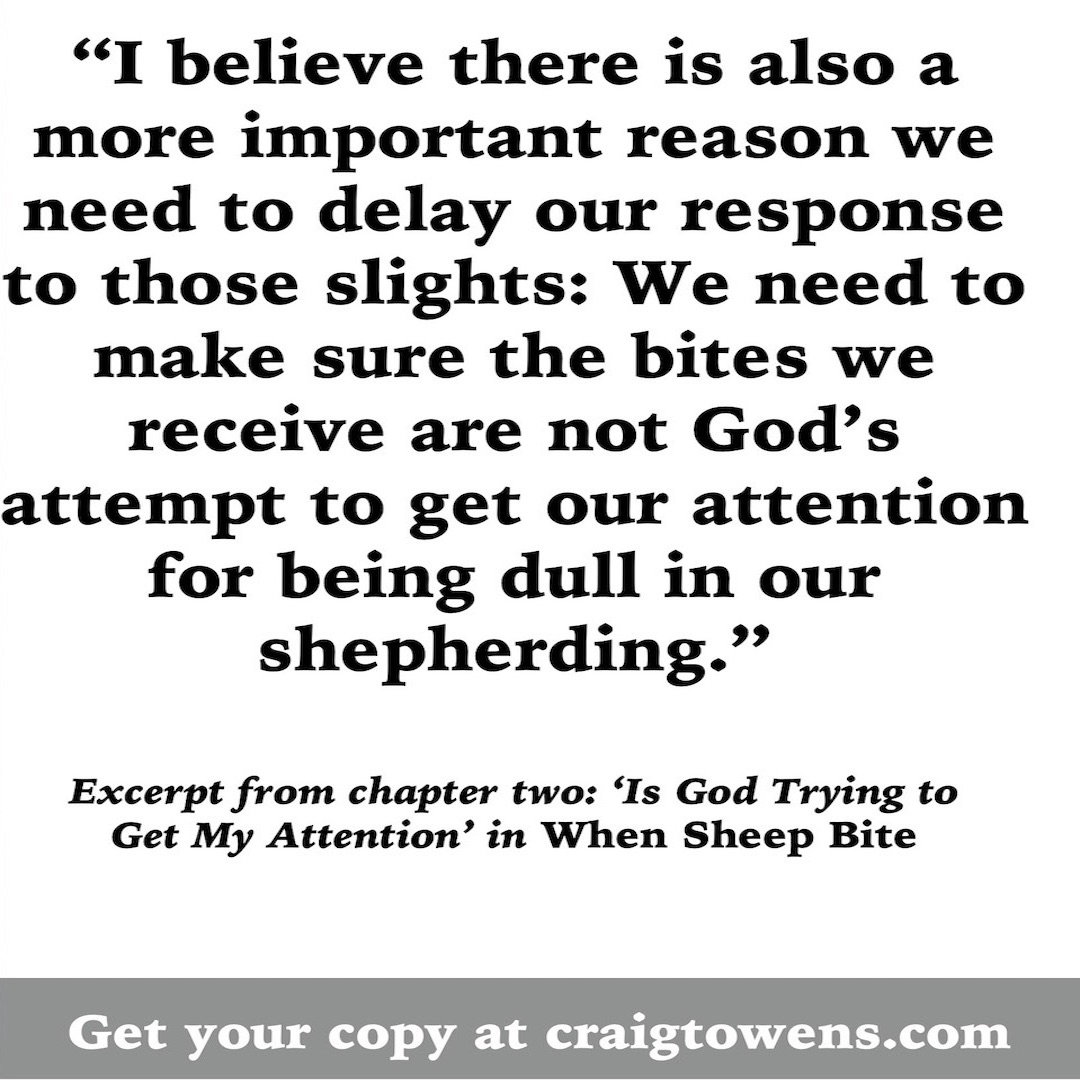
     I believe there is also a more important reason we need to delay our response to those slights: We need to make sure the bites we receive are not God’s attempt to get our attention for being dull in our shepherding. God told Jeremiah, “For the shepherds have become dull-hearted, and have not sought the Lord” (Jeremiah 10:21 NKJV). As a result, God had to send something painful to those religious leaders to make them aware of the dullness that had set in. 

I conclude this chapter with a prayer for shepherds who have been bitten—

     Father, Your sheep continued to wallow in the unhealthy habit of biting the hand that fed them and cared for them. In Your perfect love, You knew just how to discipline them, always with a heart of drawing these wayward sheep back to You. I ask You to please cultivate this loving heart in me. 

     Jesus, even as You were nailed to the Cross by the very sheep You came to save, You didn’t lash out in anger but lovingly prayed, “Father, forgive them for they don’t know what they are doing.” You know how much it hurts when my loving shepherding of these flock under my care is repaid with bites and kicks and abandonment. Jesus, help me to learn to respond in loving forgiveness as You did. 

     Holy Spirit, as David prayed, so I pray, “Search me.” As I do, please show me where my words, actions, or attitudes have rubbed the sheep under my care the wrong way and prompted them to lash out. Help me to repent, forgive, and ask forgiveness. Even if the attack was unprovoked by anything I have done, my heart’s desire is for none to be lost so please help me learn how to bring about restoration. 

     I pray this in the name of my Good Shepherd, Jesus. Amen.

To find out more about When Sheep Bite, or to pick up a copy for yourself, please click here.

►► Would you please prayerfully consider supporting this ministry? My Patreon supporters get behind-the-scenes access to exclusive materials. ◀︎◀︎
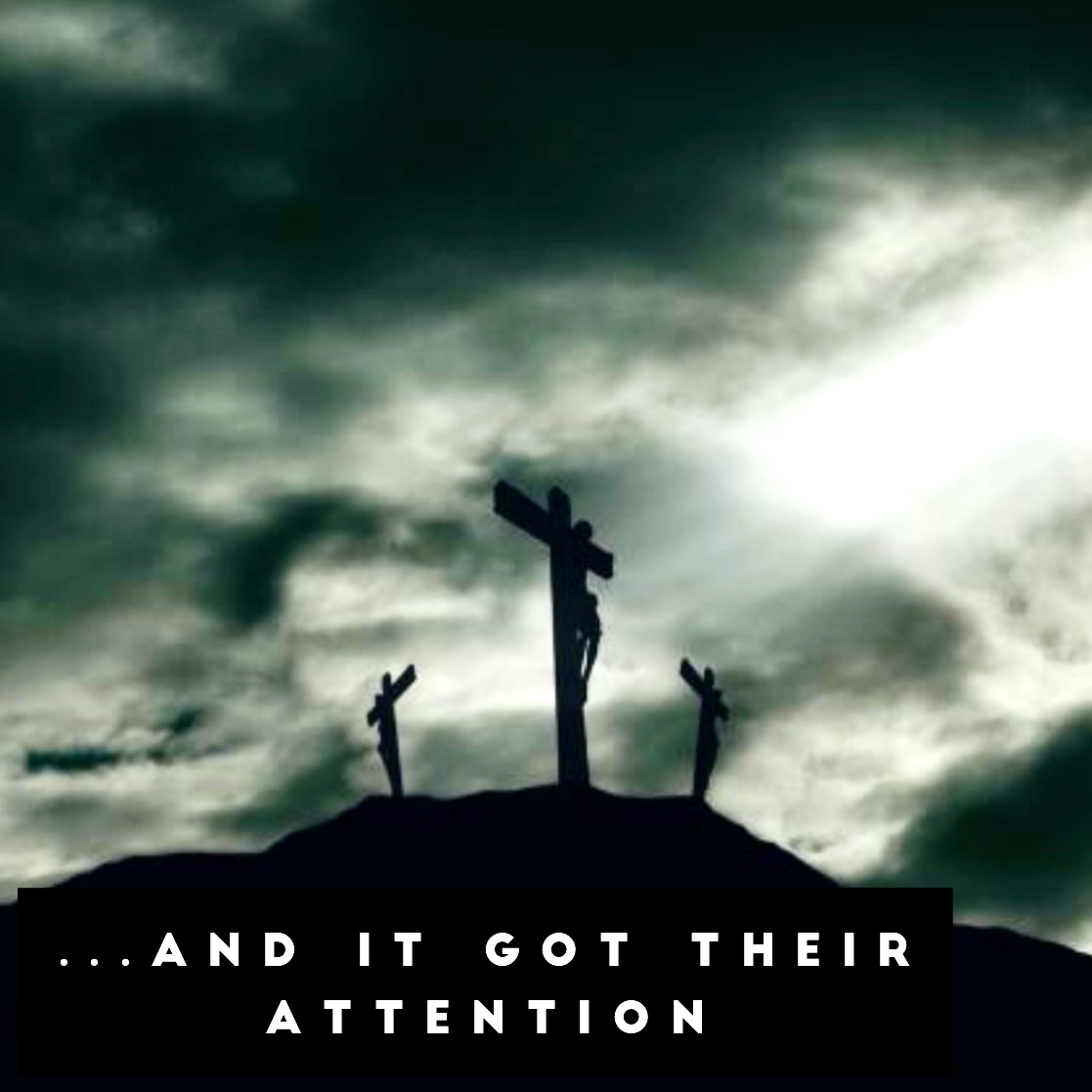
…And It Got Their Attention

Listen to the podcast of this post by clicking on the player below, and you can also subscribe on AppleSpotify, or Audible. 

And Jesus cried out again with a loud voice, and gave up His spirit. And behold, the veil of the temple was torn in two from top to bottom; and the earth shook and the rocks were split. Also the tombs were opened, and many bodies of the saints who had fallen asleep were raised; and coming out of the tombs after His resurrection, they entered the holy city and appeared to many. (Matthew 27:50-53) 

The centurion and his soldiers saw a Man die like no other crucifixion victim ever had. And it got their attention! 

People in Jerusalem had dead friends and family members return to life. And it got their attention! 

The religious leaders felt the earthquake and saw the curtain that shielded the Holy of Holies ripped in half. And it got their attention!

Now all of them had a choice: Would they acknowledge that Jesus was who He said He was or not. The Bible gives us only one man’s response: the centurion at the CrossAnd Jesus, crying out with a loud voice, said, “Father, into Your hands I entrust My spirit.” And having said this, He died. Now when the centurion saw what had happened, he began praising God, saying, “This Man was in fact innocent” (Luke 23:46-47).

I wonder if there were others? 

More importantly, with all of God’s miracles around me every single day, does it get my attention? 

►► Would you please prayerfully consider supporting this ministry? My Patreon supporters get behind-the-scenes access to exclusive materials. ◀︎◀︎
The Irrefutable Evidence

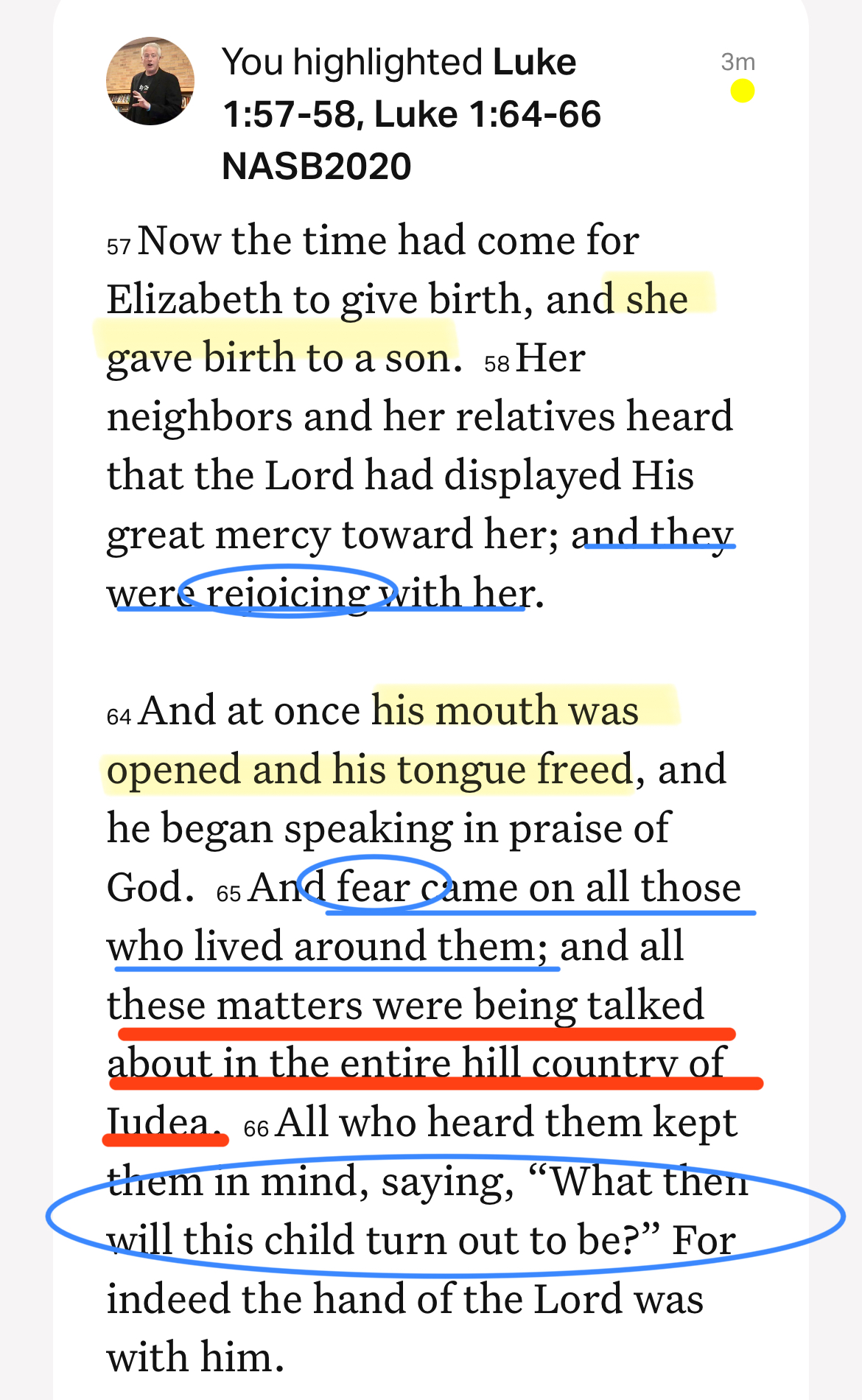
Now the time had come for Elizabeth to give birth, and she gave birth to a son. Her neighbors and her relatives heard that the Lord had displayed His great mercy toward her; and they were rejoicing with her. … And at once his mouth was opened and his tongue freed, and he began speaking in praise of God. And fear came on all those who lived around them; and all these matters were being talked about in the entire hill country of Judea. All who heard them kept them in mind, saying, “What then will this child turn out to be?” For indeed the hand of the Lord was with him. (Luke 1:57-58, 64-66)

When God does what only He can do, our testimony is irrefutable! People will rejoice, reverence God, and ask questions, but they will never be the same after witnessing a miracle. 

Let’s pray for God to do the miraculous in our own lives even now so that we can be living testimonies that draw others to our Savior and Lord! 

You may also be interested in my posts By His Stripes and Argument vs Experience. 

And check out my short video Proof!

An Eye For An Eye

Listen to the podcast of this post by clicking on the player below, and you can also subscribe on AppleSpotify, or Audible. 

We have to be very attentive when we hear anyone say something that they claim is a word from God. The first question we need to ask is, “Is that in the Bible?” If it is, then the next question is, “Is that statement being used in its proper context—does it conform with the whole counsel of God’s Word?” 

So here is statement #14 in our series—An eye for an eye, and a tooth for a tooth. Is that in the Bible? Yes.  

This first shows up in Exodus 21:24, and it is a part of the legal code God gave through Moses (Exodus 21:1). This code was entrusted to capable men (i.e. judges) in Exodus 18:19-22, 25. 

(Check out all of the Scriptures I reference in this post here.) 

This has been referred to as “the law of exact retribution.” Later on the Romans would name it lex talionis—the law of the tooth. This was to prevent one-upmanship or escalating retaliation, and it also applied to false witnesses who were trying to get someone else in trouble (Deuteronomy 19:15-21). 

By the time of Jesus, this legal maxim was so well known that when Jesus quoted it to His audience, everyone knew what it meant (Matthew 5:38). 

One of the most innate responses that we humans have to threats or to an attack is fight-or-flight. 

In this case, flight would be sweeping it under the run or pretending it didn’t happen. But it did happen, and there is a sense of justice in us that wants to see retribution. If this offense isn’t acknowledged and dealt with appropriately, the desire for retribution will allow unforgiveness to fester. This shows up in all sort of negative ways—physically and emotionally—and often there is a breaking point where the injured party lashes out. 

Fight would be taking the law into our own hands. I want everyone to know that I was wronged by you, and I want you to suffer more than you made me suffer. But the first time this law is given, God calls for precise compensation (Exodus 21:22-25). 

God’s means for carrying our the lex talionis today is exactly the same—a legal code administered by trained judges (Romans 13:1-4). 

This is the law of the land—the natural law—but Jesus calls on us to respond supernaturally. Not to be the judge or jury, but to remember that God perfectly judges and vindicates (Luke 8:17; Deuteronomy 32:35). 

Jesus continually calls us forego the natural reaction for the supernatural response. Notice the repeated pattern of, “You have heard that it was said” and then, “But I tell you…” in Matthew 5:21-22, 27-28, 31-32, 33-37, 43-44 and specifically vv. 38-42. 

If our eyes are on the one who injured us, our eyes are off of the only One who can vindicate and heal us (Romans 12:17-21). 

Natural people merely react out of innate instinct. Supernatural people are able to respond with Christlike love. 

Don’t give in to the merely natural reaction, but submit to the Holy Spirit who can help you respond supernaturally. 

Check out all of the other topics we have covered in our “Is that in the Bible?” series. 

►► Would you please prayerfully consider supporting this ministry? My Patreon supporters get behind-the-scenes access to exclusive materials. ◀︎◀︎
Shepherds Must Not Give In To Fight-Or-Flight 

Listen to the podcast of this post by clicking on the player below, and you can also subscribe on AppleSpotify, or Audible. 

Both physically and psychologically, our natural response to an attack, a surprise, or pain is to fight or flight. 

Although this is a natural response, it’s not the best response for shepherd leaders. Think about it: when a sheep is biting you or misbehaving, although you would like to smack them on the fuzzy nose or run away from them, those are not healthy responses. 

Jesus said that those who ran away in the face of attacks—either from sheep within or wolves without—aren’t worthy of the title “shepherd” (John 10:12-13). And Paul told Timothy that shepherd leaders “must not be quarrelsome but must be kind to everyone” (2 Timothy 2:24). 

As I said, fight-or-flight is natural, but Jesus is calling His under-shepherds to a supernatural response. This will require God’s help, which He frequently provides for us in the timely counsel of wise friends who have experienced the same pain you are experiencing. 

Check out this short video where I talked to a group of pastors about this topic. 

I would like to invite you to join a cohort of pastors that will be dealing with the same painful sheep bites you have experienced. We’ll meet together online every other week for 10 sessions to discuss the biblical principles that will help us all respond in the supernatural ways that strengthen our leadership, heal our flocks, and bring glory to the Chief Shepherd. 

This cohort is limited to just 10 pastors so that we can develop some solid friendships that will last well beyond the cohort, so please sign up today.

Check out more information on my book When Sheep Bite here.