Links & Quotes

On the latest episode of The Craig And Greg Show, Greg and I talked about Christmas traditions. I have lots of new content every week, which you can check out on my YouTube channel.

“Always be sure of your ground and be sure that you are honoring God. If there is anything about the situation that will make you special, it will bring you sorrow. Your whole ministry has to be along the lines of His grace and blessing.” —Smith Wigglesworth 

“Leaders have the responsibility to keep evil out. Government is incapable of making men and women moral and, in fact, it is not given that assignment, for it does not have that power. God grants government the right to make laws to hold back the power of evil, for only the church through the gospel can help men and women be good. Conversely, leadership and government can do much harm if they, through injudicious application or partial enforcement of law, let evil in. Government cannot make people good, but it can certainly make them bad. We need leadership and government to build barriers against what is wrong, but neither leaders nor external human powers can usher us to what is right. Only Jesus, full of grace and truth, can do that.” —Dick Brogden, in Proverbs: Amplified and Applied

The celebration of Christmas is obviously not seen in the Bible, but it has always seemed to be closely connected to the church’s calendar. Scott Hubbard has an eye-opening history of Christmas in his post The Curious History of Christmas.

Scientists have learned from butterflies’ amazing vision how to better detect cancer cells. The way our Creator has designed these winged marvels is truly astounding!  
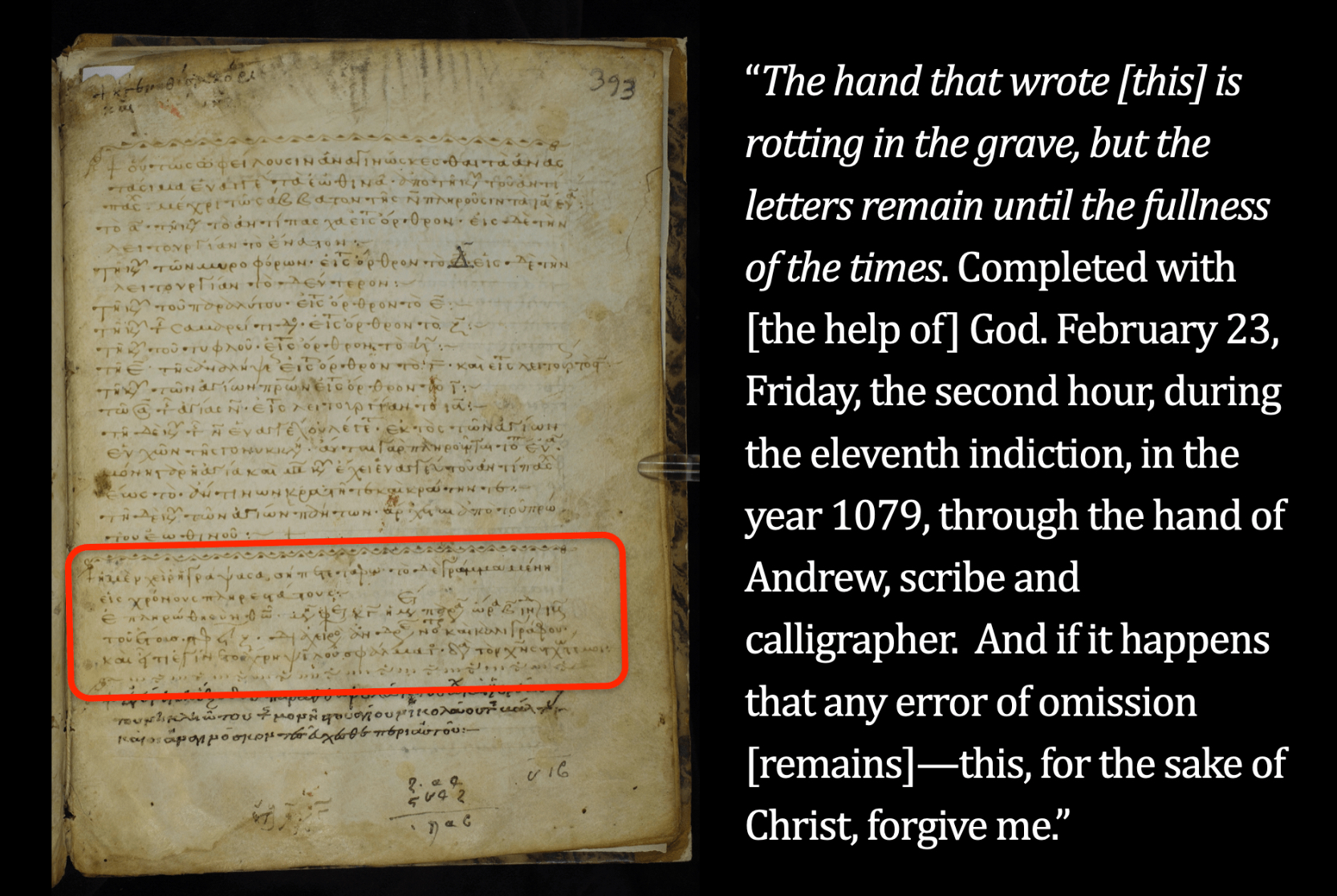
The ways the biblical text has been preserved and transmitted down to us today is nothing short of miraculous! Daniel Wallace is at the forefront of continuing to preserve the Word of God for future generations. Here is an example of the dedication of the biblical scribes: “The hand that wrote [this] is rotting in the grave, but the letters remain until the fullness of the times. Completed with [the help of] God. February 23, Friday, the second hour, during the eleventh indiction, in the year 1079, through the hand of Andrew, scribe and calligrapher. And if it happens that any error of omission [remains|—this, for the sake of Christ, forgive me.”

Just as archeological finds continue to confirm biblical accounts, fossil discoveries continue to confirm the biblical claim of Creation. Paleontologists have now created the term “problematica” to try to address fossil finds that don’t fit their evolutionary models.

T.M. Moore is sharing a thought-worthy series of posts on the biblical view of our economic activities, including a look at how governments and businesses should operate under God’s laws. Moore says, “Since God has written the works of the Law on the heart of all His image-bearers (Romans 2:14, 15), we should expect that awareness (if only subconsciously) to find expression. Put another way, whether they know it or not, people long for an economy guided by Biblical principles and guidelines.”

Links & Quotes

Are you looking for a Christmas gift for your pastor? Check out my book Shepherd LeadershipI have lots of new content every week, which you can check out on my YouTube channel.

“We rise no higher when we pull others down, yet when we stoop to serve, we conquer.” —Dick Brogden, in Proverbs: Amplified and Applied 

“Truth is incontrovertible. Panic may resent it. Ignorance may deride it. Malice may distort it. But there it is.” —Winston Churchill

The amazing history of the authors of the New Testament epistles, and their connections with each other.

“Nothing is really work unless you would rather be doing something else.” —J.M. Barrie

“God has made His Word so precious that if I could not get another copy of it, I would not part with my Bible for all the world. There is life in the Word. There is power in it. I find Christ in it, and He is the One I need for spirit, soul, and body. It tells me of the power of His name and the power of His blood for cleansing.” —Smith Wigglesworth

“Christians can most directly affect the shape of our economy by practicing love for God and neighbor in all our transactions. Beyond that, we should make the most of every opportunity and means for influencing the shape of public policy so that honesty, fairness, justice, and love guide all the policies that bind us together as we the people.” —T.M. Moore

Christian apologist Sean McDowell goes head-to-head with ChatGPT—

Links & Quotes

Your Heavenly Father never gets tired or distracted. He lovingly keeps His eye on you all the time❣️I have lots of new content every week, which you can check out on my YouTube channel.

“Could you use some high-octane boldness? If you want to outlive your life, you could. As long as you are stationary, no one will complain. Dogs don’t bark at parked cars. But as soon as your accelerate—once you step out of drunkenness into sobriety, dishonesty into integrity, or lethargy into compassion—expect the yapping to begin. Expect to be criticized. Expect to be mocked. Expect to be persecuted. So how can we prepare ourselves? Simple. Imitate the disciples. Linger long and often in the presence of Christ. Meditate on His grace. Ponder His love. Memorize His words. Gaze into His face. Talk to Him. Courage comes as we live with Christ.” —Max Lucado, Outlive Your Life 

J. Warner Wallace has an excellent teaching on why we can trust the truthfulness of the Bible.

“Unbelief robs them of these blessings. It is possible to hear and yet not to perceive the truth. It is possible to read the Word and not share in the life it brings. It is necessary for us to have the Holy Spirit to unfold the Word and bring to us the life that is Christ. We can never fully understand the wonders of this redemption until we are full of the Holy Spirit.” —Smith Wigglesworth

Fascinating evidence from Dr. Joel Kramer for the dating of the biblical exodus from Egypt and the naming of the pharaoh that reigned during that time.

Preaching To Yourself

Listen to the podcast of this post by clicking on the player below, and you can also subscribe on AppleSpotify, or Audible. 

When was the last time you preached a really good sermon to yourself?

Check out this episode of The Podcast.

Some resources to go along with this video:

►► Would you please prayerfully consider supporting this ministry? My Patreon supporters get behind-the-scenes access to exclusive materials. ◀︎◀︎

Thursdays With Spurgeon—God Means What He Says

This is a weekly series with things I’m reading and pondering from Charles Spurgeon. You can read the original seed thought here, or type “Thursdays With Spurgeon” in the search box to read more entries.

Listen to the podcast of this post by clicking on the player below, and you can also subscribe on AppleSpotify, or Audible. 

God Means What He Says

…For the mouth of the Lord has spoken (Isaiah 1:20).

     You talk about God as being ‘love,’ and if you mean by this that He is not severe in the punishment of sin, I ask you what you make of the destruction of Jerusalem? Remember that the Jews were His chosen nation and that the city of Jerusalem was the place where His temple had been glorified with His presence. Brethren, if you roam from Edom to Zion and from Zion to Sidon and from Sidon to Moab, you will find, amid ruined cities, the tokens that God’s words of judgment are sure. Depend on it, then, when Jesus says, ‘These will go away into everlasting punishment’ (Matthew 25:46), it will be so. When He says, ‘If you do not believe that I am He, you will die in your sins’ (John 8:24), it will be so. … 

     It is of no avail to sit down and draw inferences from the nature of God and to argue, ‘God is love, and therefore He will not execute the sentence upon the impenitent.’ He knows what He will do better than you can infer. He has not left us to inferences, for He has spoken pointedly and plainly. He says, ‘He that believes not shall be damned’ (Mark 16:16), and it will be so, ‘for the mouth of the Lord has spoken.’ Infer what you like from His nature. But if you draw an inference contrary to what He has spoken, you have inferred a lie and you will find it so. …

     I know why you do not believe in the terrible threats. It is because you want to be easy in your sins. … Yet if you do not believe its loving warnings nor regard its just sentences, they are true all the same. If you dare its thunders, if you trample on its promises, and even if you burn it in your rage, the Holy Book still stands unaltered and unalterable. ‘The mouth of the Lord has spoken.’ Therefore, I pray you, treat the sacred Scriptures with respect and remember that ‘these are written that you may believe that Jesus is the Christ, the Son of God, and that believing you might have life through His name’ (John 20:31).

From The Infallibility Of Scripture

Spurgeon delivered this sermon on March 11, 1888. Nearly 2000 years earlier, Asaph delivered a similar message from God—

“Call upon Me in the day of trouble; I will deliver you, and you shall glorify Me.” But to the wicked God says: “What right have you to declare My statutes, or take My covenant in your mouth, seeing you hate instruction and cast My words behind you? When you saw a thief, you consented with him, and have been a partaker with adulterers. You give your mouth to evil, and your tongue frames deceit. You sit and speak against your brother; you slander your own mother’s son. These things you have done, and I kept silent; you thought that I was altogether like you; but I will rebuke you, and set them in order before your eyes. Now consider this, you who forget God, lest I tear you in pieces, and there be none to deliver: Whoever offers praise glorifies Me; and to him who orders his conduct aright I will show the salvation of God.” (Psalm 50:15-23) 

Commenting on this passage from Psalm 50, T.M. Moore wrote, “Surely, this is the most fundamental error of thinking humans ever make: To think of God, spiritual things, worship, human life, the world, and everything else from our vantage point rather than His. … Asaph could see what was happening. And even though the nation was safe, strong, and surfeited with wealth, he knew that, spiritually, things were going awry. The people had persuaded themselves that God was just like them, that He thought like they did, and so was agreeable to their doing things their own way, indulging all their base desires, and pursuing their schemes for success—all the while continuing an outward show of faith.”

Let us take the Bible as what it truly is: Words the mouth of God has spoken. Let us not play games with them, changing the message to words we like. But if the Word of the Lord makes us uncomfortable, let us repent and return to Him. It is those who accept God’s Word as His Word, and obey it, that will see the salvation of God.

►► Would you please prayerfully consider supporting this ministry? My Patreon supporters get behind-the-scenes access to exclusive materials. ◀︎◀︎

Stop Listening To You

Listen to the podcast of this post by clicking on the player below, and you can also subscribe on AppleSpotify, or Audible. 

Isaiah 49 has an interesting phrase that appears twice: “But I said…” (vv. 4, 14). 

Notice that first word: But. That conjunction means that “I” am saying something in contradiction to what someone else has said. Sadly, in this case the Someone Else that is speaking in this chapter is God Himself! 

The phrase “this is what the LORD says” is used three times in this same chapter (vv. 8, 22, 25). Look at what God is saying to you and me:

  • I made you 
  • I called you 
  • you are My servant 
  • I reward you 
  • you have My favor 
  • you have My comfort 
  • I never forget you
  • I will never disappoint you 

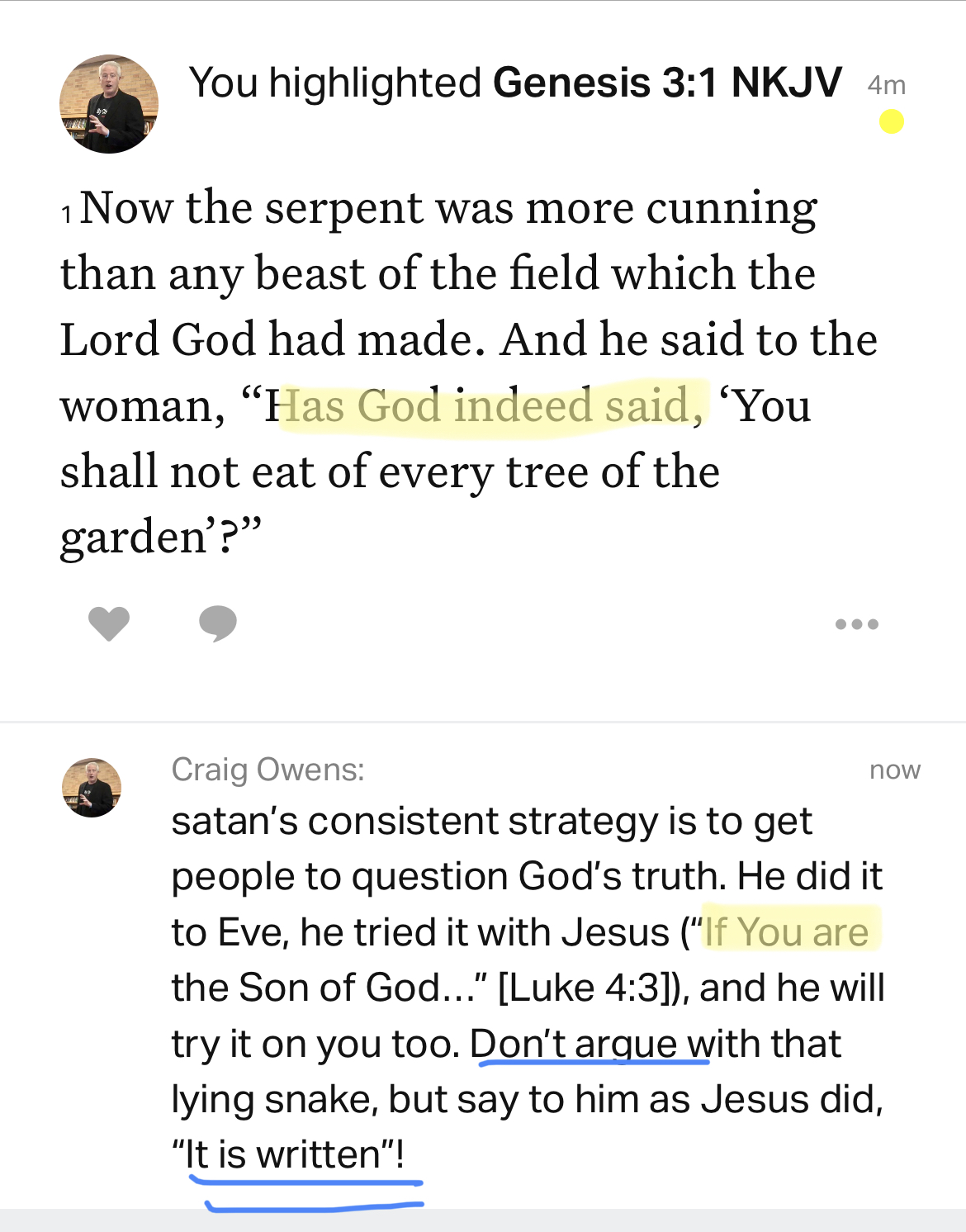
A consistent strategy of the devil is try to get us second-guessing or doubting God’s promises. He did this to Eve—“Did God really say that?”—and he tried it with Jesus—“Are You really the Son of God?”—and he’s still trying it today. 

Jesus said the devil’s native tongue is lying. He lies and he slanders you. He wants you to simply listen to those lies without questioning them. 

Someone once asked Smith Wigglesworth, “Smith, how do you feel?” He replied, “I never ask Smith how I feel. I tell him how he feels!” 

That’s good counsel for us today! 

Don’t listen to yourself, especially when you’re tired or lonely or anxious or scared, but talk to yourself. Remind yourself what God says to you and what He says about you. Remind those negative thoughts that God never lies, that He is all-loving, that He is all-powerful, and that He has a unique plan and purpose your life. 

Whenever you feel like saying, “But I said,” change those thoughts around to, “But this is what God says!” 

I’ve shared a couple of other posts that expand on this idea which you may want to read here and here. 

►► Would you please prayerfully consider supporting this ministry? ◀︎◀︎

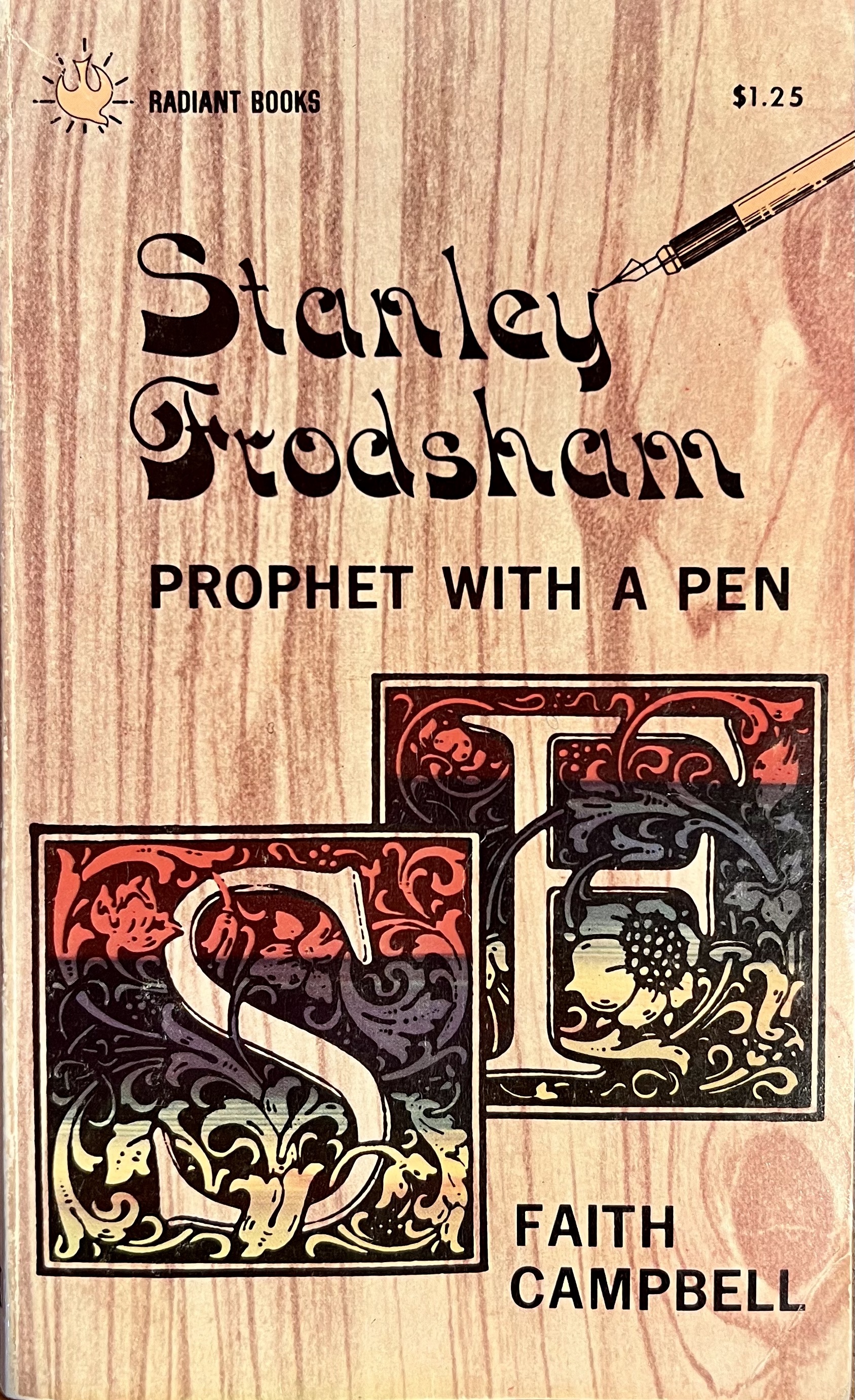
Prophet With A Pen (book review)

Listen to the podcast of this post by clicking on the player below, and you can also subscribe on AppleSpotify, or Audible. 

This book is personal for me—it’s a part of my family tree and my spiritual legacy. Prophet With A Pen is the biography of Stanley Frodsham, lovingly told by his only daughter Faith Campbell. 

Stanley Frodsham’s pen was truly anointed. From his history of the modern-day Pentecostal movement, to his biography of renown evangelist Smith Wigglesworth, to his editing of the worldwide Pentecostal Evangel magazine, all the way down to his personal correspondence. Frodsham’s pen may have done more for the Pentecostal movement than anyone else’s did. 

As a case in point, consider the powerful preaching of Smith Wigglesworth. His sermons were not prepared and written out ahead of time, but they were Holy Spirit-breathed at the moment Wigglesworth was preaching them. Most of those sermons that have been preserved for us in writing were due to the careful shorthand notes of Stanley Frodsham. 

In Prophet With A Pen, Frodsham’s daughter tells us his life story through her personal recollections, her extensive library of her father’s letters, and the remembrances of lifelong friends of the Frodshams. It’s an intimate portrait of a man who never sought the limelight, but simply wanted everyone to personally experience the power of Pentecost. 

I mentioned that this book is personal for me. Faith Campbell was my great-aunt, and her husband (who was quite an evangelist himself) shared many of these stories with me personally as I was growing up. Reading this collection of remembrances of Stanley Frodsham has reinforced my commitment to honor the heritage that I’ve been given, and to pass on a vibrant spiritual legacy to those who will come after me. 

Anyone who enjoys church history will thoroughly enjoy this behind-the-scenes look at the men and women who were so crucial to the early Pentecostal movement. 

►► Would you please prayerfully consider supporting this ministry? ◀︎◀︎

Thursdays With Spurgeon—Value The Scriptures

This is a weekly series with things I’m reading and pondering from Charles Spurgeon. You can read the original seed thought here, or type “Thursdays With Spurgeon” in the search box to read more entries.

Listen to the podcast of this post by clicking on the player below, and you can also subscribe on iTunes or Spotify.

Value The Scriptures

     John wrote to believers, ‘These things I have written to you who believe in the name of the Son of God’ (1 John 5:13). It is worthy of note that all the Epistles are so written. … 

     We do not wonder that certain men do not receive the Epistles, for they were not written to them. … Here is a will and you begin to read it. But you do not find it interesting. It is full of words and terms that you do not take the trouble to understand because they have no relation to yourself. But should you, in reading that will, come upon a clause in which an estate is left to you, I guarantee you that the nature of the whole document will seem changed to you.

You will be anxious now to understand the terms and to make sure of the clauses, and you will even wish to remember every word of the clause that refers to yourself. O dear friends, you may read the testament of our Lord Jesus Christ as a testament of love to yourselves, and then you will prize it beyond all the writings of the sages. … 

     But as these things are written to believers, believers ought especially to make themselves acquainted with them and to search into their meaning and intent. … Do not, I beseech you, neglect to read what the Holy Spirit has taken care to write to you. …  

     Value the Scriptures. … The saint can say, ‘Oh, how I love Your law!’ (Psalm 119:97). If we cannot say so, something is wrong with us. If we have lost our relish for Holy Scripture, we are out of condition and need to pray for spiritual health.

From The Blessing Of Full Assurance 

The Bible is God’s love letter to you. I love what Smith Wigglesworth said about the Word of God: 

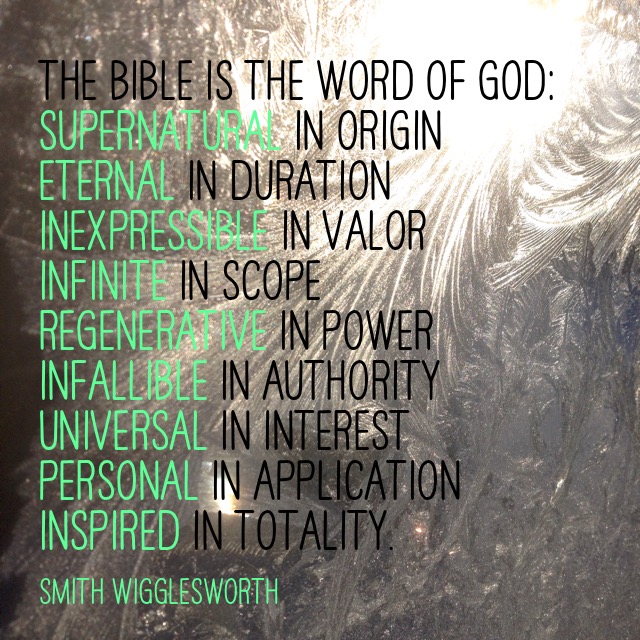
“Never compare this Book with other books. Comparisons are dangerous. Never think or say that this Book contains the Word of God. It is the Word of God. It is supernatural in origin, eternal in duration, inexpressible in value, infinite in scope, regenerative in power, infallible in authority, universal in interest, personal in application, inspired in totality. Read it through. Write it down. Pray it in. Work it out. And then pass it on.”

I spent a whole week blogging about my favorite Book. You can check out those posts by clicking here. In the meantime, let me encourage you in the strongest possible terms: Make the time to read your Bible every single day. Doing so will totally transform your life!

►► Would you please prayerfully consider supporting this ministry? ◀︎◀︎

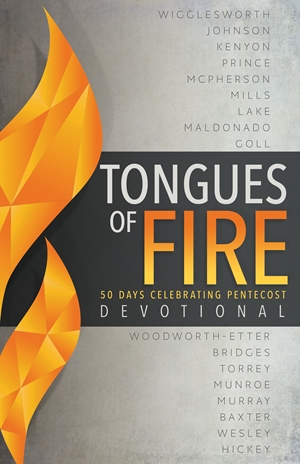
8 Quotes From “Tongues Of Fire”

Whether you grew up in Pentecost or you are simply hungry for something more substantial in your Christian walk, there is a lot of kindling for your soul’s fire in Tongues Of Fire. You can check out my full book review by clicking here. 

“We must be careful not to choose, but to let God’s Holy Spirit manage our lives; not to smooth down and explain away, but to stir up the gift and allow God’s Spirit to disturb us and disturb us and disturb us until we yield and yield and yield and the possibility in God’s mind for us becomes an established fact in our lives, with the rivers in evidence meeting the need of a dying world.” —Smith Wigglesworth 

“The power of God is seen in miracles. But it is also seen in the endurance needed until the miracle comes.” —Bill Johnson 

“The outpouring of the Holy Spirit should be a priority for us. From there, every problem, impossibility, or crisis will come under the control of the Spirit and will be solved by the power of God.” —Guillermo Maldonado 

“Any talk of miracles as ‘belonging to the past’ denies the very purpose and nature of the gospel, as well as the character of the Holy Spirit. The Spirit is sent to work in this world. Deny the miraculous, the power of the Holy Spirit, and you deny what Christianity is supposed to be: God’s power in action in the present age of living men and women.” —Reinhard Bonnke 

“All that is in the Vine, including both spiritual and physical life, belong to us—the branches.” —F.F. Bosworth 

“Let us not forget that possessing the baptism in the Holy Spirit means that there must be an ever-increasing holiness in us.” —Smith Wigglesworth 

“God never intended for us to walk aimlessly, trying to please Him without guidance or direction. Instead, He sent us the Holy Spirit and equipped us with the ability to hear, feel, intuit, and discern His atmosphere.” —Guillermo Maldonado 

“God tells us by His prophet Daniel, that ‘the people that do know their God shall be strong and do exploits. And they that understand among the people shall instruct many’ (Daniel 11:32-33). If it be ordinarily true that knowledge is power, it is supremely true in the case of the knowledge of God. Those who know their God do not attempt to do exploits, but do them. We shall search the Scriptures in vain, from Genesis to Revelation, for any command to attempt to do anything. …

“Further, God’s power is available power. We are a supernatural people, born again by a supernatural birth, kept by a supernatural power, sustained on supernatural food, taught by a supernatural Teacher, from a supernatural Book. We are led by a supernatural Captain in right paths to assured victories. … 

“The power given is not a gift from the Holy Ghost. He, Himself, is the power.” —Hudson Taylor 

More quotes coming soon, so stay tuned!

What Is Shalom?

Shalom is the Hebrew word for peace. Some of the best definitions of shalom include ideas of completeness, soundness, and wholeness. One Jewish rabbi commented that when you say “Shalom” to someone, you’re really saying, “may you be full of well-being.” Or another way of thinking of shalom is—nothing missing, nothing broken. 

Some have tried to describe shalom as the absence of conflict, but that’s not quite accurate. On the verge of going into the Promised Land to fight their enemies, God commanded Aaron to speak a blessing of peace of the people (Numbers 6:24-26). And just before Jesus said, “Blessed are those who are persecuted because of righteousness,” He said, “Blessed are the peacemakers” (Matthew 5:9-10). 

Shalom is not controlled by outward circumstances. Shalom is a deep-seated, rock-solid, unshakable assurance that I am in God’s hand. 

Isaiah describes how we live in shalom like this—

You will guard him and keep him in perfect and constant peace whose mind—both its inclination and its character—is stayed on You, because he commits himself to You, leans on You, and hopes confidently in You. (Isaiah 26:3)

How do we do keep our mind stayed on God? The Apostle Paul says, “We take captive every thought to make it obedient to Christ” (2 Corinthians 10:5). Psychologists call this process metacognition: when we think about what we’re thinking about. It’s being aware of our anxious thoughts that are robbing us of shalom and then talking back to them. 

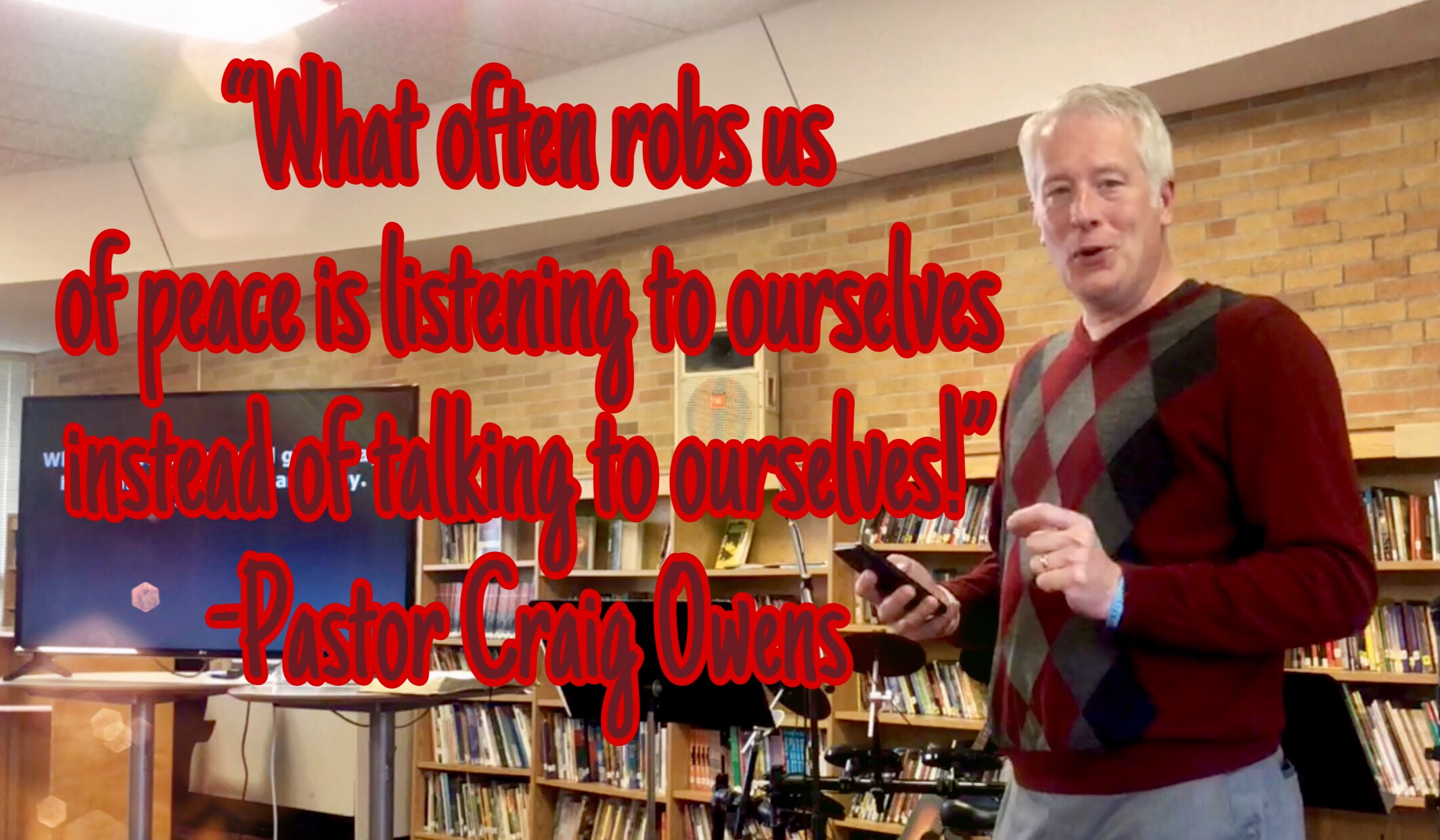
What often robs us of peace is listening to ourselves instead of talking to ourselves! 

Someone once asked evangelist Smith Wigglesworth, “Smith, how do you feel?” He replied, “I never ask Smith how I feel. I tell him how he feels!” Exactly right! 

Why do we make our thoughts obedient to Jesus? Because one of the titles given to Jesus before He was born was Prince of Peace (Isaiah 9:6), and Jesus assures us that His peace is unlike anything we can ever find in earthly things (John 14:27, 16:33). 

God’s peace is always there, but our divided minds keep us from experiencing His peace. So Isaiah tells us to keep our mind steadfast on God’s goodness, and Paul says the same thing—Don’t fret or worry. Instead of worrying, pray. Let petitions and praises shape your worries into prayers, letting God know your concerns. Before you know it, a sense of God’s wholeness, everything coming together for good, will come and settle you down. It’s wonderful what happens when Christ displaces worry at the center of your life. (Philippians 4:6-7)

I want to encourage you to practice what the Bible calls capturing your thoughts—or what psychologists call metacognition. Ask yourself, “Why am I thinking that?” Capture those thoughts and make them obedient to Christ. Don’t let your worrisome thoughts rob you of God’s shalom.

Join me this Sunday as we take a closer look at the “shalom cycle,” including the things that can derail it.