Little Is Not Insignificant

gods-promise-to-youPastor Phillips Brooks visited Israel in the mid-1800s. While there he visited a small church just outside of Bethlehem. Listening to the worshipful songs being sung in that quiet countryside, he was inspired to pen the words to O Little Town Of Bethlehem.

Because of that quiet setting, notice how Rev. Brooks notices things we often miss—

  • little town on Bethlehem
  • in thy dark streets
  • while mortals sleep
  • no ear may hear His coming

But little does not mean insignificant. And just because we can’t see or hear something doesn’t mean it doesn’t exist or it isn’t important.

Sometimes we’ve looked and listened and waited and searched for so long that we have given up and we begin to drift off to sleep. We continue to live in our own “little town” surrounded by silence. And we are in danger of missing a miracle right in our midst!

We know today that Jesus was born in Bethlehem. But did you know that this little town was still so obscure in Christ’s day that many people in Israel were unaware of what went on there? (See John 7:41-43). Even after King Herod had gruesomely killed all the baby boys in Bethlehem, scarcely anyone outside of that town knew about it or cared about it.

But God cared. And He knew exactly what He was doing.

But when the proper time had fully come, God sent His Son (Galatians 4:4)—the exact right moment—to be born in Bethlehem—the exact right place (Micah 5:2). Notice even Micah says of Bethlehem though you are small among the clans of Judah, giving birth to the title of Rev. Brooks’ poem.

How small was it? Look at the description of the territory for the tribe of Judah (in Joshua 15), and you can easily glossed over the names of all of the towns. But look more closely and you will see something you didn’t read in that list of towns. Take a close look at all 38 cities: it’s still missing.

There are a couple of very notable figures that dominate the Old and New Testaments, and they have something in common—King David and Jesus both come from the tribe of Judah. And both of them were born in Bethlehem. But in the list of towns in Judah’s territory, there is absolutely no mention of Bethlehem.

This town either didn’t exist, or it was so “insignificant” that Joshua didn’t even think to mention it. It would be almost another 500 years before David would be born in Bethlehem, and then another 900 years after that before Jesus would be born in this little town of Bethlehem.

God had in mind for the greatest earthly king in Israel’s history and the King of all kings to come from such humble origins… from a village that didn’t even make the list. Bethlehem was ready for these kings at just the right moment!

Jesus said heaven and earth will pass away, but His words will never pass away. What promise in His Word do you need to cling to? 

Just as those awaiting the Messiah clung to Micah’s promise until it came to pass, you must find God’s promise for you in His Word, cling to it, and don’t let go until it comes to pass in your little town.

If you’ve missed any of the messages in our series The Carols Of Christmas, you can find the full list here.
The Carols Of Christmas

Carols Of ChristmasI heard the bells on Christmas Day
Their old familiar carols play,
And wild and sweet the words repeat
Of peace on earth, goodwill to men. (Henry Wadsworth Longfellow)

How many “old familiar carols” have you heard Christmas after Christmas, until the words have almost lost their meaning? If we’re not careful, any song repeated too often can lose the richness of its original intent.

There are some amazing messages in many of our old familiar Christmas carols, because many of those messages are saturated with the old familiar story of Redemption that the Bible tells over and over again.

Please join me this Sunday as we take a new look at the old familiar messages in our Christmas carols. These messages will bring a new appreciation of God’s love that was sung at Christ’s Advent, and reawaken the sweetness of meaning for this Christmas Day.

This has been an ongoing Advent series for us. To check out the Christmas carols we discussed in 2014, please click here, and the carols from 2015 are here. If you’ve missed any of the messages this Christmas, please check them out:

Is Love Touchy-Feely?

mowt-loveOne of my greatest joys is investing in people, and then watching them develop their God-given gifts. One such man is my friend Scott Troost.

I began a series at the beginning of the month talking about things I have come to appreciate, and I asked a couple of my friends to join with me. Last week Josh Schram shared his appreciation with wise counsel, and this week Scott shared what he’s come to appreciate about love.

Is “puppy love” real love? Is love even supposed to have a feeling? If there are no feelings associated with love, how can you know that you are indeed loving? Scott shares his personal journey on what he’s come to appreciate about love, and I sincerely hope you will watch this video of his message…

The Truth About Wise Counsel

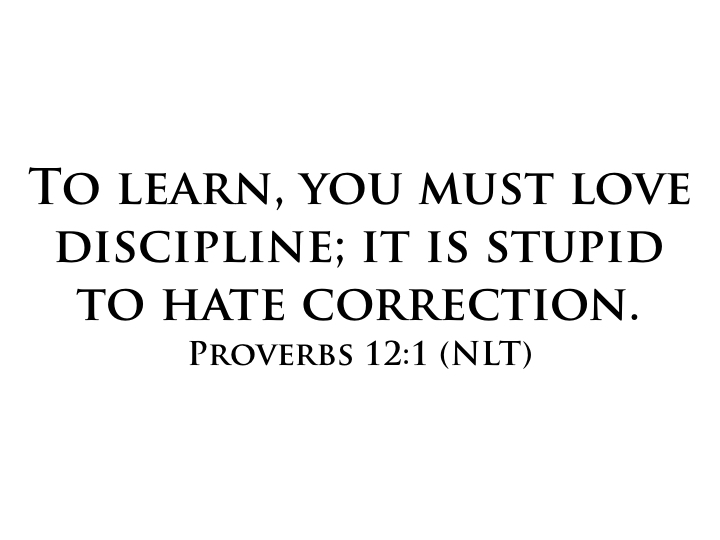
proverbs-12-1Pastor Josh Schram shared with us the lessons he’s appreciated about receiving wise counsel from those around him. One of Josh’s opening remarks really hit home with me, because it’s something I still struggle with at times: I have to get beyond thinking that those who are trying to speak into my life are somehow trying to meddle in my life!

A couple of other thoughts that really made me pause and reflect were—

“Ignorance may be bliss, but it won’t last.” How true! I may cover my eyes and ears to the truth, but my ignorance will ultimately lead to my downfall.

“People who will speak truth into my life care more about me than about my feelings.” As Proverbs says, “Wounds from a friend can be trusted, but an enemy multiplies kisses” (27:6).

Josh closed with these challenging questions:

  • Am I open to correction from wise counsel?
  • When I am corrected, do I feel like I must defend myself?
  • Are my ears open and am I really listening?

Check out this helpful message for yourself…

5 Key Parts To A Synergy Relationship

img_1970King David of Israel was a stud! Outstanding song writer, professional shepherd, bear killer, lion killer, giant killer, decorated army general, and ultimately king of Israel.

Near the end of his life we read an extensive list of Mighty Men that supported David. Some of these guys were also giant killers. One guy singlehandedly defeated 300 enemies, another guy defeated 800 bad guys, one guy killed a lion, and on and on the list goes.

I believe it is clear that David wouldn’t have become king without the support of his Mighty Men, and these guys probably wouldn’t have been recognized as “Mighty Men” without David’s support.

This is a classic definition of synergy. Synergy is when the outcome is so much greater than just the addition of the parts. Sort of like 1 + 1 = 5.

All of us can be a part of synergistic relationships, if we will include these five key parts.

[1] Humility

Without humility, you will never let anyone else into your life, and it’s doubtful they will let you in. Humility says, “I don’t have all the answers. I need some help in fulfilling my God-given dream. I have some areas of weakness where you are strong.”

[2] Confidence

Just like humility, without confidence it’s doubtful others would allow you access to their lives. Confidence says, “I have some something I am willing to offer you. I have a God-given strength in an area where you may be struggling.” The Apostle Paul said, all of us have strengths that God has given us that are to be used to help others (1 Corinthians 12:7; Ephesians 4:7).

[3] Collaboration

Quite simply, in order for synergy to work, the people in the relationship have to be willing to labor together. Paul used the example of one person planting the seed and another person watering the seed. Both laborers are necessary if there is going to be a harvest.

[4] Patience

The journey with others may be slower and messier than traveling solo, but it’s so much more rewarding (see Ecclesiastes 4:9-12).

[5] Investment

Synergy is really about there being a return on investment. But if you’re not willing to invest your time, your learning, your love, can you really expect there to be a synergistic return?

I just wrapped up a year-long investment with a group of guys from my church. What an amazing time! I am definitely better for having been involved with this synergy group, and I believe all of the other guys would tell you the same thing. You, too, can experience this same joy by investing in a synergy group of your own!

#MOWT

justice-mercy-graceLast week I blogged about justice, mercy, and grace. Justice is getting the penalty we deserve, mercy is not getting the penalty we deserve, and grace is getting blessings we don’t deserve.

If we are truly grace-full people, then we should be thank-full people as well. As we approach Thanksgiving Day, people are naturally thinking about things for which they can give thanks during this past year. But Christians should be the most full-of-thanks people on the planet, because we have been showered with so much grace! 

I’d like us to think about a word that I believe will increase our level of thankfulness: Appreciation. Appreciation goes beyond merely being thankful for blessings, as it sees the high value in those blessings, and then continually looks for ways to express even more gratitude for them. In other words, appreciation can begin a cycle of gratitude that grows and grows and GROWS!

Check out three parts to the definition of appreciation

[1] Gratitude; thankful recognition. Did you know that being grateful is actually good for you? Research has shown that increasing your gratitude levels increases your:

  • Physical health. “A state of gratitude, according to research by the Institute of HeartMath, also improves the heart’s rhythmic functioning, which helps us to reduce stress, think more clearly under pressure and heal physically. It’s actually physiologically impossible to be stressed and thankful at the same time” —Jon Gordon
  • Emotional health. Dr. Robert Emmons says gratitude decreases envy, resentment, and feelings of retaliation; and increases empathy, emotional resilience, and self-esteem.
  • Spiritual health. Notice how ingratitude is included in the list of a whole lot of ugliness (2 Timothy 3:1-4), but spiritual health is restored simply by being thankful (Ephesians 5:3-4).

[2] Estimating qualities and giving them their proper value. In order to determine value, we must have a standard of comparison. What’s your standard? Is it what your neighbor has? Is it what you don’t have? Or is it thankfulness for what God has given you? 

Max Lucado said, “To reflect on your blessings is to rehearse God’s accomplishments. To rehearse His accomplishments is to discover His heart. Gratitude always leaves us looking at God and away from dread.”

[3] Assessing the true worth of our blessings. Assessing leads to appreciation, and appreciation begins to give us a return on investment. I like how Jeff Anderson says it: “If you want to grow your faith, grow your gratitude. To grow your gratitude, take time to count your blessings.”

Remember: gratitude isn’t gratitude if it isn’t expressed. David made his gratitude known, and other afflicted people around him began to join with him in thanking God for His blessings (see Psalm 34:1-3). In other words, David’s thanksgiving went viral!

mowtHere’s how we can make our gratitude go viral: #MOWT. Let’s count our blessings every day, and let’s appreciate what God has done for us. Then let’s share our gratitude not only with God, but with others as well. Post it on Facebook or Twitter or Instagram with #MOWT: my one word thanks. Maybe include a photo and “family” #MOWT, or “protection” #MOWT, or even “paycheck” #MOWT.

Let’s give God so much glory for His grace gifts, that we tell the world about our appreciation!

Justice, Mercy, Grace & You

Imagine you are taking a nice autumn color tour. As you are enjoying the beautiful fall colors, you come upon a quaint town, where the speed limit through town drops to 25 mph.

As you make your way through town, enjoying the scenery, you suddenly become aware of the flashing lights of a police car behind you. Quickly glancing down at your speedometer, you notice that you are traveling at 35 mph!

justice-mercy-graceThe officer approaches your car, asks for your license and registration and returns to his car. At this point, there are two things that could happen.

Since you did break the law, the officer might return to your car with a traffic ticket, indicating that you were driving 10 mph over the speed limit. You may have all kinds of excuses, and even a spotless driving record, but the truth of the matter is you broke the traffic laws of that city. The ticket you received is, in fact, justice.

Now imagine the officer returns to your car and says, “You have a pretty good driving record, and I believe that you were enjoying the fall scenery, so I’m going to let you off with a warning this time.” Even though you broke the law, this police officer extended mercy to you by not giving you the penalty you deserved.

Have you ever experienced this kind of justice or mercy? Most of us probably have.

But here’s something you have probably never experienced. Imagine you are driving through the same quaint town, admiring the beauty, when you see those flashing lights in your rearview mirror. Quickly glancing down at your speedometer you see that you are traveling under the speed limit. You double-check that your seatbelt is fastened and you are obeying all of the traffic laws.

When the officer approaches your car, he says, “Do you know why I pulled you over? I pulled you over because you are following all of the traffic laws and I wanted to give you a $50 gift certificate to one of the best restaurants we have in town.”

If this ever happened to you, this would be the definition of grace: getting a blessing you didn’t deserve to receive!

Christians certainly understand justice averted, when the penalty for our sins fell on Jesus instead of on us. Christians also understand mercy, when we don’t have to pay for the sins we have committed. But have you ever stopped to consider the amazing grace God continues to pour over your life?

John describes it like this: For out of Christ’s fullness we have all received—all had a share and we were all supplied with—one grace after another and spiritual blessing upon spiritual blessing and even favor upon favor and gift heaped upon gift (John 1:16 AMP).

All of us have blessing upon blessing, favor upon favor, gift upon gift heaped onto our lives. The Apostle Paul then asks, “What am I going to do with all of this grace I’ve received?”

His answer: I’m going to make sure I pass it along to others! (see Ephesians 3:1-9)

Gordon MacDonald wrote, “The world can do almost anything as well as or better than the church. You need not be a Christian to build houses, feed the hungry, or heal the sick. There is only one thing the world cannot do. It cannot offer grace.

So here’s my question to you: how are you handling the grace God has lavished on you? Are you even aware of His grace gifts? Are you hoarding them for yourself?

Or are you making sure that those around you are recipients of the overflow of grace from your life? In other words, are you demonstrating what the world can never show?

Christian, make sure the world sees your grace-filled life in action! This is what brings glory to God and draws others to their own personal relationship with Jesus Christ.

Please check out this video…

Don’t Settle For Low Expectations

isaac-newtonSome of the greatest discoveries and revelations came about because people were curious. They refused to just go along with what they had always been told, what they grew up believing, or what the conventional wisdom told them was impossible.

Archimedes had his “Eureka!” moment because he refused to believe that it was impossible to measure the volume of an irregularly-shaped object.

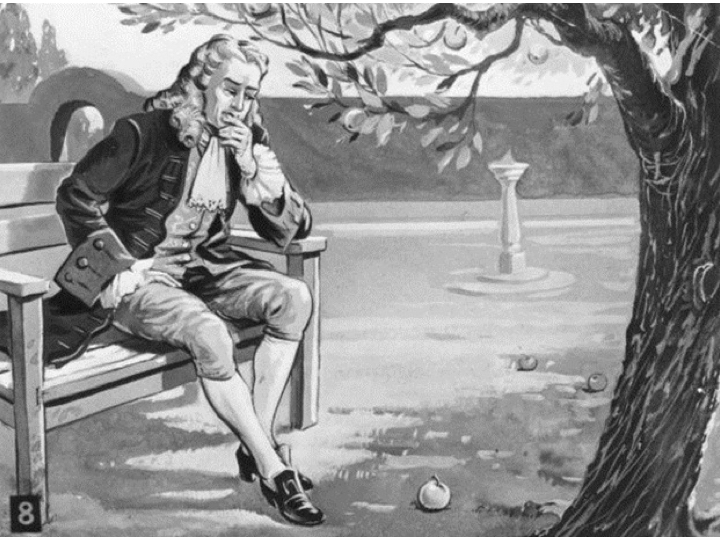
Isaac Newton formulated the laws of gravitation because he curiously wondered about why apples fell perpendicular and at the same velocity.

The Apostle Peter saw a vision from God with animals, but didn’t stop there. His openness helped him realize that God didn’t have “favorites.”

Far too many people live their lives cursed with low expectations. They say, “That’s all there is.” and they put a period on it.

God wants us to soar above those low expectations! He tells us things like:

  • Come now, let us reason together… (Isaiah 1:18).
  • Call to Me and I will answer you and tell you great and unsearchable things you do not know (Jeremiah 33:3).
  • Are you listening to this? Really listening? … The knowledge of the secrets of the kingdom of heaven has been given to you… (Matthew 13:9, 11)

great-expectationsBut we are trapped in the curse of low expectations when we put a period on things, when we refuse to learn more, see more, hear more.

  • Most people—“That’s all there is.” (period)
  • What if we changed it up—“Is this all there is?” (question mark)
  • Perhaps you might get—“There is so much more!” (exclamation point)

For example, Paul uses the word “mystery” multiple times in his letter to the Ephesians. He explains that a mystery is something hidden from those who have it all figured out (the “period” people), but is revealed to those who will ask God (the “question mark” people). Only the “question mark” people get to see the “exclamation points” God has for them. Things like…

  • God has a plan, and it is His pleasure to reveal it to me (Ephesians 1:9-10; 2:10).
  • God’s revelation is fully revealed to me in His Word (3:3-5).
  • Faith in Jesus makes Christians co-heirs and sharers in all God’s promises (3:6).
  • I have access to God’s inexhaustible riches, His immense wisdom, and I may approach Him with freedom and confidence (3:8-12).

Don’t stop with “.” but go on to “?” and experience “!

With great expectation, read God’s Word, approach His throne, dig into His riches, wrestle with the difficult things, learn more of God’s purpose for your life. He wants to give you so much more “!” 

Love Serves

love-serves-1I have blogged quite a bit about the tendency of our culture to be pragmatic. That is, people determine the rightness or wrongness of something based on how it feels to them. If it feels good,  or if they get something positive out of it, then it must be good; but if it feels bad, or if they don’t  get anything out of it, then it must be something they need to abandon.

True love is never pragmatic. Although culture tells us it is:

  • “You’ll know he’s the one by how he makes you feel.”
  • “We’ve fallen out of love.”
  • “There’s just no spark there any more.”
  • “He’s let me down one too many times.”
  • “You’ve lost that lovin’ feeling, oh that lovin’ feeling….”

“We dress ‘love’ in the fantasy of evening gowns and tuxedos, with silver and candelabras. But most of the time…love comes dressed in overalls—it is practical, down-to-earth, everyday hard work. It is really thinking of the other person and doing what the other person needs and being what the other person needs when he or she needs you to be there.” —Dr. Richard Dobbins

love-serves-2In writing to the church at Ephesus, Paul told them he became their servant—literally this means their waiter. But not so he could get something out of it. Instead it was a love completely focused on them…

  • the prisoner of Jesus Christ for the sake of you (Ephesians 3:1)
  • God’s grace was given to me for you (v. 2)
  • this grace was given to me to preach to [you] (v. 8)
  • my sufferings for you, which are your glory (v. 13)

Speaking to the Ephesian leaders as he was traveling to Jerusalem, he said…I served the Lord with great humility and with tears (Acts 20:19)

  • I never stopped warning each of you night and day with tears (v. 31)
  • I have not coveted anyone’s silver or gold or clothing (v. 33)
  • In everything I did, I showed you that by this kind of hard work we must help the weak (v. 35)

Dear Christian, is this the kind of love you demonstrate? Do you share God’s grace with the hurting? Do you walk alongside those who are limping or about to give up? Do you stand through the storms with those on the battlefield?

It’s not what I get out of it. 
Love focuses on the other person. 
Love is devoted by a solemn promise. 
Love doesn’t view “suffering” as something bad, but for the other person’s glory. 
Love doesn’t seek recognition or rewards. 
Love simply does what is important for the other person.

2 Life-Changing Words

whose-you-areThere’s an interesting story recorded in Acts. Seven sons of a priest named Sceva attempt to cast out a demon by saying, “In the name of Jesus whom Paul preaches, come out!” To which the demon replies, “Jesus I know and Paul I know, but who are you?”

Not only was the demon not exorcised, but the seven men came running out of the house bloodied and naked from the beating they received!

Think about it: If you spoke to the devil and said, “Get away from me!” would he be afraid of you? The simple answer is “No!” Why? Because you have no power in yourself.

It’s not about who you are, it’s about Whose you are.

john-14-20Jesus talked about our place in Him in John 14:20. Notice the word “in” in this verse:

  • Jesus is in the Father
  • The Christian is in Jesus
  • The Spirit of Christ is in the Christian

Here are the two life-changing words for any Christian to remember…

IN CHRIST

The devil wants to get you second-guessing your identity. He wants you to be uncertain if you are worthy of coming into God’s presence. He wants you doubting if you are truly forgiven and worthy of God’s attention. He wants you unsure if you can stand up against him in a spiritual fight.

This uncertainty and doubt is erased by faith in this: I am IN CHRIST!

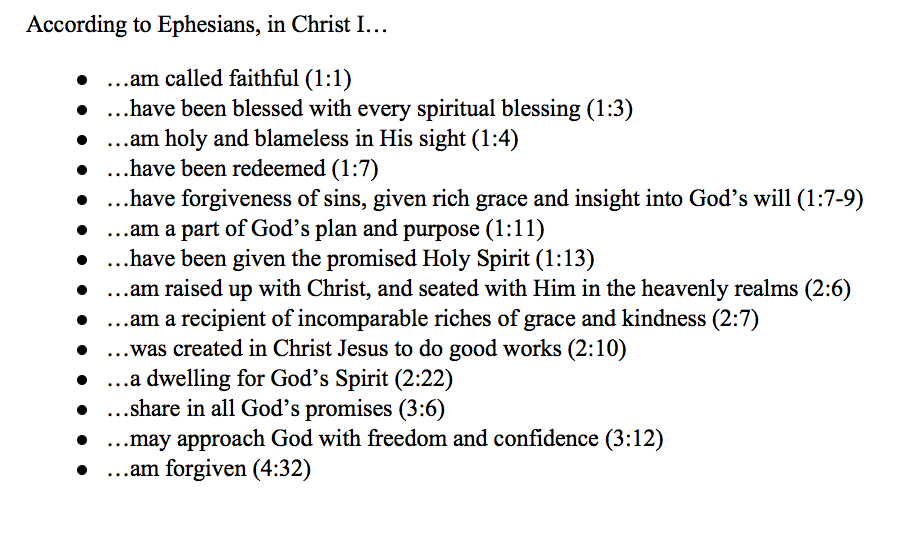
in-christ-i-amPlease print out this list from Ephesians of all the “in Christ” statements Paul shares with us. (You may download a PDF version by clicking here → in-christ-i-am)

Keep this list handy, and the next time satan whispers doubts in your ear like, “Jesus I know and Paul I know, but who are you?” say—

“It’s not who I am, but Whose I am! I am Christ’s. I am in Him and He is in me. I have been forgiven. I am a part of His family. I have a purpose. I am holy and blameless. I am the recipient of all God’s blessings. And you can never defeat me because I AM IN CHRIST!”

If you don’t have a home church, join us next week as we continue our series in the book of Ephesians called Sit Walk Stand.